
No products in the cart.
The Ultimate AI SEO Workflow for SaaS: Scale Organic Growth with Intelligent Automation
29
Jul
Jul
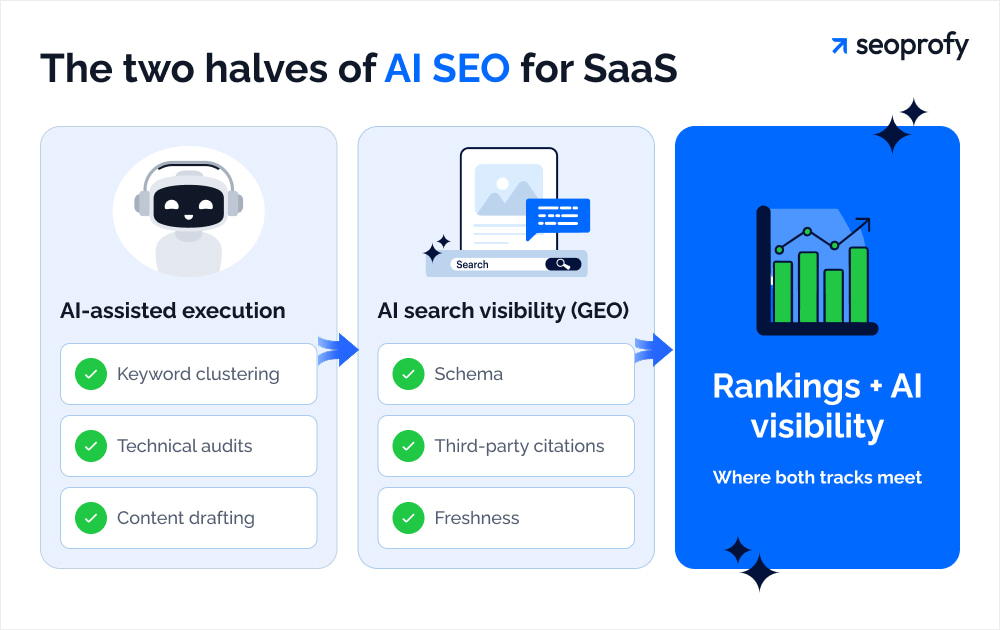
Building a predictable organic growth engine for a SaaS product demands more than scattered blog posts and occasional keyword research. An AI SEO workflow for SaaS transforms fragmented efforts into a repeatable, data-driven system that compounds traffic and sign-ups month after month. This framework layers artificial intelligence on top of proven SEO principles—automating technical audits, content clustering, intent mapping, and performance analysis—so product marketers and SEO leads can finally escape the hamster wheel of manual execution.
In this guide you will find a production-ready SaaS SEO workflow built around AI augmentation, not full replacement. Every step has been tested across B2B and B2C SaaS companies scaling from zero to 50,000 monthly organic visitors. You will learn exactly how to wire AI into each phase of the SEO lifecycle without sacrificing the brand voice, topical depth, or conversion logic that differentiates your product.
What Exactly Is an AI SEO Workflow for SaaS?
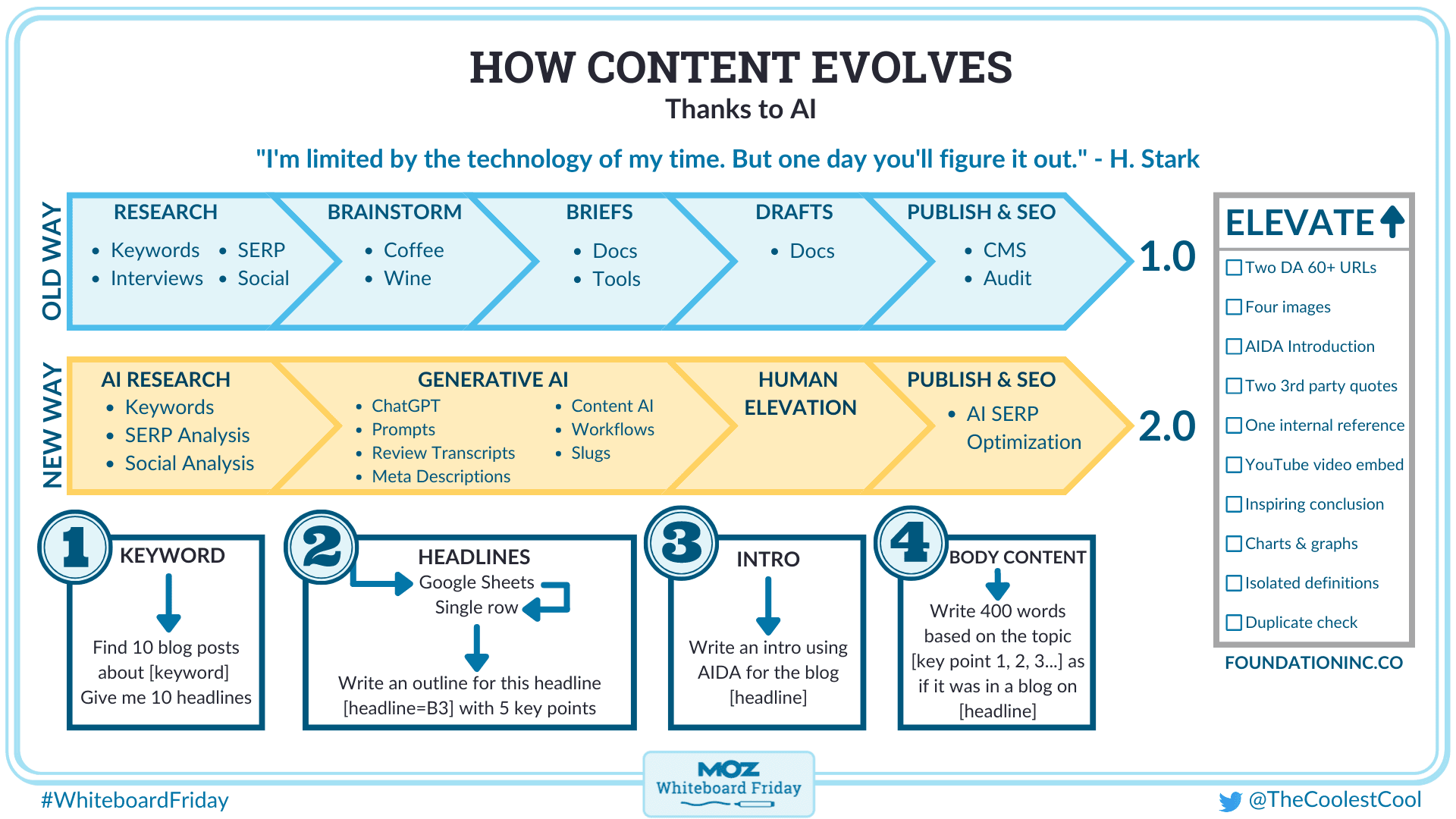
An AI SEO workflow for SaaS is a structured sequence of processes where artificial intelligence handles data processing, pattern recognition, and repetitive content operations—freeing humans to focus on strategy, creativity, and high-stakes editorial decisions. The workflow connects keyword discovery to content production, technical optimization, and reporting in a closed loop, making SEO scalable for resource-scarce SaaS teams.
Unlike a traditional practice where one specialist manually runs rank trackers, spreadsheet analyses, and content briefs, the AI-powered version uses large language models, NLP APIs, and dedicated SEO-AI tools to turn weeks of work into hours. The goal is not to publish AI-written fluff; it is to generate insights faster, surface hidden opportunities, and rigorously maintain quality controls that search engines reward.
The Core Layers of a SaaS-Focused AI SEO Flow
- Intelligent Opportunity Mining: AI detects low-competition, high-intent topics by cross-referencing search volume, SERP features, and competitor gaps at scale.
- Semantic Content Architecture: NLP models build topical clusters, pillar pages, and internal linking maps far more comprehensively than a human ever could.
- Production-Ready Drafting: Custom-trained models on your product’s unique tone and domain create first drafts that match your content brief exactly, reducing blank-page syndrome.
- Algorithmic Quality Assurance: Automated scoring of readability, entity coverage, EEAT signals, and on-page elements ensures every published page meets a high bar.
- Continuous Performance Calibration: AI monitors ranking fluctuations, reranks content regeneration priorities, and flags pages needing a refresh before decay sets in.
- Human-in-the-Loop Is Non-Negotiable: Treat AI as an elite junior strategist, not a replacement for domain expertise. Every output must be reviewed by someone who intimately understands the audience and product.
- Guard Your EEAT Signals Fiercely: Google’s quality rater guidelines prioritize experience, expertise, authoritativeness, and trustworthiness. Use AI to ensure you address these signals, not to fabricate them. Always include author bios, real credentials, and original data attribution.
- Integrate with Revenue Operations from Day One: SEO ROI isn’t traffic—it’s pipeline. Ensure your analytics can track organic leads into your CRM and attribute revenue. Without closed-loop data, the AI workflow loses its steering direction.
- Start Small, Prove Value, Then Scale: Pick one product line or content cluster to pilot the full AI workflow. Nail the measurement and output before rolling out company-wide. This protects against overwhelming the team and demonstrates clear ROI early.
- Be Transparent About AI Usage: Disclose AI involvement where it adds trust, like showing you use AI to help uncover data patterns but human experts verify all claims. Hidden AI usage backfires when audiences sense a lack of authentic voice.
Why Traditional SaaS SEO Execution Fails (And Where AI Fits In)
Most SaaS companies pour months into creating content that never ranks. The root cause is rarely a lack of effort—it is a broken workflow that relies on manual guesswork. Common failure points include targeting keywords without understanding real product-value alignment, writing generic listicles that go nowhere, and ignoring technical debt until a core update wipes out traffic. An AI SEO workflow for SaaS corrects these faults by building guardrails and accelerators into every step.
When human teams do keyword research manually, they typically scan a few tools, cherry-pick volumes, and overlook the thousands of long-tail variations that convert. AI instantly processes entire keyword universes, scoring opportunities by business value (trial intent, ICP fit, estimated conversion rate) and not just search volume. Similarly, connecting content briefs to actual SERP analysis with AI ensures each brief includes the entities, questions, and formats that Google already rewards for that query.
| Traditional Manual Workflow | AI-Enhanced SaaS Workflow |
|---|---|
| Keyword research on 50–100 terms per quarter | AI evaluates 10,000+ terms weekly, prioritizing by difficulty-to-revenue potential |
| Content briefs built from gut feel and a few top SERPs | AI-generated briefs with entity lists, NLP-graded outlines, and content gap analysis against the entire top 10 |
| Writers produce drafts without real-time optimization feedback | Drafts run through AI scoring for topical completeness, EEAT signals, and internal linking opportunities before review |
| Technical audits performed quarterly, missing live issues | AI proactively crawls site daily, detects page speed regressions, orphan pages, and index bloat, auto-opens Jira tickets |
| Manual reporting mixing spreadsheets and screenshots | AI aggregates all data into a single narrative report highlighting which clusters moved, why, and what to update next |
Step-by-Step AI SEO Workflow for SaaS: From Zero to Revenue
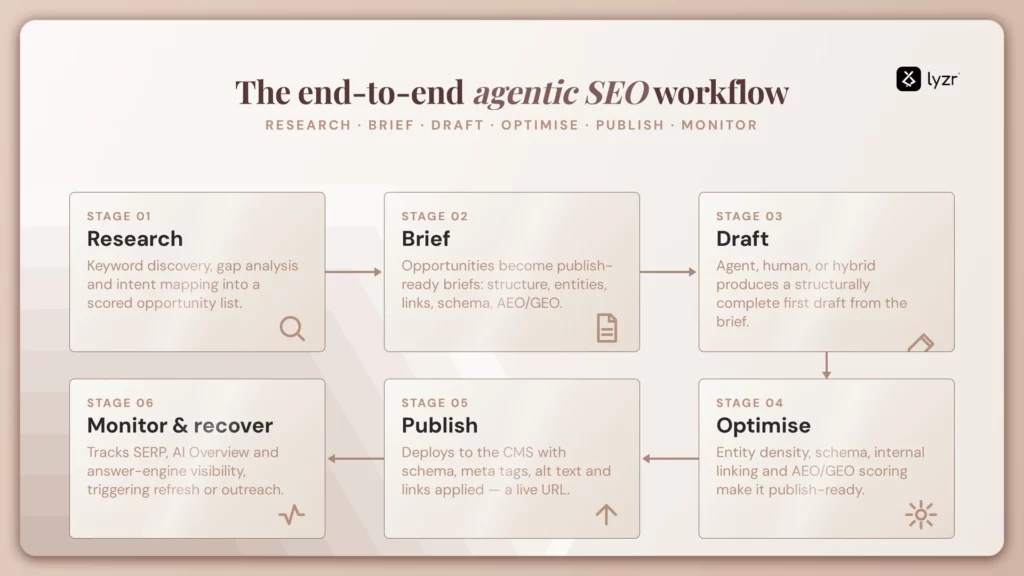
1. AI-Powered SaaS Keyword Research and Intent Modeling
Start by ingesting every conceivable query related to the problem your SaaS solves. Use AI clustering tools to group terms by intent: informational, commercial investigation, transactional, and navigational. Separate product-led keywords (directly mentioning features or comparisons) from problem-aware keywords where prospects describe pain without knowing solutions exist. The AI then scores each cluster with a custom metric—Commercial Relevance Score—factoring in your ACV, trial-to-paid rate, and average lead quality.
For example, a contract management SaaS might pull 23,000 raw keywords. AI quickly isolates the 1,200 terms where the query suggests immediate buying readiness (“best contract management software for legal teams,” “DocuSign alternative with workflow automation”). These go into an “Activation Cluster” receiving the fastest content turnaround, while broad educational terms feed the long-tail authority build.
2. Semantic Content Architecture and Pillar Strategy
Next, AI builds a topic map that mirrors how your ideal users learn. Instead of random blog posts, the system creates pillar pages surrounded by tightly interlinked cluster content. NLP models analyze the top-ranking pages for each pillar topic to extract must-cover entities, subtopics, and user questions—transforming a simple keyword list into a full semantic blueprint.
The output is a content inventory document that a head of content can review in minutes, not days. This blueprint includes the suggested URL structure, internal linking targets, the core entities each page must address, and the recommended content format (definitive guide, comparison, landing page, interactive tool). The architecture ensures every piece of content earnestly earns topical authority, which signals to Google that your domain deserves to rank for an entire subject area, not just a single keyword.
3. High-Fidelity Content Briefs and Production
With architecture locked, AI generates detailed content briefs that go far beyond a title and headings. Each brief includes: the primary and secondary keyword with target search intent, a list of semantically related entities from the SERP, a word-count range based on competitor depth, suggested FAQs to embed for featured snippet opportunity, relevant internal links with anchor text, and a content differentiation angle that ties back to your SaaS’s unique data or case studies.
Teams then use AI-assisted drafting, but with strict controls. The first draft generator is fine-tuned on your existing top-performing content, sales call transcripts, and product documentation. This ensures every article carries the product’s voice and inserts real examples, not generic placeholder text. The human editor focuses on sharpening unique insights, adding original data studies, and weaving in the conversion narrative—tasks AI cannot do alone. This hybrid approach cuts production time by up to 60% while raising content quality.
4. Automated On-Page Optimization and Internal Linking at Scale
Pre-publish, an AI auditor scans the draft against the original brief, checking entity coverage, keyword proximity, header hierarchy, readability scores, and image alt-text relevance. Missing any critical entity from the SERP analysis? The tool flags it before you hit publish, not after you lose rankings. Simultaneously, the AI runs a proprietary internal link suggestion engine that identifies where the new page fits inside the existing content graph and automatically injects contextual links, boosting both user navigation and crawl efficiency.
Post-publish, the workflow triggers a re-crawl request to Google via the Indexing API and adds the URL to a monitoring queue. The system then watches for indexing status, core web vitals metrics, and initial keyword positions over the first 72 hours, raising alerts if anything stalls.
5. Continuous Content Decay Detection and Refresh Scheduling
The biggest leak in SaaS SEO is content decay. Pages that ranked well two years ago slowly lose traffic because the SERP evolves, competitors add more depth, and user intent shifts. AI scans your entire content library quarterly, flagging pages where traffic dropped below a set threshold and comparing your page’s entity score to the new top-ranking pages. The workflow then auto-generates a prioritized refresh brief with exactly which sections need updating, new FAQs to add, and outdated statistics to replace.
One B2B analytics SaaS applied this AI decay detection and reduced content refresh turnaround from six weeks to five days. The result was a 34% recovery of lost organic traffic within three months, purely from updating existing assets rather than creating net-new content.
6. Automated Technical SEO Hygiene for Growing SaaS Sites
SaaS websites expand rapidly: documentation portals, changelogs, feature pages, localized subdirectories. Without AI oversight, technical debt accumulates fast. The workflow leverages an AI crawler that mimics Googlebot behavior, checking for broken links, crawl budget waste, slow-loading JavaScript-rendered pages, unexpected no-index tags, and orphan pages—every day. Alerts feed directly into the team’s project management tool with assigned severity levels and suggested fixes.
The AI also audits structured data across all pages, ensuring product snippets, FAQ schema, breadcrumbs, and article markup validate correctly. When rolling out new page templates (like an industry vertical landing page), the AI validates the markup on a staging environment before deployment, preventing structured data errors from ever going live.
7. Unified Reporting and ROI Attribution
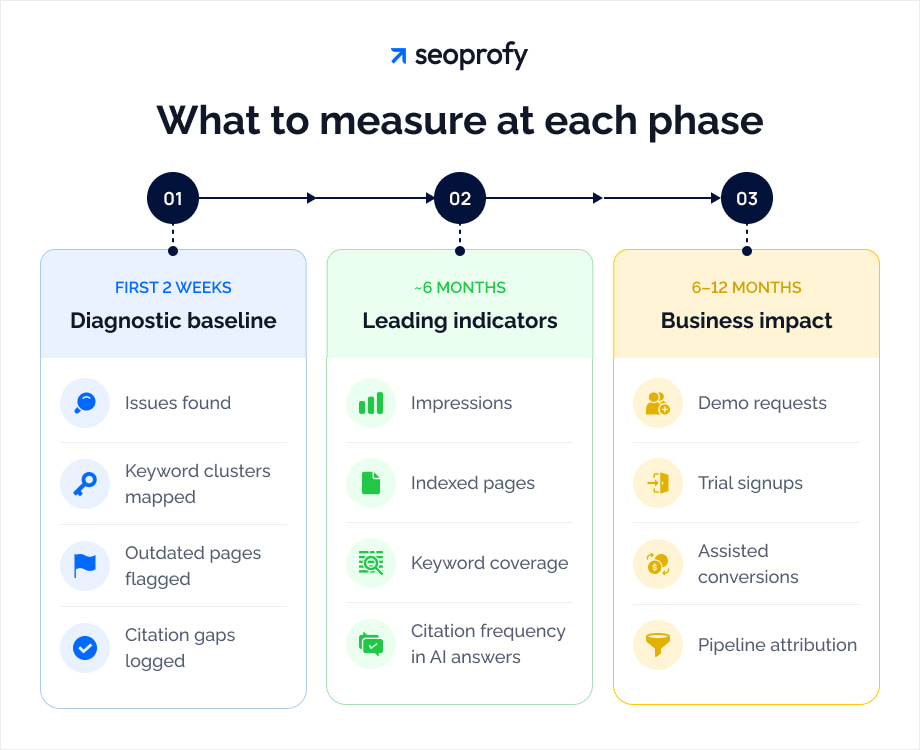
The final piece connects all data streams into one narrative dashboard: keyword rankings, organic traffic, trial sign-ups, and revenue attributed to organic content. AI does the heavy lifting by applying multi-touch attribution models that consider assisted conversions, content touchpoints along the buyer journey, and deal velocity differences for organic versus paid leads. The output is a clean weekly report that translates SEO efforts into the metrics the C-suite actually cares about—pipeline contribution, customer acquisition cost reduction, and payback period.
This transparency builds internal trust and secures continued investment in the AI SEO workflow for SaaS. When the head of marketing presents a slide showing that organic content influenced 46% of closed-won revenue last quarter, the conversation shifts from “Should we keep doing SEO?” to “How do we double down?”
Real-World Results: AI SEO Workflow in Action
A project management SaaS tailored for remote agencies implemented this exact workflow after stagnating at 15,000 monthly organic visits. AI keyword modeling revealed an untapped content angle around “client collaboration” that their competitors had ignored. They built a pillar page, eight cluster articles, and integrated their product’s collaborative review feature as the hero solution within six weeks. All content was drafted using a custom AI trained on their help docs and customer stories, then refined by a senior editor.
Within four months, the client collaboration cluster attracted 22,000 new monthly sessions, with an organic trial conversion rate 3.2x higher than the site average. The AI decay detection engine later flagged that one article was losing traffic due to a new competitor study; the team refreshed it in one day and reclaimed the lost ground. This closed-loop feedback mechanism prevented the typical feast-and-famine SEO cycle.
Across multiple SaaS implementations, companies using an AI-driven workflow consistently see 40–70% reduction in time-to-publish while increasing average page 1 keyword coverage by at least 25% in the first year. The efficiency gains allow small teams of two or three people to operate like a content department of fifteen.
Common Mistakes When Building an AI SEO Workflow for SaaS
1. Using AI as a “Set and Forget” Content Factory
Publishing raw AI output without human editing, product insight, or unique data points will tank credibility and trigger quality classifier dampening. Every AI-generated paragraph must pass a value-add check: does this sentence contain something a user couldn’t get from a generic ChatGPT prompt? If not, cut it.
2. Ignoring Your Product’s Unique Signal
AI tends toward middle-of-the-road, safe content. SaaS brands win by injecting contrarian viewpoints, original research, interactive widgets, and product-specific examples that AI cannot fabricate. Train your editorial team to identify where the AI draft becomes “generic explainer” and insert original material there.
3. Over-Engineering Technical Workflows Before Content Quality
A perfectly automated technical SEO stack does not matter if the content fails to satisfy user intent. Balance the workflow so that at least 60% of your optimization effort targets content differentiation and depth, not just schema and page speed.
4. Neglecting Bottom-of-Funnel Content in the AI Plan
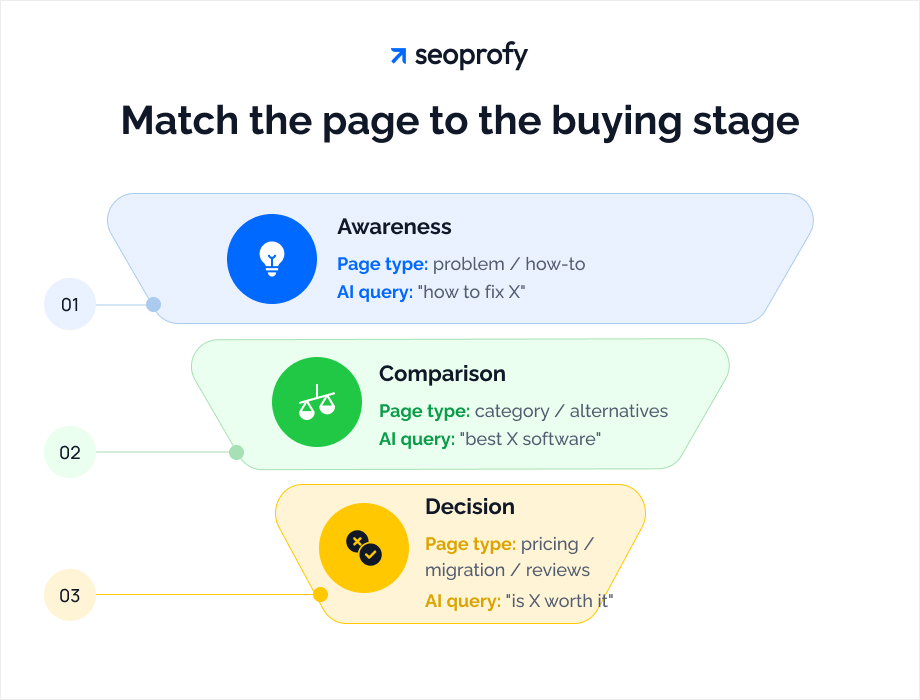
AI loves building top-of-funnel educational pieces because they’re pattern-rich. Yet SaaS revenue comes from comparison pages, integration listings, and “alternative to X” articles. Force the AI keyword model to weight commercial intent heavily, allocating 40% of content production to bottom‑funnel assets.
5. Skipping Regular Prompt and Model Retraining
Your SaaS evolves, your brand voice matures, and your content benchmarks shift. Regularly feed recent top-performing content and product updates back into the AI training set. A once-great AI assistant left unchanged will start producing stale, outdated copy that diverges from current messaging.
Important Notes for Implementing an AI SEO Workflow for SaaS
Frequently Asked Questions About AI SEO Workflow for SaaS
What is an AI SEO workflow for SaaS?
It is a repeatable system where artificial intelligence automates keyword research, content clustering, drafting, on‑page optimization, technical monitoring, and performance reporting specifically for subscription software businesses. The goal is to reduce manual effort while increasing content output and ranking velocity.
How much does it cost to implement an AI SEO workflow for a SaaS company?
Costs range from a few hundred dollars a month for lightweight tool stacks (SEO tool + AI writing assistant + basic crawler) to several thousand for enterprise setups with custom‑trained models, dedicated AI engineers, and full automation suites. Many SaaS teams begin with $300–$700/month and scale up as organic revenue grows.
Can small SaaS teams with no dedicated SEO specialist use an AI workflow?
Yes, and they often see the highest relative return. AI can democratize SEO expertise by building briefs, suggesting internal links, and catching technical errors automatically. However, one person must act as the final quality gate to ensure the output aligns with product value and customer language.
Will Google penalize content produced by an AI SEO workflow?
Google does not penalize AI content as long as it meets EEAT standards and genuinely helps users. Penalties arise from low‑value, thin, or manipulative content regardless of how it was produced. A well‑crafted AI workflow that includes rigorous human editing and unique data generates content that signals high quality.
Which parts of the SaaS SEO workflow should never be fully automated?
Original data collection, customer interviews, product walkthrough videos, unique case studies, brand story development, and final editorial approval must stay human‑led. AI can support these tasks with summaries and suggestions but should never create proprietary evidence or authoritative opinion from whole cloth.
Conclusion: Embedding AI into Your SaaS SEO DNA
An AI SEO workflow for SaaS swaps hope-based content marketing with a factory‑like system where every piece of content earns its organic footprint through data, not luck. By connecting intelligent opportunity detection, semantic content architecture, assisted drafting, automated QA, and active decay management, SaaS teams finally achieve the repeatable growth cadence that product‑led companies need. The transition requires upfront process design and a commitment to human editorial excellence, but the payoff is massive: more qualified trials, lower customer acquisition cost, and a content engine that actually scales with your ARR.
The technology is ready. The question is whether your team will adopt a workflow that turns SEO from a cost center into a predictable revenue driver.
Xem thêm:
- AI SEO Content Hierarchy: The Complete Blueprint for 2025 Rankings
- AI SEO Topical Depth: The Complete Guide to Dominating Search Rankings
- AI SEO Contextual Internal Links: The Complete Guide to Smarter Site Architecture
- AI SEO Broken Link Opportunities: The Complete Guide to Automated Link Recovery
- AI SEO Ecommerce Keyword Research: The Complete Playbook for 2025
Bài viết cùng chủ đề:

AI SEO SEO Automation with Make: The Complete Workflow Guide

AI SEO SEO Automation with Zapier: The Complete Workflow Guide

AI SEO SEO Automation with n8n: The Complete Workflow Guide
AI SEO SEO Automation with Gemini: The Complete Guide to Scaling Organic Growth

AI SEO SEO Automation with Claude: The Complete Guide to Scaling Content in 2025

AI SEO SEO Automation with ChatGPT: The Complete Playbook for 2025

AI SEO & SEO Automation for Affiliate Sites: The 2025 Playbook for Passive Income Growth
AI SEO & SEO Automation for Bloggers: The Complete Guide to Scaling Your Content

AI SEO & SEO Automation for Agencies: The Complete 2025 Playbook

AI SEO and SEO Automation for Ecommerce: The Complete Playbook for 2025

AI SEO & SEO Automation for WordPress: The Complete Playbook for 2025
AI SEO SEO Automation Strategy: The Complete Playbook for 2025

Mastering the AI SEO SEO Automation Process: A Complete Guide to Scaling Organic Growth
AI SEO SEO Automation System: The Complete Guide to Scaling Organic Growth in 2025
AI SEO SEO Automation Platform: The Complete Guide to Scaling Organic Growth in 2025
AI SEO SEO Automation Software: The Complete Guide to Scaling Organic Growth in 2025















