
No products in the cart.
AI SEO Automation Scripts: The Complete Guide to Scaling Your Rankings in 2025
31
Jul
Jul
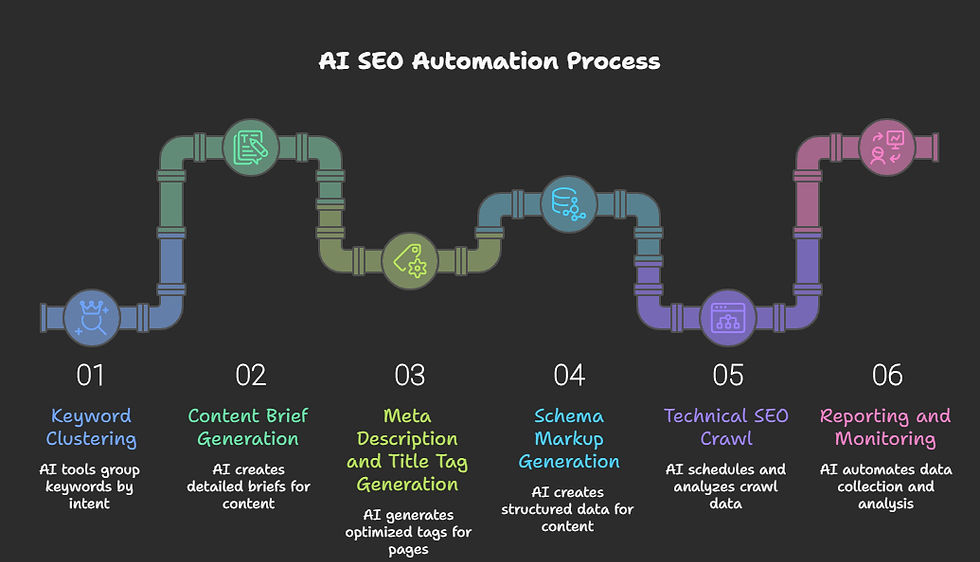
Search engine optimization has evolved from a manual, time-consuming process into a data-driven discipline where speed and precision determine winners. AI SEO automation scripts have emerged as the critical bridge between raw data and actionable strategy, allowing marketers to process thousands of keywords, audit entire websites, and generate optimized content at scale. These scripts, powered by machine learning models and natural language processing, are no longer optional tools for competitive industries. They represent the fundamental shift in how modern SEO teams operate, replacing repetitive tasks with intelligent workflows that adapt to algorithm updates in real time.
What Are AI SEO Automation Scripts?
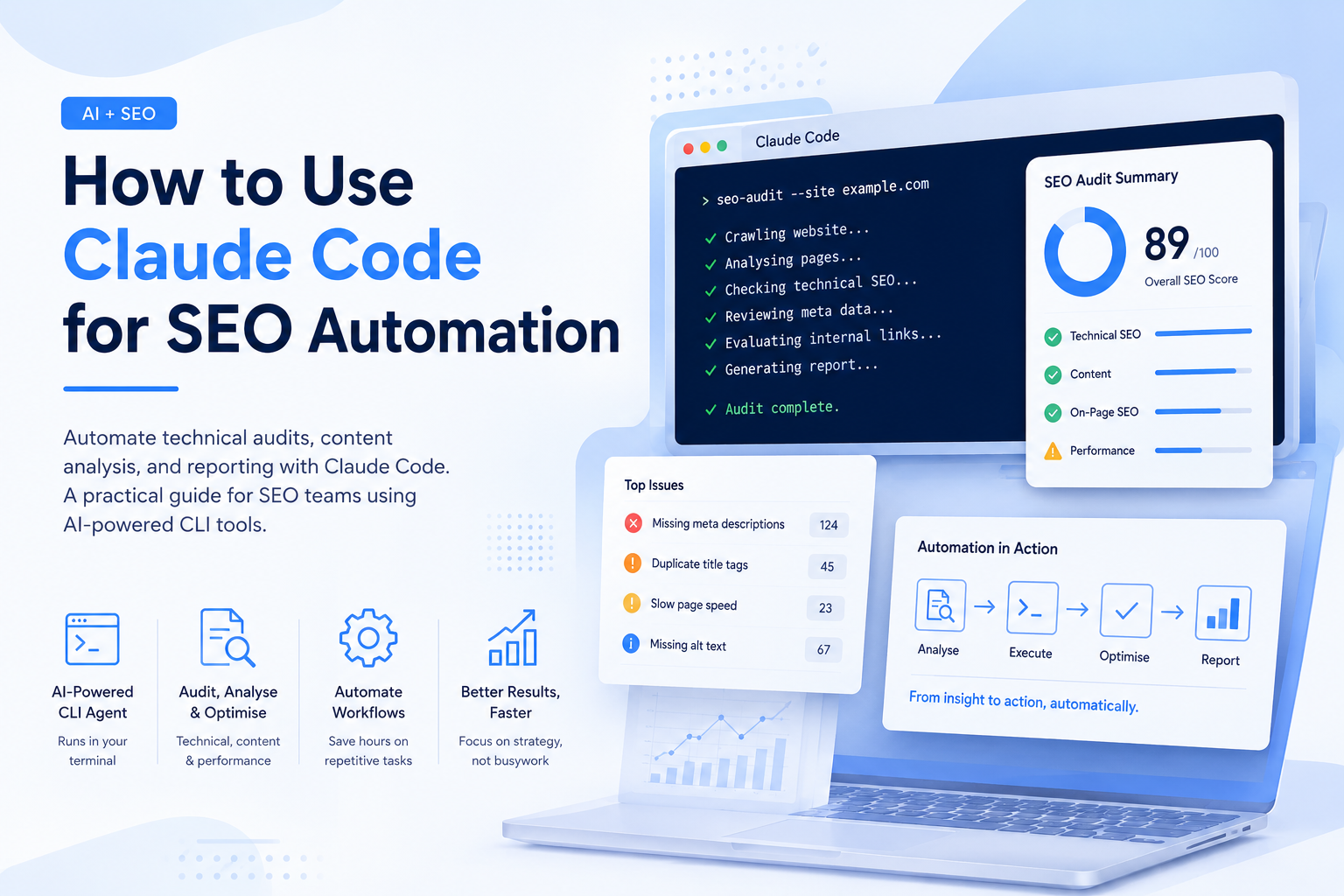
AI SEO automation scripts are programmatic solutions that combine artificial intelligence capabilities with traditional automation logic to execute search optimization tasks without constant human intervention. Unlike standard SEO tools that require manual configuration, these scripts leverage machine learning algorithms to analyze patterns, predict outcomes, and make data-driven decisions autonomously. They can range from simple Python scripts that scrape search engine results pages to sophisticated systems that generate entire content clusters based on semantic analysis.
The core distinction lies in the intelligence layer. Traditional automation follows fixed rules, while AI-powered scripts learn from data. For instance, a basic script might check if a title tag exceeds 60 characters. An AI version would analyze thousands of top-ranking pages to determine the optimal title length, emotional triggers, and keyword placement for each specific query. This adaptive capability makes AI SEO automation scripts particularly valuable in an environment where search algorithms change frequently.
Why AI SEO Automation Scripts Matter for Modern Marketers
The volume of data involved in comprehensive SEO campaigns has grown exponentially. A mid-sized e-commerce site might have 50,000 product pages, each requiring unique metadata, internal linking strategies, and content optimization. Manual processing of this scale is physically impossible. AI SEO automation scripts process this data in minutes, identifying opportunities and issues that would take human analysts weeks to uncover.
Speed alone does not tell the full story. These scripts deliver consistency that human teams struggle to maintain. When you run the same script across 10,000 pages, every page receives identical treatment based on the same intelligent criteria. This uniformity is crucial for technical SEO elements like schema markup, canonical tags, and heading structures. Search engines reward sites that demonstrate clear, consistent information architecture.
Core Components of Effective AI SEO Automation Scripts
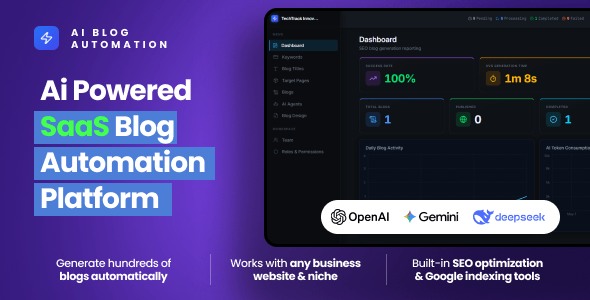
Understanding the anatomy of these scripts helps you evaluate existing solutions and build custom ones. Every effective AI SEO automation script contains several essential components that work together to deliver results.
Data Collection and Parsing Modules
The foundation of any automation script is its ability to gather data from multiple sources. This includes search engine result pages, Google Search Console APIs, website crawlers, and third-party SEO platforms. Advanced scripts use rotating proxies and headless browsers to collect accurate ranking data without triggering bot detection. The parsing layer then extracts structured information from unstructured HTML, JSON, or XML responses, preparing it for analysis.
Machine Learning Analysis Engines
This is where the artificial intelligence aspect comes into play. The analysis engine processes collected data using models trained on historical SEO performance. For example, a script might use a classification model to categorize keywords by search intent, or a regression model to predict the impact of page speed improvements on rankings. Natural language processing models analyze competitor content to identify topical gaps and semantic opportunities.
Action Execution and Reporting Interfaces
Analysis without action produces no value. Effective scripts connect to content management systems, rank tracking platforms, and communication tools to implement changes automatically. They can update meta descriptions, generate internal link suggestions, or send alerts when anomalies are detected. Comprehensive reporting modules track the impact of each automated action, creating a feedback loop that continuously improves the script’s decision-making capabilities.
Types of AI SEO Automation Scripts You Should Know
The SEO landscape contains numerous repetitive tasks, each with dedicated automation solutions. Understanding the categories helps you prioritize which scripts to implement first based on your specific needs.
Keyword Research and Clustering Scripts
These scripts go beyond simple volume data. They analyze search engine results pages for thousands of keywords simultaneously, identifying patterns in content format, user intent, and competitive density. AI-powered clustering algorithms group semantically related keywords into topics, enabling you to create comprehensive content pillars rather than isolated pages. This approach aligns perfectly with modern search engines’ preference for topical authority.
Content Generation and Optimization Scripts
Using large language models, these scripts draft articles, product descriptions, and metadata that match your brand voice while targeting specific keywords. More importantly, they optimize existing content by analyzing readability scores, keyword density, and semantic relevance against top-ranking competitors. The best scripts integrate directly with your content management system, suggesting real-time edits as you write.
Technical SEO Audit and Monitoring Scripts
Technical issues like broken links, duplicate content, and slow page speeds silently erode rankings. AI audit scripts crawl your entire website, prioritizing issues based on their likely impact on search performance. They don’t just report problems; they generate fix recommendations and, in many cases, implement solutions automatically. Continuous monitoring scripts run daily, catching new issues before they affect your search visibility.
Link Building and Digital PR Automation
While link building requires genuine human relationships, the prospecting and outreach process benefits immensely from automation. AI scripts analyze millions of web pages to identify link opportunities based on content relevance, domain authority, and audience overlap. They personalize outreach emails using natural language generation, track responses, and manage follow-up sequences. This automation multiplies your outreach capacity while maintaining personalization at scale.
Practical Benefits of Implementing AI SEO Automation Scripts
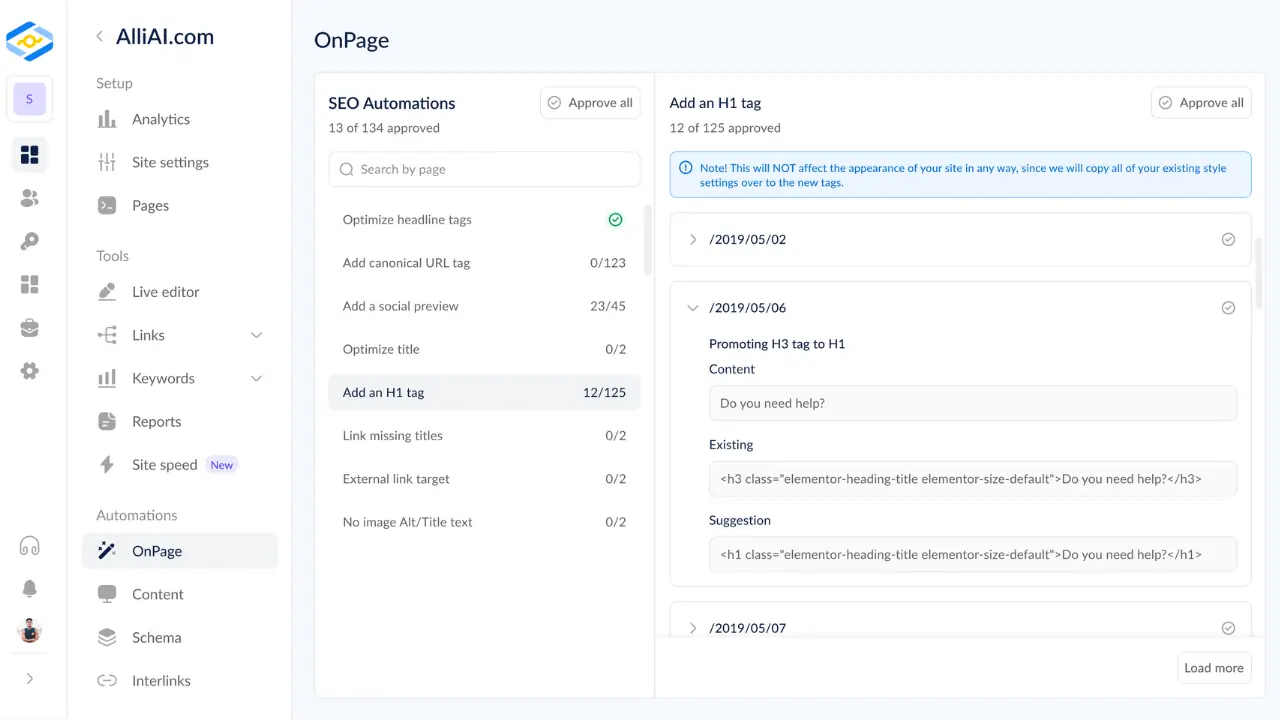
Organizations that successfully integrate these scripts report measurable improvements across multiple dimensions of their search marketing efforts. The benefits extend beyond simple time savings to fundamentally change strategic capabilities.
- Scalability without Headcount Growth: Process unlimited keywords, pages, and backlinks without proportional increases in team size. One analyst with proper scripts outperforms a team of ten manual workers.
- Real-Time Adaptation to Algorithm Updates: When Google releases a core update, AI scripts immediately analyze affected pages, identify patterns in ranking fluctuations, and suggest corrective actions within hours rather than weeks.
- Enhanced Predictive Capabilities: Machine learning models trained on historical data forecast the potential impact of proposed changes, allowing you to prioritize high-impact activities first.
- Reduction of Human Error: Manual SEO work inevitably contains mistakes—misspelled metadata, incorrect canonical tags, or inconsistent formatting. Scripts execute identical logic across all pages, eliminating variability.
- Competitive Intelligence at Scale: Monitor thousands of competitors’ pages daily, tracking their content updates, backlink acquisition, and keyword targeting. This intelligence informs your strategic decisions with current market data.
Limitations and Challenges You Must Consider
AI SEO automation scripts are powerful, but they are not magic solutions. Understanding their limitations prevents unrealistic expectations and poor implementation decisions.
Search engines are increasingly sophisticated at detecting purely automated content. While AI-generated text has improved dramatically, it still lacks the unique insights, personal experiences, and original research that truly differentiate content. Over-reliance on automation for content creation risks producing generic pages that fail to engage users or earn natural backlinks. The most successful strategies use AI for drafting and optimization while maintaining human oversight for final quality control.
Technical complexity presents another barrier. Building custom AI SEO automation scripts requires programming knowledge, understanding of machine learning concepts, and familiarity with various APIs. Many marketing teams lack these skills in-house, leading to dependency on expensive agencies or off-the-shelf tools that may not fit their specific workflows. Additionally, maintaining scripts requires ongoing effort as search engine algorithms, website structures, and API endpoints change over time.
Comparison: AI SEO Automation Scripts vs. Traditional SEO Tools
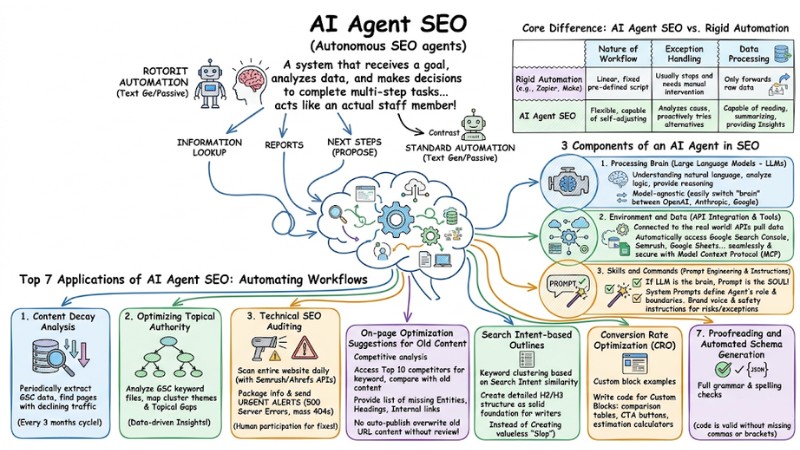
Understanding the differences between AI-powered scripts and conventional SEO software helps you make informed purchasing decisions. Each approach has distinct advantages depending on your use case.
| Feature | AI SEO Automation Scripts | Traditional SEO Tools |
|---|---|---|
| Learning Capability | Adapts based on new data and outcomes | Fixed logic based on initial programming |
| Customization | Fully customizable through code | Limited to vendor-defined features |
| Data Processing | Handles unstructured and massive datasets | Structured reports with predefined metrics |
| Action Implementation | Can execute changes automatically | Provides recommendations for manual action |
| Technical Skill Required | High (programming knowledge needed) | Low (user-friendly interfaces) |
| Cost Structure | Development time plus API costs | Monthly subscription fees |
| Speed of Deployment | Weeks to develop and test | Immediate after signup |
Most mature SEO operations use a hybrid approach. They leverage traditional tools for standard reporting and monitoring while deploying custom AI scripts for unique, high-value tasks that require deep customization. This combination maximizes efficiency while maintaining flexibility.
Step-by-Step Guide to Building Your First AI SEO Automation Script
Creating a functional script requires careful planning and execution. This practical guide walks through the process of building a keyword gap analysis script, a common use case that delivers immediate value.
Step 1: Define Your Objective and Data Sources
Start with a clear question your script must answer. For keyword gap analysis, the objective is identifying keywords where competitors rank but your site does not. Your data sources include your Google Search Console account, competitor URLs, and a keyword database like Ahrefs or SEMrush API. Document the exact metrics you need: keyword, search volume, competitor ranking position, and your current ranking (if any).
Step 2: Set Up Your Development Environment
Python is the preferred language for SEO automation due to its extensive libraries for data processing and machine learning. Install essential packages including requests for API calls, pandas for data manipulation, and scikit-learn for any predictive modeling. Set up a virtual environment to manage dependencies and ensure reproducibility. If you plan to run scripts on a schedule, consider cloud platforms like AWS Lambda or Google Cloud Functions for serverless execution.
Step 3: Write the Data Collection Functions
Your script needs functions to fetch data from each source. For Google Search Console, use the official API with OAuth authentication. For competitor analysis, you might use a headless browser like Selenium to extract keywords from their meta tags and content. Structure your code with error handling to manage rate limits and API failures gracefully. Store raw data in a structured format like CSV or a database for later analysis.
Step 4: Implement the Analysis Logic
This is where AI enhances the script beyond simple comparison. Instead of just listing keywords where competitors rank, use a machine learning model to prioritize opportunities. Train a classifier on historical data that predicts which keywords are most likely to convert based on search intent, competition level, and your site’s topical relevance. This prioritization ensures you focus content creation efforts on keywords with the highest potential return.
Step 5: Create Actionable Output and Automation
The script’s final output should be a prioritized list of keyword opportunities with recommended content titles, target search intent, and estimated difficulty. Automate the delivery by sending this report to your email or Slack channel on a weekly schedule. For advanced setups, integrate with your CMS to create draft content briefs automatically, complete with suggested headings and semantic keywords.
Common Mistakes When Using AI SEO Automation Scripts
Even experienced marketers make errors when implementing automation. Recognizing these pitfalls helps you avoid costly mistakes and maximize the value of your investment.
Ignoring Data Quality and Validation
AI models are only as good as their training data. If your script pulls inaccurate ranking data or incomplete keyword lists, the resulting analysis will be misleading. Always implement data validation steps that check for anomalies, missing values, and inconsistencies. Regularly audit your data sources to ensure they remain reliable. A script that produces confident but wrong recommendations is worse than no script at all.
Over-Automating Content Creation
Publishing AI-generated content without human review is a fast track to losing search visibility. While AI can produce grammatically correct text, it often lacks the depth, originality, and practical experience that readers value. Search engines increasingly prioritize content that demonstrates first-hand experience and unique perspectives. Use AI for outlines, research summaries, and first drafts, but always have subject matter experts review and enhance the final content before publication.
Neglecting Continuous Monitoring and Maintenance
AI SEO automation scripts are not set-and-forget solutions. Search engine algorithms change, competitor landscapes shift, and your website evolves. Scripts that worked perfectly six months ago may now produce outdated recommendations. Establish a regular review schedule for your scripts, checking their outputs against actual performance data. Update your machine learning models with new training data to maintain accuracy. Budget time and resources for ongoing maintenance as part of your SEO operations.
Important Notes for Successful Implementation
Several practical considerations significantly impact the success of your AI SEO automation initiatives. Paying attention to these details separates successful implementations from failed experiments.
Start small and prove value before scaling. Choose one high-impact use case, build a script, and measure its impact over a defined period. Document the time saved and performance improvements. This evidence builds internal support for expanding automation to other areas. Attempting to automate everything at once leads to overwhelmed teams and poorly tested scripts.
Respect search engine guidelines and terms of service. Aggressive scraping or automated content generation that violates Google’s webmaster guidelines can result in penalties. Use official APIs where available, implement reasonable rate limits, and ensure your automated content provides genuine value to users. Ethical automation builds sustainable long-term success, while shortcuts risk your entire domain’s search visibility.
Invest in team training and documentation. The team members who will use and maintain these scripts need proper training. Create comprehensive documentation covering script architecture, data sources, and troubleshooting procedures. This knowledge transfer ensures continuity when team members change and enables continuous improvement of your automation stack.
Frequently Asked Questions About AI SEO Automation Scripts
Do AI SEO automation scripts replace human SEO experts?
No, these scripts replace repetitive tasks, not strategic thinking. Human experts are still essential for interpreting data, making creative decisions, building relationships, and providing the unique insights that differentiate exceptional content. The most effective approach combines AI automation for efficiency with human expertise for quality and strategy.
What programming language is best for building SEO automation scripts?
Python is the dominant choice due to its rich ecosystem of libraries for data processing, machine learning, and API integration. JavaScript with Node.js is also viable, especially for browser automation tasks. The best language depends on your existing technical stack and the specific tasks you need to automate.
How much does it cost to implement AI SEO automation scripts?
Costs vary dramatically based on complexity. Simple scripts using free APIs might cost only development time. Enterprise-level systems with custom machine learning models, cloud infrastructure, and ongoing maintenance can cost tens of thousands of dollars annually. Many teams start with a hybrid approach, using affordable third-party tools that offer API access and building custom scripts for specific gaps.
Can AI SEO automation scripts guarantee first-page rankings?
No legitimate tool or script can guarantee rankings. Search algorithms consider hundreds of factors, many of which are outside your direct control, such as competitor actions and algorithm updates. AI scripts improve your efficiency and decision-making, but they cannot override fundamental issues like poor product-market fit or weak domain authority.
How do I measure the ROI of AI SEO automation scripts?
Track both efficiency gains and performance improvements. Measure time saved on manual tasks, the volume of work completed, and the resulting changes in organic traffic, keyword rankings, and conversions. Compare these metrics against your baseline before automation to calculate a clear return on investment.
Conclusion: The Future of SEO Belongs to Intelligent Automation
AI SEO automation scripts represent the natural evolution of search optimization in an era of massive data and rapid algorithm changes. Marketers who embrace these tools gain significant competitive advantages in speed, scale, and accuracy. The key to success lies in thoughtful implementation—starting with clear objectives, building robust scripts, maintaining human oversight, and continuously refining your approach based on real-world results.
The landscape will continue to evolve as AI models become more sophisticated and search engines adapt. Staying informed about new capabilities and best practices ensures your automation stack remains effective. The organizations that thrive will be those that view AI SEO automation scripts not as a replacement for human expertise, but as a powerful amplifier that enables their teams to focus on the creative, strategic work that truly drives sustainable search success.
Xem thêm:
- AI SEO for Education: The Complete Guide to Dominating Search in 2025
- AI SEO Product Reviews: The Complete Guide to Smarter Buying Decisions
- AI SEO AI Search Reputation: The Complete Playbook for 2025
- WP Trove AI Articles: The Complete Guide to Automated Content Creation
- Gemini vs ChatGPT for SEO: Which AI Tool Truly Elevates Your Search Rankings
Bài viết cùng chủ đề:

AI SEO SEO Automation with Make: The Complete Workflow Guide

AI SEO SEO Automation with Zapier: The Complete Workflow Guide

AI SEO SEO Automation with n8n: The Complete Workflow Guide
AI SEO SEO Automation with Gemini: The Complete Guide to Scaling Organic Growth

AI SEO SEO Automation with Claude: The Complete Guide to Scaling Content in 2025

AI SEO SEO Automation with ChatGPT: The Complete Playbook for 2025

AI SEO & SEO Automation for Affiliate Sites: The 2025 Playbook for Passive Income Growth
AI SEO & SEO Automation for Bloggers: The Complete Guide to Scaling Your Content

AI SEO & SEO Automation for Agencies: The Complete 2025 Playbook

AI SEO and SEO Automation for Ecommerce: The Complete Playbook for 2025

AI SEO & SEO Automation for WordPress: The Complete Playbook for 2025
AI SEO SEO Automation Strategy: The Complete Playbook for 2025

Mastering the AI SEO SEO Automation Process: A Complete Guide to Scaling Organic Growth
AI SEO SEO Automation System: The Complete Guide to Scaling Organic Growth in 2025
AI SEO SEO Automation Platform: The Complete Guide to Scaling Organic Growth in 2025
AI SEO SEO Automation Software: The Complete Guide to Scaling Organic Growth in 2025















