
No products in the cart.
Gemini vs ChatGPT for SEO: Which AI Tool Truly Elevates Your Search Rankings
29
Jul
Jul
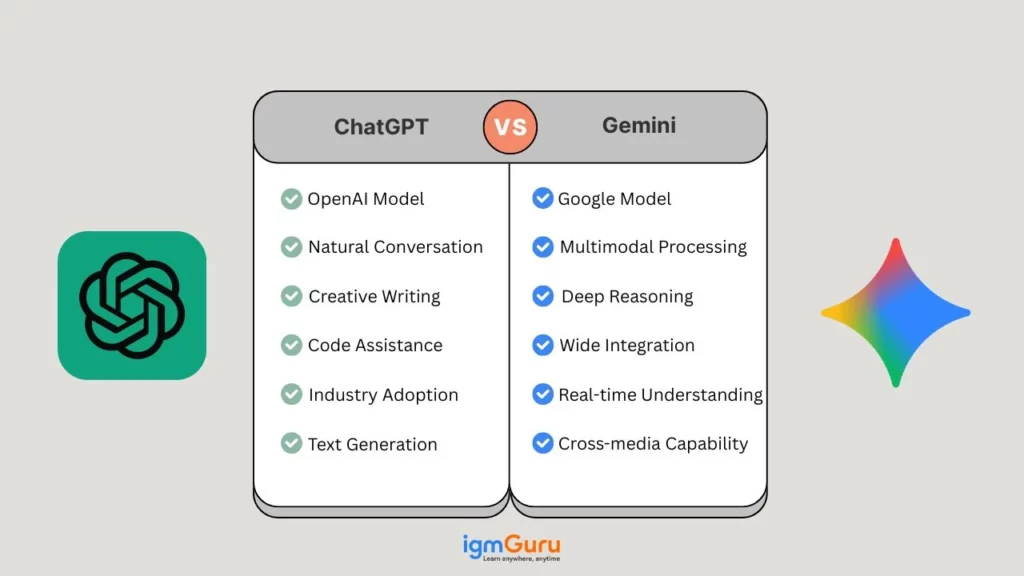
Every SEO professional now faces the same question when building a modern toolkit: Gemini vs ChatGPT for SEO. Both language models promise to slash research time, generate perfect meta tags, and solve technical puzzles, but they deliver very different results depending on the task. This article dissects their real-world capabilities, limitations, and the strategic workflows that combine both to outperform competitors in organic search.
Understanding the Core Differences Between Gemini and ChatGPT
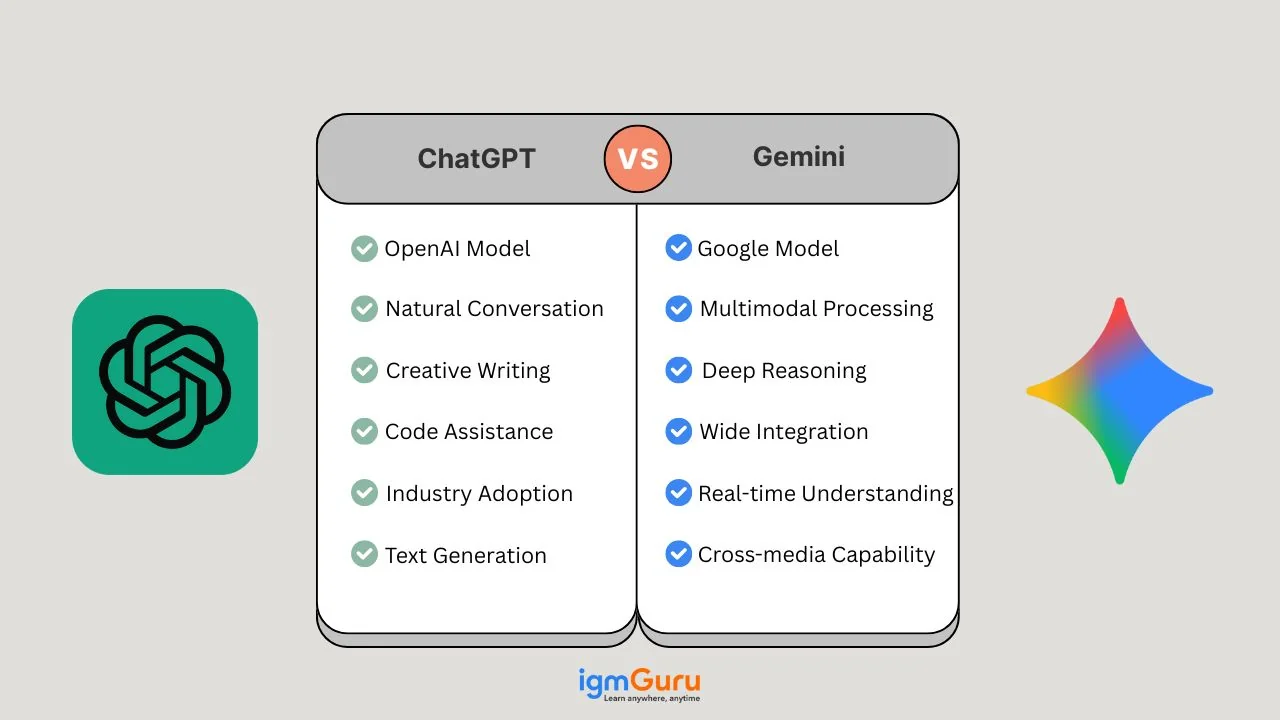
Before comparing output quality, it is essential to understand how these models access and process information. ChatGPT, developed by OpenAI, originally relied on a training data cut-off with no live internet access, but with GPT-4 and the browsing beta it can now retrieve current web pages. Google’s Gemini (formerly Bard) natively integrates with Google Search, drawing on the live index and Knowledge Graph to provide responses that reflect the current state of the web.
This architectural split fundamentally changes how each tool handles time-sensitive SEO tasks such as checking trending keywords, verifying algorithm updates, or analyzing competitor sites. Gemini often surfaces recent articles and real-time data, while ChatGPT’s browsing mode requires manual activation and sometimes struggles with paywalled or dynamic JavaScript content.
Another critical distinction lies in multimodal capabilities. Gemini can process text, images, and code concurrently through its Ultra model, allowing SEOs to upload screenshots of analytics dashboards or site architecture diagrams for direct analysis. ChatGPT’s vision features in GPT-4 are powerful but still limited to certain contexts and often require workarounds for complex charts.
How Gemini and ChatGPT Perform Across Key SEO Workflows
Keyword Research and Intent Classification
Keyword research demands more than a list of related terms. Both Gemini and ChatGPT generate seed keyword ideas rapidly, but their classification of search intent differs markedly. ChatGPT, when prompted with clear frameworks, tends to produce structured clusters based on traditional informational, navigational, and transactional categories. It excels at brainstorming long-tail variations that feel human-written because it mimics the natural language patterns found in forums and Q&A sites.
Gemini, by contrast, leverages Google’s own understanding of intent. It often groups queries according to the SERP features currently dominating those terms. For instance, when asked about “best running shoes,” Gemini instinctively knows that a shopping carousel and review articles dominate the results, so it suggests content angles that match what Google already rewards. This gives its keyword recommendations a tighter alignment with what actually ranks.
A practical technique involves asking each tool the same query: “Analyze the search intent behind [keyword] and suggest content structures that would satisfy it.” Gemini typically references real-time SERP formats, while ChatGPT relies on its trained understanding, sometimes missing newly emerged video or local pack dominance.
Content Brief and Outline Generation
SEO content briefs demand comprehensiveness, competitor awareness, and adherence to E-E-A-T principles. ChatGPT produces remarkably detailed outlines when fed a clear persona and SERP competitor URLs. Its strength lies in mimicking expert editorial structures and suggesting statistics, quotes, or data points to include, although those data points must be verified since they may be hallucinated.
Gemini holds an advantage because it can read and summarize actual competitor pages from the live web without needing a separate browsing plugin. You can give it three ranking URLs and ask for a merged content outline that surpasses them. The tool will identify common H2s, gaps in coverage, and unique angles the competitors miss. This drastically reduces the time spent manually scraping and auditing SERP content.
Technical SEO Audits and Schema Markup
When troubleshooting technical issues such as incorrect canonical tags, hreflang annotations, or structured data errors, both tools provide useful code snippets. ChatGPT’s code generation is mature, producing clean JSON-LD schema for articles, products, and events that validates against Google’s testing tool. It can also suggest regex patterns for server-side redirects or robots.txt directives.
Gemini’s advantage in technical SEO lies in its ability to interpret a full screenshot of a developer console error or a browser’s “View Source” output if uploaded as an image. Its multimodal engine can visually identify broken elements and then produce corrected code. This is a game-changer for SEOs who prefer working visually rather than copying and pasting raw source code. Additionally, Gemini’s native connection to Google’s algorithms means it often nuances advice like “use self-referencing canonical here because Google may ignore the cross-domain variant in your specific case.”
On-Page Optimization and Meta Data Creation
Both Gemini and ChatGPT craft compelling title tags and meta descriptions when given target keywords and character limits. ChatGPT tends to produce emotional, click-driven copy because its training data includes high-performing ad copy and social media headlines. It balances power words with keyword inclusion incredibly well.
Gemini, however, shows a deeper understanding of Google’s truncation rules and pixel-width limits. It can preview how a title tag might appear in mobile versus desktop SERPs and adjust punctuation accordingly. When asked to optimize for featured snippets, Gemini structures answers in the concise, bulleted format that Google loves to pull into position zero. A small but meaningful edge is Gemini’s instinct to include dates and statistics where appropriate, mirroring the elements that tend to increase CTR in real SERPs.
Deep-Dive Comparison Table: Gemini vs ChatGPT for SEO Tasks

| SEO Capability | Gemini (Google) | ChatGPT (OpenAI) |
|---|---|---|
| Real-time keyword data | Direct tie to Google Search & Trends; suggests keywords currently rising | Requires browsing mode; may not capture granular volume shifts |
| Competitor content analysis | Reads live URLs, identifies content gaps against current SERP | Needs manual URL input via plugin or browsing; some pages blocked |
| Schema markup generation | Good, with visual debugging via screenshot; validates code quickly | Excellent, with many ready-to-use templates; strong documentation style |
| Writing tone for SEO | Factual, concise; mirrors Google’s preferred straightforward style | Engaging, narrative; can adopt any brand voice convincingly |
| Multimodal input (images) | Seamless; analyze graphs, site architecture images, SERP screenshots | GPT-4 with vision; works but not yet fully integrated into all workflows |
| Factual accuracy risk | Lower hallucination on branded entities because of Knowledge Graph | Moderate; provides believable but sometimes incorrect statistics |
| Integration with SEO tools | Limited; available in Google Workspace but no direct API for SEO tools yet | Extensive; connects with Ahrefs, SEMrush, SurferSEO via plugins/API |
Benefits and Limitations of Using Gemini for SEO
Benefits: The tight integration with Google’s ecosystem gives Gemini an unmatched understanding of what triggers specific SERP features. When planning a content piece, you can ask, “What does Google’s algorithm prioritize for this query right now?” and receive guidance based on actual ranking patterns. The ability to drop in a screenshot of a competitor’s page structure and have Gemini dissect it visually reduces back-and-forth. Moreover, Gemini Ultra’s reasoning capabilities are proving excellent for diagnosing why a site’s organic traffic dropped, combining signals in a way that mimics a senior SEO analyst.
Limitations: Gemini is still conservative in its responses, often refusing to speculate or generate hypothetical ranking scenarios. It can be overly broad when asked for step-by-step technical fixes, requiring very specific prompts to get actionable depth. Gemini does not natively integrate with third-party SEO tools like Screaming Frog or Ahrefs, so data pulling is a manual process. Also, while its connection to Google gives it freshness, it may mirror indexing biases – if Google hasn’t indexed a page, Gemini may claim a piece of information doesn’t exist.
Benefits and Limitations of Using ChatGPT for SEO
Benefits: ChatGPT’s versatility is its superpower. Plugins allow it to fetch live keyword difficulty scores from Moz, pull backlink profiles, and even trigger automated crawls. This creates an all-in-one SEO co-pilot experience. Its ability to switch between creating detailed technical guides and persuasive sales copy without losing coherence is unmatched. For international SEO, ChatGPT’s translation and localization quality across dozens of languages often surpasses Gemini’s current performance, making it ideal for multilingual content strategies.
Limitations: Without carefully engineered prompts, ChatGPT can produce “fluff” that lacks actionable insight. Its tendency to hallucinate data – like attributing made-up statistics to real studies – poses a significant risk for E-E-A-T if not fact-checked. Complex technical audits still require human oversight because ChatGPT might suggest outdated solutions. And while browsing mode exists, it can be slow and occasionally blocked by anti-bot measures, restricting real-time competitor analysis.
Practical Application: A Combined Workflow for Maximum SEO Impact
The true power emerges when you stop viewing Gemini vs ChatGPT for SEO as an either-or choice and instead treat them as complementary instruments. A proven workflow for an SEO project might look like this: start the research phase with Gemini. Use it to scan the current SERP, identify ranking patterns, trending questions from People Also Ask, and new featured snippet opportunities. Feed those insights into ChatGPT with a plugin like WebPilot or Ahrefs to pull quantitative data such as search volume, keyword difficulty, and referring domains. ChatGPT then creates a detailed data-backed content brief that includes semantic entities and NLP-friendly corpus terms.
For content creation, draft the article in ChatGPT using a well-defined tone and structure. Run critical sections through Gemini for fact-checking against live sources. Ask Gemini to verify statistics, dates, and quoted sources by checking the current web. Once the draft is complete, use Gemini’s multimodal analysis by uploading a screenshot of the article preview and asking it to evaluate mobile readability and featured snippet potential. For technical implementation, feed the structured data generated by ChatGPT into Gemini to cross-check against any known Google guidelines updates. This dual-review process dramatically reduces errors while accelerating each stage.
Common Mistakes When Using AI for SEO and How to Avoid Them
Mistake 1: Publishing AI Output Without Human Expertise Overlay
Even the best AI cannot replace the nuanced judgment of an experienced SEO. Tools will suggest keywords that have no commercial traction or recommend internal linking that creates orphaned pages. Always apply a human editorial check that considers brand voice, user journey, and conversion goals. Layer your own first-party data and proprietary insights over AI-generated drafts to create unique value that cannot be replicated.
Mistake 2: Ignoring Fact Verification Because the Text Sounds Authoritative
Both Gemini and ChatGPT present information with high confidence. This leads many to skip fact-checking, resulting in content that cites non-existent studies or incorrect regulatory guidelines. Implement a verification protocol: every statistic, study mention, and quoted metric must be manually traced back to the original source document. Use Gemini’s live search to confirm the existence of a source before publication.
Mistake 3: Using the Same Prompt for Both Tools and Expecting Similar Results
Because the engines are architected differently, a prompt that wrings deep insight from ChatGPT may yield a superficial answer from Gemini, and vice versa. For technical tasks, provide Gemini with structured, context-rich context including images when possible. For creative content tasks, give ChatGPT extensive examples of desired output so it can mimic style and depth. Customizing the prompting approach is not a nice-to-have – it’s the key to unlocking each tool’s potential.
Important Notes for Long-Term SEO Success with AI
Google’s guidance on AI-generated content is clear: content created primarily to manipulate rankings is against its policies, regardless of the tool used. The value you add matters enormously. When you use Gemini vs ChatGPT for SEO, the output should be a starting point that is refined with genuine expertise, personal experience, and trustworthy sourcing. Disclosing AI assistance is not required, but demonstrating first-hand knowledge through author bios, original images, and unique case studies will build both reader trust and search engine confidence.
Regularly revisit your AI-assisted content as both models update their training data and capabilities. ChatGPT’s cutoff has moved forward, and Gemini’s connection to live information gets more precise. Audit old AI-generated posts, update statistics, and add new insights that reflect the current reality. This is not just a best practice; it signals to Google that your site is actively maintained and relevant.
Finally, remember that AI is not a substitute for strategy. The tools can tell you what to optimize, but they cannot define your unique value proposition, build editorial authority, or earn high-quality backlinks. Use the time saved on routine tasks to deepen your topical authority and create multimedia content that stands apart from the increasingly AI-flooded web.
Frequently Asked Questions
Which is better for SEO content writing, Gemini or ChatGPT?
ChatGPT is generally stronger for long-form, engaging content because it mimics human narrative patterns and adapts to brand voice more fluidly. Gemini excels at factual, concise writing that aligns with featured snippet formats. The best approach uses ChatGPT for drafting and Gemini for fact-checking and optimization toward SERP features.
Can Gemini replace traditional SEO tools like Ahrefs or SEMrush?
No. Gemini cannot provide quantitative metrics such as keyword difficulty, search volume, or backlink profiles. It offers qualitative insights based on Google’s index but lacks the proprietary databases and crawling infrastructure of dedicated SEO platforms. It is a complementary intelligence layer, not a replacement for data-heavy tools.
How accurate is AI-generated schema markup for SEO?
Both tools generate valid JSON-LD with high accuracy when given clear instructions about the content type. However, you should always test the markup in Google’s Rich Results Test tool and verify against the official schema.org documentation. Incorrect schema can lead to manual actions, so treat AI output as a draft that needs validation.
Does Gemini use real-time Google data for SEO suggestions?
Yes, Gemini draws on the live Google Search index and the Knowledge Graph, which means it can reference recent articles, trending topics, and new SERP features as they appear. This makes it particularly useful for identifying emerging keywords and content gaps that older training data would miss.
Can ChatGPT analyze my competitors’ SEO strategy?
With the browsing plugin or through manual URL sharing, ChatGPT can read and summarize competitor pages, identify their main topics, and suggest gaps. However, it may not accurately read JavaScript-rendered content or bypass paywalls. For a full technical competitor analysis, combine ChatGPT’s summarization with data from a crawler like Screaming Frog.
Is AI-generated content penalized by Google?
Google does not penalize content simply for being AI-generated. It penalizes low-quality, unhelpful content created to manipulate rankings. If AI output is heavily edited, enriched with original expertise, and serves the user’s intent, it can rank well. The key is demonstrating E-E-A-T through first-hand experience and authoritative sourcing.
Conclusion
The debate of Gemini vs ChatGPT for SEO does not end with a definitive winner. Gemini brings Google’s live ecosystem intelligence and a multimodal understanding that feels like having a direct line to the search algorithm’s preferences. ChatGPT offers creative depth, tool integrations, and a writing fluency that can turn rough briefs into publication-ready drafts. The SEOs who thrive are those who master both, weaving them into a seamless workflow that speeds up execution without sacrificing strategic oversight. Treat these AIs as junior analysts and tireless assistants. Your judgment, experience, and unique perspective remain the irreplaceable ingredients that transform machine output into content that earns traffic, trust, and top rankings.
Xem thêm:
- AI SEO Citation Building: The Complete Guide to Automated Local Search Dominance
- Mastering AI Search Ranking: How Artificial Intelligence is Redefining SEO Success
- AI SEO Social Distribution: The Complete Guide to Automated Content Amplification
- AI SEO NLP Keyword Analysis: The Complete Guide to Smarter Search Rankings
- AI Entity SEO: The Definitive Blueprint for Ranking in a Semantic Search World
Bài viết cùng chủ đề:

AI SEO SEO Automation with Make: The Complete Workflow Guide

AI SEO SEO Automation with Zapier: The Complete Workflow Guide

AI SEO SEO Automation with n8n: The Complete Workflow Guide
AI SEO SEO Automation with Gemini: The Complete Guide to Scaling Organic Growth

AI SEO SEO Automation with Claude: The Complete Guide to Scaling Content in 2025

AI SEO SEO Automation with ChatGPT: The Complete Playbook for 2025

AI SEO & SEO Automation for Affiliate Sites: The 2025 Playbook for Passive Income Growth
AI SEO & SEO Automation for Bloggers: The Complete Guide to Scaling Your Content

AI SEO & SEO Automation for Agencies: The Complete 2025 Playbook

AI SEO and SEO Automation for Ecommerce: The Complete Playbook for 2025

AI SEO & SEO Automation for WordPress: The Complete Playbook for 2025
AI SEO SEO Automation Strategy: The Complete Playbook for 2025

Mastering the AI SEO SEO Automation Process: A Complete Guide to Scaling Organic Growth
AI SEO SEO Automation System: The Complete Guide to Scaling Organic Growth in 2025
AI SEO SEO Automation Platform: The Complete Guide to Scaling Organic Growth in 2025
AI SEO SEO Automation Software: The Complete Guide to Scaling Organic Growth in 2025















