
No products in the cart.
AI SEO Automation Workflow: The Complete Blueprint for Scaling Organic Growth in 2025
31
Jul
Jul
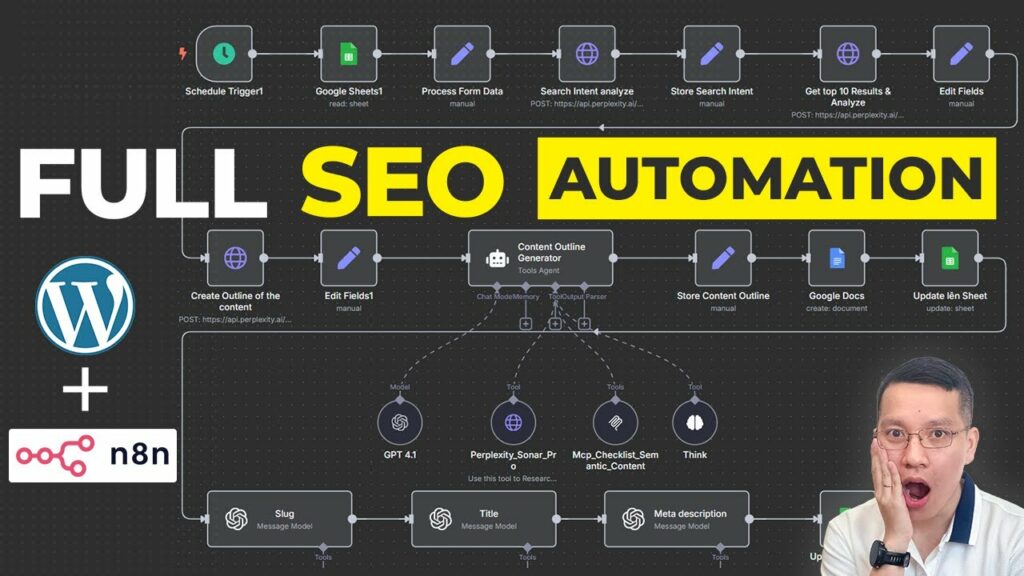
An AI SEO automation workflow is no longer a competitive advantage; it is a necessity for teams that want to scale organic traffic without proportionally scaling headcount. The modern search landscape shifts daily, and manual processes for keyword research, content optimization, and technical audits simply cannot keep pace. By integrating artificial intelligence into your operational pipeline, you move from reactive publishing to proactive, data-driven growth. This guide breaks down the exact components, tools, and processes required to build a system that saves hundreds of hours while improving ranking accuracy.
What is an AI SEO Automation Workflow?
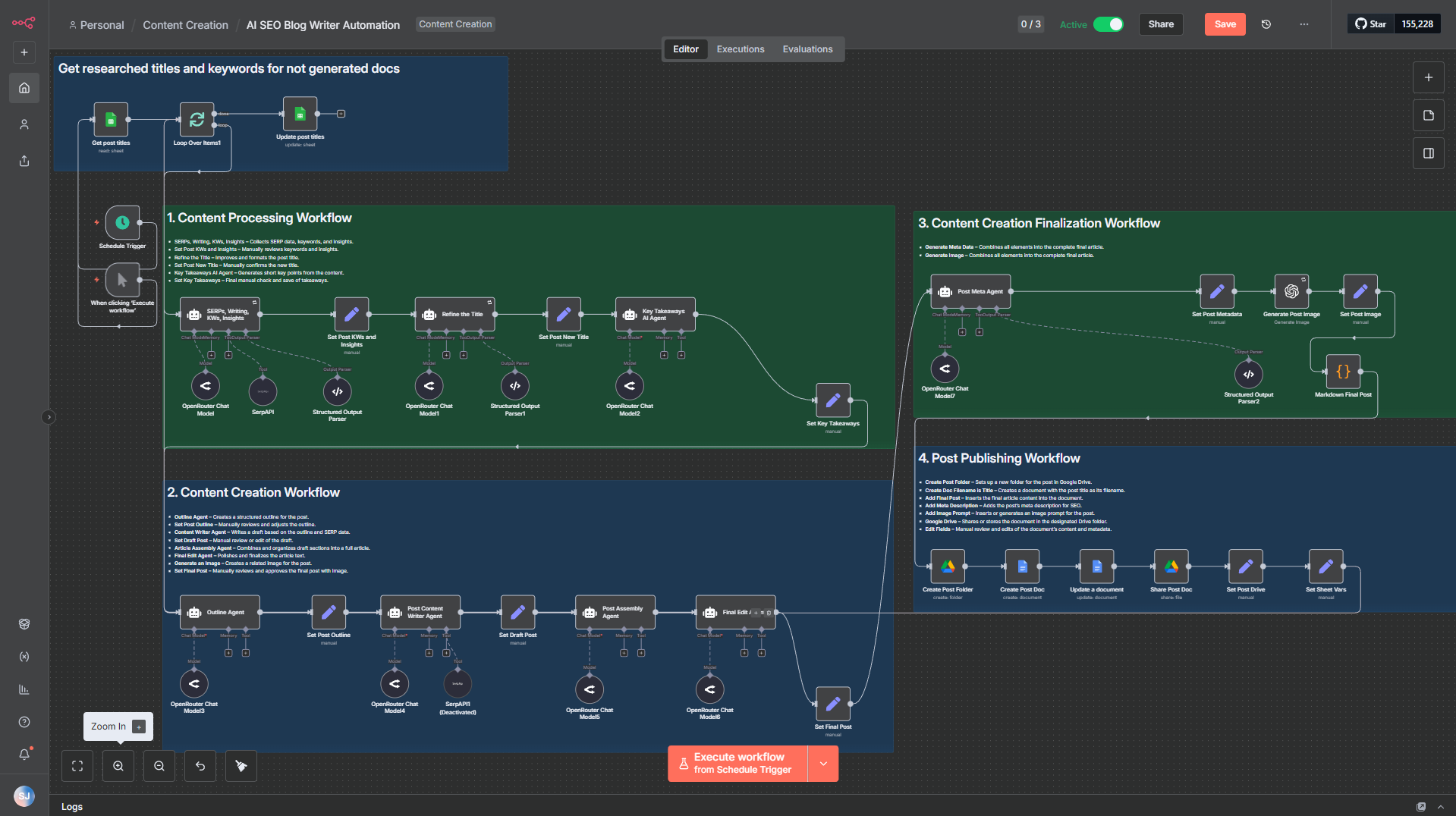
An AI SEO automation workflow is a structured sequence of tasks where artificial intelligence handles repetitive, data-heavy, or pattern-recognition steps, while human experts focus on strategy, creativity, and final quality control. This is not about replacing the SEO manager; it is about augmenting their capabilities. The workflow connects different software tools—such as content generators, rank trackers, and schema validators—into a single, automated pipeline that runs continuously.
The core value lies in speed and consistency. A manual workflow might take three days to produce a content brief; an automated one does it in thirty minutes. More importantly, AI systems can analyze thousands of SERP features, backlink profiles, and user intent signals simultaneously, something a human cannot do at scale. The output is a system that identifies opportunities, executes changes, and measures results with minimal human intervention.
Why Traditional SEO Processes Fail to Scale
Traditional SEO relies on linear, manual execution. An expert performs a keyword audit, writes a brief, a writer creates content, an editor reviews it, and a webmaster publishes it. This linear model breaks down when you need to target 500 keywords instead of 50. The bottleneck is not the writing; it is the research, the internal linking, the meta data generation, and the performance tracking.
Furthermore, search engine algorithms now prioritize entity-based relevance and semantic depth. Manual keyword stuffing is obsolete. AI systems understand topical authority, co-occurrence, and natural language processing (NLP) signals. Without automation, your team spends 80% of its time on administrative tasks and only 20% on actual optimization strategy. An AI SEO automation workflow flips that ratio, allowing experts to focus on high-level decisions like market positioning and content differentiation.
Core Components of an Effective AI SEO Automation Workflow
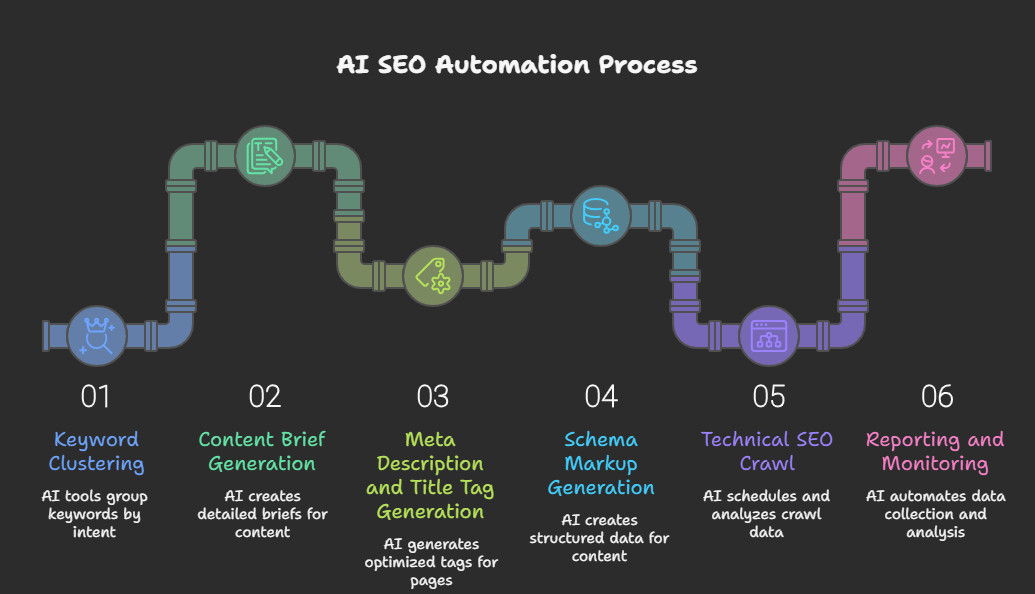
Building a robust workflow requires understanding its four foundational pillars. Each component handles a specific part of the SEO lifecycle, from discovery to maintenance.
1. Automated Keyword and Topic Clustering
This is the research phase. Instead of manually typing keywords into a tool, AI scrapes search engine results pages (SERPs), analyzes autocomplete suggestions, and mines “People Also Ask” boxes. The system then clusters these keywords into topical groups based on search intent and semantic similarity. For example, an AI tool can take 10,000 raw keywords and automatically group them into 150 clusters, each representing a distinct article or landing page.
The output is a data-driven content map. The AI identifies which clusters have high commercial intent, which are informational, and which have low competition but high traffic potential. This removes guesswork and ensures every piece of content targets a specific, viable opportunity.
2. AI-Powered Content Generation and Optimization
Once the topic cluster is defined, the workflow moves to content creation. Large Language Models (LLMs) draft initial versions of articles, product descriptions, or meta tags. However, the true power lies in optimization. The AI analyzes the top 10 ranking pages for a keyword and extracts their NLP entities, readability scores, and content structure. It then generates an outline that covers all necessary subtopics while maintaining a unique angle.
This component also handles on-page elements automatically. The system generates title tags, meta descriptions, alt text, and internal link anchors. It ensures keyword density is natural and that the content passes Google’s helpful content guidelines by prioritizing user value over search engine manipulation.
3. Technical SEO Monitoring and Issue Resolution
Technical audits are tedious but critical. An automated workflow uses crawlers that simulate Googlebot to identify broken links, duplicate content, missing schema, slow-loading pages, and indexation issues. The AI does not just flag the problem; it often provides the fix. For instance, if it detects a missing meta description, it generates one. If it finds a redirect chain, it suggests the shortest path.
This component runs on a schedule—daily, weekly, or monthly—depending on the site size. It integrates with project management tools like Jira or Slack to automatically create tickets for the development team. This ensures that technical debt does not accumulate and that crawl budget is optimized for important pages.
4. Automated Reporting and Adaptive Learning
The final component is the feedback loop. The workflow tracks keyword rankings, organic traffic, conversion rates, and engagement metrics. It then correlates these results with the actions taken. Did the new internal linking structure improve rankings? Did the updated meta description increase click-through rate?
This data feeds back into the AI models. The system learns which content formats perform best for specific queries and adjusts future recommendations accordingly. This is the “automation” part of the workflow—it is a self-improving system that gets smarter with every cycle.
Step-by-Step Guide to Building Your Workflow
Implementing this system requires a phased approach. Trying to automate everything at once leads to chaos. Follow this practical roadmap to transition from manual to automated SEO.
Step 1: Audit Your Current Stack and Identify Bottlenecks
List every task you perform in a month. Categorize them into “repetitive” and “strategic.” Repetitive tasks include pulling rank reports, checking for broken links, and writing meta descriptions. Strategic tasks include deciding which new markets to enter or how to position a flagship product. Your goal is to automate 80% of the repetitive tasks first.
Choose tools that integrate well with each other. A typical stack includes a rank tracker (like Ahrefs or Semrush), a content generator (like Jasper or ChatGPT API), a crawler (like Screaming Frog or Sitebulb), and an automation platform (like Zapier or Make). Ensure these tools have open APIs so data flows seamlessly.
Step 2: Automate the Research Phase
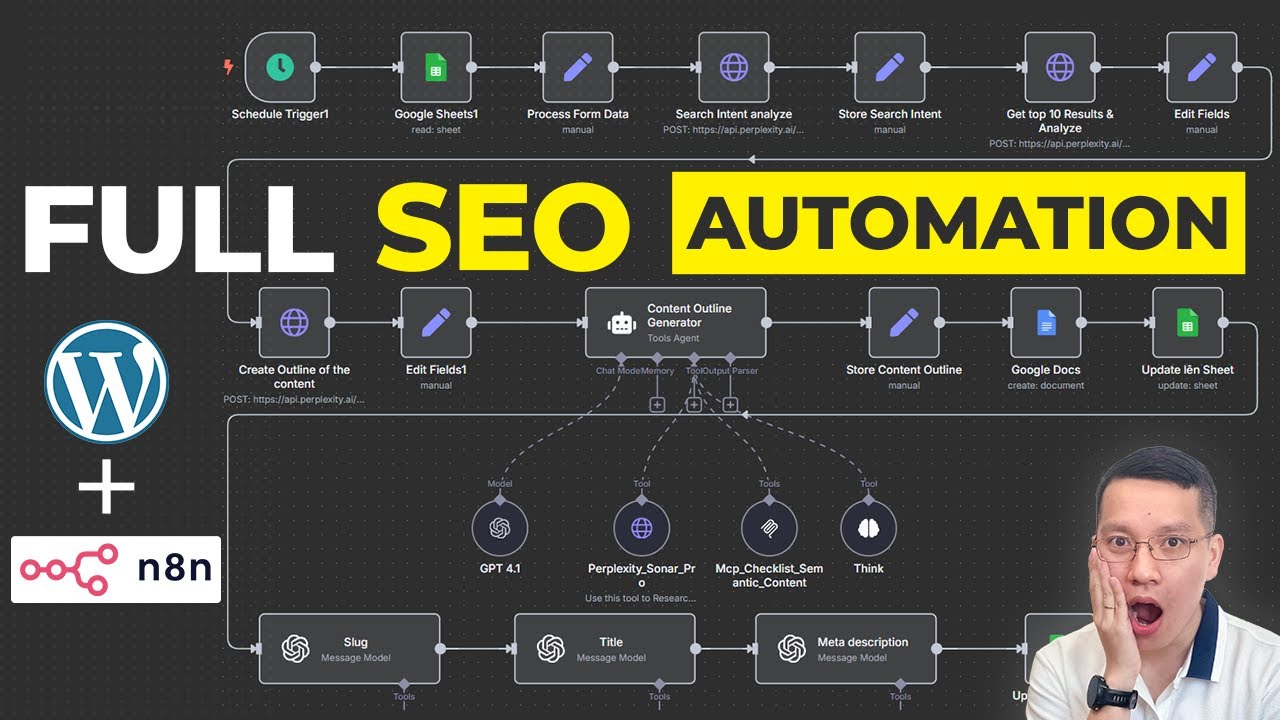
Set up a trigger in your automation platform. For example, when a new keyword list is uploaded to a Google Sheet, the AI tool automatically enriches it with search volume, difficulty, and intent data. The system then clusters the keywords and writes a brief for each cluster. This brief includes the target audience, suggested word count, related questions, and competitor analysis.
This step alone reduces research time by 90%. Instead of spending a week on a content calendar, you have a complete, prioritized list in one afternoon.
Step 3: Implement AI-Assisted Content Production
Integrate your LLM with your Content Management System (CMS). The workflow should be: the AI drafts the article based on the brief, a human editor reviews and adds unique insights, and then the AI generates the final HTML, meta tags, and image alt text. Use a human-in-the-loop model to ensure factual accuracy and brand voice consistency.
Set up automated internal linking rules. The AI scans the new article and automatically links to 3-5 existing relevant pages using optimized anchor text. This distributes link equity and improves crawlability without manual effort.
Step 4: Schedule Technical Audits and Alerts
Configure your crawler to run weekly. Set up alerts for critical errors like 500 status codes or malware detection. For non-critical issues like missing alt text, the AI should automatically fix them and log the change. This creates a “self-healing” website where minor issues are resolved before they impact user experience.
Use the automation platform to send a daily digest to your team. This digest should highlight what was fixed, what needs human approval, and any sudden drops in traffic that might indicate a penalty or algorithm update.
Step 5: Close the Loop with Predictive Analytics
After 60-90 days of data collection, your workflow should start predicting outcomes. For example, the AI can forecast that a specific piece of content will reach position 3 in 14 days based on current velocity. It can also identify content that is decaying and needs a refresh.
Set up automated “content refresh” triggers. If a page drops from position 5 to position 15 in a week, the AI flags it, suggests new sections to add based on current SERP analysis, and sends it to the editor for a quick update. This keeps your site fresh and competitive.
Benefits and Limitations of AI SEO Automation
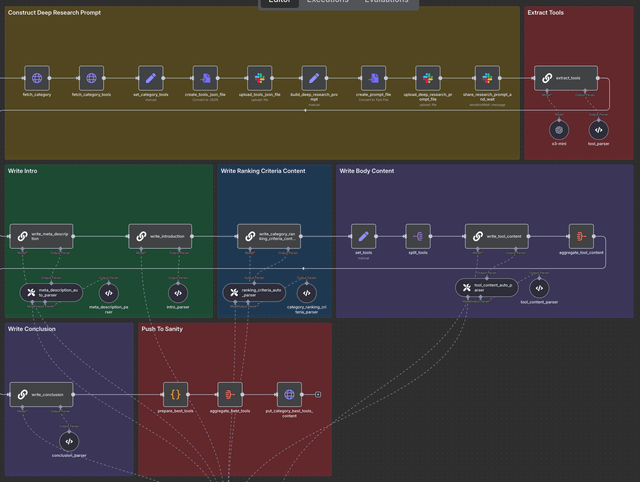
Understanding the trade-offs is essential for setting realistic expectations. The benefits are significant, but the limitations are equally important to acknowledge.
Key Benefits
- Massive Time Savings: Automating research, reporting, and technical fixes frees up 20+ hours per week for a dedicated SEO manager.
- Improved Accuracy: AI does not make typos in meta tags or forget to compress images. It follows the rules consistently.
- Scalability: You can manage a 10,000-page site with the same team size as a 500-page site.
- Real-Time Adaptation: The workflow reacts to algorithm updates and SERP changes within hours, not weeks.
- Data-Driven Decisions: Every action is backed by analytics, reducing the risk of subjective guesswork.
- Lack of True Creativity: AI generates content based on existing data. It cannot invent a completely new industry perspective or conduct original interviews.
- Contextual Blind Spots: AI may miss cultural nuances, humor, or brand-specific jargon that a human expert would catch.
- Dependency on Data Quality: If your tracking tools provide inaccurate data, the A Garbage in, garbage out.
- Initial Setup Complexity: Building the workflow requires technical skills in APIs, data mapping, and tool configuration. The learning curve can be steep.
- Risk of Over-Optimization: Without human oversight, AI might create content that is too formulaic, leading to a loss of reader trust.
Critical Limitations
AI SEO Automation Workflow vs. Traditional Manual SEO
To visualize the difference, consider the following comparison across key operational dimensions.
| Operational Dimension | Traditional Manual SEO | AI SEO Automation Workflow |
|---|---|---|
| Keyword Research Speed | 3-5 days for 100 keywords | 2 hours for 10,000 keywords |
| Content Production | 1 article per day per writer | 5 articles per day per editor (AI drafts) |
| Technical Audit Frequency | Monthly manual crawl | Daily automated crawl with auto-fixes |
| Error Rate | High (human fatigue) | Low (consistent rule-based execution) |
| Adaptation to Algorithm Updates | 1-2 weeks to analyze and react | 24-48 hours to adjust strategy |
| Cost Efficiency | High labor cost per task | High software cost, low labor cost |
| Creative Strategy | Excellent (human intuition) | Limited (data extrapolation only) |
The table illustrates that automation excels in speed, consistency, and scale, while manual processes retain the edge in strategic innovation and emotional intelligence. The winning approach is a hybrid model where AI handles the heavy lifting and humans provide the strategic direction.
Common Mistakes and How to Avoid Them
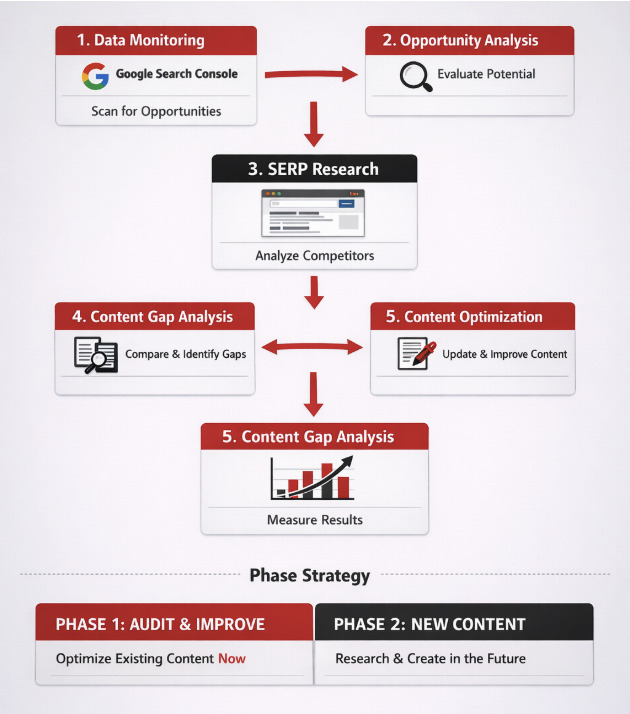
Many teams fail to realize the full potential of an AI SEO automation workflow due to avoidable errors. Recognizing these pitfalls early will save you time and frustration.
Mistake 1: Automating a Broken Process
If your current manual workflow is inefficient, automating it will only make you fail faster. You will produce more low-quality content or generate more irrelevant reports. Before introducing AI, map out your ideal process. Fix the logical flow first, then add automation.
Solution: Spend two weeks documenting your current process. Identify where tasks get stuck or where information is lost. Redesign the process for clarity and efficiency, then apply AI tools to the new design.
Mistake 2: Ignoring Human Review for AI-Generated Content
Publishing AI content without editing leads to factual errors, repetitive phrasing, and a loss of brand voice. Google’s algorithms can detect low-value AI content, and users will bounce quickly. The goal is to use AI as a first draft generator, not a final publisher.
Solution: Implement a mandatory human review step. The editor’s job is to add original data, personal experience, and unique insights. They should also verify all statistics and claims made by the AI.
Mistake 3: Over-Automating Internal Links
While automated internal linking is efficient, it can create unnatural anchor text patterns. If every link says “click here” or uses exact match keywords, it looks spammy. Search engines may devalue these links.
Solution: Set rules for the AI to vary anchor text. Use a mix of branded, generic, and partial-match anchors. Also, limit the number of links per article to a natural number, typically 3-5.
Mistake 4: Neglecting the Feedback Loop
An automation workflow is not a “set it and forget it” system. If you do not feed performance data back into the AI, it will continue making the same mistakes. For example, if the AI keeps generating listicles but your audience prefers in-depth guides, the system needs to learn this.
Solution: Schedule a monthly review of the AI’s output. Analyze which automated recommendations led to ranking improvements and which did not. Adjust the AI’s parameters and prompts accordingly.
Important Notes for Successful Implementation
Beyond the technical setup, several strategic considerations determine the long-term success of your AI SEO automation workflow.
Data Privacy and Compliance: Ensure your AI tools comply with GDPR and CCPA. If you are using APIs to send data to third-party LLMs, anonymize user data before transmission. This protects your business from legal liabilities.
Tool Integration Complexity: Not all tools play nicely together. Before purchasing, verify that your chosen tools have native integrations or robust APIs. Using a middleware like Zapier can bridge gaps, but it adds latency and potential points of failure.
Cost Management: API calls for LLMs and large-scale crawling can be expensive. Monitor your usage. Set up budget alerts in your cloud console or automation platform. Optimize prompts to use fewer tokens without sacrificing output quality.
Human Skill Development: Your team needs new skills to manage this workflow. They must learn how to write effective prompts, interpret AI-generated analytics, and troubleshoot integration issues. Invest in training. An AI workflow is only as good as the people who manage it.
Frequently Asked Questions
What is the best AI tool for SEO automation?
T For content generation, tools like Jasper and Copy.ai are popular. For technical audits, Semrush and Ahrefs offer automation features. For workflow orchestration, Zapier and Make are essential. The best approach is to use a combination of specialized tools connected via an automation platform. Evaluate your primary bottleneck—whether it is content, technical, or reporting—and choose the tool that addresses that first.
Will AI replace SEO professionals?
No, A The repetitive tasks of data collection and basic reporting will be automated. The professional’s new role focuses on strategy, creative content direction, and interpreting AI insights. Professionals who adapt and learn to work with A Those who refuse to adapt may find their skills becoming obsolete.
How long does it take to set up an AI SEO automation workflow?
The initial setup can take anywhere from two weeks to two months, depending on the complexity of your site and the number of tools you integrate. The research and content generation components can be set up in a few days. The technical audit and reporting components take longer because they require API connections and data mapping. The adaptive learning component requires at least 60 days of data to become accurate. Plan for a phased rollout, starting with the highest-impact, easiest-to-implement components.
Is AI-generated content penalized by Google?
Google does not penalize AI-generated content per se; it penalizes low-quality content regardless of how it is produced. If AI content is helpful, original, and demonstrates E-E-A-T (Experience, Expertise, Authoritativeness, Trustworthiness), it can rank well. However, if AI is used to mass-produce thin, unhelpful articles, it will be flagged as spam. The key is to use AI as a tool for efficiency, not as a replacement for human expertise and editorial judgment.
What is the ROI of implementing AI SEO automation?
The ROI is significant but varies by industry. Companies typically see a 30-50% reduction in time spent on manual SEO tasks. This translates to either cost savings (fewer contractors needed) or increased output (more content published). For a mid-sized company, this can mean an additional 20-30 high-quality articles per month without hiring new staff. The long-term ROI is even higher because the system continuously learns and improves, compounding its benefits over time.
Conclusion
An AI SEO automation workflow transforms organic search from a chaotic, manual effort into a streamlined, predictable growth engine. By automating keyword research, content optimization, technical audits, and performance reporting, you free up your team to focus on what truly matters: creating compelling strategies and building authority. The transition requires an upfront investment in tools and training, but the payoff in scalability and efficiency is substantial. Start small, focus on automating one bottleneck at a time, and continuously refine the system based on performance data. The future of SEO belongs to those who can harness the power of AI while maintaining the human touch that builds trust with audiences.
Xem thêm:
- AI Localization: Unlocking Global Markets with Intelligent Language Adaptation
- AI SEO Vector Search: The Complete Guide to Semantic Search Optimization
- AI SEO Integrations: The Complete Guide to Smart Automation and Higher Rankings
- AI SEO Content Promotion: The Complete Guide to Scaling Your Reach in 2025
- AI SEO Trends That Will Reshape Search Visibility in 2025 and Beyond
Bài viết cùng chủ đề:

AI SEO SEO Automation with Make: The Complete Workflow Guide

AI SEO SEO Automation with Zapier: The Complete Workflow Guide

AI SEO SEO Automation with n8n: The Complete Workflow Guide
AI SEO SEO Automation with Gemini: The Complete Guide to Scaling Organic Growth

AI SEO SEO Automation with Claude: The Complete Guide to Scaling Content in 2025

AI SEO SEO Automation with ChatGPT: The Complete Playbook for 2025

AI SEO & SEO Automation for Affiliate Sites: The 2025 Playbook for Passive Income Growth
AI SEO & SEO Automation for Bloggers: The Complete Guide to Scaling Your Content

AI SEO & SEO Automation for Agencies: The Complete 2025 Playbook

AI SEO and SEO Automation for Ecommerce: The Complete Playbook for 2025

AI SEO & SEO Automation for WordPress: The Complete Playbook for 2025
AI SEO SEO Automation Strategy: The Complete Playbook for 2025

Mastering the AI SEO SEO Automation Process: A Complete Guide to Scaling Organic Growth
AI SEO SEO Automation System: The Complete Guide to Scaling Organic Growth in 2025
AI SEO SEO Automation Platform: The Complete Guide to Scaling Organic Growth in 2025
AI SEO SEO Automation Software: The Complete Guide to Scaling Organic Growth in 2025















