
No products in the cart.
AI SEO Integrations: The Complete Guide to Smart Automation and Higher Rankings
29
Jul
Jul
In the rapidly evolving digital landscape, AI SEO integrations have become the backbone of modern search engine optimization strategies. Businesses no longer rely solely on manual keyword research and gut-feeling content creation. Instead, they embed artificial intelligence directly into their SEO workflows, creating a seamless fusion of data science, automation, and creativity. This integration enables marketers to uncover hidden opportunities, predict ranking factors, and scale content production while maintaining high quality. Understanding how to connect AI tools with your existing SEO stack is no longer optional—it is the dividing line between stagnant traffic and exponential organic growth. The following guide unpacks every layer of AI SEO integrations, from core concepts to advanced implementation mistakes, offering a practical roadmap for professionals who want to work smarter, not harder.
Understanding AI SEO Integrations
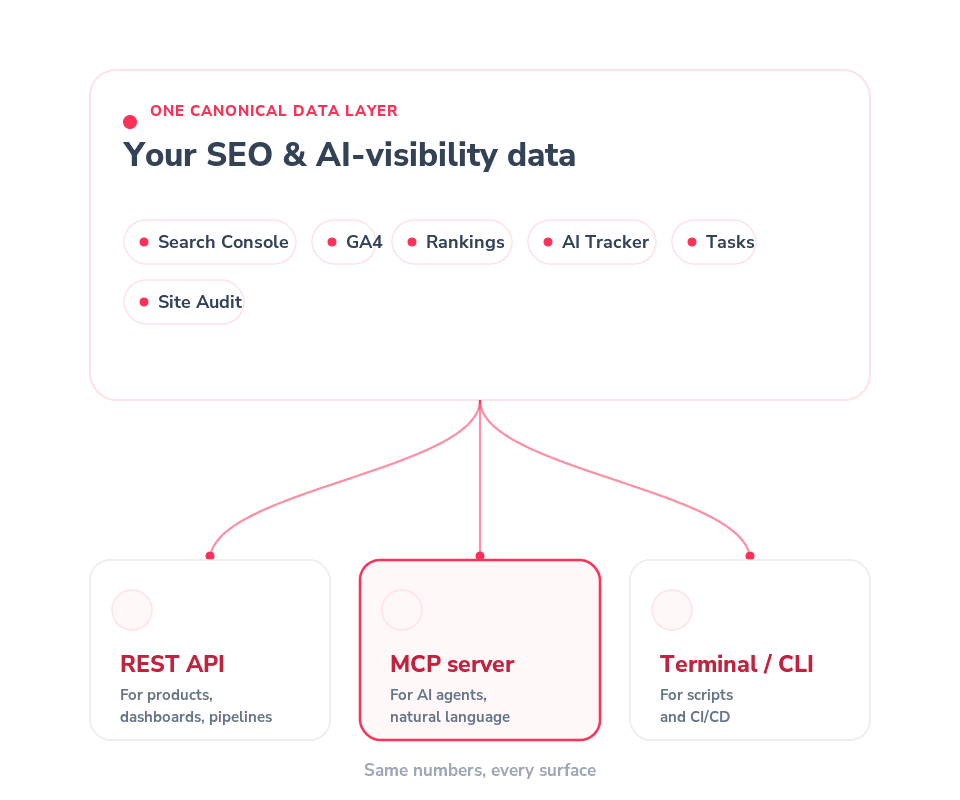
An AI SEO integration refers to the deliberate connection between artificial intelligence platforms and the tools and systems that drive search engine optimization. Rather than treating AI as a standalone chatbot, an integration weaves its capabilities directly into keyword explorers, content management systems, analytics dashboards, and technical auditing software. This allows real-time data flow and decision-making. For example, a content team might integrate a generative AI model with their CMS so that each new article draft is automatically enriched with semantically related entities, internal linking suggestions, and tone adjustments based on top-ranking competitors. The integration is not merely about using AI to write text; it involves embedding machine learning algorithms into every layer of SEO: crawling, indexing analysis, content scoring, and performance prediction.
The power of integration lies in context. Isolated AI tools produce generic output. When connected to live SEO data—search volume trends, click-through rates, seasonal fluctuations—the same AI models generate highly contextualized recommendations. Modern integrations often rely on APIs, webhooks, and custom middleware to enable this two-way conversation between data sources and AI engines. The goal is a dynamic ecosystem where AI continuously learns from your site’s performance and adjusts SEO tactics without constant human intervention.
The Core Components of AI SEO Integrations
To fully grasp what makes an AI SEO integration effective, you need to understand the technological pillars that support it. These components are not isolated; they must work in concert to deliver meaningful results.
Data Aggregation and Preprocessing Layers
Before AI can add value, vast amounts of structured and unstructured SEO data must be collected and cleaned. Search console click data, rank tracking metrics, competitor backlink profiles, and log file analyses form the raw fuel. Integration platforms often use ETL (Extract, Transform, Load) pipelines to standardize this data, removing duplicates and normalizing formats so that machine learning models can interpret them correctly. Without a robust preprocessing layer, the A
Natural Language Processing Engines
NLP is the heart of content-focused AI SEO integrations. Modern engines like GPT-based models, BERT, or domain-specific fine-tuned transformers understand search intent, entity relationships, and topical depth. When integrated with a content optimizer, the NLP engine scans top-ranking pages, identifies knowledge gaps, and suggests subtopics that should be covered. It can go beyond simple keyword frequency to analyze question patterns, readability scores, and the structural flow that aligns with Google’s helpful content guidelines.
Predictive Analytics and Ranking Models
Sophisticated integrations use historical data to train predictive models that forecast ranking changes. By feeding on-page attributes, backlink velocity, and algorithm update signals into a machine learning classifier, the system can alert teams to pages at risk of dropping or highlight quick-win opportunities. These AI models simulate the search engine’s evaluation process and often surface correlations that human analysts overlook, such as the impact of meta description sentiment on click-through rate for specific intents.
Automation and Workflow Connectors
The true value of AI SEO integrations emerges when insights trigger actions automatically. A workflow connector can update a task in a project management tool like Asana when an AI audit detects a critical technical flaw, or it can publish an AI-generated monthly performance report to a Slack channel. These connectors bridge the gap between analysis and execution, ensuring that recommendations do not get lost in email inboxes.
Classification of AI SEO Tools and Platforms
AI SEO integrations manifest across a wide spectrum of tool categories. Understanding the landscape helps you choose where to start and how to prioritize investment.
- All-in-One SEO Suites with Native AI: Platforms like Semrush, Ahrefs, and Moz have embedded AI assistants for keyword suggestions, content scoring, and competitive gap analysis. These offer the simplest integrations because everything lives within a single ecosystem.
- AI Content Optimization Tools: Dedicated tools such as Surfer SEO, MarketMuse, and Frase use AI to compare your content against top-ranking pages and provide real-time recommendations on word count, entity usage, and structure. They often integrate via browser extensions or API connections into Google Docs or WordPress.
- Generative AI Copywriting Assistants: Jasper, Writesonic, and ChatGPT Enterprise can be connected to SEO tools through APIs. This allows SEO briefs to flow directly into the writing interface, enabling drafts that are both creative and data-backed.
- Technical SEO AI Platforms: Deepcrawl (now Lumar) and Botify use machine learning to analyze crawl data, detect orphan pages, and prioritize fixes. Some offer AI-driven recommendations to improve site architecture and internal link equity distribution.
- AI-Powered Rank Tracking and Forecasting: Nozzle and SE Ranking incorporate AI to estimate keyword difficulty dynamics and predict traffic gains from snippet optimizations, merging historical rank data with competitive fluctuation patterns.
- Data Source Connection: Connect your Google Search Console, Google Analytics, Bing Webmaster Tools, and rank tracking API to a central data warehouse or directly to your AI platform. This establishes the ground truth for all subsequent analysis.
- Intelligent Auditing: The AI engine crawls your site and evaluates technical health, content quality, and user experience signals. It flags canonical issues, missing alt text, slow-loading pages, and content that fails to satisfy search intent.
- Opportunity Detection: Using the connected keyword and competitive data, the AI identifies pages that rank on the second page of results for high-volume terms, content gaps where you have no presence, and keywords where featured snippets are obtainable with minor adjustments.
- Strategy Generation: The AI system produces a prioritized list of tasks—new content topics, on-page optimization changes, internal linking restructuring, or backlink acquisition targets—each accompanied by an estimated impact score.
- Content and Optimization Brief Delivery: Detailed briefs containing target keyword clusters, recommended headers, semantic phrases, and optimal media suggestions are fed directly to content creators via the integrated writing tool. For simple updates, the AI can auto-generate optimized meta titles and descriptions.
- Performance Monitoring Loop: After changes go live, the AI tracks ranking shifts, click-through rates, and engagement metrics. It learns from successes and failures, refining its predictive models and adjusting future recommendations accordingly.
- Publishing AI Content Without Human Review: Google’s guidelines explicitly reward content that demonstrates experience and expertise. An unverified AI article can contain factual errors, sterile tone, or thin content that fails to help users. Always assign a subject-matter expert to review and enrich AI-generated drafts before publication.
- Ignoring Brand Voice and Audience Nuance: AI tools often default to a generic, informative tone. An integration that lacks custom brand guidelines will produce content that feels disconnected from your audience. Feed the AI model examples of your top-performing articles, brand style guides, and customer personas to maintain consistency.
- Over-Optimizing Based on AI Keyword Density Suggestions: Some AI tools still emphasize exact-match keyword frequency. Chasing a specific density number can make content unnatural and trigger spam filters. Modern integrations should focus on entity coverage and user intent satisfaction, not outdated metrics.
- Treating AI Recommendations as Infallible: An AI might suggest removing a page because it has low traffic, but that page could be a crucial step in the user journey or a legal requirement. Always apply business logic to AI output. Set up a decision framework that requires human sign-off for high-impact changes like page deletion or URL restructuring.
- Neglecting Data Hygiene: Feeding AI models with incomplete or dirty data leads to skewed outputs. If your search console data is not filtered for bot traffic or your rank tracker contains outdated URLs, the integration will produce misleading strategies. Schedule regular data validation checks as part of your integration maintenance.
- Stay Informed About Algorithm Changes: AI models trained on historical data may not anticipate radical search engine updates. When Google releases a core update, pause fully automated content generation and reassess your AI’s training inputs. Update your models with fresh data from the post-update environment.
- Maintain Ethical and Legal Standards: Transparency about AI usage is becoming a trust signal. Ensure that AI-generated content does not infringe copyright or plagiarize. Implement duplicate content checks as part of your integration pipeline.
- Invest in Team Upskilling: AI SEO integrations shift the required skill set. Your team needs to understand prompt engineering, data analysis, and API logic. Organize regular workshops to build internal competence rather than relying on a single specialist.
- Diversify Your AI Dependencies: Relying on a single AI provider poses a business risk if pricing changes or service outages occur. Whenever feasible, architect your integration to be model-agnostic, allowing you to swap underlying engines without rebuilding the entire workflow.
- Measure ROI Holistically: Beyond ranking improvements, track operational metrics such as time saved per campaign, content output volume, and error reduction. These efficiency gains often justify the integration investment long before traffic lifts become visible.
How AI SEO Integrations Work: A Step-by-Step Process
Deploying an AI SEO integration is not a single plug-and-play action. It follows a logical sequence that transforms raw data into measurable ranking improvements. Below is a typical end-to-end process used by advanced teams.
Benefits and Limitations of AI SEO Integrations
Every SEO professional faces a balancing act between automation and human judgment. AI integrations offer compelling advantages but come with caveats that cannot be ignored.
| Benefits | Limitations |
|---|---|
| Speed and Scale: AI can analyze millions of data points and generate recommendations in seconds, tasks that would take human teams weeks. This is critical for enterprise sites with thousands of pages. | Over-Reliance on Patterns: AI models sometimes mistake correlation for causation. A ranking drop may be attributed to a content change when the real cause was a Google core update. Blind trust leads to misguided actions. |
| Uncovering Hidden Entities: AI NLP models detect semantic gaps that traditional keyword tools miss. They ensure content covers related topics that search engines expect, improving topical authority. | Generative Fluff and Inaccuracy: Language models can produce confident-sounding but factually wrong content. Without human editors, AI-written pages may include outdated statistics or harmful advice. |
| Personalized Reporting: AI can tailor insights to different stakeholders—executives see ROI forecasts, while content managers see optimization checklists—all from the same dashboard. | Data Privacy and Security Risks: Sending proprietary performance data to external AI APIs may expose sensitive business metrics. Compliance with GDPR and company policies requires rigorous vetting. |
| Predictive Maintenance: AI flags technical SEO decay before it impacts rankings, such as slowly bloating JavaScript or emerging crawl budget drain, preventing traffic losses. | Setup Complexity and Cost: True integration demands technical expertise in APIs, data engineering, and maintenance. For small teams, the resource investment may outweigh immediate gains. |
Comparing Traditional SEO vs. AI-Integrated SEO
The shift from manual processes to AI-driven workflows redefines every aspect of an SEO campaign. The table below highlights key differences.
| Aspect | Traditional SEO | AI-Integrated SEO |
|---|---|---|
| Keyword Research | Manual spreadsheet analysis, one-by-one evaluation | Automated cluster discovery, intent classification, and trend prediction |
| Content Creation | Writers rely on separate briefs and static guidelines | AI drafts based on real-time SERP analysis; writers refine with data-backed suggestions |
| Technical Audits | Periodic crawls with manual issue triage | Continuous AI monitoring with auto-prioritized fix recommendations and impact scores |
| Performance Analysis | Monthly reports with lagging indicators | Real-time dashboards with predictive alerts and what-if scenario modeling |
| Scalability | Limited by headcount and hours | Highly scalable, enabling management of massive page volumes without proportional team growth |
Practical Application: A Step-by-Step Guide to Implementing AI SEO Integrations
Moving from theory to execution requires a structured approach. The following guide helps you integrate AI into your SEO stack without disrupting existing operations.
1. Audit Your Current SEO Tech Stack
List every tool you use for rank tracking, crawling, content management, analytics, and reporting. Identify which of these platforms already offer native AI features or robust APIs. Determine the data flows between them. For example, can your rank tracker automatically feed keyword data into your content optimization tool, or are you manually exporting CSV files? This gap analysis reveals where integrations will save the most time.
2. Define Clear Integration Goals
A common pitfall is integrating AI for the sake of novelty. Define specific, measurable objectives. Are you trying to reduce the time from keyword research to published brief by 60%? Do you need to automatically detect and fix keyword cannibalization across 10,000 product pages? Concrete goals determine the type of AI model and the depth of integration needed.
3. Choose the Right AI Models and Vendors
Not all AI is equal. For content optimization, you might select a fine-tuned NLP model specialized in search intent scoring. For predictive ranking, a gradient-boosted tree model might outperform a neural network on small datasets. Evaluate vendors based on data residency, API latency, and training data transparency. Request trial access to test output quality against your historical campaigns before committing.
4. Build Secure API Connections
Work with your development team to establish authenticated API connections. Use OAuth 2.0 where possible, and store secrets in environment variables rather than hardcoding them. Implement rate limiting and error handling to prevent cascading failures if one service goes down. For sensitive projects, consider self-hosting open-source AI models so that no external third party has access to your search performance data.
5. Develop a Hybrid Human-AI Workflow
Design workflows where AI handles repetitive, data-intensive tasks and humans own strategic, creative, and ethical decisions. A typical hybrid flow: AI produces a content brief with suggested headers and entities; a human strategist reviews competitive nuances and brand messaging; AI generates a full draft; a human editor verifies facts, injects unique case studies, and ensures EEAT signals; AI re-optimizes the final draft for entities and internal links; the human hits publish. Clearly document these steps so that the team trusts and understands the process.
6. Test, Monitor, and Iterate
Launch your first integration on a limited set of pages—perhaps 50 blog posts or a single product category. Track ranking changes, organic traffic, and user engagement over 4-6 weeks. Compare results against a control group of pages managed traditionally. Use this pilot period to fine-tune the AI’s parameters, improve data quality, and address any team friction. Scale only when the pilot demonstrates a statistically significant improvement.
Common Mistakes When Using AI for SEO and How to Avoid Them
Even experienced professionals stumble when blending AI with SEO. Recognizing these pitfalls in advance prevents costly reversals.
Important Notes for Long-Term Success with AI SEO Integrations
Sustaining competitive advantage requires more than a one-time setup. Keep these principles in mind.
Frequently Asked Questions About AI SEO Integrations
What exactly does an AI SEO integration do?
An AI SEO integration connects artificial intelligence software directly to your SEO tools and data sources. It allows the AI to access live keyword data, crawl reports, and analytics, then generate optimized content, technical fix suggestions, or predictive ranking alerts automatically. Instead of manually using separate tools, the integration creates a seamless information pipeline that learns and adapts over time.
How do I integrate AI with my existing SEO tools?
Integration typically happens through APIs, native plugins, or middleware platforms. Start by identifying which of your current tools offer open APIs. Then, use a developer or a no-code automation platform like Zapier or Make to connect the AI engine to your keyword database or CMS. Many modern AI writing tools also provide direct plugins for WordPress, Google Docs, or popular SEO suites, making the process easier for non-technical teams.
What are the best AI SEO tools for integration?
The best tool depends on your primary need. For content optimization, Surfer SEO and MarketMuse excel at real-time SERP analysis. For generative writing with data input, Jasper with Surfer integration or ChatGPT with custom API connections works well. For technical SEO, Lumar and Botify integrate crawl data with machine learning models. Semrush and Ahrefs continue to expand their native AI assistants, which can be integrated into broader workflows via their APIs.
Will AI replace human SEO experts?
No, AI does not replace human SEO experts but transforms their role. AI handles data processing, pattern recognition, and repetitive tasks at scale. Humans are indispensable for strategy, creative direction, ethical oversight, and understanding nuanced user intent. The most effective approach is a collaborative model where AI amplifies the expert’s capabilities rather than making them obsolete.
Is AI SEO integration expensive for small businesses?
Costs vary widely. Some entry-level integrations, such as using a free AI writing assistant connected to Google Sheets via a low-code platform, can be implemented for under $50 per month. Enterprise-level custom integrations with dedicated data pipelines and proprietary models can run into thousands of dollars. Small businesses should start with existing native AI features in affordable tools and expand gradually as they see ROI.
Can AI help with local SEO integration?
Absolutely. AI models can integrate with Google Business Profile APIs to analyze reviews, suggest response templates, detect inconsistent NAP data across directories, and generate locally relevant content. They can also predict the impact of local algorithm nuances and automatically update business information when AI detects discrepancies, ensuring strong local pack visibility.
Conclusion
AI SEO integrations represent a fundamental shift from manual optimization to intelligent, adaptive systems that learn and improve with every data point. When executed thoughtfully, they free up strategists to focus on high-level creativity while machines handle the grunt work of data crunching and pattern matching. The key to success is never to hand over the reins entirely. The most potent combination is a tight integration where AI supplies deep, real-time insights and humans inject experience, empathy, and editorial judgment. Start small, validate your AI’s suggestions against real-world outcomes, and build a culture where technology serves strategy rather than dictating it. The future of search belongs to those who can seamlessly blend the predictive power of artificial intelligence with the irreplaceable nuance of human expertise.
Xem thêm:
- AI Rewrite Tool: The Ultimate Guide to Rewriting Content with Artificial Intelligence
- AI SEO Smart Search: The Complete Guide to Future-Proofing Your Organic Traffic
- AI SEO MCP: The Complete Guide to Model Context Protocol for Search Optimization
- AI SEO Competitor Traffic: The Complete Playbook for Outranking Rivals in 2025
- AI SEO Neural Search: The Complete Guide to Ranking in the Era of Semantic Discovery
Bài viết cùng chủ đề:

AI SEO SEO Automation with Make: The Complete Workflow Guide

AI SEO SEO Automation with Zapier: The Complete Workflow Guide

AI SEO SEO Automation with n8n: The Complete Workflow Guide
AI SEO SEO Automation with Gemini: The Complete Guide to Scaling Organic Growth

AI SEO SEO Automation with Claude: The Complete Guide to Scaling Content in 2025

AI SEO SEO Automation with ChatGPT: The Complete Playbook for 2025

AI SEO & SEO Automation for Affiliate Sites: The 2025 Playbook for Passive Income Growth
AI SEO & SEO Automation for Bloggers: The Complete Guide to Scaling Your Content

AI SEO & SEO Automation for Agencies: The Complete 2025 Playbook

AI SEO and SEO Automation for Ecommerce: The Complete Playbook for 2025

AI SEO & SEO Automation for WordPress: The Complete Playbook for 2025
AI SEO SEO Automation Strategy: The Complete Playbook for 2025

Mastering the AI SEO SEO Automation Process: A Complete Guide to Scaling Organic Growth
AI SEO SEO Automation System: The Complete Guide to Scaling Organic Growth in 2025
AI SEO SEO Automation Platform: The Complete Guide to Scaling Organic Growth in 2025
AI SEO SEO Automation Software: The Complete Guide to Scaling Organic Growth in 2025















