
No products in the cart.
AI SEO Automation: The Complete Guide to Ranking Smarter, Not Harder
29
Jul
Jul
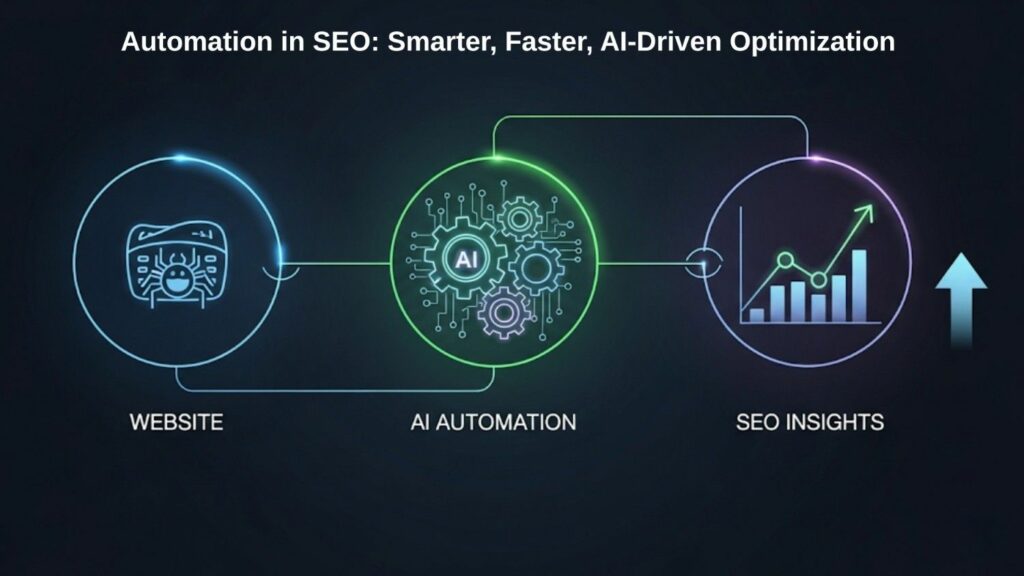
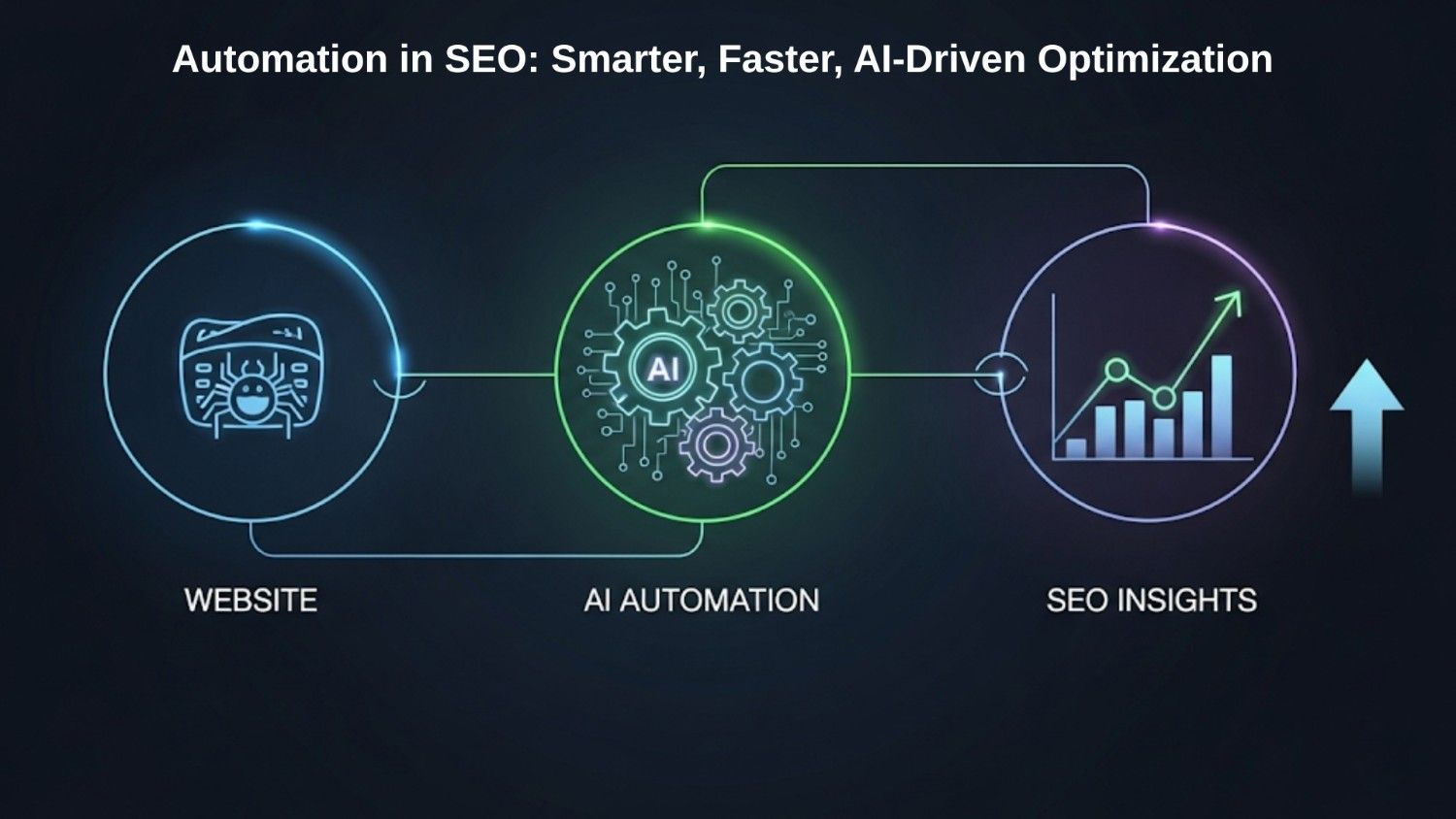
The world of search engine optimization is evolving faster than ever, and at the center of this transformation sits a powerful new ally: AI SEO automation. Gone are the days of manually sifting through keyword spreadsheets, painstakingly tweaking meta tags, and guessing what content will resonate. Today, intelligent algorithms can shoulder the repetitive, data-heavy work, freeing you to focus on strategy and creativity. By blending machine learning, natural language processing, and predictive analytics, AI SEO automation supercharges every stage of the optimization process, from idea generation to performance monitoring.
This guide walks you through everything you need to know to harness that power effectively. You will learn what AI-driven SEO really means, which specific tasks can be automated, the measurable benefits and potential pitfalls, and a practical framework for weaving artificial intelligence into your daily workflow—without sacrificing quality or running afoul of search engine guidelines.
What Is AI SEO Automation?

AI SEO automation refers to the use of artificial intelligence technologies to streamline, execute, and enhance search engine optimization activities that were traditionally manual or semi-automated. It goes far beyond basic scheduled reporting or rule‑based crawling. Modern AI systems analyze vast datasets in real time, detect patterns that humans might miss, and even suggest or implement optimization actions.
At its core, the process relies on machine learning models trained on ranking factors, user behavior signals, and content performance data. These models can predict which topics are gaining traction, generate content briefs that align with search intent, fine‑tune on‑page elements, and surface technical issues before they hurt rankings. The result is a dynamic, responsive SEO engine that operates around the clock.
How AI Is Reshaping the SEO Landscape
Search engines themselves are AI‑driven. Google’s RankBrain, BERT, and the more recent Helpful Content System all employ advanced machine learning to understand queries and evaluate page quality. Consequently, the tools marketers use must be equally intelligent to stay competitive.
Three major shifts define this new landscape. First, search intent has become the primary ranking signal; AI excels at clustering queries by intent and matching them with the right content format. Second, content freshness and comprehensiveness are weighted more heavily, making AI’s ability to update and expand content at scale invaluable. Third, the volume of data required to make informed decisions—keyword gaps, competitor movements, SERP feature volatility—has exploded beyond manual management. AI absorbs that complexity and translates it into actionable insights.
Key Components of AI SEO Automation

Automation touches every pillar of a modern SEO strategy. Below are the areas where AI makes the most significant impact, along with the typical tasks it handles.
AI‑Powered Keyword Research and Topic Discovery
Traditional keyword research asks, “What terms are people searching for?” AI‑powered research asks, “What does the audience genuinely need to know next?” Tools equipped with natural language processing scan forums, social media, news, and competitor pages to uncover topic clusters and long‑tail variations that align with different stages of the buyer journey. They also forecast search volume trends, helping you invest in topics that will grow rather than decline.
- Semantic gap analysis: AI compares your content inventory against the full spectrum of terms that top‑ranking pages cover, identifying missing subtopics to boost topical authority.
- Competitor keyword extraction: Instead of manually mining a handful of rivals, AI processes hundreds of domains simultaneously, revealing keyword opportunities hidden in long‑tail patterns.
- Dramatic time savings: Tasks that once took days—competitive content audits, thousands of meta description rewrites, technical health checks—now finish in minutes.
- Data‑driven content strategies: AI eliminates guesswork by basing editorial calendars on quantified demand, search intent clusters, and content gap analysis.
- Personalized optimization at scale: For e‑commerce sites with millions of URLs, AI can generate unique, intention‑matched titles and descriptions for every product page.
- Real‑time adaptability: When search trends shift or a core update rolls out, AI systems detect anomalies immediately and adjust recommendations.
- Improved SERP feature capture: Natural language generation tailors content for featured snippets, “People Also Ask” boxes, and knowledge panels more consistently.
- Content quality and originality: Generative AI can produce grammatically perfect but factually incorrect, shallow, or plagiarized text. Search engines are getting better at detecting machine‑generated fluff, and the helpful content update actively devalues content created primarily for search engines rather than people.
- Algorithmic compliance: Automated link schemes, mass article spinning, and auto‑generated doorway pages remain against Google’s guidelines. AI tools that promise quick wins often skirt these rules, putting your domain at risk.
- Contextual and brand voice gaps: AI lacks genuine empathy and brand intuition. It might suggest keywords that are demographically mismatched or produce copy that feels sterile and off‑brand. Human editors must always curate the output.
- Data privacy and security: Feeding proprietary business data into public AI models can expose confidential strategies. On‑premise or enterprise‑grade solutions are necessary for sensitive information.
- Black‑box decision making: Some AI tools provide recommendations without clear rationales. When rankings drop, you need to understand the chain of events; opaque systems make troubleshooting nearly impossible.
- Publishing unedited AI content: Tools like ChatGPT or Jasper can generate a first draft, but without human oversight the content often lacks depth, original examples, and accurate internal linking. Google’s guidelines clearly state that using automation to generate content with the primary purpose of manipulating ranking is a violation.
- Ignoring search intent subtleties: AI can misinterpret ambiguous queries. A keyword might look informational to a machine but actually require a transactional landing page. Always manually verify the intent behind top‑ranking results for your most valuable terms.
- Automating link building entirely: Fully automated outreach that scrapes email addresses and sends generic blasts will torch your domain’s reputation. Use AI for prospect research and personalization hints, but keep the relationship‑building human.
- Setting and forgetting: AI models can drift. An optimization strategy that worked for a pharmaceutical site may fail for an e‑commerce store because the underlying data patterns differ. Monitor performance and recalibrate frequently.
- Over‑optimizing for AI rather than users: Chasing perfect content scores from SEO tools can lead to keyword‑stuffed, unnatural text. Keep the primary focus on delivering genuine value. The best‑performing pages are those people bookmark and share, not those that hit an arbitrary tool score.
- Prioritize E‑E‑A‑T constantly: Expertise, experience, authoritativeness, and trustworthiness cannot be faked by an algorithm. Use AI to research authoritative sources and cite them, but let human professionals who possess demonstrable experience in the niche create and sign off on final content.
- Stay transparent where required: If AI generates significant portions of published content for a YMYL (Your Money or Your Life) topic, consider an appropriate disclosure. While not an SEO ranking factor, transparency builds user trust and aligns with broader quality standards.
- Adopt privacy‑conscious AI infrastructure: If you handle customer data, use AI models that run in a secure private cloud or on‑premise. Never feed sensitive information into public, unsecured language models.
- Maintain a human‑first content audit schedule: Quarterly, pull a random sample of AI‑assisted pages and have a senior editor perform a blind quality review. If the content would not genuinely help a real user, revise your AI parameters immediately.
- Keep learning and testing: AI SEO automation is a moving target. Google’s algorithms evolve, and AI tools update weekly. Dedicate time each month to study official Google documentation, test new features, and benchmark your tools against manual expert work.
Automated Content Generation and Optimization
Perhaps the most visible face of AI SEO automation, content tools now draft blog posts, product descriptions, and meta tags in seconds. Yet the real value lies in augmentation rather than pure creation. AI content assistants score readability, tone, and keyword usage while you write. They suggest structural improvements—such as adding a comparison table, image alt text, or a FAQ section—based on what currently ranks in the top 10.
Advanced platforms go further by rewriting sections to improve E‑E‑A‑T signals. For instance, they can inject authoritative statistics, credit original sources, or restructure paragraphs to feature a clear answer at the top for featured snippet eligibility.
On‑Page and Technical SEO Automation
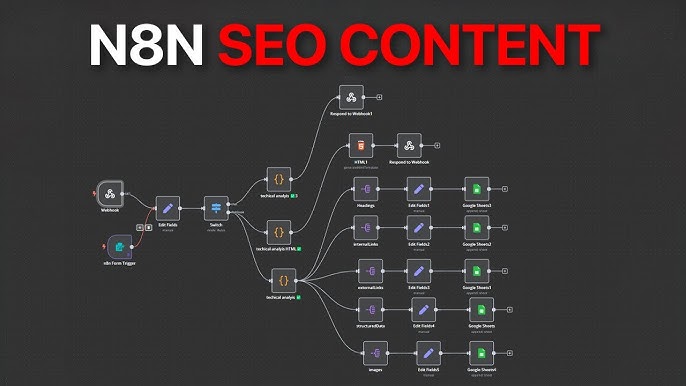
Technical hygiene has long been a drain on SEO resources. AI bots now crawl sites continuously, detecting broken links, slow‑loading pages, duplicate titles, and indexing issues as soon as they appear. Instead of waiting for a weekly crawl report, you receive real‑time alerts with suggested fixes.
On‑page optimization is similarly accelerated. AI can generate schema markup, optimize image file sizes and alt attributes, and even rewrite title tags and meta descriptions based on click‑through‑rate data from search console. The system learns which phrasing attracts clicks without over‑promising, striking the delicate balance that search engines reward.
Link Building and Outreach Automation
Prospecting for high‑quality backlinks is time‑intensive. AI tools scrape the web for linkable assets, find unlinked brand mentions, and evaluate the authority of potential linking domains using custom scoring models. Some platforms draft personalized outreach emails by pulling details from the prospect’s recent content, dramatically increasing response rates. While fully automated link building that violates guidelines is dangerous, AI‑assisted prospecting and validation keeps the process white‑hat and efficient.
Rank Tracking and Predictive Analytics
Traditional rank trackers tell you where you stand today. AI‑enhanced trackers forecast where you will stand next week if you take a certain action. They simulate algorithm updates, estimate the impact of content refreshes, and prioritize pages that are on the verge of page‑one rankings. Data from Google Search Console, Analytics, and third‑party sources is woven together into dashboards that surface why a page moved, not just that it moved.
Benefits of AI‑Powered SEO
Organizations that embed AI into their SEO workflows consistently report faster execution, deeper insights, and better resource allocation. Here are the most significant benefits, observed across agencies and in‑house teams alike.
Limitations and Risks of AI SEO Automation
Despite its power, AI is not an autopilot that can replace human judgment. Over‑reliance leads to serious missteps. Understanding these constraints is essential to avoid penalties and wasted investment.
AI SEO Automation vs Traditional SEO: A Comparison
The table below contrasts traditional manual SEO methods with AI‑augmented approaches across key dimensions. This is not an either‑or proposition—the strongest strategies use AI to amplify human expertise.
| Dimension | Traditional SEO | AI SEO Automation |
|---|---|---|
| Keyword research | Manual seed list expansion using spreadsheets and basic tools | NLP‑powered intent clustering, trend forecasting, and competitor gap mining across thousands of terms simultaneously |
| Content creation | Human writers draft from creative briefs; heavy editing cycles | AI drafts, outline generation, and real‑time SERP‑aligned recommendations while humans refine for voice and E‑E‑A‑T |
| Technical audits | Scheduled crawls with manual issue triage | Continuous crawling with immediate alerts, impact scoring, and one‑click fixes for common problems |
| Rank tracking | Daily or weekly snapshots of keyword positions | Predictive forecasting, anomaly detection, and correlation analysis with content changes and algorithm shifts |
| Scalability | Limited by team size; exponential effort to expand to new markets or languages | Nearly linear scaling; localized content and technical optimizations generated for dozens of regions with minimal incremental effort |
| Strategic insight | Relies on SEO analyst’s experience to connect data points | AI uncovers hidden patterns (e.g., topic decay rates, micro‑fluctuations triggering ranking drops) but still requires human interpretation |
Step‑by‑Step Guide to Implementing AI in Your SEO Workflow

Integration does not mean handing over the keys. A measured, phased rollout preserves quality and builds team confidence. Follow this sequence to embed AI without disrupting what already works.
1. Audit Your Current Process
Map every recurring SEO task—keyword tracking, content brief creation, internal linking checks, reporting—and note how much time each consumes. Highlight bottlenecks and repetitive manual chores. These are your prime automation candidates.
2. Select Tools That Match Your Maturity Level
Begin with plug‑and‑play platforms that integrate with your existing tech stack (WordPress, Shopify, Google Search Console). Popular starting points include AI writing assistants, SEO content scoring tools, and automated rank trackers with predictive features. Avoid over‑investing in an all‑in‑one suite until you confirm the use cases in your environment.
3. Define Guardrails and Human Checkpoints
Establish a policy for AI‑generated content: all output must be reviewed by a subject‑matter expert, fact‑checked, and edited for brand voice. Set boundaries for automated actions—for example, schema generation and image optimization can run automatically, but meta title changes require human approval.
4. Run a Pilot on a Specific Segment
Choose a contained section of your site, such as a blog category or a regional subdirectory. Use AI to accelerate content updates, keyword tuning, and technical fixes. Measure the impact on organic traffic, click‑through rate, and dwell time over a 60‑day window. Compare against a control group where possible.
5. Train Your Team and Refine Prompts
AI effectiveness grows when users know how to communicate with it. Train your team on prompt engineering—for SEO content, that means detailing audience persona, target keyword cluster, desired structure, tone, and even competitor URLs to emulate. Iterate based on output quality.
6. Close the Loop with Analytics
Connect your AI tools to your analytics and search data. Create a feedback loop where ranking movements and user engagement signals automatically adjust keyword priorities and content refresh schedules. Over time, the system becomes smarter and more tailored to your unique audience.
Common Mistakes to Avoid
Even experienced SEOs stumble when they first bring AI into the mix. Awareness of these pitfalls will save you from ranking drops and wasted budget.
Important Considerations for Ethical and Effective Use
The line between smart automation and manipulative spam is thinner than many realize. Following a few foundational principles ensures that AI elevates your SEO rather than endangering it.
Frequently Asked Questions
What exactly is AI SEO automation?
AI SEO automation is the practice of using artificial intelligence technologies—including machine learning and natural language processing—to perform, accelerate, and improve search engine optimization tasks such as keyword research, content creation, technical audits, and performance forecasting. It shifts repetitive, data‑intensive work from human hands to smart systems that can analyze patterns at scale and propose optimizations in real time.
Can AI SEO automation replace human SEO professionals?
Not entirely. AI excels at processing large datasets, spotting trends, and executing routine tasks, but it lacks strategic intuition, genuine brand understanding, and the ability to build relationships that are crucial for high‑quality link building and thought leadership. The most effective model is a collaboration: humans set the strategy and refine AI output, while AI handles the heavy analytical lifting.
Is AI‑generated content penalized by Google?
Google does not penalize content simply because it was created with AI assistance. However, it does penalize content that is mass‑produced, low‑quality, and created primarily to manipulate rankings. If AI is used responsibly—with thorough human review, fact‑checking, and value addition—the resulting pages can perform just as well as entirely human‑written content. The key is to uphold E‑E‑A‑T standards and always serve user needs first.
Which SEO tasks are best suited for automation?
Tasks with high volume and clear rule sets yield the fastest ROI. These include technical site audits, meta tag generation, internal link analysis, image optimization, SERP feature tracking, and content gap analysis. Keyword clustering and trend forecasting also benefit greatly. Content drafting can be automated but requires a robust human‑review layer.
How do I measure the success of AI SEO automation?
Beyond traditional metrics like organic traffic and keyword rankings, monitor efficiency gains such as time saved per content piece, reduction in technical errors, and speed from keyword discovery to published page. Also track quality indicators: bounce rate, average engagement time, and conversion rate on AI‑influenced pages. A healthy AI‑augmented workflow should lift both efficiency and user satisfaction simultaneously.
What are the most reliable AI tools for SEO automation?
The landscape is broad, but several categories stand out. For content optimization and writing assistance, platforms such as SurferSEO, MarketMuse, and Clearscope are widely adopted. Technical and on‑page automation is strong with tools like Botify and DeepCrawl (Lumar). All‑in‑one suites like Semrush and Ahrefs now incorporate AI‑powered features including predictive analytics and content scoring. The best tool depends on your specific workflow, team size, and budget; starting with integrated features in tools you already use often yields the lowest friction.
Bringing Intelligence to Your SEO Practice
AI SEO automation is not a magic button but a force multiplier. Businesses that treat it as a partner rather than a crutch are the ones that will dominate the search results of tomorrow. By automating the predictable, you create space for the unpredictable—those creative insights, brand‑building stories, and empathetic user experiences that no machine can replicate.
Start small, audit relentlessly, and never sacrifice the human touch that ultimately earns trust from both readers and search engines. As algorithms grow smarter, the playbook stays surprisingly simple: use technology to become more helpful, more relevant, and more efficient. The rest will follow.
Xem thêm:
- AI SEO Server Logs: The Complete Guide to Unlocking Hidden Search Insights
- AI SEO Outreach Automation: The Complete Guide to Scaling Link Building in 2025
- Small Business AI SEO: The Complete Guide to Dominating Search in 2025
- AI Copywriting Tools: The Complete Guide to Automating High-Converting Content in 2025
- AI SEO Link Building Automation: The Complete 2025 Playbook for Scalable Growth
Bài viết cùng chủ đề:

AI SEO SEO Automation with Make: The Complete Workflow Guide

AI SEO SEO Automation with Zapier: The Complete Workflow Guide

AI SEO SEO Automation with n8n: The Complete Workflow Guide
AI SEO SEO Automation with Gemini: The Complete Guide to Scaling Organic Growth

AI SEO SEO Automation with Claude: The Complete Guide to Scaling Content in 2025

AI SEO SEO Automation with ChatGPT: The Complete Playbook for 2025

AI SEO & SEO Automation for Affiliate Sites: The 2025 Playbook for Passive Income Growth
AI SEO & SEO Automation for Bloggers: The Complete Guide to Scaling Your Content

AI SEO & SEO Automation for Agencies: The Complete 2025 Playbook

AI SEO and SEO Automation for Ecommerce: The Complete Playbook for 2025

AI SEO & SEO Automation for WordPress: The Complete Playbook for 2025
AI SEO SEO Automation Strategy: The Complete Playbook for 2025

Mastering the AI SEO SEO Automation Process: A Complete Guide to Scaling Organic Growth
AI SEO SEO Automation System: The Complete Guide to Scaling Organic Growth in 2025
AI SEO SEO Automation Platform: The Complete Guide to Scaling Organic Growth in 2025
AI SEO SEO Automation Software: The Complete Guide to Scaling Organic Growth in 2025















