
No products in the cart.
Small Business AI SEO: The Complete Guide to Dominating Search in 2025
31
Jul
Jul
Small business AI SEO is no longer a futuristic concept; it is the current battleground where local shops, independent consultants, and online stores win or lose their digital visibility. For years, small businesses struggled to compete with enterprise brands that had massive budgets for content teams and link-building campaigns. Artificial intelligence has leveled that playing field dramatically. Today, a two-person operation can outrank a Fortune 500 company for highly specific, profitable keywords by leveraging machine learning tools for research, content creation, and technical optimization. This guide breaks down exactly how small business owners can harness AI to drive organic traffic, generate qualified leads, and build sustainable online authority without burning out their limited resources.
What Is Small Business AI SEO?
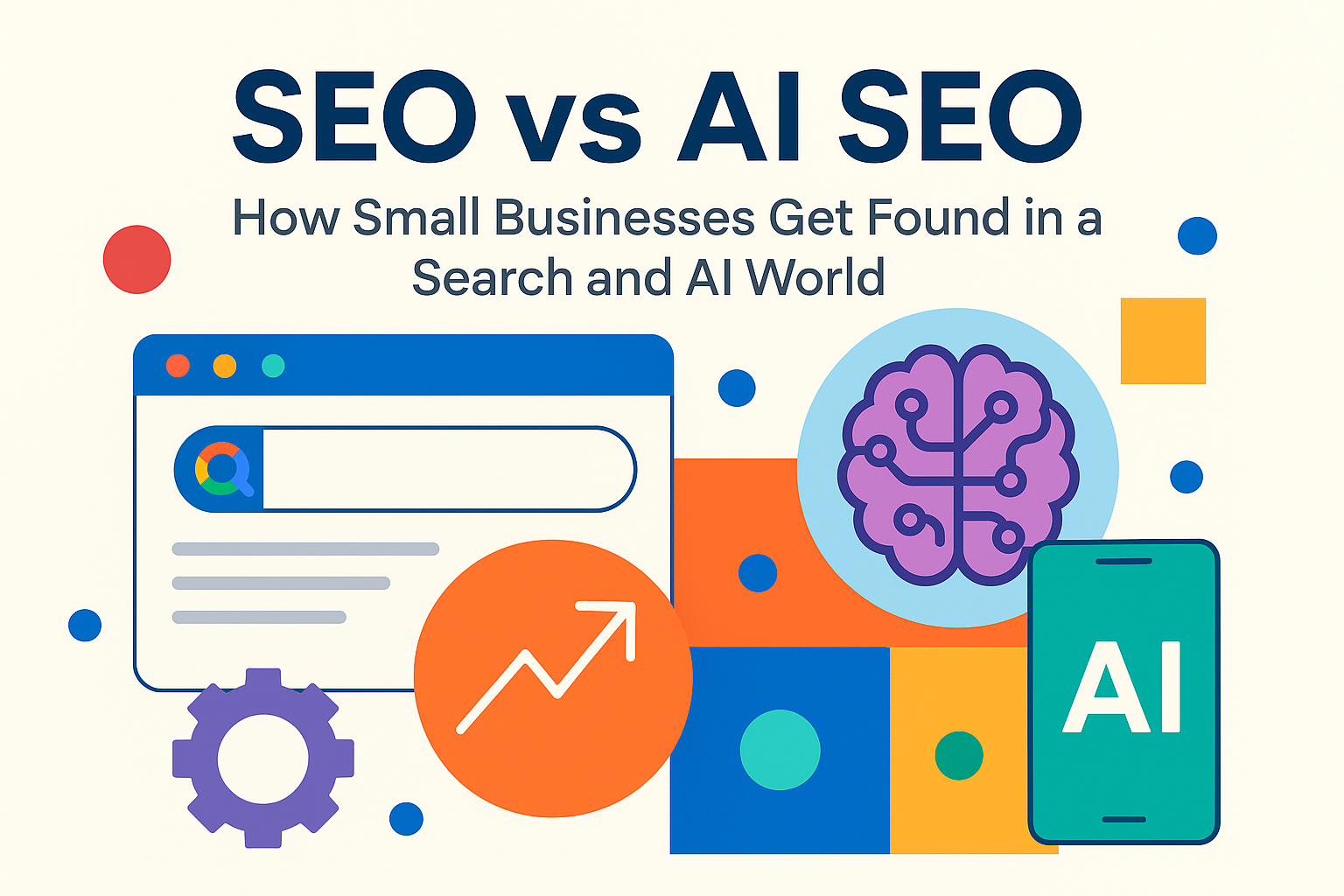
Small business AI SEO refers to the strategic application of artificial intelligence tools and machine learning algorithms to improve a company’s organic search rankings, specifically tailored for the constraints and opportunities of small enterprises. Unlike traditional SEO, which relies heavily on manual keyword research, manual content drafting, and slow, iterative testing, AI SEO automates and accelerates these processes. It involves using AI to analyze search intent, predict content performance, optimize technical site structure, and generate human-quality copy at scale.
The core difference lies in efficiency. A small business owner might spend ten hours a week on SEO tasks. With AI, that same workload can be reduced to two hours, allowing the owner to focus on product development and customer service. Furthermore, AI tools can process vast datasets—like millions of search queries or competitor backlink profiles—in seconds, uncovering opportunities that would take a human analyst weeks to find manually. This capability is crucial for small businesses that need to move quickly and pivot their strategies based on real-time data.
Why Traditional SEO Fails Small Businesses (And How AI Fixes It)
Traditional SEO methodologies were designed in an era of slower content production and less sophisticated search engines. For a small business, the traditional playbook often leads to frustration. The old model demanded publishing 3-5 blog posts per week, building dozens of backlinks monthly, and waiting six to twelve months for results. Small businesses rarely have the staff or the cash flow to sustain that pace.
AI changes the economics of SEO. Instead of writing a generic 1,500-word article on “best coffee beans,” an AI-powered strategy allows a small roaster to generate 50 highly specific, location-based landing pages for “best single-origin coffee in Austin” or “Ethiopian Yirgacheffe beans for espresso in Portland.” Each page is unique, optimized for a specific micro-intent, and can be produced in minutes. This hyper-local, hyper-specific approach aligns perfectly with how modern search engines rank results—by matching the deepest level of user intent, not just broad topic relevance.
Moreover, AI tools excel at identifying “topic clusters” and “entity relationships.” They can map out the entire semantic landscape of a niche, showing a small business exactly which subtopics to cover to become an authority. This eliminates the guesswork and ensures that every piece of content created serves a dual purpose: satisfying the user and signaling topical expertise to Google’s algorithms.
Core Components of an AI-Driven SEO Strategy for Small Businesses
Implementing small business AI SEO requires a structured approach. It is not about using one tool; it is about creating a workflow that integrates AI across three critical pillars: research, creation, and technical optimization.
AI-Powered Keyword and Intent Research
Gone are the days of manually typing keywords into a planner and guessing at search volume. AI research tools analyze real-time search data, autocomplete suggestions, and “People Also Ask” boxes to generate a comprehensive list of long-tail keywords. More importantly, they classify these keywords by search intent—informational, navigational, transactional, or commercial investigation. For a small business, focusing on transactional and commercial investigation keywords is often the fastest path to revenue. AI can also analyze the top-ranking pages for any keyword and extract the common entities, questions, and subtopics they cover, giving you a blueprint for content that can outrank them.
Automated Content Generation and Optimization
AI writing assistants have matured significantly. They no longer produce robotic, keyword-stuffed text. Modern models can generate detailed product descriptions, service pages, and blog posts that read naturally and pass AI-detection tests. The key for small businesses is to use AI as a first draft generator, not a final publisher. The workflow should be: AI generates a comprehensive draft based on your input and research data, then a human editor adds personal experience, brand voice, and specific local knowledge. This hybrid approach ensures speed without sacrificing authenticity. Additionally, AI tools can optimize existing content by suggesting internal link opportunities, meta description rewrites, and header tag improvements based on current ranking factors.
Technical SEO Audits and Schema Markup
Technical issues like slow page speed, broken links, and missing schema markup can silently kill a small business’s rankings. AI-powered auditing tools crawl your entire website and identify issues in seconds, prioritizing them by impact on search performance. They can automatically generate JSON-LD schema for local businesses, products, reviews, and FAQs. This structured data helps search engines understand your content better and enables rich snippets, which dramatically increase click-through rates. For a small business, having a proper local business schema can be the difference between appearing in the top three local pack results or being buried on page two.
Practical Applications: How to Use AI for Local SEO
For small businesses with a physical location, local SEO is the lifeblood of customer acquisition. AI enhances local search in several specific ways. First, AI can manage and optimize your Google Business Profile by analyzing customer review sentiment and suggesting responses that address common complaints or praises. Second, AI can generate localized content at scale—creating unique pages for each service area you cover, each with locally relevant images, testimonials, and landmarks.
Consider a plumbing company serving five cities. Instead of one generic “plumbing services” page, AI can help create five distinct pages: “Emergency Plumber in Arlington,” “Water Heater Repair in Falls Church,” and so on. Each page is optimized for the specific city name, includes local phone numbers, and references local building codes or weather patterns that affect plumbing. This level of granularity signals to Google that you are a legitimate local entity, not a spammy directory listing.
Another powerful application is AI-driven review generation. Tools can automatically send follow-up SMS or email requests to customers after a service is completed, making it effortless to accumulate positive reviews. AI can also analyze your competitors’ review profiles to identify gaps—perhaps they are praised for speed but criticized for pricing. You can then emphasize your transparent pricing in your content and review requests.
Benefits and Limitations of AI SEO for Small Businesses
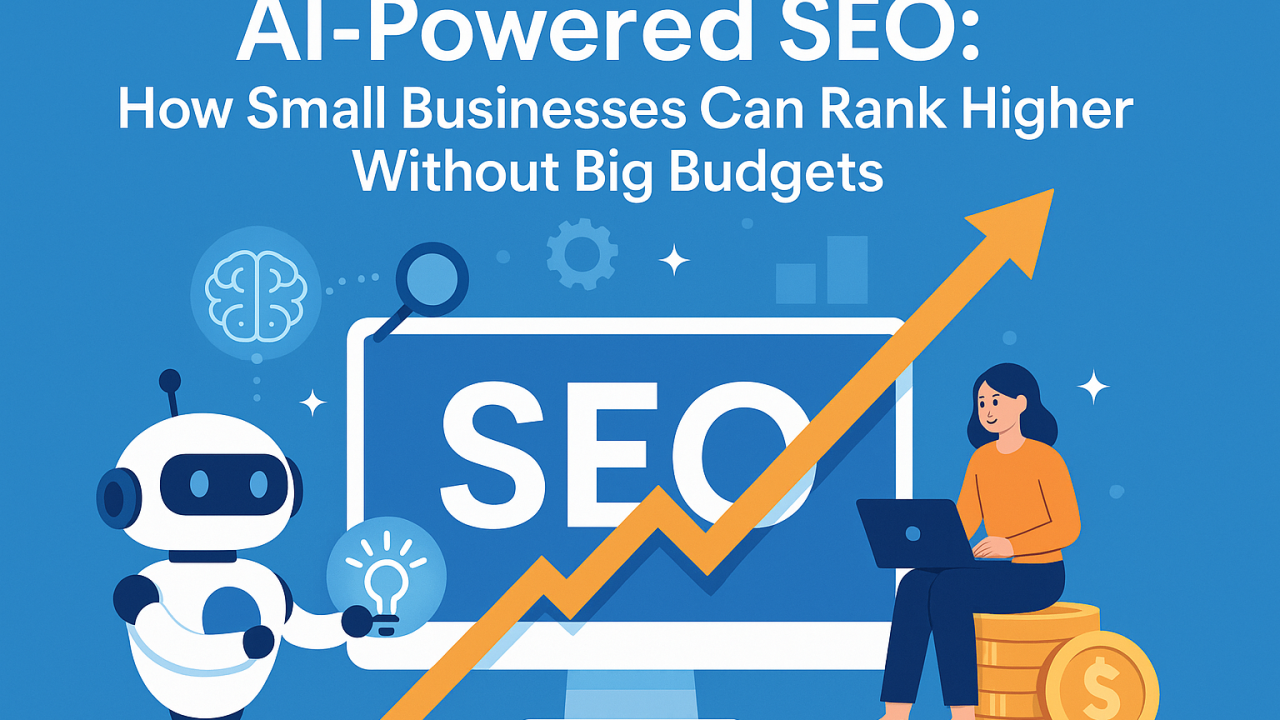
The advantages of adopting AI SEO are compelling, but it is equally important to understand its boundaries to avoid costly mistakes.
| Aspect | Benefits | Limitations |
|---|---|---|
| Speed | Content production and keyword research are 10x faster than manual methods. | AI can produce content too quickly, leading to a flood of low-quality pages if not managed. |
| Cost | Replaces the need for expensive agencies and large content teams. | Premium AI tools have subscription costs that can add up if you use multiple platforms. |
| Data Analysis | Processes competitor data and search trends instantly. | AI models can be trained on outdated data, leading to recommendations that miss current shifts. |
| Scalability | Easily expands content to cover hundreds of long-tail keywords. | Scalability can dilute brand voice and create duplicate content issues if not carefully edited. |
| Accuracy | Provides data-driven suggestions based on millions of search queries. | AI can hallucinate facts or generate incorrect statistics, requiring human fact-checking. |
The most significant limitation is the lack of genuine experience. AI does not know what it is like to run your specific business, deal with your specific customers, or navigate your local regulations. Therefore, all AI-generated content must be reviewed through the lens of real-world experience. Google’s algorithms are increasingly sophisticated at detecting content that lacks first-hand expertise. A small business owner who injects personal stories, specific case studies, and unique photos into AI drafts will always outperform a business that publishes raw AI output.
Step-by-Step Guide to Implementing AI SEO Today
Transitioning to an AI-driven workflow does not require a complete overhaul of your current processes. Start with these five actionable steps to see immediate improvements.
- Audit your current content with AI: Run your top 10 pages through an AI content optimization tool. Identify pages with thin content, missing meta descriptions, or poor internal linking. Prioritize updating these pages first.
- Build a keyword matrix: Use an AI research tool to generate 100 long-tail keywords relevant to your business. Categorize them by intent and map them to specific pages on your website. Create new pages for keywords that do not have a target.
- Generate a content brief: For your top 5 priority keywords, use AI to generate a detailed content brief. This brief should include the target keyword, secondary keywords, suggested headings, word count, and questions to answer. Use this brief to guide your writing or AI-assisted drafting.
- Implement schema markup: Use an AI technical SEO tool to generate JSON-LD schema for your local business, products, and articles. Test the markup using Google’s Rich Results Test to ensure it is valid.
- Set up automated reporting: Connect your Google Search Console and Analytics to an AI reporting tool. Set up weekly alerts that highlight ranking changes, keyword opportunities, and technical errors. Review these reports for 15 minutes each week to guide your next actions.
Common Mistakes Small Businesses Make with AI SEO
Adopting AI without a clear strategy often leads to wasted time and even penalties. Here are the most frequent pitfalls and how to avoid them.
Publishing unedited AI content. The biggest mistake is treating AI output as finished work. Search engines can detect generic, low-value content. Always edit for voice, add personal anecdotes, and include original data or images. Use AI as a research assistant, not a ghostwriter.
Ignoring search intent. AI tools can generate content for any keyword, but if the content does not match what the user wants to see, the bounce rate will skyrocket. For example, if someone searches “best CRM for small business,” they want a comparison list, not a single product review. Always verify the top-ranking pages for your target keyword to understand the expected format and angle.
Keyword cannibalization. When you use AI to generate hundreds of pages quickly, you risk creating multiple pages targeting the same keyword. This confuses search engines and splits your authority. Use an AI tool to audit your existing pages for overlapping keywords and consolidate or redirect duplicate content.
Neglecting E-E-A-T signals. Experience, Expertise, Authoritativeness, and Trustworthiness are critical ranking factors. AI content lacks these signals by default. Add author bios with credentials, cite real sources, and include customer testimonials to build trust. Ensure your About page clearly explains who you are and why you are qualified to discuss your topic.
Important Notes on AI Detection and Google’s Policies
Google’s official stance is that AI-generated content is not inherently against its guidelines, as long as it is created for people first, not search engines. However, Google’s systems are designed to reward original, high-quality content that demonstrates E-E-A-T. This means that using AI to mass-produce low-value articles is a violation of spam policies. The safest approach is to use AI for ideation, research, and drafting, but to ensure that every published piece has a significant human editorial layer.
Additionally, be aware of AI detection tools. While they are not always accurate, some clients or users may run your content through them. To avoid false accusations of spam, always disclose your use of AI in your editorial process if asked, and focus on adding unique value that a machine cannot replicate—such as proprietary data, personal experiences, and expert commentary.
Frequently Asked Questions
How much does small business AI SEO cost?
The cost varies widely depending on the tools you choose. Basic AI writing assistants cost around $20-$50 per month. Comprehensive SEO suites with AI features range from $100 to $300 per month. Technical audit tools are often free for basic use. A complete stack for a small business typically costs between $100 and $500 per month, which is significantly less than hiring an agency that charges $2,000+ per month.
Can AI replace an SEO agency for a small business?
AI can replace many of the repetitive tasks an agency performs, such as keyword research, reporting, and initial content drafting. However, AI cannot replace strategic thinking, creative campaign ideation, or relationship building for link acquisition. If you have the time to learn the tools and interpret the data, AI can help you do the work of an agency in-house. If you lack the time, a hybrid approach—using AI tools internally while hiring an agency for strategy—is often the most effective.
Is AI-generated content penalized by Google?
No, not automatically. Google penalizes content that is designed to manipulate search rankings, regardless of whether it is written by a human or an AI. If AI-generated content is helpful, original, and demonstrates expertise, it can rank well. The problem arises when AI is used to create spammy, thin content at scale. Focus on quality and user experience, and you will not face penalties.
What is the best AI tool for local SEO?
T For local keyword research, tools like Semrush and Ahrefs have robust AI features. For content generation, tools like Jasper and Copy.ai are popular. For technical audits, Screaming Frog with AI integrations is powerful. For review management, platforms like Podium use AI to analyze sentiment. The best approach is to start with one comprehensive tool like Semrush and add specialized tools as your needs grow.
How long does it take to see results from AI SEO?
Results depend on the competitiveness of your niche and the current state of your website. For low-competition, long-tail keywords, you can see rankings improve within 2-4 weeks. For more competitive terms, it may take 3-6 months. AI accelerates the process by allowing you to publish more optimized content faster, but it does not change the fundamental timeline of search engine crawling and indexing.
Conclusion
Small business AI SEO represents a paradigm shift in how independent companies can compete for online visibility. By automating the tedious aspects of research and content production, AI frees up small business owners to focus on what truly matters: delivering excellent products and services. The key to success lies in a balanced approach—leveraging AI’s incredible speed and data-processing capabilities while maintaining the human touch that builds trust and authority. Start small, experiment with one or two tools, and gradually integrate AI into your daily workflow. The businesses that learn to collaborate with AI today will be the dominant players in their local markets tomorrow.
Xem thêm:
- 10 Best AI Research Tools Revolutionizing Academic Discovery in 2025
- AI SEO Newsletters: The Ultimate Guide to Staying Ahead in Search with AI-Powered Insights
- WP Trove AI Tutorials: The Complete Guide to Mastering AI-Powered WordPress Workflows
- AI SEO Short Form Content: The Complete Playbook for 2025
- AI SEO AI SEO Audit Tool: The Complete Guide to Automated Site Optimization
Bài viết cùng chủ đề:

AI SEO SEO Automation with Make: The Complete Workflow Guide

AI SEO SEO Automation with Zapier: The Complete Workflow Guide

AI SEO SEO Automation with n8n: The Complete Workflow Guide
AI SEO SEO Automation with Gemini: The Complete Guide to Scaling Organic Growth

AI SEO SEO Automation with Claude: The Complete Guide to Scaling Content in 2025

AI SEO SEO Automation with ChatGPT: The Complete Playbook for 2025

AI SEO & SEO Automation for Affiliate Sites: The 2025 Playbook for Passive Income Growth
AI SEO & SEO Automation for Bloggers: The Complete Guide to Scaling Your Content

AI SEO & SEO Automation for Agencies: The Complete 2025 Playbook

AI SEO and SEO Automation for Ecommerce: The Complete Playbook for 2025

AI SEO & SEO Automation for WordPress: The Complete Playbook for 2025
AI SEO SEO Automation Strategy: The Complete Playbook for 2025

Mastering the AI SEO SEO Automation Process: A Complete Guide to Scaling Organic Growth
AI SEO SEO Automation System: The Complete Guide to Scaling Organic Growth in 2025
AI SEO SEO Automation Platform: The Complete Guide to Scaling Organic Growth in 2025
AI SEO SEO Automation Software: The Complete Guide to Scaling Organic Growth in 2025















