
No products in the cart.
AI SEO Blog Post Generator: The Complete Guide to Automated Content That Ranks
10
Aug
Aug
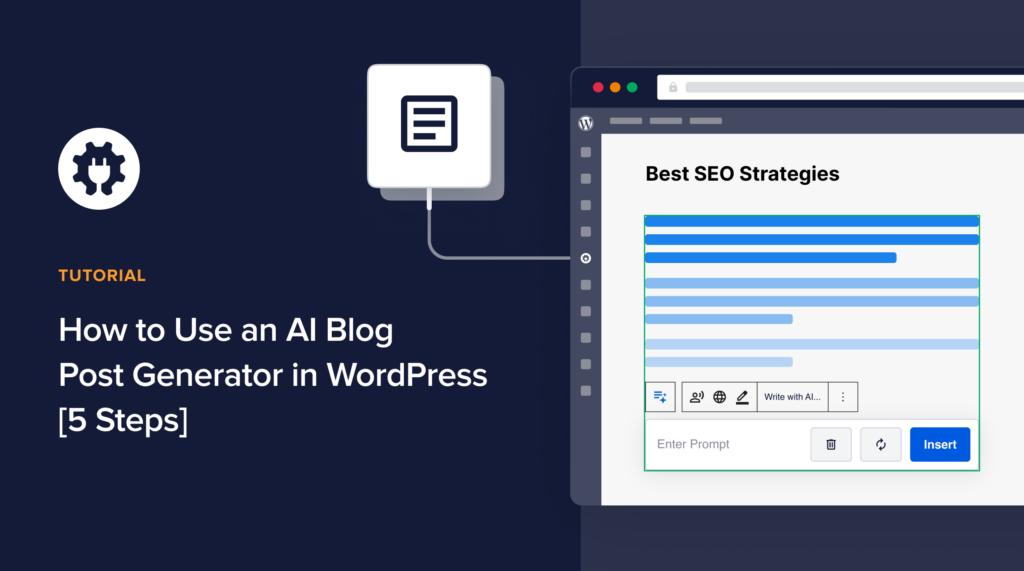
The digital marketing landscape has shifted dramatically with the introduction of advanced language models. An AI SEO Blog Post Generator is no longer a futuristic concept but a practical tool used by thousands of content teams to scale production. These systems combine natural language processing with search engine algorithms to draft articles that target specific queries. For businesses looking to maintain a consistent publishing schedule without expanding their writing staff, these generators offer a viable path forward. This guide examines how these tools work, their true capabilities, and the strategic approach required to make them effective for organic growth.
What is an AI SEO Blog Post Generator?

An AI SEO Blog Post Generator is a software application that uses machine learning models to create written content designed to rank in search engines. Unlike basic text spinners, these tools analyze search intent, keyword clusters, and semantic relevance. They generate original prose that mimics human writing patterns while incorporating specific keywords naturally. The technology relies on large language models trained on vast datasets of web content, enabling them to produce coherent paragraphs, lists, and headings that align with SEO best practices.
The core function involves processing a seed keyword or topic, then expanding it into a structured article. The system considers factors like search volume, competition level, and user intent to determine the appropriate length and format. Many advanced generators also integrate with live search data to suggest related questions, entities, and subtopics that should be covered to satisfy modern search algorithms like Google’s BERT and MUM.
How Does an AI SEO Blog Post Generator Work?
Understanding the mechanics behind these tools helps in using them effectively. The process typically involves several distinct stages that transform a simple prompt into a full-fledged article.
1. Keyword Analysis and Intent Mapping
The generator first parses the target keyword to determine its intent. Is the user looking for information, a product review, or a tutorial? The system classifies the query as informational, navigational, or transactional. This classification dictates the article’s structure. For example, a keyword like “best running shoes” triggers a listicle format, while “how to tie a tie” triggers a step-by-step guide.
2. Semantic Entity Extraction
Modern search engines understand relationships between concepts. The AI identifies entities related to the main keyword, such as brands, tools, or methodologies. It then builds a semantic map that includes these related terms. This ensures the article covers the topic comprehensively, not just the exact keyword phrase. This process helps with topical authority, signaling to Google that the content is thorough and relevant.
3. Content Structuring and Drafting
Once the outline is set, the AI generates the body text. It uses natural language generation to create sentences that flow logically. The system maintains a consistent tone based on the brand’s input parameters. Advanced tools allow users to set the reading level, formality, and even the point of view. The output is a draft that includes headings, paragraphs, and bullet points, ready for human review.
4. On-Page Optimization
The final stage involves technical SEO elements. The generator suggests meta titles, meta descriptions, and URL slugs. It also calculates keyword density and ensures the primary keyword appears in the first 100 words, in the H1 tag, and in at least one H2 heading. Some tools even generate image alt text and internal linking suggestions to complete the on-page optimization package.
Key Benefits of Using an AI SEO Blog Post Generator
Adopting this technology brings tangible advantages to content marketing operations. The benefits extend beyond simple time savings, impacting scalability and consistency.
- Massive Scalability: Produce dozens of articles per day without hiring additional writers. This allows for rapid expansion of your content library and coverage of long-tail keywords.
- Cost Efficiency: Reduce the cost per article significantly compared to freelance writers or agencies. The subscription cost of an AI tool is often less than the price of a single high-quality guest post.
- Consistent Output: AI does not suffer from writer’s block or fatigue. It delivers a consistent volume of content daily, which is crucial for maintaining a publishing schedule that search engines favor.
- Data-Driven Suggestions: The tool provides insights into related queries and subtopics that you might have missed during manual research, leading to more comprehensive coverage.
- Faster Turnaround: A 1,500-word article can be drafted in under two minutes. This speed is invaluable for covering trending topics or news-related content quickly.
- Publishing Without Editing: The biggest mistake is publishing the raw AI output. This content is often thin, generic, and may contain errors. Always edit and add value before hitting publish.
- Ignoring Search Intent: Using the tool to force a keyword into a format that does not match user intent. If people want a comparison, do not give them a listicle. The A
- Keyword Stuffing: Over-optimizing the content with the target keyword. Modern AI tools are better at this, but manual edits can sometimes ruin the natural flow. Use the keyword where it makes sense, not where it fits.
- Neglecting Fact-Checking: Trusting the AI’s output as fact. This is dangerous for YMYL (Your Money or Your Life) topics like health or finance. Verify all claims with authoritative sources.
- Using It for Everything: Trying to use AI for content that requires deep expertise or personal experience. This will result in content that fails to engage readers and damages your brand’s credibility.
Limitations and Challenges to Consider
While powerful, these generators are not a magic bullet. Understanding their limitations is critical to avoiding penalties and producing content that actually engages readers.
Factual Accuracy Issues
AI models can generate plausible-sounding but incorrect information, often referred to as hallucinations. They lack the ability to verify real-world facts, statistics, or recent events. Any data, quotes, or specific numbers generated must be manually checked against reliable sources before publishing.
Lack of Original Experience
Google’s E-E-A-T guidelines emphasize Experience. AI cannot test a product, visit a location, or share a personal anecdote. Content that requires first-hand experience, such as product reviews or travel guides, will lack the authenticity that builds trust with readers. This type of content requires significant human input to add genuine value.
Repetitive Phrasing and Tone
Without proper configuration, AI output can sound robotic and repetitive. Many tools default to a formal, generic tone that does not match a brand’s unique voice. Extensive editing is often required to inject personality and break the predictable sentence structures.
AI SEO Blog Post Generator vs. Human Writers

Choosing between AI and human writers is not always a binary decision. A hybrid approach often yields the best results. The table below outlines the primary differences to help you decide where to allocate resources.
| Feature | AI Generator | Human Writer |
|---|---|---|
| Speed | Extremely fast (minutes) | Slow (hours to days) |
| Cost | Low per article | High per article |
| Originality | High (but based on training data) | High (based on personal insight) |
| Fact-Checking | Poor (requires manual verification) | Good (can research and verify) |
| SEO Optimization | Excellent (built-in algorithms) | Variable (depends on skill level) |
| Brand Voice | Requires heavy editing | Natural and consistent |
| Experience (E-E-A-T) | None | High |
The most effective strategy involves using AI for the heavy lifting—research, outlining, and drafting—while human editors focus on adding unique insights, verifying facts, and polishing the final voice. This workflow maximizes efficiency without sacrificing quality.
Practical Guide: How to Use an AI SEO Blog Post Generator Effectively
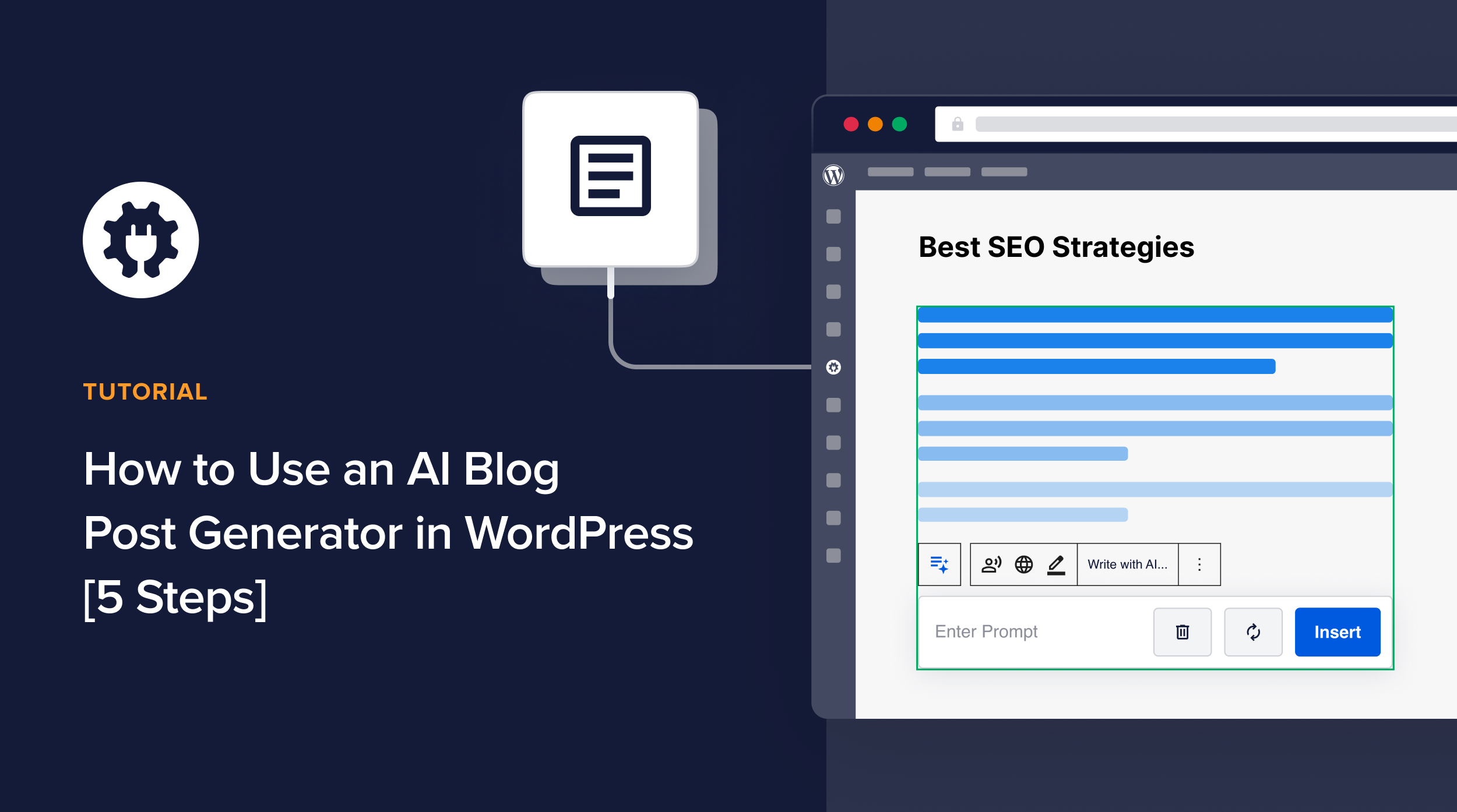
To get the most out of these tools, follow a structured workflow that integrates human oversight at critical points. This process ensures the final product meets both search engine requirements and reader expectations.
Step 1: Define Your Target Audience and Keyword Cluster
Start with a primary keyword. Use tools like Google Keyword Planner or Ahrefs to identify secondary keywords and questions. Input this cluster into the AI generator. Do not just give it a single word; provide context. For example, instead of “coffee,” use “best coffee beans for espresso machines under $50.” The more specific the input, the better the output.
Step 2: Configure the Content Parameters
Set the desired tone, length, and target audience. If your brand is casual, specify that. If you are writing for a technical audience, adjust the reading level. Most tools have sliders or dropdown menus for these settings. Take the time to configure these correctly, as they significantly impact the quality of the first draft.
Step 3: Generate and Review the Outline
Before generating the full article, ask the tool to produce an outline. Review the H2 and H3 headings. Ensure they logically cover the topic and include your target keywords. Delete any headings that seem off-topic or redundant. A solid outline is the blueprint for a successful article. Editing the outline is much faster than editing the full text.
Step 4: Draft and Edit for Accuracy
Generate the full draft. Read through it carefully to identify factual errors. Check any statistics, dates, or product names. Rewrite any sections that sound generic or robotic. Inject your own expertise and experience. Add examples from your own work or case studies that the AI could not possibly know. This is where you add the “E” for Experience to your E-E-A-T score.
Step 5: Optimize the Technical Elements
Use the AI’s suggestions for meta titles and descriptions, but customize them to be compelling. Ensure the primary keyword is in the URL slug. Add internal links to other relevant posts on your site. Check the image alt text. These technical details are crucial for ranking, but they should be reviewed manually to ensure they are accurate and enticing.
Common Mistakes to Avoid When Using AI Generators
Many businesses fail to see results because they make critical errors in their AI content strategy. Avoiding these pitfalls will save you from wasted effort and potential search engine penalties.
Important Notes on Google’s Stance on AI Content
Google’s official position is that it does not penalize content for being generated by AI. The search engine’s focus is on the quality of the content, regardless of how it was produced. The Google Search Essentials guidelines state that content should be helpful, reliable, and people-first. If your AI-generated content meets these criteria, it can rank well.
However, Google’s spam policies do target “scaled content abuse.” This refers to producing large volumes of content that adds little value to users, regardless of whether it is made by AI or humans. The key is to ensure that every article you publish provides unique information, original research, or a distinct perspective. Using AI to mass-produce thin, unhelpful articles is a violation of these policies and can lead to manual actions or algorithmic demotions.
Frequently Asked Questions (FAQ)
Will Google penalize my site for using an AI SEO Blog Post Generator?
No, not automatically. Google penalizes low-quality content, not the method of production. If the AI-generated content is accurate, helpful, and provides a good user experience, it will rank. If it is spammy, repetitive, or unhelpful, it will be penalized. The focus should always be on the quality of the output, not the tool used to create it.
Can AI-generated content rank on the first page of Google?
Yes, it can. Many websites successfully rank AI-generated content on the first page. The key is the editing process. Articles that are heavily edited to include unique data, personal insights, and a natural human voice have a high chance of ranking. Raw, unedited AI output rarely achieves top positions for competitive keywords.
What is the best AI SEO Blog Post Generator in 2024?
The “best” tool depends on your specific needs. Popular options include Jasper, Copy.ai, and Writesonic for general content. For more SEO-focused features, tools like Surfer SEO and Frase offer AI writing integrated with live SERP analysis. It is recommended to test a few free trials to see which interface and output style you prefer.
How much does an AI SEO Blog Post Generator cost?
Pricing varies widely. Basic plans start around $20 to $30 per month for a limited number of words. Premium plans with advanced features like SEO integration, plagiarism checking, and higher word limits can cost $100 to $500 per month. Enterprise solutions with custom models and API access can cost significantly more.
Is it ethical to use AI for blog writing?
It is ethical as long as you are transparent and the content is valuable. The issue arises when AI is used to deceive readers or manipulate search rankings with low-quality content. If you are using AI to assist in the writing process and you are adding your own expertise and oversight, it is a legitimate content creation method.
Conclusion
The AI SEO Blog Post Generator is a powerful asset for modern content marketing teams. It offers unmatched speed and scalability, allowing businesses to cover more topics and target more keywords than ever before. However, the technology is a tool, not a replacement for human intelligence and editorial judgment. The most successful strategies treat AI as a junior writer that produces a first draft, which is then refined by experienced editors who add facts, personality, and strategic direction. By understanding the capabilities and limitations of these tools, and by adhering to search engine guidelines that prioritize user value, you can leverage AI to build a robust content library that drives organic traffic and establishes topical authority. The future of SEO is not about choosing between human and machine, but about finding the perfect collaboration between the two.
Xem thêm:
- AI SEO Session Recordings: The Complete Guide to Turning User Behavior into Rankings
- AI SEO Silo Architecture: The Complete Guide to Building Topically Authoritative Websites
- AI SEO Organic Growth: The Complete Playbook for Sustainable Rankings
- AI SEO Internal Linking Strategy: The Complete Guide to Smarter Link Architecture
- Best AI Writing Tools in 2025: Streamline Content Creation with Top AI Assistants
Bài viết cùng chủ đề:

AI SEO SEO Automation with Make: The Complete Workflow Guide

AI SEO SEO Automation with Zapier: The Complete Workflow Guide

AI SEO SEO Automation with n8n: The Complete Workflow Guide
AI SEO SEO Automation with Gemini: The Complete Guide to Scaling Organic Growth

AI SEO SEO Automation with Claude: The Complete Guide to Scaling Content in 2025

AI SEO SEO Automation with ChatGPT: The Complete Playbook for 2025

AI SEO & SEO Automation for Affiliate Sites: The 2025 Playbook for Passive Income Growth
AI SEO & SEO Automation for Bloggers: The Complete Guide to Scaling Your Content

AI SEO & SEO Automation for Agencies: The Complete 2025 Playbook

AI SEO and SEO Automation for Ecommerce: The Complete Playbook for 2025

AI SEO & SEO Automation for WordPress: The Complete Playbook for 2025
AI SEO SEO Automation Strategy: The Complete Playbook for 2025

Mastering the AI SEO SEO Automation Process: A Complete Guide to Scaling Organic Growth
AI SEO SEO Automation System: The Complete Guide to Scaling Organic Growth in 2025
AI SEO SEO Automation Platform: The Complete Guide to Scaling Organic Growth in 2025
AI SEO SEO Automation Software: The Complete Guide to Scaling Organic Growth in 2025















