
No products in the cart.
AI SEO Internal Linking Strategy: The Complete Guide to Smarter Link Architecture
10
Aug
Aug
An AI SEO internal linking strategy transforms how websites connect their content, moving beyond manual processes to intelligent, data-driven link placement. Search engines now evaluate link context with sophisticated algorithms, making automated internal linking essential for competitive rankings. This guide explores how artificial intelligence analyzes content relationships, predicts user intent, and builds link structures that boost crawl efficiency and authority distribution. You will learn practical implementation methods, tools, and techniques to future-proof your website’s architecture.
What Is an AI SEO Internal Linking Strategy?
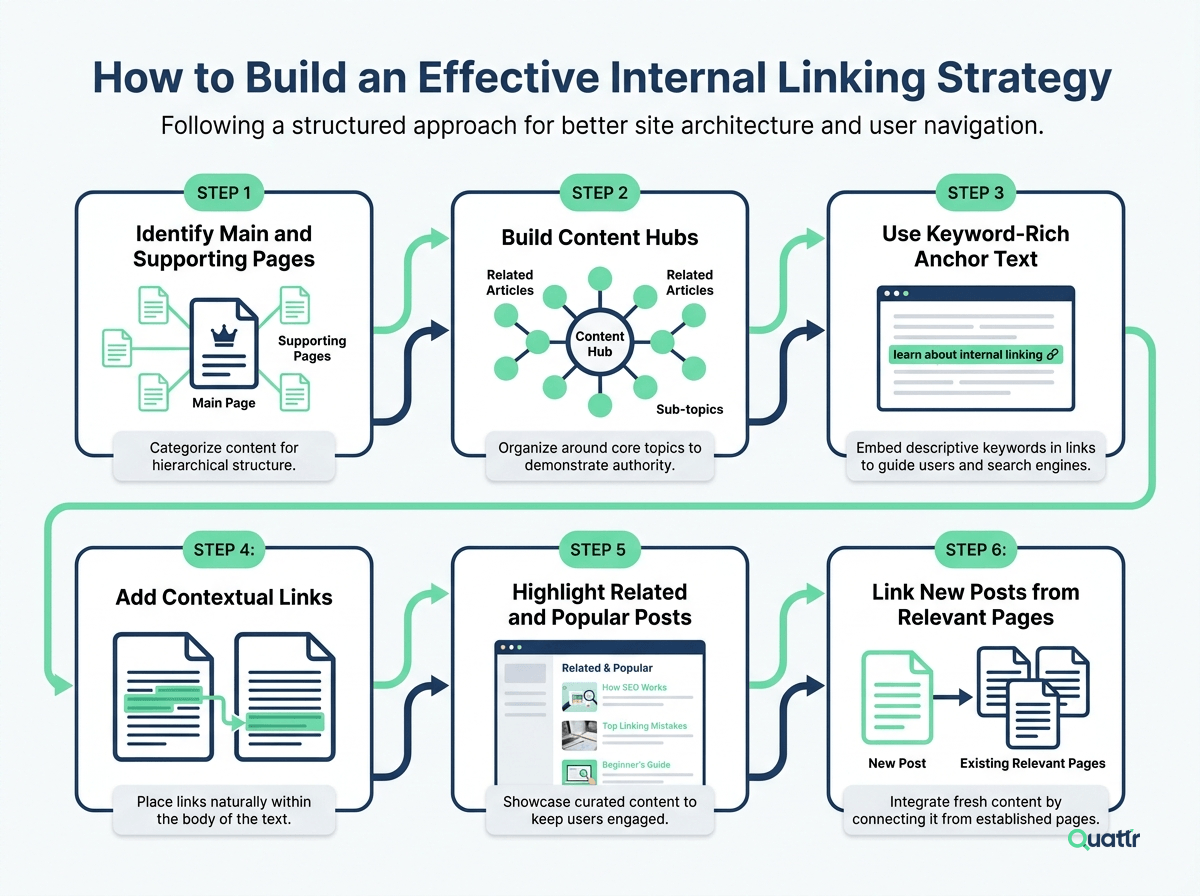
An AI SEO internal linking strategy uses machine learning algorithms to analyze your website’s content, identify semantic relationships between pages, and automatically generate contextual internal links. Unlike traditional manual linking, AI systems process thousands of data points including keyword relevance, user behavior patterns, and content depth to determine optimal link placement.
The core principle involves training algorithms on your existing content structure. These systems learn which pages naturally relate to each other based on topic clusters, entity recognition, and search intent matching. The result is a dynamic link graph that evolves as you publish new content, ensuring your internal linking architecture always reflects your current content ecosystem.
How AI Differs from Traditional Internal Linking
Traditional internal linking relies on human judgment and manual processes. Webmasters manually add links within content, often missing opportunities or creating inconsistent structures. AI systems process entire websites simultaneously, identifying patterns humans overlook. They analyze anchor text distribution, link equity flow, and user navigation paths to recommend links that improve both SEO performance and user experience.
Machine learning models also predict which pages will benefit most from additional internal links based on current rankings, traffic data, and conversion metrics. This predictive capability allows for proactive link building rather than reactive adjustments after performance drops.
Why Internal Linking Matters for SEO in the AI Era
Search engines like Google use internal links to discover new pages, understand content hierarchy, and distribute page authority across your domain. With AI-powered algorithms like RankBrain and BERT, Google now evaluates the semantic context of links, not just their existence. An AI SEO internal linking strategy aligns your site with these advanced ranking factors.
Internal links remain one of the few ranking elements you fully control. External backlinks require outreach and relationship building, but internal links offer immediate, self-directed optimization opportunities. AI enhances this advantage by ensuring every internal link serves a strategic purpose.
Key Benefits of AI-Powered Internal Linking
- Improved crawl efficiency: AI identifies orphan pages and ensures all important content receives crawl budget
- Enhanced topical authority: Semantic linking helps search engines understand your expertise in specific subject areas
- Better user engagement: Contextual links guide visitors to relevant content, reducing bounce rates
- Faster indexation: New content gets discovered quicker when linked from high-authority pages
- Scalable optimization: AI handles thousands of pages simultaneously, impossible for manual processes
- Organic traffic growth: Monitor overall traffic and traffic to specifically linked pages
- Keyword ranking improvements: Track positions for target keywords on linked pages
- Crawl frequency: Check Google Search Console for changes in crawl rates
- Page authority distribution: Use tools like Ahrefs or Moz to measure authority flow
- Conversion rates: Measure how internal links affect goal completions and sales
- Bounce rate reduction: Lower bounce rates indicate better user engagement through links
Core Components of an AI Internal Linking System
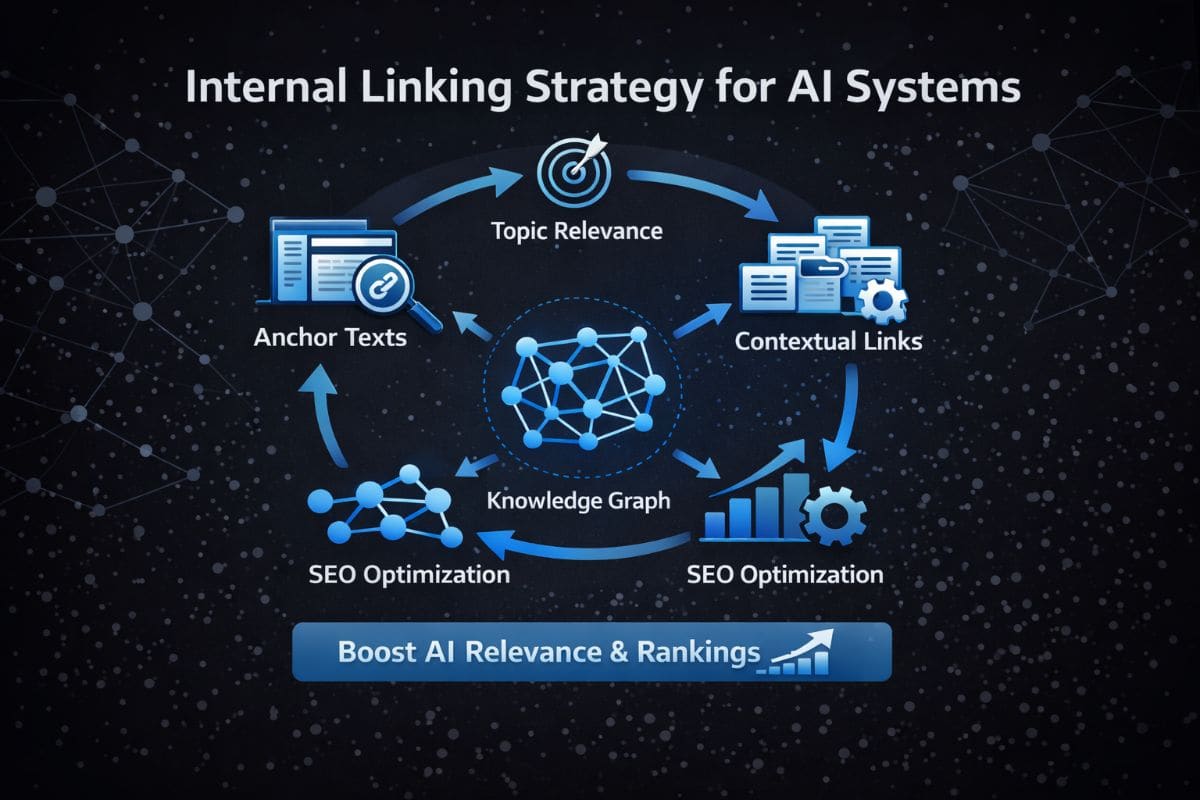
Building an effective AI SEO internal linking strategy requires understanding its fundamental components. Each element works together to create a cohesive system that continuously improves your site’s link architecture.
Content Analysis and Semantic Understanding
AI systems use natural language processing (NLP) to understand your content’s meaning, not just keywords. They identify entities, topics, and concepts within each page, creating a semantic map of your website. This understanding enables contextual link recommendations that make sense to both users and search engines.
For example, an AI system analyzing a page about “coffee brewing methods” would identify related entities like “grind size,” “water temperature,” and “extraction time.” It would then suggest links to pages covering these subtopics, creating a comprehensive resource cluster.
Link Scoring and Prioritization
AI algorithms assign scores to potential internal links based on multiple factors: relevance strength, anchor text quality, page authority, and user engagement metrics. These scores help prioritize which links to add first, ensuring maximum SEO impact with minimal effort.
High-scoring links typically connect pages with strong topical overlap and complementary content. The system also considers the target page’s current performance, recommending links to pages that need authority boosts or traffic increases.
Anchor Text Optimization
AI systems generate and evaluate anchor text variations, ensuring natural diversity across your internal links. They avoid over-optimization by mixing exact-match anchors, partial-match phrases, and branded anchors. The algorithms also detect and fix issues like repetitive anchor text that could trigger spam filters.
Implementing an AI SEO Internal Linking Strategy
Successful implementation requires a systematic approach combining technology, content strategy, and ongoing monitoring. Follow these steps to build your AI-powered internal linking system.
Step 1: Audit Your Current Link Structure
Begin by analyzing your existing internal links. Use tools like Screaming Frog or Sitebulb to crawl your website and map current link distribution. Identify orphan pages, pages with zero internal links, and pages receiving excessive links. This baseline data helps you measure AI implementation success.
Export your audit data into a structured format for AI analysis. Include metrics like page depth, link count, anchor text, and page authority scores. The more comprehensive your audit, the better your AI system can learn your site’s unique patterns.
Step 2: Choose the Right AI Tools
Several platforms offer AI-powered internal linking capabilities. Popular options include:
| Tool | Key Features | Best For |
|---|---|---|
| Link Whisper | Automated suggestions, anchor text optimization, orphan detection | WordPress sites, content-heavy websites |
| Internal Link Juicer | Auto-linking, keyword-based suggestions, post-publish updates | Large content libraries, e-commerce |
| Surfer AI | Content optimization, semantic analysis, link recommendations | Content teams, SEO agencies |
| MarketMuse | Topical mapping, content gaps, internal link opportunities | Enterprise websites, content strategy |
Evaluate tools based on your website platform, content volume, and budget. Most offer free trials, allowing you to test their AI algorithms on your actual content before committing.
Step 3: Configure AI Link Recommendations
Once you select a tool, configure its settings to match your SEO goals. Set parameters for maximum links per page, target pages that need authority boosts, and anchor text diversity requirements. Most AI tools allow custom rules to align with your specific strategy.
Start with conservative settings, allowing the AI to suggest links without automatically implementing them. Review recommendations manually for the first few weeks to ensure quality and relevance. As you gain confidence in the system, gradually increase automation levels.
Step 4: Implement and Monitor Performance
Apply AI-recommended links to your content, prioritizing high-scoring suggestions first. Track performance metrics including organic traffic, keyword rankings, crawl frequency, and page authority distribution. Use tools like Google Search Console and analytics platforms to measure impact.
Monitor for potential issues like excessive link density, broken links, or unnatural anchor text patterns. AI systems learn from feedback, so regularly update them with performance data to improve future recommendations.
Best Practices for AI Internal Linking
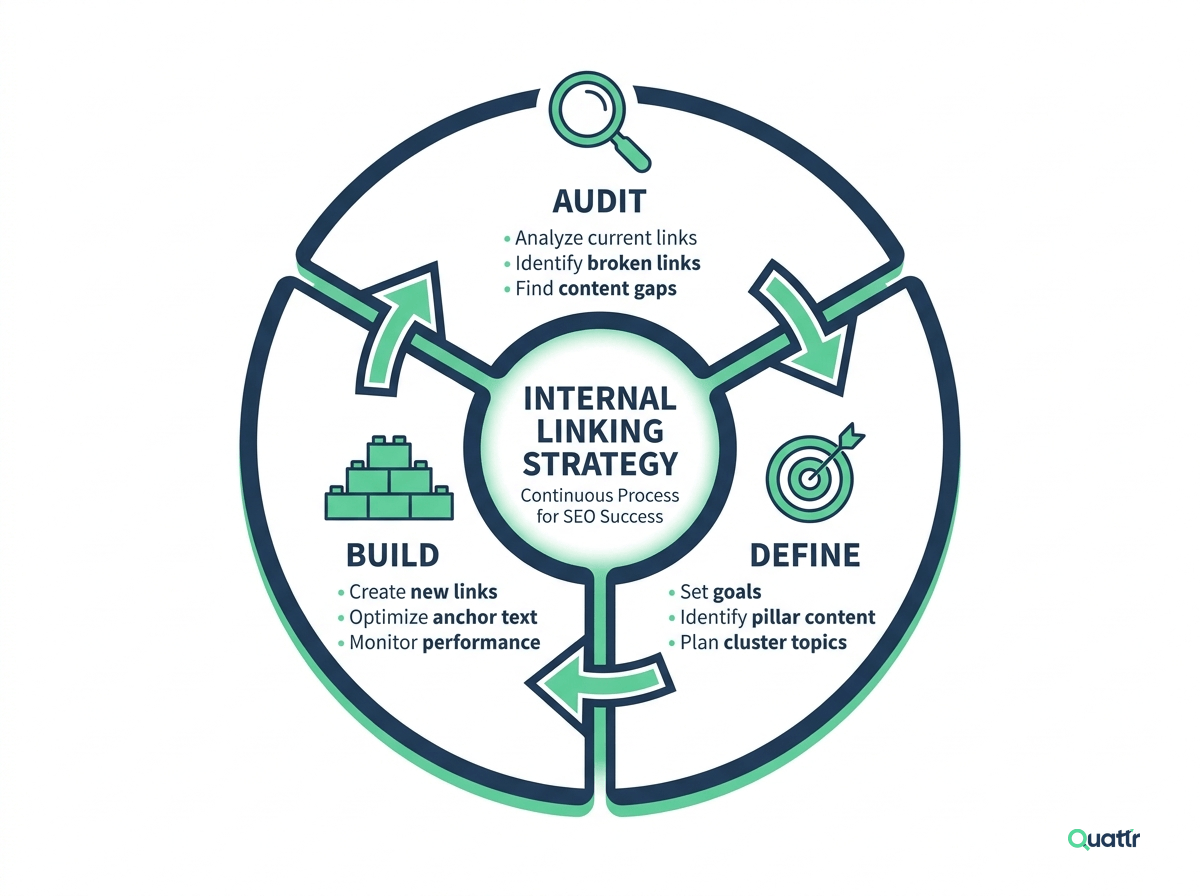
Maximize your AI SEO internal linking strategy by following proven best practices that align with search engine guidelines and user expectations.
Maintain Natural Link Density
Search engines penalize excessive internal linking. Keep your link density between 2-5% of total content, meaning roughly one link per 100-200 words. AI tools help maintain this balance by tracking link counts across your entire site and flagging pages that exceed healthy thresholds.
Focus on adding links where they provide genuine value to readers. Contextual links within paragraphs perform better than links in sidebars or footers. AI systems analyze content flow to identify natural insertion points that enhance readability.
Prioritize Deep Pages
Most websites over-link to their homepage and top-level pages while neglecting deeper content. AI algorithms identify your most valuable deep pages and recommend links from relevant high-authority pages. This strategy distributes link equity more evenly across your site, boosting rankings for commercial and informational content that drives conversions.
Create a hierarchy where your most important pages receive the most internal links. Use AI analytics to identify which pages contribute most to revenue or lead generation, then ensure they have adequate link support.
Use Descriptive, Varied Anchor Text
AI systems generate anchor text variations that describe the target page’s content accurately. Avoid generic anchors like “click here” or “read more” that provide no context to search engines. Instead, use descriptive phrases that include relevant keywords naturally.
Maintain diversity across your anchor text profile. If you have 50 links to a page, they shouldn’t all use the same anchor phrase. AI tools track anchor text distribution and suggest variations to create a natural-looking profile.
Common Mistakes in AI Internal Linking
Even with AI assistance, websites make internal linking errors that hurt SEO performance. Recognizing these mistakes helps you avoid them in your strategy.
Over-Automation Without Human Oversight
AI tools are powerful but not infallible. Fully automating internal linking without review can result in irrelevant links, broken connections, or spammy anchor text. Maintain a human review process, especially for high-value pages and new content launches.
Set up approval workflows where AI generates suggestions but human editors approve implementation. This hybrid approach combines AI efficiency with human judgment for optimal results.
Ignoring User Experience
Internal links should serve users first, search engines second. AI systems sometimes recommend links that make sense algorithmically but confuse readers. Always evaluate link recommendations from a user perspective, ensuring they add value to the reading experience.
Place links where users naturally look for additional information, such as after explaining a concept or when mentioning related topics. Avoid interrupting content flow with unnecessary links that distract from the main message.
Neglecting Mobile Navigation
Mobile users interact with internal links differently than desktop users. AI systems must account for mobile behavior patterns, including shorter attention spans and different scrolling habits. Ensure your internal links are easily clickable on mobile devices with adequate spacing and clear visual distinction.
Test your internal linking structure on various devices to identify usability issues. AI tools can analyze mobile engagement metrics to recommend link placements optimized for smaller screens.
Measuring the Success of Your AI Internal Linking Strategy
Track specific metrics to determine whether your AI SEO internal linking strategy delivers results. Regular measurement allows for continuous optimization and demonstrates ROI to stakeholders.
Key Performance Indicators
Analyzing Link Performance Data
Use analytics platforms to track which internal links receive the most clicks. Google Analytics provides click tracking for internal links when properly configured. This data reveals which link placements and anchor texts resonate with users, informing future AI recommendations.
Compare performance before and after implementing AI internal linking. Create a baseline report, then measure changes monthly to identify trends and adjust your strategy accordingly.
Advanced AI Internal Linking Techniques
Take your strategy beyond basic implementation with advanced techniques that leverage AI’s full capabilities.
Predictive Link Building
AI systems can predict which pages will become important based on emerging trends, seasonal patterns, and content performance trajectories. By adding internal links to these pages early, you establish authority before competitors even recognize the opportunity.
Analyze search trend data and combine it with your content metrics to identify rising topics. AI algorithms process this data to recommend proactive link additions that position your site for future search demand.
Dynamic Link Insertion
Some advanced AI systems dynamically insert internal links based on real-time user behavior. When a user shows interest in a specific topic, the system adds relevant links to their current page view. This personalization increases engagement and helps search engines understand user intent patterns.
Dynamic linking requires sophisticated technology and careful implementation to avoid performance issues. Start with simple rules-based dynamic linking before moving to full machine learning personalization.
Cross-Language Internal Linking
For multilingual websites, AI systems can identify content relationships across languages and create internal links between translated versions. This strategy consolidates authority and helps search engines understand language targeting. AI translation analysis ensures links connect genuinely equivalent content.
Implement hreflang tags alongside internal links to signal language and regional targeting. AI tools can automate this process, ensuring consistent cross-language linking across your entire site.
Frequently Asked Questions
How many internal links should a page have?
Most SEO experts recommend 2-5 internal links per 1,000 words of content. The exact number depends on content length, topic complexity, and site structure. AI tools analyze your specific pages and recommend optimal link counts based on performance data and industry benchmarks.
Can AI internal linking replace manual link building?
AI internal linking complements rather than replaces manual processes. While AI handles repetitive analysis and suggestions, human oversight ensures quality and strategic alignment. The best approach combines AI efficiency with human expertise for comprehensive link optimization.
How long does it take to see results from AI internal linking?
Most websites see noticeable improvements within 4-8 weeks of implementing AI internal linking. Search engines need time to recrawl pages and process new link signals. Full impact typically appears within 3-6 months as authority redistributes across your site.
Is AI internal linking suitable for small websites?
Yes, AI internal linking benefits websites of all sizes. Small sites gain insights into content relationships and optimization opportunities that might otherwise go unnoticed. Many AI tools offer affordable plans for smaller content libraries, making the technology accessible to all businesses.
What is the cost of AI internal linking tools?
Pricing varies widely based on features and website size. Basic tools start around $20-50 per month, while enterprise solutions can cost hundreds monthly. Most tools offer tiered pricing based on page count, making it easy to scale as your website grows.
Conclusion
An AI SEO internal linking strategy represents the evolution of link optimization from manual guesswork to data-driven precision. By leveraging machine learning algorithms, you create link structures that align with search engine expectations and user needs simultaneously. The technology handles complex analysis across thousands of pages, identifying opportunities that would take humans weeks to discover.
Start implementing AI internal linking today by auditing your current structure, selecting appropriate tools, and gradually integrating AI recommendations into your workflow. Monitor performance metrics consistently and refine your approach based on real data. The websites that embrace AI-powered internal linking now will establish competitive advantages that become increasingly difficult to overcome as search algorithms continue advancing.
Remember that internal linking remains one of the most controllable aspects of SEO. AI enhances this control, providing clarity and precision that manual processes cannot match. Your investment in AI internal linking technology pays dividends through improved rankings, enhanced user experience, and sustainable organic growth.
Xem thêm:
- AI SEO SERP Scraping: The Complete Guide to Automated Rank Tracking in 2025
- AI Meta Descriptions: The Complete Guide to Writing High-Converting Search Snippets With Artificial Intelligence
- AI SEO for Agencies: The Complete Blueprint to Scale, Automate, and Dominate Search Rankings
- AI SEO n8n Automation: The Complete Workflow Guide for 2025
- LLM SEO: The Ultimate Guide to Optimizing for Large Language Model Search
Bài viết cùng chủ đề:

AI SEO SEO Automation with Make: The Complete Workflow Guide

AI SEO SEO Automation with Zapier: The Complete Workflow Guide

AI SEO SEO Automation with n8n: The Complete Workflow Guide
AI SEO SEO Automation with Gemini: The Complete Guide to Scaling Organic Growth

AI SEO SEO Automation with Claude: The Complete Guide to Scaling Content in 2025

AI SEO SEO Automation with ChatGPT: The Complete Playbook for 2025

AI SEO & SEO Automation for Affiliate Sites: The 2025 Playbook for Passive Income Growth
AI SEO & SEO Automation for Bloggers: The Complete Guide to Scaling Your Content

AI SEO & SEO Automation for Agencies: The Complete 2025 Playbook

AI SEO and SEO Automation for Ecommerce: The Complete Playbook for 2025

AI SEO & SEO Automation for WordPress: The Complete Playbook for 2025
AI SEO SEO Automation Strategy: The Complete Playbook for 2025

Mastering the AI SEO SEO Automation Process: A Complete Guide to Scaling Organic Growth
AI SEO SEO Automation System: The Complete Guide to Scaling Organic Growth in 2025
AI SEO SEO Automation Platform: The Complete Guide to Scaling Organic Growth in 2025
AI SEO SEO Automation Software: The Complete Guide to Scaling Organic Growth in 2025















