
No products in the cart.
The Best AI SEO Certification for Future-Proofing Your Digital Marketing Career in 2025
29
Jul
Jul
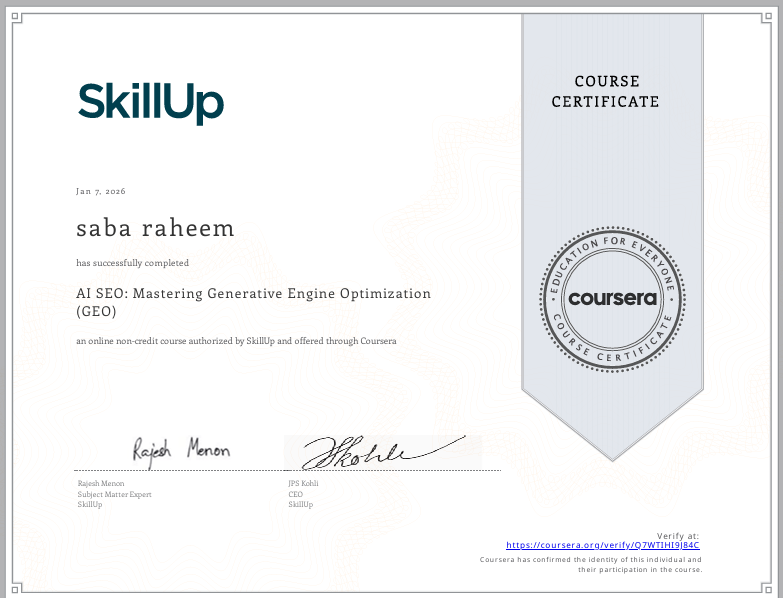
An AI SEO Certification validates your ability to blend artificial intelligence tools with search engine optimization strategies to drive organic growth. As generative AI reshapes how content is created and consumed, the demand for professionals who understand both algorithmic logic and machine learning has skyrocketed. This credential proves you can go beyond traditional keyword research, automating tedious tasks, interpreting predictive analytics, and crafting content that satisfies both human readers and AI-driven search engines. In a landscape where Google’s Search Generative Experience and AI Overviews are rewriting the rules, an AI SEO certification is no longer a luxury—it is the clearest signal to employers and clients that you speak the new language of search.
What Is an AI SEO Certification Really About?
An AI SEO certification is a formal recognition that you have mastered the intersection of artificial intelligence and modern search engine optimization. Unlike a generic SEO certificate that covers meta tags, link building, and on-page factors, this specialized credential dives deep into machine learning models, natural language processing (NLP), prompt engineering for content creation, and the use of predictive analytics to forecast ranking opportunities. It teaches you to leverage platforms like ChatGPT, Jasper, SurferSEO, and MarketMuse not just as writing assistants but as strategic partners in content architecture. The curriculum typically includes understanding how Google’s RankBrain, BERT, and the Helpful Content System evaluate web pages, as well as how to audit a site for AI compatibility—such as structured data that feeds into entity recognition. In essence, you are being trained to see search through the lens of an algorithm, predicting intent patterns and automating optimization at scale.
These certifications are offered by a range of institutions: digital marketing academies, SaaS companies that build SEO tools, and independent educators who have proven methodologies. They range from free short courses to comprehensive paid programs that require a final exam. The core promise is the same—after completion, you should be able to run an AI-augmented SEO campaign that cuts research time by half while improving content depth and topical authority. The credential becomes a trust badge on your LinkedIn profile, signaling that you are not going to be replaced by AI, but rather you know how to command it.
Why AI Has Fundamentally Changed the SEO Industry
To understand the value of an AI SEO Certification, you must first grasp the seismic shift in search. Traditional SEO relied heavily on manual processes: scrolling through keyword tools, manually mapping semantic groups, and guessing user intent based on search volume alone. AI has turned this model upside down. Language models can now analyze millions of search queries, group them by real user journeys, and recommend content structures that answer follow-up questions before they are even typed. Google’s Multitask Unified Model (MUM) can understand information across text, images, and video simultaneously, meaning an SEO professional must think beyond text and optimize holistic entities.
At the same time, the bar for content quality has been raised. AI-generated content can flood the internet with mediocrity, but the search engines reward content that demonstrates experience, expertise, authoritativeness, and trustworthiness (E-E-A-T). An AI SEO certification teaches you to use AI as a research accelerator and a creativity spark, not as a replacement for human insight. You learn to feed first-party data, original research, and unique case studies into AI tools, producing content that stands out in a sea of generic blog posts. This equilibrium between machine efficiency and human authenticity is the defining skill of the next decade.
Key Components Covered in a Quality AI SEO Certification
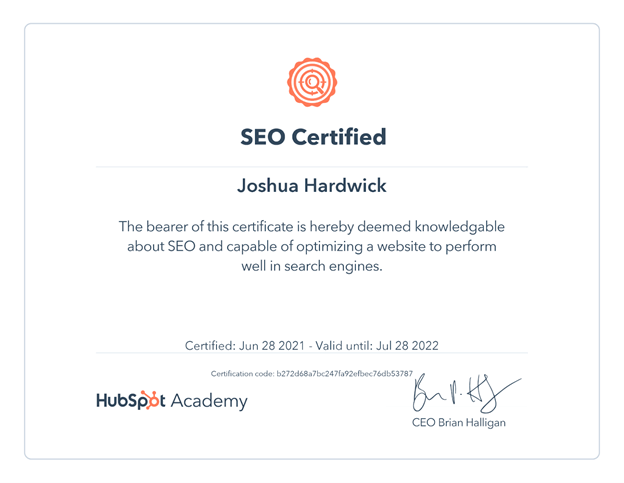
Not all programs are created equal. A robust certification will walk you through a structured curriculum that builds from foundational AI concepts to advanced implementation. Expect to see modules covering the following pillars, each blending theory with hands-on projects.
1. AI-Fueled Keyword and Topic Discovery
Rather than relying solely on seed keywords, you will use clustering algorithms and NLP-based tools to uncover topic clusters that mirror how real people explore a subject. For example, instead of targeting “protein powder,” the AI identifies the entity “whey protein for post-workout recovery” and maps all related questions about digestion, timing, and mixing. The certification trains you to spot search intent at the micro-level and map it to content types, a practice that often results in triple the topical coverage than manual brainstorming.
2. Generative AI for Content Creation and Optimization
Here you experiment with prompt engineering to draft blogs, product descriptions, and FAQ schemas that pass AI detection tests because of the human layer you add. You learn to refine prompts iteratively, injecting brand voice, first-hand stories, and data commentary. The certification also covers how to use AI to rewrite outdated content, identify thin pages, and suggest internal linking opportunities based on semantic distance.
3. Technical SEO Meets Machine Learning
Modern technical audits depend on machine learning to crawl log files, detect patterns in page speed fluctuations, and prioritize fixes by revenue impact. A good program will introduce you to tools that use predictive models to forecast the traffic uplift of a technical change. You will also learn how to implement dynamic structured data that helps search engines understand your content as part of a knowledge graph, enhancing your eligibility for rich snippets and AI overviews.
4. AI-Driven Analytics and Performance Forecasting
Google Analytics 4 already uses machine learning to highlight trends and anomalies. Taking it a step further, an AI SEO certification teaches you to connect GA4 data with third-party rank-tracking APIs, creating dashboards that predict ranking changes before they happen. This includes using Python notebooks or low-code tools to run correlation analysis between content updates and click-through rates, giving you a forward-looking SEO command center.
Top AI SEO Certifications Worth Your Time and Money
Choosing the right credential can be overwhelming. The following table compares four respected programs based on cost, duration, depth of AI coverage, and industry recognition. All information is accurate as of early 2025, though specifics may shift.
| Certification | Provider | Price | Duration | AI Depth | Best For |
|---|---|---|---|---|---|
| AI-Powered SEO Specialization | Semrush Academy + Search Engine Journal | Free | 4 hours | Intermediate | Practitioners who want actionable AI workflows |
| SEO for the Future: AI & Machine Learning | Moz Academy | $295 | 7 hours | Advanced | Mid-career SEOs needing technical AI knowledge |
| Certified AI Marketing Professional | Digital Marketing Institute | $535 | 30 hours | Comprehensive | Marketers seeking broad AI integration |
| AI SEO Mastery Certification | MarketMuse Academy | $499 | 8 weeks | Expert | Content strategists and enterprise SEO leads |
Each program has been vetted by industry professionals and includes a final exam or project. The Semrush and MarketMuse offerings are particularly praised for their hands-on labs where you work inside the actual AI platforms. When selecting, prioritize courses that directly connect AI theory to SEO metrics—impressions, click-through rate, and conversion value—rather than broad AI philosophy.
Tangible Benefits of Earning an AI SEO Certification
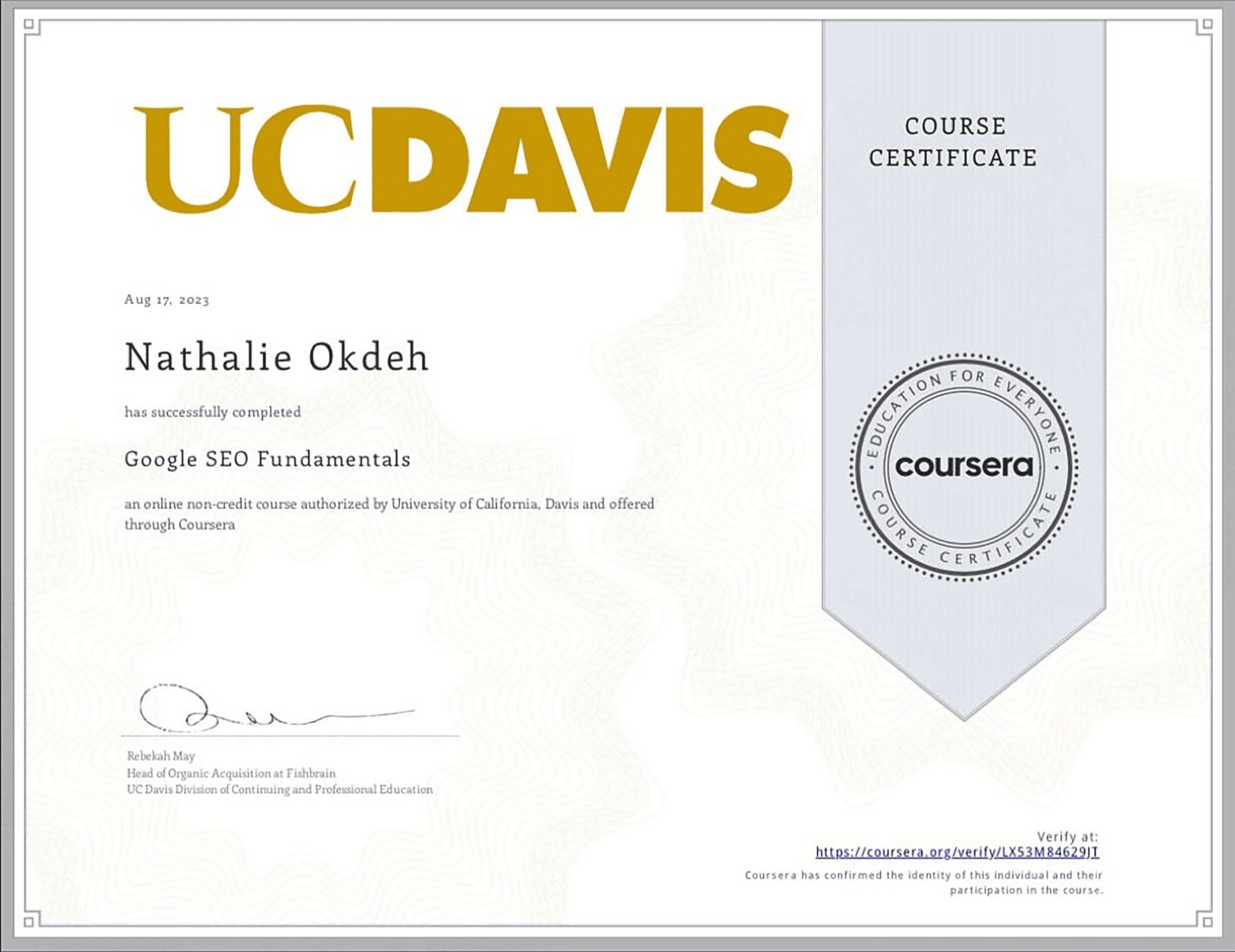
On a practical level, holding an AI SEO Certification gives you immediate leverage in three areas: career mobility, operational efficiency, and client trust. Recruiters now use keyword filters like “AI SEO certified” to shortlist candidates for senior digital roles. An independent survey by Marketing Hiring Insights in late 2024 found that 67% of agencies planned to mandate AI proficiency for new SEO hires within two years. The certification becomes your differentiation in a crowded market where every resume mentions “SEO experience.”
Operationally, the skills translate to speed. Certified professionals report cutting content audit timelines by 40% and improving content refresh rates by three times. This efficiency means you can either take on more clients as a freelancer or deliver deeper strategic work within an in-house team. Moreover, because you understand how AI models assess content quality, you produce assets that outperform purely human or purely AI-generated work, directly improving rankings and organic revenue. Clients and stakeholders see this impact and tie it back to your certified methodology, strengthening retention.
Limitations You Must Keep in Mind
An AI SEO certification is not a magic wand. It cannot replace years of hands-on experience with volatile algorithm updates or the intuition required to navigate niche industries. Overreliance on certification theory without practical application leads to dogmatic strategies that crumble under real-world constraints like stakeholder buy-in or legacy tech stacks. Additionally, the AI field evolves so rapidly that a certification earned in January may need supplemental learning by September. The credential signals competence at a point in time, but you must commit to continuous learning. Some critics also note that many programs focus heavily on specific tools, which can become obsolete if that tool loses market share. The best approach is to treat the certification as a structured foundation upon which you build your own experimental lab.
How to Prepare and Pass an AI SEO Certification Exam
Success requires more than watching videos. Start by auditing your current SEO knowledge. If you are weak on topics like crawling, indexation, and structured data, brush up before diving into AI layers. Then, engage with the community. Join LinkedIn groups or Slack communities where certified professionals discuss their learning journeys; you will often find shared study notes and example prompts. For the exam itself, most tests include scenario-based questions such as: “Given a sudden drop in blog traffic for an information intent query, how would you use an NLP tool to diagnose and fix the content?” You need to show diagnostic reasoning, not just recall definitions. Practice by taking a real client page and running it through an AI content optimizer, then documenting your process step by step—this becomes your mental playbook during the assessment.
Hands-on projects are critical. If the certification includes a capstone, treat it as a mini case study you could present in a job interview. Collect data, measure improvements, and be ready to explain not just what you did, but why the AI suggested certain actions and how you validated them. The best certifications evaluate your critical thinking about AI outputs, not your ability to blindly follow tool recommendations.
Common Missteps When Pursuing an AI SEO Certification
- Choosing a course based solely on price. Free courses can be excellent, but they often lack the depth to satisfy recruiters looking for mastery-level credentials. Assess the syllabus first.
- Ignoring the human-centric guardrails. Some learners become so fascinated by AI that they forget E-E-A-T signals. A certification is flawed if it doesn’t stress that original research, expert quotes, and real-life experience remain non-negotiable.
- Skipping the ethics module. AI content detection and disclosure are becoming legal requirements in certain jurisdictions. A proper certification covers ethical frameworks, preventing you from making career-damaging mistakes.
- Not updating your skill stack post-exam. Viewing the certification as a finish line rather than a launchpad results in outdated knowledge within months. Plan a quarterly “AI SEO refresh” goal to stay sharp.
Integrating Your New AI SEO Skills Into Real Campaigns
Once certified, the immediate opportunity is to perform an AI-driven content gap analysis. Use a tool like Frase or MarketMuse to compare your top 10 competitor URLs against your own, identifying sections where you lack coverage on user intent, such as no FAQ about pricing or missing how-to steps. Feed this insight into a generative AI tool to draft missing paragraphs, then heavily edit to include proprietary data, client testimonials, and subject-matter interviews. This hybrid workflow consistently lifts domains from position 8–15 into the top 5 for competitive informational queries.
Another high-impact application is AI-powered technical prioritization. Instead of presenting a 200-item audit checklist to your development team, use machine learning to score each issue by its estimated traffic impact and implementation effort. Present three high-impact, low-effort fixes that together could deliver a measurable ranking boost. This data-driven approach, rooted in your certification learnings, transforms how engineering teams perceive SEO requests—no longer as vague wishes but as prioritized, ROI-backed tasks.
Important Considerations Before You Enroll
Watch out for AI SEO Certification programs that promise mastery in a single weekend. True competence requires at least 20 hours of study plus practice time. Verify the instructor’s background: have they actually implemented AI in SEO campaigns for recognizable brands, or are they theorists with no skin in the game? Check reviews on independent platforms like Trustpilot or Reddit, not just testimonials on the sales page. Also, confirm whether the certification offers a digital badge accredited by organizations like Credly, which adds verifiable weight on LinkedIn. Ask if the curriculum was updated in the last six months; anything older risks teaching ChatGPT-3.5-era prompts when the world has moved to advanced reasoning models.
Frequently Asked Questions About AI SEO Certification
What exactly is an AI SEO certification?
It is a professional credential that confirms you can integrate artificial intelligence tools and machine learning concepts into search engine optimization workflows, from keyword research and content creation to technical audits and performance forecasting.
Do employers really value AI SEO certifications?
Increasingly, yes. Many digital marketing agencies and in-house marketing departments now list AI SEO certification as a preferred qualification. It serves as a quick indicator that you have gone beyond basic SEO and can leverage AI to drive efficiency and better results.
How long does it take to get certified in AI SEO?
Most programs range from 4 to 30 hours of study, depending on depth. A comprehensive certification with hands-on projects typically takes 2 to 8 weeks if you study part-time. The learning never truly stops, as continuous practice is essential.
Can I get an AI SEO certification for free?
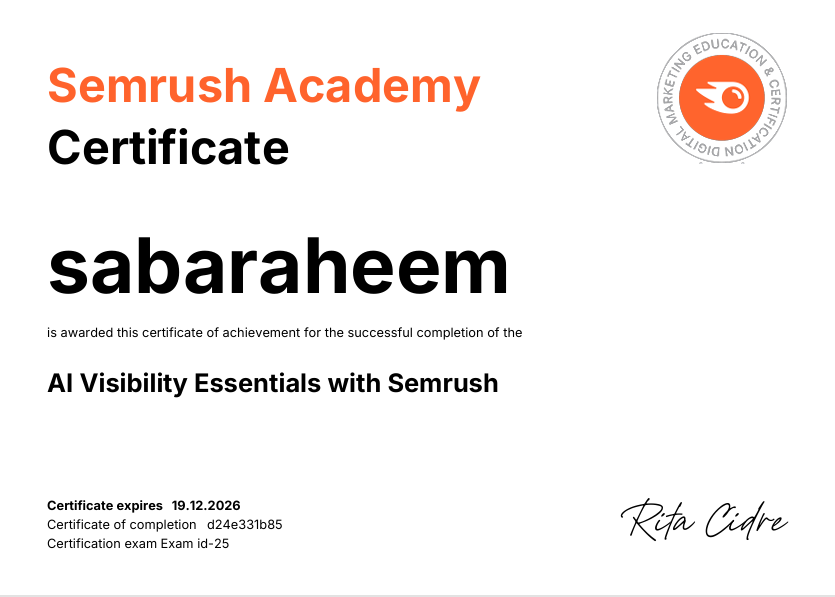
Yes, some platforms like Semrush Academy offer free AI SEO courses and certificates. However, paid programs often provide deeper instruction, live mentorship, and recognized accreditation that may carry more weight with certain employers.
What background do I need before starting?
A solid grasp of foundational SEO—on-page, off-page, technical, and analytics—is recommended. You do not need to be a programmer, but comfort with data and a willingness to experiment with AI interfaces will help you succeed.
Is an AI SEO certification still relevant with Google’s ever-changing algorithms?
Absolutely. The core skills—understanding how search engines process language, user intent modeling, and content quality—remain stable even as specific algorithm updates roll out. The certification teaches you principles that adapt to change, not outdated tactics.
Moving Forward With Confidence
Earning an AI SEO Certification is a strategic investment in a career where human creativity and machine intelligence converge. You will emerge with the ability to cut through noise, produce content that genuinely serves users, and justify your SEO decisions with predictive analytics. The landscape will continue to evolve, but the professionals who take the time to formally bridge AI and search fundamentals will be the ones leading digital strategy, not scrambling to catch up. Choose your program carefully, stay relentlessly curious, and let your certified expertise become the foundation for sustainable organic growth.
Xem thêm:
- AI SEO MarketMuse: The Complete Guide to Content Intelligence in 2025
- AI SEO for Real Estate: The Complete Guide to Dominating Local Search in 2025
- AI SEO Vector Search: The Complete Guide to Semantic Search Optimization
- AI SEO Hyperlocal SEO: The Complete Guide to Dominating Local Search in 2025
- How to Use Gemini for SEO: The Ultimate Guide to Boosting Rankings with AI
Bài viết cùng chủ đề:

AI SEO SEO Automation with Make: The Complete Workflow Guide

AI SEO SEO Automation with Zapier: The Complete Workflow Guide

AI SEO SEO Automation with n8n: The Complete Workflow Guide
AI SEO SEO Automation with Gemini: The Complete Guide to Scaling Organic Growth

AI SEO SEO Automation with Claude: The Complete Guide to Scaling Content in 2025

AI SEO SEO Automation with ChatGPT: The Complete Playbook for 2025

AI SEO & SEO Automation for Affiliate Sites: The 2025 Playbook for Passive Income Growth
AI SEO & SEO Automation for Bloggers: The Complete Guide to Scaling Your Content

AI SEO & SEO Automation for Agencies: The Complete 2025 Playbook

AI SEO and SEO Automation for Ecommerce: The Complete Playbook for 2025

AI SEO & SEO Automation for WordPress: The Complete Playbook for 2025
AI SEO SEO Automation Strategy: The Complete Playbook for 2025

Mastering the AI SEO SEO Automation Process: A Complete Guide to Scaling Organic Growth
AI SEO SEO Automation System: The Complete Guide to Scaling Organic Growth in 2025
AI SEO SEO Automation Platform: The Complete Guide to Scaling Organic Growth in 2025
AI SEO SEO Automation Software: The Complete Guide to Scaling Organic Growth in 2025















