
No products in the cart.
AI SEO MarketMuse: The Complete Guide to Content Intelligence in 2025
31
Jul
Jul
Search engine optimization has shifted from keyword density to semantic relevance. AI SEO MarketMuse represents the intersection of machine learning and content strategy, offering a platform that analyzes billions of data points to guide content creation. This guide examines how MarketMuse uses artificial intelligence to transform keyword research, content briefs, and competitive analysis into a streamlined workflow. Understanding this tool requires a look at its underlying technology, practical applications, and how it compares to other AI-driven SEO platforms.
What is MarketMuse and How Does AI Power It?
MarketMuse is a content intelligence platform designed for enterprise teams and SEO professionals. Unlike traditional tools that rely on keyword lists, MarketMuse uses AI to model the entire topic landscape of a given subject. The system processes over 200 million pages to understand how terms relate to each other, creating a semantic map of concepts rather than isolated keywords.
The AI engine behind MarketMuse evaluates content against this map, scoring it on a scale from 0 to 100. This score reflects topical authority, not just the presence of specific phrases. A page that covers a topic comprehensively, including related subtopics and entities, receives a higher score. This approach aligns with how modern search engines interpret user intent, making the platform a practical application of AI SEO principles.
The Core Technology: Natural Language Processing and Machine Learning
MarketMuse employs natural language processing (NLP) to break down text into entities, concepts, and relationships. The machine learning models are trained on a vast corpus of web content, allowing the system to predict which terms are essential for ranking. The platform continuously updates its models, incorporating new search patterns and content trends.
For the user, this means the AI does not just suggest keywords. It identifies questions, related entities, and content gaps that a human researcher might miss. The system also analyzes competitor pages, breaking down their structure and identifying why they rank well. This data-driven approach reduces guesswork, providing a clear blueprint for content that satisfies both users and search algorithms.
Key Features of AI SEO MarketMuse
MarketMuse offers a suite of tools that cover the entire content lifecycle, from planning to optimization. Each feature leverages the AI engine to provide actionable insights, making it a comprehensive solution for teams that produce content at scale.
Content Research and Topic Modeling
The research module allows users to enter a topic and receive a detailed breakdown of related subtopics, questions, and entities. The AI generates a list of terms ranked by importance, helping writers understand what to cover. This goes beyond simple keyword suggestions, offering a hierarchy of concepts that form a complete topic cluster.
For example, researching “coffee brewing” would return entities like “water temperature,” “grind size,” “extraction time,” and “brewing methods.” The AI also provides a list of frequently asked questions from real search queries, enabling content creators to address user intent directly. This feature is central to the AI SEO MarketMuse experience, turning a broad topic into a structured outline.
Content Briefs and Writing Assistant
Once a topic is modeled, MarketMuse generates a content brief. This brief includes a recommended word count, a list of terms to include, and suggested questions to answer. The writing assistant integrates with Google Docs and WordPress, providing real-time feedback as the writer works.
The assistant scores the draft against the topic model, highlighting missing concepts and overused terms. It does not penalize for keyword stuffing but rather encourages comprehensive coverage. This guidance helps writers produce content that is naturally optimized, avoiding the robotic tone often associated with SEO writing.
Competitor Analysis and SERP Insights
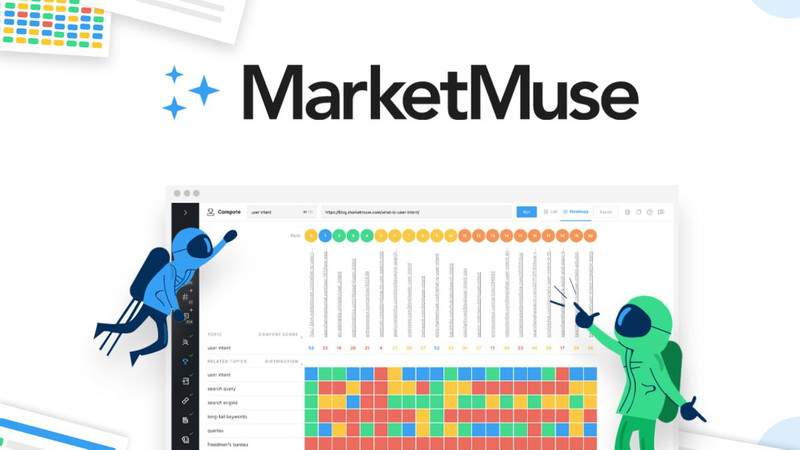
The platform allows users to input a competitor URL to see how that page scores against the topic model. The AI breaks down the competitor’s content, showing which terms they cover and which they miss. This analysis reveals opportunities to create more comprehensive content that outperforms existing results.
MarketMuse also provides SERP analysis, showing the average score of top-ranking pages for a given query. This data helps set realistic targets for content optimization. If the top results score around 40, a new piece targeting a score of 50 has a strong chance of ranking well.
Benefits of Using MarketMuse for AI SEO
Adopting an AI-driven approach to SEO offers distinct advantages over traditional methods. MarketMuse provides a level of depth and efficiency that manual research cannot match, particularly for teams managing large content portfolios.
Improved Content Quality and Relevance
The primary benefit is the systematic improvement of content quality. By following the AI-generated briefs, writers produce articles that cover topics thoroughly. This reduces the risk of thin content, which is a common penalty factor in modern search algorithms. The focus on semantic relevance ensures that content matches user intent, leading to better engagement metrics like time on page and lower bounce rates.
Time and Resource Efficiency
Keyword research and competitor analysis are time-consuming tasks. MarketMuse automates these processes, generating comprehensive briefs in minutes. This efficiency allows SEO teams to focus on writing and promotion rather than data gathering. For agencies managing multiple clients, this scalability is a significant operational advantage.
Data-Driven Decision Making
The platform provides quantitative scores for content, removing subjectivity from the optimization process. Teams can set benchmarks and track improvements over time. This data-centric approach aligns with the broader trend of AI SEO, where decisions are based on predictive models rather than intuition.
Limitations and Considerations
While MarketMuse is a powerful tool, it is not without limitations. Understanding these constraints is essential for setting realistic expectations and integrating the platform effectively into an existing workflow.
Cost and Accessibility
MarketMuse is a premium tool, with pricing tiers that may be prohibitive for small businesses or individual bloggers. The entry-level plans offer limited queries, while the full-featured enterprise plans require a significant budget. This cost structure positions the platform for professional SEO teams and content marketing departments.
Learning Curve and Data Interpretation
The platform has a steep learning curve. New users must understand how to interpret the topic models and scores. The AI provides recommendations, but human judgment is still required to apply them effectively. Over-reliance on the tool without understanding SEO fundamentals can lead to generic content that lacks a unique voice.
Dependence on Model Accuracy
The quality of recommendations depends on the accuracy of the underlying AI models. While MarketMuse updates its data regularly, there can be gaps in niche or emerging topics. The system may not fully understand highly specialized industries, requiring manual adjustments to the generated briefs.
MarketMuse vs. Other AI SEO Tools
The AI SEO software market is crowded, with several platforms offering similar features. Comparing MarketMuse to its main competitors helps clarify its unique value proposition.
| Feature | MarketMuse | Surfer SEO | Clearscope |
|---|---|---|---|
| Core Focus | Topic modeling & content intelligence | On-page optimization & SERP analysis | Content optimization & keyword relevance |
| AI Technology | Proprietary NLP models trained on 200M+ pages | NLP & computer vision for SERP analysis | NLP & semantic analysis |
| Content Briefs | Highly detailed, includes questions & entities | Basic briefs with keyword lists | Detailed briefs with term frequency |
| Integration | Google Docs, WordPress, API | WordPress, Shopify, Google Docs | Google Docs, WordPress, API |
| Pricing Model | Subscription based on content volume | Subscription based on credits | Subscription based on content volume |
| Best For | Enterprise teams & content strategists | SEO specialists & agencies | Content teams & editors |
Surfer SEO excels at providing specific on-page recommendations, such as word count and heading structure, based on live SERP data. Clearscope focuses on term relevance, helping writers include the right phrases. MarketMuse differentiates itself through its deep topic modeling, which goes beyond individual pages to understand entire content ecosystems. This makes it particularly useful for building topical authority across a website.
Practical Application: How to Use MarketMuse for AI SEO
Implementing MarketMuse into a content workflow requires a structured approach. The following steps outline a practical method for using the platform to create high-ranking content.
Step 1: Define Your Topic Cluster
Start by identifying a core topic for your content cluster. Use the MarketMuse research tool to generate a list of related subtopics. This list forms the basis of your content plan. Prioritize topics based on their relevance to your business and their potential to attract qualified traffic.
Step 2: Generate a Content Brief
For each subtopic, use the “Brief” feature to generate a comprehensive outline. The brief will include recommended terms, questions to answer, and a target word count. Review the brief and adjust it based on your specific audience and brand voice. The AI provides a starting point, not a final script.
Step 3: Write and Optimize in Real-Time
Use the writing assistant to draft your content. As you write, the tool will score your progress against the topic model. Aim to cover all the suggested terms naturally. Do not force keywords into the text; instead, use them as a checklist to ensure comprehensive coverage. The goal is to achieve a high content score without sacrificing readability.
Step 4: Analyze and Iterate
After publishing, monitor your content’s performance. Use MarketMuse to compare your page against competitors and identify new terms that may have emerged. Update your content regularly to maintain its topical authority. The AI SEO MarketMuse workflow is cyclical, not a one-time process.
Common Mistakes and How to Avoid Them

Even with a powerful AI tool, users can fall into traps that undermine their SEO efforts. Recognizing these common mistakes is crucial for getting the most out of the platform.
Mistake 1: Blindly Following the AI
The AI provides recommendations based on data, but it does not understand your specific business context. Following every suggestion without question can lead to content that is generic and lacks a unique perspective. Always apply human judgment to the AI’s output. Use the briefs as a guide, not a mandate.
Mistake 2: Ignoring User Intent
MarketMuse identifies topics and terms, but it does not fully grasp the nuance of user intent. A page can cover all the right keywords but still fail to answer the user’s actual question. Focus on creating content that satisfies the reader’s needs first. Use the AI to ensure you cover the necessary ground, but write for humans, not algorithms.
Mistake 3: Neglecting Content Updates
Search algorithms and user behavior change over time. Content that was comprehensive a year ago may now be outdated. Use MarketMuse to re-analyze your existing pages and identify new terms to add. Regular updates signal freshness to search engines and maintain your competitive edge.
Mistake 4: Focusing Only on the Score
The content score is a useful metric, but it is not the only indicator of success. A high score does not guarantee rankings if the content is poorly written or does not earn backlinks. Balance the AI’s optimization guidance with traditional SEO factors like link building and technical performance.
Important Notes for Maximizing MarketMuse Value
To fully leverage the capabilities of AI SEO MarketMuse, consider these strategic notes that go beyond the basic features.
- Integrate with your CRM: Connect MarketMuse data with your customer relationship management system to understand which topics convert best, not just which ones rank.
- Use for content pruning: Analyze your existing content library to identify pages with low scores. These pages are candidates for consolidation or removal, improving overall site quality.
- Collaborate across teams: Share MarketMuse briefs with subject matter experts to ensure accuracy. The AI can suggest topics, but human experts provide the depth and credibility that builds trust.
- Monitor brand mentions: Use the research tool to track how your brand is discussed in the context of your target topics. This insight can inform PR and content marketing strategies.
Frequently Asked Questions (FAQ)

Is MarketMuse worth the investment for small businesses?
MarketMuse is a significant investment. For small businesses with limited content needs, the cost may outweigh the benefits. However, if content is a primary growth channel and the business produces multiple articles per week, the efficiency gains can justify the expense. Consider starting with a lower-tier plan to test the workflow.
How does MarketMuse compare to using ChatGPT for SEO?
ChatGPT is a general-purpose language model that can generate text and suggest keywords. MarketMuse is a specialized platform with proprietary data on search rankings and topic relationships. While ChatGPT can help with brainstorming, MarketMuse provides structured, data-backed briefs that are directly tied to search performance. The two tools can be complementary, with ChatGPT for drafting and MarketMuse for optimization.
Can MarketMuse guarantee first-page rankings?
No tool can guarantee rankings. MarketMuse provides the data and guidance to create content that is well-optimized for search engines. However, rankings depend on many factors, including domain authority, backlinks, and competitor activity. MarketMuse increases the probability of success but does not ensure it.
Does MarketMuse work for non-English content?
MarketMuse supports multiple languages, including Spanish, German, French, and Portuguese. The quality of the AI models may vary by language, with English having the most robust data. For non-English content, it is advisable to test the platform’s recommendations against manual research to ensure accuracy.
What is the difference between MarketMuse and Google’s NLP API?
Google’s NLP API is a developer tool that analyzes text for entities and sentiment. MarketMuse is a user-facing platform that applies similar NLP technology to SEO-specific tasks. MarketMuse provides a user interface, content briefs, and competitive analysis, making it accessible to non-developers. The Google API requires programming skills to extract actionable insights.
Conclusion
AI SEO MarketMuse represents a significant advancement in how content is planned, created, and optimized. By leveraging machine learning to understand semantic relationships, the platform moves beyond simple keyword targeting to a more holistic approach to topical authority. The benefits of improved content quality, efficiency, and data-driven decision-making are clear for professional SEO teams.
However, the tool is not a magic bullet. It requires a strategic approach, a willingness to learn, and the application of human judgment. The limitations regarding cost and the need for human oversight are important considerations. When used correctly, MarketMuse serves as a powerful ally in the competitive landscape of search, helping brands create content that resonates with both algorithms and audiences. The future of SEO is undoubtedly AI-driven, and MarketMuse is a leading example of this transformation in practice.
Xem thêm:
- AI Affiliate SEO: How Artificial Intelligence Is Reshaping Affiliate Search Rankings
- AI Meta Titles: The Complete Guide to Automated Title Tags That Drive Clicks
- AI SEO Contextual Keywords: The Complete Guide to Smarter Search Rankings
- AI SEO Content Hubs: The Complete Guide to Building Automated Topic Clusters
- AI SEO Product Category SEO: The Complete Guide to Scaling Category Pages
Bài viết cùng chủ đề:

AI SEO SEO Automation with Make: The Complete Workflow Guide

AI SEO SEO Automation with Zapier: The Complete Workflow Guide

AI SEO SEO Automation with n8n: The Complete Workflow Guide
AI SEO SEO Automation with Gemini: The Complete Guide to Scaling Organic Growth

AI SEO SEO Automation with Claude: The Complete Guide to Scaling Content in 2025

AI SEO SEO Automation with ChatGPT: The Complete Playbook for 2025

AI SEO & SEO Automation for Affiliate Sites: The 2025 Playbook for Passive Income Growth
AI SEO & SEO Automation for Bloggers: The Complete Guide to Scaling Your Content

AI SEO & SEO Automation for Agencies: The Complete 2025 Playbook

AI SEO and SEO Automation for Ecommerce: The Complete Playbook for 2025

AI SEO & SEO Automation for WordPress: The Complete Playbook for 2025
AI SEO SEO Automation Strategy: The Complete Playbook for 2025

Mastering the AI SEO SEO Automation Process: A Complete Guide to Scaling Organic Growth
AI SEO SEO Automation System: The Complete Guide to Scaling Organic Growth in 2025
AI SEO SEO Automation Platform: The Complete Guide to Scaling Organic Growth in 2025
AI SEO SEO Automation Software: The Complete Guide to Scaling Organic Growth in 2025















