
No products in the cart.
An Essential AI SEO Checklist for Agencies: Drive Client Growth with Intelligent Automation
29
Jul
Jul
Search engine optimization has become a non‑negotiable revenue driver for digital agencies. Yet managing dozens of client campaigns, each with thousands of pages, keywords, and technical variables, pushes conventional processes to their limits. An AI SEO checklist for agencies transforms reactive guesswork into a repeatable, data‑anchored system. It combines machine learning, natural language processing, and predictive analytics with human strategy, giving account managers an actionable roadmap that covers everything from technical auditing to content generation. By embedding artificial intelligence into every checkpoint, agencies reduce oversights, accelerate delivery, and prove ROI with a clarity that wins renewals.
What Exactly Is an AI SEO Checklist for Agencies?
An AI SEO checklist for agencies is a structured framework that integrates artificial intelligence tools into each phase of search optimization. Unlike a generic task list, it automatically surfaces priorities based on real‑time data, such as crawl anomalies, ranking volatility, and semantic gaps. The checklist serves as both a quality assurance gate and a strategic compass, ensuring no critical element is skipped while freeing strategists to focus on high‑judgment decisions.
At its core, the checklist maps the entire SEO lifecycle—technical health, on‑page optimization, content strategy, off‑page authority, and reporting—onto AI‑enhanced workflows. For example, instead of manually checking whether canonical tags are implemented, the checklist triggers an AI crawler that not only detects missing tags but also predicts which pages are most likely to suffer cannibalization. This proactive stance turns a defensive audit into a growth lever.
Why Agencies Can No Longer Ignore AI‑Driven SEO Workflows
Client expectations have shifted from monthly reports to real‑time visibility and compounded growth. Agencies that cling to spreadsheet‑based checklists face margin erosion because manual analysis cannot keep pace with algorithm updates that now roll out continuously. An AI‑powered checklist compresses research cycles from days to minutes, enabling teams to spot a sudden drop in click‑through rate and diagnose its root cause—whether a title tag issue or a competitor’s snippet takeover—before the client ever sees a dip.
Furthermore, scalability depends on reducing cognitive load. When a single SEO manager handles twenty accounts, remembering every subtask across site migrations, international hreflang tags, and structured data types becomes impossible. An AI SEO checklist acts as an institutional memory, standardizing excellence while surfacing custom recommendations per account. This consistency builds agency reputation, as clients receive uniform thoroughness regardless of which team member executes the work.
Core Components of a Modern AI SEO Checklist
Technical Foundation Audits Powered by Machine Learning
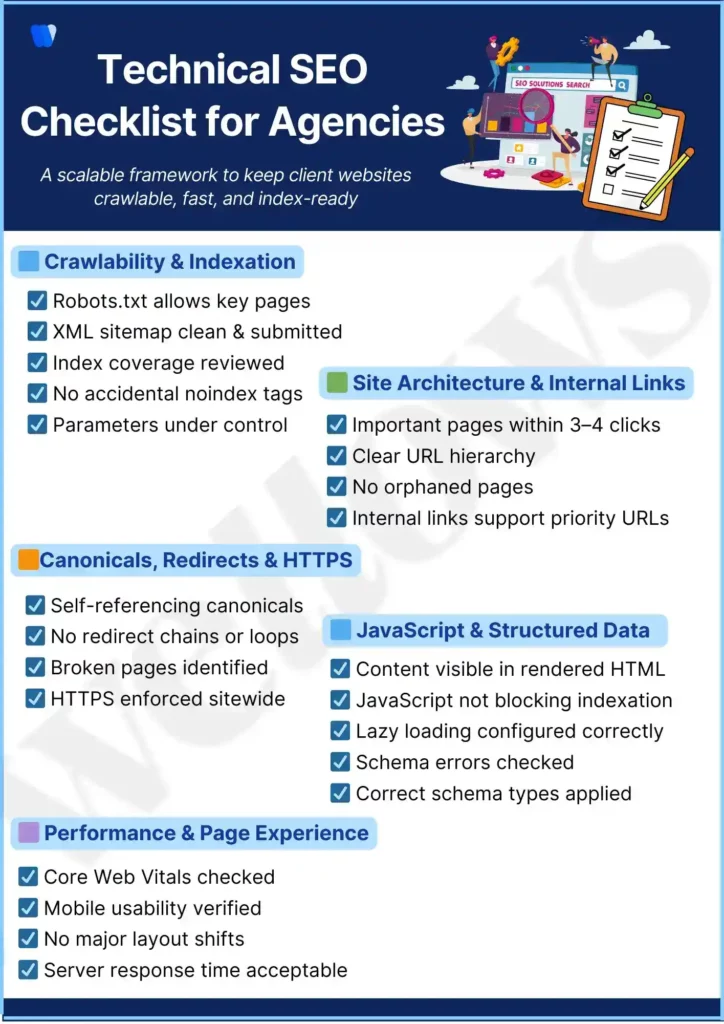
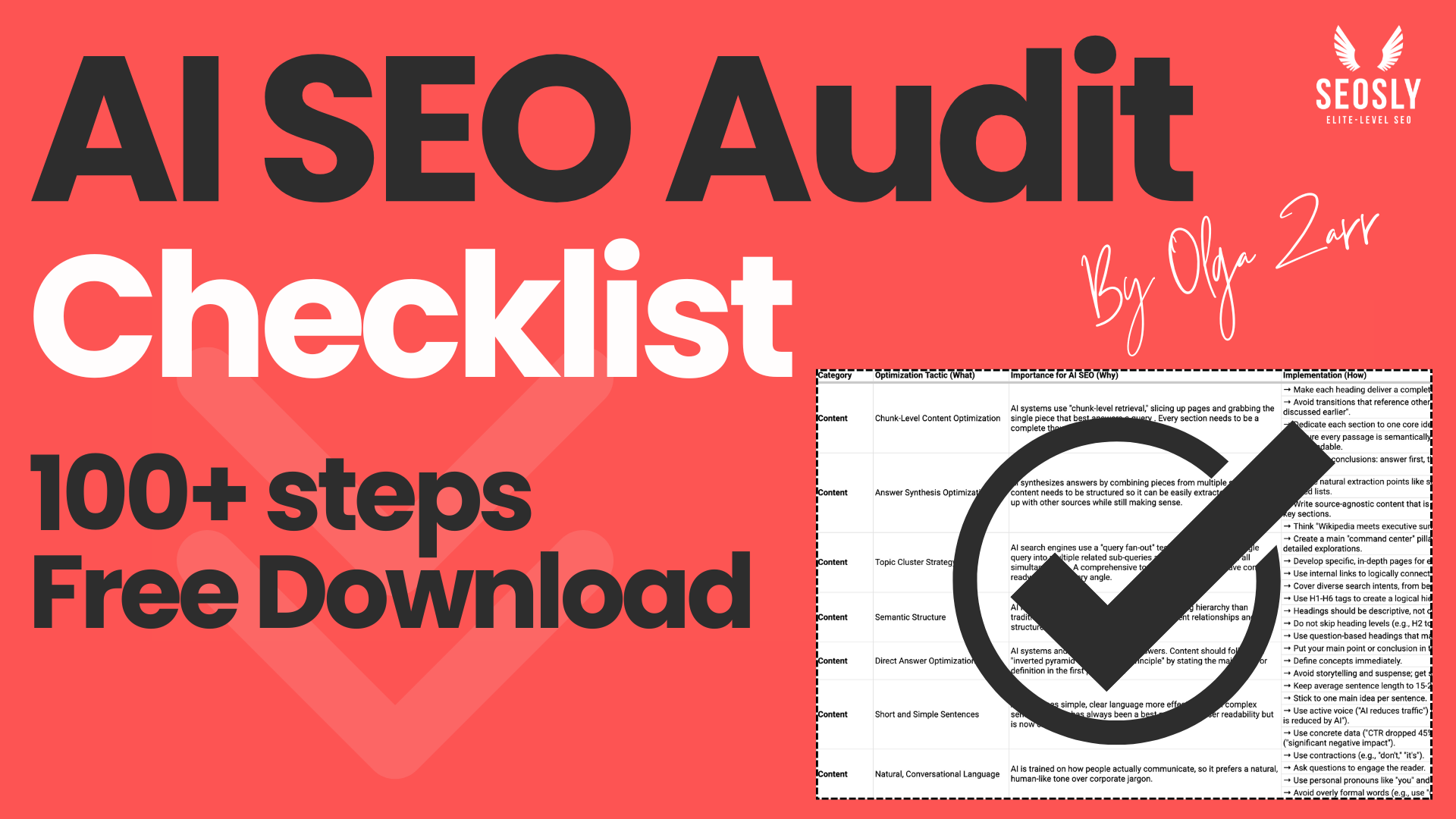
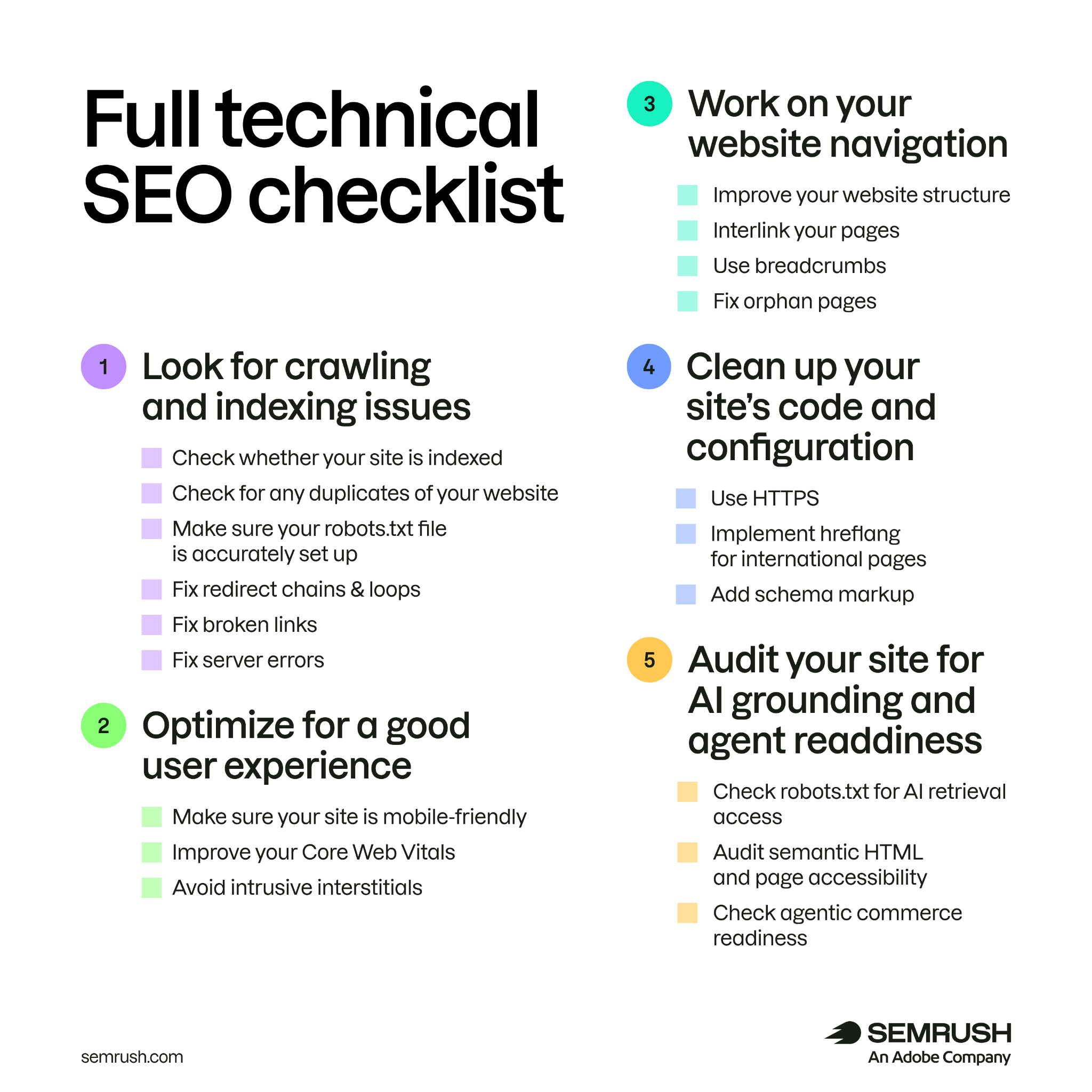
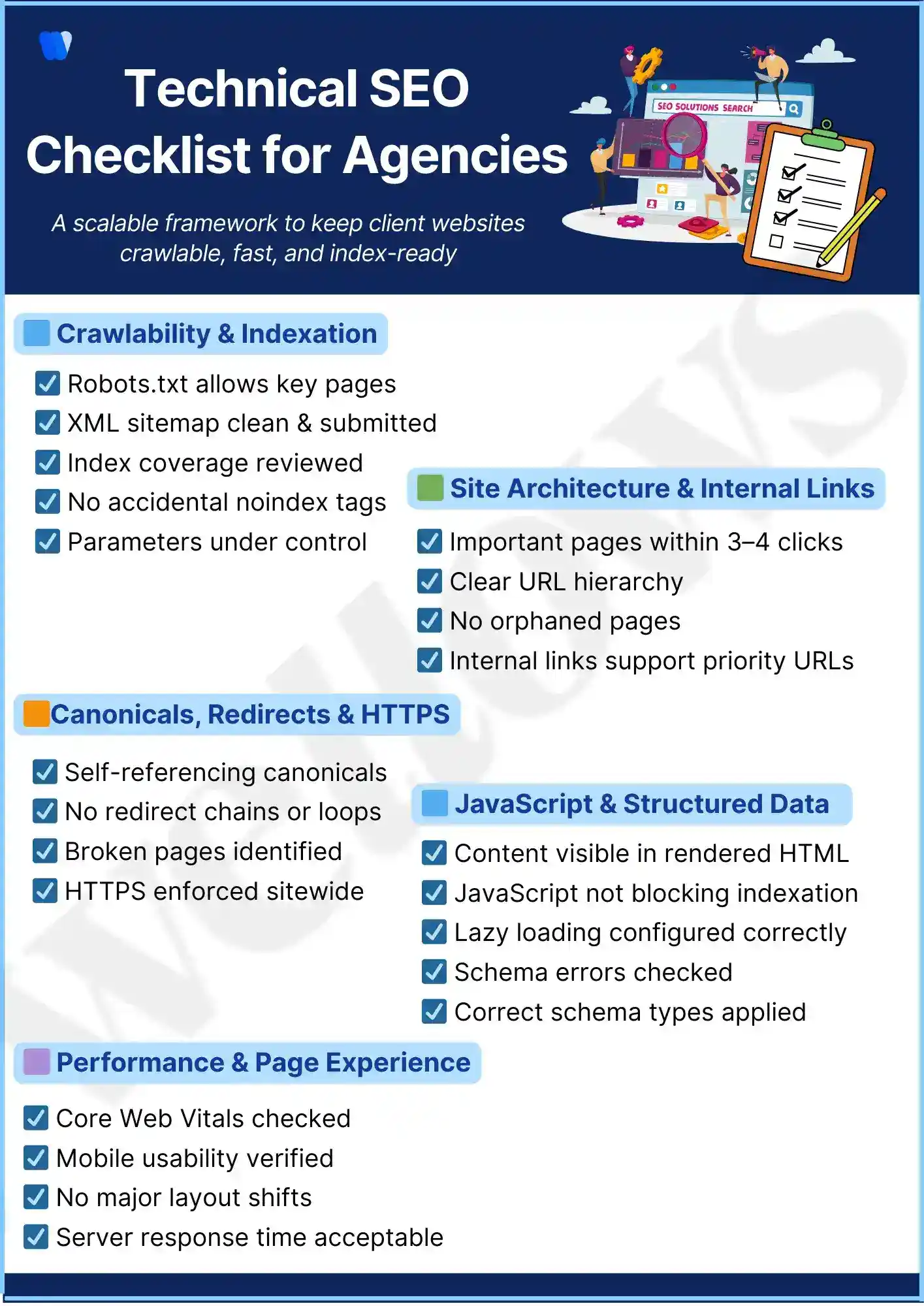
Every effective AI SEO checklist begins with a technical health screening that goes far beyond a simple site crawl. AI‑powered crawlers now classify issues by business impact using historical data. For instance, they distinguish between a blocked resource that affects a low‑traffic blog page and one that cripples a product category driving forty percent of revenue. The checklist should mandate an AI audit log that tracks:
- Crawl budget optimization – identifies orphaned pages, redirect chains, and dynamically generated URLs that waste Google’s crawl allowance.
- Indexability signals – correlates server log data with XML sitemap entries to detect pages that are crawled but never indexed, flagging thin content or duplicate meta robots directives automatically.
- Core Web Vitals segmentation – uses AI to group pages by template, pinpointing whether poor LCP stems from a universal image compression issue or a third‑party script that only loads on checkout pages.
- Competitive content gap extraction – AI scans the top twenty results for a target query and extracts entities, questions, and visual formats that the client’s page misses.
- On‑page element generation – uses generative AI to draft meta titles and descriptions that balance click appeal with keyword inclusion, then A/B tests variations in a controlled environment.
- Readability and depth scoring – assesses content against Google’s helpful content signals, flagging paragraphs that rely on fluff or lack unique insights. The checklist enforces the addition of original data, like internal survey results, before publication.
Semantic Keyword Clustering and Intent Mapping
Agencies frequently waste budget targeting head terms in isolation. An AI SEO checklist for agencies demands topic‑based clustering before content briefs are even written. Using natural language processing, tools group thousands of keywords into parent topics, subtopics, and long‑tail expansions, then map each cluster to a clear user intent—informational, commercial, navigational, or transactional.
The checklist step should verify that every service line or product category has a corresponding pillar page supported by at least five cluster articles. AI models also forecast keyword difficulty shifts by analyzing SERP volatility and new entrant velocity, helping agencies reallocate budget to clusters where the client can realistically rank within one quarter.
AI‑Assisted Content Creation and Optimization
Content production remains the largest line item in many retainers. The AI SEO checklist should ensure that every piece of content passes through a creation‑optimization‑validation loop, not just a final grammar check. Specific checkpoints include:
Entity and Structured Data Validation
Modern search engines parse entities, not just strings. The checklist must include a structured data review that goes beyond mere validation errors. AI tools now compare a page’s schema markup against the SERP features currently appearing for that query. If a recipe carousel dominates but the client’s page only carries Article schema, the checklist triggers a recommendation to implement Recipe or HowTo markup where relevant. It also verifies that the organization’s entity is correctly linked to its Google Knowledge Graph entry and that all local pages contain consistent NAP‑W data across the web.
Off‑Page Signal Evaluation with Predictive Power
Backlink audits are notoriously time‑consuming. An AI SEO checklist for agencies replaces manual outreach lists with predictive link prospecting. The system analyzes competitors’ link velocity, identifies domains that link to multiple competitors but not to the client, and scores them by domain authority and topical relevance. It then automatically categorizes prospects into “reclaimable unlinked mentions,” “resource page opportunities,” and “digital PR angles.” The checklist ensures that each month, a minimum number of linkable assets are created based on trending topics that align with journalists’ editorial calendars, sourced through AI media monitoring.
Building Your Agency’s AI SEO Checklist Step by Step
Step One: Audit Your Current Workflow for AI Insertion Points
Start by mapping every existing task in your SEO delivery process—from client onboarding to quarterly business reviews. For each task, ask two questions: Does this require human judgment, or is it pattern‑based? Can data be collected and analyzed faster with machine assistance? Tasks like sitemap generation, site speed diagnosis, and SERP feature tracking almost always qualify for AI augmentation. Identify one AI tool per category—crawling, content, keyword analytics, and reporting—to avoid tool bloat.
Step Two: Define AI‑Driven Thresholds and Alerts
A checklist becomes powerful when it triggers action instead of mere awareness. Set automatic thresholds within your AI platform. For example, if a client’s key landing page drops from position three to eight for a high‑intent keyword, the checklist should immediately create a notification that includes a side‑by‑side content comparison showing what the new top‑ranking page does differently. Similarly, if internal link equity shifts after a site restructure, the AI must flag pages that lost the most in‑links, enabling rapid remediation.
Step Three: Create Role‑Specific Checklist Views
An AI SEO checklist for agencies should adapt to who is executing it. A technical SEO specialist needs granular logs; a content strategist requires topic clusters and readability metrics; an account director wants high‑level client‑ready insights. Use dashboarding features that filter the checklist output by role. This prevents information overload while ensuring accountability—each team member sees only the items relevant to their domain, all generated from the same AI backbone.
Step Four: Integrate Continuous AI Learning Loops
The most overlooked element is feedback. Ensure that your AI tools learn from human corrections. When a content brief is rejected or a title tag is manually rewritten, log that correction. Over time, the A Schedule a monthly “AI recalibration” session where the team reviews false positives—issues flagged as critical but marked as acceptable—and adjusts model sensitivity. This turns the checklist from a static document into a living system that improves with each campaign.
Common Mistakes Agencies Make with AI SEO Checklists
Over‑automating without human oversight. AI can detect a duplicate title tag, but it cannot judge whether that duplicate was intentional for a franchise multi‑location page. Agencies that blindly accept every AI recommendation create new errors. The checklist must always include a “human review” checkpoint before high‑stakes changes are pushed live, especially for e‑commerce sites where a bulk title update could impact conversions.
Neglecting first‑party data signals. Many checklists rely exclusively on third‑party metrics like domain authority. AI models thrive on proprietary data—CRM records, call tracking transcripts, sales qualified lead rates. If the checklist does not pull keyword rankings and correlate them with actual revenue, the agency optimizes for vanity. Integrate GA4 and CRM connectors so the AI can identify which organic landing pages generate demos, not just traffic.
Ignoring algorithm update context. When a core update rolls out, an AI checklist might flood the team with volatility alerts. Without context, strategists chase ghost fluctuations. The checklist should include a step that cross‑references movement with known update timelines and industry‑wide impact reports, ensuring the response is calibrated, not hysterical.
Using a one‑size‑fits‑all checklist across verticals. A local bakery’s SEO priorities differ sharply from a SaaS company’s. AI allows checklist personalization at scale. The setting for an e‑commerce client should emphasize product structured data and feed optimization; for a B2B brand, it should prioritize whitepaper content depth and LinkedIn signal correlation. Failing to adjust checklist templates by vertical creates a generic, low‑value output.
Manual vs AI‑Driven SEO Checklist: A Comparative Overview
| Dimension | Manual Checklist | AI SEO Checklist for Agencies |
|---|---|---|
| Issue Detection Speed | Days to weeks, depends on scheduled audits | Real‑time or near‑real‑time, with predictive alerts |
| Scalability | Limited by headcount; one manager handles 5‑8 accounts | One strategist can manage 15‑20 accounts with AI triaging |
| Data Integration | Disparate tools, manual csv exports | Unified dashboards pulling from crawl, analytics, and CRM |
| Personalization | Generic across clients | Adaptive per vertical, audience, and conversion goal |
| Proactive vs Reactive | Reactive – fixes issues after they occur | Proactive – forecasts risks like cannibalization before ranking drops |
| Cost Efficiency | Higher labor hours per campaign | Higher tool investment, lower repetitive labor cost |
Important Notes for Agency Leaders Implementing AI SEO Processes
Transitioning to an AI SEO checklist for agencies requires a deliberate change management approach. Start by selecting two client accounts with contrasting profiles—one stable and one in a competitive niche—and run parallel checklists for one month. Document time saved, issues caught, and, most importantly, client outcomes. Use this data to secure buy‑in from the wider team and to refine the checklist logic before enterprise‑wide adoption.
Data privacy remains paramount. When integrating AI tools, ensure that client data is siloed and that the AI models do not use that data for training without explicit consent. Agencies handling healthcare or finance clients must verify that the AI platform complies with HIPAA or SOC 2 standards. The checklist must include a compliance verification step before any third‑party tool is connected to client analytics properties.
Finally, invest in your team’s AI literacy. The most advanced checklist fails if strategists distrust the outputs. Hold internal workshops on how the AI generates recommendations, where its confidence intervals lie, and how to override suggestions with documentation. This builds a culture where the AI SEO checklist becomes a trusted co‑pilot, not a black box.
Frequently Asked Questions
What is the first step in creating an AI SEO checklist for a digital agency?
Begin by auditing your existing manual workflow and identifying tasks that are repetitive, data‑heavy, or pattern‑based. Choose one AI tool per functional area—crawling, content, and reporting—and map those tools to specific checklist steps. Pilot the system on a single client before scaling.
Can small agencies afford an AI SEO checklist solution, or is it only for large firms?
Many AI‑powered SEO platforms offer tiered pricing with entry‑level plans suitable for small agencies. The real cost comparison is between tool subscriptions and the labor hours saved. Even a solo consultant can implement a lightweight AI SEO checklist for agencies using tools like ChatGPT for content briefs and free crawlers for technical audits, then expand as clients grow.
How often should an agency update its AI SEO checklist?
The underlying operating procedures should be reviewed quarterly, but the AI‑generated task list refreshes continuously with each new data ingestion. Special reviews are mandatory after major Google core updates or when a client changes its technology stack, as these events alter which AI signals matter most.
Which AI tools are essential for building an effective agency SEO checklist?
Essential categories include an AI crawler with log file integration, a natural language processing tool for semantic keyword research, a generative AI platform for content drafting with guardrails, and a predictive analytics layer that connects ranking data to conversions. Avoid over‑stacking; a deeply integrated suite often outperforms five disconnected point solutions.
Will an AI SEO checklist replace human SEO strategists?
No. The checklist automates data collection, pattern recognition, and routine diagnostics, but human strategists are irreplaceable for interpreting nuance, building client relationships, and crafting creative link‑earning campaigns. The AI SEO checklist for agencies elevates strategists from task‑doers to high‑level advisors, allowing them to focus on strategy and innovation.
How does an AI SEO checklist handle local SEO versus enterprise SEO?
Intelligent checklists adapt dynamically. For local SEO, the AI emphasizes Google Business Profile signals, review sentiment analysis, and localized schema. For enterprise SEO, the same framework prioritizes crawl budget management, hreflang validation, and large‑scale content personalization across subdomains. The checklist template is one; the AI’s weighting logic makes the distinction.
Conclusion
An AI SEO checklist for agencies is no longer a futuristic luxury—it is the operational backbone that separates growth‑minded agencies from those struggling with margin decay. By weaving artificial intelligence into technical audits, content development, off‑page analysis, and reporting, agencies deliver faster, deeper, and more consistent results while reclaiming hundreds of billable hours. The key lies in building a checklist that respects the interplay between machine efficiency and human strategic insight. Start small, measure relentlessly, and treat the checklist as a living asset that evolves with both search algorithms and client objectives. Agencies that master this integration will not only impress clients but will fundamentally redefine what scalable organic growth looks like.
Xem thêm:
- Mastering AI EEAT Optimization: The Strategic Blueprint for Next-Level Search Authority
- AI SEO Guest Post Outreach: The Complete Guide to Scaling Link Building in 2025
- AI SEO Lazy Loading: The Complete Guide to Faster Sites and Higher Rankings
- AI Headline Generator: Craft High-Converting Titles in Seconds
- AI SEO Long Tail Keyword Research: The Complete Guide to Smarter Rankings
Bài viết cùng chủ đề:

AI SEO SEO Automation with Make: The Complete Workflow Guide

AI SEO SEO Automation with Zapier: The Complete Workflow Guide

AI SEO SEO Automation with n8n: The Complete Workflow Guide
AI SEO SEO Automation with Gemini: The Complete Guide to Scaling Organic Growth

AI SEO SEO Automation with Claude: The Complete Guide to Scaling Content in 2025

AI SEO SEO Automation with ChatGPT: The Complete Playbook for 2025

AI SEO & SEO Automation for Affiliate Sites: The 2025 Playbook for Passive Income Growth
AI SEO & SEO Automation for Bloggers: The Complete Guide to Scaling Your Content

AI SEO & SEO Automation for Agencies: The Complete 2025 Playbook

AI SEO and SEO Automation for Ecommerce: The Complete Playbook for 2025

AI SEO & SEO Automation for WordPress: The Complete Playbook for 2025
AI SEO SEO Automation Strategy: The Complete Playbook for 2025

Mastering the AI SEO SEO Automation Process: A Complete Guide to Scaling Organic Growth
AI SEO SEO Automation System: The Complete Guide to Scaling Organic Growth in 2025
AI SEO SEO Automation Platform: The Complete Guide to Scaling Organic Growth in 2025
AI SEO SEO Automation Software: The Complete Guide to Scaling Organic Growth in 2025















