
No products in the cart.
AI SEO Claude Search Optimization: The Complete Guide to Ranking in the Age of Conversational AI
10
Aug
Aug
AI SEO Claude Search Optimization has emerged as a critical discipline for digital marketers in 2025. As Anthropic’s Claude AI becomes a primary entry point for millions of users seeking answers, understanding how this large language model retrieves, processes, and cites web content is no longer optional. This comprehensive guide breaks down the mechanics of Claude’s search capabilities, the exact strategies to make your content visible, and the technical frameworks required to stay ahead of the algorithmic curve.
Understanding AI SEO Claude Search Optimization: What It Really Means
AI SEO Claude Search Optimization refers to the practice of structuring and publishing web content so that Anthropic’s Claude AI can accurately retrieve, understand, and cite it in conversational responses. Unlike traditional search engines that rank pages based on backlinks and domain authority, Claude operates on a retrieval-augmented generation (RAG) model. This means it pulls specific chunks of information from indexed web pages to construct coherent, cited answers.
The fundamental shift Claude does not display a list of blue links. Instead, it synthesizes an answer and provides inline citations to sources. Your goal is to become the source that Claude trusts and references. This requires a deep understanding of natural language processing, semantic relevance, and structured data implementation.
The Core Difference Between Google SEO and Claude Optimization
Traditional Google SEO focuses on crawling, indexing, and ranking entire pages. The algorithm evaluates hundreds of ranking factors, including mobile responsiveness, page speed, and backlink profiles. Claude Search Optimization, however, prioritizes clarity, factual accuracy, and the ability of a specific paragraph to stand alone as a definitive answer.
Google rewards comprehensive, long-form content that covers a topic broadly. Claude rewards concise, authoritative passages that answer a specific query without ambiguity. A 3,000-word guide might rank on page one of Google, but Claude will only extract the 150-word section that directly addresses the user’s question. This distinction drives every strategic decision in this guide.
How Claude AI Retrieves and Processes Web Content
To optimize effectively, you must understand the technical pipeline. Claude does not browse the live web in real-time for every query. It relies on a combination of a pre-trained knowledge cutoff and a retrieval system that accesses indexed web pages at the moment of the query. This process involves three distinct stages.
Stage 1: Query Understanding and Intent Parsing
When a user asks Claude a question, the model first parses the query to determine the underlying intent. It identifies the subject, the desired action, and any constraints. For example, a query like “What are the best practices for on-page SEO in 2025?” is broken down into subject (on-page SEO), timeframe (2025), and intent (best practices). Your content must mirror this structure to be considered relevant.
Stage 2: Semantic Search and Passage Retrieval
Claude uses vector embeddings to convert both the query and your web content into mathematical representations. It then calculates the cosine similarity between the query vector and all indexed passages. The passages with the highest similarity scores are retrieved. This is why keyword stuffing fails. Claude looks for semantic meaning, not exact-match keywords. Your content must use related terms, synonyms, and natural language variations to increase its vector similarity score.
Stage 3: Synthesis and Citation Generation
After retrieving the top passages, Claude synthesizes them into a coherent answer. It does not copy text verbatim. It paraphrases, combines information from multiple sources, and assigns citations to the original URLs. The citation algorithm favors sources that are clear, authoritative, and directly relevant. If your content is ambiguous or contains contradictory statements, Claude will likely exclude it in favor of a more definitive source.
Technical Foundation: Structured Data and Schema Markup
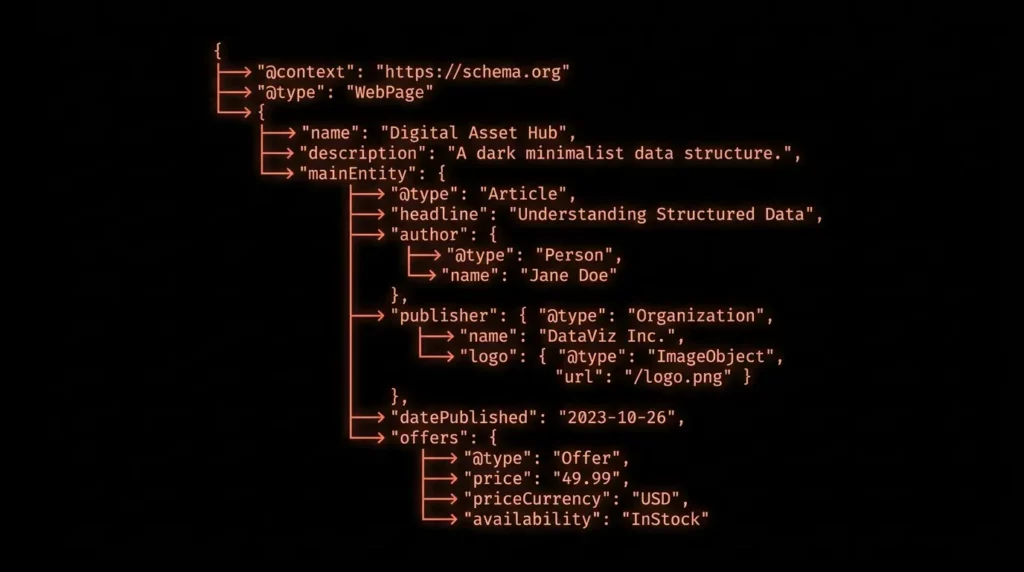
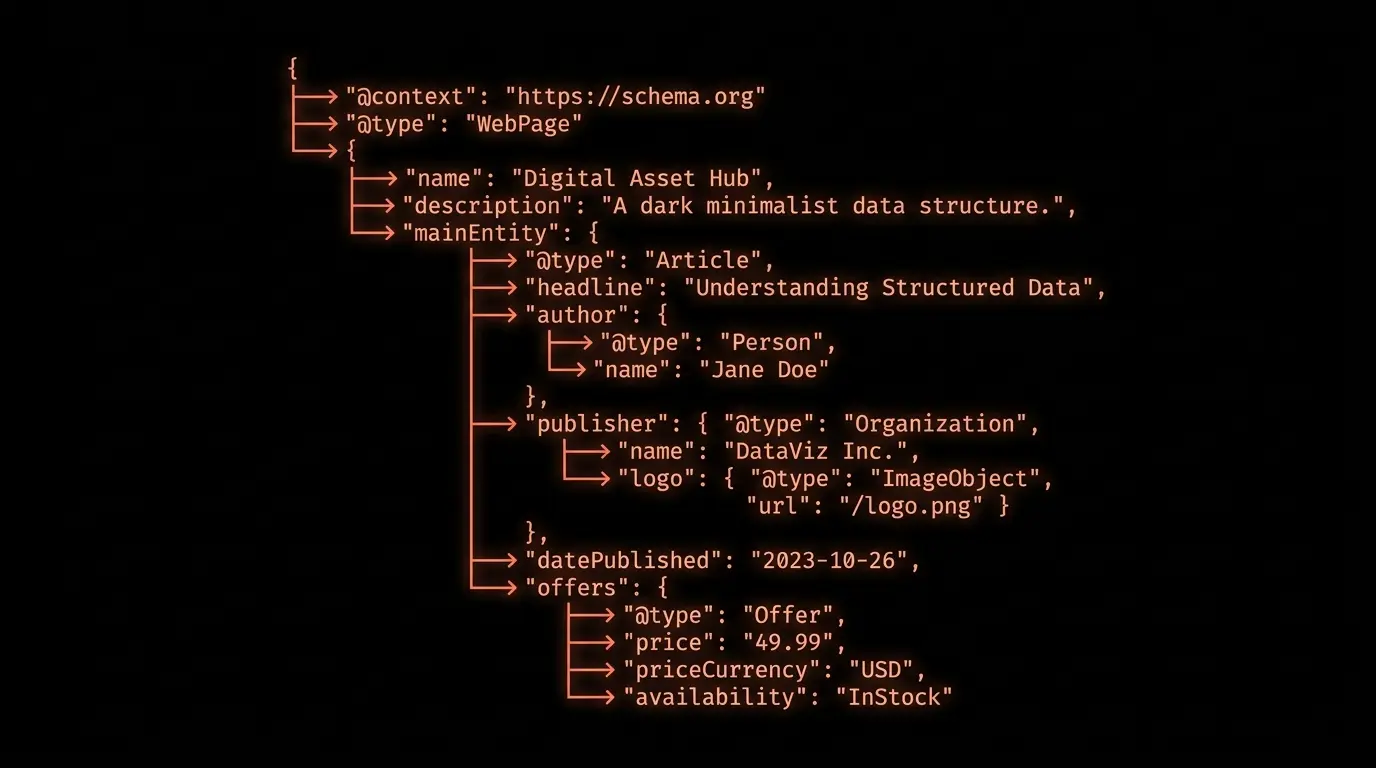
The backbone of AI SEO Claude Search Optimization is structured data. Schema markup provides explicit context to AI crawlers, telling them exactly what your content means. While Google uses schema for rich snippets, Claude uses it to disambiguate entities and relationships. Implementing the following schema types is non-negotiable.
| Schema Type | Purpose | Implementation Priority |
|---|---|---|
| Article | Identifies the content as a news article or blog post | High |
| FAQPage | Marks question-and-answer pairs for direct extraction | High |
| HowTo | Structures step-by-step instructions | Medium |
| BreadcrumbList | Establishes site hierarchy and context | Medium |
| Organization | Provides entity information about the publisher | Low |
Implementing FAQPage schema is particularly effective. When Claude encounters a query that matches a question in your FAQ section, it can extract that exact Q&A pair with high confidence. This increases the likelihood of citation. Use JSON-LD format for all schema implementations, as it is the most widely supported and easiest for AI crawlers to parse.
Content Architecture for Claude Search Visibility
The structure of your content determines how easily Claude can extract value. A wall of text is unreadable by AI retrieval systems. You must architect your content in discrete, self-contained blocks that each answer a specific sub-question. This is known as the “chunking” strategy.
The Optimal Paragraph Length and Structure
Each paragraph should be between 40 and 80 words. This length is sufficient to convey a complete idea but short enough to be extracted as a clean passage. The first sentence of each paragraph must contain the core answer to the implied question. Claude’s retrieval system weights the beginning of passages more heavily. If the answer is buried in the middle of a long paragraph, the vector similarity score drops.
Using Headings as Semantic Signposts
Your H2 and H3 headings are not just for readers. They serve as semantic anchors for AI retrieval. Each heading should be a question or a clear topic statement that mirrors the language users type into Claude. For example, instead of “Benefits,” use “What are the benefits of AI SEO Claude Search Optimization?” This exact-match phrasing increases the likelihood of retrieval.
Entity Clarity and Definitional Precision
Claude operates on entities. It needs to know that “Claude” refers to Anthropic’s AI model, not a person’s name. Define all key entities explicitly within the first 200 words of your article. Use the full name “Anthropic’s Claude AI” at least once before using the shorthand “Claude.” This disambiguation helps the retrieval system correctly map your content to the query’s intent.
Proven Strategies for Claude Search Optimization
Beyond the technical setup, several content strategies have proven effective in increasing citation rates from Claude. These strategies focus on aligning your content with the way Claude constructs answers.
Strategy 1: The Direct Answer Format
Start every major section with a direct, declarative answer to the question posed in the heading. Do not use introductory fluff or background context. For example, if your H2 is “How does Claude rank web content?”, the first sentence should be “Claude ranks web content using a retrieval-augmented generation model that scores passages based on semantic similarity to the query.” This immediate answer provides the exact passage Claude needs.
Strategy 2: Incorporate Comparative Data and Statistics
Claude frequently cites sources that contain specific, verifiable data points. When you include statistics, ensure they are current and sourced from reputable studies. For instance, stating “A 2024 study by BrightEdge found that 67% of all search queries now include conversational language” gives Claude a concrete fact to reference. Avoid vague claims like “many experts believe” or “research shows” without citing the specific study.
Strategy 3: Create a Dedicated “Key Takeaways” Box
At the top of your article, include a bulleted list of key takeaways. This serves as a summary that Claude can extract for queries seeking a quick overview. The list should be 5-7 items, each under 20 words, and each containing the primary keyword or a direct semantic variant. This box acts as a high-value passage that is easily retrievable.
Common Mistakes That Block Claude from Citing Your Content
Many websites fail to appear in Claude’s responses due to avoidable errors. Understanding these pitfalls is essential for successful AI SEO Claude Search Optimization.
Mistake 1: Over-Optimization and Keyword Stuffing
Repeating the exact target keyword in every paragraph triggers Claude’s anti-spam filters. The model is trained to detect unnatural language patterns. Instead of forcing the keyword, use semantic variations. For “AI SEO Claude Search Optimization,” use phrases like “optimizing for Claude,” “Claude visibility,” “AI search ranking,” and “conversational AI optimization.” This variety improves semantic vector scores.
Mistake 2: Contradictory Information Within the Same Page
If your article contains conflicting statements, Claude’s synthesis algorithm will discard the entire passage. For example, saying “Claude uses real-time web search” in one section and “Claude has a static knowledge cutoff” in another creates confusion. Before publishing, audit your content for internal consistency. Every claim must align with the others.
Mistake 3: Ignoring the “People Also Ask” Data
Google’s “People Also Ask” boxes are a goldmine for Claude optimization. These questions represent real user queries that Claude is likely to encounter. If you do not explicitly answer these questions in your content, you miss out on high-volume retrieval opportunities. Scrape these questions and create dedicated H3 sections for each one.
Measuring Success: Tracking Your Claude Citation Rate
You cannot improve what you do not measure. Tracking your performance in Claude requires a different approach than traditional SEO analytics. Since Claude does not provide a search console, you must use manual and semi-automated methods.
Method 1: Manual Query Testing
Create a spreadsheet of 20-30 target queries related to your niche. Use Claude’s interface to ask each query and record whether your domain appears in the citations. Perform this test weekly to track changes. Ensure you use a fresh conversation for each query to avoid context contamination.
Method 2: Referral Traffic Analysis
Monitor your analytics for traffic coming from Anthropic’s domain or from the Claude app. While Claude does not always send direct traffic (users often stay in the chat interface), an increase in direct visits to specific pages often correlates with citation activity. Set up a custom segment in Google Analytics to isolate this traffic.
Method 3: Brand Mention Monitoring
Use tools like Google Alerts or Brand24 to monitor for mentions of your brand name alongside the word “Claude” or “AI search.” Users often mention the source in follow-up questions. This provides qualitative data on how often your content is being referenced.
Advanced Techniques: Multimodal and Multimedia Optimization
Claude is a multimodal model, meaning it can process images, tables, and charts. Optimizing these elements can provide additional retrieval opportunities. While Claude primarily extracts text, it can interpret data presented in structured visual formats.
Optimizing Tables for AI Extraction
Tables are highly effective for Claude retrieval because they present data in a structured, unambiguous format. Ensure your tables have clear headers, use simple language, and avoid merged cells. Each row should be a self-contained data point. Claude can extract a specific row to answer a comparative query.
Image Alt Text as Data Points
Write descriptive alt text that includes the key data point shown in the image. For example, instead of “Chart showing SEO growth,” use “Line chart showing a 45% increase in organic traffic after implementing AI SEO Claude Search Optimization strategies in Q3 2024.” This provides Claude with an additional text passage to retrieve.
Important Notes on Ethical Optimization and AI Policy
As AI search evolves, so do the policies governing content creation. Anthropic has published guidelines on AI-generated content and manipulation. It is critical to distinguish between optimizing for AI retrieval and attempting to manipulate the AI. The latter can result in your domain being blacklisted from retrieval entirely.
Transparency is paramount. If you use AI to generate content, disclose it. Claude is trained to detect AI-generated text and may deprioritize it if it lacks original human insight. The most successful strategy combines AI-assisted research with human expertise, editorial oversight, and original data collection. Your unique experience and proprietary data are your strongest assets for citation success.
Frequently Asked Questions (FAQ)
What is the difference between AI SEO Claude Search Optimization and traditional SEO?
Traditional SEO optimizes for search engine result pages (SERPs) with the goal of ranking pages in a list of links. AI SEO Claude Search Optimization focuses on making content retrievable as a cited passage within a conversational AI response. The former prioritizes backlinks and domain authority; the latter prioritizes semantic clarity, passage structure, and factual precision.
How long does it take to see results from Claude Search Optimization?
Results typically appear within 2 to 4 weeks after implementing changes. Claude’s retrieval system re-indexes high-authority domains frequently. However, the timeline depends on your domain authority and the frequency of your content updates. Consistent publishing and updating of existing content accelerates the process.
Does Claude use real-time web search or a static database?
Claude uses a hybrid approach. It has a static knowledge cutoff for training data, but it also has access to real-time web search through its retrieval-augmented generation system. When a query requires current information, it searches the web at that moment. This is why fresh, updated content is critical for optimization.
Can I use the same content for Google SEO and Claude optimization?
Yes, but you must adapt the structure. Google rewards comprehensive, long-form content. Claude rewards concise, extractable passages. The solution is to write long-form content but break it into clearly defined, self-contained sections with direct answers at the start of each paragraph. This satisfies both algorithms simultaneously.
Is it necessary to use schema markup for Claude optimization?
While not strictly mandatory, schema markup significantly increases your chances of citation. It provides explicit semantic signals that reduce ambiguity. FAQPage schema, in particular, has a direct correlation with higher citation rates for question-based queries. It is a recommended best practice.
Conclusion: The Future of Search Visibility
AI SEO Claude Search Optimization represents a fundamental shift in how content is discovered and consumed. The era of optimizing solely for blue links is ending. The new era demands content that is structured for machine comprehension, grounded in verifiable facts, and designed to be extracted as a standalone answer. By implementing the technical schema, restructuring your content into discrete passages, and focusing on semantic clarity, you position your domain as a primary source for conversational AI.
The strategies outlined in this guide are actionable today. Start by auditing your top 10 pages for passage clarity. Implement FAQ schema. Rewrite your headings to match conversational queries. Monitor your citation rate weekly. The brands that adapt to this new retrieval paradigm will dominate the next generation of search traffic, capturing users who never click a link but trust the answer provided by Claude. The time to optimize is now, before your competitors understand the mechanics of this new landscape.
Xem thêm:
- AI Meta Descriptions: The Complete Guide to Writing High-Converting Search Snippets With Artificial Intelligence
- AI Conclusion Generator: Generate Powerful Closing Paragraphs in Seconds
- AI Crawl Optimization: The Complete Guide to Making Your Content Machine-Ready
- AI SEO Content Promotion: The Complete Guide to Scaling Your Reach in 2025
- AI Zero Search Volume Keywords: The Hidden Traffic Strategy Smart SEOs Use to Dominate Niche Markets
Bài viết cùng chủ đề:

AI SEO SEO Automation with Make: The Complete Workflow Guide

AI SEO SEO Automation with Zapier: The Complete Workflow Guide

AI SEO SEO Automation with n8n: The Complete Workflow Guide
AI SEO SEO Automation with Gemini: The Complete Guide to Scaling Organic Growth

AI SEO SEO Automation with Claude: The Complete Guide to Scaling Content in 2025

AI SEO SEO Automation with ChatGPT: The Complete Playbook for 2025

AI SEO & SEO Automation for Affiliate Sites: The 2025 Playbook for Passive Income Growth
AI SEO & SEO Automation for Bloggers: The Complete Guide to Scaling Your Content

AI SEO & SEO Automation for Agencies: The Complete 2025 Playbook

AI SEO and SEO Automation for Ecommerce: The Complete Playbook for 2025

AI SEO & SEO Automation for WordPress: The Complete Playbook for 2025
AI SEO SEO Automation Strategy: The Complete Playbook for 2025

Mastering the AI SEO SEO Automation Process: A Complete Guide to Scaling Organic Growth
AI SEO SEO Automation System: The Complete Guide to Scaling Organic Growth in 2025
AI SEO SEO Automation Platform: The Complete Guide to Scaling Organic Growth in 2025
AI SEO SEO Automation Software: The Complete Guide to Scaling Organic Growth in 2025















