
No products in the cart.
AI SEO Click Through Rate: The Complete Guide to Boosting Your Organic CTR in 2025
31
Jul
Jul
The digital landscape has shifted dramatically. Traditional SEO focused on rankings, but the new battleground is the AI SEO Click Through Rate. With the rise of AI Overviews, zero-click searches, and generative engine optimization (GEO), getting users to actually click your link requires a sophisticated blend of data analysis and machine learning insights. This guide dives deep into how artificial intelligence is reshaping organic CTR, why your current metrics might be misleading, and the exact strategies to reclaim your traffic share from both Google and AI chatbots.
What is AI SEO Click Through Rate?
AI SEO Click Through Rate refers to the percentage of users who click on your organic listing after seeing it in search results, specifically when those results are influenced or generated by artificial intelligence systems. This includes traditional Google search results, AI Overviews at the top of the SERP, and answers provided by chatbots like ChatGPT, Perplexity, or Google’s Gemini.
In the past, CTR was a simple ratio: impressions divided by clicks. Today, the definition has expanded. It now measures how effectively your content convinces both human users and AI algorithms that your page is the most relevant answer. The AI component analyzes user behavior patterns, engagement signals, and content structure to determine which links deserve the click.
Understanding this metric is crucial because a high ranking without a corresponding high CTR signals to search engines that your content is irrelevant. Conversely, a lower ranking with an exceptional CTR can trigger rank boosts, as the algorithm interprets the clicks as a strong relevance signal.
The Shift from Traditional CTR to AI-Driven CTR
Traditional CTR optimization focused on title tags and meta descriptions. You wrote a catchy headline, added a keyword, and hoped for a 5% click rate. The AI era demands more. Search engines now use machine learning models like RankBrain and BERT to understand user intent at a granular level. These models evaluate whether your snippet satisfies the query before the user even clicks.
AI systems now track “dwell time” and “pogo-sticking” more aggressively. If a user clicks your link but immediately returns to the search results, the AI interprets this as a poor match. This behavioral data feeds back into the ranking algorithm, creating a feedback loop where CTR directly influences future visibility.
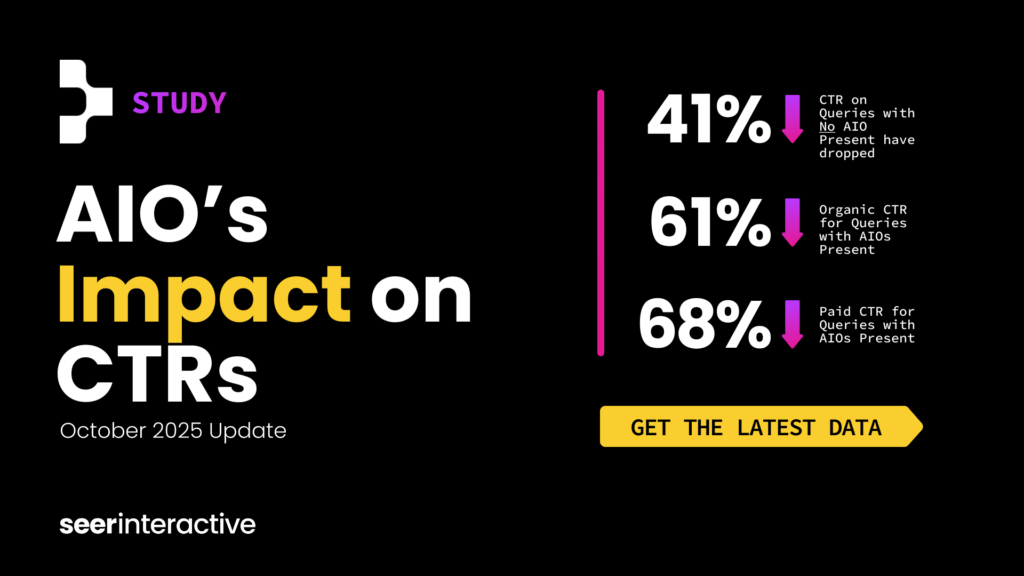
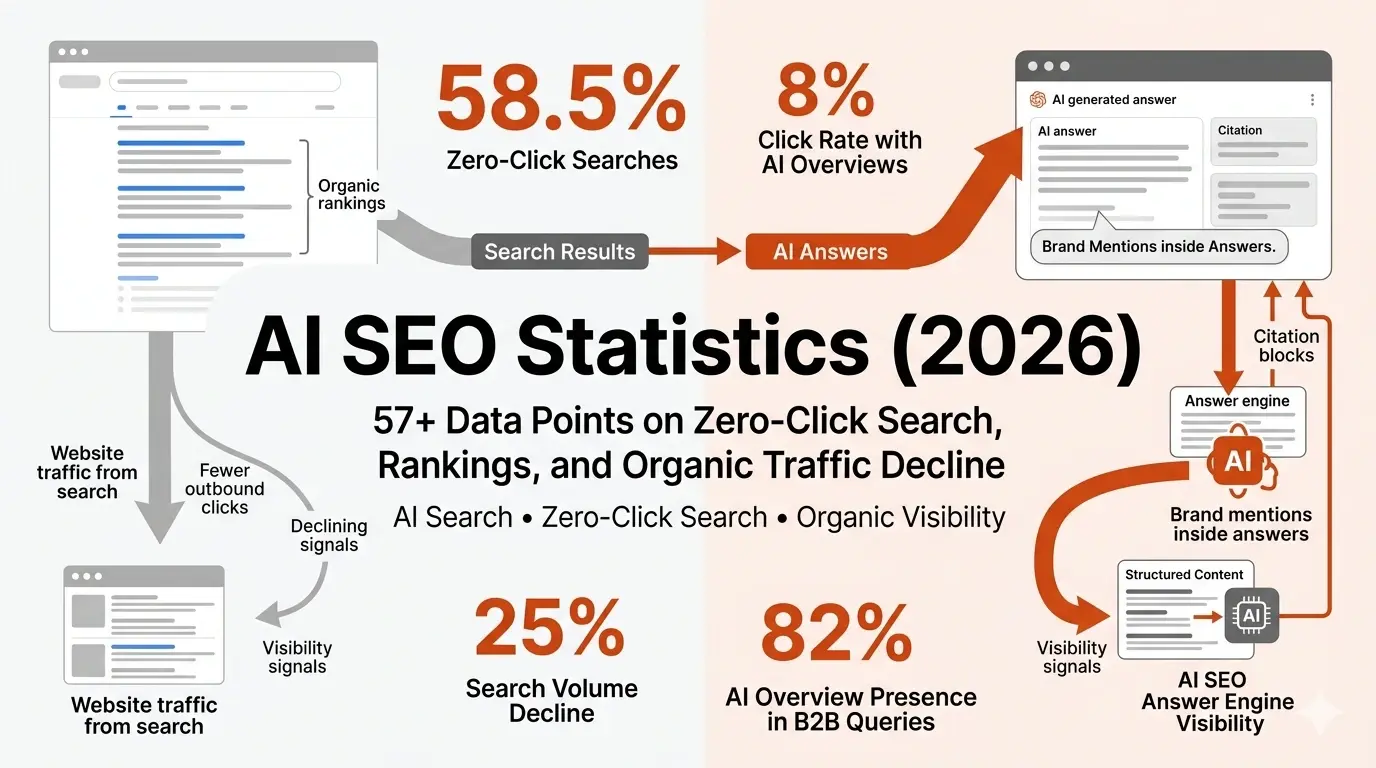
Furthermore, the introduction of AI Overviews has cannibalized traditional clicks. When Google generates a direct answer at the top of the page, users often find what they need without clicking any organic result. This has forced SEO professionals to optimize not just for the blue link, but for inclusion within the AI-generated summary itself.
Why AI SEO Click Through Rate Matters More Than Rankings
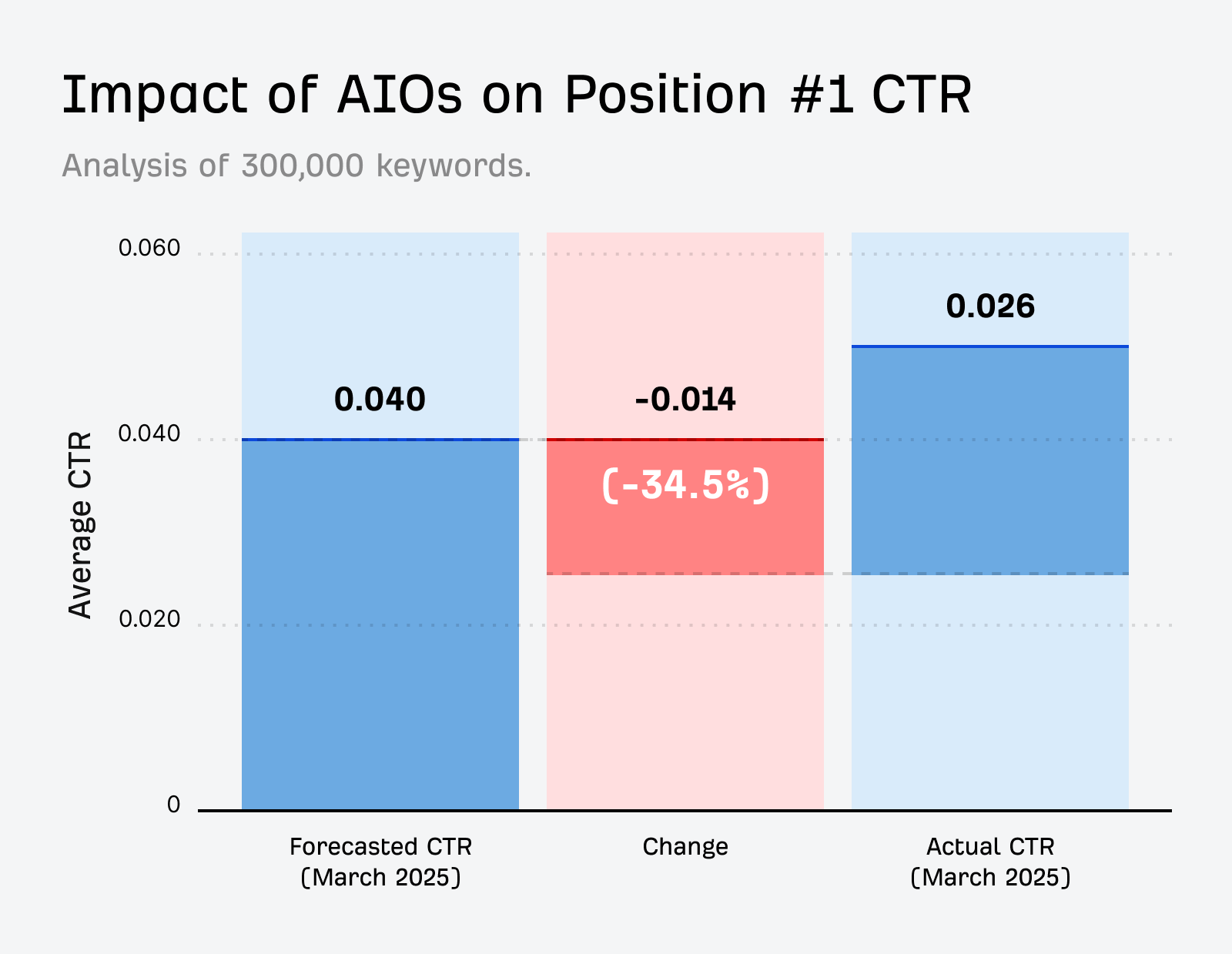
Ranking number one used to guarantee traffic. That is no longer true. Studies indicate that the presence of AI Overviews can reduce organic CTR by up to 40% for informational queries. If you are ranking first but the AI box above you answers the question completely, your click-through rate plummets to near zero.
Focusing solely on rankings without monitoring AI-driven CTR is a recipe for disaster. You might see your keyword positions improving while your organic traffic declines. This disconnect happens because the SERP landscape has changed, not your content quality. Tracking CTR through the lens of AI helps you identify which queries are at risk of zero-click saturation.
Moreover, a healthy CTR signals authority. Google’s AI uses CTR as a proxy for user satisfaction. If your snippet consistently earns clicks, the system assumes your content is valuable and trustworthy. This trust translates into higher rankings for related keywords and better visibility across your entire domain.
How AI Algorithms Calculate and Predict Click-Through Rate
Search engines do not use a simple formula for CTR. Instead, they employ predictive models that estimate the probability of a click based on hundreds of variables. These variables include historical CTR data for your URL, the freshness of your content, the prominence of your brand, and the specific formatting of your search result.
AI models also analyze the “contextual relevance” of your snippet. They compare your title and meta description against the query’s semantic meaning. If your snippet contains entities and keywords that match the user’s intent, the predicted CTR increases. This prediction often determines whether you appear in position one or position five, regardless of your domain authority.
Another critical factor is “query saturation.” The AI tracks how many similar results are shown. If the SERP is cluttered with listicles and forums, the algorithm might predict a lower CTR for a product page. It then adjusts the layout, potentially inserting an AI Overview or a video carousel to better satisfy the user, further impacting your click metrics.
Key Factors Influencing AI SEO Click Through Rate
Several elements dictate whether a user clicks your link in an AI-dominated search environment. Understanding these factors allows you to engineer your snippets for maximum appeal.
Title Tag Optimization for AI Parsing
Your title tag is the primary signal for both users and AI. It must be concise, include the primary keyword near the front, and convey a clear value proposition. AI systems favor titles that are under 60 characters to prevent truncation. Use power words like “Ultimate,” “Proven,” or “Step-by-Step” to trigger emotional responses, but avoid clickbait that leads to high bounce rates.
Meta Description as a Conversion Tool
The meta description is your elevator pitch. AI algorithms read this to understand the page’s context. Include a call to action, a specific data point, or a unique selling proposition. Descriptions between 150-160 characters perform best. Ensure it answers the “why” behind the query, not just the “what.”
Structured Data and Rich Snippets
Schema markup helps AI understand your content’s structure. Implementing FAQ schema, review stars, or product pricing makes your listing larger and more visually appealing. Rich snippets dominate the visual attention of users, leading to significantly higher CTRs compared to plain text results. AI systems prioritize pages with clear entity definitions.
Brand Recognition and Trust Signals
Users click on brands they recognize. AI algorithms track brand search volume and mentions across the web. If your brand is frequently associated with the query topic, the AI predicts a higher CTR for your link. Building a strong brand presence through digital PR and consistent content creation directly impacts your organic click performance.
Practical Strategies to Improve Your AI SEO Click Through Rate
Improving this metric requires a shift from guesswork to data-driven experimentation. Here are actionable strategies that leverage AI tools and behavioral psychology.
Leverage AI-Powered SERP Analysis Tools
Tools like Clearscope, Surfer SEO, and MarketMuse use machine learning to analyze top-ranking pages. They provide recommendations for related terms and content depth. More importantly, they can simulate how your snippet will appear in AI Overviews. Use these insights to rewrite your titles and descriptions to match the semantic patterns of the current winners.
Optimize for the “People Also Ask” Box
The PAA box is a gateway to AI Overviews. Structure your content with clear H2 and H3 headings that directly answer common questions. When Google’s AI extracts your content for a PAA box, it increases your visibility and establishes your page as an authority. This often leads to a secondary click when users expand the answer and seek more detail.
Implement the “Skyscraper Technique” for Snippets
Analyze the current featured snippet and AI Overview content. Create a piece that is more comprehensive, better formatted, and includes updated data. Use bullet points, tables, and short paragraphs. AI prefers content that is easy to parse. If your content is more scannable than the competition, the AI is more likely to cite you, driving both direct clicks and referral traffic from the AI box.
Use Emotional Triggers in Headlines
AI models are trained on human behavior. They know that curiosity gaps and negative emotions (fear of missing out) drive clicks. Craft headlines that promise a specific outcome. For example, “How to Increase CTR by 300% Using AI” outperforms “AI CTR Guide.” The specificity gives the user a reason to click.
Common Mistakes That Destroy Your AI SEO Click Through Rate
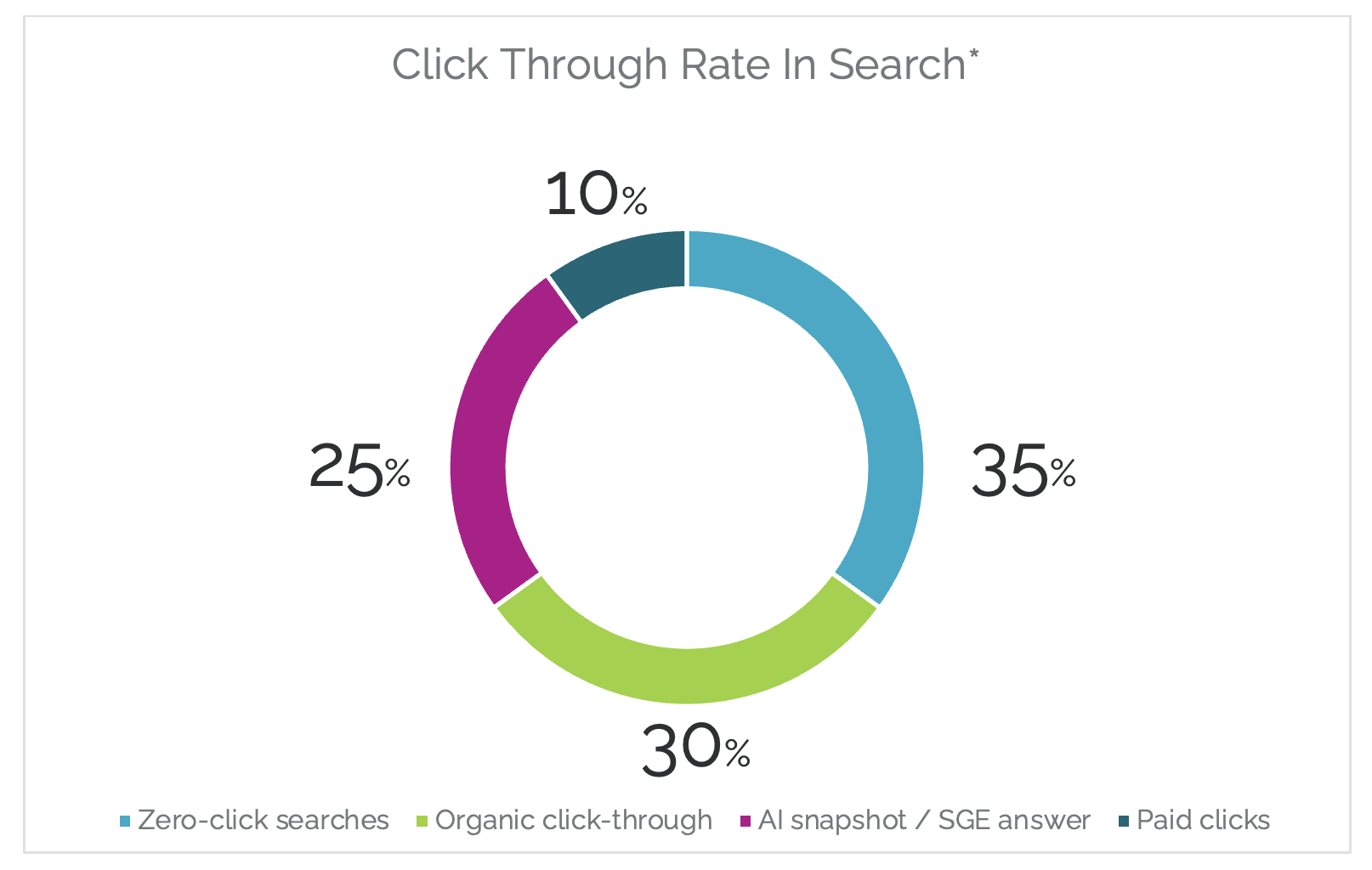
Even with the best intentions, many SEO professionals sabotage their own CTR. Avoiding these pitfalls is essential for success.
Keyword Stuffing in Titles
Repeating your keyword multiple times in a title tag confuses AI and repels users. It looks spammy and reduces readability. Use your primary keyword once and focus on the benefit. The AI algorithm penalizes unnatural phrasing by lowering your predicted CTR, which in turn hurts your rankings.
Ignoring Mobile SERP Layout
Over 60% of searches occur on mobile. On smaller screens, AI Overviews take up the entire first viewport. If your title is too long or your meta description is cut off, users will not see your value proposition. Always preview your listing on mobile devices to ensure critical information appears above the fold.
Targeting the Wrong Search Intent
If your page is a product page but the query is informational, your CTR will be terrible. AI algorithms detect this mismatch immediately. Users click, see the wrong content, and bounce. This negative signal trains the AI to lower your CTR prediction. Always align your content type with the dominant intent of the keyword.
Neglecting Content Freshness
AI systems favor recent data. If your title says “2023 Guide” and it is now 2025, users will skip your link. Update your content regularly and reflect the current date in your title if it is time-sensitive. The AI tracks the last crawl date and uses it to predict relevance, directly impacting your click-through rate.
Measuring and Analyzing Your AI CTR Performance
You cannot improve what you do not measure. Google Search Console provides basic CTR data, but you need deeper analysis to understand AI’s impact.
Segment your queries by “with AI Overview” and “without AI Overview.” This requires manual checking or using third-party tools that track SERP features. Compare the CTR for these segments. If your CTR is significantly lower on queries with AI Overviews, you need to adjust your content to be more concise and direct, as users are looking for quick answers.
Track your “impression share” versus “click share.” If you have high impressions but low clicks, your snippet is not compelling. Use A/B testing on your title tags. Change one variable at a time—such as adding a number or a power word—and monitor the CTR over a two-week period. AI tools can automate this testing by rotating your metadata.
Comparison: Traditional SEO CTR vs. AI SEO CTR
| Factor | Traditional SEO CTR | AI SEO CTR |
|---|---|---|
| Primary Focus | Ranking position | Snippet relevance & AI citation |
| Algorithm Basis | Keyword matching | Semantic understanding & user behavior |
| Content Length | Long-form preferred | Concise, scannable, direct answers |
| Optimization Target | Title & Meta Description | Structured Data & Entity Clarity |
| Competition | Other blue links | AI Overviews & Chatbots |
| Success Metric | High CTR on your link | High CTR + Inclusion in AI summary |
The table illustrates a fundamental shift. Traditional methods are not obsolete, but they are secondary. The AI-driven approach requires you to optimize for the “answer engine” first and the “search engine” second.
The Role of Generative Engine Optimization (GEO)
GEO is the practice of optimizing your content to be cited by AI chatbots. This directly influences your AI SEO Click Through Rate. When a user asks ChatGPT a question, the chatbot cites sources. If your content is cited, you receive referral traffic. This traffic has a 100% CTR from the AI perspective, as the user clicks directly from the chat interface.
To optimize for GEO, you must write in a way that AI can easily quote. Use clear definitions, statistical data, and authoritative statements. Avoid vague language. Include quotes from industry experts. AI models are trained to trust content that demonstrates high E-E-A-T (Experience, Expertise, Authoritativeness, Trustworthiness).
Furthermore, ensure your content is accessible. AI crawlers need to parse your HTML without issues. Use proper heading hierarchy and avoid JavaScript-heavy navigation that hides content. If the AI cannot read your page, it cannot cite you, and your CTR from AI sources will be zero.
Important Notes for Long-Term Success
Do not chase CTR at the expense of user experience. If you get the click but the user bounces immediately, your long-term metrics will suffer. The goal is to attract qualified clicks that lead to engagement.
Monitor your competitors’ CTR strategies. Use tools like Ahrefs or Semrush to see which pages are gaining clicks for your target keywords. Analyze their title patterns and content structure. Reverse-engineer their success but add your unique value proposition.
Stay updated on Google’s algorithm updates. The integration of AI into search is evolving rapidly. What works today might not work next quarter. Subscribe to reputable SEO news sources and be ready to pivot your strategy based on real-time data.
Finally, integrate your CTR data with your conversion data. A high CTR with a low conversion rate indicates a mismatch between your snippet and your actual content. Fix this disconnect to ensure your traffic is not just clicks, but revenue.
Frequently Asked Questions (FAQ)
What is a good AI SEO Click Through Rate?
A good CTR varies by industry and query type. For informational queries, a CTR of 3-5% is average. For commercial queries, a CTR of 6-10% is considered strong. However, with AI Overviews, these benchmarks are shifting. Focus on improving your relative CTR compared to your competitors rather than chasing a fixed number.
How does AI Overview affect my click-through rate?
AI Overviews reduce the visibility of traditional organic results. They push the first organic result down the page. This typically reduces your CTR by 20-40% for the affected queries. To mitigate this, optimize your content to be featured within the AI Overview itself, which can drive clicks from the expanded box.
Can I use AI tools to write better meta descriptions?
Yes. AI writing tools like Jasper or Copy.ai can generate multiple meta description variations. However, you must edit them to ensure accuracy and brand voice. Use the AI-generated text as a starting point, then manually refine it to include your specific keywords and value proposition.
Does page speed affect my CTR?
Indirectly, yes. If your page loads slowly, users who click may bounce quickly. This increases your bounce rate, which the AI interprets as a negative signal. Over time, this lowers your predicted CTR. Ensure your Core Web Vitals are in the green to maintain a positive user experience.
Should I target zero-click searches?
You should target them strategically. If a query has a high zero-click rate, it means users are satisfied with the SERP itself. Instead of fighting for a click, optimize to be the source of the answer in the AI Overview. This builds brand awareness and positions you as an authority, leading to clicks on related, more transactional queries.
Conclusion
The AI SEO Click Through Rate is no longer a vanity metric; it is a critical health indicator for your organic visibility. As artificial intelligence continues to mediate the search experience, your ability to earn clicks depends on your content’s clarity, relevance, and trustworthiness. By optimizing for AI parsing, leveraging structured data, and understanding the behavioral signals that drive clicks, you can thrive in an era of zero-click searches.
Stop obsessing over rankings alone. Shift your focus to the user journey from the SERP to your page. Use AI tools to analyze, predict, and optimize your snippets. Track your performance meticulously and adapt to the changing landscape. The brands that master this new CTR paradigm will dominate organic search traffic for years to come.
Xem thêm:
- AI SEO for Bloggers: How to Build Smarter Content That Ranks and Converts
- AI SEO NeuronWriter: The Complete Guide to Data-Driven Content Optimization
- AI SEO Informational Intent: The Complete Guide to Winning Search Visibility
- AI SEO DNS Optimization: The Complete Guide to Boosting Search Rankings in 2025
- AI SEO JavaScript SEO: The Complete Guide to Modern Search Optimization
Bài viết cùng chủ đề:

AI SEO SEO Automation with Make: The Complete Workflow Guide

AI SEO SEO Automation with Zapier: The Complete Workflow Guide

AI SEO SEO Automation with n8n: The Complete Workflow Guide
AI SEO SEO Automation with Gemini: The Complete Guide to Scaling Organic Growth

AI SEO SEO Automation with Claude: The Complete Guide to Scaling Content in 2025

AI SEO SEO Automation with ChatGPT: The Complete Playbook for 2025

AI SEO & SEO Automation for Affiliate Sites: The 2025 Playbook for Passive Income Growth
AI SEO & SEO Automation for Bloggers: The Complete Guide to Scaling Your Content

AI SEO & SEO Automation for Agencies: The Complete 2025 Playbook

AI SEO and SEO Automation for Ecommerce: The Complete Playbook for 2025

AI SEO & SEO Automation for WordPress: The Complete Playbook for 2025
AI SEO SEO Automation Strategy: The Complete Playbook for 2025

Mastering the AI SEO SEO Automation Process: A Complete Guide to Scaling Organic Growth
AI SEO SEO Automation System: The Complete Guide to Scaling Organic Growth in 2025
AI SEO SEO Automation Platform: The Complete Guide to Scaling Organic Growth in 2025
AI SEO SEO Automation Software: The Complete Guide to Scaling Organic Growth in 2025















