
No products in the cart.
The Ultimate Guide to AI SEO Conferences: Where Search Meets Artificial Intelligence
29
Jul
Jul
The landscape of search engine optimization is undergoing its most radical transformation in decades, driven entirely by generative AI and machine learning. Attending AI SEO conferences is no longer a luxury for forward-thinking marketers; it is a strategic necessity. These specialized events distill the overwhelming noise around tools like ChatGPT, Google SGE, and automated content workflows into actionable, human-verified strategies. They are the only place where search engineers, data scientists, and SEO practitioners physically collide to debate what truly moves the needle when an algorithm can think. This article maps out everything you need to know about choosing, navigating, and leveraging the best AI SEO conferences in 2025.
What Are AI SEO Conferences?
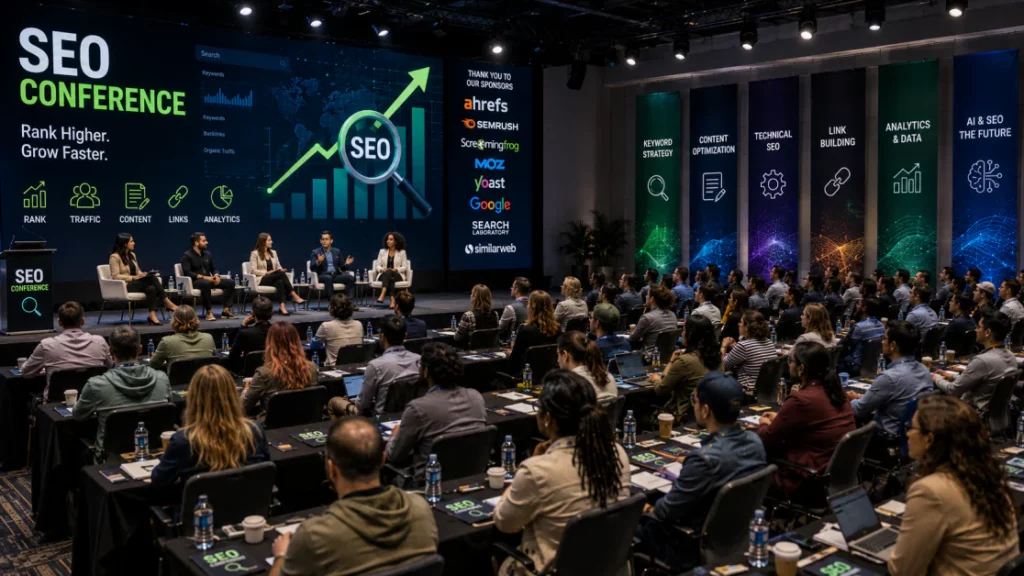
An AI SEO conference is a dedicated industry gathering that focuses specifically on the convergence of artificial intelligence technologies and organic search strategy. Unlike a broad digital marketing summit, these events zero in on how large language models (LLMs), neural matching, and natural language processing are rewriting the rules of ranking. The agenda typically moves beyond basic keyword research and backlink analysis to dissect entity-based search, predictive user intent, and the architecture of AI-powered search engines.
These conferences attract a distinct blend of technical SEOs, content strategists, and product leaders who are directly responsible for maintaining organic visibility in an era of zero-click searches. The content is deeply tactical, often featuring live audits of AI-generated content, workshops on fine-tuning open-source models for content briefs, and rigorous debates on the ethics of machine-scale publishing. They serve as a reality check, separating emerging best practices from the hype that floods social media feeds.
The Evolution of AI in Search and Why Dedicated Conferences Exist
For twenty years, SEO conferences dealt with relatively stable variables: crawl budget, PageRank, and on-page tags. The sudden commoditization of generative AI shattered that stability. When Google integrated its Search Generative Experience (SGE) and Bing deployed deep learning copilots, the traditional rulebook burned. General marketing conferences could not keep pace with the technical depth required, so a new category of AI SEO conferences emerged to fill the void.
The shift happened in two distinct phases. First came the tool-integration phase, where speakers demonstrated how to prompt ChatGPT for meta descriptions or rephrase product descriptions. That was quickly replaced by the architectural phase, where the conversation turned to training custom retrieval-augmented generation (RAG) systems for content optimization, and understanding how Google’s RankBrain interprets unscripted, multimodal assets. Dedicated conferences exist because the half-life of an AI SEO tactic is now measured in weeks, not years, making real-time peer exchange the only reliable learning format.
Why You Need to Attend an AI SEO Conference
Reading a blog post about algorithm updates provides historical context; attending a specialized conference provides predictive context. You gain access to the unfiltered testing data that agencies and in-house teams have not yet published. The hallway conversations at these events often reveal which AI detection methods genuinely work, which prompt engineering patterns scale safely, and which AI writing tools are already causing manual penalties.
Beyond the tactical intelligence, these conferences offer a critical psychological reset. The isolation of managing an SEO program in a volatile AI environment leads to strategic paralysis. Surrounding yourself with hundreds of peers who are also debugging AI Overviews and navigating the “content adapt or die” paradigm validates your experiments and sharpens your decision-making. The return on investment usually manifests as a single strategic pivot that saves a domain from an algorithmic demotion, easily justifying the ticket price.
Top AI SEO Conferences to Mark on Your Calendar
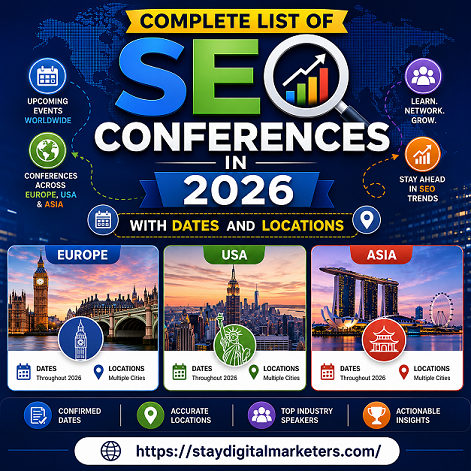
The market now offers a spectrum of events ranging from purely technical search engineering summits to marketing-AI crossover experiences. Selecting the right one depends on whether your focus is on the back-end retrieval science or the front-end content production workflow. Below is a curated list of the most impactful gatherings that treat AI not as a side track, but as the central nervous system of the agenda.
| Conference Name | Core Focus | Target Audience | Typical Location |
|---|---|---|---|
| Marketing AI Conference (MAICON) | Practical AI adoption for content, SEO, and analytics | Marketing leaders, SEO strategists, content directors | Cleveland, Ohio (with virtual access) |
| SMX Advanced | Technical SEO and AI integration in search engines | Expert-level SEOs, developers, and search analysts | Berlin and Virtual |
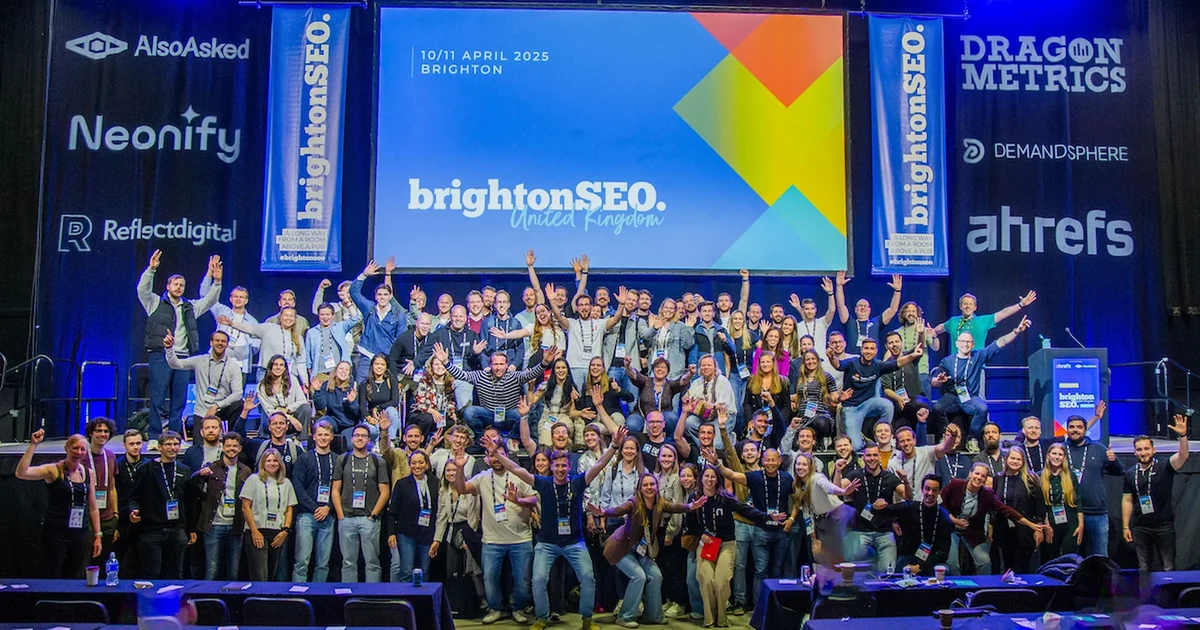
| BrightonSEO | Large-scale AI content operations and search trends | In-house SEOs, agency specialists, content marketers | Brighton, UK (and San Diego, US) |
| The AI Conference | Deep learning architectures and retrieval-augmented search | Data scientists, search engineers, CTOs | San Francisco / London |
| Pubcon AI & Search | Multi-model search, Google updates, and AI ethics | SEO managers, digital agencies, martech providers | Austin, Texas |
| AI for Content & SEO Summit | Generative AI workflows, video AI, and semantic optimization | Content strategists, SEO copywriters, brand leads | Online (global virtual summit) |
What to Expect at an AI SEO Event
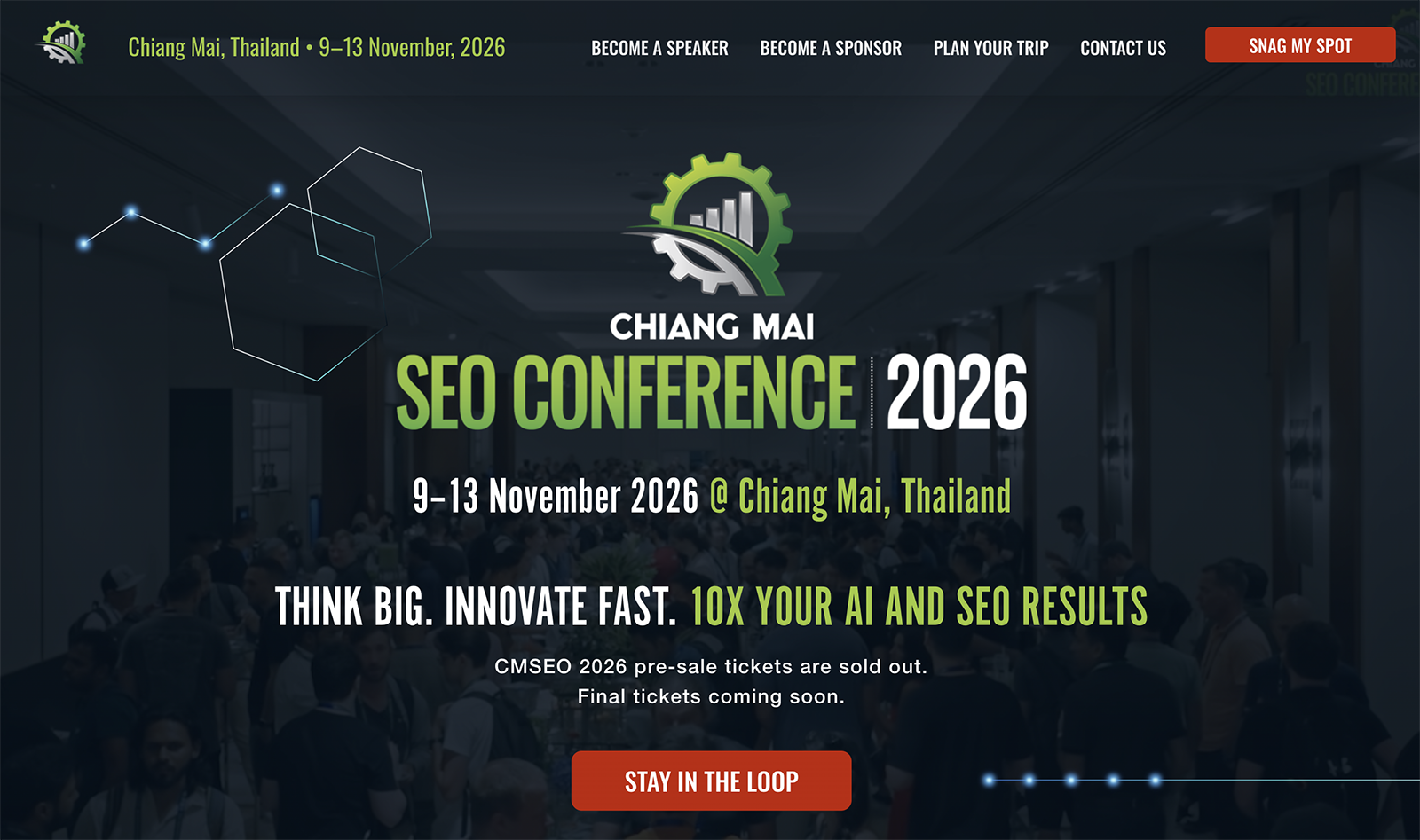
Walking into an AI SEO conference, you will immediately notice a departure from the PowerPoint-heavy keynotes of legacy events. The emphasis is on live demos. A presenter might connect to a search engine API in real time, move latent semantic vectors, and show how a page’s ranking flux changes. Workshops often involve hands-on model building, where attendees train a domain-specific classifier to align content drafts with search quality raters’ guidelines.
Networking is exceptionally high-context. Because the niche attracts a technical crowd, business cards are often replaced by shared GitHub repositories and private Discord servers. Sponsors are typically tool-vendors offering cutting‑edge indexation monitoring or AI‑driven internal linking platforms, and they provide alpha access to features that will not hit public release for months. Expect a rigorous, jargon‑dense atmosphere where concepts like temperature, top‑p sampling, and entity salience are table stakes, not advanced topics.
Key Topics and Emerging Trends Dominating the Agenda
- Google SGE and AI Overviews Strategy: How to get cited in AI‑generated snapshots and defend traffic when the answer appears above the fold.
- Retrieval-Augmented Generation (RAG) for Content: Building internal knowledge bases that feed an LLM to produce verifiably accurate, semantic‑SEO‑rich articles.
- Multi-Modal Search Optimization: Optimizing for voice, visual, and camera‑based queries as Gemini and GPT-4o unify search inputs.
- Authority in the AI Era: Differentiating between AI model “hallucination” and entity‑brand authority signals that survive algorithm updates.
- Programmatic SEO with AI Agents: Designing autonomous workflows for large‑scale content that maintain quality thresholds without manual review.
- Detection, Watermarking, and Compliance: Navigating the technical and legal lines between AI assistance and penalized AI spam.
Benefits and Limitations of AI SEO Conferences
The primary benefit is accessing a non‑public layer of intelligence. Conference speakers often share pre‑released data from collaboration with search engines, or unredacted case studies that legal teams could not let them publish in a blog post. The compressed timeframe of a two‑day event forces your brain to synthesize patterns that would take six months of scattered online research to uncover.
However, limitations exist. The pace of AI innovation means a technique demonstrated on day one can be partially deprecated by a Google core update on day five. Some events lean too heavily on theoretical AI that lacks SEO application, leaving tactical implementers frustrated. Furthermore, high‑quality AI SEO conferences are expensive, often exceeding $1,500 for a pass, and require significant time away from the very search engine shifts you are trying to manage. The key is to filter sessions ruthlessly, prioritizing those led by search engineers who maintain live index data over branding gurus selling AI snake oil.
Virtual vs. In-Person: Choosing the Right Format
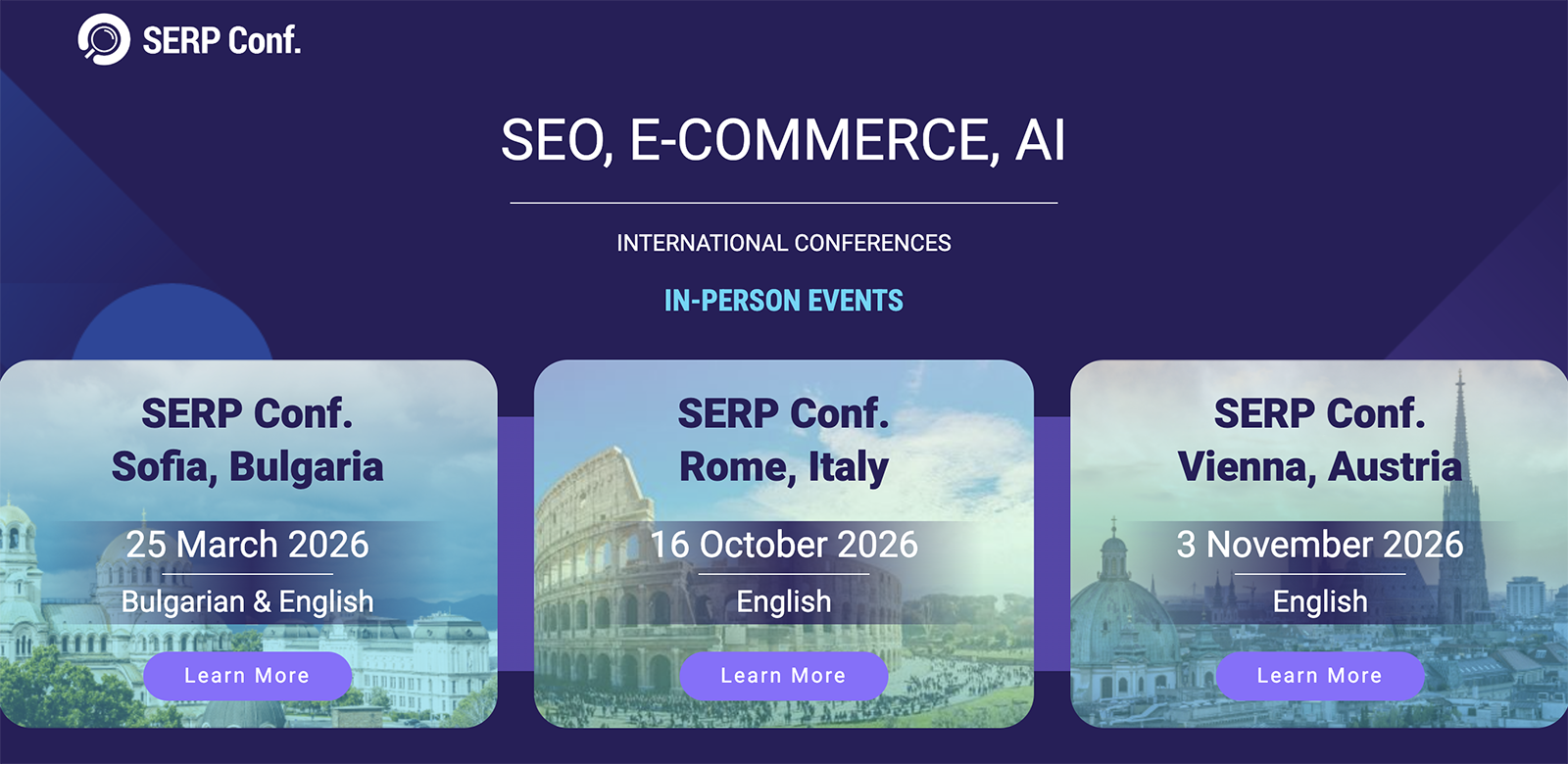
The format you select directly impacts the value you extract. In‑person attendance gives you the unfiltered, off‑the‑record conversations where the most honest algorithmic observations surface. The hallway track at BrightonSEO or SMX often delivers more actionable insight than the main stage. You also build a network of alpha‑testers who will share their real‑time ranking data with you long after the conference ends.
Virtual AI SEO conferences, such as the AI for Content & SEO Summit, excel at instant access and affordability. They suit teams with limited travel budgets and those who need to watch sessions asynchronously. The drawback is screen fatigue and the absence of serendipitous collision. A hybrid model works best: send one senior search strategist to the physical venue for human signal, and have the rest of the content team consume the recorded tracks, focusing on structured note‑taking rather than passive listening.
How to Prepare and Maximize Your Experience
Preparing for an AI SEO conference requires a different ritual than traditional marketing events. Because the content is technically dense, arrive with a precise audit of your current domain’s AI‑related challenges. Run a full topical authority gap analysis, identify where AI Overviews are stealing your featured snippets, and export your server log files to spot improper crawler prioritization by LLM bots. Armed with this data, you can walk up to a speaker after a session and ask a micro‑specific question that yields a custom‑tailored solution.
During the event, avoid the common trap of obsessively taking linear notes. Instead, use a mind‑mapping tool to cluster insights under operational headings like “Indexation,” “Prompt Architecture,” and “Content Refresh Triggers.” Sync privately with no more than five high‑caliber peers; exchange phone numbers and agree on a mutual accountability call thirty days after the event. This forces you to move from inspiration to implementation, transforming the conference from an information dump into a measurable performance lever.
Common Mistakes Attendees Make and How to Avoid Them
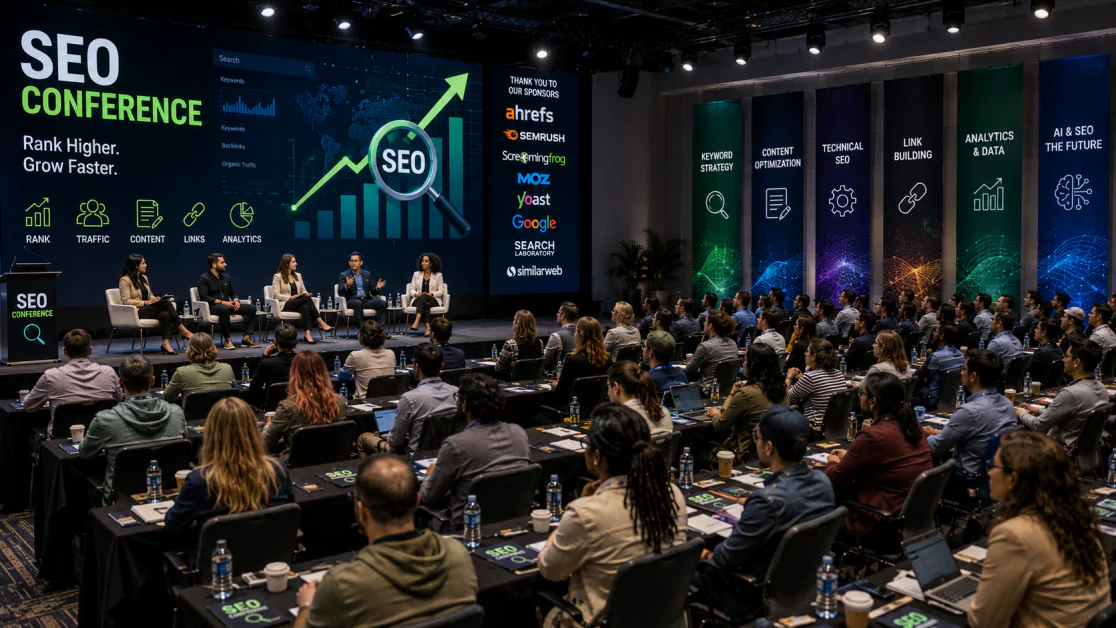
Many attendees treat AI SEO conferences solely as an educational broadcast, prioritizing the recording over the live exchange. This is a mistake because the most valuable insight rarely appears on the slide deck. The speaker’s off‑comment about a Python script that bypasses a certain API cost, or a whispered warning about a cluster of affiliate sites getting manually deindexed after using AI images, only exists in the room.
Another frequent error is trying to adopt every tool advertised in the exhibitor hall by the following Monday. When teams return and attempt to deploy three new AI scraping tools, a schema generator, and an automated content shield simultaneously, their workflows fracture. Instead, select one high‑impact concept—such as semantic HTML restructuring for LLM readability—and run a controlled test on a single subdirectory of your site before scaling. Avoidance of shiny‑object syndrome preserves your site’s stability.
Important Notes on Evaluating Conference Quality
Not every event labeling itself as an AI SEO conference delivers practical SEO value. Some are generalized AI ethics panels dressed up with search buzzwords. To verify quality, scrutinize the speaker list. Genuine tactical conferences feature people whose primary job title is “Search Engineer,” “Head of SEO Experimentation,” or “Technical SEO Lead.” Beware of agendas where every speaker is a founder or a vice president of marketing; these events often prioritize storytelling over systemic instruction.
Additionally, check the conference’s data freshness policy. Given the velocity of AI updates, any event that finalized its speaker deck topics more than three months in advance risks being obsolete. The best organizers allow speakers to update their sessions forty‑eight hours before going on stage to reflect last‑minute developments like a Gemini ranking glitch or a new API parameter that changes keyword volume modeling. Prioritize events that celebrate rapid iteration over polished, pre‑recorded perfection.
Frequently Asked Questions About AI SEO Conferences
What is the primary purpose of an AI SEO conference?
The primary purpose is to provide a live, interactive environment for search marketing professionals to learn and test the latest strategies for optimizing websites in search engines dominated by artificial intelligence. These conferences cut through the speculation, offering verified data on how LLM-powered search results, automated content generation, and machine learning ranking factors directly affect organic traffic and indexation.
How much does it cost to attend a major AI SEO conference?
Costs vary widely based on format and fame. Virtual passes to niche AI SEO summits can range from $99 to $300. In-person, multi‑day conferences like MAICON or SMX Advanced typically start at $1,000 for early‑bird registration and climb to $1,800–$2,500 for full‑access passes that include workshops and networking dinners. Premium industry tickets that include VIP speaker access may exceed $3,000.
Are these conferences suitable for beginners in SEO?
Some AI SEO conferences offer introductory tracks, but most assume a baseline understanding of technical SEO concepts like crawling, rendering, and schema markup. If you are a complete beginner, start with a foundational SEO course before diving into the deeply technical AI events. However, if you are a marketer who already understands keyword intent and page authority, the AI-focused sessions can accelerate your transition into more strategic, machine‑augmented workflows.
How can I find out which AI SEO conferences are legitimate and not just hype?
Legitimacy can be verified by looking at the technical depth of past talk recordings on YouTube or Vimeo. Legitimate conferences publish free sessions that directly show code, search query analytics, or empirical test results. Review the speaker background; you want to see active contributors to the SEO community who present data from their own large‑scale sites, not just speakers who repackage generic AI news. Word‑of‑mouth in private SEO Slack groups is a highly reliable signal.
What should I do if I cannot afford to travel to these events?
Many top‑tier AI SEO conferences now offer robust digital passes that include live stream access and on‑demand replays. Join the event’s virtual Slack workspace to simulate hallway‑track conversation. Additionally, speakers often share their key slides on Twitter or LinkedIn immediately after the live talk. Following the event hashtag during and after the conference gives you access to the community’s summarization and commentary, often unveiling the core insights at no cost.
The Future of SEO is Being Written at These Programs
The velocity of change in organic search has never moved faster. We are witnessing the death of the static blue link and the rise of an answer engine that generates reality on the fly. AI SEO conferences are the live development environment where the playbook for this new reality gets written, stress‑tested, and corrected in real time. They are the antidote to the lagging information cycle of online blogs and LinkedIn thought pieces.
Your presence at these gatherings signals that you understand the stakes: adapt now, or lose the channel entirely. The brands that will dominate the search results of 2026 are not the ones with the biggest backlink budgets, but the ones that sent their smartest minds to a conference, had a difficult conversation about retrieval‑augmented generation over coffee, and ran a risky experiment the very next morning. The information is there, unrecorded and raw, waiting for those who show up.
Xem thêm:
- AI SEO LLM Content: The Complete Guide to Ranking in the Age of Generative Search
- WP Trove Content AI Review: The Ultimate WordPress Content Creation Tool in 2025
- An Essential AI SEO Checklist for Agencies: Drive Client Growth with Intelligent Automation
- AI SEO Lazy Loading: The Complete Guide to Faster Sites and Higher Rankings
- AI SEO Featured Snippet Optimization: The 2025 Playbook for Position Zero
Bài viết cùng chủ đề:

AI SEO SEO Automation with Make: The Complete Workflow Guide

AI SEO SEO Automation with Zapier: The Complete Workflow Guide

AI SEO SEO Automation with n8n: The Complete Workflow Guide
AI SEO SEO Automation with Gemini: The Complete Guide to Scaling Organic Growth

AI SEO SEO Automation with Claude: The Complete Guide to Scaling Content in 2025

AI SEO SEO Automation with ChatGPT: The Complete Playbook for 2025

AI SEO & SEO Automation for Affiliate Sites: The 2025 Playbook for Passive Income Growth
AI SEO & SEO Automation for Bloggers: The Complete Guide to Scaling Your Content

AI SEO & SEO Automation for Agencies: The Complete 2025 Playbook

AI SEO and SEO Automation for Ecommerce: The Complete Playbook for 2025

AI SEO & SEO Automation for WordPress: The Complete Playbook for 2025
AI SEO SEO Automation Strategy: The Complete Playbook for 2025

Mastering the AI SEO SEO Automation Process: A Complete Guide to Scaling Organic Growth
AI SEO SEO Automation System: The Complete Guide to Scaling Organic Growth in 2025
AI SEO SEO Automation Platform: The Complete Guide to Scaling Organic Growth in 2025
AI SEO SEO Automation Software: The Complete Guide to Scaling Organic Growth in 2025















