
No products in the cart.
AI SEO Featured Snippet Optimization: The 2025 Playbook for Position Zero
10
Aug
Aug
Securing the coveted position zero in Google search results has transformed from a nice-to-have into a critical component of digital strategy. The landscape of search has shifted dramatically with the integration of artificial intelligence into ranking algorithms. AI SEO Featured Snippet Optimization is no longer just about formatting content correctly; it involves understanding how machine learning models interpret queries, extract information, and determine what deserves the top spot. This comprehensive guide breaks down the mechanics of modern snippet optimization, offering actionable strategies to dominate the zero-click search space.
Understanding the Evolution of Featured Snippets in the AI Era
Featured snippets have been a staple of Google search for years, but the underlying technology driving them has evolved. Previously, snippets were primarily selected based on keyword matching and basic page authority. Today, AI models like the Multitask Unified Model (MUM) and the RankBrain system analyze the semantic meaning behind queries. They assess the depth of content, the clarity of the answer, and the contextual relevance of the entire page, not just a single paragraph.
This shift means that AI SEO Featured Snippet Optimization requires a holistic approach. You cannot simply stuff a question in an H2 tag and expect to win. The AI evaluates whether your content genuinely satisfies the user’s intent better than any other result on the web. This involves analyzing the structure of your sentences, the logical flow of your arguments, and the factual accuracy of your claims.
The Role of Natural Language Processing (NLP) in Snippet Selection
Natural Language Processing allows Google to understand the nuances of human language, including synonyms, context, and sentiment. When optimizing for snippets, you must write in a way that mirrors how people actually speak and ask questions. The AI looks for direct, concise answers that are grammatically correct and free of ambiguity. Content that uses passive voice or overly complex jargon often gets passed over in favor of clear, active-voice explanations.
Furthermore, NLP helps Google differentiate between different types of search intent. A query like “how to bake a cake” requires a step-by-step list, while “what is a cake” requires a definition. Your content must clearly signal its format to the AI. Using structured data and clear headings helps the algorithm categorize your content correctly, increasing the likelihood of being featured.
Core Strategies for AI SEO Featured Snippet Optimization
To effectively target position zero, you need to align your content creation process with the way AI evaluates web pages. This goes beyond basic on-page SEO. It involves a deep understanding of information architecture and user experience signals.
Structuring Content for Direct Answers
The most common type of featured snippet is the paragraph snippet, which provides a direct answer to a question. To optimize for this, your content should begin with a clear, succinct answer to the target query within the first 50-60 words of the section. This answer should be a standalone paragraph that makes sense even if read in isolation. The AI extracts this block of text and displays it to the user, so it must be self-contained and highly informative.
For listicle snippets, the structure is equally important. When answering “how-to” queries, use an ordered list. When answering “best of” queries, use an unordered list. Ensure that each list item is a complete sentence or phrase that provides value. The AI looks for lists that are logically ordered and cover all aspects of the query.
Leveraging Schema Markup for Enhanced Understanding
While schema markup does not directly guarantee a featured snippet, it significantly helps AI understand the context of your content. Implementing FAQPage schema, HowTo schema, and Article schema provides explicit signals about the type of content you have published. This structured data acts as a roadmap for crawlers, allowing them to index your content more efficiently and match it to relevant queries.
When using FAQPage schema, ensure that the questions in the markup match the questions in your visible content. Discrepancies between the structured data and the on-page text can confuse the AI and hurt your chances of being featured. Consistency is key to building trust with the algorithm.
Technical Audits for Snippet Opportunities
Optimizing for AI-driven snippets requires a technical audit of your existing content. You need to identify which pages are already ranking on the first page but missing the snippet. These are your low-hanging fruit. By making minor adjustments to the structure and wording, you can often push these pages into position zero.
Analyzing Current SERP Features
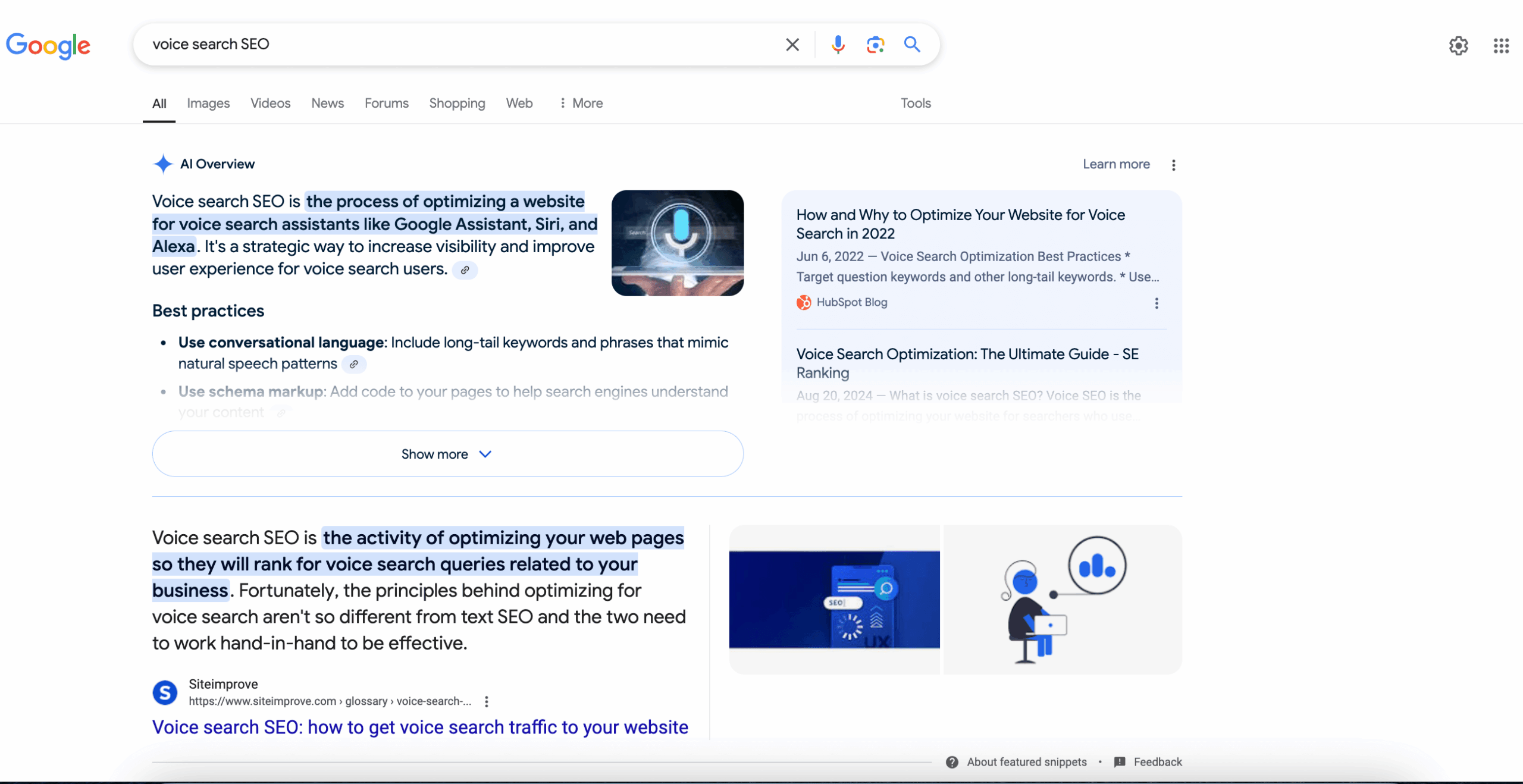
Start by performing a manual search for your target keywords. Analyze the current featured snippets. What format are they in? Are they paragraphs, lists, or tables? What is the source domain? How long is the answer? This analysis provides a benchmark for your optimization efforts. If the current snippet is a list, you need to provide a better list. If it is a paragraph, you need to provide a more concise and accurate paragraph.
Use SEO tools to track your current rankings and identify pages that are close to the top. Tools like Ahrefs and Semrush have specific filters for “Featured Snippet” opportunities. These tools analyze your content against the current snippet holder and provide recommendations for improvement, such as adding a definition paragraph or restructuring a list.
Optimizing for Voice Search and Zero-Click Queries
AI SEO Featured Snippet Optimization is intrinsically linked to voice search. When users perform a voice search, the assistant reads out the featured snippet. This means your content must be optimized for conversational queries. These queries are typically longer and more specific than text-based searches. For example, instead of “best coffee maker,” a voice query might be “what is the best coffee maker for a small kitchen under 100 dollars?”
To capture this traffic, create content that answers these long-tail, conversational questions. Use natural language in your headings and body text. The goal is to provide an answer that sounds natural when read aloud. This often means using full sentences and avoiding abbreviations or unusual punctuation.
Content Depth and E-E-A-T Signals
Google’s Quality Rater Guidelines emphasize Experience, Expertise, Authoritativeness, and Trustworthiness (E-E-A-T). AI models are trained to recognize these signals. Content that demonstrates first-hand experience or deep expertise is more likely to be featured. This is particularly true for YMYL (Your Money or Your Life) topics like health, finance, and legal advice.
Demonstrating Expertise Through Data and Examples
To outrank competitors, your content must go beyond surface-level information. Include original data, case studies, or real-world examples. If you are writing a review, include photos or videos of the product. If you are writing a guide, include screenshots of the process. This original content signals to the AI that you have actual experience with the topic, not just a rehash of other articles.
Furthermore, ensure your author bio is clear and displays credentials. Linking to your author page with a headshot and a summary of their experience helps build authority. The AI uses these signals to determine whether your content is trustworthy enough to be displayed as the primary answer.
Common Mistakes in AI SEO Featured Snippet Optimization

Many marketers make critical errors that prevent them from winning snippets. Understanding these pitfalls is essential for success.
- Keyword Stuffing in Headings: Repeating the exact keyword in every H2 tag does not help. The AI looks for semantic relevance, not exact match repetition. Use variations and synonyms to cover the topic comprehensively.
- Ignoring the “People Also Ask” Box: The PAA box is a goldmine of information. It shows you the related questions users are asking. Failing to answer these questions in your content means you are missing out on potential snippet opportunities.
- Over-Optimizing the Answer: Trying to make the answer too short can strip it of necessary context. While conciseness is good, the answer must be complete. A 40-word answer that is vague will lose to a 60-word answer that is specific and helpful.
- Neglecting Mobile Optimization: The majority of searches happen on mobile devices. If your page loads slowly or has intrusive pop-ups, the A
- Keyword Research: Identify target keywords that have a high snippet potential. Look for question-based queries and keywords where a snippet is already present.
- Content Gap Analysis: Compare your existing content with the current snippet holder. Identify what they have that you don’t. This could be a specific example, a clearer definition, or a better-structured list.
- Rewrite the Answer Block: Create a dedicated section in your content that directly answers the query. Place this section near the top of the page, ideally within the first 200 words.
- Format for Readability: Use bullet points for lists, bold text for key terms, and short paragraphs. Ensure the answer is visually distinct from the rest of the content.
- Implement Schema Markup: Add the appropriate structured data to your page. This helps the AI understand the hierarchy and purpose of your content.
- Monitor and Adjust: After publishing, track your rankings. If you don’t win the snippet within a few weeks, analyze the new snippet holder and adjust your content accordingly.
Practical Guide: Step-by-Step Optimization Process
Implementing a successful strategy involves a systematic process. Follow these steps to optimize your content for AI-driven featured snippets.
Comparison: Traditional SEO vs. AI SEO for Snippets

Understanding the difference between traditional methods and AI-driven methods is crucial for adapting your strategy.
| Aspect | Traditional SEO | AI SEO (Modern) |
|---|---|---|
| Keyword Focus | Exact match keywords | Semantic topics and entities |
| Content Structure | Keyword-dense headings | Logical flow and clear answer blocks |
| Primary Goal | Increase page rank | Win position zero and zero-click searches |
| User Intent | Inferred from keywords | Understood via NLP and context |
| Success Metric | Click-through rate | Visibility and answer accuracy |
The table illustrates that while traditional SEO focuses on driving traffic to the site, AI SEO focuses on providing the answer directly on the search engine results page (SERP). This shift requires a change in mindset from “getting clicks” to “being the source of truth.”
Important Notes on Algorithm Updates
Google frequently updates its algorithms, and these updates often change how snippets are generated. The March 2024 core update, for example, placed a heavy emphasis on “scaled content abuse” and “site reputation abuse.” This means that AI-generated content that lacks original insight is less likely to be featured. The algorithm is getting better at detecting content that is purely synthesized from other sources without adding new value.
To remain resilient, focus on creating unique data, conducting original research, and providing personal insights. Content that offers a unique perspective or proprietary information is far more likely to be trusted by the AI. Additionally, ensure your site has a strong internal linking structure. This helps the AI crawl your site more effectively and understand the relationship between different pages.
Frequently Asked Questions (FAQ)
What is the ideal length for a featured snippet answer?
The ideal length varies by query type. For paragraph snippets, the answer is typically between 40 and 60 words. For list snippets, the list should cover all relevant steps or items, usually between 5 and 10 items. The key is to be comprehensive yet concise. The AI extracts the block that best satisfies the query, so clarity is more important than a specific word count.
Can I optimize for multiple featured snippets on one page?
Yes, a single page can win multiple featured snippets if it covers a topic comprehensively. This is common for “What is X?” and “How to do X?” queries on the same page. However, you must structure the content clearly with distinct H2 sections for each query. Overlapping or confusing content will reduce your chances of winning multiple positions.
Does having a featured snippet affect my click-through rate?
Yes, it often reduces the click-through rate for the organic result because the user gets the answer directly on the SERP. However, it significantly increases brand visibility and authority. The trade-off is generally positive, as it positions your brand as the definitive source for that topic. It also captures voice search traffic, which has no clicks at all.
How long does it take to see results from snippet optimization?
Results can vary. If you are optimizing an existing page that is already ranking on the first page, you might see changes within a few days. If you are creating new content, it can take several weeks for the AI to crawl, index, and evaluate your page. Consistency and patience are key. Regularly updating your content with fresh data also helps maintain your snippet position.
Is schema markup required for featured snippets?
Schema markup is not a direct ranking factor for featured snippets, but it is highly recommended. It helps the search engine understand the context of your content, which indirectly improves your chances. It also makes your page eligible for rich results, which can increase visibility even if you don’t win the featured snippet.
Conclusion
AI SEO Featured Snippet Optimization represents the new frontier of search marketing. The days of simple keyword matching are over. Success now hinges on creating content that is semantically rich, structurally clear, and demonstrably authoritative. By understanding how AI models process language and evaluate trust, you can craft content that consistently wins position zero. This requires a commitment to quality, a focus on user intent, and a willingness to adapt to the ever-changing algorithms. The brands that embrace this AI-driven approach will not only dominate the SERPs but also establish themselves as the leading voices in their respective industries.
Xem thêm:
- AI SEO Analytics: Turning Raw Search Data Into Unstoppable Organic Growth
- AI SEO Plugins: Automate Your Search Rankings Without Losing the Human Touch
- AI SEO Generative Search Optimization: The Complete Playbook for 2025
- AI SEO Topic Modeling: The Complete Guide to Content That Ranks
- AI SEO NLP Content Analysis: The Complete Guide to Smarter Content Optimization
Bài viết cùng chủ đề:

AI SEO SEO Automation with Make: The Complete Workflow Guide

AI SEO SEO Automation with Zapier: The Complete Workflow Guide

AI SEO SEO Automation with n8n: The Complete Workflow Guide
AI SEO SEO Automation with Gemini: The Complete Guide to Scaling Organic Growth

AI SEO SEO Automation with Claude: The Complete Guide to Scaling Content in 2025

AI SEO SEO Automation with ChatGPT: The Complete Playbook for 2025

AI SEO & SEO Automation for Affiliate Sites: The 2025 Playbook for Passive Income Growth
AI SEO & SEO Automation for Bloggers: The Complete Guide to Scaling Your Content

AI SEO & SEO Automation for Agencies: The Complete 2025 Playbook

AI SEO and SEO Automation for Ecommerce: The Complete Playbook for 2025

AI SEO & SEO Automation for WordPress: The Complete Playbook for 2025
AI SEO SEO Automation Strategy: The Complete Playbook for 2025

Mastering the AI SEO SEO Automation Process: A Complete Guide to Scaling Organic Growth
AI SEO SEO Automation System: The Complete Guide to Scaling Organic Growth in 2025
AI SEO SEO Automation Platform: The Complete Guide to Scaling Organic Growth in 2025
AI SEO SEO Automation Software: The Complete Guide to Scaling Organic Growth in 2025















