
No products in the cart.
AI SEO LLM Content: The Complete Guide to Ranking in the Age of Generative Search
10
Aug
Aug
The digital marketing landscape has shifted dramatically. Traditional SEO focused on keywords and backlinks, but the rise of large language models (LLMs) like ChatGPT, Claude, and Gemini has introduced a new paradigm. This is where AI SEO LLM Content becomes critical. It represents the intersection of artificial intelligence, search engine optimization, and machine-generated text. Understanding how to create content that satisfies both traditional search engines and AI-driven answer engines is no longer optional; it is a survival skill for digital publishers.
This guide provides a deep dive into the mechanics of AI SEO LLM Content. You will learn how LLMs process information, why “AI search” changes your content strategy, and how to structure your writing to appear in AI-generated summaries and traditional search results simultaneously. The focus is on practical, actionable strategies that build authority and drive sustainable organic traffic.
What is AI SEO LLM Content?
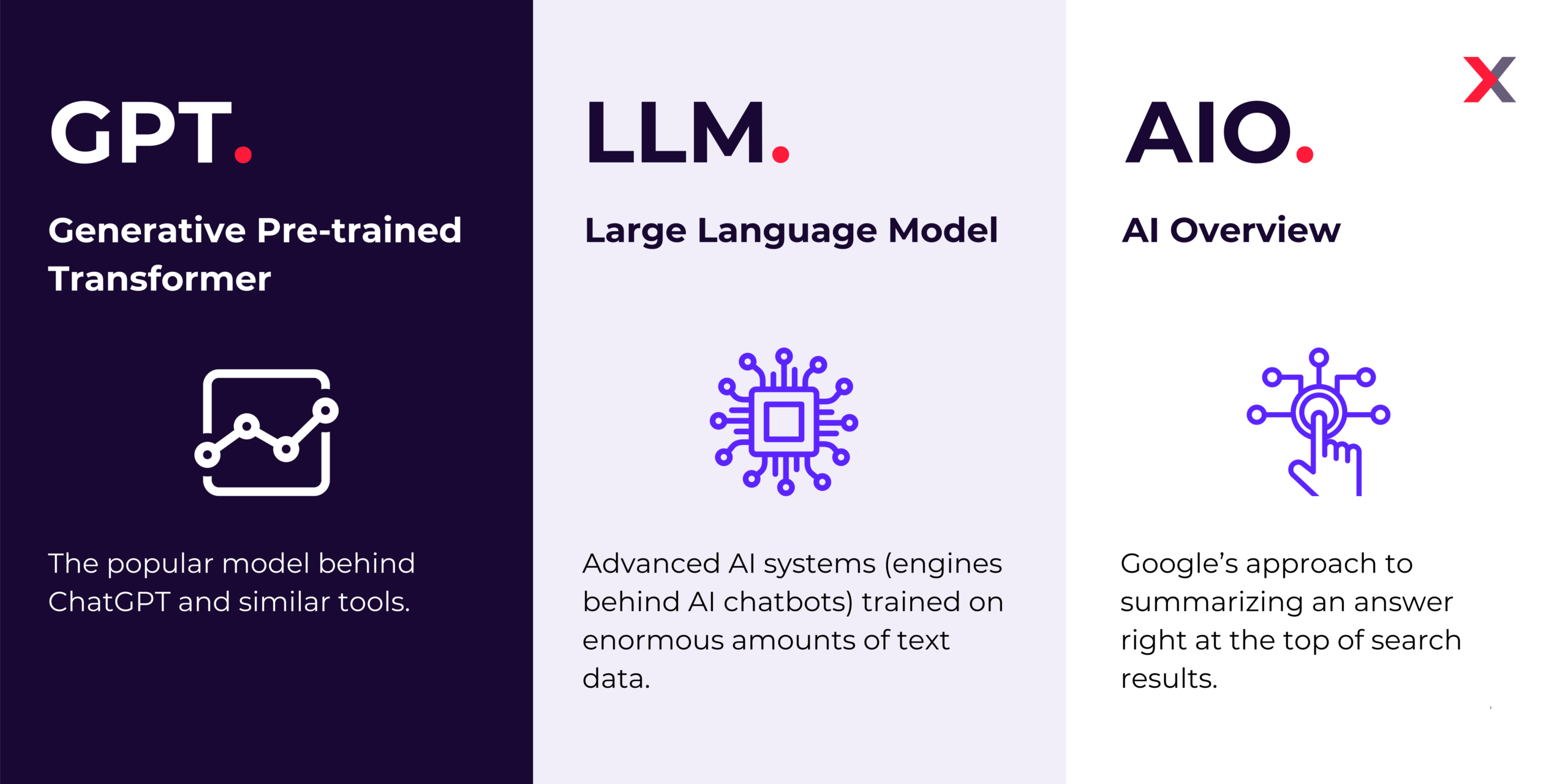
AI SEO LLM Content refers to written material that is strategically optimized to be understood, indexed, and cited by large language models. It goes beyond standard SEO practices. While traditional SEO targets search engine crawlers (like Googlebot), LLM optimization targets the semantic understanding of AI models. These models are trained on vast datasets and generate answers by predicting the most relevant sequence of words based on user prompts.
This type of content is designed to be “machine-readable” in a semantic sense. It uses clear entities, logical relationships, and structured data to help AI models extract facts accurately. The goal is to become the primary source cited when an AI tool answers a user’s question. This requires a shift from writing for “queries” to writing for “intent” and “context.”
The Difference Between Traditional SEO and LLM Optimization
To master AI SEO LLM Content, you must understand the core differences between the two systems. Traditional SEO relies on crawling, indexing, and ranking algorithms that use backlinks and keyword density as primary signals. LLMs, however, use a process called “retrieval-augmented generation” (RAG) in many modern search interfaces. This means the AI searches a database of indexed content, retrieves relevant passages, and then generates an answer based on those passages.
| Feature | Traditional SEO | AI SEO LLM Content |
|---|---|---|
| Primary Target | Search Engine Crawlers | LLM Semantic Models |
| Focus | Keywords & Backlinks | Entities & Context |
| Content Structure | Short paragraphs, H2/H3 | Comprehensive, logical flow |
| Success Metric | Page Rank & CTR | Citation & AI Reference |
| User Intent | Click-through to site | Direct answer in SERP |
The table illustrates a key point: AI SEO LLM Content aims to provide the answer so clearly that the AI trusts it. This often results in zero-click searches, but it builds brand authority and positions you as the definitive source for that topic.
How LLMs Process and Rank Content
Large language models do not “read” content like humans. They tokenize text, breaking it down into smaller units (tokens) and analyzing the statistical relationships between them. When you ask an AI a question, it does not search the live web in real-time (unless it has browsing enabled). Instead, it relies on its training data or a retrieval system that pulls from a specific index.
For AI SEO LLM Content to be effective, it must align with how these models parse information. The model looks for clarity, factual consistency, and semantic relevance. If your content contains contradictory statements or lacks clear definitions, the A
The Role of Entities and Semantic Relationships
Entities are specific, identifiable objects—people, places, concepts, or products. In AI SEO LLM Content, you must clearly define these entities and explain their relationships. For example, if you are writing about “machine learning,” you must connect it to related entities like “neural networks,” “training data,” and “algorithms.” This helps the LLM build a knowledge graph that associates your content with the correct topic cluster.
Using consistent terminology is vital. If you use “AI” in one paragraph and “Artificial Intelligence” in another, the model must recognize they are the same entity. While this is usually handled by the model’s training, using the exact full term at least once and then the abbreviation consistently helps reinforce the connection.
Why AI SEO LLM Content is Crucial for Modern Rankings
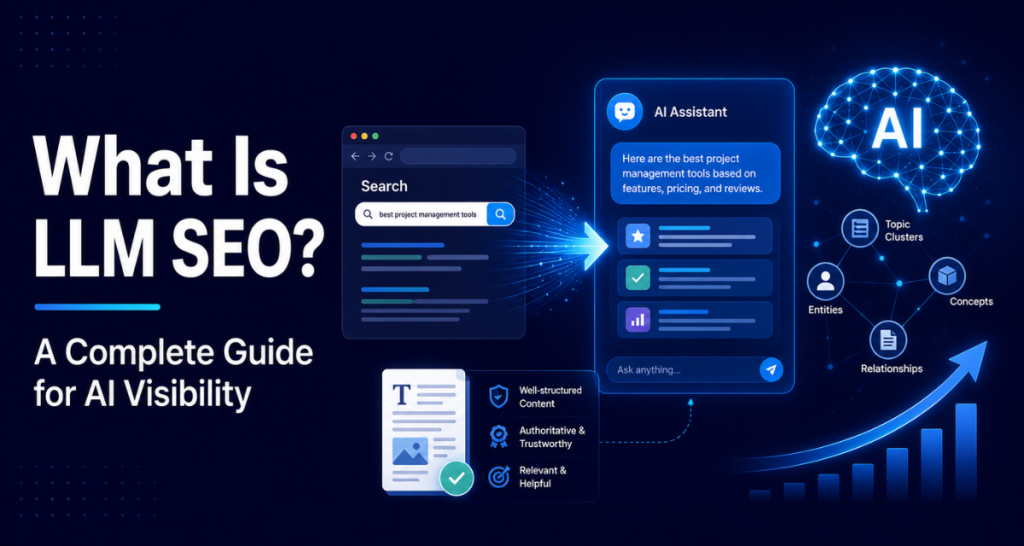
The integration of AI into search engines (like Google’s Search Generative Experience or Bing Chat) has changed user behavior. Users now ask complex, conversational questions and expect a synthesized answer. If your content is not optimized for these AI systems, you risk losing visibility to competitors who have adapted.
Furthermore, the rise of “answer engines” means that the traditional “blue link” is becoming less prominent. Users often get their answer directly in the AI-generated summary. To be the source of that summary, your content must be the most authoritative and clearly structured piece on the web for that specific query.
Building Authority with E-E-A-T in the AI Era
Google’s E-E-A-T (Experience, Expertise, Authoritativeness, Trustworthiness) remains a cornerstone of ranking. However, in the context of AI SEO LLM Content, E-E-A-T takes on a new dimension. AI models are trained to prefer content that demonstrates high levels of these qualities. This means citing credible sources, providing original research, and showcasing first-hand experience.
Content that simply rehashes information from other websites is less likely to be cited by an LLM. The model looks for unique value. If you can provide a specific case study, a unique data point, or a detailed personal analysis, your content becomes more valuable to the AI’s answer generation process.
Core Strategies for Creating AI SEO LLM Content
Creating content that ranks in both traditional and AI search requires a specific approach. It is not about stuffing keywords or writing for bots. It is about creating the most comprehensive, logically structured resource on the topic.
1. Focus on Comprehensive Coverage (The “Hub” Model)
LLMs favor content that covers a topic exhaustively. A 500-word article is rarely sufficient. To win in AI SEO LLM Content, you need to create “pillar pages” or “hubs” that address every aspect of the main topic. This includes definitions, history, benefits, drawbacks, examples, and future trends. The more complete your coverage, the higher the chance the A
This does not mean writing 5,000 words of fluff. It means writing 2,000 words of dense, valuable information. Every section should add a new layer of understanding. Break down complex ideas into digestible sub-topics using clear H2 and H3 headings.
2. Implement Structured Data and Schema Markup
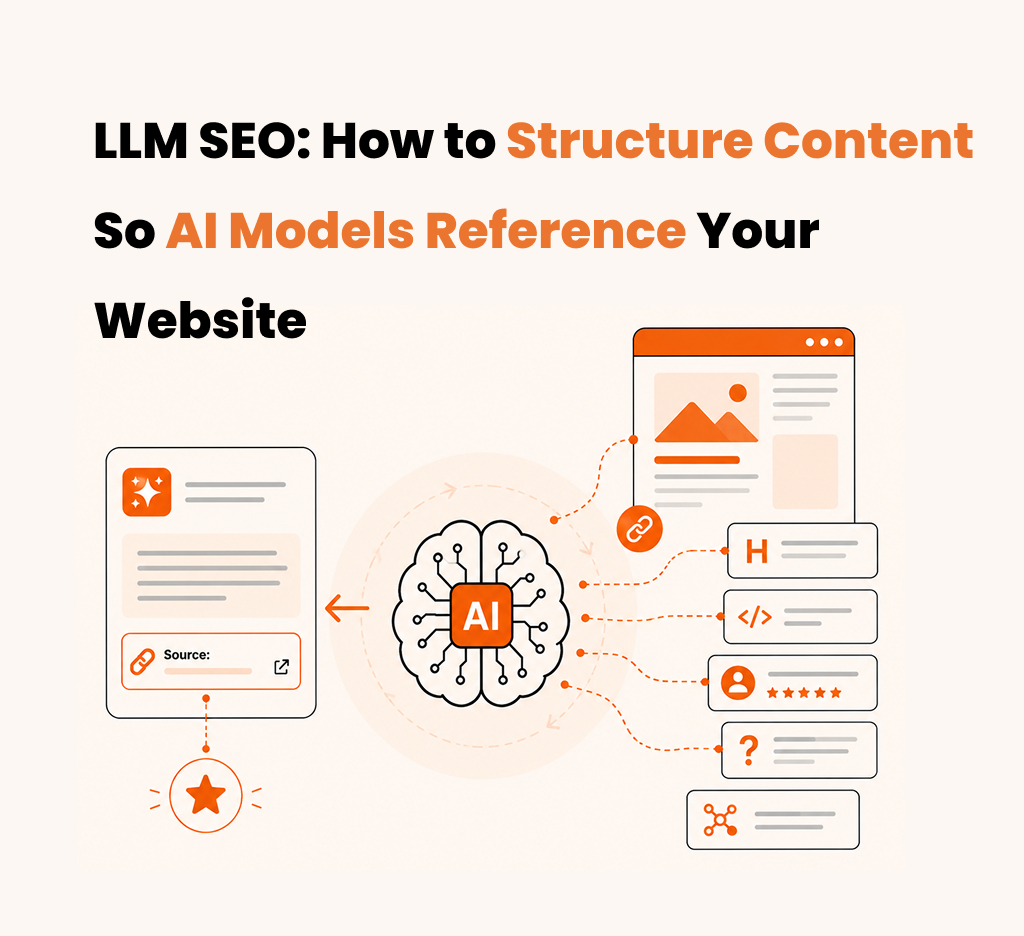
While LLMs can read plain text, structured data (Schema.org markup) helps them understand the context of your content instantly. Using “FAQPage” schema, “HowTo” schema, or “Article” schema provides explicit signals about the type of content you are publishing. This is a direct line of communication to the AI that your content is structured for answers.
For AI SEO LLM Content, the “Speakable” schema is particularly interesting. It tells search engines which parts of your article are best suited for audio or voice assistants. This aligns perfectly with the conversational nature of AI queries.
3. Optimize for Conversational Queries and Natural Language
People use different language when typing a search query versus speaking to an AI. AI queries are often full sentences or complex questions. Your content must address these long-tail, conversational phrases. Include a section that directly answers the “People Also Ask” questions related to your topic.
Use natural language in your writing. Avoid robotic, keyword-stuffed sentences. Write the way a subject matter expert would explain the topic to a colleague. This improves readability for humans and semantic clarity for AI.
Practical Guide: How to Write an Article for LLM Optimization
- Identify the Core Entity: Define the main topic (e.g., “AI SEO LLM Content”).
- Map the Knowledge Graph: List all related entities (e.g., “tokenization,” “RAG,” “semantic search,” “E-E-A-T”).
- Outline with Intent: Create H2 headings that answer specific questions (What, Why, How).
- Write the Draft: Focus on clarity. Use short sentences. Define terms early.
- Add Context: Include examples, analogies, and data to enrich the semantic field.
- Review for Ambiguity: Remove vague pronouns. Ensure every claim is supported.
Structuring Your Headings for AI Extraction
AI models often scan headings to understand the structure of an article. Your H2 and H3 tags should be descriptive and contain the key entities. Instead of “Introduction,” use “The Evolution of AI SEO LLM Content.” Instead of “Benefits,” use “Key Benefits of LLM-Optimized Content for Organic Traffic.” This provides a clear outline that the AI can easily parse.
Use bullet points and tables to present data. These formats are highly effective for AI extraction. A list of “Top 5 Strategies” is easier for an LLM to cite than a paragraph that mentions the same strategies in passing.
Benefits and Limitations of AI SEO LLM Content
Understanding the pros and cons helps set realistic expectations for your content strategy.
Key Benefits
- Future-Proofing: You are optimizing for the next generation of search, not just the current one.
- Higher Authority: Content that is clear and comprehensive tends to earn more backlinks naturally.
- Voice Search Optimization: The conversational tone required for LLMs also improves visibility for voice assistants like Siri and Alexa.
- Brand Visibility: Being cited by an AI tool positions your brand as a thought leader in the space.
Potential Limitations
- Zero-Click Searches: Users may get the answer from the AI summary and never click through to your site.
- Resource Intensive: Creating comprehensive, high-quality content requires significant time and expertise.
- Rapid Algorithm Changes: The way LLMs retrieve information is still evolving, requiring constant adaptation.
Common Mistakes to Avoid in AI SEO LLM Content
Many marketers make critical errors when trying to optimize for AI. Avoiding these pitfalls will give you a significant competitive advantage.
Mistake 1: Keyword Stuffing and Repetition
LLMs are excellent at detecting unnatural language. Repeating the exact target keyword too often will make your content look spammy and reduce its quality score. Use synonyms and related terms instead. The goal is to cover the topic, not to repeat a phrase.
Mistake 2: Ignoring Factual Accuracy
AI models are trained to reject misinformation. If your content contains outdated or incorrect data, the LLM will likely ignore it. Always verify your facts with authoritative sources. In the age of AI, accuracy is the ultimate ranking factor.
Mistake 3: Writing for Bots Instead of Humans
While the goal is to be understood by AI, the reader is still human. If your content is dry, boring, or difficult to read, users will bounce. High bounce rates signal to search engines that your content is not valuable, which will hurt your rankings. Write engaging content that happens to be structured well for AI.
Important Notes on Measuring Success
Tracking the success of AI SEO LLM Content is different from traditional SEO. You cannot simply look at “rankings” for keywords. Instead, you must monitor brand mentions in AI tools. Use tools that track “share of voice” in ChatGPT or Perplexity responses. Monitor your referral traffic from AI search engines.
Also, pay attention to “impressions” in Google Search Console. If your impressions are high but clicks are low, it may mean you are being featured in the AI summary but users are not clicking through. This is a sign of authority, but it requires a strategy to convert that authority into direct traffic (e.g., through email newsletters or brand searches).
Frequently Asked Questions (FAQ)
What is the difference between AI content and AI SEO LLM Content?
AI content refers to any text generated by artificial intelligence. AI SEO LLM Content is a strategic approach where the content is specifically structured and written to be optimized for retrieval and citation by large language models in search results. It involves semantic optimization, entity clarity, and comprehensive coverage.
How do I check if my content is optimized for LLMs?
You can test this by asking an AI chatbot a specific question related to your content and seeing if it cites your website. You can also use tools that analyze your content for “LLM visibility” or “AI search score.” Look for clear structure, defined entities, and the presence of direct answers to common questions.
Does Google use LLMs for ranking?
Yes, Google uses a system called MUM (Multitask Unified Model) and BERT to understand the context and intent behind search queries. While these are not the same as generative LLMs like ChatGPT, they are based on similar transformer architecture. Optimizing for semantic clarity helps with these systems as well.
Is it necessary to use AI to create AI SEO LLM Content?
No. You can write this content manually. In fact, human-written content with deep expertise often performs better because it contains unique insights and experiences that AI models value. AI tools can assist in research and outlining, but the final output should be refined by a human expert to ensure accuracy and originality.
Will AI SEO LLM Content replace traditional SEO?
No, it will augment it. Traditional SEO factors like backlinks and page speed still matter. AI SEO LLM Content is an additional layer of optimization that focuses on the semantic and contextual aspects of your writing. The two strategies work best when combined.
Conclusion
The era of AI-driven search is here, and adapting your content strategy is imperative. AI SEO LLM Content is not a fleeting trend; it is the new standard for digital visibility. By focusing on comprehensive coverage, clear entity definitions, and logical structure, you can position your brand to be the primary source for AI-generated answers.
The shift requires a move away from keyword-centric thinking toward context-centric thinking. Prioritize the user’s intent, provide unmatched value, and ensure your facts are bulletproof. This approach will not only satisfy AI algorithms but will also build a loyal human audience. The brands that invest in this strategy now will dominate the search landscape for years to come.
Xem thêm:
- AI SEO Ranking Signals: The Complete Guide to Google’s Machine Learning Algorithms
- AI Duplicate Content: The Silent SEO Killer and How to Outsmart It in 2025
- AI SEO Strategy 2026: The Complete Blueprint for Search Dominance
- AI SEO Database Optimization: The Complete Guide to Smarter Data-Driven Rankings
- AI SEO Trust Signals: The Complete Guide to Building Authority in the Age of Machine-Driven Search
Bài viết cùng chủ đề:

AI SEO SEO Automation with Make: The Complete Workflow Guide

AI SEO SEO Automation with Zapier: The Complete Workflow Guide

AI SEO SEO Automation with n8n: The Complete Workflow Guide
AI SEO SEO Automation with Gemini: The Complete Guide to Scaling Organic Growth

AI SEO SEO Automation with Claude: The Complete Guide to Scaling Content in 2025

AI SEO SEO Automation with ChatGPT: The Complete Playbook for 2025

AI SEO & SEO Automation for Affiliate Sites: The 2025 Playbook for Passive Income Growth
AI SEO & SEO Automation for Bloggers: The Complete Guide to Scaling Your Content

AI SEO & SEO Automation for Agencies: The Complete 2025 Playbook

AI SEO and SEO Automation for Ecommerce: The Complete Playbook for 2025

AI SEO & SEO Automation for WordPress: The Complete Playbook for 2025
AI SEO SEO Automation Strategy: The Complete Playbook for 2025

Mastering the AI SEO SEO Automation Process: A Complete Guide to Scaling Organic Growth
AI SEO SEO Automation System: The Complete Guide to Scaling Organic Growth in 2025
AI SEO SEO Automation Platform: The Complete Guide to Scaling Organic Growth in 2025
AI SEO SEO Automation Software: The Complete Guide to Scaling Organic Growth in 2025















