
No products in the cart.
AI SEO Content Audits: The Complete Guide to Automated Content Optimization
31
Jul
Jul
AI SEO content audits have transformed how digital marketing teams evaluate and improve their website content. Traditional manual audits that took weeks can now be completed in hours, with deeper insights and more actionable recommendations. This guide explores how artificial intelligence is reshaping content auditing, what tools and techniques deliver real results, and how to implement an AI-driven audit workflow that improves organic visibility and user engagement.
What Is an AI SEO Content Audit?
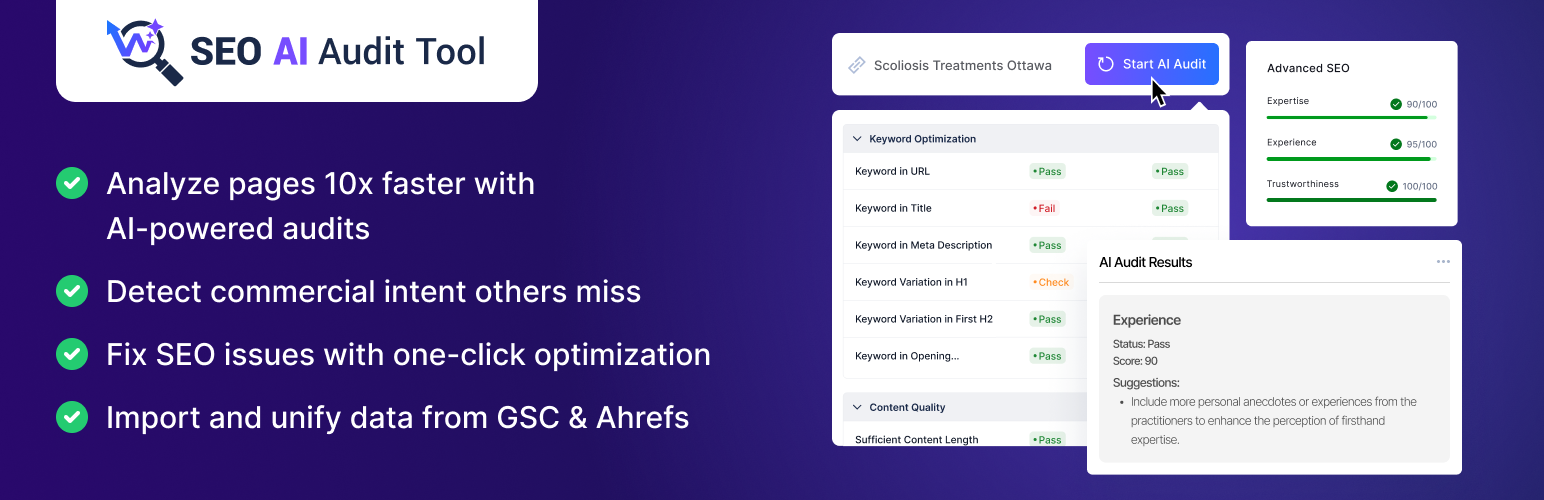
An AI SEO content audit is a systematic evaluation of all published content on a website using machine learning algorithms and natural language processing. Unlike manual audits that rely on human judgment and sampling, AI audits analyze every page, every paragraph, and every keyword cluster to identify strengths, weaknesses, and opportunities.
The core difference lies in scale and precision. A human auditor might review 50 key pages in a week. An AI system can process 50,000 pages in the same timeframe, detecting patterns invisible to the human eye. These patterns include semantic gaps, entity coverage, internal linking opportunities, and content decay signals.
How AI Audits Differ from Traditional Content Audits
Traditional content audits focus on surface-level metrics: word count, keyword usage, meta tags, and broken links. AI audits go several layers deeper. They analyze topical authority by examining entity relationships, compare your content against top-ranking competitors at the semantic level, and predict content performance based on historical data patterns.
AI systems also learn from your specific niche. A healthcare content audit requires different evaluation criteria than an e-commerce audit. Machine learning models can be trained on your industry’s top performers, creating customized scoring rubrics that reflect what actually ranks in your space.
Why AI SEO Content Audits Matter in 2025
Search engines have evolved beyond keyword matching. Google’s algorithms now understand user intent, semantic relationships, and content quality at a sophisticated level. This evolution makes manual content evaluation increasingly inadequate. AI SEO content audits align your evaluation methods with how search engines actually assess content.
The competitive landscape demands speed. Content marketing teams publish thousands of pages annually. Without AI assistance, maintaining content quality across this volume becomes impossible. AI audits provide continuous monitoring rather than periodic snapshots, catching issues before they impact rankings.
Data from industry studies shows that websites conducting regular AI-driven content audits see 23-40% improvements in organic traffic within six months. These gains come from identifying and fixing content gaps, refreshing outdated information, and improving internal linking structures that boost crawl efficiency.
Core Components of an AI SEO Content Audit
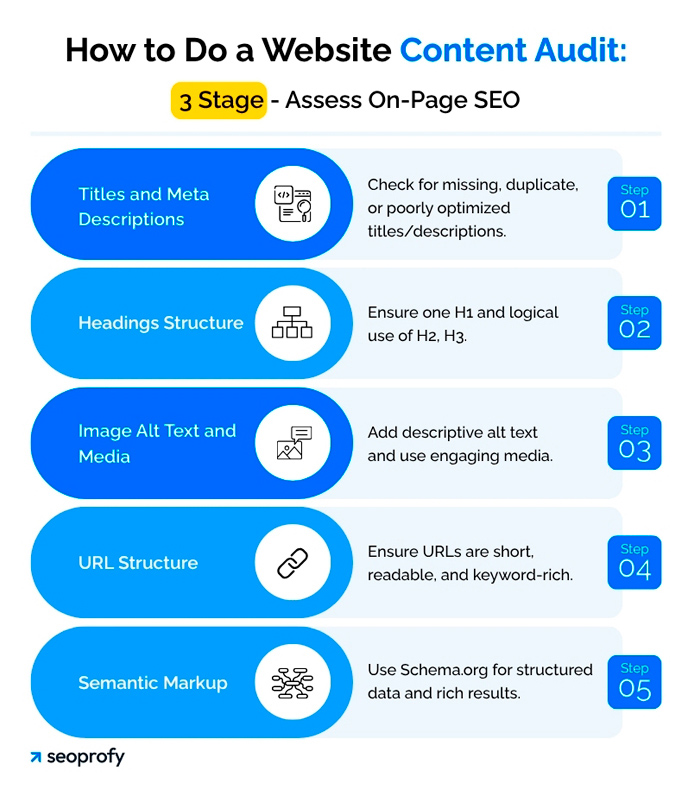
Understanding what an AI audit examines helps you interpret results and take meaningful action. The following components form the foundation of any comprehensive AI-driven content evaluation.
Semantic and Entity Analysis
AI systems map the entities mentioned in your content and compare them against what search engines expect for your target topics. For example, an article about “Mediterranean diet” should naturally include entities like olive oil, omega-3 fatty acids, heart health, and specific foods. Missing these related entities signals incomplete topical coverage to search engines.
Natural language processing identifies how entities relate to each other within your content. Strong content demonstrates clear hierarchical relationships between main topics and supporting subtopics. AI audits score this semantic structure and recommend additions or reorganizations.
Content Quality Scoring
Machine learning models trained on high-ranking pages evaluate your content’s quality dimensions. These include readability, information density, originality, and comprehensiveness. The scoring goes beyond simple metrics like Flesch-Kincaid grade levels to assess whether your content genuinely answers user questions better than competing pages.
AI quality scores also factor in user engagement signals when available. Pages with high dwell time, low bounce rates, and positive interaction patterns receive higher quality scores. The system learns which content characteristics correlate with these positive signals in your specific niche.
Keyword and Topic Gap Analysis
AI audits compare your content coverage against the full topic cluster your target keywords represent. This reveals gaps where competitors have content but you do not, or where your existing content fails to address important subtopics that users search for.
Topic gap analysis extends beyond simple keyword matching. AI systems understand that “best running shoes” and “running shoe reviews” represent different search intents within the same topic cluster. Your content might rank for one intent while completely missing the other, representing a lost opportunity.
Technical SEO Integration
Modern AI content audits integrate technical signals with content evaluation. Page speed, mobile responsiveness, structured data implementation, and crawlability all affect how search engines interpret your content quality. An AI audit flags pages where excellent content suffers from technical limitations.
Internal linking analysis forms another critical component. AI systems evaluate whether your content creates logical topical clusters through internal links, distributing authority effectively across your site. Poor internal linking structures dilute content value regardless of writing quality.
The AI SEO Content Audit Process: Step by Step
Implementing an AI-driven content audit requires a structured approach. Following this proven process ensures you extract maximum value from your investment in AI tools and technologies.
Step 1: Define Audit Goals and Scope
Start by clarifying what you want the audit to achieve. Are you preparing for a site migration? Recovering from a Google algorithm update? Launching a new content strategy? Each goal requires different audit parameters and success metrics.
Determine which content segments to include. You might audit all blog posts, only product pages, or focus on your highest-traffic content. Scope definition prevents analysis paralysis and ensures the audit delivers actionable insights rather than overwhelming data.
Step 2: Select and Configure AI Tools
Choose AI audit tools that align with your goals and technical capabilities. Enterprise solutions like Clearscope, MarketMuse, and Surfer SEO offer comprehensive analysis. Smaller teams might use more focused tools like Frase or Content Harmony. Configure each tool with your target keywords, competitor URLs, and industry context.
Integration matters. Your AI audit tools should connect with your CMS, Google Analytics, and Search Console data. This integration enables the AI to correlate content characteristics with actual performance metrics, producing more accurate recommendations.
Step 3: Run the Initial Audit
Execute the audit across your defined content scope. Most AI tools provide a dashboard showing content scores, semantic coverage, and prioritized recommendations. Expect the initial audit to surface numerous issues, especially if your content has not been systematically evaluated before.
Resist the urge to fix everything at once. The AI should prioritize recommendations based on potential impact and effort required. Focus first on high-impact, low-effort fixes that generate quick wins and build momentum for larger content projects.
Step 4: Analyze and Prioritize Recommendations
Review the AI’s findings through the lens of your business goals. A recommendation to expand a blog post might be less valuable than updating a product page that drives significant revenue. Combine AI insights with your strategic priorities to create an action plan.
Group recommendations into categories: immediate fixes (broken elements, missing meta tags), short-term improvements (content expansion, internal linking), and long-term projects (new content creation, site architecture changes). Assign ownership and deadlines for each action item.
Step 5: Implement Changes and Track Results
Execute your action plan systematically. As you update content, re-run the AI audit to verify improvements. Track organic traffic, keyword rankings, and engagement metrics before and after changes to measure the audit’s impact.
Document what works and what does not. AI systems improve with feedback. If the audit recommends changes that do not produce expected results, adjust your tool configurations or evaluation criteria. Over time, your AI audit becomes increasingly accurate for your specific niche.
Benefits of AI SEO Content Audits
The advantages of AI-driven content auditing extend far beyond time savings. Organizations that embrace this technology gain strategic capabilities that directly impact revenue and market position.
Unmatched Scale and Speed
AI systems analyze thousands of pages in minutes, providing a complete picture of your content ecosystem. This scale enables comprehensive audits that manual processes cannot match. You identify issues across your entire site rather than sampling a fraction of pages.
Speed translates to agility. When Google releases an algorithm update, you can re-audit your content within hours to understand potential impacts. This rapid response capability prevents ranking losses that might otherwise persist for weeks or months.
Data-Driven Prioritization
AI audits rank recommendations by predicted impact, helping you allocate resources where they generate the greatest return. Instead of guessing which content needs attention, you follow a data-backed roadmap that maximizes your content team’s productivity.
This prioritization extends to new content creation. AI identifies topic gaps with sufficient search volume and business relevance, guiding your editorial calendar toward opportunities with proven demand.
Consistent Evaluation Standards
Human auditors bring subjective biases to content evaluation. AI systems apply consistent criteria across all pages, eliminating inconsistencies that plague manual audits. This consistency ensures fair comparison between content produced by different writers or at different times.
Consistency also enables trend analysis. You can track content quality scores over time, identifying patterns that predict performance changes before they impact traffic.
Limitations and Challenges of AI Content Audits
While AI transforms content auditing, understanding its limitations prevents unrealistic expectations and poor decision-making based on incomplete information.
Context Blindness
AI systems lack the business context that human auditors bring. A page might score poorly on generic quality metrics but serve a critical conversion function in your sales funnel. AI cannot understand your brand voice nuances or strategic positioning without explicit configuration.
Mitigate this limitation by providing the AI with extensive context about your business, target audience, and content goals. Customize evaluation criteria to reflect what matters for your specific situation rather than accepting default settings.
Data Quality Dependence
AI audit accuracy depends entirely on the quality of input data. If your analytics tracking is broken, your keyword data is outdated, or your competitor analysis is incomplete, the AI produces misleading recommendations. Garbage in, garbage out remains a fundamental truth.
Regularly audit your data sources. Verify that tracking codes work correctly, keyword research reflects current search behavior, and competitor data is current. Invest in data hygiene before relying heavily on AI recommendations.
Over-Optimization Risk
Following AI recommendations too literally can produce content that feels formulaic and robotic. Search engines increasingly detect and penalize content that appears optimized for algorithms rather than humans. AI audits should inform your strategy, not dictate every sentence.
Balance AI insights with human creativity and judgment. Use AI to identify gaps and opportunities, then apply your editorial expertise to create content that genuinely serves readers while satisfying technical requirements.
AI SEO Content Audits vs. Manual Audits: A Comparison
| Factor | AI Content Audit | Manual Content Audit |
|---|---|---|
| Time Required | Hours for entire site | Weeks for sample pages |
| Coverage | 100% of pages | 10-20% sample typically |
| Cost | Software subscription | Labor hours, potentially higher |
| Consistency | Uniform criteria applied | Subject to human bias |
| Depth of Analysis | Semantic, entity, predictive | Surface metrics, qualitative judgment |
| Actionable Recommendations | Prioritized, data-backed | General, experience-based |
| Context Understanding | Limited without configuration | Deep business understanding |
| Adaptability | Learns from data patterns | Relies on individual expertise |
The comparison reveals that AI and manual audits serve complementary roles. AI provides scale, speed, and consistency. Manual audits contribute strategic context and creative judgment. The most effective content operations combine both approaches, using AI for broad analysis and human expertise for interpretation and execution.
Common Mistakes in AI SEO Content Audits
Organizations often make predictable errors when implementing AI content audits. Recognizing these pitfalls helps you avoid wasting time and resources on ineffective audit processes.
Ignoring Search Intent
Many AI tools optimize for keyword matching without adequately considering search intent. A page targeting “best coffee makers” might rank for informational queries but fail to convert users ready to purchase. AI audits must distinguish between informational, navigational, and transactional intent.
Configure your audit tools to evaluate intent alignment. Review top-ranking pages for your target keywords to understand what format and content type satisfies user expectations. Adjust your content strategy accordingly rather than blindly following AI keyword suggestions.
Focusing Only on Content Creation
AI audits often reveal that existing content needs updating more urgently than new content needs creating. Many teams make the mistake of prioritizing new production while neglecting content refresh opportunities that offer faster returns.
Analyze your audit results carefully. A well-optimized existing page with strong authority signals often outperforms a brand-new page that requires months to gain traction. Balance your content calendar between creation and optimization based on audit insights.
Neglecting Internal Linking Recommendations
AI audits typically surface internal linking opportunities that significantly impact content performance. Teams focused on content quality often overlook these recommendations, missing easy wins for improving crawlability and authority distribution.
Treat internal linking as a core component of your content optimization workflow. Allocate time specifically for implementing link recommendations from your AI audit. The compound effect of improved internal linking across hundreds of pages produces substantial ranking improvements.
Failing to Re-Audit Regularly
Content audits are not one-time projects. Search algorithms change, competitors publish new content, and your own site evolves. A single audit provides a snapshot that becomes outdated within months.
Establish a regular audit cadence that matches your content production volume. Monthly audits work well for active sites, while quarterly audits suffice for smaller operations. Continuous monitoring through AI tools provides alerts when content quality scores decline or new gaps emerge.
Practical Guide: Implementing AI SEO Content Audits
Putting AI content audits into practice requires careful planning and execution. This practical guide walks through the essential steps for successful implementation.
Build Your Content Inventory
Before running any audit, create a complete inventory of your content assets. Include URLs, titles, publication dates, word counts, target keywords, and current performance metrics. This inventory serves as the foundation for your AI audit configuration.
Clean your inventory by removing duplicate content, redirecting broken pages, and consolidating thin content. AI audits work best when analyzing quality content rather than processing large volumes of low-value pages that should be removed anyway.
Define Your Competitive Set
AI audits compare your content against competitors. Choose your competitive set carefully to ensure meaningful comparisons. Include direct competitors in your industry, as well as content sites that rank for your target keywords even if they operate in adjacent spaces.
Update your competitive set regularly. New competitors emerge, and existing competitors change their content strategies. Stale competitive data produces misleading audit results that do not reflect current market conditions.
Configure Custom Scoring Criteria
Default AI scoring models provide a starting point, but customization improves accuracy. Define what quality means for your specific content types. A technical documentation page requires different evaluation criteria than a lifestyle blog post.
Incorporate your brand guidelines into the audit configuration. Specify tone requirements, formatting standards, and content structure preferences. The AI should flag content that deviates from your established standards, not just content that performs poorly on generic metrics.
Integrate with Your Workflow
AI audit tools deliver maximum value when integrated into your content production workflow. Connect audit results to your CMS so writers see recommendations while creating content. Set up automated alerts when new content receives low quality scores.
Create a review process for AI recommendations. Assign a content strategist to evaluate audit findings, filter out irrelevant suggestions, and translate technical recommendations into actionable briefs for writers and editors.
Measure and Iterate
Track the impact of your AI audit implementation. Monitor organic traffic, keyword rankings, engagement metrics, and conversion rates before and after audit-driven changes. Compare performance against a control group of pages that did not receive optimization.
Use performance data to refine your audit configuration. If certain recommendations consistently produce positive results, adjust your scoring criteria to prioritize similar suggestions. If other recommendations have no impact, reduce their weight in future audits.
Important Notes for AI SEO Content Audits
Several considerations deserve special attention when working with AI content audit tools and methodologies.
Data privacy matters. AI tools process your content and competitive data through their servers. Review privacy policies and data handling practices before committing to a tool, especially if you operate in regulated industries with strict data protection requirements.
AI audit results should never replace human editorial judgment. The most successful content operations use AI as a decision-support tool, not a decision-making tool. Your editorial team brings understanding of audience needs, brand voice, and strategic priorities that AI cannot replicate.
Budget realistically for AI audit tools. Quality tools require meaningful investment, but the return on that investment comes through improved content performance and reduced manual analysis time. Compare pricing against the labor costs of manual audits to build a compelling business case.
Stay current with AI audit technology evolution. The field advances rapidly, with new capabilities emerging regularly. Attend industry conferences, follow thought leaders, and test new tools to ensure your audit process remains cutting-edge.
Frequently Asked Questions
How often should I run an AI SEO content audit?
Monthly audits work well for active websites that publish new content regularly. Quarterly audits suffice for smaller sites or those with stable content. Continuous monitoring through AI tools provides real-time alerts for content quality issues, supplementing periodic comprehensive audits.
What is the cost of AI SEO content audit tools?
Pricing varies widely based on features and scale. Entry-level tools start around $100 per month, while enterprise solutions can exceed $1,000 monthly. Most tools offer tiered pricing based on content volume and team size. Consider your content volume and required features when selecting a pricing tier.
Can AI content audits replace human SEO experts?
No. AI audits provide data and recommendations, but human experts interpret results, understand business context, and make strategic decisions. The most effective approach combines AI analysis with human expertise. AI handles scale and pattern recognition while humans provide judgment and creativity.
How long does an AI content audit take to complete?
Initial setup takes one to two days, including tool configuration and data integration. Once configured, the actual audit runs in minutes for most websites. Analysis and prioritization of recommendations typically takes several hours, depending on the number of pages and complexity of issues found.
What metrics should I track after implementing audit recommendations?
Track organic traffic, keyword rankings for target terms, average position changes, click-through rates, bounce rates, and conversion metrics. Compare these metrics against baseline data collected before the audit. Also monitor content quality scores from your AI tools to verify improvements.
Do AI content audits work for all types of websites?
AI audits benefit most websites, but effectiveness varies by content type and industry. E-commerce sites, blogs, and corporate websites see significant improvements. Highly specialized technical content or content in niche industries may require additional customization to produce accurate recommendations.
Conclusion
AI SEO content audits represent a fundamental shift in how organizations evaluate and optimize their content assets. The ability to analyze every page at scale, identify semantic gaps, and prioritize improvements based on predicted impact gives content teams a significant competitive advantage.
Success with AI audits requires more than purchasing software. You need clear goals, quality data, thoughtful configuration, and human expertise to interpret and act on recommendations. Organizations that master this combination achieve measurable improvements in organic visibility, user engagement, and content ROI.
The future of content auditing belongs to those who embrace AI while maintaining editorial judgment. Start with a pilot audit on your most important content segments, learn from the results, and gradually expand your AI-driven optimization program. The insights you gain will transform your content strategy and position your brand for sustained search success.
Xem thêm:
- AI SEO Customer Acquisition: The Complete Playbook for Sustainable Growth in 2025
- AI Voice Search SEO: The Ultimate Guide to Dominating Spoken Queries in 2025
- AI SEO Content Creation: The Complete Playbook for Ranking in 2025
- AI SEO Content Hubs: The Complete Guide to Building Automated Topic Clusters
- AI SEO for Shopify: Transform Your Store Traffic With Intelligent Automation
Bài viết cùng chủ đề:

AI SEO SEO Automation with Make: The Complete Workflow Guide

AI SEO SEO Automation with Zapier: The Complete Workflow Guide

AI SEO SEO Automation with n8n: The Complete Workflow Guide
AI SEO SEO Automation with Gemini: The Complete Guide to Scaling Organic Growth

AI SEO SEO Automation with Claude: The Complete Guide to Scaling Content in 2025

AI SEO SEO Automation with ChatGPT: The Complete Playbook for 2025

AI SEO & SEO Automation for Affiliate Sites: The 2025 Playbook for Passive Income Growth
AI SEO & SEO Automation for Bloggers: The Complete Guide to Scaling Your Content

AI SEO & SEO Automation for Agencies: The Complete 2025 Playbook

AI SEO and SEO Automation for Ecommerce: The Complete Playbook for 2025

AI SEO & SEO Automation for WordPress: The Complete Playbook for 2025
AI SEO SEO Automation Strategy: The Complete Playbook for 2025

Mastering the AI SEO SEO Automation Process: A Complete Guide to Scaling Organic Growth
AI SEO SEO Automation System: The Complete Guide to Scaling Organic Growth in 2025
AI SEO SEO Automation Platform: The Complete Guide to Scaling Organic Growth in 2025
AI SEO SEO Automation Software: The Complete Guide to Scaling Organic Growth in 2025















