
No products in the cart.
AI SEO Content Consistency: The Complete Guide to Scaling Quality Without Losing Your Voice
10
Aug
Aug
Maintaining a uniform brand voice, factual accuracy, and publishing cadence across hundreds of pages is a logistical nightmare for modern marketing teams. This is where AI SEO content consistency becomes the defining factor between a chaotic content operation and a predictable growth engine. Consistency in this context means more than posting on schedule; it involves the systematic alignment of tone, structure, data points, and keyword targeting across every AI-generated asset. When executed correctly, this approach transforms sporadic publishing into a compounding asset that search engines reward with sustained rankings.
Understanding AI SEO Content Consistency
AI SEO content consistency refers to the practice of using artificial intelligence tools to produce and maintain a uniform standard of quality, tone, and topical relevance across all published materials. Unlike manual editing, which relies on human memory and subjective judgment, AI-driven consistency relies on predefined parameters, style guides, and machine learning models that enforce the same rules on every piece of content.
The core challenge is that raw AI output is often inconsistent. A chatbot might produce a formal tone in one paragraph and a casual tone in the next. It might cite outdated statistics or shift between British and American spelling. Without a governance framework, these inconsistencies erode trust with both readers and search engine crawlers. Google’s helpful content system rewards sites that demonstrate clear expertise and a coherent user experience, which directly correlates with how consistently you present information.
The Difference Between Consistency and Uniformity
Consistency does not mean every article reads identically. Uniformity creates robotic, duplicated content that triggers algorithmic filters. True consistency means the underlying quality bar, factual rigor, and stylistic guidelines remain stable while the surface-level expression adapts to the specific query. For example, a technical guide for developers should use precise jargon, while a beginner’s tutorial on the same topic should simplify terminology. Both pieces must share the same brand voice, formatting standards, and citation practices, but the depth and vocabulary differ.
Why AI SEO Content Consistency Matters for Rankings
Search engines evaluate websites holistically. A site with 500 pages where 50 are excellent and 450 are mediocre will rank lower than a site with 200 consistently good pages. The algorithm detects patterns of quality across your entire domain. Inconsistent AI content creates a fragmented user experience, increasing bounce rates and reducing dwell time, which are negative ranking signals.
Furthermore, consistent content builds topical authority. When you publish multiple articles that consistently cover related subtopics with the same level of depth and internal linking structure, search engines recognize you as a comprehensive resource. This semantic relevance is crucial for ranking on long-tail keywords and featured snippets. AI SEO content consistency enables you to scale this topical coverage without sacrificing the quality that builds authority.
The Role of Brand Voice in AI Output
Your brand voice is a competitive differentiator. If your AI-generated content sounds like every other AI-generated article on the internet, you lose that differentiation. Consistency in voice requires training your AI tools on your specific style guide, including vocabulary preferences, sentence length variations, and emotional tone. This is not a one-time setup; it requires continuous refinement as your brand evolves.
Core Components of a Consistent AI Content Workflow

Building a reliable system for AI SEO content consistency involves several interconnected components. Each element must be configured correctly to prevent quality drift.
Centralized Brand and Style Guidelines
Your style guide is the single source of truth. It must include grammar rules, tone descriptors, banned words, preferred terminology, and formatting conventions. This document should be machine-readable, meaning it can be fed directly into your AI prompt templates. For instance, if your brand avoids passive voice, the style guide must explicitly state this and provide examples of active voice alternatives.
Structured Prompt Templates
Ad-hoc prompting produces inconsistent results. Instead, develop structured prompt templates that include placeholders for the target keyword, audience persona, desired word count, and specific sections required. These templates enforce a consistent structure across all articles, making it easier for search engines to understand your content hierarchy and for readers to navigate your pages.
Automated Fact-Checking and Data Validation
AI models can hallucinate statistics or mix up dates. A consistent workflow must include an automated validation layer that cross-references all factual claims against trusted databases. This could involve using a separate AI tool designed for fact verification or integrating with an API that checks data points against reputable sources. This step is non-negotiable for maintaining E-E-A-T (Experience, Expertise, Authoritativeness, Trustworthiness).
Version Control and Audit Trails
When you scale content production, you need to track what was changed, when, and by whom. Implementing version control for your AI-generated drafts allows you to revert to previous iterations if a new prompt update causes quality regression. An audit trail also helps you identify which AI models or prompt versions produce the most consistent output, enabling data-driven optimization.
Practical Strategies for Achieving Consistency
Implementing AI SEO content consistency requires a shift from treating AI as a novelty to treating it as a managed production system. The following strategies provide a roadmap for this transition.
Create a Master Prompt Library
Develop a library of prompts for different content types: blog posts, product descriptions, FAQs, and landing pages. Each prompt should be tested and refined until it produces consistent output. Document the exact wording of successful prompts and share them across your team. This prevents individual writers from creating their own inconsistent prompt variations.
Use AI to Review AI Content
Use a secondary AI model to audit the primary AI’s output. This reviewer model can be programmed to check for tone consistency, keyword density, structural completeness, and adherence to your style guide. This creates a feedback loop where the reviewer flags inconsistencies, and the primary model is adjusted accordingly. This dual-model approach significantly reduces human editing time.
Implement a Content Scoring System
Develop a scoring rubric that quantifies consistency. Score each piece on factors like tone alignment, keyword usage, internal linking, and factual accuracy. Track these scores over time to identify trends. If scores drop, you know your AI configuration needs adjustment. This data-driven approach removes guesswork from quality control.
Schedule Regular Model Retraining
AI models are not static. They update, and their output patterns shift. Schedule monthly or quarterly reviews of your AI tools to ensure they still align with your brand guidelines. This is particularly important when search engine algorithms update, as you may need to adjust your content structure to maintain consistency with new ranking factors.
Benefits of AI SEO Content Consistency
The advantages of maintaining strict consistency in your AI-driven content operations extend beyond search rankings. These benefits compound over time, creating a significant competitive moat.
- Improved Crawl Efficiency: Consistent internal linking and URL structures help search engine bots crawl your site more efficiently, ensuring all your pages get indexed.
- Higher Conversion Rates: A consistent tone builds trust. When a reader moves from a blog post to a product page, the seamless voice reassures them they are in the right place.
- Faster Production Cycles: With a standardized workflow, you reduce the time spent on editing and rewriting. Your team can publish more content in less time without quality degradation.
- Better A/B Testing: When your content is consistent, you can accurately test which headlines, structures, or calls-to-action perform best, because you are not dealing with confounding variables.
- Scalable Localization: If you expand to multiple languages, a consistent source framework makes translation and localization more predictable and accurate.
Limitations and Risks to Manage
While the benefits are compelling, there are inherent limitations to relying on AI for content consistency. Ignoring these risks can lead to significant setbacks.
Over-Optimization and Algorithmic Penalties
If your consistency efforts result in every article having the exact same structure, keyword placement, and heading format, you risk creating a pattern that search engines detect as templated. This can trigger spam policies. The key is to maintain consistency in quality and voice while varying the surface-level structure based on the specific query intent.
Loss of Creative Edge
Strict consistency can stifle creativity. If your AI is programmed too rigidly, your content may become boring and fail to engage readers emotionally. You need to build flexibility into your guidelines, allowing for creative expression within defined boundaries. The goal is consistency of quality, not consistency of mediocrity.
Data Drift and Outdated Information
AI models trained on historical data may consistently produce outdated information. Your consistency workflow must include a freshness protocol that automatically flags content older than a certain threshold for review. Consistency in this case means consistently updating your content, not consistently publishing stale data.
Comparison: Manual Consistency vs. AI-Driven Consistency
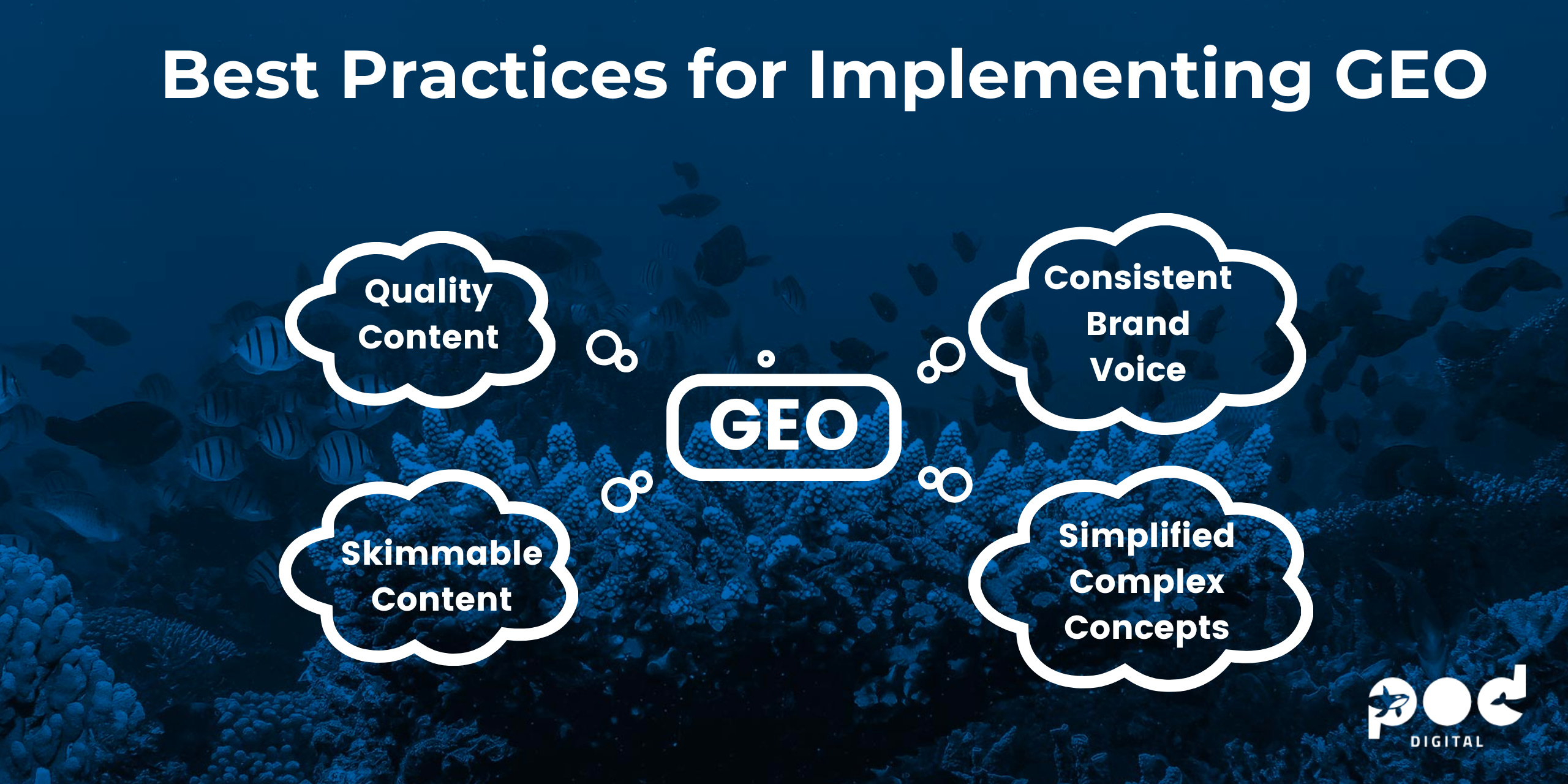
Understanding the difference between traditional manual methods and AI-driven approaches clarifies why the latter is essential for scaling operations.
| Aspect | Manual Consistency | AI-Driven Consistency |
|---|---|---|
| Speed | Slow, limited by human capacity | Fast, scalable to thousands of pages |
| Accuracy | Prone to human error and oversight | High, with automated validation layers |
| Cost | High labor costs for editing and review | Lower marginal cost per piece |
| Scalability | Difficult to maintain across large teams | Easily replicated across global teams |
| Brand Voice | Dependent on individual writer memory | Enforced by centralized guidelines |
| Flexibility | High, human judgment adapts quickly | Requires prompt updates for changes |
Common Mistakes and How to Avoid Them
Many teams fail to achieve AI SEO content consistency due to predictable pitfalls. Recognizing these mistakes early saves significant time and resources.
Mistake 1: Ignoring the Human Review Layer
Some teams assume that AI output is ready to publish without human oversight. This is a critical error. AI can maintain consistency in formatting, but it cannot fully understand nuanced brand context or cultural sensitivities. Always have a human editor perform a final review, even if it is a quick check.
Mistake 2: Using Different AI Tools Without Integration
Using one tool for drafting, another for keyword research, and a third for meta descriptions creates data silos. If these tools do not share a common data layer, your content will lack consistency in keyword targeting and messaging. Use an integrated platform or ensure your tools export data in a compatible format.
Mistake 3: Neglecting to Update the Style Guide
Your style guide is a living document. If your brand pivots or you enter a new market, your guidelines must change. Failing to update the guide means your A
Mistake 4: Focusing Only on Text, Ignoring Metadata
Consistency must extend to title tags, meta descriptions, and alt text. If your body content is consistent but your metadata is erratic, you confuse search engines and lower your click-through rates. Apply the same AI-driven consistency rules to all metadata fields.
Important Notes for Long-Term Success
Maintaining AI SEO content consistency is an ongoing process, not a one-time setup. Several factors require continuous attention to ensure long-term effectiveness.
First, monitor search engine algorithm updates. When Google changes its ranking criteria, your content consistency parameters may need adjustment. For example, a shift towards user experience signals might require you to standardize page speed and mobile responsiveness across all AI-generated pages.
Second, invest in team training. Your content managers need to understand how to configure and troubleshoot AI tools. Without this expertise, your consistency framework will degrade as team members leave or new tools are introduced.
Third, prioritize user feedback. If readers consistently complain about confusing content or a jarring tone shift, that is a signal your consistency framework is failing, regardless of what your internal metrics say. Integrate user feedback loops into your content audit process.
Frequently Asked Questions
What is the ideal frequency for auditing AI content consistency?
You should perform a high-level audit monthly and a deep-dive audit quarterly. The monthly audit checks for obvious tone or formatting drift. The quarterly audit reviews factual accuracy, keyword alignment, and whether your content still matches current search intent. This cadence allows you to catch issues before they impact rankings significantly.
Can AI SEO content consistency work for small businesses with limited budgets?
Yes, but the approach differs. Small businesses can start with a single AI tool and a simple style guide. The key is to document your guidelines and use the same prompt structure for every piece. As your budget grows, you can add automated fact-checking and review layers. Consistency is more about process discipline than expensive software.
How do you measure AI SEO content consistency?
Measure consistency using a combination of quantitative and qualitative metrics. Quantitatively, track the variance in word count, heading structure, and keyword density across your published articles. Qualitatively, use a scoring rubric that evaluates tone, clarity, and brand alignment. A low variance and high rubric scores indicate strong consistency.
Does AI SEO content consistency affect voice search optimization?
Yes, it has a direct impact. Voice search queries are conversational and often phrased as questions. If your AI content consistently uses a clear, direct answer format at the beginning of each section, you are more likely to be featured in voice search results. Consistency in this format across all your content increases your chances of being selected as the answer.
What is the biggest mistake when implementing AI for content consistency?
The biggest mistake is treating AI as a replacement for strategy. If you do not have a clear content strategy, target audience definition, and brand voice, A Consistency requires a solid strategic foundation before you introduce AI tools.
Conclusion
AI SEO content consistency is not a luxury for enterprise brands; it is a fundamental requirement for any organization serious about organic growth. The ability to produce a high volume of content that maintains a uniform quality bar, a coherent brand voice, and accurate data is the new competitive advantage in search marketing. By implementing structured workflows, centralized guidelines, and automated validation, you transform AI from a chaotic generator into a disciplined production system. The effort invested in building this framework pays dividends through improved rankings, higher user trust, and a scalable content operation that can adapt to market changes without losing its core identity. Start by auditing your current output, identifying the inconsistencies, and building the governance structure to eliminate them permanently.
Xem thêm:
- The Definitive AI SEO Guide: How to Leverage Artificial Intelligence for Higher Rankings
- The Rise of AI SEO Experts: Redefining Search Engine Strategy in the Age of Artificial Intelligence
- AI Robots.txt: The Complete Guide to Controlling AI Crawlers on Your Website
- AI Grey Hat SEO: The Hidden Mechanics of Blurring Search Engine Guidelines
- Mastering the AI Content Calendar: Automate, Optimize, and Scale Your Publishing Strategy
Bài viết cùng chủ đề:

AI SEO SEO Automation with Make: The Complete Workflow Guide

AI SEO SEO Automation with Zapier: The Complete Workflow Guide

AI SEO SEO Automation with n8n: The Complete Workflow Guide
AI SEO SEO Automation with Gemini: The Complete Guide to Scaling Organic Growth

AI SEO SEO Automation with Claude: The Complete Guide to Scaling Content in 2025

AI SEO SEO Automation with ChatGPT: The Complete Playbook for 2025

AI SEO & SEO Automation for Affiliate Sites: The 2025 Playbook for Passive Income Growth
AI SEO & SEO Automation for Bloggers: The Complete Guide to Scaling Your Content

AI SEO & SEO Automation for Agencies: The Complete 2025 Playbook

AI SEO and SEO Automation for Ecommerce: The Complete Playbook for 2025

AI SEO & SEO Automation for WordPress: The Complete Playbook for 2025
AI SEO SEO Automation Strategy: The Complete Playbook for 2025

Mastering the AI SEO SEO Automation Process: A Complete Guide to Scaling Organic Growth
AI SEO SEO Automation System: The Complete Guide to Scaling Organic Growth in 2025
AI SEO SEO Automation Platform: The Complete Guide to Scaling Organic Growth in 2025
AI SEO SEO Automation Software: The Complete Guide to Scaling Organic Growth in 2025















