
No products in the cart.
AI Grey Hat SEO: The Hidden Mechanics of Blurring Search Engine Guidelines
29
Jul
Jul
Search engine optimization has always walked a fine line between best practices and quick wins. The arrival of artificial intelligence has turned that thin tightrope into a hazy, moving target. AI grey hat SEO is now the accelerating force behind strategies that are not clearly forbidden by Google’s guidelines today but could become the penalty triggers of tomorrow. It exploits the space where algorithmic gaps, automation speed, and semantic loopholes collide. Understanding this twilight zone is essential for anyone managing organic visibility in a world where machine-generated content, automated link graphs, and intelligent scraping can either propel a site or burn its reputation overnight.
Grey hat tactics have existed for decades, but AI has supercharged their scale, sophistication, and believability. This article maps the entire landscape: what qualifies as AI-powered grey hat work, which tools fuel it, where the real risks live, and how to make decisions that protect long-term authority while still staying competitive.
What Is Grey Hat SEO and Where Does AI Fit In?
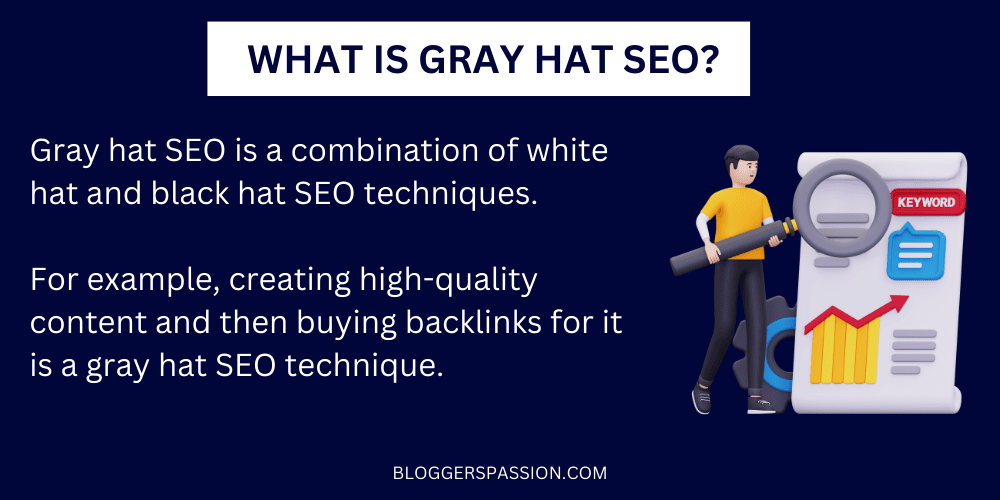
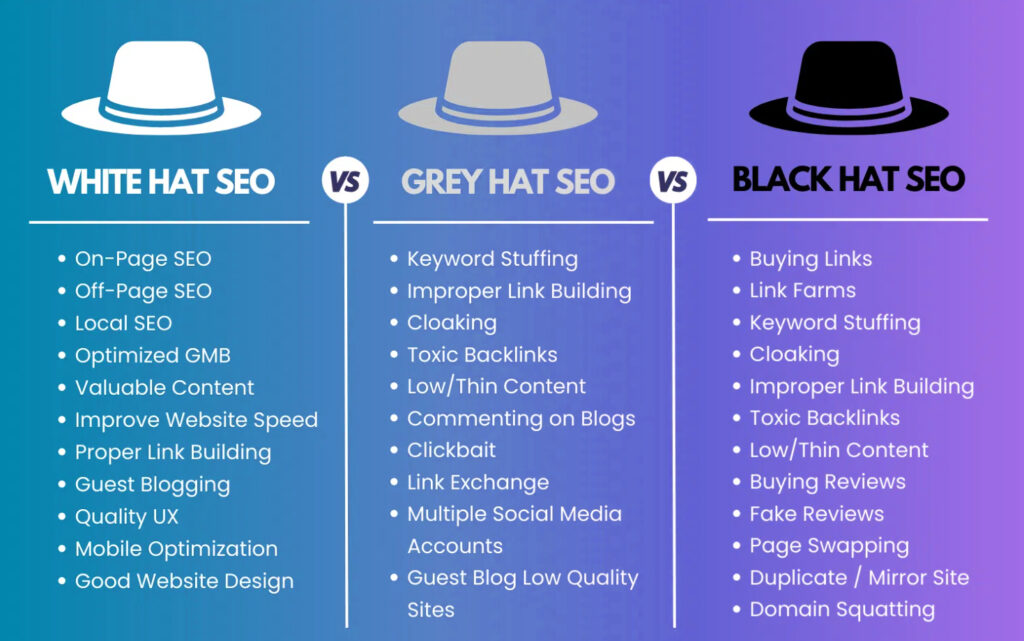
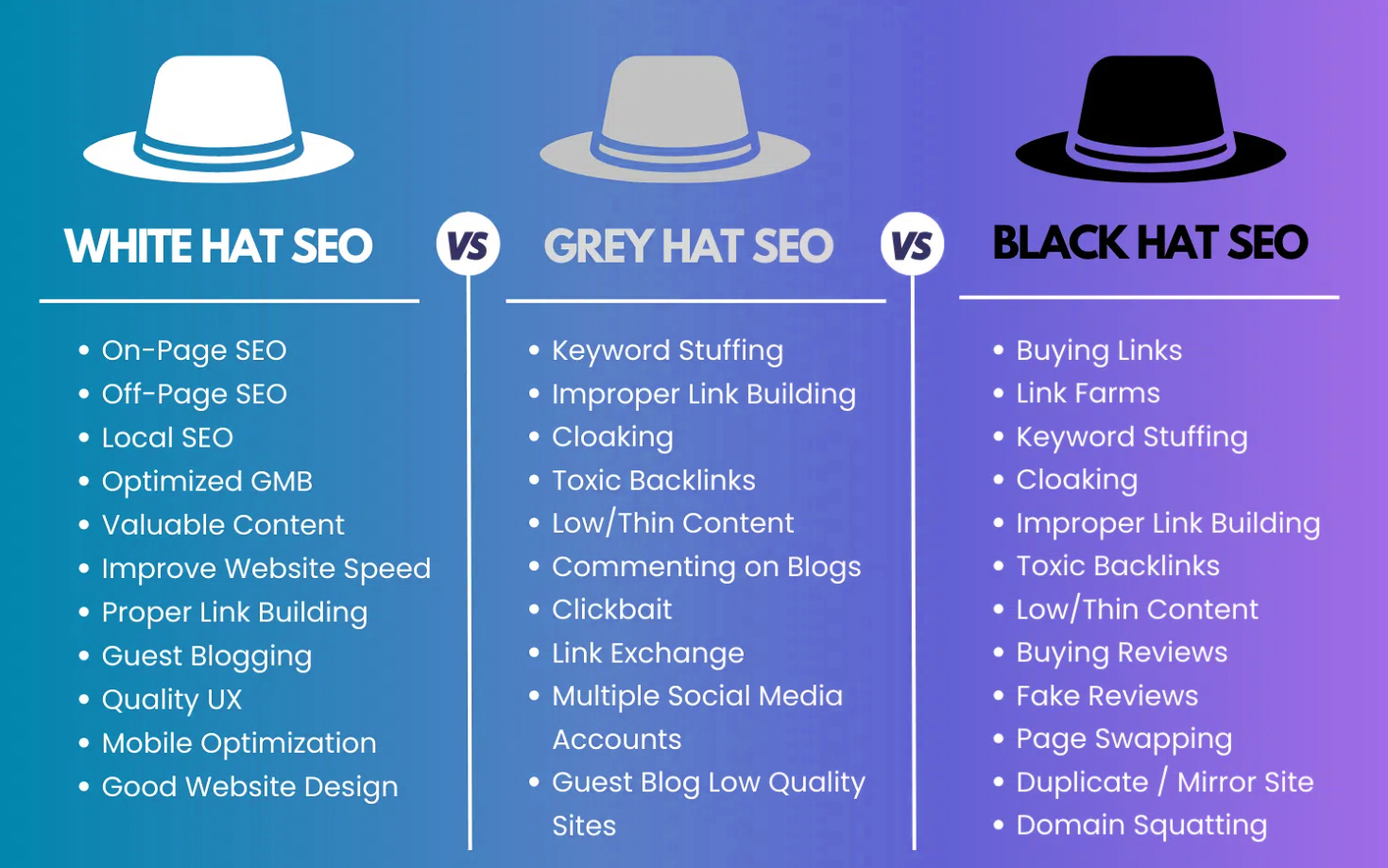
Grey hat SEO refers to optimization methods that sit between the clean, user-first principles of white hat SEO and the deceptive, penalty-prone world of black hat. A grey hat technique may technically comply with search engine guidelines right now but is designed to manipulate rankings in a way that the guidelines intended to prevent. It often exploits ambiguity, incomplete enforcement, or the practical limits of manual review. Common examples include purchasing expired domains with existing authority, aggressive internal linking with over-optimized anchors, building private blog networks disguised as genuine sites, or spinning content enough to pass duplicate checks without adding real value.
AI enters this equation not by inventing new grey hat categories but by industrializing them. Machine learning models can generate thousands of unique articles from a single seed, create entire link networks with natural-looking anchor text distributions, and rewrite content in ways that fool both plagiarism detectors and human reviewers. The core grey hat logic remains the same, but the execution capacity has multiplied by several orders of magnitude. What used to require a team of low-paid writers and a developer can now be partially or fully automated with a few prompts and API connections.
The Core Mechanics of AI Grey Hat SEO
To see why AI changes the grey hat game, it helps to separate the work into three core layers: content manipulation, link building at scale, and authority spoofing. Each of these layers now has dedicated AI-driven tools that reduce cost, increase output volume, and make detection markedly harder for search engines.
1. AI-Enhanced Content Spinning and Regeneration
Traditional article spinning replaced synonyms and rephrased sentences using static thesauruses, producing garbled text that readers immediately recognized as artificial. Modern large language models can restructure entire paragraphs, alter narrative tone, insert alternative data points, and generate multiple output versions that read as if written by different people. Grey hat practitioners use these capabilities to populate money pages, PBN sites, and parasite platforms with content that passes both automated originality checks and superficial human review. The content may still be thin on genuine expertise, but it appears legitimate enough to rank for lower-competition queries.
This approach is grey, not black, because the content is often factually correct on the surface, not outright gibberish. Yet it adds no original research, expert opinion, or user-first value. The purpose is volume and keyword saturation, not reader education. Google’s helpful content system continues to target such material, but AI’s ability to mimic authentic writing styles blurs the detection line.
2. AI-Powered Link Graph Automation
Link building remains the most manipulated ranking signal. Grey hat AI applications now automate the discovery of link prospects, generate outreach emails that sound personal, and even create entire websites designed solely to host backlinks. AI scrapers can pull thousands of target opportunities from SERPs, analyze their topical relevance, and craft guest post pitches that mention specific site details. On the more aggressive side, machine-generated private blog networks use AI to write filler content, create believable author personas, and schedule posts with natural cadences.
Some tools go further by automatically identifying expired domains with strong backlink profiles, reconstructing their previous content using Wayback Machine data processed through language models, and then inserting links to the money site. This tactic leverages existing authority while blurring the originality of the restored site. While not outright link injection or hacking, it falls squarely into the grey zone because the intent is to manipulate PageRank through a manufactured entity. The risk is significant: if the PBN footprint becomes detectable, all connected properties can receive manual actions.
3. Authority Spoofing Through AI-Generated Entities
Search engines increasingly rely on entity recognition and E-E-A-T signals (Experience, Expertise, Authoritativeness, Trustworthiness) to evaluate site quality. Grey hat practitioners now deploy AI to fabricate convincing author bios, generate fake credentials, and build synthetic social proof. A fictional journalist with a photo created by a generative adversarial network can be given a LinkedIn profile, Medium articles, and a consistent posting history, all generated automatically. The author page on the target site looks credible, and semantic markup ties the entity to the content.
This goes beyond simple content spinning. It weaponizes the Knowledge Graph and authorship signals, making it difficult for algorithms to distinguish a constructed persona from a real expert without manual investigation. The tactic exploits the grey area of identity verification online: platforms rarely require proof of existence beyond a working email and a consistent digital footprint.
Common AI Grey Hat Techniques in Practice

Several concrete workflows have emerged as the most frequently used combinations of AI and grey hat thinking. They are not theoretical; they appear daily in competitive niches like finance, health, gambling, and adult content.
- Parasite SEO at scale: AI creates dozens of optimized pages on high-authority domains like Medium, LinkedIn Pulse, or Reddit. These pages target long-tail keywords and link back to the money site. The content is unique enough to index but thin enough to be low-effort. AI rewrites and formats each piece for platform-specific guidelines.
- AI-assisted doorway pages: Multiple versions of a single landing page are generated, each tweaked for a different city, language variant, or keyword synonym. Internal linking is automatically adjusted. While Google considers doorway pages against guidelines, the line blurs when each page has genuinely unique content, even if the core value proposition is identical.
- Automatic structured data injection: AI scrapers pull star ratings, product prices, and FAQ snippets from legitimate websites and inject them into grey hat pages as JSON-LD schema. This can earn rich results in SERPs while the underlying content remains mediocre, a clear exploitation of a system designed for genuine data.
- Sentiment-driven content generation: Language models are prompted to produce emotionally charged review articles that mimic authentic user experiences. These pages rank for “product X review” and funnel traffic through affiliate links. The reviews appear heartfelt but are entirely synthetic.
- Extreme speed to market: A grey hat campaign that would have taken weeks of manual labor can launch in hours. This is particularly useful for exploiting trending topics, limited-time offers, or competitor weaknesses.
- Cost arbitrage: AI tools cost a fraction of human writers and link builders. For a minimal subscription fee, operators can produce content and link assets at a scale previously reserved for large agencies.
- Algorithmic blind spots: Search algorithms still struggle to identify AI-generated content that has been lightly edited by a human. By blending human polish with machine volume, sites can maintain indexation and rankings for months before detectors catch up.
- Competitive displacement: In niches where competitors play by white hat rules, a sudden flood of optimized, reasonable-looking content can temporarily capture traffic, especially for commercial intent keywords.
- Sudden manual actions: One human reviewer can spot patterns—identical author photos, unrealistic posting frequency, unnatural anchor text—that algorithms miss until the cumulative footprint is undeniable. A manual penalty can deindex an entire domain.
- Algorithmic devaluation: Google’s SpamBrain and other machine learning anti-spam systems are trained to detect scaled content abuse. Sites relying on grey hat AI often see traffic plateaus collapse overnight when a new classifier updates.
- Brand reputation destruction: If visitors discover fake authors, plagiarized structures, or AI hallucinations that damage their trust, the brand may never recover, even after pivoting to ethical SEO.
- Legal and platform risks: Generating fake identities or scraping proprietary data can violate platform terms of service and data protection laws like GDPR or the Computer Fraud and Abuse Act, exposing operators to litigation.
- Phase 1 – Keyword and competitor scraping: AI tools scrape SERPs for keyword clusters where the top-ranking pages have modest E-E-A-T signals or where dominant sites are slow and outdated.
- Phase 2 – Content seed generation: A prompt defines the topic, target audience, and required semantic entities. The language model produces a long-form draft that includes natural LSI keywords, subtopics, and FA schema-ready Q&A.
- Phase 3 – Variation spinning: The seed is passed through a paraphrasing API with temperature and diversity settings to produce multiple unique versions. Each version targets a slightly different keyword set or geo-modifier.
- Phase 4 – Site and persona deployment: Domains are registered (often aged or expired), and AI-generated author pages, contact details, and privacy policies are uploaded. Content is scheduled for drip publication.
- Phase 5 – Link asset creation: The operator builds or commissions PBN sites, guest posts on low-barrier platforms, or profile links, all populated with AI-written supporting material. Anchor text is programmatically varied to avoid over-optimization.
- Phase 6 – Monitoring and iteration: Rank tracking tools feed data back into the AI, which adjusts content emphasis and linking velocity in response to traffic changes and algorithmic fluctuations.
- Leaving AI fingerprints: Unedited output often contains telltale phrasing, repetitive transitions, or metadata artifacts from specific models. Failing to humanize these elements creates a collective footprint across multiple sites.
- Ignoring topical relevance: AI can generate content on almost any subject, but if a PBN site about pet care suddenly features a single post about payday loans, the unnatural pattern screams manipulation.
- Over-automating anchor text: Even with variation scripts, a purely AI-driven linking campaign can settle into statistical patterns—exact match anchors clustering at certain percentages—that SpamBrain flags easily. Natural link profiles have chaotic variety that pure automation rarely mimics.
- Neglecting website hygiene: Using identical CMS themes, IP addresses, or hosting providers across an entire network creates instant connections for Google’s cloud infrastructure analysis tools.
- Faking local presence poorly: AI-generated location pages that list fake addresses or use Google Maps snippets without verifying physical existence can trigger local spam filters, resulting in a complete removal from local pack results.
- Forgetting user engagement signals: If AI-generated content leads to high bounce rates, low dwell time, and no return visits, even perfect on-page signals will eventually fade. Engagement is a ranking factor, and thin AI content rarely holds attention.
Benefits and Risks of Deploying AI Grey Hat SEO
Any discussion of these tactics must acknowledge the practical temptations and the sobering consequences.
Short-Term Advantages
Long-Term Dangers
Grey Hat vs. Black Hat vs. White Hat SEO with AI
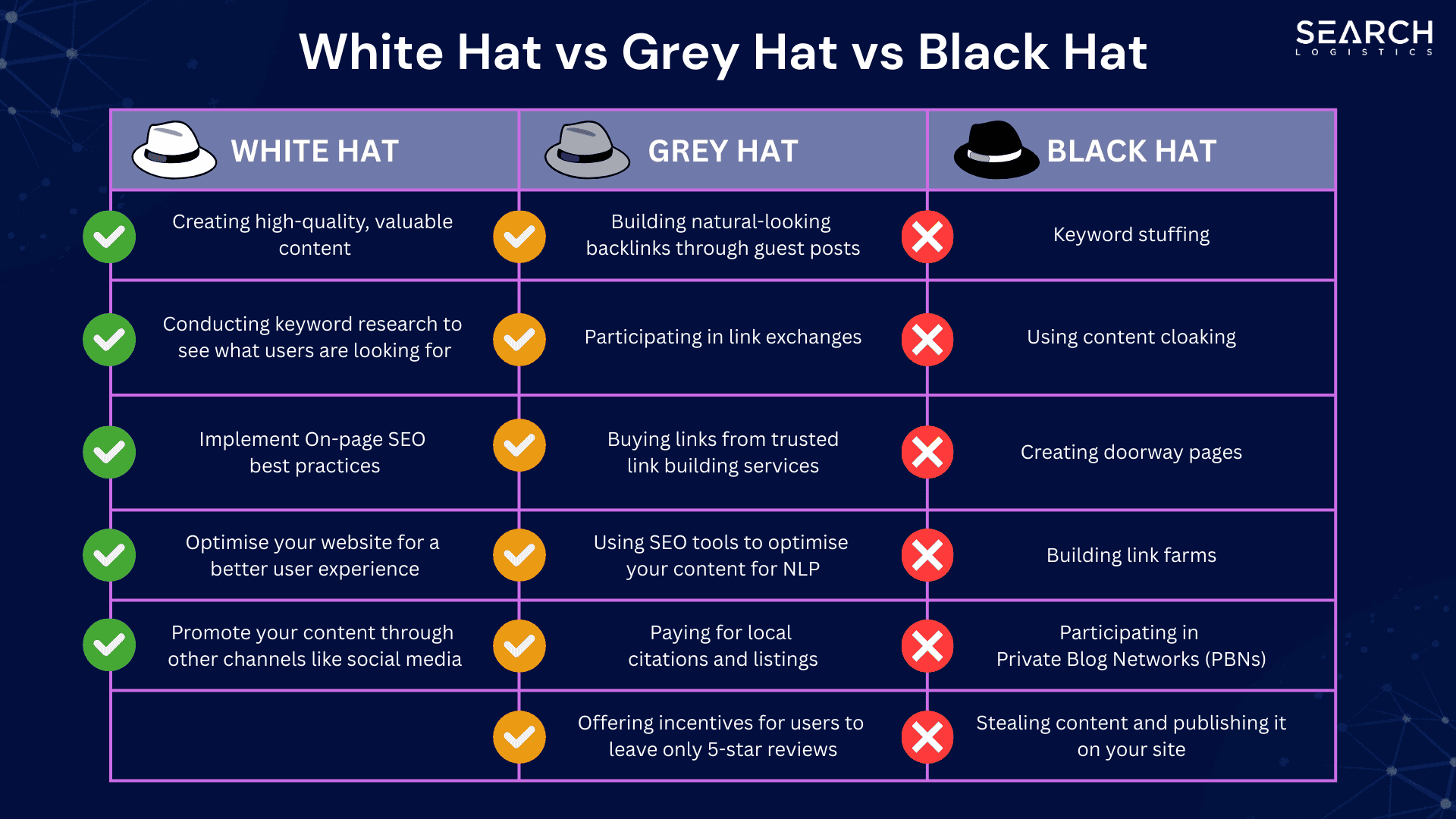
AI can power all three approaches. The difference lies in intent, transparency, and the degree of manipulation. The table below highlights how the same AI capability looks under each framework.
| Aspect | White Hat AI SEO | Grey Hat AI SEO | Black Hat AI SEO |
|---|---|---|---|
| Content creation | AI assists human experts to outline, research, and draft original, valuable information. Thorough fact-checking and expert review are included. | AI generates complete articles from a shallow prompt, lightly edited to avoid detection. Content is unique but lacks original insight or authorship. | AI produces mass volumes of spun, scraped, or translated content. No value added, designed purely to exploit algorithms. |
| Link building | AI helps identify genuinely relevant outreach opportunities and personalize messages at scale, with manual supervision. Earned links from real relationships. | AI builds and populates PBN sites or parasite pages that appear legitimate. Links are placed on sites created solely for passing PageRank, though not obviously spammy. | AI automates link injection, comment spam, or hacked link insertion. Links are placed without owner consent or on completely irrelevant pages. |
| Entity and authorship | AI enhances the profiles of real experts by formatting their genuine credentials and achievements to improve E-E-A-T. | AI fabricates an entire author persona with synthetic photo, fake social media, and generated bio to boost authority signals. | AI hijacks real author identities or scrapes genuine credentials without consent to impersonate industry figures. |
| Risk profile | Low risk; compliant with guidelines. Success depends on content quality. | Moderate to high risk; compliant on surface but designed to manipulate. Penalty possible upon manual review or algorithm update. | Extreme risk; directly violates guidelines. High probability of swift manual action and domain burn. |
| Detection evasion | Not needed; transparent methods. | Active effort to mimic white hat signals while cutting corners on genuine value. | Relies on cloaking, redirects, and technical trickery to avoid immediate identification. |
Why AI Grey Hat SEO Is Harder to Detect and Penalize
Search engines face a genuine enforcement problem that grey hat tacticians deliberately exploit. AI-generated text has become indistinguishable from human writing in many contexts, especially after brief manual editing. Traditional signals like grammar errors, awkward phrasing, or high keyword density no longer apply. Large language models can follow topical clustering that mimics human expertise, using semantic relationships to connect subtopics in a way that search crawlers interpret as topic authority.
The scale also overwhelms moderation pipelines. A single operator can generate hundreds of domains, each with unique templates, author names, and linking structures. Because each asset appears different on the surface, automated systems struggle to connect them into a single coordinated campaign. Only when pattern analysis aggregates data over months can a footprint emerge, and by then the site may have banked significant revenue and moved on to fresh domains.
Algorithmic updates such as the helpful content system target “content written for search engines first” rather than humans. Yet an AI article that a real user finds superficially useful—answering a simple question with a clear definition and steps—may still satisfy the user in the moment, sending ambiguous satisfaction signals. The grey area exists precisely because the content is not bad enough to trigger immediate demotion but not good enough to survive long-term quality scoring.
Practical Guide: How AI Grey Hat SEO Is Actually Executed

For informational purposes, understanding the typical workflow clarifies why these tactics persist. A common sequence unfolds as follows.
This entire pipeline can be orchestrated by a single person using off-the-shelf AI services and basic scripting. The barrier to entry has never been lower, which increases both the prevalence of this approach and the aggressiveness of search engine countermeasures.
Common Mistakes When Using AI in Grey Hat SEO
Operators who underestimate the sophistication of modern search engines often stumble into easily avoidable traps that accelerate detection.
Important Notes for Site Owners and SEO Professionals
Any serious SEO practitioner should approach AI grey hat tactics with full awareness of the consequences. What works as a temporary traffic spike can permanently damage a domain’s trust, sometimes irreversibly. Google’s John Mueller has repeatedly stated that machine-generated content used to manipulate rankings violates their guidelines, regardless of how polished it looks. The grey hat label does not provide immunity; it merely describes a temporary evasion of clear-cut violation status.
Moreover, the cost-benefit calculus has shifted. In the past, grey hat methods might sustain rankings for years. Now, with faster update cycles and increasingly sophisticated machine learning countermeasures, a site built on these techniques may last only a few months before being algorithmically suppressed. The effort required to start over from a new domain often exceeds the initial commitment needed to build a white hat resource with genuine, expert-driven content.
For agencies and in-house teams, due diligence matters. If you inherit a site, audit its backlink profile and content origins with tools that can detect AI-generated text, unnatural link velocity, and suspicious authorship signals. Proactively disavowing toxic links and rewriting or removing questionable pages can prevent future disasters. Transparency with clients about how AI is used—whether for drafting assistance or for fully automated publishing—is also an ethical obligation that avoids misrepresentation.
The future of search will likely treat unverified AI content with increasing skepticism. Developing a strategy that combines AI assistance with real human expertise, unique data, and genuine community engagement remains the only sustainable path to visibility.
Frequently Asked Questions About AI Grey Hat SEO
Is AI-generated content automatically considered grey hat SEO?
No. AI-generated content itself is not against Google’s guidelines. The critical factor is intent and quality. If AI assists human experts in creating valuable, people-first information and the output is reviewed and enhanced with original experience, it can be fully white hat. Content becomes grey hat when AI scales production beyond what human oversight can verify, prioritizes search-engine manipulation over user value, or is designed to artificially inflate authority through synthetic entities.
Can Google detect AI grey hat SEO tactics?
Yes, increasingly. Google uses machine learning models that analyze writing patterns, site structure nuances, and linking behavior anomalies. While perfectly humanized, low-volume grey hat sites may evade detection for some time, algorithmic updates such as the helpful content system and SpamBrain continuously improve at identifying scaled, low-value AI output. Manual reviewers also identify patterns like fake author profiles and PBN footprints effectively.
What is the most dangerous AI grey hat SEO technique right now?
AI-driven PBN creation combined with fabricated authorship is among the riskiest. Building an entire network of convincing sites with fake experts creates a deep footprint that, once discovered, results in a wholesale manual action. The interconnected nature means all properties linked to the network can be penalized simultaneously, often without recovery.
How can I protect my site from being associated with grey hat competitors?
Audit your backlink profile regularly using multiple tools like Google Search Console, Ahrefs, and Semrush. Look for sudden spikes of low-quality links, unnatural anchor text distributions, and links from sites with thin, AI-generated content. Disavow suspicious domains promptly. Ensure your own content has clear expert attribution and genuine E-E-A-T signals that differentiate it from synthetic alternatives.
Does rewriting AI content make it white hat?
It depends on the depth of rewriting and the value added. A complete rewrite that injects original research, personal experience, and expert insights can transform AI output into a genuinely helpful resource. Superficial editing that only rephrases sentences to pass detection tools remains grey hat because the substance is still machine-invented without real knowledge. The rule of thumb: if a human expert could stand behind every claim, the content is on safer ground.
What are the early warning signs that a site is using AI grey hat SEO?
Warning signs include rapid publication of hundreds of pages on a new domain, generic author profiles without off-site presence, identical writing style across seemingly unrelated sites, and backlinks from domains that all share similar CMS footprints. Unnatural keyword clustering, where a site ranks for many long-tail terms but has no branded search volume, is another red flag.
Conclusion
The rise of AI grey hat SEO forces the entire search industry to confront fundamental questions about what defines genuine value. When a machine can simulate expertise, build synthetic reputations, and scale optimization tactics beyond human speed, the old rules of compliance become less about static checklists and more about holistic evaluation. Short-term gains are undeniably tempting, yet the accelerating intelligence of search algorithms means that the window of artificial success narrows with each core update.
Sustainable organic growth now hinges on a commitment that AI cannot fake on its own: authentic experience, transparent expertise, and a genuine reason for users to trust a site as a primary source. The tools themselves are neutral. Their ethical application, guided by human judgment and a long-term perspective, separates the noise from the signal in the grey, hazy middle where many operators now find themselves. The choice is not between using AI or avoiding it; it is between using AI to serve real human needs or to temporarily deceive the machines that connect content to people.
Xem thêm:
- WP Trove AI Prompts: The Complete Guide to Unlocking WordPress Automation
- AI SEO Content Consistency: The Complete Guide to Scaling Quality Without Losing Your Voice
- AI SEO GEO Ranking: The Complete Guide to Winning Generative Engine Optimization
- AI SEO Team Workflow: The Complete Guide to Scaling Organic Growth in 2025
- ChatGPT SEO: The Ultimate Guide to AI-Powered Search Engine Optimization
Bài viết cùng chủ đề:

AI SEO SEO Automation with Make: The Complete Workflow Guide

AI SEO SEO Automation with Zapier: The Complete Workflow Guide

AI SEO SEO Automation with n8n: The Complete Workflow Guide
AI SEO SEO Automation with Gemini: The Complete Guide to Scaling Organic Growth

AI SEO SEO Automation with Claude: The Complete Guide to Scaling Content in 2025

AI SEO SEO Automation with ChatGPT: The Complete Playbook for 2025

AI SEO & SEO Automation for Affiliate Sites: The 2025 Playbook for Passive Income Growth
AI SEO & SEO Automation for Bloggers: The Complete Guide to Scaling Your Content

AI SEO & SEO Automation for Agencies: The Complete 2025 Playbook

AI SEO and SEO Automation for Ecommerce: The Complete Playbook for 2025

AI SEO & SEO Automation for WordPress: The Complete Playbook for 2025
AI SEO SEO Automation Strategy: The Complete Playbook for 2025

Mastering the AI SEO SEO Automation Process: A Complete Guide to Scaling Organic Growth
AI SEO SEO Automation System: The Complete Guide to Scaling Organic Growth in 2025
AI SEO SEO Automation Platform: The Complete Guide to Scaling Organic Growth in 2025
AI SEO SEO Automation Software: The Complete Guide to Scaling Organic Growth in 2025















