
No products in the cart.
AI SEO Updates: Navigating the New Era of Search Engine Optimization
29
Jul
Jul
The digital landscape is undergoing a seismic shift as artificial intelligence becomes the backbone of search engines. Keeping up with the latest AI SEO updates is no longer optional—it’s the difference between obscurity and top rankings. From Google’s AI-powered algorithms like RankBrain and MUM to the recent rollout of AI Overviews, every change demands a strategic pivot. This guide dissects the most critical AI SEO updates, explaining what they mean for your website and how to adapt for sustainable organic growth.
Understanding the AI Revolution in SEO
Search engines have evolved far beyond simple keyword matching. Modern search relies on layers of artificial intelligence to interpret user intent, evaluate content quality, and deliver the most relevant answers. Grasping this foundation is essential before diving into recent AI SEO updates.
From RankBrain to MUM: The Evolution of AI in Search
Google’s journey into AI-powered search began in 2015 with RankBrain, a machine learning system that helped the engine process never-before-seen queries by linking words to concepts. Then came neural matching in 2018, which enabled Google to understand how words relate to broader topics, moving beyond exact keyword matching.
In 2019, BERT (Bidirectional Encoder Representations from Transformers) allowed Google to grasp the context of each word in a query, especially in longer, conversational searches. The most advanced leap arrived with MUM (Multitask Unified Model) in 2021, which can analyze information across text, images, and video simultaneously and generate insights in multiple languages. These layers form the intelligence core that processes every search today.
Each advancement has pushed SEO practitioners to create content that is semantically rich, contextually relevant, and genuinely helpful. Keyword stuffing and thin pages simply cannot survive in this AI-driven environment.
Major AI SEO Updates from Google in Recent Years
Google’s commitment to improving search quality through AI has resulted in several landmark updates. Understanding these shifts helps webmasters align their strategies with the algorithms rather than react in panic.
The Helpful Content System and AI-Generated Content
Launched in August 2022 and refined through multiple iterations, the Helpful Content System is a site-wide classifier that demotes content designed primarily to attract search engines rather than satisfy human readers. While Google does not ban AI-generated content outright, it explicitly warns that using automation to produce low-value, unoriginal material violates its guidelines. The system rewards content that demonstrates first-hand experience, depth of knowledge, and a people-first approach.
For site owners, the AI SEO update means every piece of content must answer a visitor’s query comprehensively and reflect genuine expertise. Content that merely rephrases existing information without adding unique perspectives is flagged and suppressed.
March 2024 Core Update: The Crackdown on Unhelpful AI Spam
The March 2024 core update represented one of the most aggressive algorithmic actions against low-quality AI-generated content. Google reported that this update reduced unhelpful content in search results by 45%. Websites relying on mass-produced AI articles, scaled content abuse, and expired-domain repurposing saw massive deindexing and traffic collapses. The update also refined core ranking systems to better identify pages that offer poor user experience or are created solely for search engines.
This AI SEO update underscored that automation without human oversight is a liability. Sites that survived and thrived were those blending AI efficiency with rigorous editorial review, original data, and clear author credentials.
AI Overviews (Formerly SGE): A New Search Landscape
In May 2024, Google officially rolled out AI Overviews in the United States, replacing the Search Generative Experience (SGE) experiment. Now, for many informational queries, an AI-generated summary appears above traditional organic results, synthesizing key points from multiple sources. This fundamentally alters click distribution, as users often get their answer without clicking through.
To adapt, SEOs must optimize for inclusion in AI Overviews by structuring content with clear, authoritative answers, using structured data, and becoming the cited source. Conversational long-tail queries now carry even more weight, and concisely formatted content—such as definitions, steps, and comparison tables—stands a better chance of being extracted.
How AI is Transforming Keyword Research and Content Strategy
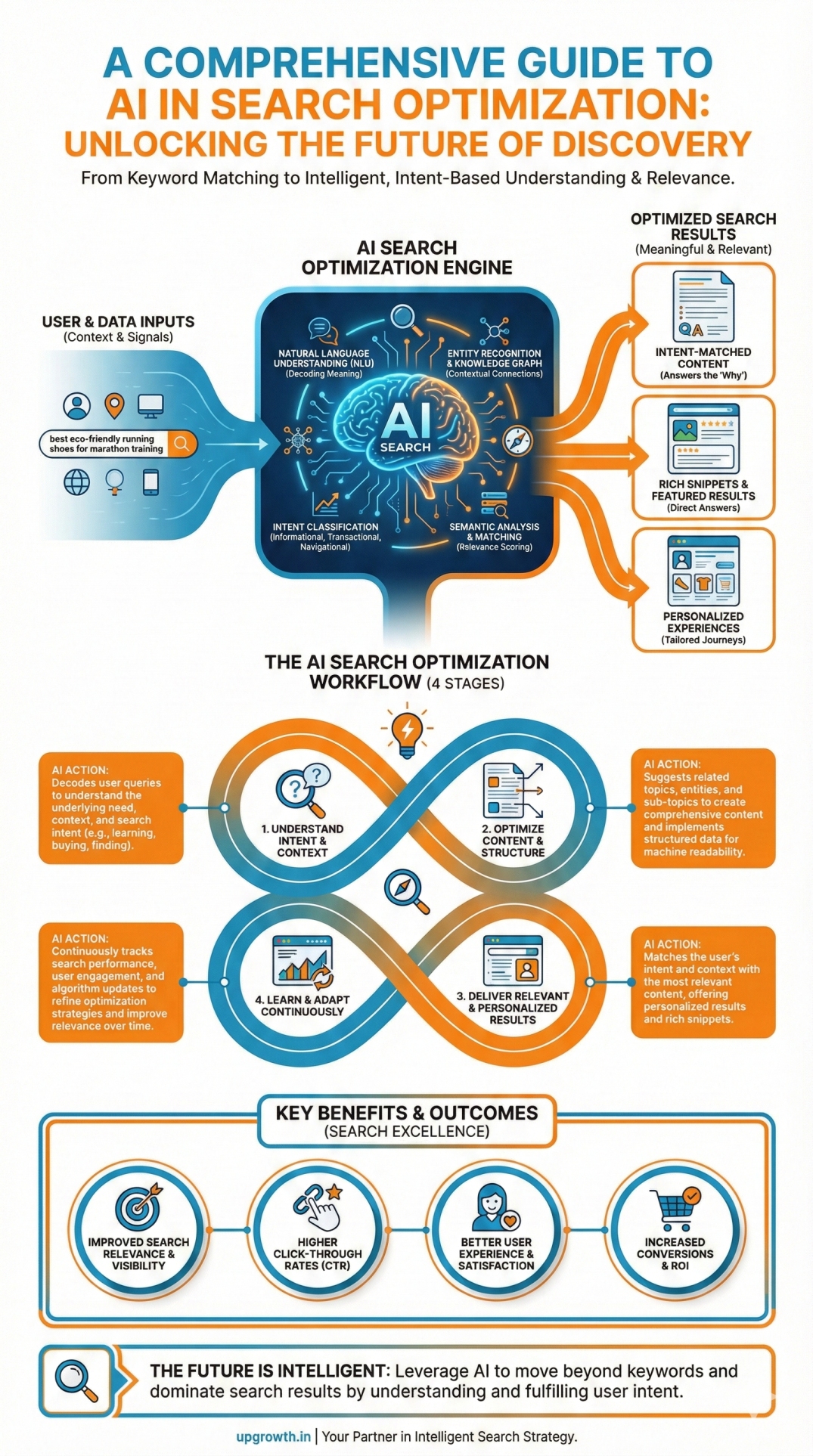
Beyond algorithmic updates, the way marketers perform keyword research and build content strategies has been radically changed by accessible AI tools. Large language models (LLMs) can now generate topic clusters, identify semantic gaps, and predict user intent shifts at scale.
Instead of relying solely on traditional keyword tools, many SEOs use AI to analyze search query contexts, create content briefs that include entities and subtopics, and simulate how a piece of content might answer multiple related intents. This leads to more holistic page designs that align with how modern AI search algorithms evaluate relevance.
However, the seeds of strategy must still be planted by human intelligence. AI can surface thousands of keyword variations, but only a human can determine which ones align with brand voice, business goals, and the nuanced needs of a specific audience.
AI-Powered SEO Tools: Benefits and Limitations
A wave of tools now embeds AI to automate meta description generation, internal linking suggestions, and even content scoring. Platforms like MarketMuse, Clearscope, and SurferSEO incorporate AI to compare pages against top-ranking competitors. Meanwhile, generative AI from OpenAI, Anthropic, and Google’s Gemini can draft entire articles or optimize existing copy.
The benefits are clear: faster content production, data-driven recommendations, and the ability to scale SEO efforts for large websites. Yet the limitations are equally stark—AI tools can hallucinate facts, miss cultural context, and produce bland, undifferentiated content that fails to stand out in a crowded SERP. The most effective workflows treat AI as an assistant, not the author, with every output verified and enriched by a subject-matter expert.
Benefits of AI in SEO
Embracing AI, when done responsibly, offers tangible advantages that were hard to achieve with manual processes alone.
- Speed and scalability: AI can generate meta titles, descriptions, and schema markup for thousands of pages in minutes, freeing teams to focus on strategy.
- Data-driven insights: Machine learning algorithms can detect ranking patterns, content gaps, and user behavior signals that humans might overlook.
- Enhanced personalization: AI can tailor content recommendations and on-site search results based on individual user segments, improving engagement metrics that indirectly affect SEO.
- Predictive analysis: Advanced models forecast keyword trends and seasonality, enabling proactive content planning.
- Natural language processing (NLP) optimization: AI helps writers maintain topic depth, use related entities, and meet the semantic expectations of algorithms like BERT and MUM.
- Content homogenization: When every competitor uses similar AI prompts, the web floods with indistinguishable content, making it harder for any site to demonstrate uniqueness.
- Factual inaccuracies: Large language models are prone to hallucinations, confidently presenting false information that damages both credibility and rankings.
- Loss of EEAT signals: AI-generated content often lacks real-world experience, expert authorship, and trustworthiness—exactly the signals Google’s quality raters prioritize.
- Algorithmic penalties: Mass-produced AI content is the primary target of core updates and spam policies. Sites that ignore quality thresholds risk manual actions or algorithmic suppression.
- Over-optimization: AI tools may suggest keyword densities or linking schemes that feel unnatural, triggering red flags.
- Audit existing content for EEAT: Review every page for clear authorship, updated dates, references to original research, and evidence of hands-on experience. Thin or outdated AI-generated articles should be rewritten or consolidated.
- Optimize for AI Overviews: Identify queries in your niche that trigger AI-generated summaries. Structure answers in a concise, scannable format—use bullet points, numbered steps, or definition paragraphs at the top of the page. Implement FAQ schema to increase chances of being sourced.
- Integrate human expertise relentlessly: Even if AI drafts the content, subject-matter specialists must inject unique examples, proprietary data, case studies, and opinion. Google’s raters actively look for clear indications of real-world involvement.
- Employ multimodal content: With MUM’s ability to process images and video, include original graphics, screenshots, and video summaries. This not only enriches the page but also creates assets that could appear in AI-generated overviews.
- Monitor brand mentions and entity relationships: Use AI-powered brand monitoring to ensure your name is associated with relevant entities. Building a strong Knowledge Graph presence helps Google trust your site as an authority.
- Publishing raw AI output: The most frequent and damaging mistake. Without human fact-checking, editing, and personalization, such content is a direct target for the Helpful Content System.
- Ignoring authorship transparency: Hiding the fact that content is AI-assisted or lacking author bios entirely erodes trust signals. Clearly label expert reviewers and authors.
- Neglecting technical foundations: AI can suggest content, but if the site has crawl errors, slow loading speeds, or poor mobile experience, no amount of optimization will help. Core Web Vitals remain a ranking factor.
- Focusing solely on volume: Some publishers use AI to produce hundreds of posts per day without a coherent content strategy. This triggers scaled content abuse penalties. Quality over quantity is the guiding principle.
- Forgetting user intent evolution: AI algorithms shift how intents are fulfilled. A keyword that once required a long guide may now be fully answered by an AI Overview. Relying on outdated intent mapping leads to steep traffic drops.
- Invest in original research and proprietary data: Links and citations from authoritative sources are powerful; being the primary source is even stronger. Conduct surveys, publish industry reports, and create datasets that others want to reference—this makes your site indispensable.
- Build a brand, not just a website: Google increasingly weights brand signals. Consistent social presence, off-site mentions, and a recognizable name boost rankings and reduce vulnerability to algorithmic swings.
- Use AI to enhance, not replace, human judgment: Let AI handle data crunching, competitor analysis, and first drafts. Reserve final decisions and voice modulation for experienced human editors.
- Diversify traffic sources: Overdependence on organic Google traffic magnifies the impact of any single AI SEO update. Nurture email lists, social communities, and even direct traffic through memorable brand experiences.
- Stay informed without knee-jerk reactions: Review official Google announcements and reputable SEO news sources. Avoid making sweeping changes within hours of an update; instead, gather data over two to four weeks before adjusting.
Limitations and Risks of AI-Driven SEO

The dark side of AI SEO updates is the potential for misuse. Understanding these risks is critical to avoid falling into pitfalls that can tank a site’s search presence.
Comparison: Traditional SEO vs. AI-Powered SEO
The following table highlights key differences between conventional manual SEO approaches and AI-augmented strategies in light of recent AI SEO updates.
| Aspect | Traditional SEO | AI-Powered SEO |
|---|---|---|
| Keyword Research | Manual brainstorming, tool-assisted volume checks | AI-generated topic clusters, intent prediction, semantic grouping |
| Content Creation | Fully human-written, slower output | AI drafts with human refinement, hybrid workflows |
| Quality Signals | Naturally exhibits author experience | Requires deliberate EEAT enhancement and fact-checking |
| Technical SEO | Manual audits, one-off fixes | Automated crawls, AI-driven prioritization and anomaly detection |
| Risk Profile | Lower algorithmic risk, harder to scale | Higher risk of penalization if unchecked, but massive scale |
| Adaptation to Updates | Slower to react | Rapid analysis of ranking fluctuations and content gaps |
Practical Application: Adapting to AI SEO Updates

To remain competitive amid fast-moving AI SEO updates, webmasters and marketers need a tangible action plan. The strategies below help align with current algorithmic expectations while preserving authenticity.
Common Mistakes When Adapting to AI SEO Updates
Despite good intentions, many websites stumble when trying to incorporate AI into their SEO workflows. Recognizing these errors early can save months of recovery work.
Important Notes for Future-Proofing Your SEO Strategy
AI SEO updates will continue accelerating, and a reactive stance is unsustainable. Embedding resilience into your strategy requires several forward-thinking shifts.
Frequently Asked Questions
How do AI SEO updates affect my rankings?
AI SEO updates refine how search engines evaluate content quality, relevance, and authority. Sites with original, expert-driven content often rise, while those relying on low-value AI-generated material experience dramatic drops. The key is to focus on EEAT and user satisfaction.
Is AI-generated content penalized by Google?
Google does not penalize AI-generated content simply because it was created with AI. Penalization occurs when the content is unhelpful, unoriginal, or created purely to manipulate rankings. The official guidance stresses that content must demonstrate expertise, experience, authoritativeness, and trust, regardless of its creation method.
What are AI Overviews and how can I optimize for them?
AI Overviews are AI-generated summaries at the top of search results that synthesize information from multiple web pages. To optimize for them, create content that directly answers common questions with clear, structured information. Use headings, lists, and tables, implement schema markup, and cite reliable sources.
Which AI tools are best for SEO?
The best tools depend on your needs. For content optimization, MarketMuse and Clearscope excel. For keyword and competitor analysis, Semrush’s AI capabilities and Ahrefs are strong. For generating drafts, human-supervised use of ChatGPT or Claude can accelerate workflows, but every output must be verified and enhanced.
How can I recover from a core update targeting AI content?
Recovery starts with a brutal content audit. Remove or significantly rewrite and improve pages that lack original insight. Add author bios, cite real experience, incorporate unique data, and ensure every page genuinely serves user intent. Recovery takes months and requires consistent quality signals before Google regains trust.
Conclusion
The wave of AI SEO updates is not a temporary disruption—it’s the new baseline for search optimization. Search engines are becoming smarter, more conversational, and more discerning about the content they reward. Success now depends on a hybrid approach: leveraging AI’s speed and analytical power while anchoring every asset in human expertise, originality, and trust. By auditing existing content, adapting to AI Overviews, avoiding common pitfalls, and building a resilient brand, you can navigate these updates confidently. The future of SEO belongs to those who see AI as a partner in creating valuable experiences, not as a shortcut to rankings.
Xem thêm:
- AI SEO Topical Coverage: The Complete Guide to Dominating Search Rankings
- AI SEO Content Hubs: The Complete Guide to Building Automated Topic Clusters
- AI SEO Generative Engine Optimization Tools: The Complete Guide to Ranking in the Age of Answer Engines
- AI SEO Featured Snippet Optimization: The 2025 Playbook for Position Zero
- AI SEO Product Category SEO: The Complete Guide to Scaling Category Pages
Bài viết cùng chủ đề:

AI SEO SEO Automation with Make: The Complete Workflow Guide

AI SEO SEO Automation with Zapier: The Complete Workflow Guide

AI SEO SEO Automation with n8n: The Complete Workflow Guide
AI SEO SEO Automation with Gemini: The Complete Guide to Scaling Organic Growth

AI SEO SEO Automation with Claude: The Complete Guide to Scaling Content in 2025

AI SEO SEO Automation with ChatGPT: The Complete Playbook for 2025

AI SEO & SEO Automation for Affiliate Sites: The 2025 Playbook for Passive Income Growth
AI SEO & SEO Automation for Bloggers: The Complete Guide to Scaling Your Content

AI SEO & SEO Automation for Agencies: The Complete 2025 Playbook

AI SEO and SEO Automation for Ecommerce: The Complete Playbook for 2025

AI SEO & SEO Automation for WordPress: The Complete Playbook for 2025
AI SEO SEO Automation Strategy: The Complete Playbook for 2025

Mastering the AI SEO SEO Automation Process: A Complete Guide to Scaling Organic Growth
AI SEO SEO Automation System: The Complete Guide to Scaling Organic Growth in 2025
AI SEO SEO Automation Platform: The Complete Guide to Scaling Organic Growth in 2025
AI SEO SEO Automation Software: The Complete Guide to Scaling Organic Growth in 2025















