
No products in the cart.
AI SEO Content Workflow: The Complete Blueprint for Scaling Organic Growth in 2025
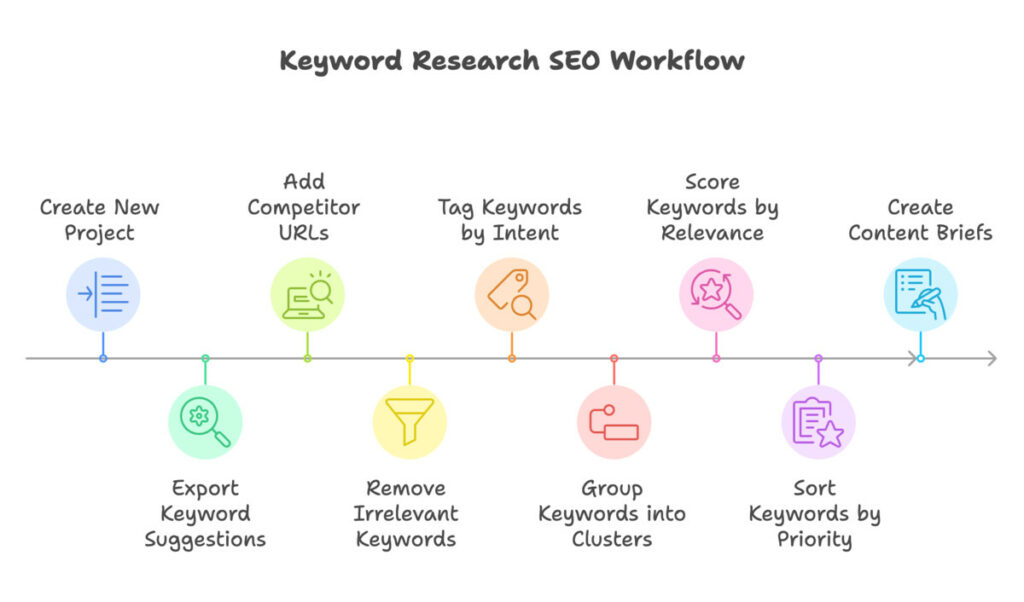
31
Jul
Jul
The modern digital landscape demands a shift from manual, time-consuming content production to a streamlined, data-driven approach. An AI SEO Content Workflow is no longer a luxury but a necessity for teams aiming to scale their organic visibility without sacrificing quality. This system integrates artificial intelligence at every stage—from keyword discovery and brief creation to drafting, optimization, and performance analysis. By implementing a structured workflow, you move from guessing to predicting, transforming raw data into authoritative articles that rank.
This guide provides a comprehensive breakdown of building, executing, and refining an AI-powered content engine. You will learn the exact components, the step-by-step process, and the pitfalls to avoid, ensuring your team produces content that satisfies both search engines and human readers.
What is an AI SEO Content Workflow?
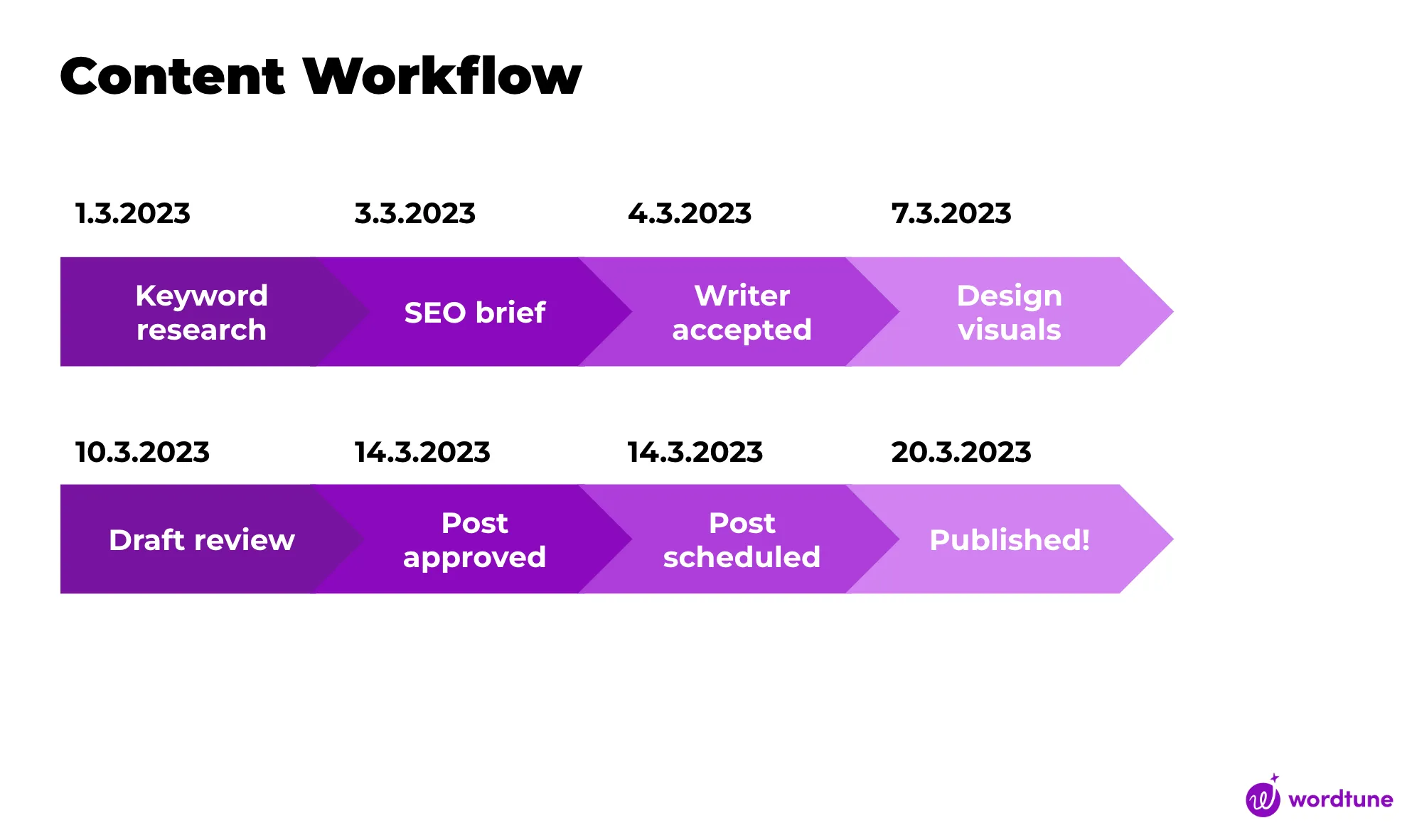
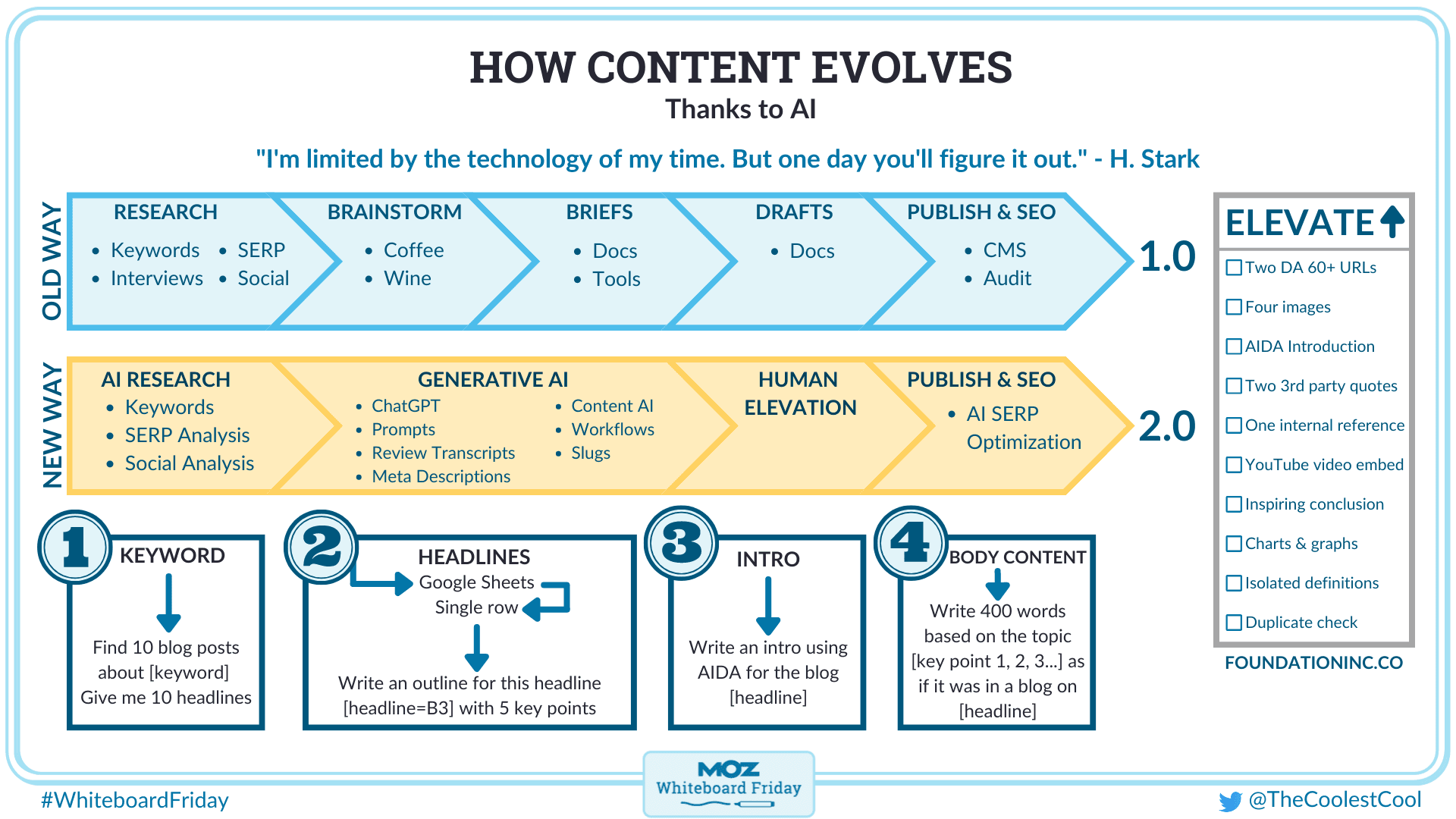
An AI SEO Content Workflow is a defined sequence of tasks that leverages machine learning and natural language processing to automate and enhance the creation of search-optimized content. It is not about replacing human writers entirely. Instead, it functions as a force multiplier, handling repetitive research and data analysis so that strategists and editors can focus on creativity, brand voice, and factual accuracy.
This workflow encompasses the entire lifecycle of a piece of content. It begins with identifying semantic gaps in your niche, moves through automated outline generation, and concludes with predictive performance scoring. The core value lies in its ability to process vast datasets—like search engine results pages (SERPs) and user behavior metrics—to inform every decision, reducing the risk of publishing content that fails to gain traction.
The Core Components of a Modern AI Workflow
To build an effective system, you must understand its four foundational pillars. Each component feeds into the next, creating a closed loop of continuous improvement.
- Data Aggregation: This layer pulls real-time search data, competitor rankings, and audience queries. Tools like Ahrefs, Semrush, and Google Search Console feed raw numbers into the system.
- Intelligent Briefing: AI analyzes the aggregated data to generate comprehensive briefs. These briefs include target keywords, related entities, suggested headings, and even the search intent (informational, transactional, or navigational).
- Assisted Drafting: Language models (like GPT-4 or Claude) generate initial drafts based on the brief. This step accelerates the writing process, providing a structural skeleton that human writers then flesh out with unique insights and experience.
- Optimization & Validation: This final component uses AI to check for readability, keyword density, internal linking opportunities, and factual consistency before publication. It ensures the content meets the technical standards required for ranking.
- Search Intent Analysis: Determines if the user wants a list, a guide, a comparison, or a tutorial.
- Recommended Headings (H2/H3): Based on the top competitors’ structure.
- Related Questions: Pulled from “People Also Ask” boxes to target featured snippets.
- Word Count Target: Based on the average length of current top-ranking content.
- Entity List: Specific nouns, names, and concepts that must be mentioned to establish relevance.
- Scalability: You can produce 5x to 10x more content without expanding your team headcount.
- Cost Efficiency: Reduces the hours spent on research, potentially lowering the cost per article by 40-60%.
- Data-Driven Decisions: Removes guesswork from content creation, focusing efforts on topics with proven search demand.
- Consistency: Ensures all content follows a uniform structure and covers all necessary entities, improving site-wide topical authority.
- Faster Time-to-Market: Capitalize on trending topics quickly before your competitors do.
- Lack of Originality: AI models are trained on existing data. They can produce generic content that lacks unique insights or breaking news.
- Factual Errors (Hallucinations): AI can confidently state incorrect information. Human verification is non-negotiable for YMYL (Your Money or Your Life) topics.
- Brand Voice Dilution: AI struggles to replicate a specific, quirky, or highly personal brand voice without extensive fine-tuning.
- Dependency on Tool Quality: The output is only as good as the data the tool uses. Poor keyword data leads to poor content strategy.
- Human Oversight is Mandatory: AI is a tool, not a replacement for editorial judgment. You must have a senior editor review all content for accuracy, tone, and alignment with brand values.
- Start with a Pilot Project: Do not overhaul your entire content strategy overnight. Choose a small cluster of keywords, test the workflow, and measure the results against your baseline.
- Invest in Quality Tools: Free AI tools often lack the depth of data needed for serious SEO. Budget for premium platforms that integrate with Google Search Console and provide real-time SERP analysis.
- Update Your Existing Content: Use the AI workflow to refresh your old, underperforming posts. This is often faster than creating new content and can yield significant ranking improvements.
- Monitor Algorithm Updates: Google frequently updates its spam policies regarding AI content. Stay informed about what constitutes “automated content” versus “AI-assisted content” to remain compliant.
Why You Need an AI-Driven Content Pipeline
The traditional method of “write an article and hope it ranks” is obsolete. Search engines now prioritize topical authority and user engagement metrics. An AI SEO Content Workflow allows you to systematically build topical authority by covering every facet of a subject with precision.
Consider the speed advantage. A human researcher might take three hours to analyze the top ten ranking pages for a keyword. An AI tool can perform the same analysis in under three minutes, extracting the common subtopics, questions, and word count patterns. This efficiency enables you to publish more high-quality content in a shorter time frame, directly impacting your crawl budget and indexation rate.
Furthermore, this workflow enhances consistency. When you rely on individual writers, the quality and style can vary dramatically. An AI-driven process standardizes the research phase, ensuring that every article covers the essential entities and follows a logical structure, regardless of who writes the final draft.
Step-by-Step Guide to Building Your AI SEO Content Workflow
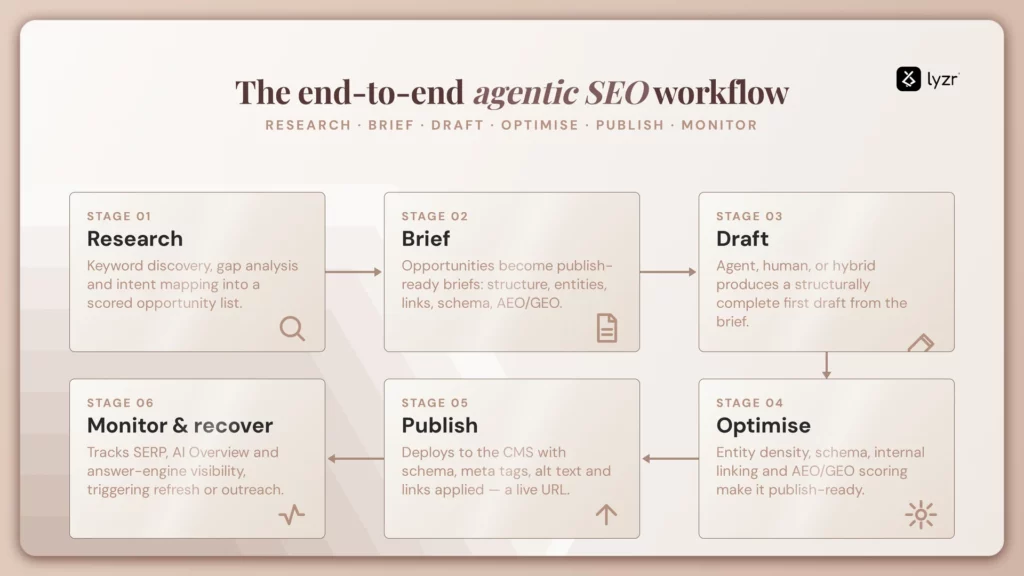
Implementing this system requires a methodical approach. Below is a detailed breakdown of the seven critical stages, from initial planning to post-publication analysis.
Step 1: Strategic Keyword and Topic Clustering
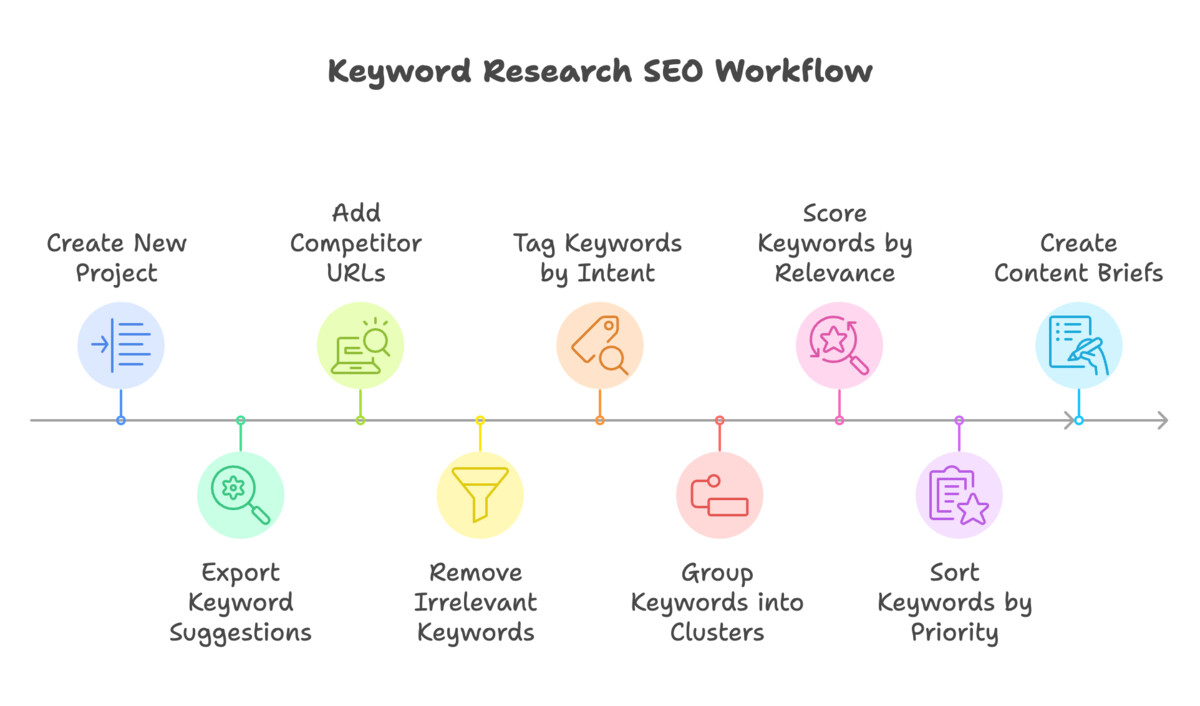
Your workflow begins with identifying the “money” keywords—those with high commercial value or strong informational demand. However, you must go beyond single keywords. Use AI tools to generate topic clusters. For example, if your main keyword is “AI SEO Content Workflow,” your cluster includes “AI content optimization,” “programmatic SEO,” “content brief automation,” and “NLP in search.”
Utilize tools like Clearscope or MarketMuse to analyze the top-ranking pages for your seed keyword. These platforms use AI to identify the entities and subtopics that Google considers relevant. This data forms the foundation of your content brief, ensuring you cover the full spectrum of user intent.
Step 2: Automated Content Brief Generation
Once you have your cluster, the AI generates a detailed brief. This is not a simple list of keywords. A high-quality brief includes:
This brief acts as the single source of truth for your writers. It eliminates the “blank page” problem and ensures the writer focuses on adding value rather than researching basic facts.
Step 3: Human-Centric Drafting with AI Assistance
Here, the workflow splits into two paths: fully automated and human-in-the-loop. For high-authority domains, the human-in-the-loop model is superior. The AI generates a first draft based on the brief. The writer then rewrites, fact-checks, and infuses the content with personal experience, case studies, and unique data points.
This is where E-E-A-T (Experience, Expertise, Authoritativeness, Trustworthiness) comes into play. AI cannot visit a factory, interview an expert, or test a product. Your human writer provides that first-hand experience. The AI provides the structure and ensures no critical subtopic is missed. This synergy produces content that is both comprehensive and authentic.
Step 4: On-Page Optimization and Technical SEO
After the draft is finalized, the workflow moves to technical optimization. AI tools analyze the draft for keyword placement in the title tag, meta description, and URL slug. They also check for semantic relevance—ensuring that related terms (LSI keywords) are naturally integrated.
Internal linking is another critical task. AI can suggest relevant existing articles to link to based on the current draft’s topic. This strengthens your site architecture and distributes link equity. Additionally, the tool will check for image alt text optimization and schema markup opportunities (like FAQPage or HowTo schema) to enhance visibility in rich results.
Step 5: Predictive Performance Scoring
Before hitting publish, run the content through a predictive scoring tool. Platforms like Surfer SEO or Frase provide a “content score” based on how well your draft aligns with the top 20 ranking pages. This score considers keyword density, text length, image count, and heading structure.
If the score is below 80%, the workflow loops back to the drafting stage with specific recommendations. This quality gate prevents under-optimized content from being published, saving you from costly corrections later.
Step 6: Publication and Indexation Monitoring
Once published, the workflow does not end. Use Google Search Console (GSC) to monitor indexation status. AI-powered monitoring tools can alert you if the page is not indexed within 48 hours. They can also track the initial ranking fluctuations for your target keywords.
This stage involves checking for “cannibalization”—when two of your pages compete for the same keyword. AI tools can detect this by analyzing the overlap in your content’s semantic fingerprint.
Step 7: Performance Analysis and Iteration
The final stage is the feedback loop. After 30 to 60 days, analyze the page’s performance. Look at metrics like average position, click-through rate (CTR), and dwell time. If the content is ranking on page two but not page one, the AI can suggest updates—adding a new section, improving the intro, or refreshing statistics.
This iterative process is what separates a static content strategy from a dynamic growth engine. You are continuously refining your content based on real-world performance data, not just publishing and forgetting.
Benefits and Limitations of an AI SEO Workflow
Adopting this technology brings significant advantages, but it is not without its challenges. Understanding both sides is crucial for successful implementation.
The Key Benefits
The Limitations to Acknowledge
AI SEO Workflow vs. Traditional Content Creation
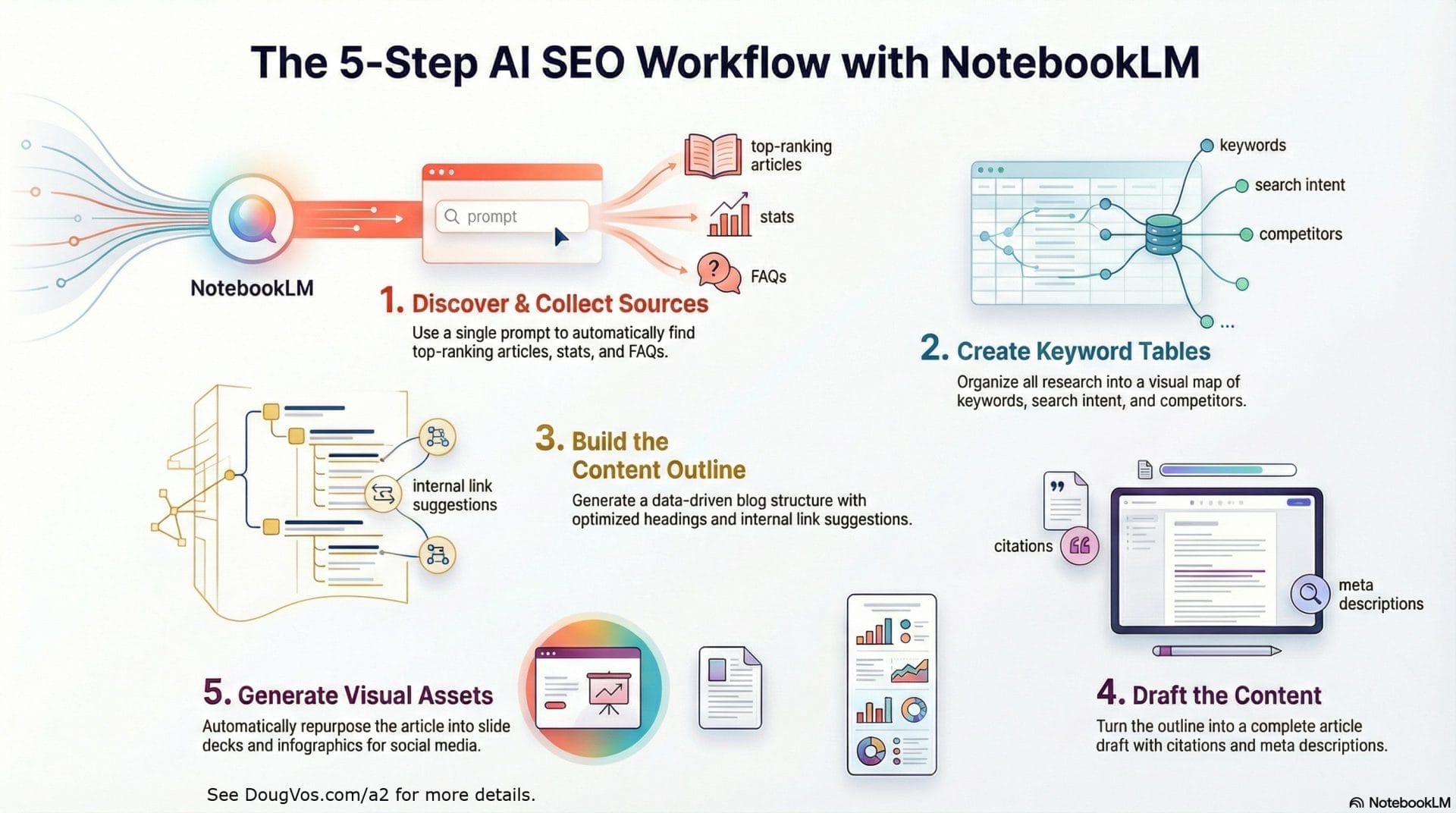
To fully appreciate the value, it helps to compare the two approaches side-by-side. The differences are stark in terms of speed, cost, and data utilization.
| Feature | Traditional Workflow | AI SEO Workflow |
|---|---|---|
| Research Time | 4-6 hours per keyword | 30-60 minutes per keyword |
| Content Brief Detail | Basic keyword list | Full semantic map with entities and questions |
| Drafting Speed | 1-2 days per article | 2-4 hours per article |
| Optimization | Manual guesswork | Real-time scoring against SERP competitors |
| Scalability | Limited by team size | Limited only by editorial review capacity |
| Data Integration | Minimal | Deep integration with GSC and analytics |
The table illustrates that the AI workflow is not just faster; it is fundamentally more intelligent. It uses live search data to inform every decision, whereas the traditional method often relies on stale keyword lists and personal intuition.
Common Mistakes in AI Content Workflows and How to Avoid Them
Many teams fail to see results not because the technology is flawed, but because they misuse it. Here are the most frequent errors and the strategies to prevent them.
Mistake 1: Publishing Raw AI Output
This is the most damaging mistake. Publishing unedited AI text leads to thin, generic content that Google’s helpful content system will likely de-rank. The content lacks the nuance and personal experience that builds trust.
Solution: Implement a strict editorial policy. AI drafts must go through a human editor who verifies facts, adds original quotes, and injects unique data points. Treat the AI output as a detailed outline, not a finished product.
Mistake 2: Ignoring Search Intent
Using AI to write a “how-to” guide when the top results are actually product comparisons will fail. The A
Solution: Always review the “Search Intent” section of your AI-generated brief. Look at the current SERP. If the top results are all listicles, write a listicle. If they are videos, consider embedding a video and writing a transcript-style article.
Mistake 3: Over-Optimizing for Keywords
Stuffing the main keyword into every paragraph to hit a “target density” makes the content unreadable. Google’s algorithms are sophisticated enough to understand synonyms and context.
Solution: Focus on semantic relevance. Use the AI tool to identify related terms and entities, then write naturally. The goal is to cover the topic comprehensively, not to repeat a phrase a specific number of times.
Mistake 4: Neglecting Internal Linking
An AI workflow that focuses only on the new article and ignores the existing site architecture creates isolated pages with low authority.
Solution: Use AI tools that suggest internal links based on the current draft’s content. Ensure every new piece of content links to at least two older, relevant posts, and vice versa.
Important Notes for Successful Implementation
To maximize the return on your investment, keep these critical points in mind throughout your journey.
Frequently Asked Questions (FAQ)
Is AI-generated content penalized by Google?
Google’s official stance is that it penalizes spammy, automated content regardless of how it is produced. However, content that is genuinely helpful, original, and demonstrates E-E-A-T is rewarded, even if AI tools assisted in its creation. The key is to use AI for research and drafting, but to add substantial human value through editing, fact-checking, and unique insights.
What is the best AI tool for SEO content workflows?
T For comprehensive research and briefs, tools like MarketMuse and Clearscope are excellent. For drafting, ChatGPT and Claude are powerful. For optimization, Surfer SEO and Frase are industry standards. The most effective workflows combine a research tool, a drafting tool, and an optimization tool.
How long does it take to see results from an AI SEO workflow?
SEO is a long-term game. While you may see faster indexation and initial ranking improvements within 2-3 weeks, significant organic traffic growth typically takes 3-6 months. This timeline depends on your domain authority, the competitiveness of your keywords, and the consistency of your publishing schedule.
Can AI replace human SEO specialists?
No. AI cannot strategize, build relationships, or understand nuanced brand positioning. It can, however, automate the tactical execution of a strategy. The role of the SEO specialist shifts from doing manual research to interpreting AI data, making strategic decisions, and ensuring the final output aligns with business goals.
How do I measure the ROI of an AI content workflow?
Track the cost per article before and after implementation. Monitor the average ranking position for your target keywords. Measure the growth rate of organic traffic and the number of keywords on page one. A successful workflow should show a decrease in cost per article and an increase in the speed of ranking improvements.
Conclusion
The AI SEO Content Workflow represents the next evolution in digital marketing. It bridges the gap between data analysis and creative writing, enabling teams to produce content that is both technically optimized and genuinely useful. By automating the research and briefing phases, you free up your most valuable asset—human creativity—to focus on what machines cannot do: providing real-world experience and building trust with your audience.
The transition requires a commitment to quality control and a willingness to adapt. You must treat AI as a junior researcher and writer, not as a final authority. When implemented correctly, this workflow transforms your content operations from a cost center into a predictable, scalable growth engine. The future belongs to those who can harness the speed of AI while maintaining the integrity of human expertise.
Xem thêm:
- The Rise of AI SEO Experts: Redefining Search Engine Strategy in the Age of Artificial Intelligence
- AI Competitor Analysis: Master Market Intelligence With Automated Precision
- AI SEO SE Ranking: The Complete Guide to Dominating Search in 2025
- AI SEO Monitoring: The Ultimate Guide to Smarter Search Performance Tracking
- AI SEO Conversational Keywords: The Complete Guide to Ranking in the Age of Voice Search
Bài viết cùng chủ đề:

AI SEO SEO Automation with Make: The Complete Workflow Guide

AI SEO SEO Automation with Zapier: The Complete Workflow Guide

AI SEO SEO Automation with n8n: The Complete Workflow Guide
AI SEO SEO Automation with Gemini: The Complete Guide to Scaling Organic Growth

AI SEO SEO Automation with Claude: The Complete Guide to Scaling Content in 2025

AI SEO SEO Automation with ChatGPT: The Complete Playbook for 2025

AI SEO & SEO Automation for Affiliate Sites: The 2025 Playbook for Passive Income Growth
AI SEO & SEO Automation for Bloggers: The Complete Guide to Scaling Your Content

AI SEO & SEO Automation for Agencies: The Complete 2025 Playbook

AI SEO and SEO Automation for Ecommerce: The Complete Playbook for 2025

AI SEO & SEO Automation for WordPress: The Complete Playbook for 2025
AI SEO SEO Automation Strategy: The Complete Playbook for 2025

Mastering the AI SEO SEO Automation Process: A Complete Guide to Scaling Organic Growth
AI SEO SEO Automation System: The Complete Guide to Scaling Organic Growth in 2025
AI SEO SEO Automation Platform: The Complete Guide to Scaling Organic Growth in 2025
AI SEO SEO Automation Software: The Complete Guide to Scaling Organic Growth in 2025















