
No products in the cart.
AI SEO Content Outlines: The Complete Guide to Smarter Content Planning
10
Aug
Aug
Creating a successful content strategy in 2025 requires more than just keyword research and a blank document. The most efficient teams now rely on AI SEO content outlines to structure their articles, blog posts, and landing pages before a single word is written. These AI-generated frameworks help marketers visualize the entire piece, ensuring comprehensive topic coverage, logical flow, and proper keyword placement. This guide explores how AI SEO content outlines work, why they matter, and how to use them effectively to improve search rankings and reader engagement.
What Are AI SEO Content Outlines?
An AI SEO content outline is a structured framework for an article or webpage, generated by artificial intelligence tools. These outlines typically include suggested headings, subheadings, key points to cover, relevant keywords, and even potential questions to answer. Unlike traditional outlines created manually, AI versions analyze vast amounts of search data, competitor content, and user intent signals to propose a structure that is optimized for both search engines and human readers.
The core purpose of these outlines is to eliminate guesswork. Instead of staring at a blank page, writers receive a detailed roadmap that covers all essential aspects of a topic. This approach ensures that the final content is comprehensive, well-organized, and aligned with what users are actually searching for online.
How AI Generates Content Outlines
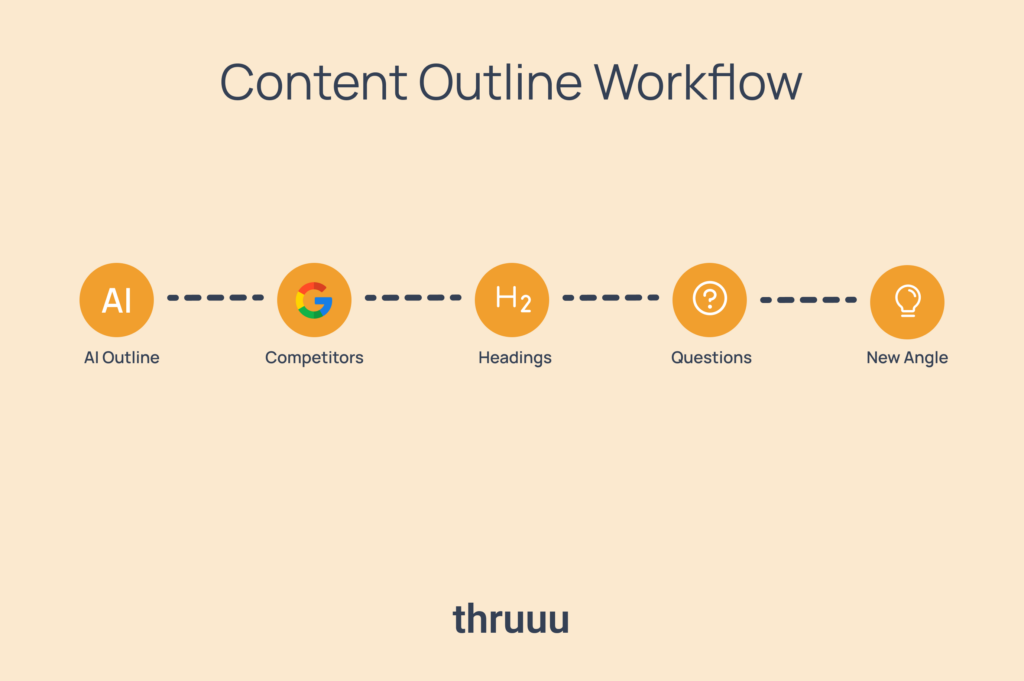
AI tools use natural language processing and machine learning algorithms to understand the context of a target keyword. They analyze top-ranking pages, examine search engine results pages, and identify common patterns in successful content. The AI then synthesizes this information into a logical structure that includes:
- Primary and secondary keyword suggestions
- Suggested H2 and H3 headings
- Key subtopics and supporting points
- Related questions from “People Also Ask” sections
- Recommended word count for each section
- Internal linking opportunities
- Always combine AI suggestions with your own industry knowledge and experience
- Use AI outlines for research and structure, but write the final content in your own voice
- Regularly update your content and outlines to reflect changes in search trends and user behavior
- Monitor the performance of content created from AI outlines and adjust your approach accordingly
- Use AI as a tool to enhance your workflow, not replace human creativity and judgment
This data-driven approach produces outlines that are far more detailed and strategic than what most writers would create on their own.
Why AI SEO Content Outlines Matter for Search Rankings
Search engines reward content that is comprehensive, well-structured, and directly answers user queries. AI SEO content outlines help achieve these goals by ensuring that every important aspect of a topic is covered. When a page addresses multiple related subtopics, it signals expertise and authority to search engines, which can lead to higher rankings for both the main keyword and long-tail variations.
Additionally, these outlines help with semantic search optimization. Modern search algorithms understand the relationships between words and concepts. By including related terms and natural language variations suggested by AI, content becomes more relevant to a wider range of search queries.
The Role of Structure in SEO
Search engine crawlers use heading tags to understand the hierarchy and main themes of a page. A well-structured outline ensures that H1, H2, and H3 tags are used correctly, making it easier for crawlers to index the content. Proper structure also improves user experience, as readers can quickly scan the page and find the information they need.
Pages with clear headings and logical flow tend to have lower bounce rates and longer dwell times. These user engagement metrics are important ranking factors, making AI-generated outlines a valuable tool for improving overall SEO performance.
Key Components of an Effective AI-Generated Outline
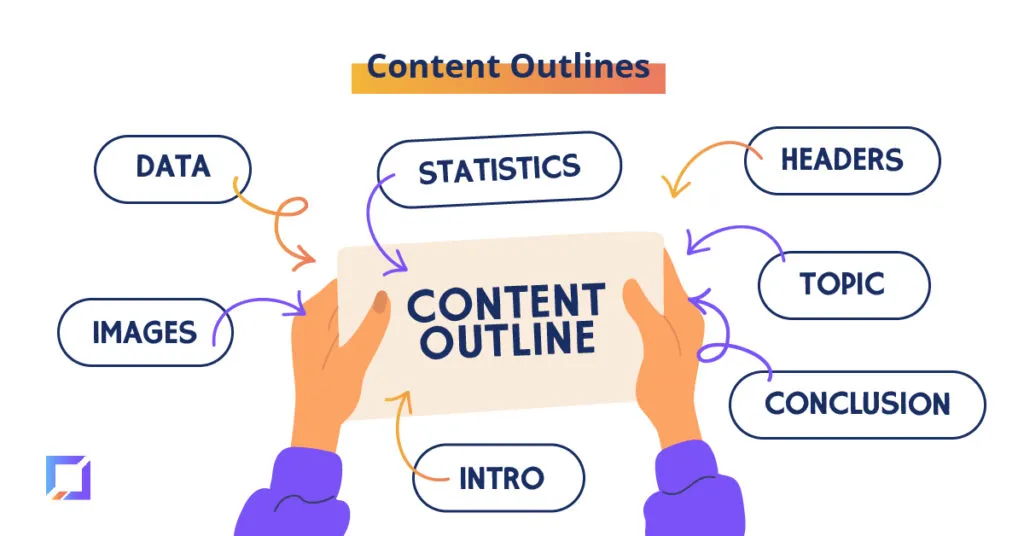
Not all AI SEO content outlines are created equal. The most effective ones share several common components that make them actionable and useful for writers.
Comprehensive Keyword Integration
A good outline includes the primary keyword in the title and first heading, but it also incorporates secondary and LSI keywords throughout the structure. This prevents keyword stuffing while ensuring that the content is relevant to a broad range of related searches. The AI identifies these related terms by analyzing what successful competitors are using and what users are searching for in connection with the main topic.
Logical Heading Hierarchy
The outline should present a clear hierarchy of information, starting with broad concepts and moving to specific details. This structure helps readers follow the narrative and helps search engines understand the relative importance of different sections.
Suggested Content Length
AI tools often recommend a target word count based on the average length of top-ranking pages for the target keyword. This guidance helps writers create content that is sufficiently detailed to compete without being unnecessarily long.
FAQ and Question-Based Sections
Many AI outlines include a section for frequently asked questions. These are derived from actual user queries and “People Also Ask” boxes. Including these questions and providing clear answers can help capture featured snippets and voice search traffic.
Benefits of Using AI SEO Content Outlines
The adoption of AI for content planning has grown rapidly because of the numerous benefits it offers to content teams, freelancers, and marketing departments.
Time Efficiency
Creating a detailed outline manually can take 30 to 60 minutes or more. AI tools generate a comprehensive structure in seconds. This time savings allows writers to focus on the actual writing process, increasing overall productivity.
Consistency Across Content
When multiple writers contribute to a blog or website, maintaining a consistent structure can be challenging. AI outlines provide a standardized framework that ensures all content follows the same quality and formatting standards.
Improved Content Quality
AI outlines often include subtopics and angles that a writer might not have considered. This leads to more thorough, informative content that provides greater value to readers and better satisfies search intent.
Better Keyword Coverage
By suggesting a variety of related keywords and phrases, AI outlines help content rank for more than just the primary target. This expands the page’s visibility across multiple search queries.
Reduced Writer’s Block
With a detailed outline in hand, writers always know what to write next. This eliminates the common problem of staring at a blank screen and wondering how to proceed.
Limitations and Challenges of AI-Generated Outlines
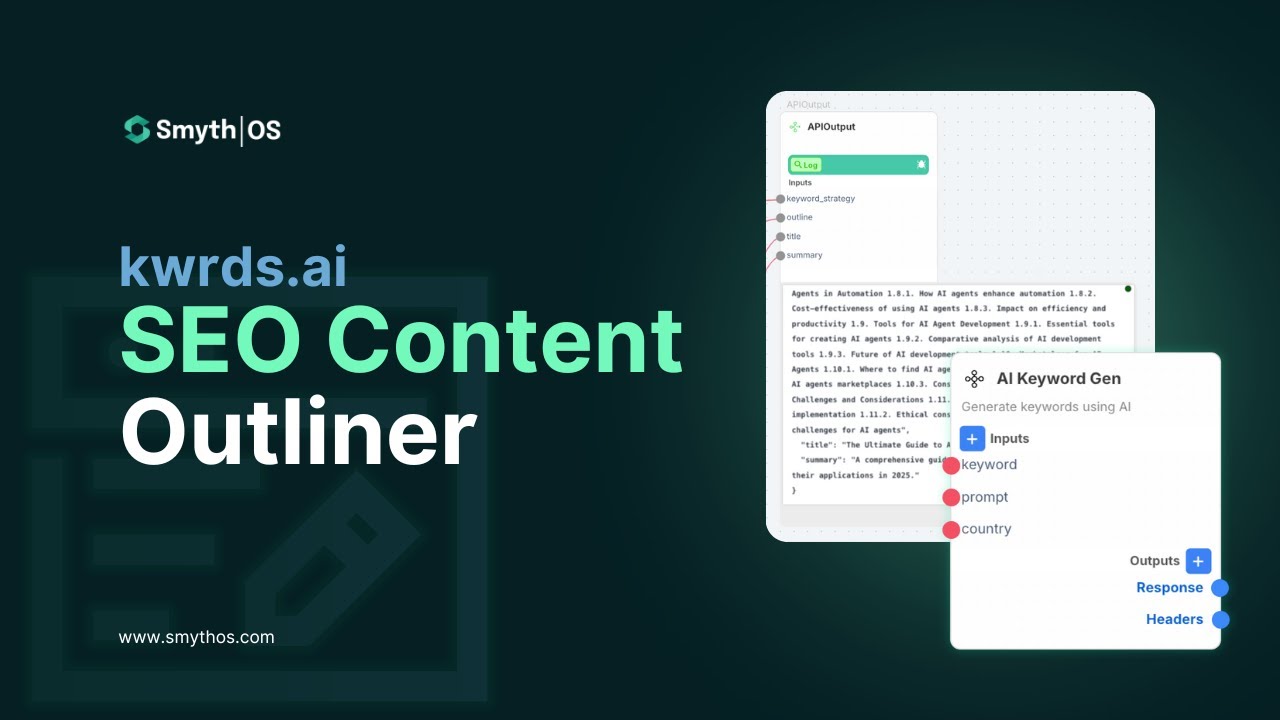
While AI SEO content outlines offer significant advantages, they are not without limitations. Understanding these challenges helps users get the most out of the technology.
Lack of Human Insight
AI tools analyze data and patterns, but they cannot fully understand the nuances of a specific audience or industry. A human editor may need to adjust the outline to include unique insights, personal experiences, or brand-specific information.
Potential for Generic Content
Because AI tools analyze the same top-ranking pages, the outlines they generate can sometimes be similar. This can lead to content that feels repetitive or lacks a unique perspective. Writers must add their own voice and original ideas to stand out.
Data Accuracy Concerns
AI models are trained on existing data, which may contain outdated or incorrect information. It is essential to verify any facts, statistics, or claims suggested by the AI before including them in the final content.
Over-Reliance on Automation
Some teams may become too dependent on AI outlines and stop thinking critically about their content strategy. The best results come from using AI as a starting point and then applying human judgment and creativity.
AI SEO Content Outlines vs. Traditional Outlines
Understanding the differences between AI-generated and traditional outlines helps content creators choose the right approach for their needs.
| Feature | AI-Generated Outlines | Traditional Outlines |
|---|---|---|
| Creation Time | Seconds to minutes | 30-60 minutes or more |
| Data Source | Search data, competitor analysis, user queries | Personal knowledge, research, brainstorming |
| Keyword Coverage | Extensive, includes LSI and long-tail keywords | Limited to what the writer identifies |
| Uniqueness | May be similar to competitor content | Reflects individual perspective and experience |
| Customization | Requires human editing for best results | Fully customizable from the start |
| Best Use Case | High-volume content production, competitive niches | Expert-level content, personal stories, unique insights |
Both approaches have their place. Many successful content teams use AI outlines as a starting point and then customize them heavily with their own expertise and brand voice.
How to Create AI SEO Content Outlines: A Step-by-Step Guide
Using AI to create content outlines is straightforward, but following a systematic process yields the best results.
Step 1: Choose the Right AI Tool
Several AI tools offer content outline generation features. Popular options include dedicated SEO platforms, general AI writing assistants, and specialized content planning tools. Consider factors like budget, ease of use, and the specific features offered when making a choice.
Step 2: Define Your Target Keyword and Intent
Before generating an outline, clearly define the primary keyword and the search intent behind it. Are users looking for information, comparing products, or ready to make a purchase? The AI needs this context to generate a relevant structure.
Step 3: Generate the Initial Outline
Input your target keyword and any additional instructions into the AI tool. Many tools allow you to specify the type of content, desired tone, and target audience. The A
Step 4: Review and Refine the Outline
Carefully review the AI-generated outline. Remove any sections that are not relevant to your specific audience or goals. Add your own expertise, unique angles, and personal experiences. Ensure the outline aligns with your brand voice and content strategy.
Step 5: Conduct Additional Research
Use the outline as a research guide. Look for statistics, case studies, and examples to support the points in each section. Verify any facts suggested by the AI to ensure accuracy.
Step 6: Write the Content
With a finalized outline, write the content section by section. Use the headings as a guide but write in a natural, engaging style. Aim to provide more value and detail than what is found in competing articles.
Step 7: Optimize and Publish
After writing, review the content for SEO best practices. Ensure the primary keyword appears in the title, first paragraph, and a few headings. Add internal links to other relevant pages on your site. Then publish and monitor performance.
Practical Applications of AI SEO Content Outlines
AI-generated outlines are versatile and can be used for various types of content beyond standard blog posts.
Product Descriptions and Landing Pages
For e-commerce sites, AI outlines can structure product descriptions to highlight key features, benefits, and use cases. This ensures that all important selling points are covered while maintaining a logical flow.
Long-Form Pillar Content
Comprehensive guides and pillar pages benefit greatly from AI outlines. The AI can suggest a structure that covers all subtopics related to a broad keyword, making it easier to create a definitive resource that attracts links and authority.
Video Scripts and Podcast Episodes
Content outlines are not just for written content. AI can generate structures for video scripts, ensuring that all key points are covered in a logical sequence. This helps with audience retention and ensures the video answers the viewer’s search query.
Email Newsletters
AI outlines can help structure email content, ensuring that the message is clear, concise, and includes all necessary calls to action. This improves the effectiveness of email marketing campaigns.
Common Mistakes When Using AI SEO Content Outlines
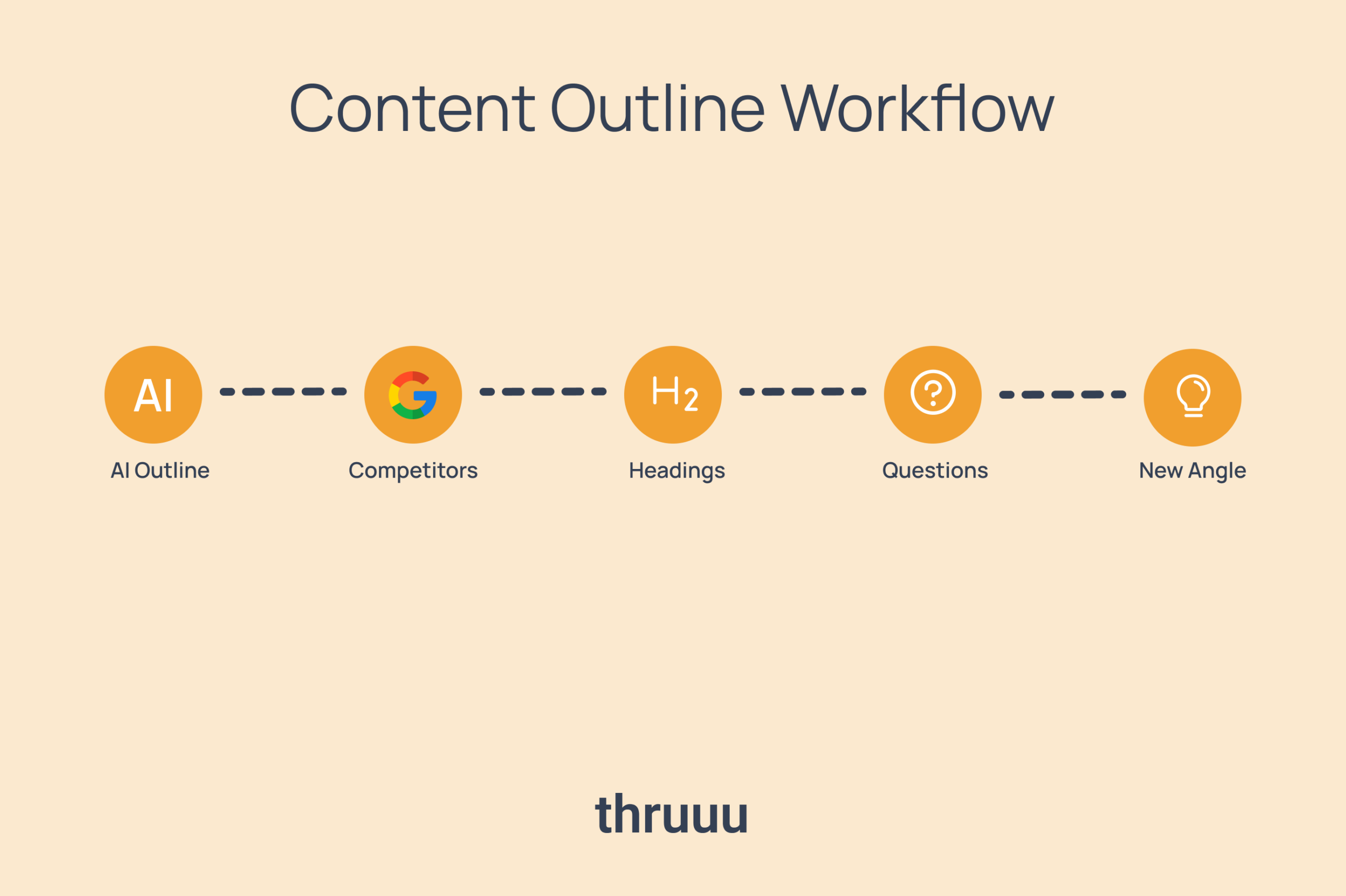
To get the most value from AI-generated outlines, avoid these common pitfalls.
Blindly Following the AI Output
The AI-generated outline is a starting point, not a final product. Failing to customize the outline with your own expertise and insights leads to generic content that does not stand out from competitors.
Ignoring User Intent
AI tools are sophisticated, but they may not always perfectly understand the specific intent behind a search query. Always review the outline to ensure it matches what your target audience is actually looking for.
Neglecting Fact-Checking
AI models can generate plausible-sounding but incorrect information. Always verify statistics, quotes, and factual claims before publishing content based on AI outlines.
Using the Same Outline for Every Piece
Each piece of content should have a unique structure that fits its specific topic and goals. Reusing the same AI-generated outline template for all content makes your site feel repetitive and reduces engagement.
Forgetting About Internal Linking
AI outlines may suggest internal linking opportunities, but it is up to the writer to actually implement them. Failing to add internal links misses an opportunity to improve site navigation and distribute link equity.
Important Notes for Maximizing AI Outline Effectiveness
Keep these considerations in mind to get the best results from AI SEO content outlines.
Frequently Asked Questions
Are AI SEO content outlines worth using?
Yes, for most content teams, AI SEO content outlines provide significant value. They save time, improve keyword coverage, and ensure comprehensive topic coverage. The key is to use them as a starting point and customize them with human expertise.
Can AI outlines replace human content strategists?
No, AI outlines are tools that assist human strategists. They cannot replicate the strategic thinking, brand understanding, and creative insight that experienced professionals bring to content planning. The best results come from a collaboration between AI and human expertise.
What is the best AI tool for generating content outlines?
The best tool depends on your specific needs, budget, and workflow. Popular options include general AI assistants and specialized SEO platforms. It is recommended to try a few different tools to find the one that best fits your requirements.
How long should an AI-generated content outline be?
The length of the outline depends on the depth of the topic and the target word count of the final content. A typical blog post outline might have 5-10 main sections with several subheadings each. For pillar pages, the outline can be much more extensive.
Do AI SEO content outlines guarantee higher search rankings?
No tool can guarantee rankings. AI outlines help create well-structured, comprehensive content, which is a positive ranking factor. However, rankings also depend on many other factors, including domain authority, backlinks, page speed, and user engagement.
Conclusion
AI SEO content outlines have transformed the way content teams approach article planning and creation. By leveraging search data and machine learning, these tools provide a solid foundation for creating content that is comprehensive, well-structured, and aligned with user intent. The time savings and improved keyword coverage make them an essential part of a modern content strategy.
However, the most successful content creators understand that AI is a tool, not a replacement for human judgment. The best content combines the efficiency of AI-generated outlines with the unique insights, experiences, and creativity of skilled writers. By using AI SEO content outlines as a starting point and then applying human expertise, content teams can produce articles that rank well, engage readers, and achieve their marketing goals.
Xem thêm:
- Mastering the AI SEO Prompt Workflow: A Complete Guide to Scaling Organic Growth
- AI SEO Search Demand: The Complete Guide to Understanding and Leveraging AI-Driven Search Behavior
- AI SEO BI Reports: The Complete Guide to Data-Driven Search Optimization
- Mastering AI SEO Prompts: The Ultimate Guide to Supercharging Your Search Strategy
- AI SEO Keyword Forecasting: The Complete Guide to Predicting Search Trends
Bài viết cùng chủ đề:

AI SEO SEO Automation with Make: The Complete Workflow Guide

AI SEO SEO Automation with Zapier: The Complete Workflow Guide

AI SEO SEO Automation with n8n: The Complete Workflow Guide
AI SEO SEO Automation with Gemini: The Complete Guide to Scaling Organic Growth

AI SEO SEO Automation with Claude: The Complete Guide to Scaling Content in 2025

AI SEO SEO Automation with ChatGPT: The Complete Playbook for 2025

AI SEO & SEO Automation for Affiliate Sites: The 2025 Playbook for Passive Income Growth
AI SEO & SEO Automation for Bloggers: The Complete Guide to Scaling Your Content

AI SEO & SEO Automation for Agencies: The Complete 2025 Playbook

AI SEO and SEO Automation for Ecommerce: The Complete Playbook for 2025

AI SEO & SEO Automation for WordPress: The Complete Playbook for 2025
AI SEO SEO Automation Strategy: The Complete Playbook for 2025

Mastering the AI SEO SEO Automation Process: A Complete Guide to Scaling Organic Growth
AI SEO SEO Automation System: The Complete Guide to Scaling Organic Growth in 2025
AI SEO SEO Automation Platform: The Complete Guide to Scaling Organic Growth in 2025
AI SEO SEO Automation Software: The Complete Guide to Scaling Organic Growth in 2025















