
No products in the cart.
Mastering the AI SEO Prompt Workflow: A Complete Guide to Scaling Organic Growth
31
Jul
Jul
The digital marketing landscape has shifted dramatically with the integration of generative AI. Yet, many teams still treat AI tools as simple chatbots, typing random requests and hoping for usable output. The difference between mediocre results and exceptional organic growth lies in a structured approach. An AI SEO prompt workflow is that structured approach—a repeatable system of instructions, templates, and validation steps designed to produce consistent, high-ranking content. This guide breaks down every component, from foundational principles to advanced automation, giving you a blueprint to integrate AI into your SEO operations without sacrificing quality or brand voice.
What is an AI SEO Prompt Workflow?

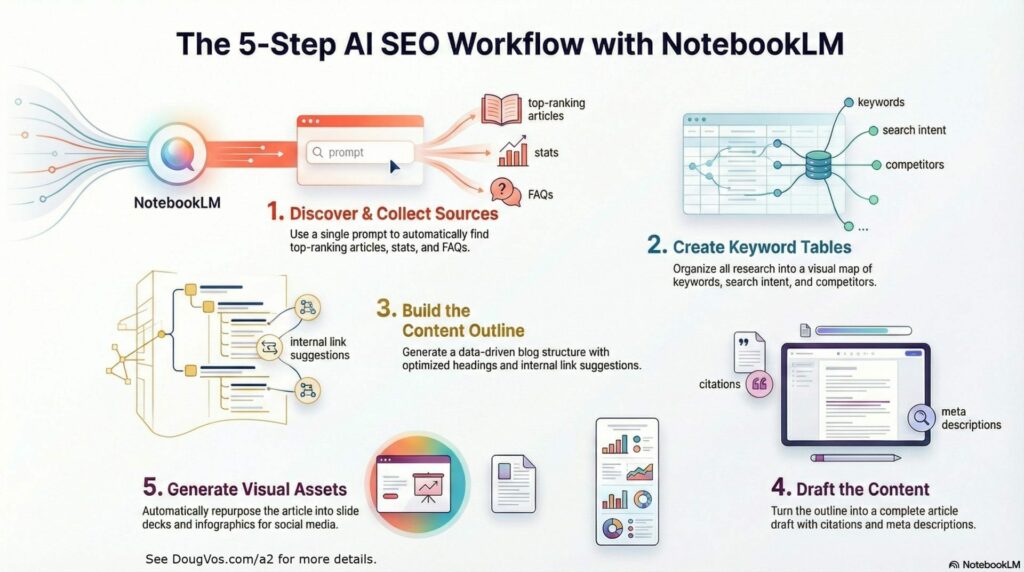
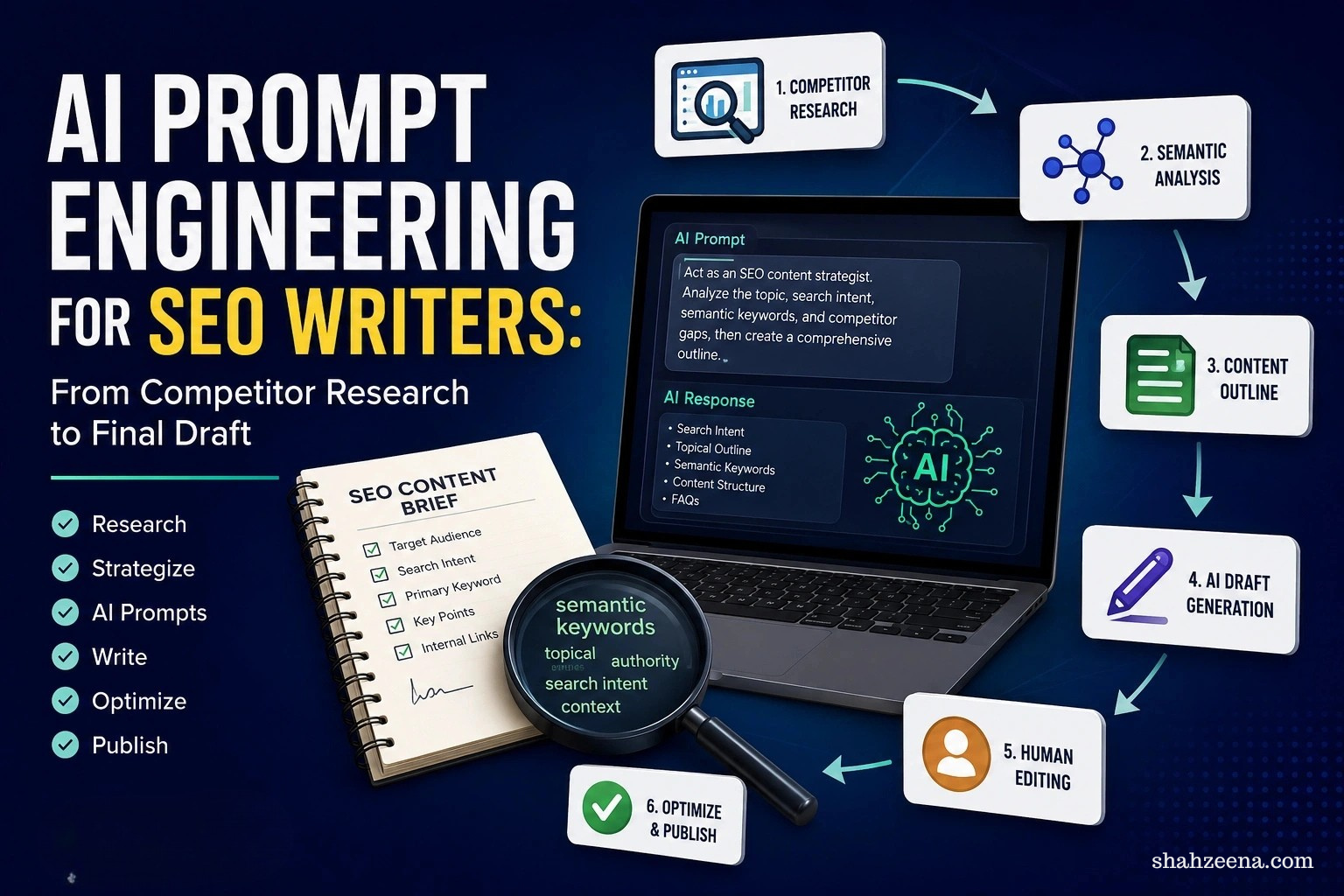
An AI SEO prompt workflow is a defined sequence of steps that combines human strategic input with AI generation capabilities. It moves beyond single, isolated prompts. Instead, it involves a chain of interconnected tasks: keyword research, content brief creation, drafting, internal linking suggestions, and meta description generation. Each step uses a specific prompt engineered to achieve a particular output, with human review gates at critical checkpoints.
This workflow is not about replacing SEO professionals. It is about augmenting their efficiency. By standardizing how you communicate with AI models, you reduce the randomness of output. You create a system where the AI understands your brand guidelines, target audience, and SEO objectives before it writes a single word. The result is a scalable content operation that maintains editorial standards while producing volume.
The Core Components of a High-Performing Workflow
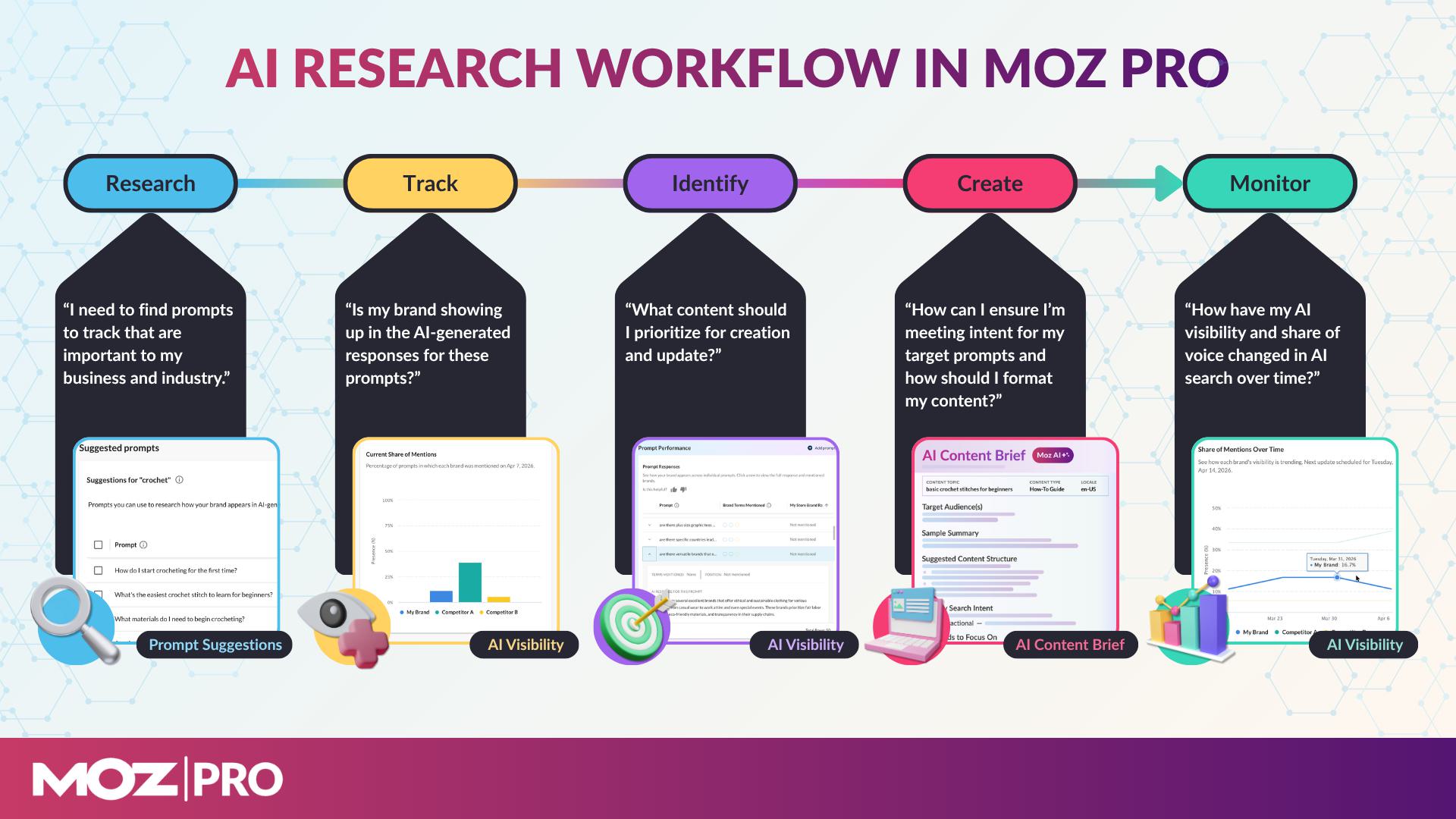
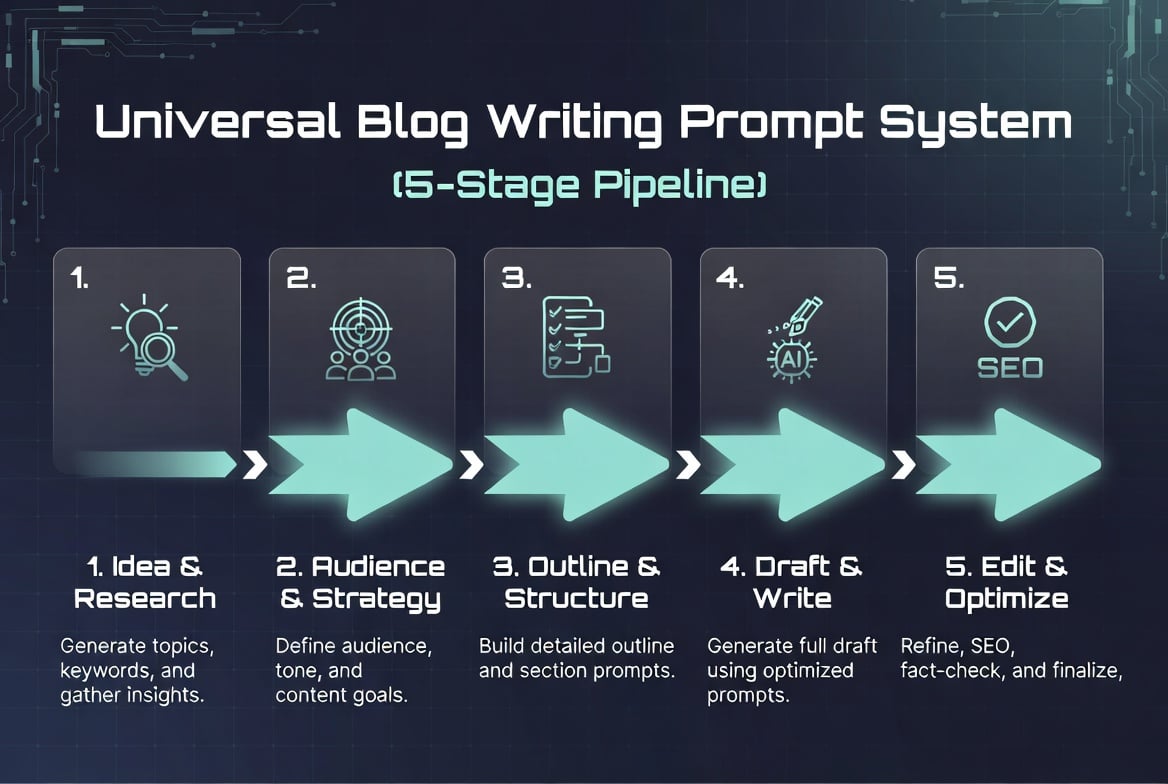
To build a robust system, you need to understand its building blocks. A typical AI SEO prompt workflow consists of five critical stages:
- Research & Data Input: Gathering search intent data, competitor analysis, and keyword clusters.
- Prompt Engineering: Crafting specific instructions that include role assignment, context, constraints, and output format.
- Content Generation: Using the AI to produce drafts, outlines, or full articles based on the engineered prompts.
- Human Review & Editing: Fact-checking, adding personal experience, and ensuring alignment with E-E-A-T guidelines.
- Optimization & Publishing: Adding metadata, internal links, and schema markup before hitting publish.
- Provide Context: Give the AI the target keyword, the search intent (informational, transactional, navigational), and the target audience.
- Set Constraints: Specify word count, tone (professional, conversational), and formatting requirements (use H2s, include bullet points).
- Request an Outline First: Before writing the full article, ask for a detailed outline. This allows you to approve the structure before the AI invests time in writing.
- Generate Section by Section: Instead of asking for the whole article at once, ask for the introduction, then the first H2 section, and so on. This gives you more control over the narrative flow.
- Include a Self-Review Prompt: After generating, ask the AI to review its own work for keyword usage and readability. This acts as a first-pass quality check.
Each component feeds into the next. Skipping the research phase leads to generic content. Skipping the human review leads to factual errors. The workflow ensures that no critical step is overlooked, creating a safety net for quality control.
Why You Need a Structured AI SEO Prompt Workflow
Without a workflow, using AI for SEO is like driving without a map. You might move, but you will likely get lost. The primary benefit is consistency. A structured workflow ensures that every piece of content follows the same quality bar and formatting standards. This consistency is crucial for building topical authority with search engines.
Another significant advantage is efficiency. When you have pre-built prompt templates, you eliminate the time spent thinking about how to ask the AI for what you need. You simply plug in the new topic and keywords. This reduces the content production cycle from days to hours, allowing your team to focus on strategy and analysis rather than repetitive writing tasks.
Finally, a workflow improves the accuracy of AI outputs. By providing clear context and constraints, you reduce hallucinations and off-topic tangents. The AI has a defined path to follow, which minimizes the need for extensive rewriting. This directly impacts your bottom line by reducing the cost per article and increasing the volume of publishable content.
Key Benefits for SEO Teams and Agencies
For agencies managing multiple clients, the workflow becomes a scalable asset. You can create a master template and then customize it for each client’s voice and industry. This allows you to onboard new writers and account managers faster, as they have a clear playbook to follow.
For in-house teams, the workflow helps maintain brand integrity. You can encode your specific terminology, tone of voice, and content pillars into the prompts. This ensures that even when different team members use the AI, the output sounds like it came from the same brand. It also helps with knowledge retention, as the workflow documents your best practices in a reusable format.
How to Build Your AI SEO Prompt Workflow: A Step-by-Step Guide
Building this system requires deliberate planning. Start by mapping out your current content process. Identify the bottlenecks. Are you spending too much time on outlines? Is the writing phase slow? Once you identify the pain points, you can design prompts to address them.
For example, “You are a senior SEO copywriter with 10 years of experience in the SaaS industry.”
Example Prompt Template for a Blog Post
To illustrate, This is the “Drafting” prompt within the larger workflow:
Prompt: “Act as an SEO content strategist. Write a 1500-word blog post about [MAIN KEYWORD]. The target audience is [AUDIENCE]. The primary search intent is [INTENT]. Use a [TONE] tone. Structure the article with an H1, and use H2s for the main sections. Include a table comparing [TOPIC A] and [TOPIC B]. Use the secondary keywords [KEYWORD 1] and [KEYWORD 2] naturally in the text. Do not use jargon. Write in short paragraphs. Start with a compelling introduction that summarizes the problem and the solution.”
This prompt gives the AI all the necessary information to produce a first draft that is close to publishable. The human editor then checks for factual accuracy, adds unique insights, and ensures the content aligns with the brand’s specific experiences.
Comparing AI SEO Prompt Workflow vs. Traditional Content Creation
Understanding the difference between these two approaches helps you decide where to allocate resources. Traditional content creation relies heavily on human writers for every step, from research to drafting. This is time-consuming but often yields high levels of nuance and original thought. The AI workflow, on the other hand, leverages machine speed for the heavy lifting, allowing humans to focus on strategy and editing.
| Feature | Traditional Content Creation | AI SEO Prompt Workflow |
|---|---|---|
| Speed | Slow (days to weeks per article) | Fast (hours per article) |
| Cost | High (writer fees, editing fees) | Lower (AI subscription + editor time) |
| Scalability | Limited by team size | High (can produce 10x more content) |
| Originality | High (human creativity) | Medium (requires human input for true originality) |
| Consistency | Variable (depends on writer) | High (follows the same prompt logic) |
| SEO Optimization | Depends on writer’s knowledge | Built-in via prompt instructions |
The table shows that the AI workflow excels in speed, cost, and scalability. However, it requires a human editor to inject the “experience” and “expertise” that Google’s E-E-A-T guidelines look for. The best approach is often a hybrid model, using the AI workflow for the initial heavy lifting and human writers for complex, high-authority pieces.
Common Mistakes in AI SEO Prompt Workflows and How to Avoid Them
Many teams fail to see results because they make critical errors in their workflow design. The most common mistake is using vague prompts. Asking the AI to “write about SEO” yields generic, useless content. You must be specific about the angle, the audience, and the desired outcome.
Another frequent error is skipping the fact-checking stage. AI models can produce confident, well-written sentences that are factually incorrect. If you publish this without verification, you damage your site’s credibility. Always have a human verify statistics, quotes, and technical claims before publishing.
Finally, many people ignore the importance of the “self-review” prompt. They take the first output as final. A good workflow includes a step where the AI is asked to critique its own work. This often catches missing keywords or awkward phrasing that the human editor can then fix quickly.
Mistake #1: Ignoring Search Intent
If your prompt does not specify the search intent, the A If the user wants a comparison or a tutorial, you will miss the mark. Always define the intent in the prompt. For example, if the keyword is “best CRM software,” the intent is transactional/commercial. The prompt should instruct the AI to include product comparisons, pricing tables, and pros/cons lists.
Mistake #2: Not Providing Enough Context
The AI does not know your business unless you tell it. If you are a B2B company, you need to specify that. If you are targeting local customers, say so. The more context you provide, the more relevant the output. Include information about your unique selling proposition (USP) and your competitors in the prompt.
Mistake #3: Over-Optimizing for Keywords
While you want to include keywords, forcing them into every sentence makes the content unreadable. The A” Instead, instruct it to use the keyword naturally in the title, first paragraph, and one H2 heading. This is more aligned with modern SEO best practices, which prioritize semantic relevance over exact-match density.
Important Notes for Advanced AI SEO Prompt Workflows
As you mature in your use of AI, you will need to consider more advanced aspects. One key area is the use of custom GPTs or fine-tuned models. These allow you to embed your workflow directly into the AI, so you do not have to repeat the context every time. You create a “Content Writer” GPT that already knows your brand voice and formatting rules.
Another consideration is the integration of real-time data. Some AI tools can now access the internet. You can use this to have the AI analyze the top-ranking pages for your keyword and then write a better outline based on the gaps in the current SERP. This is a powerful way to create content that is genuinely better than what is currently ranking.
Finally, remember that the workflow is not static. You must continuously update your prompts based on performance data. If a particular article structure is ranking well, analyze the prompt that created it and replicate that structure. If an article is underperforming, review the prompt to see what might have gone wrong. This iterative process is what separates a simple tactic from a strategic asset.
Integrating Human Expertise into the Loop
The most successful workflows place the human at the center. The AI does the drafting, but the human does the “experience” part. This means adding personal anecdotes, case studies, and unique data points that the AI cannot know. This is what builds trust with your readers and signals authority to Google. The workflow should have a clear “Human Edit” phase that is non-negotiable.
Practical Applications: Using the Workflow for Different Content Types
The AI SEO prompt workflow is not limited to blog posts. You can adapt it for various content formats. For product descriptions, the prompt focuses on features, benefits, and persuasive language. For landing pages, the prompt focuses on conversion optimization and clear calls-to-action.
For programmatic SEO, the workflow is essential. You can create a template for local landing pages, where the only variable is the city name. The workflow allows you to generate hundreds of pages quickly, each with unique meta titles and descriptions. This is a massive time-saver for businesses with multiple locations.
For video content, you can use the workflow to generate scripts and YouTube descriptions. The prompt would include instructions for a hook, the main content points, and a call to subscribe. This ensures your video content is also optimized for search, capturing traffic from YouTube and Google.
Frequently Asked Questions (FAQ)
What is the best AI tool for an SEO prompt workflow?
T ChatGPT, Claude, and Google Gemini are popular for their versatility. For SEO-specific features like SERP analysis, tools like Surfer SEO or Frase offer integrated AI writing assistants. The best approach is to test a few and see which one aligns with your workflow requirements and budget.
How do I write a good prompt for SEO content?
A good prompt includes four elements: Role, Task, Context, and Format. You tell the AI who it is (Role), what to do (Task), who the audience is and what the goal is (Context), and how to structure the output (Format). Being specific in each area reduces ambiguity and improves output quality.
Can AI replace human SEO writers?
No, AI cannot fully replace human writers. It can replace the mechanical aspects of writing, such as drafting and summarizing. However, it lacks the ability to conduct original interviews, share personal experiences, or provide genuine expert opinions. Google’s algorithms are designed to reward this type of unique content, so human oversight remains critical.
How do I ensure AI-generated content is not flagged as spam?
To avoid spam flags, you must edit the AI output significantly. Add your own insights, rephrase sentences, and ensure the content provides value beyond what is already on the web. Using the AI for outlines and research, rather than copy-pasting full articles, is the safest strategy. Always run the final content through a plagiarism checker.
What is the ideal word count for AI-generated SEO content?
T The length should be determined by the search intent and the depth of the topic. A simple “how-to” might only need 800 words, while a comprehensive guide might need 3000. The workflow should prioritize covering the topic completely over hitting a specific word count.
Conclusion
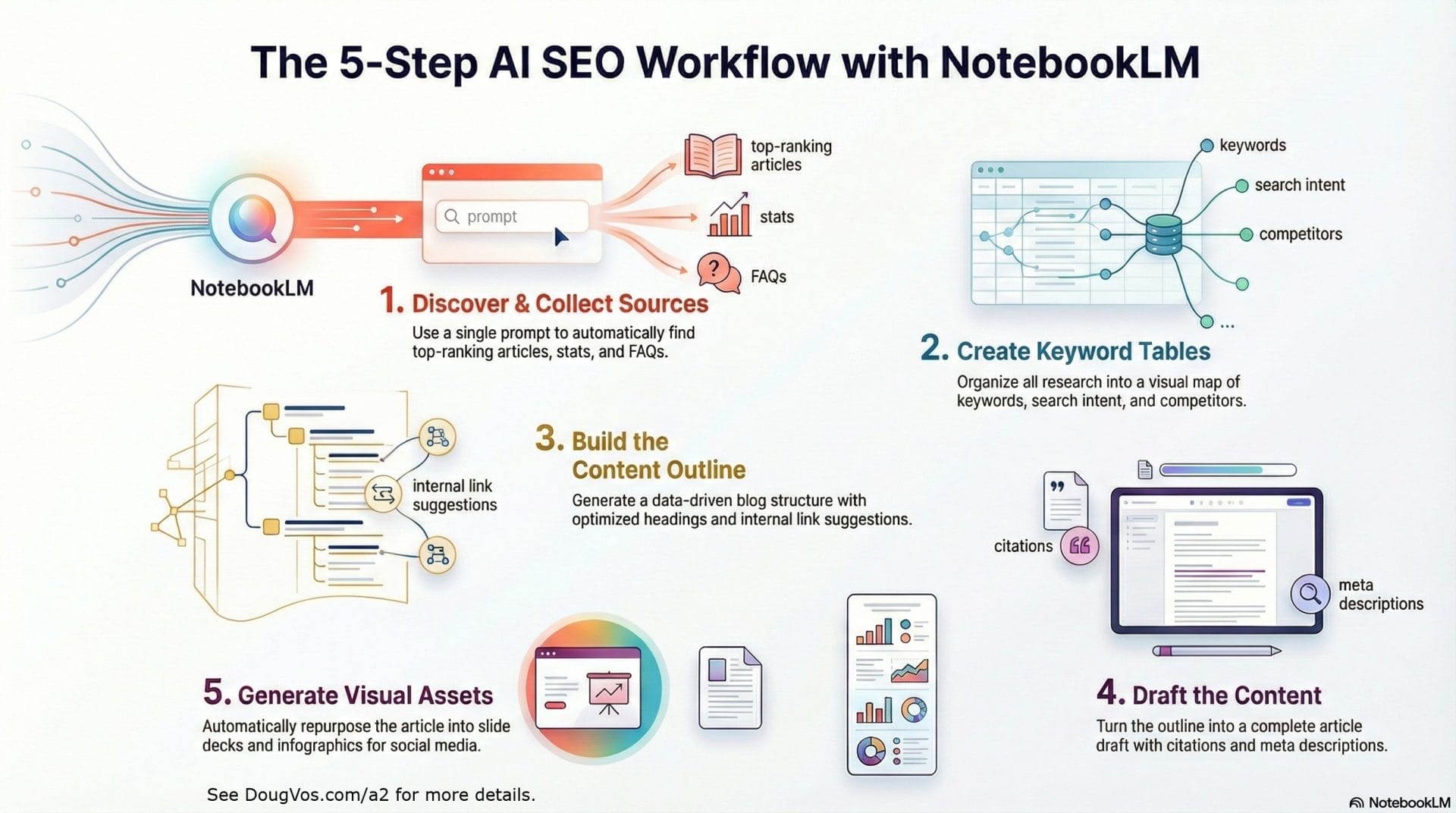
The AI SEO prompt workflow is a powerful methodology for modern digital marketing. It transforms AI from a novelty into a reliable production tool. By implementing a structured system of research, prompt engineering, generation, and human review, you can scale your content efforts while maintaining high editorial standards. The key is to view AI as a collaborator, not a replacement. The workflow ensures that collaboration is smooth, efficient, and results-driven. Start by building a simple template, test it on a few articles, and refine it based on your performance data. This iterative approach will build a system that consistently delivers organic growth.
Xem thêm:
- The Rise of AI SEO Experts: Redefining Search Engine Strategy in the Age of Artificial Intelligence
- AI SEO Claude Projects: The Complete Guide to Automating Search Rankings in 2025
- AI SEO Crawl Budget: The Complete Guide to Smarter Crawling in 2025
- AI SEO LLM Search Optimization: The Complete Guide to Ranking in Generative Search
- AI Rich Snippets: What They Are, Why They’re Taking Over Search, and How to Win Them
Bài viết cùng chủ đề:

AI SEO SEO Automation with Make: The Complete Workflow Guide

AI SEO SEO Automation with Zapier: The Complete Workflow Guide

AI SEO SEO Automation with n8n: The Complete Workflow Guide
AI SEO SEO Automation with Gemini: The Complete Guide to Scaling Organic Growth

AI SEO SEO Automation with Claude: The Complete Guide to Scaling Content in 2025

AI SEO SEO Automation with ChatGPT: The Complete Playbook for 2025

AI SEO & SEO Automation for Affiliate Sites: The 2025 Playbook for Passive Income Growth
AI SEO & SEO Automation for Bloggers: The Complete Guide to Scaling Your Content

AI SEO & SEO Automation for Agencies: The Complete 2025 Playbook

AI SEO and SEO Automation for Ecommerce: The Complete Playbook for 2025

AI SEO & SEO Automation for WordPress: The Complete Playbook for 2025
AI SEO SEO Automation Strategy: The Complete Playbook for 2025

Mastering the AI SEO SEO Automation Process: A Complete Guide to Scaling Organic Growth
AI SEO SEO Automation System: The Complete Guide to Scaling Organic Growth in 2025
AI SEO SEO Automation Platform: The Complete Guide to Scaling Organic Growth in 2025
AI SEO SEO Automation Software: The Complete Guide to Scaling Organic Growth in 2025















