
No products in the cart.
AI SEO Conversational Keywords: The Complete Guide to Ranking in the Age of Voice Search

10
Aug
Aug
The digital landscape has shifted dramatically. Users no longer type fragmented phrases like “best pizza NYC.” Instead, they ask their devices, “What is the best pizza place open right now near me?” This shift in user behavior has given rise to the importance of AI SEO Conversational Keywords. These are not just long-tail keywords; they are full queries, questions, and natural language phrases that mirror how humans actually speak. For businesses aiming to capture organic traffic in 2025 and beyond, understanding and leveraging these conversational patterns is no longer optional—it is a necessity for survival in search rankings.
This guide provides a deep dive into the world of conversational search optimization. We will explore what these keywords are, why they matter for artificial intelligence algorithms like Google’s RankBrain and BERT, and how you can integrate them into a winning SEO strategy. From practical implementation steps to common pitfalls, this article serves as your blueprint for dominating voice search and AI-driven results.
What Are AI SEO Conversational Keywords?
To grasp the concept, one must first understand the evolution of search queries. Traditional SEO focused on short, generic keywords that were often ambiguous. For example, the keyword “apple” could mean the fruit, the tech company, or the record label. Search engines relied heavily on exact-match domains and backlinks to decipher intent.
AI SEO Conversational Keywords are search queries that mimic natural human speech patterns. They are typically longer, more specific, and structured as complete sentences or questions. Examples include “how to fix a leaking kitchen faucet step by step” or “what are the best budget smartphones with a good camera for travel.”
These keywords are the direct result of two technological advancements: the proliferation of voice assistants (Siri, Alexa, Google Assistant) and the implementation of Natural Language Processing (NLP) in search algorithms. AI now understands context, sentiment, and the relationships between words, allowing it to match conversational queries with the most relevant content, even if the exact phrasing doesn’t match the webpage text.
The Difference Between Traditional and Conversational Keywords
The distinction is critical for content strategy. Traditional keywords focus on “what” a user is looking for, while conversational keywords focus on “why” and “how.”
| Feature | Traditional Keywords | AI SEO Conversational Keywords |
|---|---|---|
| Length | 1-3 words | 4-10+ words |
| Intent | Often ambiguous | Highly specific and clear |
| Format | Fragmented phrases | Full questions or sentences |
| Example | “Running shoes” | “What are the best running shoes for flat feet on a budget?” |
| Search Volume | High | Lower but highly targeted |
| Conversion Rate | Lower | Higher (closer to purchase) |
While traditional keywords are still relevant for building topical authority, they lack the specificity required to win the featured snippet or the “People Also Ask” box. Conversational keywords are the bridge between user intent and content relevance.
Why AI SEO Conversational Keywords Matter in Modern Search
The importance of these keywords stems from the fundamental change in how search engines process information. Google’s algorithms are now “neural matching” engines. They use deep learning to understand the nuances of language, including synonyms, context, and user intent.
When a user speaks a query into a phone, the AI must interpret the audio, correct for background noise, and understand the specific intent. The result is that search engines now favor content that answers questions directly and comprehensively. Content optimized for AI SEO Conversational Keywords aligns perfectly with this preference.
The Rise of Voice Search and Zero-Click Results
Statista data indicates that the number of digital voice assistants is expected to reach 8.4 billion units by 2024, surpassing the global population. This massive adoption means a significant portion of searches are now voice-activated. Voice searches are 3 times more likely to be conversational than text searches.
Furthermore, the rise of zero-click searches—where the answer is displayed directly on the search results page without requiring a click—has made it imperative to target these conversational phrases. If your content is not structured to answer a specific question, you will miss out on this prime real estate.
How to Find AI SEO Conversational Keywords
Finding these keywords requires a shift from traditional keyword research tools to a more analytical approach. While tools like Ahrefs and SEMrush are helpful, they often miss the long-tail conversational queries that have low volume but high intent.
Leveraging “People Also Ask” and Autocomplete
Google’s “People Also Ask” (PAA) box is a goldmine for conversational keywords. Type in a broad topic, and Google will generate a list of questions real users are asking. Each time you click on a PAA question, more questions appear, allowing you to map out an entire cluster of conversational queries.
Similarly, Google Autocomplete (the suggestions that appear as you type) provides insight into common phrasing. For example, typing “how to” will reveal popular completions like “how to lose weight fast” or “how to tie a tie.” These are the exact phrases you should target.
Using AI-Powered Tools for Discovery
Ironically, AI tools are the best way to find AI-driven keywords. Tools like ChatGPT, Claude, or specialized SEO platforms like Surfer SEO and Clearscope can generate a list of natural language questions based on a seed keyword. You can prompt an AI tool to “generate 50 questions a user might ask about [topic]” to quickly build a list of potential conversational keywords.
Additionally, analyzing the “Related Searches” at the bottom of Google’s SERP provides further insight into the semantic variations of your topic.
Strategies for Optimizing Content with Conversational Keywords
Simply inserting a conversational keyword into a paragraph is not enough. The content must be structured to satisfy the user’s query fully. This involves a holistic approach to on-page SEO.
Optimizing for Featured Snippets
Featured snippets are the ultimate goal for conversational search. To win them, your content must directly answer the question in a concise format. Use the following structure:
- Question as H2/H3: Use the exact conversational keyword as a heading.
- Direct Answer: Immediately follow the heading with a 40-60 word paragraph that answers the question.
- Supporting List: Follow up with a bulleted list or table to provide additional context.
- Higher Conversion Rates: Users asking specific questions are further down the sales funnel.
- Less Competition: Ranking for a specific question is easier than ranking for a broad, generic term.
- Improved User Experience: Content that answers questions directly reduces bounce rates and increases dwell time.
- Future-Proofing: As AI continues to evolve, the importance of natural language will only grow.
- Low Search Volume: Individual conversational keywords often have very low monthly search volume, making it hard to justify targeting them individually.
- Resource Intensive: Creating content for dozens of specific questions requires more time and effort than writing one generic article.
- Difficulty in Tracking: It can be challenging to track rankings for long-tail queries that change frequently.
For example, if the keyword is “how to clean a coffee maker with vinegar,” the H2 should be exactly that. The first paragraph should state: “To clean a coffee maker with vinegar, fill the reservoir with equal parts water and white vinegar, run a brew cycle, let it sit for 30 minutes, and then run two cycles with clean water.” This structure gives Google a clear, extractable answer.
Structuring Content for Natural Language Processing
NLP algorithms look for semantic relationships. This means you should not just use the exact keyword but also related terms and synonyms. If you are writing about “AI SEO Conversational Keywords,” you should also naturally include terms like “voice search optimization,” “natural language processing,” “search intent,” and “long-tail keywords.”
Use short paragraphs (2-3 sentences) to improve readability. Break up text with H3 subheadings that address specific sub-questions. This creates a logical flow that AI can easily crawl and understand.
Practical Applications: Content Types That Rank

Certain content formats are inherently better suited for conversational keywords. Understanding which format to use is key to a successful strategy.
FAQ Pages and “How-To” Guides
FAQ pages are the most direct application. Each question in the FAQ should be a conversational keyword. This format is perfect for capturing voice search traffic because it matches the question-and-answer format of voice assistants.
“How-to” guides are equally effective. They naturally break down into steps, which Google loves to display as list-style featured snippets. When writing a guide, ensure each step begins with a verb (e.g., “Open,” “Mix,” “Apply”) to align with typical conversational queries.
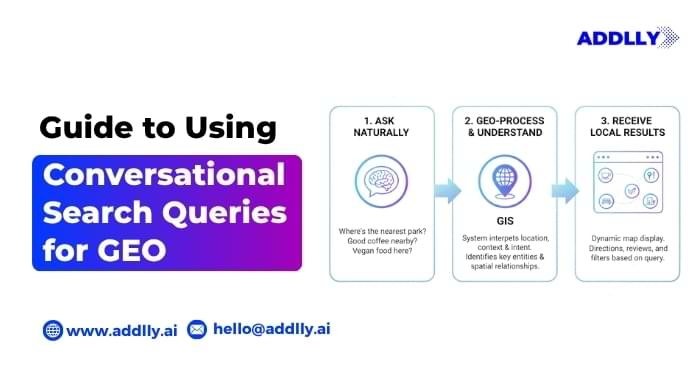
Local SEO and “Near Me” Queries
Conversational keywords are heavily used in local searches. Phrases like “w To optimize for these, ensure your Google Business Profile is up-to-date and that your content includes local landmarks and neighborhood names.
Embedding a map and including testimonials with local references can also boost your visibility for these specific conversational queries.
Benefits and Limitations of Conversational Keyword Optimization
Like any SEO strategy, focusing on conversational keywords has its pros and cons. A balanced view helps set realistic expectations.
The Advantages
The Challenges
The key is to group these keywords into “topic clusters” rather than targeting them individually. Create one “pillar” page that covers the broad topic and then create multiple “cluster” posts that answer specific conversational questions, all linking back to the pillar.
Common Mistakes and How to Avoid Them
Many marketers attempt to optimize for conversational keywords but fail to see results due to common errors. Awareness of these pitfalls is the first step to avoiding them.
Keyword Stuffing in Unnatural Ways
One of the biggest mistakes is forcing a conversational keyword into a sentence where it doesn’t belong. For example, writing “Our coffee maker cleaning with vinegar service is the best” sounds robotic. Instead, write naturally: “If you are wondering how to clean your coffee maker with vinegar, our guide covers the best methods.” The keyword is present, but the sentence flows naturally.
Ignoring the “Why” Behind the Query
Conversational keywords often imply a specific intent. The query “how to tie a tie” implies the user has a formal event soon. If your content only discusses the history of ties, it will not satisfy the user. Always analyze the intent behind the question and deliver the exact information requested.
Neglecting Schema Markup
Schema markup (structured data) helps search engines understand the context of your content. Using FAQPage schema or HowTo schema can significantly increase your chances of appearing in rich results. Without it, even the best conversational content might be overlooked.
Important Notes on AI and Search Algorithms
It is crucial to understand that Google’s algorithms are constantly updating. The introduction of MUM (Multitask Unified Model) and the integration of generative AI (like the Search Generative Experience) have changed the game again.
These new AI models do not just look for keywords; they generate answers by synthesizing information from multiple sources. This means your content must be the most comprehensive and authoritative source on the topic. E-E-A-T (Experience, Expertise, Authoritativeness, and Trustworthiness) signals are now more important than ever. Ensure your content is written by experts, cites credible sources (without citation markers in the text, but via hyperlinks), and is regularly updated to remain accurate.
Furthermore, the user experience is a ranking factor. Pages that are slow, cluttered with ads, or difficult to navigate will rank poorly regardless of how well they are optimized for conversational keywords.
Frequently Asked Questions (FAQ)

What is the difference between long-tail keywords and conversational keywords?
While they overlap, they are not identical. Long-tail keywords are simply longer, more specific phrases (e.g., “best running shoes for marathons”). Conversational keywords are a subset of long-tail keywords that are phrased as questions or full sentences mimicking speech (e.g., “what running shoes should I buy for my first marathon?”). All conversational keywords are long-tail, but not all long-tail keywords are conversational.
How do I measure the success of conversational keyword optimization?
Success is measured through several metrics: organic traffic to the specific FAQ or guide pages, keyword rankings in the “Questions” report of Google Search Console, and the number of featured snippets earned. Additionally, monitor the “Average Position” for the specific query strings. An increase in impressions for question-based queries is a strong indicator of success.
Are conversational keywords only for voice search?
No. While they are heavily used in voice search, they are also typed into search engines. Users often type full questions into the search bar, especially on mobile devices. Optimizing for these keywords improves visibility across all search modalities, not just audio-based ones.
Can I use the same conversational keyword on multiple pages?
It is not recommended. Using the same keyword on multiple pages creates cannibalization, where search engines struggle to decide which page to rank. Instead, assign one primary conversational keyword per page and use variations and synonyms on other pages within the same topic cluster.
How often should I update content optimized for conversational keywords?
Conversational trends change as new products and technologies emerge. It is advisable to review and update your FAQ and “How-To” content every 6-12 months. Check if the answers are still accurate and if new questions have emerged in the “People Also Ask” box that you can add to your content.
Conclusion
The era of keyword stuffing is over. The future of search is conversational, driven by AI that understands human nuance and intent. AI SEO Conversational Keywords are the tools that bridge the gap between user queries and relevant content. By shifting your strategy to answer questions, structure content for featured snippets, and focus on the user’s intent, you position your brand to capture high-intent traffic and build authority.
This approach requires patience and a commitment to quality. It is not about chasing volume but about providing value. As AI continues to reshape the search landscape, those who prioritize natural language and genuine helpfulness will be the ones who thrive. Start by auditing your current content, identifying the questions your audience is asking, and building a strategy around those conversational patterns. The results will follow.
Xem thêm:
- AI SEO Server Logs: The Complete Guide to Unlocking Hidden Search Insights
- AI SEO Compression: The Complete Guide to Slimming Down Your Content for Higher Rankings
- AI SEO Cornerstone Content: The Complete Playbook for Dominating Search Rankings
- AI Keyword Difficulty: The Smarter Way to Gauge Search Competition in the Age of Machine Learning
- AI SEO Comparison Table Generator: The Ultimate Guide to Smarter Content in 2025
Bài viết cùng chủ đề:

AI SEO SEO Automation with Make: The Complete Workflow Guide

AI SEO SEO Automation with Zapier: The Complete Workflow Guide

AI SEO SEO Automation with n8n: The Complete Workflow Guide
AI SEO SEO Automation with Gemini: The Complete Guide to Scaling Organic Growth

AI SEO SEO Automation with Claude: The Complete Guide to Scaling Content in 2025

AI SEO SEO Automation with ChatGPT: The Complete Playbook for 2025

AI SEO & SEO Automation for Affiliate Sites: The 2025 Playbook for Passive Income Growth
AI SEO & SEO Automation for Bloggers: The Complete Guide to Scaling Your Content

AI SEO & SEO Automation for Agencies: The Complete 2025 Playbook

AI SEO and SEO Automation for Ecommerce: The Complete Playbook for 2025

AI SEO & SEO Automation for WordPress: The Complete Playbook for 2025
AI SEO SEO Automation Strategy: The Complete Playbook for 2025

Mastering the AI SEO SEO Automation Process: A Complete Guide to Scaling Organic Growth
AI SEO SEO Automation System: The Complete Guide to Scaling Organic Growth in 2025
AI SEO SEO Automation Platform: The Complete Guide to Scaling Organic Growth in 2025
AI SEO SEO Automation Software: The Complete Guide to Scaling Organic Growth in 2025















