
No products in the cart.
AI Competitor Analysis: Master Market Intelligence With Automated Precision
29
Jul
Jul
Every day, your business loses opportunities because you lack real-time insight into what competitors are doing. Traditional manual tracking—spreadsheets, Google Alerts, periodic newsletter checks—can no longer keep up with the speed of digital markets. AI competitor analysis changes the game by using machine learning and natural language processing to continuously collect, categorize, and surface competitive signals from millions of sources. Within the first few minutes of reading this guide, you will understand exactly how automated competitor intelligence works, which tools truly deliver, and the step‑by‑step workflow that transforms raw data into strategic advantage.
This is not a superficial overview. You are about to learn how to build an AI‑powered competitive monitoring engine that tracks pricing moves, product launches, content strategy shifts, hiring patterns, and customer sentiment—without adding headcount. The technology is mature, accessible, and dramatically underutilized.
What Is AI Competitor Analysis?

AI competitor analysis is the application of artificial intelligence to systematically gather, process, and interpret data about rival businesses. Instead of humans manually visiting competitor websites, reading reviews, or compiling spreadsheets, AI software ingests data from websites, social media, job boards, app stores, review platforms, news outlets, and regulatory filings. It then structures that data, identifies patterns, detects anomalies, and delivers alerts with context.
The core technologies include natural language processing to understand textual sentiment and intent, computer vision for tracking visual changes like logo redesigns or packaging updates, and predictive models that forecast competitor moves based on historical patterns. The output is not a raw dump of mentions—it is a curated intelligence feed that tells you what changed, why it matters, and how your team should react.
The distinction from conventional competitive analysis lies in scale and speed. A human analyst might monitor 10 competitors across 5 data dimensions. AI can track 500 competitors across 50 dimensions simultaneously, updating every hour. This shift from reactive, periodic snapshots to proactive, continuous sensing is the fundamental innovation.
Why Traditional Competitive Analysis Fails Today
Manual competitor research breaks down in three predictable ways. First, it is latency‑ridden. By the time an analyst has compiled a competitive newsletter, a rival has already shipped two new features and adjusted pricing. Second, it is incomplete. Humans see only the most visible surface-level changes while missing subtle but critical signals buried in code changes, job postings for obscure roles, or niche forum discussions. Third, it is expensive and scales poorly.
Consider a mid‑market SaaS company with 12 direct competitors. A dedicated competitive intelligence manager costs upwards of $90,000 annually, and that person can realistically produce one comprehensive report per month. That report ages quickly. Meanwhile, the AI alternative monitors those same competitors plus 30 adjacent threats for a fraction of the cost, delivering real‑time battlecards and weekly strategic summaries to the entire go‑to‑market team.
Key Capabilities of AI‑Driven Competitive Intelligence Platforms
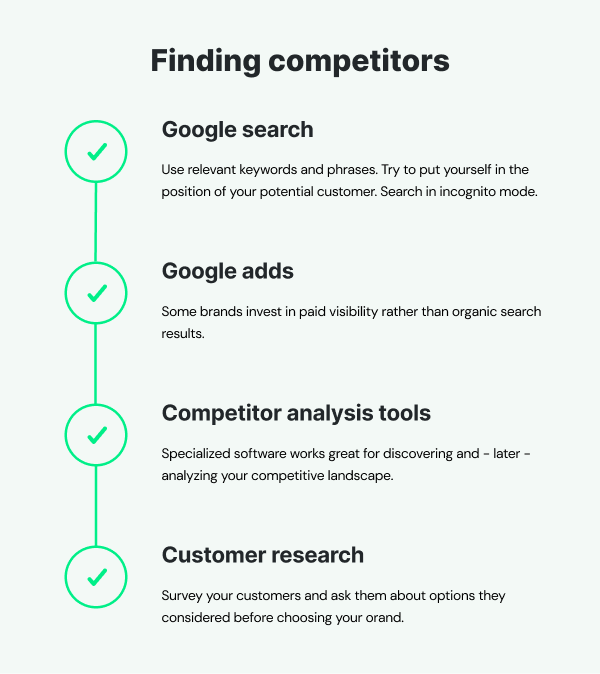
Modern platforms fuse several AI capabilities into cohesive workflows. Understanding these capabilities will help you evaluate tools and design your own intelligence process.
Automated Web and Social Monitoring
AI crawlers consistently scan competitor homepages, pricing pages, blogs, help centers, YouTube channels, and LinkedIn feeds. They detect content changes, new page additions, updated messaging, and even subtle shifts in tone. Instead of checking 20 URLs every morning, you receive a single digest highlighting only meaningful transformations.
Review and Sentiment Mining
Reviews on G2, Capterra, Trustpilot, and app stores form a rich demographic and psychographic dataset. AI models summarize thousands of reviews instantly, revealing emergent competitor weaknesses (slow support, buggy mobile experience) and strengths that your product team needs to address. Topic modeling groups reviews by theme, while sentiment scoring tracks upward or downward perception trends.
Pricing and Promotion Tracking
Dynamic pricing engines, bundle changes, and discount campaigns are notoriously hard to track manually. AI scrapes pricing tables, checkout flows, and promotional landing pages, building a historical pricing database for each competitor. When a competitor introduces a freemium tier or drops annual pricing by 15%, the system alerts pricing and product marketing teams within hours.
Job Posting Intelligence
A company’s hiring profile betrays its future strategy. An AI system analyzes job titles, descriptions, and skill requirements across LinkedIn, Indeed, and company career pages. A sudden cluster of AI/ML engineers in the logistics department of a retail competitor signals a major supply chain automation push—months before any public announcement.
Tech Stack and Patent Tracking
By scanning job postings for specific technologies, scraping technical documentation, and monitoring patent databases, AI can infer the technology roadmap of a competitor. A sharp increase in patents around real‑time video processing or a new requirement for Kubernetes experience reveals engineering priorities that directly inform your own R&D investments.
How to Implement AI Competitor Analysis: A Step‑by‑Step Framework
Rolling out an AI‑powered intelligence system requires process, not just software. The following framework has been applied successfully by product marketing teams, strategy consultants, and corporate development groups.
Step 1: Define Intelligence Questions
Specify exactly what you need to know. Vague goals like “know what competitors are doing” produce noise. Instead, define precise questions: “Which features are our top 3 competitors shipping next quarter?” or “What is the average time from funding announcement to geographic expansion for Series B logistics startups?” These questions become the filter for all subsequent data collection.
Step 2: Map the Competitive Landscape
Divide competitors into tiers: direct (same product, same buyer), indirect (different product, same budget source), aspirational (category leaders), and emerging (seed‑stage start‑ups). For each, list the data sources that matter most—their blog, documentation changelog, social profiles, review profiles, regulatory filings. Feed this map into your AI tool as a configuration blueprint.
Step 3: Select and Integrate the Right AI Tools
No single tool does everything. A typical stack might combine a broad web‑monitoring platform with a specialized pricing tracker and a review analytics tool. The table below compares categories to help you choose.
| Tool Category | Primary Function | Best For | Example Use Case |
|---|---|---|---|
| Broad Competitive Intelligence Platforms | All‑in‑one monitoring (web, social, battlecards) | Product marketing, enablement | Creating automated battlecards for sales reps |
| Price Optimization & Tracking Software | Price scraping, elasticity modeling | E‑commerce, retail, SaaS | Adjusting room rates based on competitor occupancy‑linked pricing |
| Review & Voice‑of‑Customer Analytics | Sentiment, topic modeling, review aggregation | Product management, CX | Discovering that competitor users hate their mobile sync, then emphasizing your flawless sync |
| Job Market & Talent Intelligence | Job posting analysis, skills mapping | HR, corporate strategy | Anticipating a competitor’s move into Europe by spotting a rush of European sales hires |
| Patent & IP Analytics | Patent landscape, technology forecasting | R&D, legal | Identifying white space before filing defensive patents |
Step 4: Set Up Data Pipelines and Normalization
Raw data is messy. AI platforms must deduplicate, translate, and normalize disparate data points into a unified competitor record. For instance, a pricing change appearing on the Australian homepage, a third‑party deal site, and a Google Shopping listing must be recognized as a single signal and timestamped accurately. Your operational team should validate data quality for the first two weeks, tuning filters and confidence thresholds.
Step 5: Configure Alerts and Reporting Cadences
Not everyone needs real‑time pings. Sales teams need just‑in‑time battlecard updates before calls. Product managers benefit from a weekly digest of feature changes. Executives want a monthly landscape risk report. Design alert hierarchies so that a drastic competitor move (e.g., acquisition) triggers an immediate push to strategy, while routine blog posts flow into the weekly newsletter.
Step 6: Embed Insights Into Decision Workflows
Intelligence without action is noise. Plug analysis directly into CRM for sales objection handling, into product roadmapping tools to highlight feature gaps, and into weekly leadership stand‑ups. The output format matters: a one‑pager with three recommendations lands better than a 20‑slide deck with raw data.
Real‑World Applications Across Industries
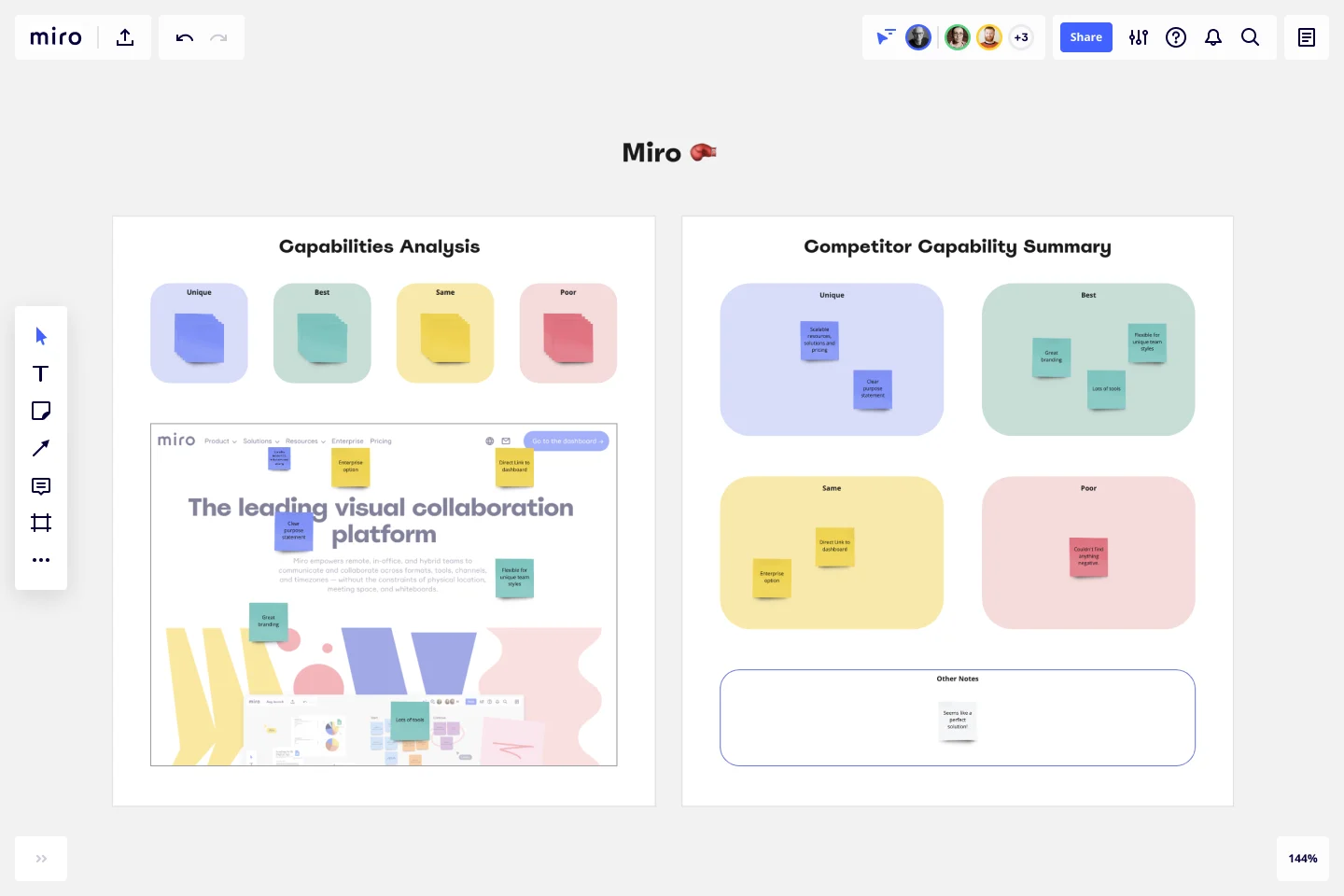
Retail and E‑commerce: A fashion brand uses AI competitor analysis to track the launch cadence, color palette, and discount rhythm of 30 rival brands. The system ingests Instagram posts, Shopify store changes, and email marketing newsletters via natural language processing to predict the next color trend. The brand then adjusts its own design and inventory plans, reducing markdowns by 18%.
Software as a Service: A B2B project management tool monitors the product changelogs and G2 reviews of three direct competitors. Sentiment analysis reveals a spike in complaints about missing time‑tracking integrations. The company fast‑tracks a Zapier integration for time tracking, announces it prominently, and captures a 7% conversion uplift from disgruntled competitor users.
Financial Services: A neo‑bank tracks fintech competitors’ mobile app permissions, API documentation updates, and job postings for Rust developers. The combination suggests a move toward high‑frequency trading infrastructure. The bank pre‑emptively builds a low‑latency feature and releases it as “industry‑first” before the competitor’s product goes live.
Manufacturing: An industrial equipment manufacturer scans patent filings, trade show announcements, and supplier news using AI. It spots a competitor’s new patent for a friction‑reducing coating six months before a product launch, allowing its own R&D team to develop an alternative coating and lock in exclusivity with a key material supplier.
Benefits and Limitations of AI Competitor Analysis
Adoption is not without trade‑offs. Understanding both sides prevents over‑reliance and under‑investment.
Benefits
- Speed and scalability: Processes millions of data points daily, enabling real‑time awareness impossible for humans.
- Unbiased signal detection: AI does not suffer from confirmation bias; it flags signals that challenge internal assumptions.
- Pattern recognition across vast datasets: Identifies weak correlations humans would miss—like a competitor’s subtle change in blog publication frequency preceding a funding round.
- Democratized intelligence: Rather than intelligence living in one analyst’s head, structured insights flow to sales, marketing, product, and leadership simultaneously.
- Cost efficiency: Reduces the need for large in‑house intelligence teams, while increasing coverage.
- Contextual understanding gaps: AI can surface that a competitor changed its homepage headline, but it may not grasp the strategic brand positioning shift without human interpretation.
- Data source blind spots: Private beta launches, closed‑door enterprise deals, and verbal partnerships evade public sensor networks.
- Signal‑to‑noise challenges: Without proper tuning, alerts overwhelm. A/B test changes on pricing pages often flood dashboards with false positives.
- Setup complexity: Properly configuring a multi‑source intelligence system requires cross‑functional collaboration and an initial data‑cleaning sprint.
- Legal and ethical boundaries: Scraping must respect robots.txt, terms of service, and data protection regulations. Aggressive scraping can lead to IP blocks or legal risk.
Limitations
Common Mistakes When Adopting AI Competitor Analysis
Mistake 1: Overloading the system with competitors. Teams often dump 100 URLs into a tool on day one, creating an avalanche of noise. Start with the 5–7 competitors that truly move your market, then expand gradually as you refine filters.
Mistake 2: Neglecting internal context. AI delivers external signal, but if your team lacks a clear internal strategy framework, insights will scatter. Always tie every intelligence alert to a strategic question: “How does this affect our pricing architecture or go‑to‑market message?”
Mistake 3: Treating intelligence as a one‑time project. Competitive analysis is not a Q1 deliverable; it is a continuous discipline. AI tools work best when they run in the background, feeding weekly cadences. Companies that treat intelligence as a periodic campaign return to square one each time.
Mistake 4: Ignoring the human‑in‑the‑loop. Fully automated dashboards breed complacency. The highest‑performing programs assign a “sense‑maker”—a product marketer or strategist—to review AI summaries, add strategic interpretation, and craft concrete recommended actions before distribution.
Mistake 5: Overlooking competitive enablement for the whole team. Intelligence that stops at the strategy team delivers 20% of possible value. Embed key competitor insights into sales playbooks, product requirement documents, and marketing campaign briefs so that every function makes competitor‑informed decisions.
Important Considerations for Long‑Term Success
Data governance is critical. Create a shared, documented list of approved data sources and scraping rules to avoid legal exposure. Regularly audit the accuracy of AI‑generated summaries by spot‑checking against primary sources. Reevaluate your intelligence questions quarterly because the market shifts, and last quarter’s assumptions may no longer be valid.
Integrate competitive data with your internal business intelligence. When you can overlay your own win/loss data, website traffic, and sales cycle length onto AI‑generated competitor moves, you move from descriptive analysis to prescriptive strategy. The combination of internal and external signals is where true advantage lies.
Keep an eye on emerging AI capabilities. Large language models are becoming better at generating synthetic competitor profiles and simulating competitive scenarios. They will soon power “war‑gaming” modules that let you play out competitive responses before committing resources.
Frequently Asked Questions About AI Competitor Analysis
What exactly can AI competitor analysis detect that manual research misses?
AI detects subtle signals such as a competitor’s gradual shift in blog sentiment, a quiet expansion of engineering teams in a new geography, or a 2% pricing change on a specific SKU. It can correlate job postings for Kubernetes architects with upcoming product infrastructure changes, and it identifies cross‑competitor patterns—like three rivals simultaneously increasing emphasis on sustainability language—that no single‑analyst scan would catch.
How much does AI competitor analysis cost for a small business?
Entry‑level AI‑powered monitoring platforms start at roughly $300–$500 per month for limited competitor profiles and basic alerting. Mid‑tier platforms handling 20–50 competitors with integration into CRM and Slack cost between $1,000 and $3,000 monthly. Enterprise custom deployments can exceed $10,000 per month, but for most small to medium businesses, a $500‑per‑month tool reduces the need for a full‑time analyst, delivering immediate ROI.
Can AI competitor analysis completely replace human analysts?
No. AI excels at collection, pattern recognition, and summarization. Human analysts remain essential for strategic interpretation, context application, scenario planning, and internal advocacy. The optimal model is a human‑in‑the‑loop where AI reduces the noise and surfaces what matters, while a skilled professional translates those signals into actions aligned with the company’s unique strategy and culture.
Is AI competitor analysis ethical and legal?
Yes, when done correctly. Publicly available information—website content, social posts, public reviews, press releases, patent filings, job postings—is fair game. Data collection must respect robots.txt, avoid circumventing paywalls, and comply with GDPR and similar regulations regarding personal data. Competent AI platforms are designed with compliance guardrails. Always consult legal counsel to establish internal policies before launching large‑scale scraping programs.
What are the first steps to start using AI competitor analysis today?
Begin by listing your top five direct competitors and defining three specific intelligence questions for each. Sign up for a trial account on a reputable competitive intelligence platform that offers AI‑powered monitoring. Configure your competitor profiles, connect the sources that matter (websites, social, review sites), and let the system run for two weeks. During those two weeks, actively tune alert thresholds and discard irrelevant signals. By the end of the month, you will have a functional, actionable intelligence engine.
How does AI competitor analysis integrate with existing CRM and sales tools?
Modern platforms offer native integration with Salesforce, HubSpot, Microsoft Dynamics, and Slack. Competitor intelligence flows directly into account records, so a sales representative preparing for a call sees a real‑time battlecard summarizing recent moves by the competitor mentioned in the deal. Automated Slack channels push high‑priority alerts to product‑marketing and enablement teams, ensuring that sales collateral is updated within hours of a major competitive event.
Transforming Data Into Durable Competitive Advantage
AI competitor analysis does more than keep you informed. It rewires how your organization senses and responds to market dynamics. When competitive signals flow into every department—not just a strategy silo—the firm becomes faster at closing product gaps, counter‑positioning in marketing, and proactively pricing to win. The tools are ready, the cost is manageable, and the alternative—losing market share to a faster competitor—is far more expensive.
Start small, focus on actionable questions, and build the organizational habit of using intelligence to make decisions. Over time, the AI‑driven insights will become as essential as your financial reporting. In a world where competitive windows are shrinking, automated, continuous analysis is not a luxury; it is the baseline for staying relevant.
Xem thêm:
- AI SEO Structured Data Generator: The Complete Guide to Automated Schema Markup
- AI SEO PAA Optimization: The Complete Guide to Winning People Also Ask Boxes in 2025
- AI SEO Assistant: The Ultimate Guide to Automating and Scaling Your Organic Growth
- AI SEO for WooCommerce: Automate, Optimize, and Scale Your Store Traffic
- AI SEO Product Category SEO: The Complete Guide to Scaling Category Pages
Bài viết cùng chủ đề:

AI SEO SEO Automation with Make: The Complete Workflow Guide

AI SEO SEO Automation with Zapier: The Complete Workflow Guide

AI SEO SEO Automation with n8n: The Complete Workflow Guide
AI SEO SEO Automation with Gemini: The Complete Guide to Scaling Organic Growth

AI SEO SEO Automation with Claude: The Complete Guide to Scaling Content in 2025

AI SEO SEO Automation with ChatGPT: The Complete Playbook for 2025

AI SEO & SEO Automation for Affiliate Sites: The 2025 Playbook for Passive Income Growth
AI SEO & SEO Automation for Bloggers: The Complete Guide to Scaling Your Content

AI SEO & SEO Automation for Agencies: The Complete 2025 Playbook

AI SEO and SEO Automation for Ecommerce: The Complete Playbook for 2025

AI SEO & SEO Automation for WordPress: The Complete Playbook for 2025
AI SEO SEO Automation Strategy: The Complete Playbook for 2025

Mastering the AI SEO SEO Automation Process: A Complete Guide to Scaling Organic Growth
AI SEO SEO Automation System: The Complete Guide to Scaling Organic Growth in 2025
AI SEO SEO Automation Platform: The Complete Guide to Scaling Organic Growth in 2025
AI SEO SEO Automation Software: The Complete Guide to Scaling Organic Growth in 2025















