
No products in the cart.
AI SEO Dashboard: The Ultimate Guide to Smarter, Faster Search Optimization
29
Jul
Jul
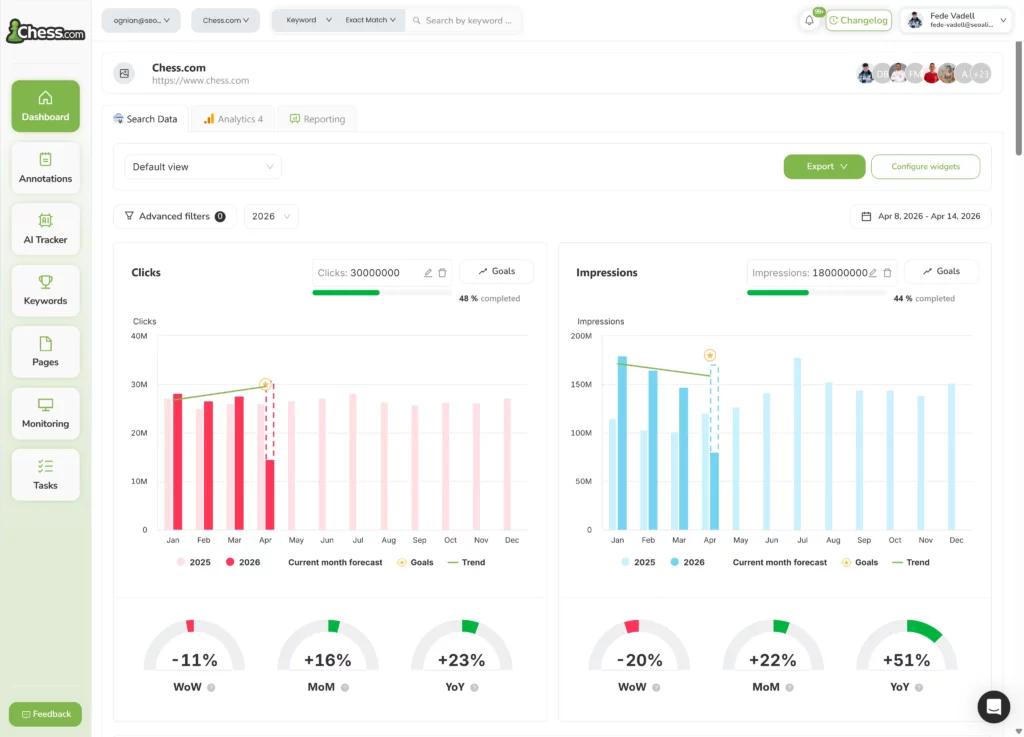
An AI SEO Dashboard transforms how marketers and businesses monitor, analyze, and improve organic search performance. Instead of staring at static charts and endless spreadsheets, you get a centralized, intelligent interface that automates data collection, delivers predictive insights, and recommends specific actions. As search algorithms grow more complex, relying on manual tracking simply cannot keep pace. The modern AI SEO dashboard surfaces what matters, cuts through noise, and helps teams make quick decisions backed by data. This guide covers everything from core components and real-world benefits to common pitfalls and a detailed comparison of leading platforms.
What Is an AI SEO Dashboard?
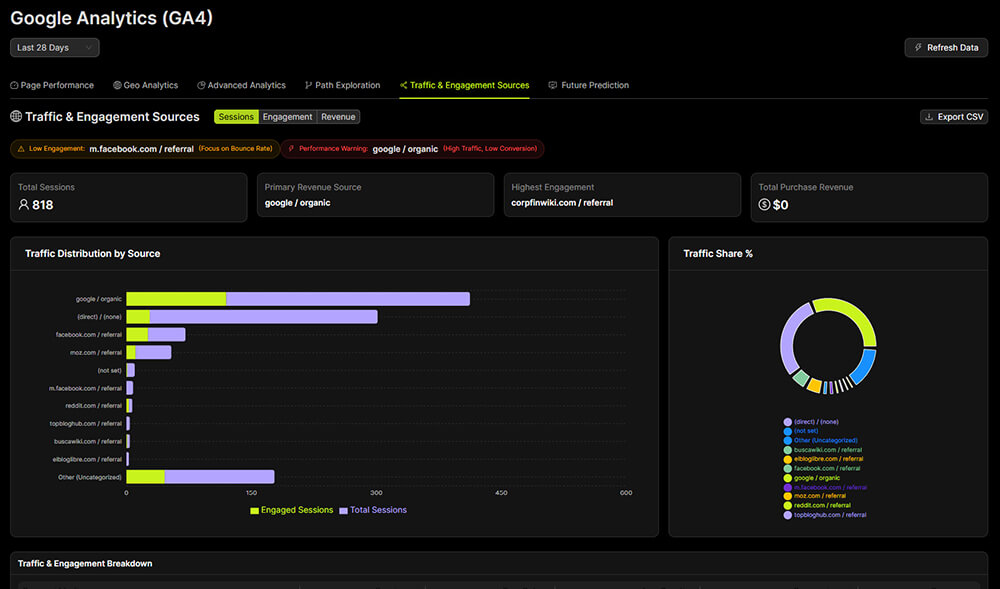
An AI SEO Dashboard is a data visualization and analytics platform that uses artificial intelligence and machine learning to process large volumes of SEO data. It pulls metrics from sources like Google Search Console, Google Analytics, rank trackers, backlink tools, and site audits, then applies algorithms to detect patterns, anomalies, and opportunities. Unlike a conventional dashboard that simply displays numbers, an AI-powered version interprets those numbers. It can forecast ranking movements, highlight pages losing traffic unexpectedly, and even generate content briefs based on competitor gaps.
The core idea is to move from reactive monitoring to proactive optimization. The AI layer analyzes historical trends, seasonality, and competitor changes, then presents recommendations in plain language. For example, it might flag that a high-value product page is slipping because a competitor recently published a more detailed guide, and suggests specific on-page enhancements. These systems save hours of manual digging every week and reduce the risk of missing critical shifts.
Key Components of an AI SEO Dashboard
Every robust AI SEO dashboard shares several essential building blocks. Understanding these components helps you evaluate tools and build your own internal dashboards more effectively.
Unified Data Integration
An AI dashboard starts by connecting all relevant data sources in one place. It ingests real-time and historical data from rank tracking, organic traffic, click-through rates, backlink profiles, technical site audits, social signals, and even paid search if needed. The integration layer cleans and normalizes data so you see a single source of truth. Without this, AI algorithms would work with incomplete context and deliver inaccurate insights.
AI-Powered Analytics Engine
This is the brain of the dashboard. The engine applies machine learning models to detect anomalies, segment data, and predict future performance. It can identify whether a traffic drop is caused by an algorithm update, technical issue, seasonality, or competitor gain. Advanced implementations use natural language processing to scan top-ranking content and extract semantic gaps. The engine continuously learns from new data, improving the accuracy of its forecasts and recommendations over time.
Intelligent Alerts and Notifications
Instead of requiring constant manual checking, an AI SEO dashboard sends proactive alerts. These are not simple threshold-based triggers like “traffic dropped by 20%.” They are contextual. The system might alert you that a core landing page lost three positions for a high-converting keyword while a competitor gained them, and then suggest reviewing that competitor’s updated page. Such alerting prevents issues from going unnoticed for weeks and allows faster reaction.
Actionable Recommendation Engine
One of the biggest differentiators is the ability to suggest what to do next. The dashboard might recommend rewriting a meta description to improve CTR, adding internal links to strengthen topic clusters, or creating a new blog post targeting a high-volume long-tail keyword with low difficulty. The recommendations are ranked by potential impact and often link directly to implementation steps or task management integrations.
Customizable Visualization and Reporting
AI dashboards present complex data through dynamic, interactive charts, graphs, and tables. Users can customize views by business objectives, campaigns, regions, or content types. Automated reporting generates client-ready summaries with AI-written executive summaries that explain performance trends in plain English, replacing hours of manual report building.
How AI Enhances Traditional SEO Dashboards
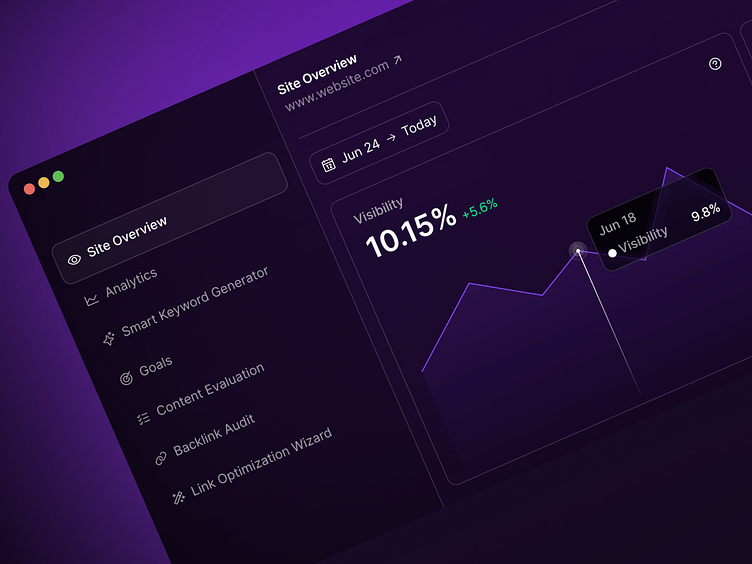
Traditional SEO dashboards are essentially report generators. They consolidate data and display it, but interpretation remains entirely manual. AI introduces a layer of analysis that was previously only possible with a seasoned SEO strategist dedicating dozens of hours each month.
- Pattern Recognition at Scale: AI processes millions of data points across rankings, traffic, and backlinks to spot correlations invisible to the human eye. For example, it might link a subtle increase in page load time to a gradual ranking decline for a set of mobile queries.
- Predictive Insights: Instead of only showing past data, the AI SEO dashboard forecasts where rankings and traffic will likely move in the next 30 to 60 days. This allows teams to allocate resources to defend top positions before they erode, rather than after.
- Content Gap Analysis Automation: The AI scans top-10 SERPs for a topic and compares your content’s depth, structure, and entity coverage. It then produces a prioritized list of subtopics to add, significantly speeding up content planning.
- Natural Language Querying: Many modern dashboards include conversational interfaces. You can type “show me pages that lost more than 10% organic clicks this week but improved average position” and receive an instant filtered view, eliminating complex filter setups.
Benefits of Using an AI SEO Dashboard
Adopting an AI-powered dashboard creates measurable efficiency gains and competitive advantages. Below are the major benefits that teams experience after implementation.
Significant Time Savings
Manual data pulling, spreadsheet manipulation, and report generation can consume 10 to 20 hours per week for a mid-size SEO operation. An AI SEO dashboard automates data collection, anomaly detection, and insight generation. The time reclaimed can be redirected toward strategy, content creation, and high-impact technical fixes.
Faster Response to Ranking Changes
Search landscapes shift daily. When a competitor targets your primary keyword or a Google algorithm update impacts your site, minutes matter. AI-driven alerts ensure you become aware of critical changes within hours, often with a root cause analysis already prepared. Speed here protects revenue that would otherwise bleed away over days of investigation.
Data-Driven Content Strategy
AI SEO dashboards excel at identifying content opportunities. They analyze search demand, user intent clusters, and what currently ranks well, then recommend specific topics and subtopics. This transforms content ideation from gut-feel brainstorming into a precise, ROI-focused process. Some platforms automatically generate content briefs complete with target word count, suggested headings, and semantically related keywords.
Improved Cross-Team Collaboration
A central, intelligent dashboard breaks down silos between SEO, content, development, and marketing leadership. Everyone sees the same metrics and AI-generated insights without waiting for an analyst to prepare a presentation. Executives access high-level predictive summaries, while specialists drill down into technical recommendations, all from a single source of truth.
Limitations and Risks to Watch For
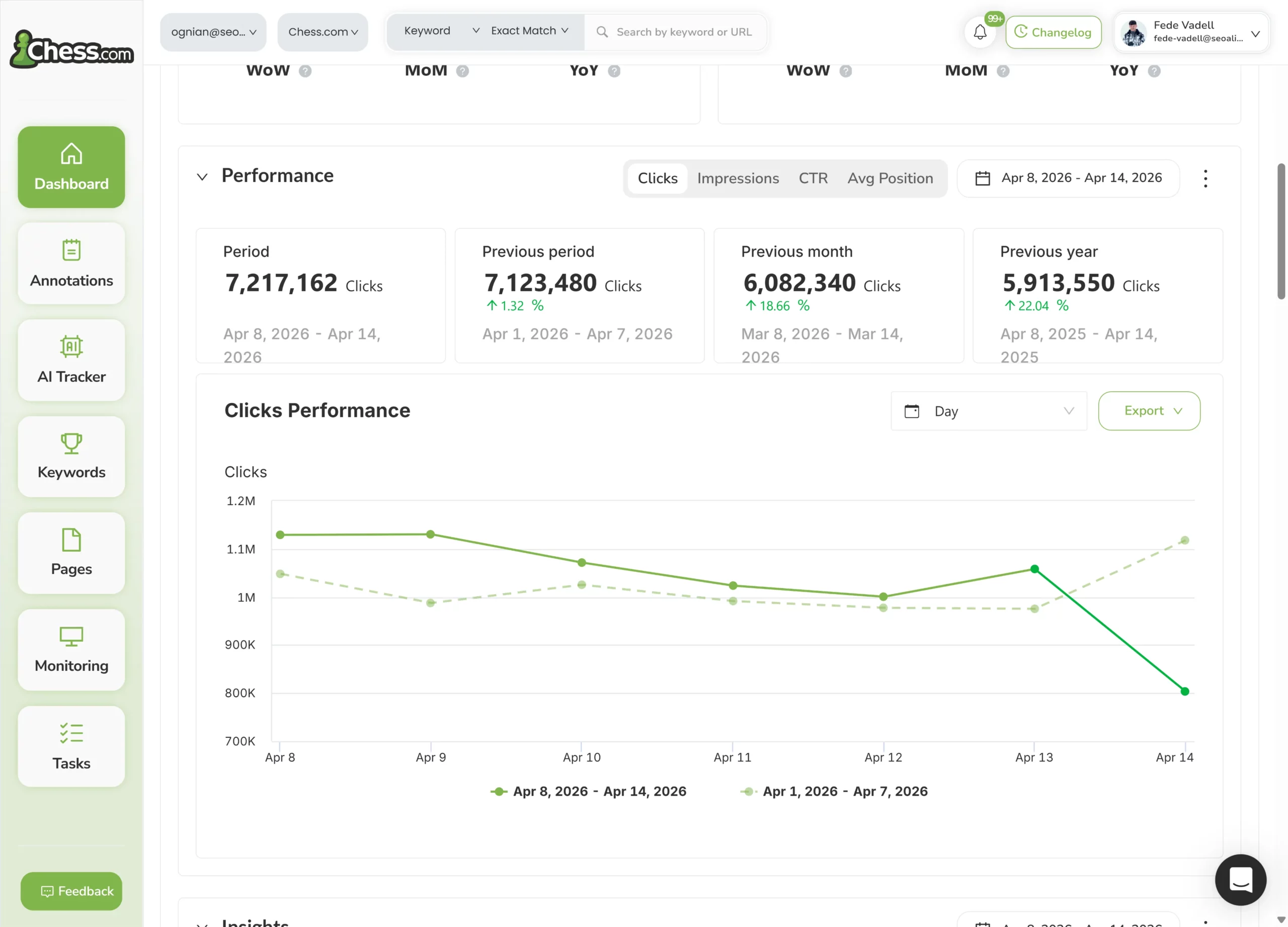
No technology is flawless, and AI SEO dashboards carry their own set of limitations that require careful management.
Data Quality Dependency
AI models are only as good as the data they ingest. If your rank tracker samples inaccurate data, your Google Search Console integration breaks, or your tracking parameters aren’t set correctly, the A Regular data hygiene checks and validation processes are non-negotiable.
Over-Reliance on Automation
A dashboard can recommend a meta description, but it cannot fully grasp your brand voice, legal constraints, or nuanced audience psychology. Treating AI suggestions as final decisions without human review leads to generic, sometimes risky optimizations. The best approach keeps a strategic human in the loop for all critical decisions.
Black Box Recommendations
Some platforms surface recommendations without clearly explaining the underlying reasoning. A suggestion to “delete these 50 pages” could be dangerous if the AI misinterpreted traffic data or ignored pages that serve a loyal but small audience. Always choose tools that provide transparent logic, and validate major actions with additional data points.
Integration Complexity and Cost
Enterprise-grade AI SEO dashboards can require significant integration effort and come with a steep subscription price. For smaller businesses, the cost may outweigh the efficiency gains. Carefully map your required data sources and feature needs before committing, and take advantage of free trials to test connectivity with your existing tech stack.
AI SEO Dashboard vs. Traditional SEO Dashboard: A Detailed Comparison
Below is a side-by-side look at the key differences that matter most for daily work and strategic planning.
| Feature | Traditional SEO Dashboard | AI SEO Dashboard |
|---|---|---|
| Data Interpretation | Manual; user must analyze charts and spot patterns | Automatic; AI surfaces insights, anomalies, and root causes |
| Alerting | Static, metric-based thresholds requiring custom setup | Context-aware, dynamic alerts with suggested actions |
| Content Recommendations | None or limited to keyword lists | Semantic gap analysis, content briefs, entity suggestions |
| Forecasting | Not available or based on simple linear trendlines | Predictive models using machine learning and competitive data |
| Reporting | Static PDFs or dashboards requiring manual commentary | Auto-generated summaries in natural language with dynamic visuals |
| Ease of Investigative Queries | Complex filtering and manual CSV exports | Natural language queries and instant deep dives |
| Typical User | SEO specialist willing to spend hours per report | Strategists, content teams, executives needing speed and clarity |
How to Choose the Right AI SEO Dashboard for Your Business
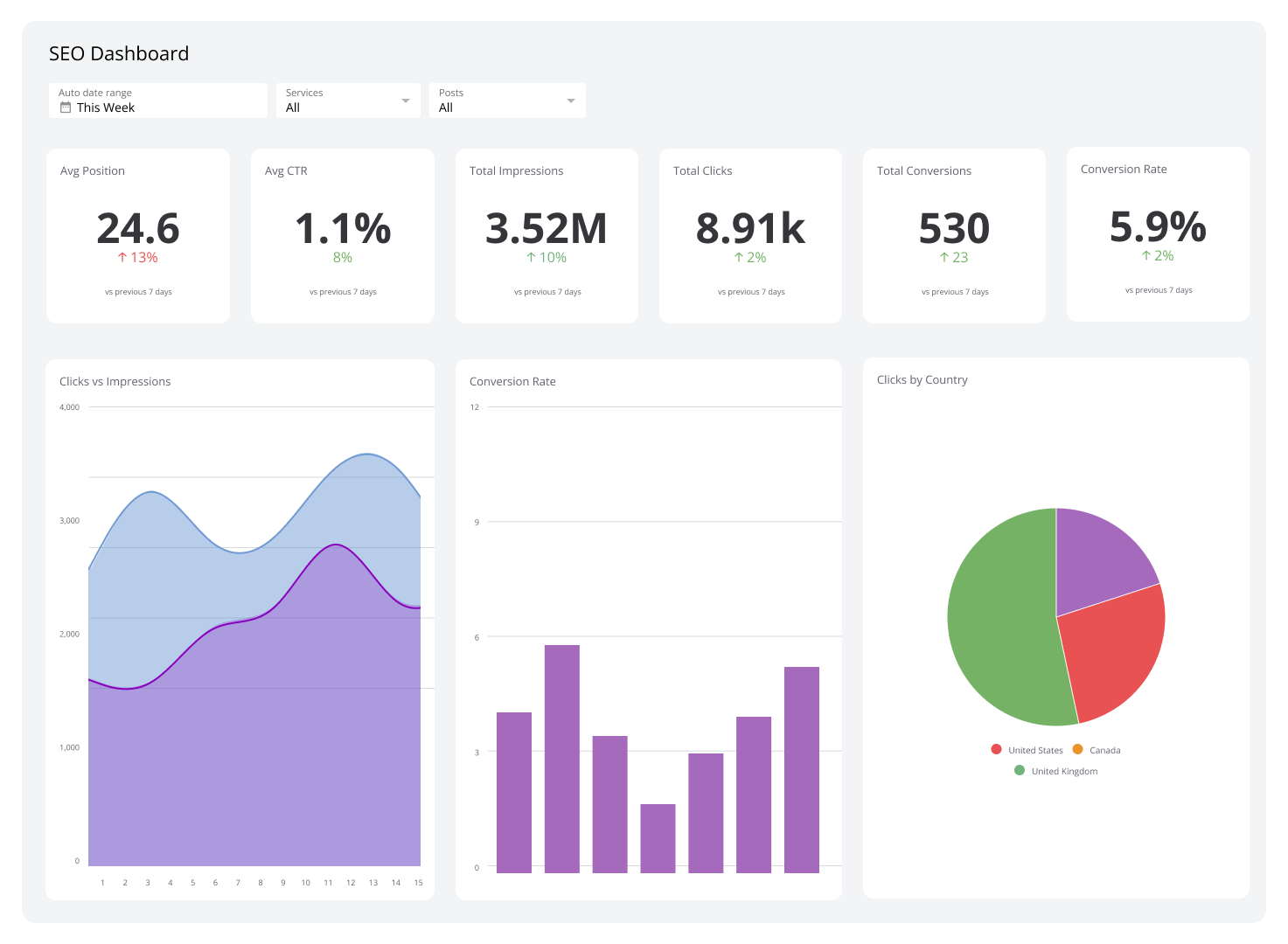
With dozens of tools claiming AI capabilities, selecting the right dashboard requires a structured approach. Focus on these evaluation criteria.
Define Your Primary Use Cases
Are you mainly tracking e‑commerce category rankings and revenue, monitoring a large blog’s content velocity, or managing technical SEO for an enterprise site with millions of URLs? Different dashboards excel in different areas. A tool strong in AI content optimization might have weaker backlink analysis, and vice versa. List your top three daily use cases before shortlisting tools.
Evaluate AI Capabilities, Not Just Labels
Many established SEO platforms have added “AI-powered” tagging to existing features. Test the actual AI depth. Does the dashboard provide predictive traffic estimates that adjust based on seasonality? Can it automatically cluster keywords by intent and recommend page improvements? Or does it simply surface pre-built reports with a chatbot frontend? Request a live demo and ask specific questions about the machine learning models used.
Check Data Source Integrations
A dashboard is only as powerful as the data it connects. Ensure it integrates seamlessly with Google Search Console, Google Analytics 4, Bing Webmaster Tools, your rank tracking provider, major backlink databases, and, if critical, paid search and social platforms. The integration should support historical data backfill so AI models train on sufficient information from day one.
Assess Customization and Scalability
Pre-built dashboards can look impressive but often fail to map to your unique business KPIs. Check whether you can create custom metrics, weighted scoring models, and personalized alert rules on top of the AI layer. For agencies managing multiple clients, white-label reporting and user permission levels become essential. Scalability also matters, the platform should handle your data volume without latency as your site grows.
Consider the Learning Curve and Support
A powerful AI SEO dashboard can feel overwhelming if the interface is not intuitive. Prioritize tools that offer onboarding support, knowledge bases, and responsive customer success teams. Look for platforms that provide an AI‑assisted setup wizard that configures initial dashboards based on your goals and industry. This drastically shortens time-to-value.
Step-by-Step Guide to Setting Up an AI SEO Dashboard
Implementing an AI SEO dashboard effectively requires thoughtful configuration. Follow these steps to get actionable insights from day one.
Step 1: Connect All Data Sources
Start by linking every SEO-related data stream. At minimum, connect Google Search Console for query and impression data, Google Analytics 4 for user behavior and conversions, and your rank tracking tool. Add backlink data from Ahrefs, Semrush, or Majestic. For advanced setups, ingest data from your CMS, e‑commerce platform, and log file analyzers. Verify that the data is flowing correctly and timestamps match across sources.
Step 2: Define Core KPIs and Business Objectives
An AI dashboard without clear goals will generate insights that look interesting but drive no results. Map your top KPIs: organic sessions, conversion rate from organic traffic, keyword positions by intent group (informational, commercial, transactional), and revenue from SEO. Some dashboards allow you to assign a monetary value to each conversion, enabling AI to prioritize recommendations that directly impact the bottom line.
Step 3: Train the AI with Context
Many platforms let you provide business context to improve recommendations. Input your target audiences, main competitors, seasonality patterns, and product release cycles. If your site sees a predictable traffic dip every July, teaching the AI this baseline prevents false anomaly alerts. Upload your content calendar so the system correlates new blog posts with ranking changes instead of treating them as unrelated events.
Step 4: Customize Views for Different Stakeholders
Create role-specific dashboards. The executive view should show a concise traffic forecast, revenue impact of SEO, and top gained/lost keywords with AI commentary. The content manager’s view highlights content decay alerts, new topic opportunities, and optimization suggestions for underperforming pages. The SEO specialist sees technical crawl errors, indexation issues, and granular ranking movements. Tailored views prevent information overload and drive adoption.
Step 5: Set Up Proactive Alerting
Configure alerts that matter most to your team. Instead of enabling every possible notification, focus on high-impact signals: organic traffic anomalies beyond seasonal norms, significant ranking drops for revenue-driving keywords, sudden spikes in crawl errors, and competitor content gains on key topics. Use the AI’s ability to learn and eventually auto-mute repetitive, low-priority alerts so your attention stays on what truly moves the needle.
Step 6: Establish a Weekly Review Rhythm
Block a recurring 30-minute session to review AI-generated insights with your team. During this meeting, validate top recommendations, assign tasks, and discuss any alerts that require deeper investigation. Over time, the AI’s suggestions improve because the platform observes which actions you took and their impact, creating a feedback loop that makes the system smarter for your specific site.
Common Mistakes When Using an AI SEO Dashboard and How to Avoid Them
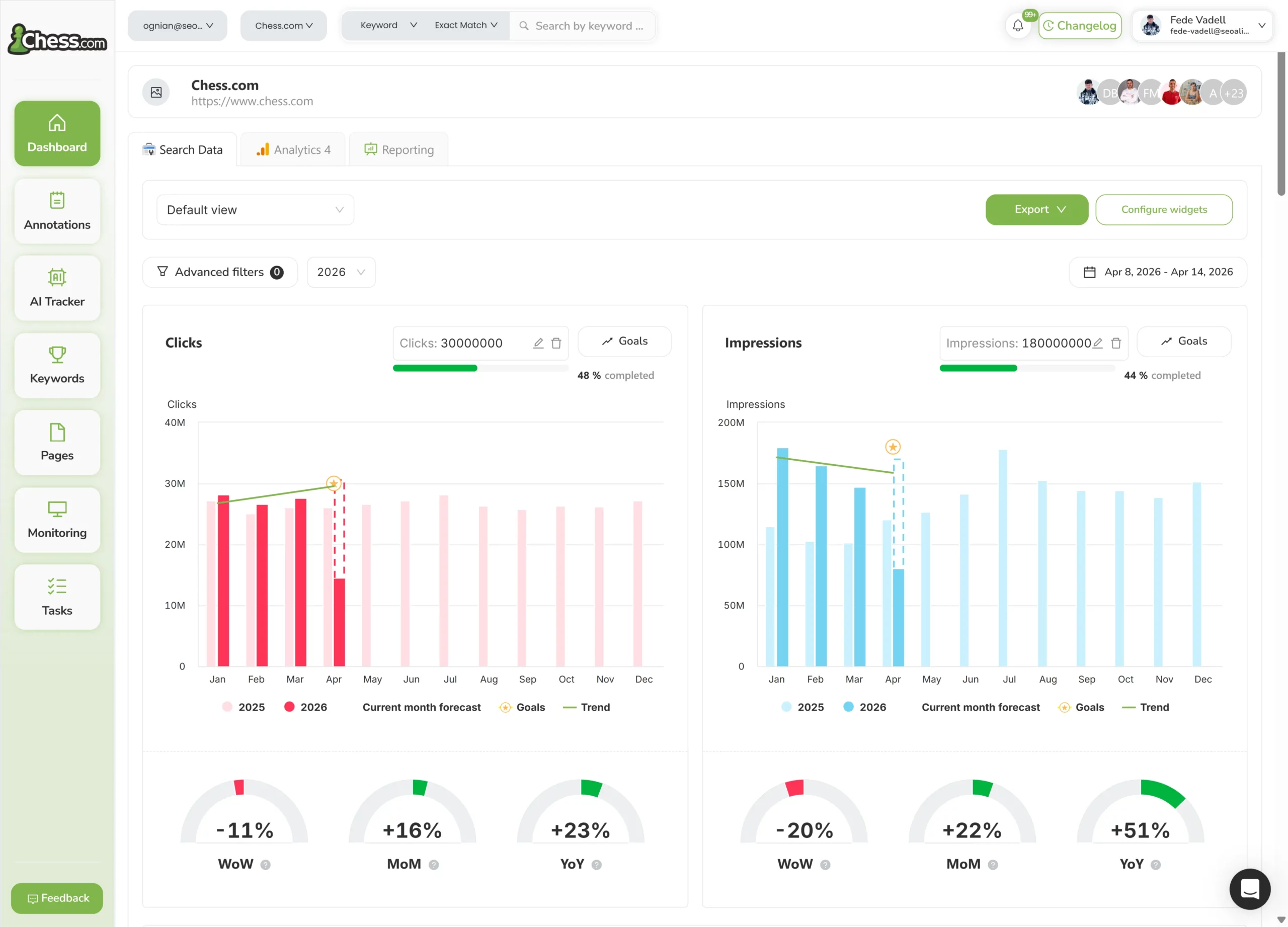
Even experienced marketers fall into traps that diminish the value of their AI dashboards. Here are the most frequent mistakes and practical fixes.
Mistake: Treating AI Insights as Final Decisions
Blindly implementing every recommendation without human judgment can damage your SEO. For instance, an AI might flag a high-authority page for deletion because organic traffic is low, ignoring that it serves as a critical support page for customer service inquiries. Always have a skilled SEO professional review major actions, especially those involving content removal, redirects, or significant title tag changes.
Mistake: Ignoring Data Freshness and Accuracy
Dashboards pull data from APIs that may have built-in delays. If your Search Console data is 48 hours behind and your rank tracker updates daily, the AI might perceive a ranking spike as a trend when it is simply a data sync issue. Document the refresh frequency of each source and account for lag when interpreting real-time alerts. Perform a monthly audit of data accuracy by manually cross-checking a sample of metrics.
Mistake: Using Too Many Dashboards Without Integration
A fragmented stack where content AI lives in one tool, rank tracking in another, and technical alerts in a third defeats the purpose of an AI SEO dashboard. The machine learning models require consolidated data to make accurate predictions. Consolidate your core SEO monitoring into one primary AI platform that can ingest data from other tools via API, or choose an all-in-one solution from the start.
Mistake: Neglecting Mobile and Local SEO Dimensions
Many teams configure their AI dashboards with a desktop-only lens. Organic search behavior varies significantly by device and location. Ensure your dashboard tracks and segments mobile versus desktop rankings, local pack appearances, and mobile page speed scores. The AI should be able to alert you when mobile rankings diverge negatively from desktop trends, a frequent signal of a technical mobile usability issue.
Important Notes on Data Privacy and Security
An AI SEO dashboard processes sensitive business data: traffic metrics, revenue, content plans, and competitive intelligence. Before adopting any platform, review its data security certifications (SOC 2, ISO 27001), encryption standards, and data retention policies. For GDPR compliance, confirm how the tool handles data from European visitors and whether it offers data processing agreements. If you work in highly regulated industries, such as finance or healthcare, verify that the vendor restricts AI model training on your proprietary data unless explicitly permitted. A dashboard breach could expose your entire content strategy to competitors, so due diligence in vendor selection is non-negotiable.
Frequently Asked Questions
What exactly does an AI SEO Dashboard do differently from regular SEO tools?
An AI SEO Dashboard does not just report data, it interprets it. It automatically detects anomalies, predicts future ranking trends, identifies content gaps by analyzing competitor pages semantically, and suggests prioritized actions. Regular tools require you to manually find patterns and decide what to fix. The AI dashboard surfaces insights in natural language, telling you what changed, why it likely happened, and what to do next, dramatically cutting analysis time.
Which platforms offer the best AI SEO Dashboard capabilities?
Several established platforms have integrated robust AI features. Semrush offers its Copilot function with predictive analytics and natural language insights. Ahrefs provides AI-driven content gap and opportunity alerts. SE Ranking has a comprehensive AI dashboard with automated site audit prioritization. Surfer SEO focuses heavily on AI content optimization dashboards, while MarketMuse excels at content inventory and gap analysis. For enterprise, BrightEdge and Conductor offer advanced predictive and intent-based AI dashboards. The best choice depends on your team’s primary focus: content, technical SEO, or full‑funnel analytics.
Can small businesses afford an AI SEO Dashboard?
Yes, many AI-powered dashboards now offer tiered pricing suitable for smaller teams. Tools like SEO PowerSuite with its AI reporting, or Mangools with its KWFinder insights, provide affordable entry points. Free or low-cost versions of Google Looker Studio combined with AI add-ons can also create a workable dashboard, though with less automation. Start with the essentials—rank tracking and Google Search Console integration—and expand as your organic traffic grows and justifies additional investment.
How much time does it take to set up an effective AI SEO Dashboard?
Initial setup can range from a few hours for a basic template-based dashboard to several days for a fully customized enterprise implementation. Connecting reliable data sources and training the AI with business context are the most time-intensive steps. After the first week, ongoing maintenance typically requires only a few minutes per day to review alerts and recommendations. Most platforms accelerate setup with AI-assisted wizards that configure dashboards based on your website URL and industry.
Is an AI SEO Dashboard a replacement for human SEO experts?
No, it is a force multiplier, not a replacement. The dashboard handles data processing and surface-level pattern detection, but strategic decisions—brand voice, user intent subtleties, legal reviews, creative content ideation—require human judgment. The most successful teams use AI dashboards to eliminate grunt work so their SEO professionals can focus on high-level strategy, testing, and creative problem-solving that machines cannot replicate.
How accurate are the predictive traffic forecasts in these dashboards?
Accuracy varies based on data volume, history length, and the stability of your niche. In relatively predictable markets with consistent seasonality and sufficient historical data, forecasts can be within a 10-15% margin. For sites in volatile niches or those impacted by unexpected algorithm updates, predictions are less reliable. Always treat forecasts as directional guidance, not guarantees, and combine them with manual analysis of upcoming industry and product changes.
Conclusion
An AI SEO Dashboard represents a fundamental shift from passive monitoring to active, intelligent optimization. By unifying data, applying machine learning, and delivering actionable recommendations in plain language, these platforms empower teams to move faster, make smarter decisions, and protect their organic search investments. The key to success lies in choosing a tool that aligns with your specific use cases, configuring it with accurate data and business context, and always pairing AI insights with experienced human oversight. When implemented thoughtfully, an AI SEO dashboard becomes the central nervous system of your search strategy—continuously learning, alerting, and guiding you toward sustainable growth in an ever-changing SEO landscape.
Xem thêm:
- AI SEO Topic Mapping: The Complete Guide to Building Content Clusters That Rank
- AI SEO Mobile First Indexing: The Complete Guide to Future-Proofing Your Rankings
- ChatGPT SEO: The Ultimate Guide to AI-Powered Search Engine Optimization
- AI SEO Content Distribution: The Complete Playbook for 2025
- AI SEO Content: The Complete Blueprint for Higher Rankings and Organic Traffic
Bài viết cùng chủ đề:

AI SEO SEO Automation with Make: The Complete Workflow Guide

AI SEO SEO Automation with Zapier: The Complete Workflow Guide

AI SEO SEO Automation with n8n: The Complete Workflow Guide
AI SEO SEO Automation with Gemini: The Complete Guide to Scaling Organic Growth

AI SEO SEO Automation with Claude: The Complete Guide to Scaling Content in 2025

AI SEO SEO Automation with ChatGPT: The Complete Playbook for 2025

AI SEO & SEO Automation for Affiliate Sites: The 2025 Playbook for Passive Income Growth
AI SEO & SEO Automation for Bloggers: The Complete Guide to Scaling Your Content

AI SEO & SEO Automation for Agencies: The Complete 2025 Playbook

AI SEO and SEO Automation for Ecommerce: The Complete Playbook for 2025

AI SEO & SEO Automation for WordPress: The Complete Playbook for 2025
AI SEO SEO Automation Strategy: The Complete Playbook for 2025

Mastering the AI SEO SEO Automation Process: A Complete Guide to Scaling Organic Growth
AI SEO SEO Automation System: The Complete Guide to Scaling Organic Growth in 2025
AI SEO SEO Automation Platform: The Complete Guide to Scaling Organic Growth in 2025
AI SEO SEO Automation Software: The Complete Guide to Scaling Organic Growth in 2025















