
No products in the cart.
AI SEO Topic Mapping: The Complete Guide to Building Content Clusters That Rank
10
Aug
Aug
AI SEO Topic Mapping has transformed how digital marketers plan, create, and optimize content in 2025. Instead of guessing which keywords to target, artificial intelligence now analyzes search intent, competitor gaps, and semantic relationships to build comprehensive topic clusters. This guide explains everything you need to know about using AI for SEO topic mapping, from basic concepts to advanced implementation strategies that drive measurable organic traffic growth.
What Is AI SEO Topic Mapping?
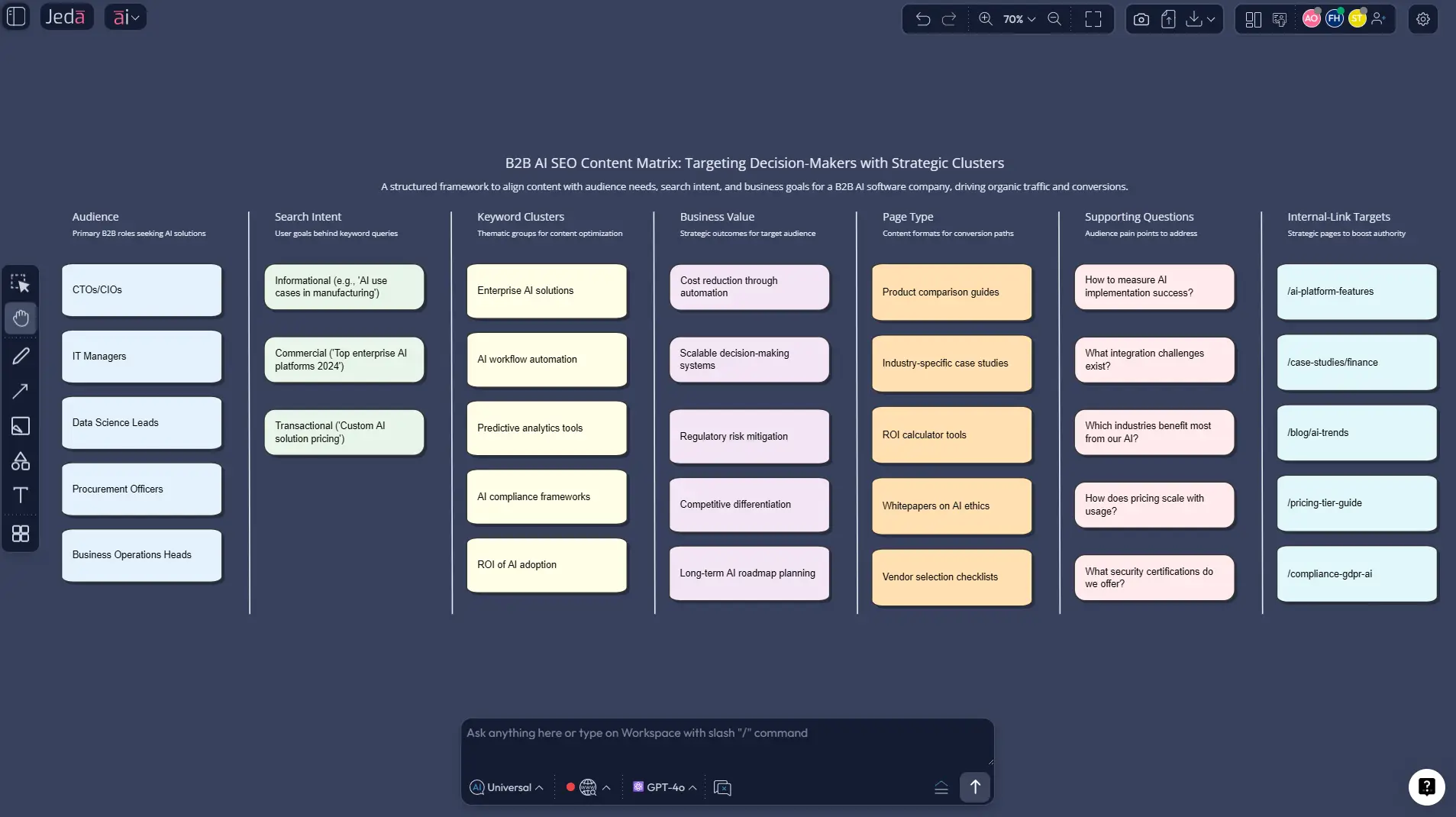
AI SEO Topic Mapping is the process of using artificial intelligence algorithms to identify, organize, and structure content topics around a central pillar theme. Unlike traditional keyword research that focuses on individual search terms, AI-driven topic mapping examines the entire semantic landscape of a subject area. The AI analyzes millions of search queries, user behavior patterns, and content performance data to create interconnected topic clusters that satisfy both search engines and human readers.
This approach moves beyond simple keyword density. It understands that Google’s RankBrain and BERT algorithms prioritize topical authority and semantic relevance. When you map topics correctly using AI, you build a web of content where each piece supports the others, signaling expertise to search engines.
How AI Topic Mapping Differs from Traditional Keyword Research
Traditional keyword research relies heavily on search volume, keyword difficulty, and cost-per-click data. It treats keywords as isolated entities. AI SEO Topic Mapping treats keywords as part of a larger semantic ecosystem. The AI identifies relationships between concepts, understands user intent variations, and predicts which subtopics will gain traction.
For example, a traditional approach to “coffee brewing” might target “best coffee maker” and “french press instructions” separately. AI topic mapping would recognize that users searching for “coffee brewing” also need information about water temperature, grind size, brew ratios, and equipment maintenance. It creates a comprehensive map that covers the entire topic from multiple angles.
Why AI SEO Topic Mapping Matters for Modern Search Rankings
Search engines have evolved dramatically. Google now processes over 8.5 billion searches per day, and its algorithms prioritize content that demonstrates complete topic coverage. AI SEO Topic Mapping helps you achieve this comprehensive coverage systematically.
The core benefit lies in building topical authority. When you publish a cluster of interconnected articles covering all aspects of a subject, search engines recognize your website as a reliable resource. This recognition translates into higher rankings not just for individual keywords, but for the entire topic ecosystem.
The Connection Between Topic Clusters and E-E-A-T
Google’s E-E-A-T framework (Experience, Expertise, Authoritativeness, Trustworthiness) directly benefits from proper topic mapping. AI helps you identify gaps in your content that undermine your expertise signals. By filling these gaps with high-quality, relevant articles, you demonstrate comprehensive knowledge that builds trust with both users and search algorithms.
Websites that implement AI SEO Topic Mapping typically see improvements in multiple metrics: organic click-through rates, average time on page, and reduced bounce rates. These user engagement signals further reinforce your topical authority.
Core Components of an AI-Driven Topic Map
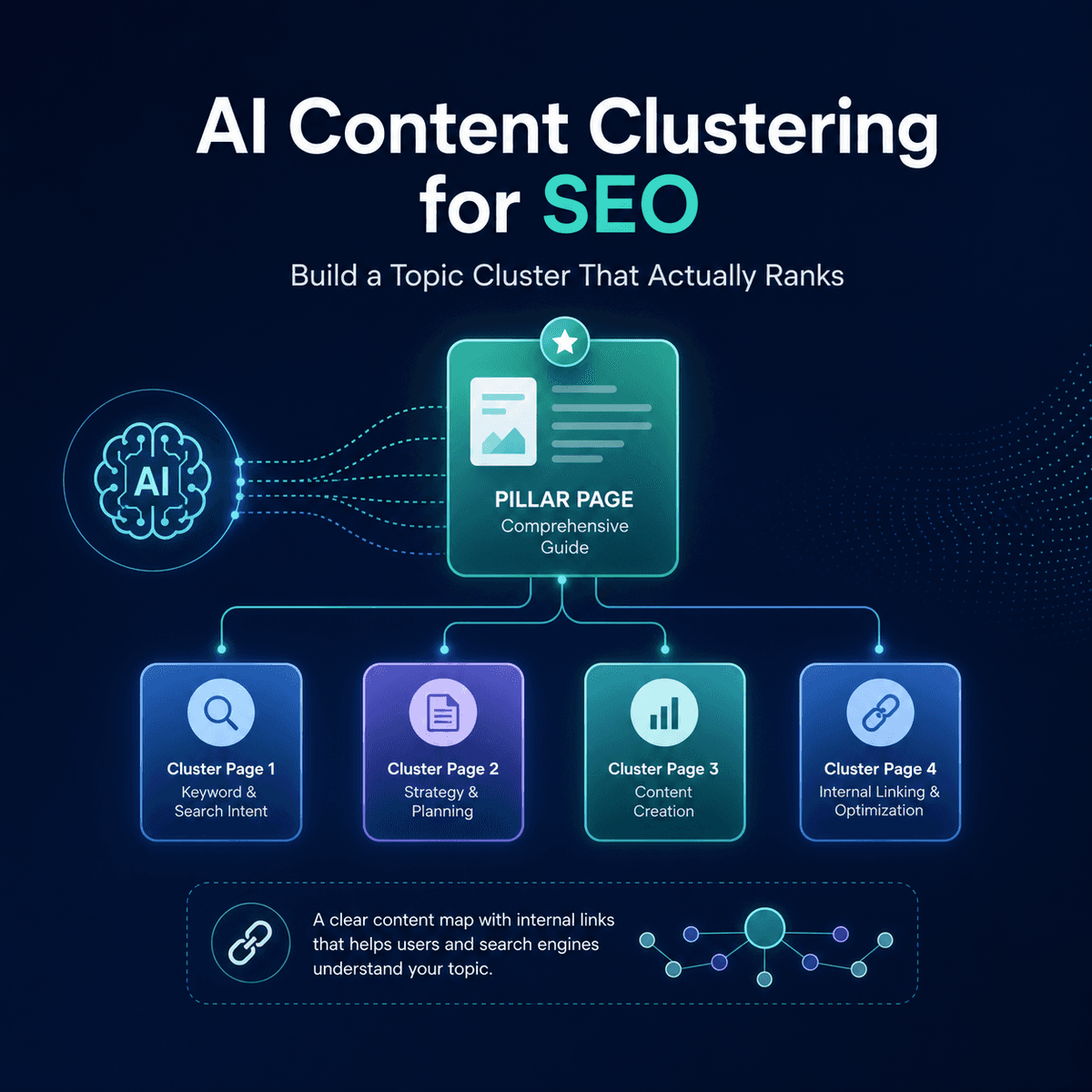
Understanding the anatomy of a topic map helps you appreciate what AI brings to the table. Every effective topic map contains several essential elements that work together to create a coherent content strategy.
Pillar Content Identification
The pillar page serves as the cornerstone of your topic cluster. AI analyzes search data to identify the broadest, most commercially valuable topic in your niche. This pillar content typically targets high-volume, high-intent keywords and provides a comprehensive overview of the subject.
For instance, if you operate a fitness website, your pillar content might be “Complete Guide to Strength Training.” This page covers fundamental concepts, links out to cluster content, and establishes your authority on the subject.
Cluster Content Discovery
AI algorithms sift through search query data to identify related subtopics that deserve individual articles. These cluster pieces target long-tail keywords and specific user questions. The AI prioritizes topics based on search volume trends, competition levels, and relevance to your business goals.
Continuing the fitness example, cluster content might include “Best Dumbbell Exercises for Beginners,” “How to Progressive Overload Safely,” and “Strength Training Nutrition Basics.” Each piece links back to the pillar page, creating a strong internal linking structure.
Semantic Relationship Mapping
Modern AI tools use natural language processing to understand how concepts relate to each other. They identify synonyms, related terms, and contextual variations that human researchers might miss. This semantic understanding ensures your content covers topics in the way users actually search for them.
The AI also analyzes competitor content to find semantic gaps. If your competitors cover certain subtopics but miss others, the AI flags these opportunities for you to exploit.
How to Implement AI SEO Topic Mapping in Your Workflow
Implementing AI topic mapping requires a systematic approach. The following process outlines how to integrate AI tools into your content planning, from initial research to final publication.
Step 1: Define Your Core Subject Area
Start by clearly defining your niche and target audience. AI tools need context to generate relevant topic maps. Input your primary business focus, target demographics, and content goals into your chosen AI platform. This initial data helps the algorithm understand your specific context.
Be specific about your unique value proposition. If you sell eco-friendly cleaning products, your topic map will differ significantly from a general cleaning supplies retailer. The AI uses this information to filter and prioritize topics that align with your brand positioning.
Step 2: Generate Initial Topic Clusters
Use AI tools like Clearscope, MarketMuse, or Surfer SEO to generate initial topic clusters. These platforms analyze top-ranking content, search query data, and semantic databases to suggest comprehensive topic lists. Review these suggestions critically, combining AI insights with your industry knowledge.
Most AI tools provide metrics for each suggested topic, including estimated search volume, keyword difficulty, and content gap scores. Use these metrics to prioritize topics that offer the best balance of opportunity and feasibility.
Step 3: Validate with Search Intent Analysis
AI-generated topic maps require validation against real user intent. Analyze the current top-ranking pages for your target keywords. Determine whether users expect informational, transactional, or navigational content. Adjust your topic map accordingly to match these expectations.
Search intent analysis also reveals content format preferences. Some topics perform better as listicles, others as in-depth guides, and others as video content. The AI can suggest optimal formats based on what currently ranks well.
Step 4: Create a Content Calendar
Transform your validated topic map into a structured content calendar. Prioritize pillar content first, then schedule cluster articles in a logical order. Consider seasonal trends, product launches, and industry events when scheduling publication dates.
Your content calendar should include target keywords, internal linking plans, and content format specifications for each piece. This structured approach ensures consistent progress toward complete topic coverage.
Top AI Tools for SEO Topic Mapping in 2025
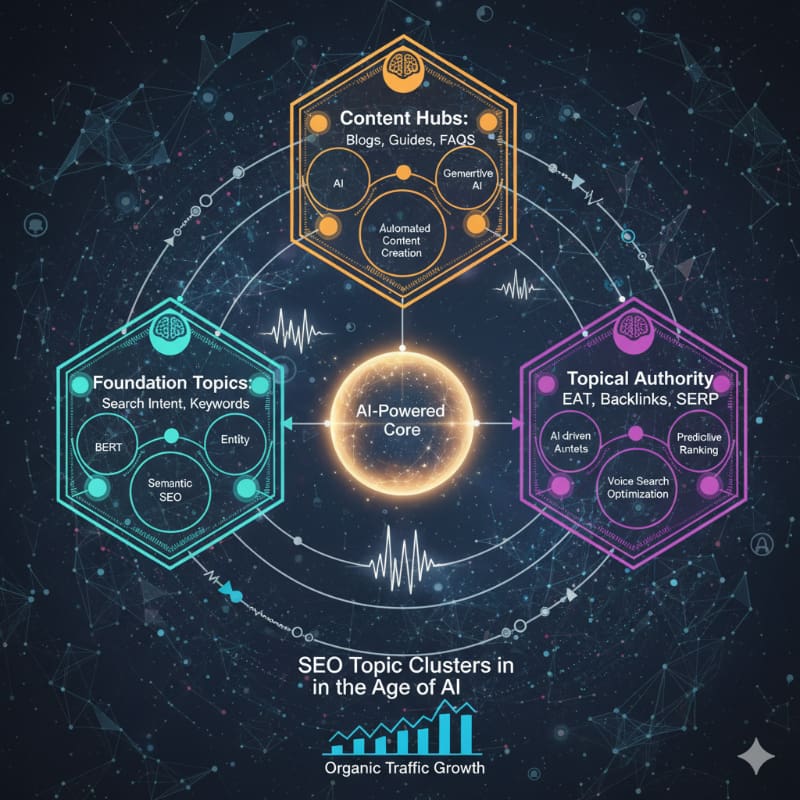
Several powerful AI tools dominate the topic mapping landscape. Each offers unique features that cater to different needs and budgets. Understanding their capabilities helps you choose the right solution for your team.
| Tool | Key Features | Best For | Pricing Model |
|---|---|---|---|
| MarketMuse | Content inventory, topic recommendations, competitive analysis | Enterprise teams needing comprehensive research | Subscription-based |
| Clearscope | Content optimization, keyword clustering, readability scoring | SEO specialists focused on on-page optimization | Monthly subscription |
| Surfer SEO | Content editor, SERP analysis, topic discovery | Freelancers and small agencies | Tiered pricing |
| Frase.io | Content briefs, AI writing assistance, topic research | Content teams wanting streamlined workflows | Monthly subscription |
| Ahrefs Content Explorer | Content gap analysis, topic trends, backlink data | Data-driven marketers | Part of Ahrefs suite |
Each tool approaches AI SEO Topic Mapping differently. MarketMuse excels at understanding content depth and comprehensiveness. Clearscope focuses on keyword optimization and semantic relevance. Surfer SEO provides practical, data-driven recommendations for on-page improvements.
Evaluating AI Tool Output Quality
AI tools are powerful but not infallible. Always evaluate their suggestions against your domain expertise. Cross-reference AI recommendations with Google Search Console data, customer feedback, and sales team insights. The best topic maps combine AI efficiency with human judgment.
Look for tools that provide transparent reasoning behind their recommendations. If an AI suggests a topic, it should explain why that topic matters and how it connects to your existing content. This transparency helps you trust and act on the recommendations.
Benefits of Using AI for Topic Mapping
The advantages of AI-driven topic mapping extend far beyond simple time savings. Organizations that adopt this approach gain strategic advantages that compound over time.
Comprehensive Content Coverage
AI analyzes vastly more data than human researchers can process manually. It identifies subtopics and semantic variations that might otherwise go unnoticed. This comprehensive coverage ensures you capture traffic from the entire topic ecosystem, not just obvious keywords.
For example, AI might identify that users searching for “home workout routines” also frequently search for “apartment-friendly exercises” and “no-equipment workouts.” These insights expand your content strategy beyond initial assumptions.
Faster Content Planning Cycles
Traditional topic research can take weeks. AI tools compress this timeline dramatically. What once required extensive manual research, competitor analysis, and keyword mining now happens in hours. This speed allows you to respond quickly to market changes and emerging trends.
Faster planning also means faster publication. You can maintain a consistent publishing cadence that keeps your website fresh and signals activity to search engines.
Improved Internal Linking Structure
AI topic mapping naturally produces content that links together logically. The semantic relationships identified by AI translate directly into internal linking opportunities. These contextual links pass authority throughout your site and help search engines understand your content architecture.
Strong internal linking also improves user experience. Visitors can easily navigate between related topics, increasing page views and time on site.
Limitations and Challenges of AI Topic Mapping
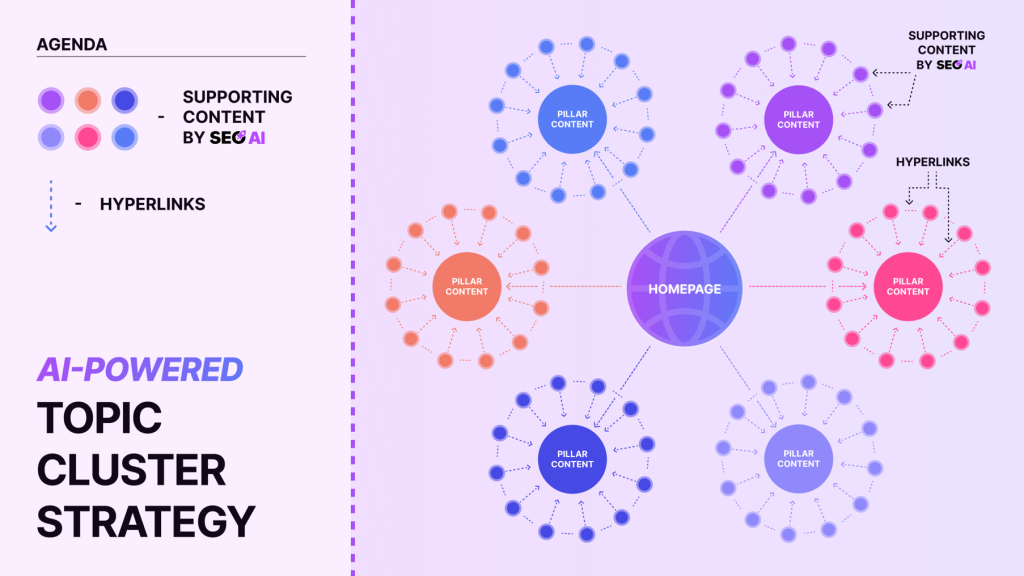
While AI SEO Topic Mapping offers significant benefits, it also presents challenges that require careful management.
Data Quality Dependence
AI models are only as good as their training data. If the underlying search data contains biases or gaps, your topic map will reflect those flaws. Always validate AI suggestions against real-world performance data and user feedback.
Search trends change rapidly. An AI topic map created six months ago may already be outdated. Regular updates and re-evaluation are essential to maintain relevance.
Over-Optimization Risks
Following AI recommendations too rigidly can lead to content that feels formulaic and robotic. Search engines increasingly reward authentic, human-written content that demonstrates genuine expertise. Use AI as a guide, not an absolute authority.
Balance AI-driven topic selection with creative content development. Your unique perspective and experience add value that AI cannot replicate.
Tool Costs and Learning Curves
Premium AI tools require significant financial investment. Enterprise-level platforms can cost thousands of dollars monthly. Additionally, team members need training to use these tools effectively, requiring time investment before seeing returns.
Start with free or low-cost tools to test the waters. Many platforms offer limited free tiers that allow you to evaluate their capabilities before committing to paid plans.
Practical Applications of AI Topic Mapping Across Industries
AI SEO Topic Mapping delivers value across diverse industries. Understanding these applications helps you adapt the methodology to your specific context.
E-Commerce Product Content
Online retailers use AI topic mapping to create comprehensive buying guides, product comparisons, and category overviews. The AI identifies what information shoppers need at each stage of the buying journey, from initial research to final purchase decision.
For example, a furniture retailer might create pillar content about “Choosing Sustainable Furniture” with cluster content covering materials, manufacturing processes, and care instructions. This approach captures traffic from environmentally conscious shoppers throughout their decision process.
SaaS and Technology Companies
Software companies leverage AI topic mapping to build extensive knowledge bases and educational content. The AI identifies common user questions, feature-related searches, and integration queries. This content serves dual purposes: attracting organic traffic and reducing support ticket volume.
A project management SaaS might map topics around “Remote Team Collaboration,” creating content about virtual meetings, asynchronous communication, and productivity tools. Each piece reinforces the software’s relevance to these workflows.
Healthcare and Wellness Websites
Medical content requires exceptional accuracy and trustworthiness. AI topic mapping helps healthcare organizations identify patient questions and concerns while maintaining compliance with medical content guidelines. The AI flags topics requiring special expertise or disclaimers.
Wellness websites use topic mapping to create comprehensive guides covering nutrition, exercise, mental health, and preventive care. The interconnected content structure helps establish authority in this competitive space.
Common Mistakes in AI SEO Topic Mapping and How to Avoid Them
Even experienced marketers make errors when implementing AI topic mapping. Recognizing these pitfalls helps you avoid costly mistakes.
Ignoring Search Intent Variations
AI tools sometimes group keywords with different search intents into the same cluster. This creates content that fails to satisfy user expectations. Always manually review topic groupings to ensure intent alignment.
For example, “best running shoes” indicates commercial intent, while “how to choose running shoes” indicates informational intent. These require different content approaches despite their semantic similarity.
Creating Content for Every Suggested Topic
Just because AI suggests a topic doesn’t mean you should create content for it. Evaluate each suggestion against your business goals, resources, and audience needs. Prioritize topics that align with your revenue objectives and content capabilities.
Quality trumps quantity. Publishing thin, low-value content across many topics damages your authority. Focus on creating exceptional content for fewer, strategically important topics.
Neglecting Content Updates
Topic maps become stale as search trends evolve. Set a regular schedule for reviewing and updating your topic map. Remove topics that no longer generate traffic, add emerging subtopics, and refresh existing content to maintain accuracy.
Search engines favor recently updated content. Regular refreshes signal that your website provides current, relevant information.
Failing to Track Performance
Implementing a topic map without tracking results is like navigating without a compass. Monitor keyword rankings, organic traffic, and conversion rates for each content piece. Use this data to refine your topic map continuously.
Set up regular reporting dashboards that show which topics drive the most value. This information guides future content investments and helps justify your SEO budget.
Important Notes for Successful AI Topic Mapping
Several key principles underpin successful AI SEO Topic Mapping implementation. Keeping these notes in mind ensures you maximize the value of your efforts.
First, always combine AI insights with human expertise. AI provides data-driven recommendations, but your industry knowledge adds context and nuance that algorithms cannot replicate. The best results come from human-AI collaboration.
Second, prioritize user experience over search engine optimization. Content that genuinely helps readers will naturally attract links, shares, and engagement. These signals reinforce your topical authority and improve rankings.
Third, maintain flexibility in your approach. Search algorithms change, user behaviors shift, and new competitors emerge. Your topic map should evolve to reflect these changes rather than remaining static.
Fourth, integrate topic mapping with your broader marketing strategy. Coordinate content creation with email campaigns, social media promotion, and paid advertising to maximize reach and impact.
Frequently Asked Questions About AI SEO Topic Mapping
What is the difference between keyword research and topic mapping?
Keyword research focuses on identifying individual search terms and their metrics. Topic mapping takes a broader view, organizing related keywords and concepts into interconnected clusters. Topic mapping considers user intent, semantic relationships, and content architecture, providing a more strategic framework for content planning.
How long does it take to see results from AI topic mapping?
Results typically appear within 3 to 6 months of consistent implementation. Search engines need time to crawl, index, and evaluate your new content structure. The speed of results depends on your website’s authority, competition levels, and content quality. Some websites see improvements sooner, especially for long-tail keywords with lower competition.
Can small businesses benefit from AI SEO Topic Mapping?
Absolutely. Small businesses can use free or low-cost AI tools to identify content opportunities that compete effectively against larger competitors. Topic mapping helps small businesses focus their limited resources on high-impact content that builds authority in specific niches.
How often should I update my topic map?
Review your topic map quarterly at minimum. Search trends, competitor activity, and user behavior change rapidly. More frequent reviews are appropriate for fast-moving industries like technology or fashion. Regular updates ensure your content strategy remains aligned with current market conditions.
Does AI topic mapping replace the need for human content writers?
No. AI tools assist with research, planning, and optimization, but human writers remain essential for creating engaging, accurate, and original content. AI-generated content often lacks the nuance, creativity, and authentic voice that readers and search engines value. Use AI to inform your strategy, but rely on human expertise for execution.
What metrics should I track to measure topic mapping success?
Track organic traffic growth, keyword rankings for mapped topics, engagement metrics like time on page and bounce rate, and conversion rates. Also monitor the number of indexed pages and internal links within your topic clusters. These metrics provide a comprehensive view of your topic mapping effectiveness.
Conclusion
AI SEO Topic Mapping represents a fundamental shift in how successful websites approach content strategy. By leveraging artificial intelligence to understand semantic relationships, user intent, and content gaps, you can build comprehensive topic clusters that establish topical authority and drive sustainable organic traffic.
The methodology combines the analytical power of AI with the strategic judgment of experienced marketers. Start by defining your core subject areas, generate topic clusters using AI tools, validate recommendations against real-world data, and create a structured content calendar. Track your results diligently and refine your approach based on performance data.
Remember that AI serves as an accelerator, not a replacement for human expertise. The most successful implementations balance data-driven insights with creative content development and genuine subject matter knowledge. As search engines continue to prioritize comprehensive, authoritative content, AI SEO Topic Mapping will remain an essential tool for digital marketers seeking competitive advantage.
Begin implementing these strategies today to build a content foundation that drives measurable business results for years to come.
Xem thêm:
- How to Create Topic Clusters with AI: A Data-Driven Blueprint for Modern SEO
- AI SEO Automated Keyword Clustering: The Complete Guide to Smarter Content Architecture
- AI SEO Outranking: The Complete Playbook for Dominating Search in 2025
- AI SEO Reports: How Intelligent Automation Redefines Search Performance Analysis
- How to Build AI Content Systems: A Complete Guide to Scalable, Intelligent Content Operations
Bài viết cùng chủ đề:

AI SEO SEO Automation with Make: The Complete Workflow Guide

AI SEO SEO Automation with Zapier: The Complete Workflow Guide

AI SEO SEO Automation with n8n: The Complete Workflow Guide
AI SEO SEO Automation with Gemini: The Complete Guide to Scaling Organic Growth

AI SEO SEO Automation with Claude: The Complete Guide to Scaling Content in 2025

AI SEO SEO Automation with ChatGPT: The Complete Playbook for 2025

AI SEO & SEO Automation for Affiliate Sites: The 2025 Playbook for Passive Income Growth
AI SEO & SEO Automation for Bloggers: The Complete Guide to Scaling Your Content

AI SEO & SEO Automation for Agencies: The Complete 2025 Playbook

AI SEO and SEO Automation for Ecommerce: The Complete Playbook for 2025

AI SEO & SEO Automation for WordPress: The Complete Playbook for 2025
AI SEO SEO Automation Strategy: The Complete Playbook for 2025

Mastering the AI SEO SEO Automation Process: A Complete Guide to Scaling Organic Growth
AI SEO SEO Automation System: The Complete Guide to Scaling Organic Growth in 2025
AI SEO SEO Automation Platform: The Complete Guide to Scaling Organic Growth in 2025
AI SEO SEO Automation Software: The Complete Guide to Scaling Organic Growth in 2025















