
No products in the cart.
AI SEO Dashboards: The Complete Guide to Data-Driven Search Optimization in 2025
31
Jul
Jul
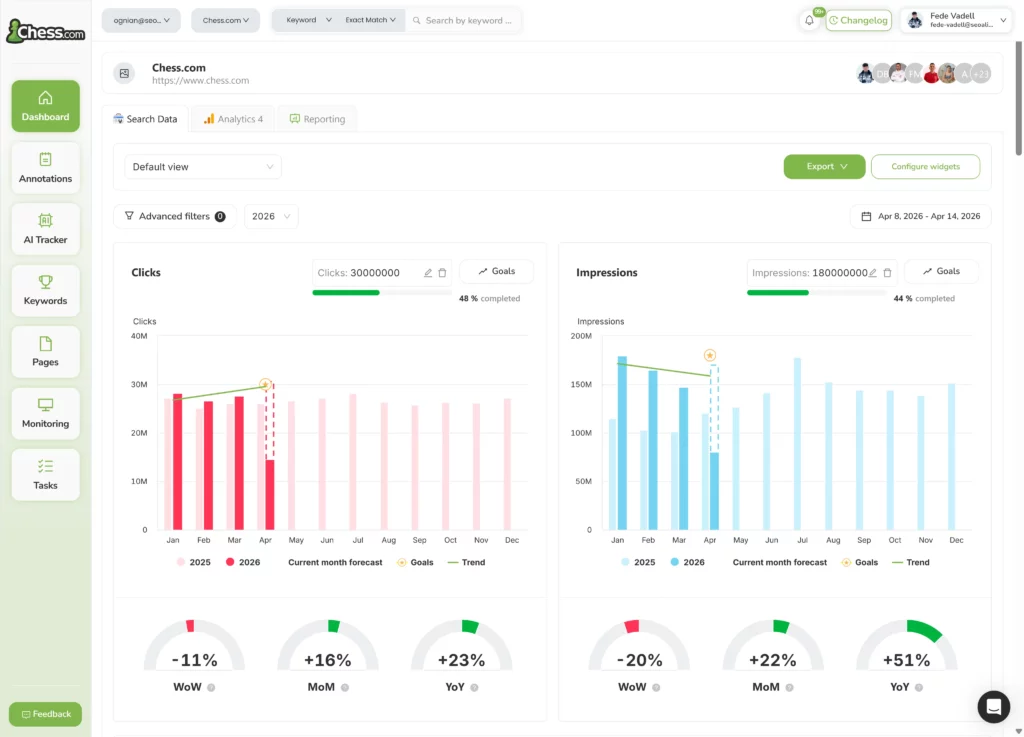
AI SEO dashboards have transformed how digital marketers monitor, analyze, and optimize their search performance. These intelligent platforms aggregate data from multiple sources, apply machine learning algorithms, and present actionable insights in real-time. Unlike traditional analytics tools that simply display numbers, AI SEO dashboards interpret patterns, predict trends, and recommend specific actions. This comprehensive guide explores everything from core concepts to advanced implementation strategies, helping you leverage these powerful tools for measurable organic growth.
What Are AI SEO Dashboards and Why Do They Matter?
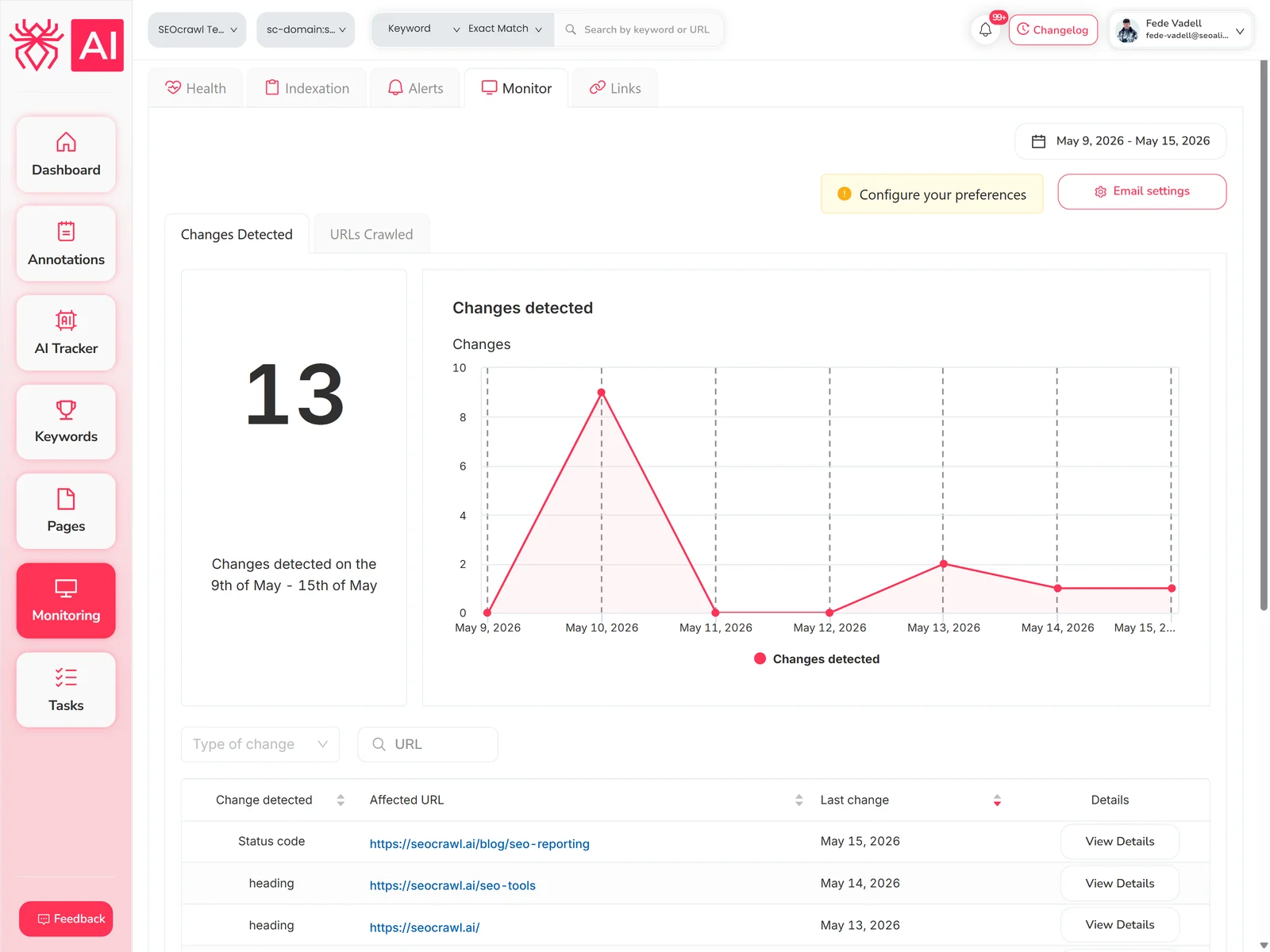
An AI SEO dashboard is a centralized reporting interface that uses artificial intelligence to collect, process, and visualize search engine optimization data. These systems connect to Google Search Console, Google Analytics, Ahrefs, SEMrush, and other data sources, then apply machine learning models to identify opportunities, anomalies, and correlations that human analysts might miss.
The importance of AI SEO dashboards stems from the sheer volume of data modern websites generate. A typical e-commerce site with 10,000 pages produces millions of data points daily across rankings, clicks, impressions, backlinks, and user behavior. Manually processing this information is impossible. AI dashboards automate the heavy lifting, delivering distilled intelligence that directly informs strategy.
Traditional SEO reporting focuses on historical performance. AI-powered dashboards shift the paradigm toward predictive and prescriptive analytics. They answer not just “what happened” but “what will happen” and “what should we do next.” This forward-looking approach gives businesses a competitive edge in rapidly changing search landscapes.
Core Components of AI SEO Dashboards
Understanding the anatomy of these systems helps you evaluate options and maximize their potential. While specific features vary by vendor, most AI SEO dashboards share several fundamental components.
Data Integration Layer
The foundation of any AI SEO dashboard is its ability to connect with diverse data sources. This includes first-party data from Google Search Console and Google Analytics, third-party data from SEO tools like Moz or Majestic, and business-specific data from CRM or e-commerce platforms. Advanced dashboards use APIs to sync data automatically, ensuring real-time accuracy without manual exports.
Machine Learning Algorithms
At the core of AI functionality are algorithms that detect patterns, forecast trends, and classify data. Natural language processing (NLP) helps interpret search queries and content relevance. Clustering algorithms group similar keywords or pages for strategic analysis. Anomaly detection flags sudden drops or spikes in traffic, rankings, or conversions that require immediate attention.
Visualization and Reporting Engine
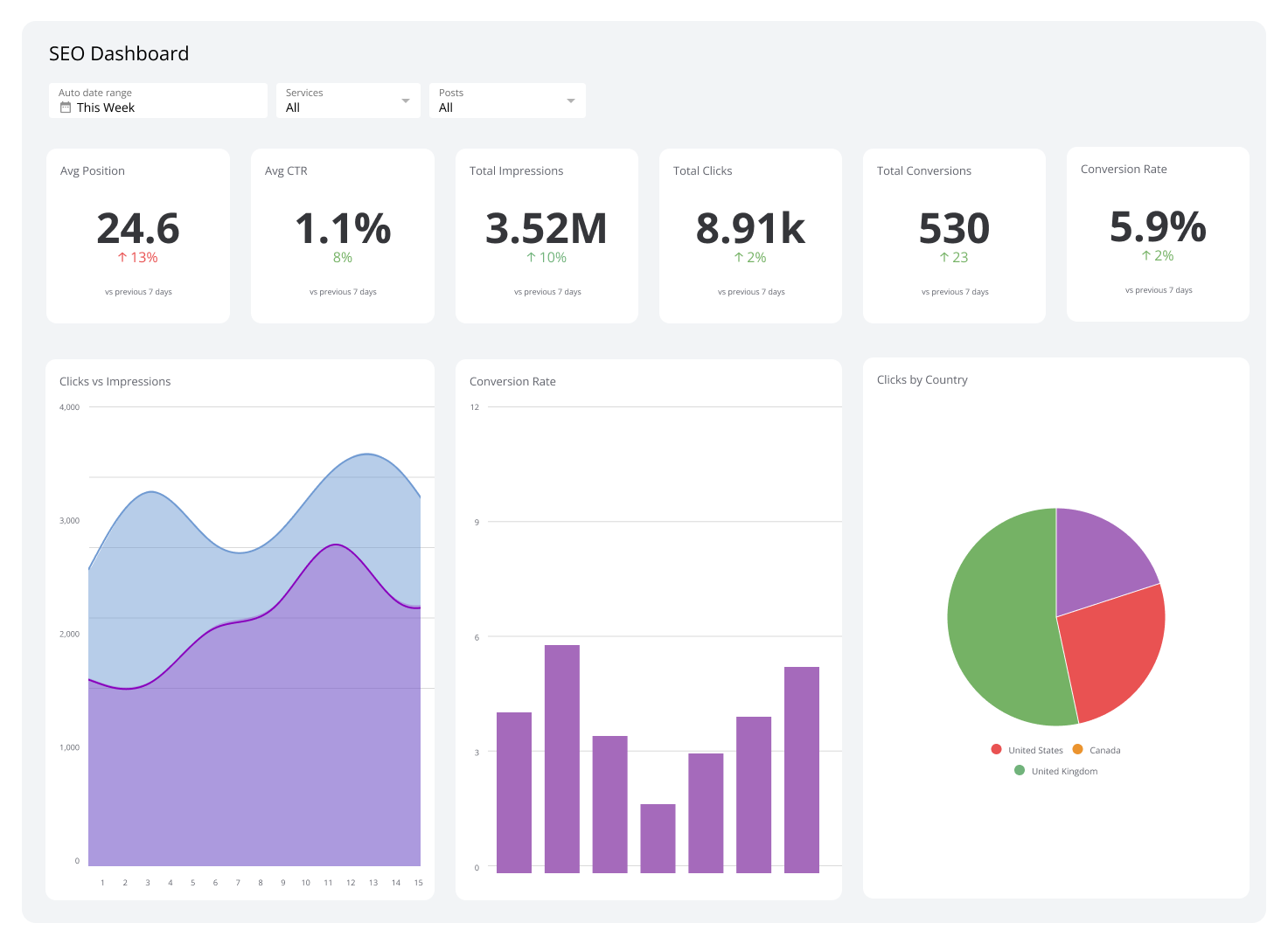
Raw data becomes actionable through intuitive visualizations. AI SEO dashboards offer customizable charts, graphs, heatmaps, and scorecards. Interactive elements allow users to drill down from high-level overviews to granular details. Automated reporting features generate scheduled PDF or email reports for stakeholders, eliminating manual compilation work.
Recommendation Engine
The most advanced AI SEO dashboards go beyond analysis to provide specific recommendations. These systems might suggest content topics based on keyword gaps, identify pages needing optimization, or recommend internal linking opportunities. Some platforms even generate draft meta descriptions or title tags using generative AI.
Key Benefits of Implementing AI SEO Dashboards
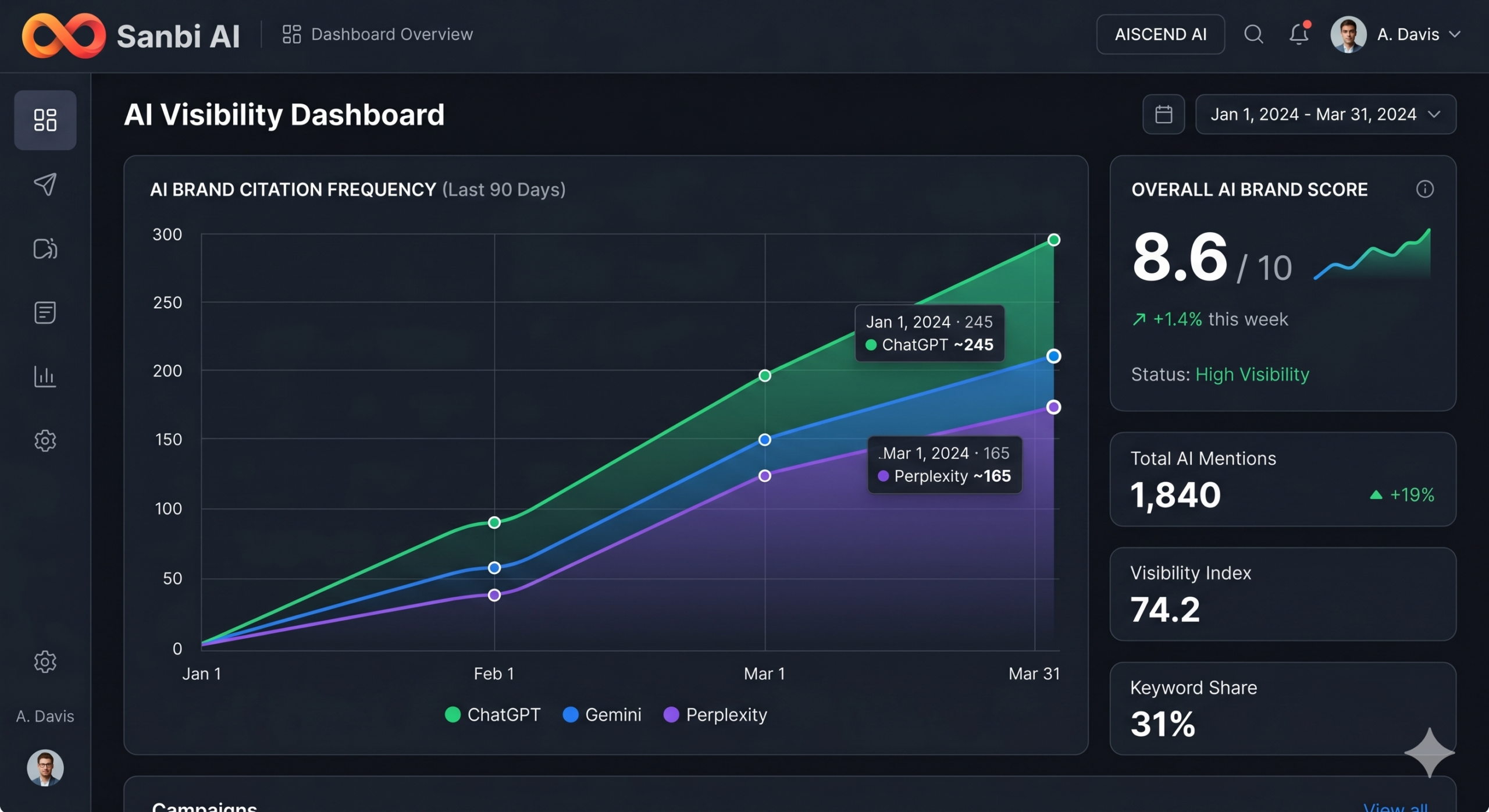
Organizations that adopt AI SEO dashboards report significant improvements in efficiency, accuracy, and outcomes. The benefits extend across multiple dimensions of search marketing.
Time Efficiency and Automation
Manual reporting consumes 5-10 hours per week for a typical SEO manager. AI dashboards reduce this to minutes by automatically aggregating data, generating visualizations, and distributing reports. This reclaimed time allows teams to focus on strategic initiatives, content creation, and link building rather than spreadsheet manipulation.
Enhanced Data Accuracy
Human error in data collection and analysis is inevitable, especially when dealing with large datasets. AI systems eliminate transcription mistakes, calculation errors, and sampling biases. They also reconcile discrepancies between different data sources, providing a single source of truth for decision-making.
Predictive Insights
AI algorithms analyze historical patterns to forecast future performance. For example, a dashboard might predict that a specific keyword will decline in rankings based on algorithm update patterns, allowing proactive optimization. Predictive capabilities also help with budget allocation, content planning, and resource forecasting.
Competitor Intelligence
AI SEO dashboards continuously monitor competitor activities, including their rankings, backlink profiles, content strategies, and paid campaigns. This intelligence reveals gaps in your own strategy and identifies emerging threats or opportunities in your niche.
Improved Collaboration
Centralized dashboards provide a shared view for marketing teams, content creators, developers, and executives. This transparency aligns everyone around common goals and KPIs. Customizable user permissions ensure that each stakeholder sees relevant data without overwhelming them with unnecessary information.
Limitations and Challenges of AI SEO Dashboards
While powerful, AI SEO dashboards are not without limitations. Understanding these constraints helps set realistic expectations and avoid common pitfalls.
Data Quality Dependencies
AI models are only as good as the data they process. Incomplete, inaccurate, or inconsistent data leads to flawed insights. Organizations must ensure proper tracking implementation, clean data governance, and regular audits to maintain data integrity.
Cost Considerations
Enterprise-grade AI SEO dashboards with advanced features can cost hundreds or thousands of dollars per month. Small businesses and startups may find these prices prohibitive. However, many platforms offer tiered pricing or free versions with limited functionality, making entry more accessible.
Learning Curve
Despite user-friendly interfaces, AI SEO dashboards require a learning curve. Users must understand both SEO fundamentals and data interpretation to extract maximum value. Training and onboarding are essential for successful adoption.
Over-Reliance on Automation
AI recommendations are based on historical data and algorithms, not human judgment. Blindly following automated suggestions without considering business context, brand voice, or strategic priorities can lead to suboptimal outcomes. Human oversight remains critical.
AI SEO Dashboards vs. Traditional SEO Reporting Tools
Understanding the differences between AI-powered dashboards and conventional reporting tools helps you make informed purchasing decisions.
| Feature | Traditional SEO Tools | AI SEO Dashboards |
|---|---|---|
| Data Processing | Manual or rule-based aggregation | Machine learning and pattern recognition |
| Insights | Descriptive (what happened) | Predictive and prescriptive (what will happen, what to do) |
| Automation | Limited scheduling and alerts | Full automation with intelligent anomaly detection |
| Customization | Static templates | Dynamic, adaptive dashboards |
| Scalability | Struggles with large datasets | Designed for enterprise-scale data |
| Cost | Generally lower | Higher, with premium features |
Traditional tools like Google Data Studio or basic Excel reports serve well for simple tracking and stakeholder communication. AI SEO dashboards excel in complex environments where data volume, velocity, and variety demand intelligent processing.
Practical Applications: How to Use AI SEO Dashboards Effectively
Implementing an AI SEO dashboard is only the first step. Maximizing its value requires strategic application across your entire SEO workflow.
Keyword Opportunity Identification
AI dashboards analyze search volume trends, keyword difficulty scores, and SERP features to identify untapped opportunities. They might reveal long-tail keywords with high commercial intent that competitors have overlooked. Use these insights to prioritize content creation and optimization efforts.
Content Performance Monitoring
Track how individual pages perform against target keywords, user engagement metrics, and conversion goals. AI algorithms detect content decay—pages that are losing rankings over time—and recommend refresh strategies. Some dashboards even suggest content briefs based on top-ranking pages for your target terms.
Technical SEO Auditing
Continuous crawling and indexing monitoring identify technical issues like broken links, duplicate content, slow page speeds, or crawl errors. AI prioritizes these issues based on their potential impact on rankings and user experience, helping you focus on high-impact fixes first.
Backlink Analysis and Acquisition
AI dashboards evaluate your backlink profile for quality, relevance, and toxicity. They identify link-building opportunities by analyzing competitor backlinks and industry directories. Predictive models estimate the potential impact of acquiring specific links, guiding outreach prioritization.
Local SEO Optimization
For businesses with physical locations, AI dashboards track local pack rankings, Google Business Profile performance, and review sentiment. They identify patterns in local search behavior and recommend location-specific content or citation strategies.
Step-by-Step Guide to Setting Up Your First AI SEO Dashboard
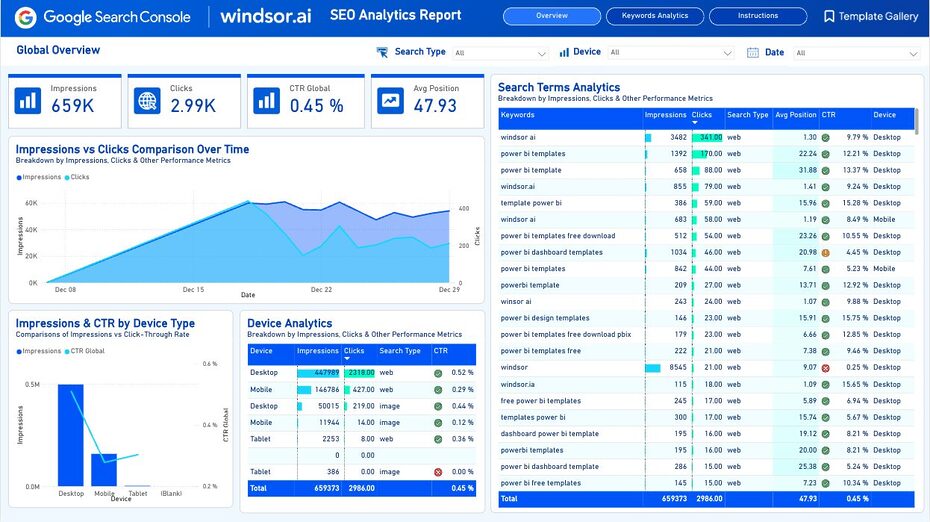
Follow this practical roadmap to deploy an AI SEO dashboard that delivers immediate value.
- Define your objectives: Determine what you want to achieve—increased organic traffic, higher conversions, better brand visibility, or all three. Your goals dictate which metrics and data sources matter most.
- Audit your current tracking: Ensure Google Analytics, Search Console, and any other tools are correctly implemented. Fix tracking gaps before connecting data sources.
- Select the right platform: Evaluate options based on your budget, technical expertise, and feature requirements. Popular choices include Ahrefs, SEMrush, Moz Pro, and specialized dashboard tools like Looker Studio with AI add-ons.
- Connect data sources: Use API integrations to link your analytics, search console, and other platforms. Verify that data is syncing correctly and consistently.
- Configure key performance indicators: Set up KPIs aligned with your objectives. Common metrics include organic sessions, keyword rankings, click-through rates, conversion rates, and backlink growth.
- Set up automated alerts: Configure notifications for significant changes—traffic drops, ranking fluctuations, or technical errors. This ensures you respond quickly to critical issues.
- Create stakeholder reports: Build customized views for different audiences. Executives need high-level summaries, while SEO specialists require granular data.
- Train your team: Provide training on how to interpret AI-generated insights and recommendations. Encourage questions and iterative refinement of dashboard configurations.
Common Mistakes to Avoid with AI SEO Dashboards
Even experienced marketers make errors when adopting AI-powered analytics. Awareness of these pitfalls prevents wasted investment and misguided strategies.
Ignoring Data Context
AI algorithms lack business context. A traffic drop might be seasonal, not algorithmic. A ranking decline might be due to a rebrand, not a penalty. Always validate AI insights against your knowledge of business operations, marketing campaigns, and industry trends.
Overcomplicating Dashboards
Including too many metrics creates noise and confusion. Focus on a handful of actionable KPIs that directly tie to business outcomes. You can always add more detail later as your team becomes comfortable.
Neglecting Data Hygiene
Garbage in, garbage out applies perfectly to AI systems. Regularly audit your tracking code, filter bot traffic, and maintain consistent naming conventions. Clean data produces reliable insights.
Failing to Act on Insights
An AI SEO dashboard is worthless if you don’t act on its recommendations. Establish clear workflows for translating insights into tasks, assign ownership, and track implementation progress.
Choosing the Wrong Tool
Not all AI SEO dashboards are created equal. Some excel at content analysis, others at technical audits, and others at competitor research. Match your primary needs to the tool’s strengths rather than selecting the most popular option.
Important Notes for Maximizing ROI
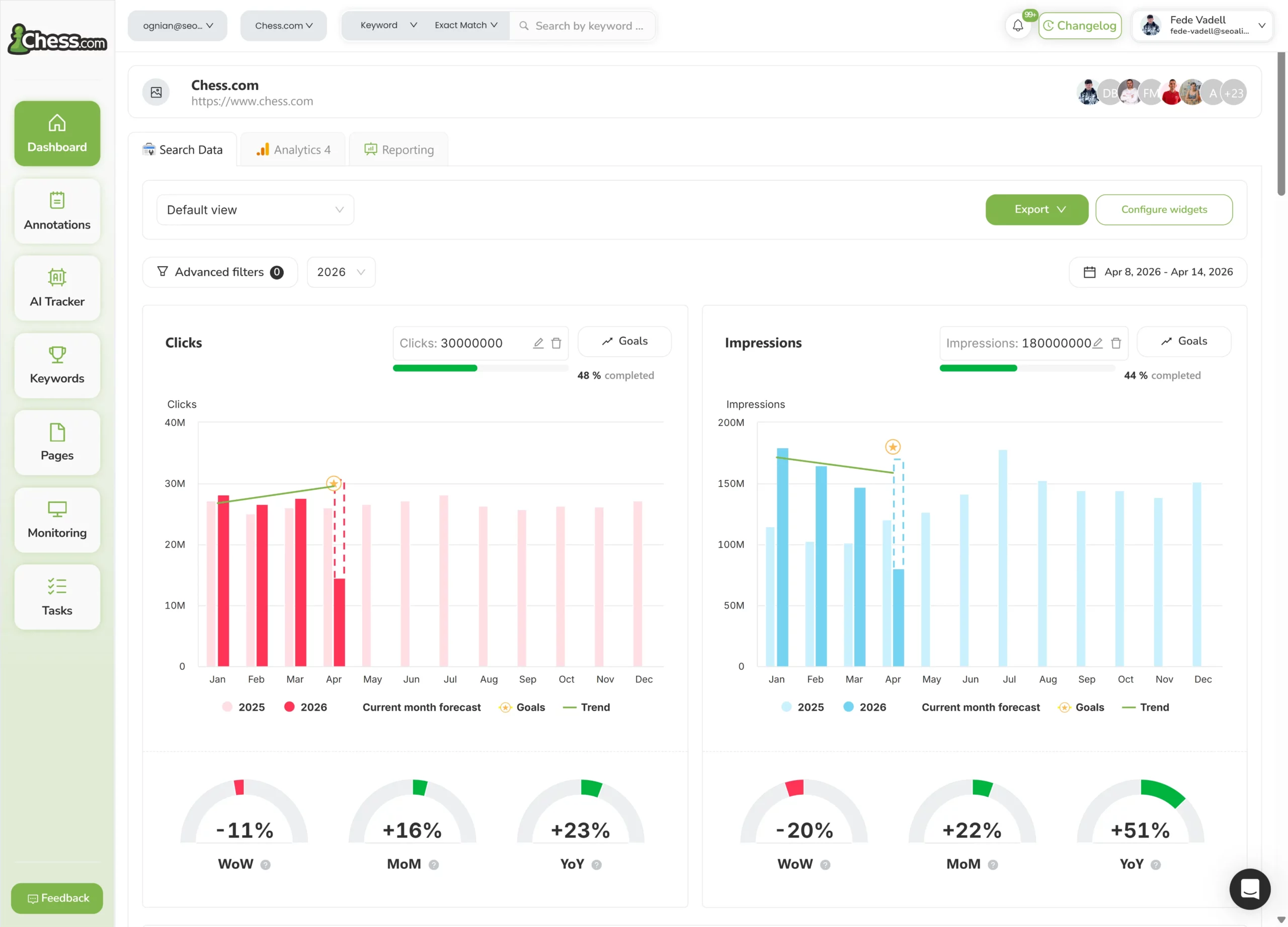
To get the most from your investment in AI SEO dashboards, keep these considerations in mind.
- Start with a pilot: Test the dashboard on a subset of your data or a specific business unit before full deployment. This allows you to refine configurations and demonstrate value to stakeholders.
- Combine AI with human expertise: Use AI for data processing and pattern detection, but rely on experienced SEO professionals for strategic interpretation and creative problem-solving.
- Regularly review and update: Search algorithms, business goals, and market conditions change. Schedule quarterly reviews of your dashboard setup to ensure it remains aligned with current priorities.
- Integrate with other marketing data: Connect your SEO dashboard with paid search, social media, and email marketing data for a holistic view of marketing performance.
- Document your processes: Create standard operating procedures for responding to AI-generated alerts and recommendations. This ensures consistency and accountability.
Future Trends in AI SEO Dashboards
The landscape of AI SEO dashboards evolves rapidly. Staying ahead of emerging trends positions your organization for continued success.
Generative AI integration is becoming standard. Dashboards now produce natural language summaries of performance, draft content briefs, and even generate entire reports with minimal human input. This capability dramatically reduces the time required for analysis and communication.
Real-time personalization is another frontier. Future dashboards will adapt to individual user behavior, showing the most relevant metrics and insights based on role, past interactions, and current projects. This level of customization enhances usability and decision-making speed.
Cross-channel attribution will improve. AI models will better understand how organic search interacts with paid campaigns, social media, email, and offline channels. This holistic view enables more accurate ROI calculations and budget optimization.
Voice search and visual search analytics will become more sophisticated. As these search modalities grow, dashboards will provide dedicated insights into how users find content through these channels, enabling targeted optimization.
Frequently Asked Questions About AI SEO Dashboards
What is the difference between an AI SEO dashboard and a regular analytics dashboard?
Regular analytics dashboards display historical data in visual formats, requiring manual interpretation. AI SEO dashboards use machine learning to automatically detect patterns, predict future trends, and recommend specific actions. They provide prescriptive insights rather than just descriptive statistics.
How much do AI SEO dashboards cost?
Pricing varies widely based on features, data volume, and number of users. Basic plans start around $50-100 per month for small websites. Mid-tier solutions range from $200-500 monthly. Enterprise platforms with advanced AI capabilities can cost $1,000 or more per month. Many tools offer free trials or limited free versions.
Can AI SEO dashboards replace human SEO experts?
No. AI dashboards are powerful tools that augment human expertise, not replace it. They excel at data processing, pattern recognition, and automation. However, strategic judgment, creative content development, relationship building, and nuanced understanding of business context remain uniquely human capabilities.
Which data sources should I connect to my AI SEO dashboard?
At minimum, connect Google Search Console and Google Analytics. For comprehensive insights, add your keyword research tool (Ahrefs, SEMrush, or similar), backlink analysis tool, and any internal data sources like your CMS or e-commerce platform. The more relevant data you connect, the more accurate your AI insights will be.
How long does it take to see results from using an AI SEO dashboard?
You’ll see immediate benefits in terms of time savings and data organization. However, meaningful improvements in organic performance typically take 2-3 months as you implement recommendations and observe their impact. Predictive insights become more accurate as the AI learns from your specific data over time.
Are AI SEO dashboards suitable for small businesses?
Yes, but with caveats. Small businesses with limited data may not benefit from advanced predictive features. However, even basic AI-powered automation for reporting, alerts, and competitor monitoring provides significant value. Start with affordable tools and scale as your needs grow.
Conclusion
AI SEO dashboards represent a fundamental shift in how organizations approach search engine optimization. By automating data collection, applying machine learning for pattern detection, and delivering prescriptive recommendations, these platforms empower marketers to make faster, more informed decisions. The benefits of time efficiency, enhanced accuracy, predictive insights, and improved collaboration far outweigh the costs and learning curves associated with adoption.
Success with AI SEO dashboards requires more than just purchasing software. It demands clean data, clear objectives, human oversight, and a commitment to acting on generated insights. Organizations that embrace this holistic approach gain a significant competitive advantage in the increasingly complex world of search marketing.
As AI technology continues to evolve, these dashboards will become even more intelligent, intuitive, and indispensable. Early adopters who master these tools today will be well-positioned to dominate their niches tomorrow. Start by evaluating your current reporting processes, identifying pain points, and exploring how AI SEO dashboards can address them. The investment in time and resources will pay dividends in organic growth, operational efficiency, and strategic clarity.
Xem thêm:
- AI SEO AI Search Audit: The Complete Guide to Future-Proofing Your Rankings
- AI SEO Plugins: Automate Your Search Rankings Without Losing the Human Touch
- AI SaaS SEO: The Ultimate Guide to Dominating Organic Growth in 2025
- AI SEO AI Search Tracking: The Complete Guide to Monitoring AI-Driven Discovery
- AI SEO Best Practices: The Complete Guide to Smarter Search Optimization
Bài viết cùng chủ đề:

AI SEO SEO Automation with Make: The Complete Workflow Guide

AI SEO SEO Automation with Zapier: The Complete Workflow Guide

AI SEO SEO Automation with n8n: The Complete Workflow Guide
AI SEO SEO Automation with Gemini: The Complete Guide to Scaling Organic Growth

AI SEO SEO Automation with Claude: The Complete Guide to Scaling Content in 2025

AI SEO SEO Automation with ChatGPT: The Complete Playbook for 2025

AI SEO & SEO Automation for Affiliate Sites: The 2025 Playbook for Passive Income Growth
AI SEO & SEO Automation for Bloggers: The Complete Guide to Scaling Your Content

AI SEO & SEO Automation for Agencies: The Complete 2025 Playbook

AI SEO and SEO Automation for Ecommerce: The Complete Playbook for 2025

AI SEO & SEO Automation for WordPress: The Complete Playbook for 2025
AI SEO SEO Automation Strategy: The Complete Playbook for 2025

Mastering the AI SEO SEO Automation Process: A Complete Guide to Scaling Organic Growth
AI SEO SEO Automation System: The Complete Guide to Scaling Organic Growth in 2025
AI SEO SEO Automation Platform: The Complete Guide to Scaling Organic Growth in 2025
AI SEO SEO Automation Software: The Complete Guide to Scaling Organic Growth in 2025















