
No products in the cart.
AI SEO Digital Authority: The Complete Playbook for Dominating Search in 2025

31
Jul
Jul
The intersection of artificial intelligence and search engine optimization has created a new competitive landscape where traditional link-building tactics no longer guarantee visibility. AI SEO Digital Authority represents the strategic fusion of machine learning insights, content intelligence, and brand trust signals that modern search algorithms prioritize. Businesses that understand how to build digital authority through AI-powered workflows are outperforming competitors who rely on outdated manual methods. This comprehensive guide explains what AI SEO Digital Authority means, how search engines evaluate it, and the exact steps your organization can take to establish market dominance through verified, data-driven strategies.
Understanding AI SEO Digital Authority: Definition and Core Principles

AI SEO Digital Authority refers to the measurable trustworthiness and expertise that a website or brand accumulates in the eyes of both search engine algorithms and human audiences, amplified through artificial intelligence tools and predictive analytics. Unlike conventional SEO authority, which focused primarily on backlink quantity and keyword density, AI-driven authority considers hundreds of behavioral and semantic signals simultaneously. Search engines like Google now deploy neural matching and natural language processing models such as BERT and MUM to evaluate content relevance. These systems assess whether your content genuinely answers user queries, demonstrates first-hand experience, and maintains consistent factual accuracy. Digital authority in the AI era is not static; it evolves in real-time based on user engagement metrics, content freshness, and the credibility of linked sources. The core principles of AI SEO Digital Authority include semantic relevance, entity recognition, contextual understanding, and predictive user satisfaction. When your website consistently demonstrates expertise across a topical cluster, search algorithms assign higher authority scores to your domain. This authority then compounds, making it easier for new content to rank quickly and attract organic backlinks naturally.
How Search Engines Evaluate Digital Authority Using AI
Modern search engines process trillions of signals when ranking content. AI algorithms analyze three primary dimensions of digital authority: topical depth, entity consistency, and user interaction patterns.
Topical Depth and Semantic Coverage
AI systems map the relationships between concepts, entities, and subtopics within your content. A page that covers a subject comprehensively, including related questions, statistical data, and practical examples, receives higher relevance scores. Google’s passage ranking technology specifically identifies whether individual sections of your content satisfy niche queries. Building topical authority requires creating interconnected content hubs where each piece links logically to related resources, demonstrating to AI crawlers that your site is a definitive source on the subject.
Entity Recognition and Knowledge Graph Alignment
Google maintains a massive Knowledge Graph containing millions of entities, including people, places, organizations, and abstract concepts. AI SEO Digital Authority increases when your content clearly identifies entities and their relationships. For example, if you write about “machine learning in healthcare,” the AI checks whether you correctly reference known entities like “electronic health records,” “predictive diagnostics,” and “FDA regulations.” Consistent entity usage across your site helps search engines associate your domain with specific knowledge domains, boosting your authority for related queries.
User Interaction and Satisfaction Metrics
AI algorithms analyze click-through rates, dwell time, bounce rates, and return-to-search behavior. When users click your result and stay engaged for several minutes, the system interprets this as a positive authority signal. Conversely, if users quickly return to search results, the algorithm reduces your perceived authority. AI tools now predict user satisfaction before a page even ranks, using historical data from similar queries. This predictive capability means your content must be structured for immediate comprehension, with clear headings, concise paragraphs, and scannable formatting.
Key Components of an AI-Driven Digital Authority Strategy
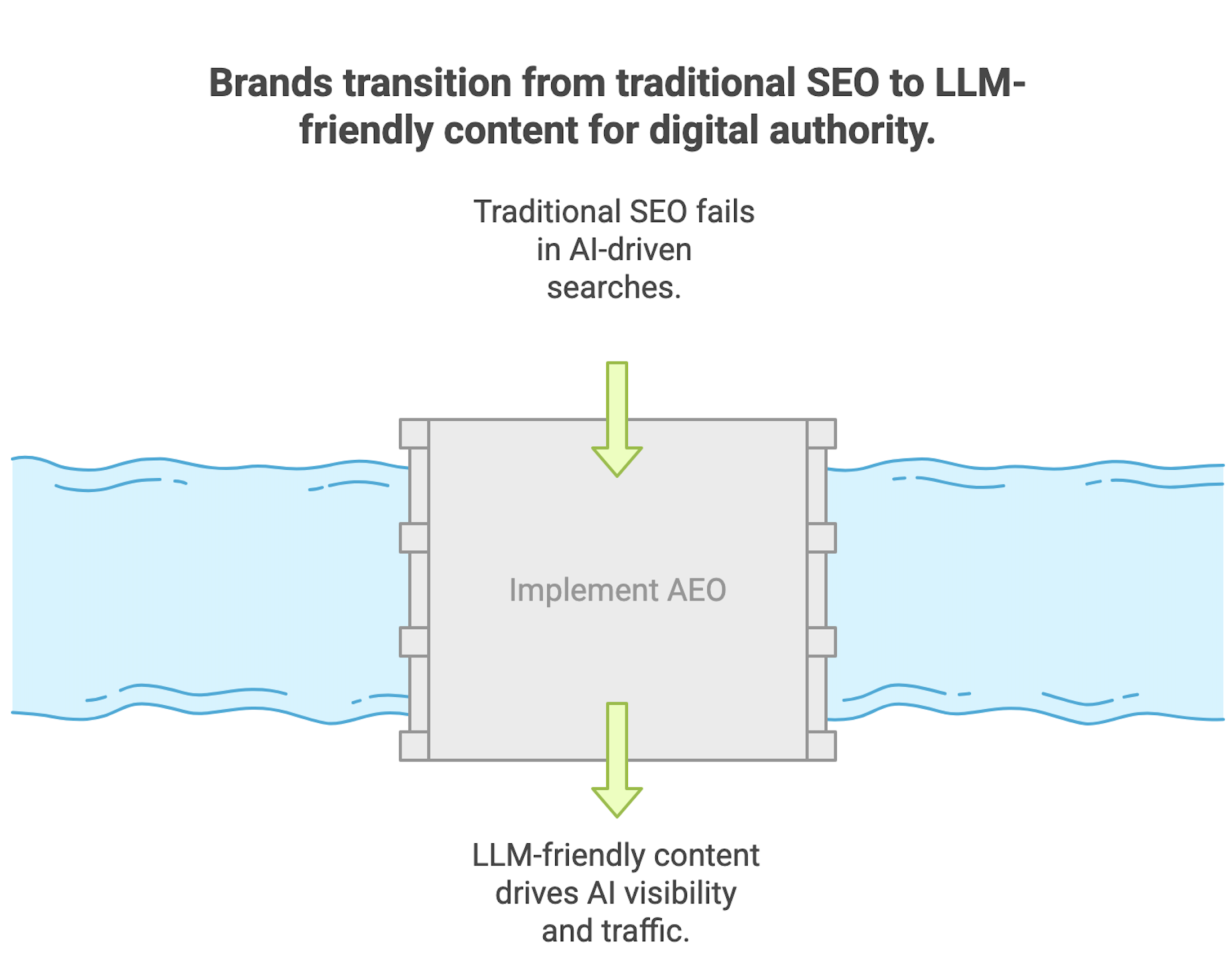
Building AI SEO Digital Authority requires a systematic approach that integrates technology, content creation, and technical optimization. The following components form the foundation of a successful strategy.
AI-Powered Keyword and Topic Research
Traditional keyword research focused on search volume and difficulty scores. AI-enhanced research tools analyze search intent patterns, question-based queries, and emerging trends before they peak. Platforms like Clearscope, MarketMuse, and Surfer SEO use machine learning to identify semantic gaps in your content compared to top-ranking pages. These tools recommend related terms, entities, and subtopics that strengthen topical relevance. For example, if you target “AI SEO Digital Authority,” the tool might suggest covering “E-E-A-T signals,” “algorithm updates,” and “content pruning strategies” to match the depth of current top performers.
Content Creation with Generative AI and Human Oversight
Generative AI tools like ChatGPT and Claude accelerate content production, but they cannot replace human expertise. The most effective approach uses AI to draft outlines, generate data tables, and suggest structural improvements, while human subject matter experts verify facts, add unique insights, and inject personal experience. Google’s helpful content system explicitly rewards content that demonstrates first-hand knowledge and original research. Publishing AI-generated text without human review risks being flagged as unhelpful, which damages your digital authority.
Technical SEO Automation and Continuous Monitoring
AI-powered crawlers can identify technical issues that undermine authority, such as broken links, slow page speeds, duplicate content, and improper schema markup. Automated monitoring tools like Screaming Frog and Sitebulb now integrate machine learning to prioritize fixes based on potential ranking impact. Regular technical audits ensure that search engines can efficiently crawl and index your content, which is a prerequisite for authority accumulation. Implementing structured data markup, such as FAQPage and HowTo schemas, helps AI systems understand your content structure and display rich snippets that improve click-through rates.
Digital PR and Authority Backlink Acquisition
Backlinks remain a critical authority signal, but AI has changed how their value is assessed. Search algorithms now evaluate the contextual relevance of linking pages, the authority of the linking domain, and the anchor text naturalness. AI SEO Digital Authority grows when you earn links from established publications within your industry niche. Digital PR campaigns that leverage data-driven storytelling, original surveys, and expert commentary attract high-quality backlinks naturally. Tools like Ahrefs and Moz use AI to analyze link velocity and identify potentially toxic links that could harm your authority.
Benefits and Limitations of AI SEO Digital Authority
Understanding both the advantages and constraints of AI-driven authority building helps set realistic expectations and guides resource allocation.
Primary Benefits
- Faster ranking improvements through predictive content optimization
- Enhanced resilience against algorithm updates because authority is based on genuine expertise
- Improved user engagement metrics that compound over time
- Scalable content strategies that maintain quality across large volumes
- Better visibility in AI-generated search features like Google AI Overviews and Bing Chat
- Competitive advantage through early adoption of emerging search trends
- High upfront investment in AI tools and skilled personnel
- Risk of over-reliance on automation leading to generic content
- Difficulty measuring authority directly due to opaque algorithm signals
- Constant need for adaptation as AI models and search algorithms evolve
- Potential for AI-generated misinformation to damage credibility if not properly vetted
Limitations and Challenges
AI SEO Digital Authority vs. Traditional SEO Authority: A Comparison
| Aspect | Traditional SEO Authority | AI SEO Digital Authority |
|---|---|---|
| Primary Signals | Backlink quantity, exact-match keywords | Semantic relevance, entity consistency, user satisfaction |
| Content Approach | Keyword-stuffed articles targeting specific phrases | Comprehensive topical clusters with natural language |
| Measurement Tools | Domain Authority (DA), Page Authority (PA) | AI-driven relevance scores, predictive engagement metrics |
| Speed of Results | Slow, often 6-12 months for significant gains | Faster initial improvements, but requires continuous refinement |
| Resilience to Updates | Vulnerable to core algorithm updates | More stable due to genuine expertise signals |
| User Focus | Search engines first, users second | Users first, search engines follow |
Practical Implementation: A Step-by-Step Guide to Building AI SEO Digital Authority
Implementing an AI-driven authority strategy requires a structured workflow that combines technology adoption with content excellence.
Step 1: Audit Your Current Digital Authority Baseline
Begin by assessing your existing online presence using AI-powered tools. Analyze your top-ranking pages, identify content gaps, and evaluate your backlink profile. Use tools like Google Search Console to understand which queries already generate impressions and clicks. Calculate your current topical authority score using platforms like Semrush or Ahrefs, which now incorporate AI-driven metrics. This baseline helps you set realistic targets and prioritize actions.
Step 2: Build a Topical Authority Map
Create a comprehensive map of your industry’s core topics and subtopics. Use AI research tools to identify questions your target audience asks, emerging trends, and content formats that perform well. Organize this map into pillar pages and cluster content. For example, if your main topic is “AI SEO Digital Authority,” your pillar page should cover the overall concept, while cluster pages address specific subtopics like “E-E-A-T optimization,” “AI content detection,” and “voice search authority.” Interlink these pages strategically to signal topical depth to search engines.
Step 3: Produce High-Quality Content with AI Assistance
Develop a content production workflow that leverages AI for efficiency without sacrificing quality. Use AI to generate initial outlines, suggest statistical data points, and create variations of headlines. Then, have subject matter experts expand each section with unique insights, case studies, and practical examples. Ensure every piece of content includes original research, expert quotes, or proprietary data to differentiate from AI-generated generic content. Publish consistently, aiming for at least two to four in-depth articles per week to demonstrate ongoing expertise.
Step 4: Optimize for AI Search Features
Google AI Overviews and other generative search experiences pull information from authoritative sources. To appear in these features, structure your content with clear question-and-answer formats, use bullet points for key takeaways, and include tables for comparative data. Implement FAQ schema markup to increase the chances of being featured. Ensure your content directly answers the query in the first paragraph, as AI systems often extract introductory text for featured snippets.
Step 5: Earn High-Quality Backlinks Through Digital PR
Develop linkable assets such as original industry reports, interactive tools, or comprehensive guides. Promote these assets to journalists, industry influencers, and relevant publications. Use AI-powered outreach tools to personalize your pitches and identify the best contacts. Monitor your backlink profile regularly and disavow any toxic links that could negatively impact your authority. Focus on earning links from domains that are topically relevant to your industry, as contextual relevance carries more weight than generic authority.
Step 6: Continuously Monitor and Refine
AI SEO Digital Authority is not a one-time project but an ongoing process. Set up automated reporting that tracks keyword rankings, organic traffic, engagement metrics, and backlink growth. Use AI analytics tools to identify content that is underperforming and update it with fresh information. Monitor algorithm updates and adjust your strategy accordingly. Regularly review your competitors’ authority-building tactics and identify opportunities to differentiate your brand.
Common Mistakes That Undermine AI SEO Digital Authority
Avoiding these pitfalls is just as important as implementing best practices.
Publishing Unedited AI-Generated Content
The most damaging mistake is publishing AI-generated text without thorough human review. Search engines can detect low-quality AI content that lacks depth, contains factual errors, or reads as generic. This content fails to engage users, leading to poor engagement metrics that reduce your authority. Always have a human expert review, edit, and enhance AI-generated drafts before publication.
Ignoring User Search Intent
Creating content that targets keywords without understanding the underlying user intent destroys authority. If users search for “how to build AI SEO authority” and you publish a product page instead of a guide, they will quickly bounce back to search results. Use AI tools to analyze the top-ranking pages for your target keywords and match their format, depth, and angle.
Neglecting Technical SEO Fundamentals
Even the best content cannot build authority if search engines cannot crawl or index it. Slow page speeds, broken internal links, and missing meta descriptions all undermine your efforts. Regularly audit your site’s technical health and fix issues promptly. Ensure your site is mobile-friendly, uses HTTPS, and has a clear site architecture.
Focusing on Quantity Over Quality
Publishing hundreds of thin, superficial articles dilutes your topical authority. Search engines recognize when a site has many low-value pages and may reduce overall domain trust. Instead, focus on creating fewer, more comprehensive pieces that thoroughly cover each subtopic. Consolidate or remove thin content that does not add value.
Ignoring Brand Signals and Off-Site Reputation
Digital authority extends beyond your website. Search engines consider brand mentions, reviews, and social media presence when evaluating trustworthiness. Actively manage your online reputation, encourage positive reviews, and participate in industry conversations. Consistent brand signals across the web reinforce your authority in the eyes of AI algorithms.
Important Notes for Sustaining Long-Term AI SEO Digital Authority
Several critical considerations ensure your authority strategy remains effective over time. First, prioritize experience, expertise, authoritativeness, and trustworthiness (E-E-A-T) in every piece of content. Google’s quality raters use these criteria to evaluate search results, and AI algorithms increasingly incorporate similar signals. Include author bios with credentials, cite reputable sources, and clearly disclose any conflicts of interest. Second, stay informed about AI advancements in search. Google’s Search Generative Experience, Microsoft’s Copilot, and other AI search tools are evolving rapidly. What works today may not work tomorrow. Subscribe to industry publications, attend conferences, and participate in professional communities to stay ahead of changes. Third, diversify your authority signals. Do not rely solely on organic search traffic. Build a strong presence on social media, video platforms, and industry forums. A multi-channel approach makes your brand more resilient to algorithm changes and reinforces your overall digital authority. Fourth, measure what matters. While rankings and traffic are important, focus on metrics that indicate genuine authority, such as branded search volume, direct traffic, and referral traffic from authoritative sources. These metrics indicate that users and other websites recognize your brand as a trusted resource.
Frequently Asked Questions About AI SEO Digital Authority
What is the difference between AI SEO and traditional SEO?
AI SEO uses machine learning algorithms to analyze search patterns, predict user behavior, and automate content optimization. Traditional SEO relies on manual keyword research, backlink building, and technical fixes. AI SEO is more dynamic, continuously learning from data to adapt strategies in real-time, while traditional SEO often uses static rules and historical best practices.
How long does it take to build AI SEO Digital Authority?
Building meaningful digital authority typically takes six to twelve months of consistent effort. Initial improvements in rankings can appear within a few weeks, but establishing your site as a recognized authority in your niche requires sustained content production, quality backlinks, and positive user engagement. The timeline varies based on your industry’s competitiveness and your starting point.
Can small businesses compete with large brands for AI SEO Digital Authority?
Yes, small businesses can compete by focusing on niche topics and demonstrating genuine expertise. AI algorithms value relevance and user satisfaction over brand size. A small business that consistently publishes authoritative content on a specific subtopic can outrank larger competitors who publish generic content. Leverage your unique experience and customer insights to create content that larger brands cannot easily replicate.
Does AI-generated content hurt my digital authority?
AI-generated content only hurts your authority if it is low-quality, unedited, or lacks genuine expertise. When used correctly, AI tools can help you produce more comprehensive content efficiently. The key is to use AI as an assistant, not a replacement for human knowledge. Always review, fact-check, and enhance AI-generated content with your own insights and experience.
How do I measure my AI SEO Digital Authority?
T Monitor your organic traffic growth, keyword rankings for high-intent terms, backlink quality, and branded search volume. Tools like Semrush and Ahrefs provide authority scores based on multiple signals. Additionally, track your visibility in AI-generated search features like Google AI Overviews, as appearing there indicates strong authority.
What role do backlinks play in AI SEO Digital Authority?
Backlinks remain an important authority signal, but their evaluation has become more sophisticated. AI algorithms assess the context of the linking page, the relevance of the anchor text, and the overall trustworthiness of the linking domain. A few high-quality, contextually relevant backlinks are more valuable than hundreds of low-quality links. Focus on earning links through digital PR, original research, and expert commentary.
Conclusion: The Future of Search Belongs to AI-Driven Authority
AI SEO Digital Authority represents a fundamental shift in how search engines evaluate and rank content. The days of gaming algorithms with keyword stuffing and spammy backlinks are over. Modern search systems demand genuine expertise, comprehensive topical coverage, and positive user experiences. By embracing AI-powered tools while maintaining human oversight, businesses can build sustainable digital authority that withstands algorithm updates and delivers long-term organic growth. The strategies outlined in this guide provide a clear roadmap for establishing your brand as a trusted authority in your industry. Start by auditing your current position, building a topical authority map, and producing content that demonstrates real expertise. Earn quality backlinks through digital PR, optimize for AI search features, and continuously refine your approach based on data. Avoid the common mistakes of publishing unedited AI content and neglecting technical SEO. With consistent effort and a user-first mindset, your organization can achieve AI SEO Digital Authority and dominate search results in the AI-driven era.
Xem thêm:
- AI SEO Natural Language SEO: The Complete Guide to Search in 2025
- AI SEO FAQ Generator: The Complete Guide to Automating Content That Ranks
- AI SEO Digital PR Strategy: The Complete Guide to Dominating Search in 2025
- AI Voice Search SEO: The Ultimate Guide to Dominating Spoken Queries in 2025
- AI SEO Entity Recognition: The Complete Guide to Mastering Semantic Search
Bài viết cùng chủ đề:

AI SEO SEO Automation with Make: The Complete Workflow Guide

AI SEO SEO Automation with Zapier: The Complete Workflow Guide

AI SEO SEO Automation with n8n: The Complete Workflow Guide
AI SEO SEO Automation with Gemini: The Complete Guide to Scaling Organic Growth

AI SEO SEO Automation with Claude: The Complete Guide to Scaling Content in 2025

AI SEO SEO Automation with ChatGPT: The Complete Playbook for 2025

AI SEO & SEO Automation for Affiliate Sites: The 2025 Playbook for Passive Income Growth
AI SEO & SEO Automation for Bloggers: The Complete Guide to Scaling Your Content

AI SEO & SEO Automation for Agencies: The Complete 2025 Playbook

AI SEO and SEO Automation for Ecommerce: The Complete Playbook for 2025

AI SEO & SEO Automation for WordPress: The Complete Playbook for 2025
AI SEO SEO Automation Strategy: The Complete Playbook for 2025

Mastering the AI SEO SEO Automation Process: A Complete Guide to Scaling Organic Growth
AI SEO SEO Automation System: The Complete Guide to Scaling Organic Growth in 2025
AI SEO SEO Automation Platform: The Complete Guide to Scaling Organic Growth in 2025
AI SEO SEO Automation Software: The Complete Guide to Scaling Organic Growth in 2025















