
No products in the cart.
AI SEO FAQ Generator: The Complete Guide to Automating Content That Ranks
10
Aug
Aug
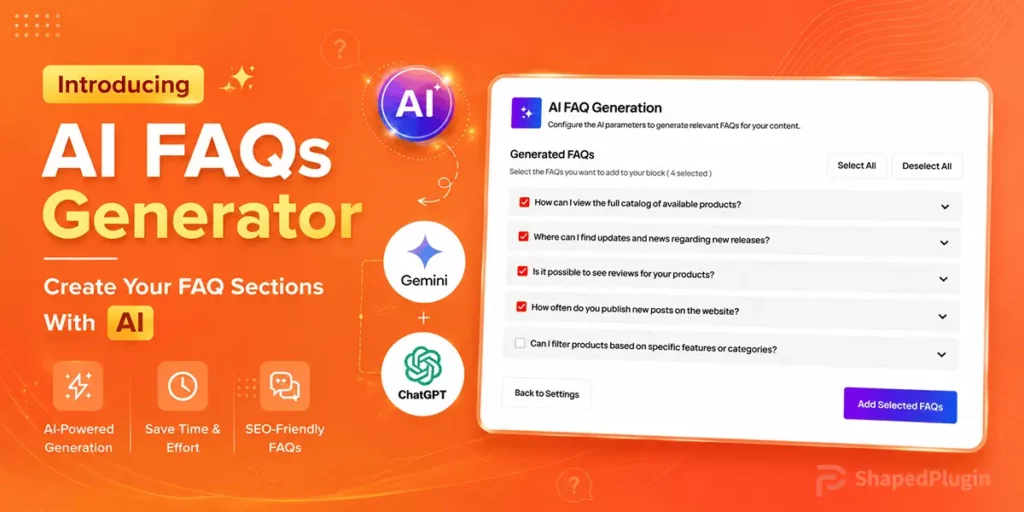
An AI SEO FAQ Generator is a specialized tool that uses machine learning and natural language processing to automatically create frequently asked questions sections for web content. These tools analyze search queries, competitor pages, and user behavior patterns to produce relevant Q&A pairs that target long-tail keywords. For digital marketers and content teams, an AI SEO FAQ Generator transforms a tedious manual research process into an automated workflow that consistently delivers structured data markup opportunities. This guide examines how these tools function, their strategic advantages, and the precise methods for implementing them to improve search visibility and user engagement.
Understanding the Core Function of an AI SEO FAQ Generator
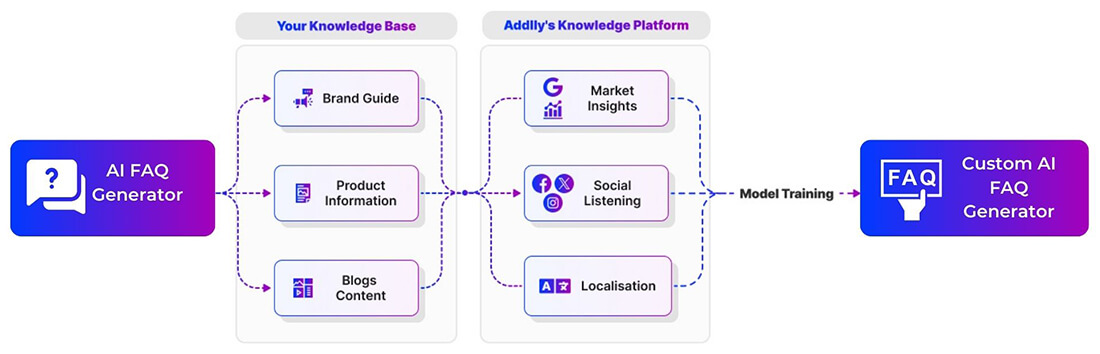
An AI SEO FAQ Generator operates on the principle of semantic search intent matching. Unlike simple keyword stuffing tools, these systems parse vast datasets from search engine autocomplete suggestions, “People Also Ask” boxes, and forum discussions to identify genuine user questions. The AI then structures these questions into a logical hierarchy that mirrors how users actually search for information at different stages of the buying journey.
The output typically includes a question, a concise answer, and often a link to a relevant section of the website. The most sophisticated generators also produce schema markup code, specifically FAQPage structured data, which enables search engines to display the content in rich results. This technical integration is what separates a basic Q&A generator from a true SEO tool.
How the Technology Processes Data
The underlying technology relies on transformer-based language models trained on billions of web pages. When you input a seed keyword like “best running shoes,” the AI does not simply search for that phrase. It clusters related concepts, identifies question patterns (who, what, when, where, why, how), and generates variations that reflect real user queries. The process involves three distinct stages:
- Query Expansion: The AI generates hundreds of related terms and questions from the seed keyword, drawing on its training data to predict what users might ask.
- Intent Classification: Each question is categorized by search intent—informational, navigational, commercial, or transactional—to ensure the answers align with what the user wants to achieve.
- Answer Generation: The system drafts concise, factual answers based on the content provided by the user or from its own knowledge base, then formats them for readability.
- Organic Impressions: Monitor the Search Console performance report for pages with FAQs. Look for increases in impressions for long-tail queries.
- Featured Snippet Wins: Track which queries trigger your FAQ content in a featured snippet. Use tools like SEMrush or Ahrefs to monitor your snippet presence.
- Click-Through Rate (CTR): Compare the CTR of pages with FAQs versus pages without. Rich results often have higher CTRs due to their visual prominence.
- Conversion Rate: Use analytics to see if users who interact with the FAQ section are more likely to make a purchase or fill out a contact form.
- Bounce Rate: A well-targeted FAQ should reduce bounce rate for informational queries, as users find what they need.
Why an AI SEO FAQ Generator Matters for Modern Search Rankings
Search engines have evolved to prioritize content that directly answers user questions. The rise of voice search and featured snippets has made FAQ sections more valuable than ever. When a user asks a voice assistant a question, the assistant often pulls the answer from a website’s FAQ section that is marked up with schema. An AI SEO FAQ Generator ensures your site is positioned to capture these zero-click searches.
Furthermore, FAQ sections increase the overall word count and topical depth of a page. This signals to search engines that your content covers a subject comprehensively. Pages with well-structured FAQs tend to have lower bounce rates because users find immediate answers, and they often earn more backlinks because other sites reference the clear, authoritative Q&A content.
The Connection Between FAQs and Featured Snippets
Featured snippets, often called “position zero,” are the highlighted answer boxes that appear at the top of Google search results. An AI SEO FAQ Generator is specifically designed to create content that matches the format Google prefers for these snippets. The questions are typically phrased exactly as users type them, and the answers are structured in short, digestible paragraphs or lists. This alignment significantly increases the probability of your content being selected for a featured snippet.
Data from various SEO studies indicates that pages with FAQ sections see a measurable increase in organic click-through rates. The rich result format, which expands to show multiple questions, occupies more screen space and draws the eye away from competing organic listings.
Key Features to Look for in an AI SEO FAQ Generator

Not all AI SEO FAQ Generator tools are created equal. The market has seen an influx of basic script-based tools that simply scrape existing FAQs from other websites. A professional-grade generator should offer a specific set of features that ensure originality, accuracy, and technical compliance.
| Feature | Basic Tool | Advanced AI Tool |
|---|---|---|
| Question Source | Scrapes competitor sites | Analyzes search engine autocomplete, PAA boxes, and semantic databases |
| Answer Generation | Pulls existing text | Generates unique, context-aware answers from your input |
| Schema Markup | Manual or absent | Automatic FAQPage JSON-LD generation |
| Language Understanding | Keyword matching | Contextual intent recognition and sentiment analysis |
| Customization | Limited to question count | Control over tone, length, and answer depth |
Integration with Content Management Systems
The best tools offer direct integration with popular CMS platforms like WordPress, Shopify, and Webflow. This allows you to generate an FAQ section and publish it with the schema markup included, without needing to manually copy and paste code. Some advanced generators also offer API access, enabling developers to build custom content pipelines that automatically generate FAQs for new blog posts or product pages as they are published.
Step-by-Step Guide to Using an AI SEO FAQ Generator Effectively
To maximize the return on investment from an AI SEO FAQ Generator, you must follow a structured workflow. Simply generating a list of questions and pasting them onto a page is not sufficient. The process requires strategic input and human oversight to ensure quality.
Step 1: Define Your Primary Topic and Audience
Before you input anything into the tool, clarify the exact topic of your page. The more specific your seed keyword, the better the AI output. For example, instead of using “digital marketing,” use “digital marketing strategies for small law firms.” This specificity helps the AI generate questions that match the intent of users who are likely to convert.
Step 2: Input High-Quality Source Material
Most advanced generators allow you to paste your draft content or provide a URL. The AI uses this material to generate answers that are consistent with your brand voice and factual claims. If you provide thin or irrelevant content, the A Ensure your source material is comprehensive and covers the subtopics you want to target.
Step 3: Review and Refine the Generated Questions
The A Review the list and remove questions that are off-topic, too broad, or already answered elsewhere on your site. Prioritize questions that address specific pain points or objections that customers might have. A good rule of thumb is to select 5 to 10 high-quality questions rather than 20 mediocre ones.
Step 4: Edit the Answers for Accuracy and Tone
AI-generated answers are a starting point, not a final product. Fact-check every answer against your own knowledge and current data. Adjust the tone to match your brand guidelines. If your brand is professional and formal, the AI’s default conversational tone may need adjustment. Add internal links within the answers to guide users to relevant product pages or blog posts.
Step 5: Implement Schema Markup Correctly
If your tool does not automatically generate schema, you will need to add FAQPage JSON-LD manually. This code must be placed in the head section of your HTML or via a plugin. Test the markup using Google’s Rich Results Test tool to ensure there are no errors. Incorrect schema implementation can lead to penalties, so validation is critical.
Strategic Benefits of Automating FAQ Creation

The primary benefit of using an AI SEO FAQ Generator is efficiency. A task that might take a content strategist two hours to research and write can be completed in ten minutes. This efficiency allows teams to scale their content production without sacrificing quality. For e-commerce sites with hundreds of product pages, this scalability is transformative.
Beyond time savings, there are significant SEO benefits. FAQ sections naturally target long-tail keywords, which often have higher conversion rates because they capture users with specific intent. For instance, a user searching “does this laptop have a backlit keyboard” is further along in the buying process than someone searching “laptop.” By answering these specific questions, you capture high-intent traffic.
Improving User Experience and Dwell Time
FAQ sections improve the user experience by providing immediate answers. This reduces friction and encourages users to explore other parts of your site. Search engines monitor dwell time—how long a user stays on a page before returning to the search results. A well-structured FAQ that answers a user’s question quickly may actually reduce dwell time, but it increases the likelihood of a return visit or a conversion. The key is to use the FAQ as a gateway to deeper content, linking each answer to a relevant, more detailed resource.
Common Mistakes When Using an AI SEO FAQ Generator
Despite the power of these tools, many users fail to achieve the desired results due to common implementation errors. Understanding these pitfalls is essential for success.
Mistake 1: Publishing Unedited AI Output
The most frequent mistake is treating the AI output as final. AI can produce grammatically correct but factually wrong or contextually inappropriate answers. Publishing this content damages your credibility and can lead to Google’s helpful content system flagging your site as low-quality. Always have a human editor review the output before publishing.
Mistake 2: Keyword Stuffing in Questions
Some users try to force the target keyword into every question. This creates unnatural phrasing that fails to match real user queries. For example, “What is the best AI SEO FAQ Generator for generating FAQs for SEO?” is a poorly phrased question. The AI should generate questions that sound like a real person asking them, not a marketer trying to rank.
Mistake 3: Ignoring the “People Also Ask” Data
Many tools provide data on related questions from Google’s “People Also Ask” feature. Ignoring this data means missing out on valuable insights into what users are actually searching for. This data should inform not only your FAQ section but also your overall content strategy, including blog topics and product descriptions.
Mistake 4: Using FAQs on Every Page
FAQs are not appropriate for every page. Adding them to your homepage or contact page can dilute the focus of those pages. Use FAQs strategically on product pages, service pages, and high-value blog posts where users are actively seeking answers. Overusing FAQs can lead to a cluttered user experience and may trigger Google to ignore your schema markup.
Practical Applications Across Different Industries
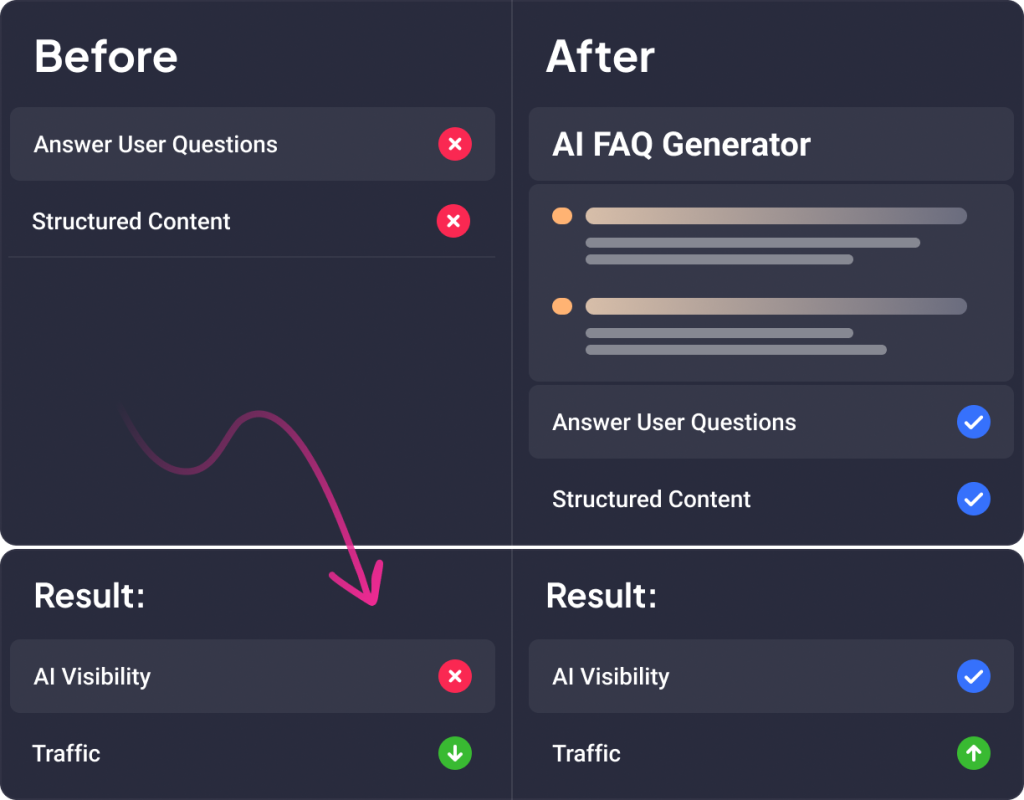
The application of an AI SEO FAQ Generator varies significantly by industry. Understanding these nuances helps you tailor the tool’s output to your specific market.
E-Commerce and Product Pages
For online retailers, the FAQ section is a sales tool. Questions about shipping times, return policies, material quality, and sizing are common. An AI generator can create a comprehensive FAQ that addresses these concerns, reducing the number of support tickets and increasing conversion rates. The schema markup also allows these FAQs to appear in Google Shopping results, providing additional visibility.
Local Service Businesses
For plumbers, electricians, and law firms, local SEO is paramount. An AI SEO FAQ Generator can create location-specific questions such as “How much does an emergency plumber cost in Austin?” or “What are the filing deadlines for personal injury claims in Texas?” These questions help the business rank for local search terms and establish authority in their geographic area.
SaaS and Technology Companies
Software companies often have complex products that require extensive explanation. FAQs generated by AI can cover onboarding questions, integration capabilities, security protocols, and pricing tiers. This content helps reduce the burden on sales teams by answering common objections before a demo call. It also improves the quality of leads by ensuring they have basic product knowledge.
Measuring the Impact of Your FAQ Strategy
To determine whether your AI SEO FAQ Generator is delivering value, you must track specific metrics. Simply checking rankings is not enough. You need to analyze how the FAQ section contributes to user behavior and conversions.
Comparing AI SEO FAQ Generators to Manual Creation
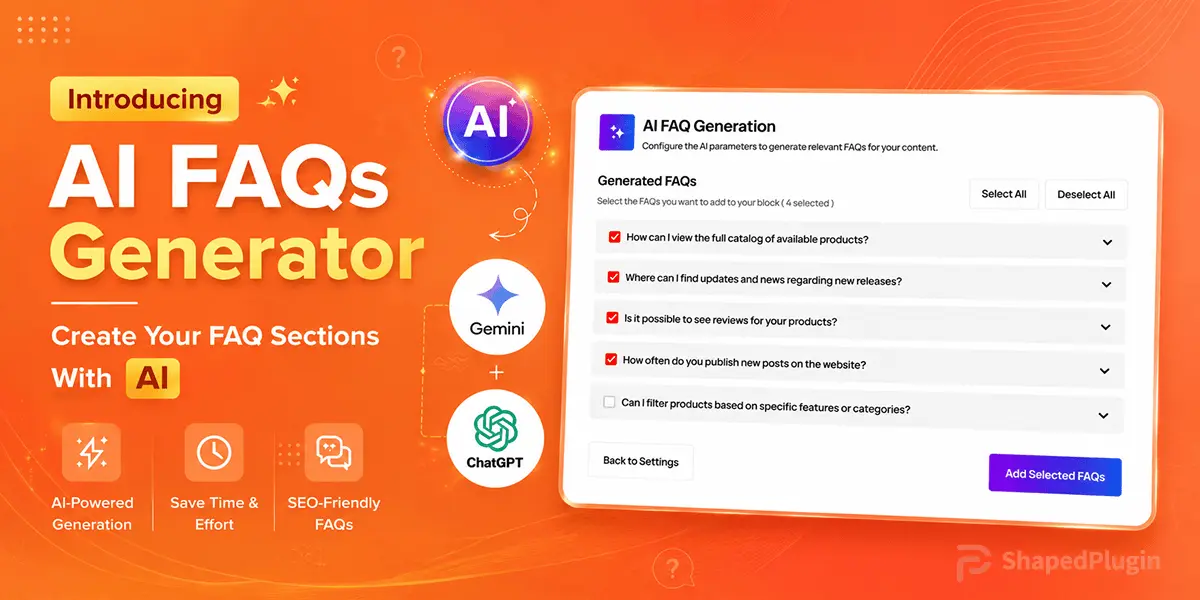
While manual FAQ creation allows for complete control, it is time-consuming and often based on assumptions rather than data. An AI tool provides data-driven insights that a human might miss. However, the human touch is still required for nuance and brand voice. The optimal approach is a hybrid model where the AI handles the heavy lifting of research and drafting, and the human editor focuses on refinement and strategic alignment.
| Aspect | Manual Creation | AI Generator |
|---|---|---|
| Time Investment | 2-3 hours per page | 15-30 minutes per page |
| Data Source | Personal experience, guesswork | Real search query data, competitor analysis |
| Scalability | Difficult to scale | Easily scalable to hundreds of pages |
| Accuracy | High if expert is involved | Requires human fact-checking |
| Schema Implementation | Manual coding required | Often automated |
Important Notes on Content Quality and Google Guidelines
Google’s spam policies are clear about the use of AI-generated content. Content created primarily for search engines, regardless of how it is produced, violates the guidelines. However, AI-generated content that provides genuine value to users and is reviewed by humans is acceptable. The key distinction is the intent behind the content. If you are using an AI SEO FAQ Generator to provide real answers to real user questions, you are aligned with Google’s guidelines. If you are using it to spam pages with keyword-stuffed nonsense, you risk a manual action penalty.
Always ensure that the answers in your FAQ section are unique to your site. Do not copy answers from competitor sites or from the AI’s generic knowledge base. Add your own data, experiences, and specific details about your products or services. This uniqueness is what builds trust with both users and search engines.
Frequently Asked Questions
What is the best AI SEO FAQ Generator on the market?
The best tool depends on your specific needs, budget, and technical skill level. Popular options include specialized SEO suites like Surfer SEO and Frase, which offer FAQ generation as part of a broader content optimization platform. Standalone tools like Outranking and NeuronWriter also offer robust FAQ features. For enterprise-level needs, custom API integrations with models like GPT-4 may be more suitable. Evaluate tools based on their ability to generate schema markup, their integration with your CMS, and the quality of their question database.
Can an AI SEO FAQ Generator replace a human content writer?
No, these tools are designed to augment, not replace, human writers. The AI handles the research and initial drafting, but a human editor is essential for fact-checking, brand voice alignment, and strategic placement of internal links. The most successful implementations involve a collaborative workflow where the AI is the assistant and the human is the decision-maker.
How many questions should I include in my FAQ section?
T A section with 5 to 10 highly relevant, well-answered questions is more effective than a section with 30 generic questions. Focus on questions that address specific user pain points or objections. If you have more than 10 questions, consider splitting them into multiple sections or creating a dedicated FAQ page.
Will adding an FAQ section guarantee a featured snippet?
No, t Adding an FAQ section with schema markup increases your chances of appearing in rich results, but Google’s algorithm determines which content is most relevant and helpful. To improve your odds, ensure your answers are concise (40-50 words), directly answer the question, and are formatted with lists or tables where appropriate. Also, ensure the rest of your page content is high-quality and relevant to the question.
Does the AI SEO FAQ Generator work for non-English content?
Most advanced AI tools support multiple languages, including Spanish, French, German, and Chinese. However, the quality of the output may vary depending on the language and the amount of training data the AI has for that language. It is crucial to have a native speaker review the generated content to ensure it sounds natural and is culturally appropriate.
How often should I update my FAQ section?
FAQs should be reviewed regularly, at least quarterly. Products change, policies are updated, and new user questions emerge. An AI SEO FAQ Generator makes it easy to regenerate and update your FAQ sections. Set a recurring calendar reminder to review your top-performing pages and refresh their FAQ content to ensure it remains accurate and relevant.
Conclusion
An AI SEO FAQ Generator is a powerful asset for any content strategy focused on search visibility and user engagement. By automating the research and drafting process, these tools free up valuable time while providing data-driven insights that manual methods cannot match. The key to success lies in the implementation: use the AI for what it does best—generating relevant questions and draft answers—and apply human expertise for editing, fact-checking, and strategic alignment. When executed correctly, an AI-driven FAQ strategy can capture featured snippets, improve click-through rates, and position your brand as an authoritative answer source in your industry. The technology is not a replacement for quality content, but rather a force multiplier that allows you to produce more of it, faster, without sacrificing the trust of your audience.
Xem thêm:
- AI SEO Silo Structure: The Complete Guide to Building Topically Authoritative Websites
- AI Copywriting Tools: The Complete Guide to Automating High-Converting Content in 2025
- AI SEO Microsoft Copilot SEO: The Complete Guide to Ranking in the New Search Era
- How to Get Cited by AI: The Definitive Playbook for Generative Search Visibility
- AI SEO Content Relevance: The Complete Guide to Ranking in the Age of Machine Learning
Bài viết cùng chủ đề:

AI SEO SEO Automation with Make: The Complete Workflow Guide

AI SEO SEO Automation with Zapier: The Complete Workflow Guide

AI SEO SEO Automation with n8n: The Complete Workflow Guide
AI SEO SEO Automation with Gemini: The Complete Guide to Scaling Organic Growth

AI SEO SEO Automation with Claude: The Complete Guide to Scaling Content in 2025

AI SEO SEO Automation with ChatGPT: The Complete Playbook for 2025

AI SEO & SEO Automation for Affiliate Sites: The 2025 Playbook for Passive Income Growth
AI SEO & SEO Automation for Bloggers: The Complete Guide to Scaling Your Content

AI SEO & SEO Automation for Agencies: The Complete 2025 Playbook

AI SEO and SEO Automation for Ecommerce: The Complete Playbook for 2025

AI SEO & SEO Automation for WordPress: The Complete Playbook for 2025
AI SEO SEO Automation Strategy: The Complete Playbook for 2025

Mastering the AI SEO SEO Automation Process: A Complete Guide to Scaling Organic Growth
AI SEO SEO Automation System: The Complete Guide to Scaling Organic Growth in 2025
AI SEO SEO Automation Platform: The Complete Guide to Scaling Organic Growth in 2025
AI SEO SEO Automation Software: The Complete Guide to Scaling Organic Growth in 2025















