
No products in the cart.
AI SEO Duplicate Pages: The Complete Guide to Detection, Prevention, and Fixes
31
Jul
Jul
Duplicate content has always been a thorn in the side of search engine optimization, but the rise of generative AI has created a new, more complex challenge: AI SEO duplicate pages. These are not your typical accidental copies from scraper sites or URL parameter issues. They are algorithmically generated pages that often look unique to human eyes but are fundamentally repetitive to search engine crawlers. Understanding how AI creates these pages, why they harm your rankings, and how to systematically eliminate them is now a core competency for any serious SEO professional. This guide provides a deep dive into the mechanics of AI-generated duplication, offering actionable strategies to protect your site’s crawl budget and authority.
What Exactly Are AI SEO Duplicate Pages?
AI SEO duplicate pages refer to web pages that are generated using large language models (LLMs) and other machine learning tools, which produce content that is structurally or semantically identical to other pages on the same domain or across the web. Unlike traditional thin content, these pages are often grammatically perfect and pass basic plagiarism checks because the AI rephrases sentences. However, they fail to provide unique value, often repeating the same core information with minor variations in wording.
The problem is exacerbated by the scale at which AI operates. A human writer might create 10 product descriptions in a day; an AI tool can generate 10,000 in the same timeframe. This leads to massive content sprawl, where a website hosts thousands of pages that all target the same user intent with nearly identical output. Search engines like Google have become adept at recognizing these patterns, often classifying them as “scaled content abuse,” which can trigger a manual action or a drop in algorithmic rankings.
The Root Causes: Why AI Creates Duplicate Content
To fix the issue, you must understand why AI generates duplicates in the first place. The root causes are typically tied to how the AI is prompted and how the site architecture is configured.
1. Template-Based Prompting
Many site owners use the same prompt template for every page. For example, “Write a 500-word article about [keyword].” The AI fills in the keyword but follows the same structural blueprint. This results in pages with identical heading structures, similar introductory paragraphs, and repetitive concluding statements. The semantic fingerprint of these pages is nearly identical, even if the specific nouns differ.
2. Faceted Navigation and Parameter Handling
AI is often used to generate content for faceted navigation filters (e.g., color, size, price range). If you have an e-commerce site with 50 filter combinations, AI might generate a unique page for each. However, the content for “Red Shoes Under $50” and “Blue Shoes Under $50” will be 95% identical, differing only in the color adjective. This is a classic trigger for duplicate page flags.
3. Syndication and Scraping at Scale
AI tools are frequently used to scrape high-ranking content and rewrite it. While this might bypass Copyscape, it does not bypass semantic analysis. Google’s BERT and MUM algorithms understand the underlying concepts. If your AI rewrites a Wikipedia article or a competitor’s guide, the core entities and relationships remain the same, making it a derivative duplicate.
How Search Engines Detect AI Duplicate Pages
Search engines do not use a simple “copy-paste” detector. They use sophisticated clustering algorithms that analyze the following signals:
- Shingle Analysis: They break content into small chunks (shingles) and compare them across pages. If a high percentage of shingles match, the pages are considered duplicates.
- Entity Overlap: They extract named entities (people, places, products) and their relationships. If two pages share the same entity graph, they are flagged as near-duplicates.
- User Interaction Data: If users click on a page and immediately bounce back to the search results, it signals that the page did not provide unique value, reinforcing the duplicate classification.
- Site Architecture Signals: If a sitemap contains thousands of URLs that all resolve to similar content, the crawler will deprioritize the entire section.
- Merge and 301 Redirect: For pages that cover the same intent, merge the best elements into a single, comprehensive page. Then, 301 redirect the duplicate URLs to the merged page. This consolidates link equity and eliminates cannibalization.
- Noindex for Thin Pages: For pages that have no unique value (e.g., “Blue Shoes Under $50” with only a paragraph of text), remove them from the index using a noindex meta tag. Do not redirect them, as this would dilute the main page.
- Rewrite with Original Data: For pages you want to keep, you must inject original research, proprietary data, or unique user-generated content. AI can assist, but the core facts must be exclusive to your site.
- Update Internal Linking: After cleanup, audit your internal links. Ensure that anchor text points to the canonical version of the page, not to the deleted or noindexed versions.
- Using 301 Redirects for Everything: Redirecting 5,000 duplicate pages to one page can look like a link scheme. It also creates a massive redirect chain that wastes crawl budget. Use noindex for low-value pages and redirects only for pages with real backlinks.
- Relying Solely on Canonical Tags: Canonical tags are a suggestion, not a directive. If you have 1,000 pages with the same canonical, Google may choose to ignore it and index them all anyway. You must physically remove or noindex the duplicates.
- Ignoring the Sitemap: If you leave duplicate URLs in your XML sitemap, you are telling Google to crawl them. After cleanup, regenerate your sitemap to include only the unique, indexable URLs.
- Publishing AI Content Without a “Why”: If you cannot articulate why a page exists for the user, it should not exist. AI-generated pages often lack a clear purpose beyond targeting a keyword, which is a direct violation of Google’s quality guidelines.
Google’s March 2024 core update specifically targeted “scaled content abuse,” which directly addresses AI-generated pages that exist solely to manipulate rankings. The update made it clear that automation, regardless of whether it involves AI or traditional scripting, does not exempt a site from the spam policies.
The Impact of AI Duplicate Pages on SEO Performance
The consequences of ignoring AI duplicate pages are severe and compound over time.
In practical terms, a site with 10,000 pages where 8,000 are AI-generated duplicates will likely see a 50-70% drop in organic traffic after a core update. The remaining 2,000 unique pages suffer because the domain’s overall quality signal is tainted.
How to Identify AI SEO Duplicate Pages on Your Site

Detection requires a combination of technical crawls and semantic analysis. You cannot rely on manual review alone because the volumes are too high. Export all URLs and look for high similarity scores. Most crawlers have a “Content Similarity” or “Duplicate Content” report that uses cosine similarity algorithms. Focus on pages with a similarity score above 85%.
Step 2: Analyze Search Console Data
In Google Search Console, navigate to the “Pages” report. Filter for pages that have impressions but zero or near-zero clicks. These are often the AI-generated duplicates that Google has indexed but refuses to rank. Cross-reference this list with your crawl data to confirm duplication.
Step 3: Use Semantic Clustering Tools
Tools like MarketMuse or Clearscope can analyze the topical coverage of your pages. If you have 50 pages that all cover “best running shoes” with the same sub-topics (cushioning, durability, price), they are semantically duplicate, even if the wording differs.
Step 4: Check Server Logs
Examine which URLs Googlebot is actually fetching. If you see a pattern of hundreds of URLs being crawled that have no external links and no internal links from your main navigation, they are likely AI-generated filler pages.
Prevention Strategies: Stopping AI Duplicates Before They Happen
Prevention is far more efficient than cleanup. If you are using AI to generate content, you must implement guardrails.
1. Implement a “One Intent, One Page” Policy
Before generating content, map out your keyword clusters. Define the primary user intent for each cluster. If two keywords have the same intent (e.g., “cheap laptops” and “budget laptops”), they should live on the same page. Do not let AI create separate pages for each.
2. Use Dynamic Prompt Engineering
Do not use static templates. For each page, provide the AI with unique data points: specific statistics, unique case studies, different angles, and distinct FAQs. Instruct the AI to avoid generic introductions and conclusions. Require a unique thesis statement for every page.
3. Set Up Canonical Tags Correctly
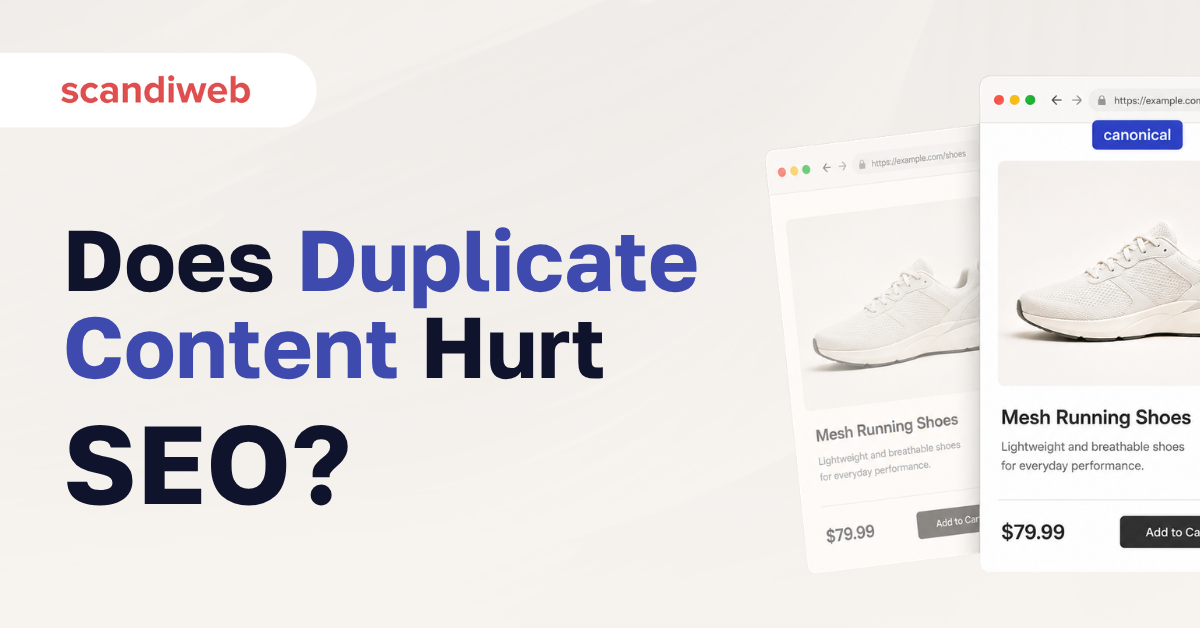
For faceted navigation, use canonical tags to point all filter variations back to the main category page. This tells Google which version is the “master” copy. However, be careful: if you have a unique review for “Red Shoes” that is genuinely different from “Blue Shoes,” do not canonicalize them. Use noindex for truly thin variations instead.
4. Implement a Content Review Workflow
Never publish AI content without human review. The reviewer’s job is not to check grammar but to check uniqueness. Ask: “Does this page provide information that cannot be found on another page on this site?” If the answer is no, do not publish it.
How to Fix Existing AI Duplicate Pages
If you already have a mess of AI-generated duplicates,
Common Mistakes When Handling AI Duplicate Pages
Many SEOs make the situation worse by applying outdated tactics. Avoid these pitfalls:
Important Notes on AI Content and Search Engine Guidelines
Google’s stance is clear: AI-generated content is not inherently against the guidelines. The issue is the intent behind it. If AI is used to produce helpful, original content that demonstrates E-E-A-T (Experience, Expertise, Authoritativeness, Trustworthiness), it can rank well. However, if AI is used to mass-produce pages that offer no new information, it is considered spam.
One critical note: Google’s spam policies specifically mention “scaled content abuse.” This includes using AI to generate multiple pages that are “primarily for the purpose of manipulating search rankings.” The key word is “primarily.” If your AI pages are supplementary to a strong, unique core, you are safer. If they are the core, you are at risk.
Another note: The concept of “duplicate” is not just about text. AI can also generate duplicate meta descriptions, title tags, and image alt text. Ensure that your AI tools are configured to generate unique metadata for every page, as this is a common signal for spam detection.
Frequently Asked Questions (FAQ)
What is the difference between traditional duplicate content and AI SEO duplicate pages?
Traditional duplicate content usually involves exact copies of text, often due to URL parameters, printer-friendly versions, or scraped content. AI SEO duplicate pages are semantically similar but not textually identical. They are generated by algorithms that rephrase and restructure information, making them harder to detect with basic plagiarism tools but equally harmful to rankings.
Can Google detect AI-generated duplicate content?
Yes. Google uses machine learning models like BERT and MUM to understand the meaning and relationships between words. These models can identify when two pages are conveying the same information, even if the surface-level text is different. Additionally, Google’s systems analyze user behavior; if users do not find AI-generated pages useful, the pages are demoted.
How many AI duplicate pages are too many?
T If more than 30% of your indexed pages are near-duplicates, you are at high risk of a sitewide penalty. The goal should be to have zero pages that do not offer a unique value proposition.
Should I delete AI duplicate pages or just noindex them?
Deleting is the safest option for pages with no external backlinks. Noindexing is a temporary fix; it keeps the URL alive but removes it from the index. If the page has valuable backlinks, you should rewrite it to be unique. If it has no backlinks and no traffic, delete it or noindex it to save crawl budget.
Is it safe to use AI to rewrite existing duplicate content?
No. Rewriting duplicate content with AI does not solve the problem. The underlying entities and concepts remain the same. You are simply creating a new version of the same duplicate. The only effective fix is to add new, original information that was not present before.
Conclusion
AI SEO duplicate pages represent a significant shift in how content duplication occurs. The scale and sophistication of AI-generated content require a proactive, data-driven approach to SEO. The days of manually checking for copied text are over. You must now rely on semantic analysis, crawl data, and user engagement metrics to identify and eliminate pages that do not serve a unique purpose.
The core principle remains unchanged: search engines reward unique, valuable content. Whether you use AI or human writers, every page on your site must answer a question that no other page on your site answers. By implementing strict content governance, using canonical tags wisely, and conducting regular audits for semantic duplication, you can harness the efficiency of AI without falling into the duplicate content trap. The sites that thrive in the AI era will be those that treat AI as a tool for enhancing originality, not for mass-producing mediocrity.
Xem thêm:
- AI SEO Archive Optimization: The Complete Guide to Maximizing Legacy Content Value
- Unlock Endless Authentic Feedback: A Deep Dive Into the AI Review Generator
- AI SEO Claude Search Optimization: The Complete Guide to Ranking in the Age of Conversational AI
- AI SEO AI Agents: The Complete Guide to Autonomous Search Optimization in 2025
- AI SEO Generative Search Optimization Tools: The Complete Guide to Winning SGE in 2025
Bài viết cùng chủ đề:

AI SEO SEO Automation with Make: The Complete Workflow Guide

AI SEO SEO Automation with Zapier: The Complete Workflow Guide

AI SEO SEO Automation with n8n: The Complete Workflow Guide
AI SEO SEO Automation with Gemini: The Complete Guide to Scaling Organic Growth

AI SEO SEO Automation with Claude: The Complete Guide to Scaling Content in 2025

AI SEO SEO Automation with ChatGPT: The Complete Playbook for 2025

AI SEO & SEO Automation for Affiliate Sites: The 2025 Playbook for Passive Income Growth
AI SEO & SEO Automation for Bloggers: The Complete Guide to Scaling Your Content

AI SEO & SEO Automation for Agencies: The Complete 2025 Playbook

AI SEO and SEO Automation for Ecommerce: The Complete Playbook for 2025

AI SEO & SEO Automation for WordPress: The Complete Playbook for 2025
AI SEO SEO Automation Strategy: The Complete Playbook for 2025

Mastering the AI SEO SEO Automation Process: A Complete Guide to Scaling Organic Growth
AI SEO SEO Automation System: The Complete Guide to Scaling Organic Growth in 2025
AI SEO SEO Automation Platform: The Complete Guide to Scaling Organic Growth in 2025
AI SEO SEO Automation Software: The Complete Guide to Scaling Organic Growth in 2025















