
No products in the cart.
AI SEO Generative Search Optimization Tools: The Complete Guide to Winning SGE in 2025
10
Aug
Aug
The landscape of search engine optimization has undergone a seismic shift. The days of simply targeting keywords and building backlinks are fading, replaced by a new paradigm where artificial intelligence curates and generates search results. At the center of this transformation are AI SEO Generative Search Optimization Tools, a new category of software designed to help brands appear in AI-generated answers. These tools are no longer a luxury; they are a necessity for any business looking to maintain visibility as Google’s Search Generative Experience (SGE) and other AI engines redefine how users find information.
This comprehensive guide explores the intricacies of these tools, how they function, their benefits, and the strategies required to dominate the new era of generative search. We will dissect the technology, compare leading solutions, and provide actionable steps to integrate them into your digital marketing strategy.
Understanding Generative Search and Its Impact on SEO
To truly appreciate the value of AI SEO Generative Search Optimization Tools, one must first understand the environment they operate in. Traditional search engines return a list of blue links based on keyword matching and backlink authority. Generative search, however, uses large language models to synthesize information from multiple sources and provide a single, conversational answer directly on the search engine results page (SERP).
This shift means that the top ten organic results are no longer the only goal. If your content is not cited in the AI-generated summary, your organic click-through rate could plummet. Generative engines prioritize context, entity authority, and clear, structured data over traditional ranking signals. This is where specialized software comes into play, helping marketers adapt their content for both human readers and AI crawlers.
The Shift from Page Ranking to Answer Ranking
In the generative era, you are no longer optimizing a page to rank; you are optimizing a page to be referenced. The AI engine reads your content, extracts key points, and determines if it is the most authoritative source for a specific query. This requires a fundamental change in content strategy. You must write in a way that is easily digestible by algorithms, using clear definitions, concise summaries, and direct answers to questions.
Generative Search Optimization (GSO) is the practice of making your content the “source of truth” for AI models. It involves technical SEO, content structuring, and digital PR to ensure that when an AI summarizes a topic, your brand is the primary citation. The tools built for this purpose automate the analysis of how AI engines perceive your content, offering a roadmap to improve visibility.
What Are AI SEO Generative Search Optimization Tools?
AI SEO Generative Search Optimization Tools are software platforms that leverage machine learning and natural language processing to analyze, optimize, and track content performance within AI-driven search environments. Unlike traditional SEO tools that focus on keywords and backlinks, these tools focus on entity recognition, topical authority, and citation likelihood.
They perform a variety of functions, including monitoring brand mentions in AI responses, analyzing competitor visibility in SGE, and providing recommendations on content structure to increase the chances of being selected by the AI. They bridge the gap between human-written content and the algorithmic understanding of AI, ensuring that your website is not just visible, but preferred by generative engines.
Core Functionalities of Modern GSO Tools
These tools are not monolithic; they offer a suite of features designed to address different aspects of the generative search ecosystem. The most effective platforms typically include the following modules:
- Visibility Tracking: Monitoring specific keywords to see if and how they appear in AI-generated answers, including the source citations.
- Entity Extraction: Identifying the key people, places, and concepts that AI associates with your brand and your competitors.
- Content Gap Analysis: Comparing your content against the sources cited by AI to identify missing subtopics or weak explanations.
- Citation Monitoring: Tracking which websites are most frequently cited by AI for specific queries, allowing you to benchmark your authority.
- NLP Optimization: Analyzing your text for clarity, structure, and semantic relevance to ensure AI models can easily parse and understand it.
- Increased Referral Traffic: Even if users don’t click the AI answer, they often click the cited sources for more detail. Being cited is the new “ranking #1.”
- Brand Authority: Being referenced by AI models like ChatGPT or Google SGE positions your brand as a thought leader and trusted source.
- Future-Proofing: As voice search and AI assistants become more prevalent, the data from these tools ensures your content is ready for zero-click searches.
- Improved Content Quality: The focus on clarity and structure improves the user experience for human readers, leading to lower bounce rates and higher engagement.
Top AI SEO Generative Search Optimization Tools in 2025
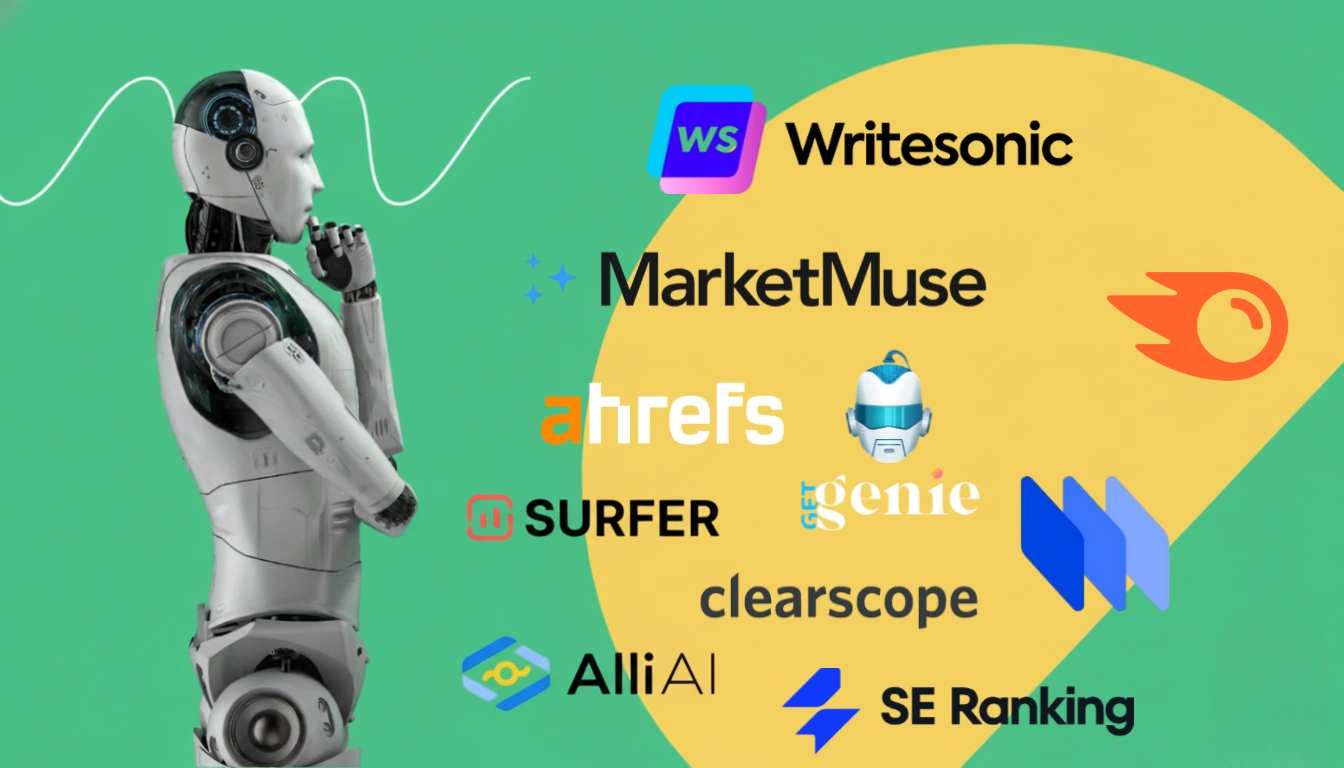
The market for these tools is expanding rapidly, with both established SEO giants and innovative startups vying for dominance. Choosing the right platform depends on your specific needs, budget, and technical expertise. Below is a comparison of the leading solutions currently available.
1. Semrush (with AI Features)
Semrush has integrated generative AI features into its suite, allowing users to track SGE visibility alongside traditional rankings. Their “SGE Position Tracking” feature shows you where your site appears in AI-generated responses, providing a direct comparison to organic performance. It is a robust option for enterprises already using the Semrush ecosystem.
2. Surfer SEO
Surfer SEO has pivoted heavily toward content optimization for AI. Their tool analyzes the top-ranking pages and AI citations to provide a content score. It offers real-time suggestions on word count, headings, and semantic terms that increase the likelihood of being referenced by generative engines. It is excellent for on-page optimization.
3. MarketMuse
MarketMuse uses AI to map out topical clusters and identify content gaps. Their platform scores your content against the entire knowledge graph of a topic, ensuring you cover all subtopics that an AI might consider relevant. This is crucial for building the topical authority that generative search engines favor.
4. Frase.io
Frase.io is designed specifically for creating content that answers questions. It uses NLP to analyze the SERP and generate content briefs that align with user intent. Their “AI Citation” feature allows you to see which sources are used for specific answers, helping you reverse-engineer the success of competitors.
5. BrightEdge (Generative AI Parser)
BrightEdge was one of the first to market with a dedicated “Generative AI Parser.” This tool tracks visibility across multiple AI platforms, including ChatGPT, Bard, and Bing Chat. It provides granular data on how your brand is mentioned and whether those mentions are positive, neutral, or negative.
Comparative Analysis Table
| Tool | Primary Focus | Best For | Key Differentiator |
|---|---|---|---|
| Semrush | Tracking & Analytics | Enterprise SEO Teams | Integration with existing SEO data |
| Surfer SEO | On-Page Optimization | Content Writers & Editors | Real-time content scoring |
| MarketMuse | Topical Authority | Content Strategists | Knowledge graph mapping |
| Frase.io | Content Briefs & Q&A | Freelancers & Agencies | Cost-effective question mining |
| BrightEdge | Cross-Platform Tracking | Large Brands | Multi-engine AI visibility tracking |
How to Use These Tools for Maximum Impact
Simply purchasing a subscription to AI SEO Generative Search Optimization Tools is not enough. You must implement a strategic workflow that integrates these insights into your content creation and digital PR processes. The following steps outline a proven methodology for leveraging these platforms effectively.
Step 1: Audit Your Current AI Visibility
Before making changes, you need a baseline. Use your chosen tool to run a report on your primary keywords. Identify which queries trigger AI-generated answers and whether your domain is cited. If you are not cited, note which competitors are. This audit reveals the gap between your current state and your desired state.
Step 2: Reverse-Engineer the AI’s “Source of Truth”
Look at the sources the AI cites for your target queries. Analyze these pages in detail. What is their structure? Do they use specific data points? Are they from.edu or.gov domains? Use your tool’s content gap analysis to compare your page against these cited sources. You will often find that the cited pages are more comprehensive, have better internal linking, or use clearer formatting.
Step 3: Restructure Content for Machine Readability
Generative AI loves structure. Use your tool’s NLP recommendations to restructure your content. Ensure you have clear H2 and H3 headings that contain the exact query. Use bullet points and tables to present data. Write concise paragraphs that answer one specific question each. This “scannable” format is easier for AI to parse and extract.
Step 4: Build Entity Authority
AI relies on entities (people, places, things) to understand context. Use your tool to identify the entities associated with your niche. Ensure your content clearly defines these entities and their relationships. For example, if you are writing about “electric vehicles,” ensure you clearly define “battery technology” and “charging infrastructure” as related entities. This helps the AI connect the dots and view your content as authoritative.
Benefits of Implementing Generative Search Optimization
The adoption of AI SEO Generative Search Optimization Tools offers tangible benefits that extend beyond just appearing in AI answers. These tools force a higher standard of content quality and provide a competitive edge in a crowded digital landscape.
Limitations and Challenges of GSO Tools
While powerful, these tools are not a magic bullet. There are inherent limitations to what they can achieve, primarily due to the “black box” nature of AI algorithms. Understanding these challenges is crucial for setting realistic expectations.
The primary challenge is the lack of transparency. Google does not publish the exact algorithm for SGE. Tools can only infer patterns based on observed data. This means that a tool’s recommendations are based on correlation, not causation. What works for one query may not work for another. Additionally, AI models are constantly updated, meaning that the “rules” of GSO can change overnight. A strategy that works today might be obsolete next month.
Furthermore, these tools cannot fix a fundamental lack of brand authority. If you are a new website with no backlinks or brand recognition, no amount of on-page optimization will get you cited by a major AI engine. GSO tools are most effective when combined with a strong digital PR and brand-building strategy.
Common Mistakes to Avoid with Generative Search Optimization
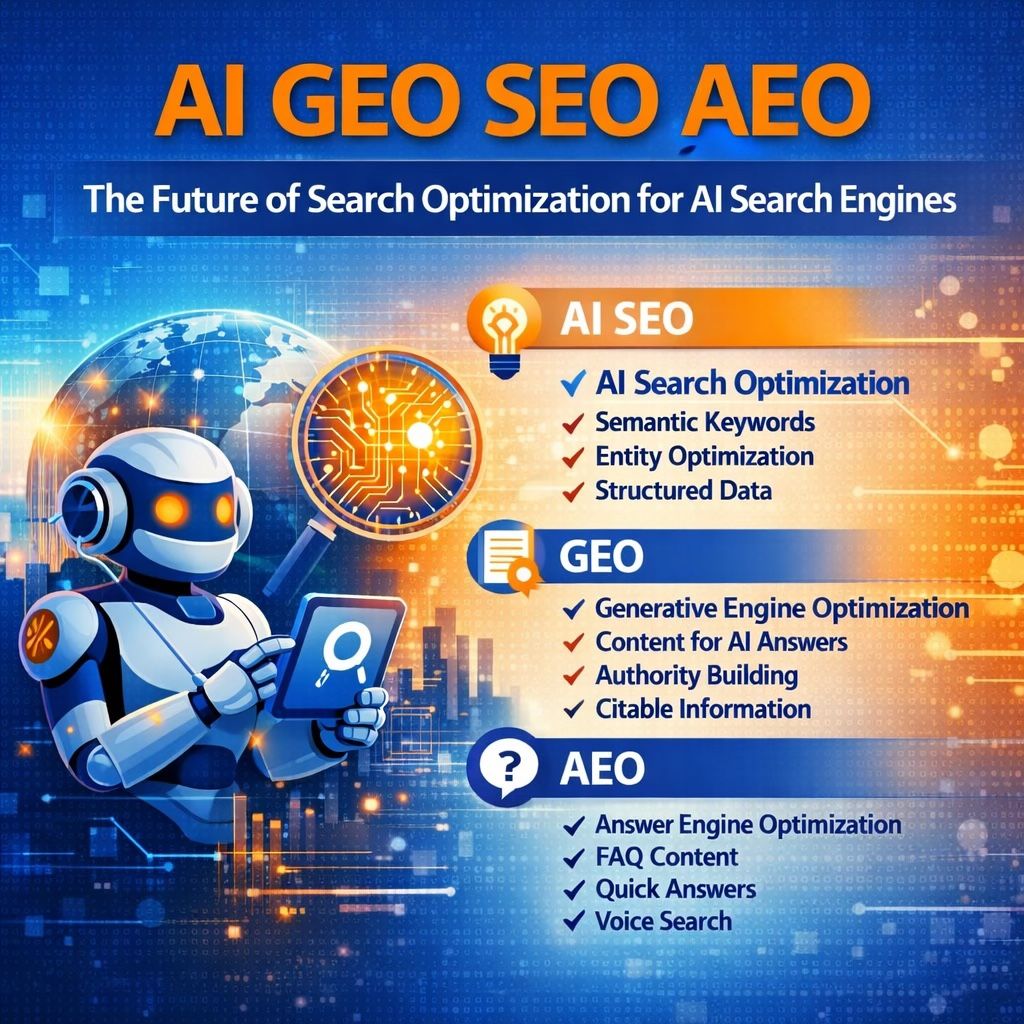
As with any new technology, there are pitfalls that marketers often fall into. Avoiding these mistakes will save you time and resources while accelerating your success with AI SEO Generative Search Optimization Tools.
Mistake 1: Keyword Stuffing in AI Era
Using the same keyword density tactics from 2010 will not work. AI engines penalize unnatural language. Instead of stuffing, focus on semantic relevance and covering the entire topic comprehensively. Use your tool to find related terms and concepts, not just variations of your primary keyword.
Mistake 2: Ignoring Traditional SEO
Generative search does not replace traditional SEO; it builds upon it. If your site has poor technical health, slow loading times, or no backlinks, A GSO tools are an addition to your stack, not a replacement for the fundamentals.
Mistake 3: Chasing Every AI Platform
There are dozens of AI chatbots and search engines. Trying to optimize for all of them is impossible. Focus on the major players: Google SGE, ChatGPT, and Bing Copilot. Use your tools to track these specific platforms and ignore the noise of smaller, less impactful models.
Mistake 4: Neglecting User Intent
AI is designed to answer the user’s intent. If your content does not satisfy the user’s need, the A Do not write content for the AI; write content for the human, but structure it in a way that the AI can easily understand. The best GSO strategy is to create the best answer on the internet.
Important Notes on Data Privacy and AI Training
When using these tools, it is important to consider the data privacy implications. Many AI platforms use user data to train their models. When you input your proprietary content or client data into a GSO tool, you are potentially exposing it to third-party AI systems. Always review the privacy policies of your chosen tools to understand how your data is used.
Furthermore, be aware of the “hallucination” problem. AI models can generate incorrect information or cite sources incorrectly. Your GSO tool may report a citation that doesn’t actually exist or miss a citation that does. Always verify the data provided by these tools with manual checks on the actual SERP.
Frequently Asked Questions (FAQ)
What is the difference between SEO and Generative Search Optimization?
Traditional SEO focuses on ranking web pages in a list of links. Generative Search Optimization (GSO) focuses on getting your content cited as a source within an AI-generated answer. GSO requires a different approach to content structure and entity clarity, whereas SEO relies heavily on backlinks and technical site health.
Are AI SEO Generative Search Optimization Tools worth the investment?
For businesses operating in competitive digital spaces, yes. These tools provide critical data that is impossible to gather manually. They save hours of research time and provide actionable insights that directly impact visibility in AI search results. The cost is often justified by the referral traffic and brand authority gained.
Can I optimize for generative search without using specialized tools?
It is possible but highly inefficient. You can manually search on ChatGPT and Google SGE to see what appears, but you will lack the historical data, competitor analysis, and content scoring that these tools provide. Manual analysis is not scalable for a large website with hundreds of pages.
How long does it take to see results from GSO?
Unlike traditional SEO which can take months, changes in AI citations can happen relatively quickly, sometimes within days. However, building the topical authority required to be consistently cited takes time. It is a continuous process of content refinement and digital PR.
Do these tools work for local SEO?
Yes, many of these tools have features for local search. They can track how AI answers local queries (e.g., “best coffee shop near me”) and whether your business is included in the AI’s recommendations. This is becoming increasingly important for local businesses competing for visibility.
Conclusion
The rise of generative search marks a pivotal moment in the history of digital marketing. The strategies that built the last decade of SEO success are no longer sufficient. To thrive in this new environment, brands must adopt AI SEO Generative Search Optimization Tools to understand, adapt, and optimize for the way AI consumes information. These tools provide the necessary intelligence to transform your content into the definitive source for AI models.
The shift from link-based ranking to answer-based citation is not a passing trend; it is the future of search. By embracing these technologies, focusing on entity authority, and committing to high-quality, structured content, you can secure your brand’s position at the forefront of this new era. The time to act is now, as the algorithms are learning and the competitive landscape is being redrawn. Those who invest in GSO today will be the dominant voices of tomorrow.
Xem thêm:
- AI WooCommerce SEO: The Complete Guide to Automating Your Store’s Search Rankings
- AI SEO Entity Authority: The Complete Guide to Dominating Search in 2025
- How to Use Claude for SEO: A Complete Guide to Ranking Higher with AI Assistance
- AI SEO Keyword Cluster Generator: The Complete Guide to Smarter Content Planning
- AI SEO Resources: The Ultimate Guide to AI-Powered Search Optimization
Bài viết cùng chủ đề:

AI SEO SEO Automation with Make: The Complete Workflow Guide

AI SEO SEO Automation with Zapier: The Complete Workflow Guide

AI SEO SEO Automation with n8n: The Complete Workflow Guide
AI SEO SEO Automation with Gemini: The Complete Guide to Scaling Organic Growth

AI SEO SEO Automation with Claude: The Complete Guide to Scaling Content in 2025

AI SEO SEO Automation with ChatGPT: The Complete Playbook for 2025

AI SEO & SEO Automation for Affiliate Sites: The 2025 Playbook for Passive Income Growth
AI SEO & SEO Automation for Bloggers: The Complete Guide to Scaling Your Content

AI SEO & SEO Automation for Agencies: The Complete 2025 Playbook

AI SEO and SEO Automation for Ecommerce: The Complete Playbook for 2025

AI SEO & SEO Automation for WordPress: The Complete Playbook for 2025
AI SEO SEO Automation Strategy: The Complete Playbook for 2025

Mastering the AI SEO SEO Automation Process: A Complete Guide to Scaling Organic Growth
AI SEO SEO Automation System: The Complete Guide to Scaling Organic Growth in 2025
AI SEO SEO Automation Platform: The Complete Guide to Scaling Organic Growth in 2025
AI SEO SEO Automation Software: The Complete Guide to Scaling Organic Growth in 2025















