
No products in the cart.
AI SEO Ecommerce Content Generator: The Complete Guide to Scaling Product Pages in 2025

10
Aug
Aug
An AI SEO Ecommerce Content Generator is no longer a futuristic luxury; it is a core operational tool for online retailers who want to scale product catalogs without sacrificing search visibility. In the current digital landscape, ecommerce teams face a brutal paradox: the need for thousands of unique, keyword-optimized product descriptions, category pages, and buying guides, versus the finite time and budget of human writers. This guide dissects how generative AI tools function, where they excel, and precisely how to deploy them to capture organic traffic, improve conversion rates, and maintain brand authenticity.
What is an AI SEO Ecommerce Content Generator?
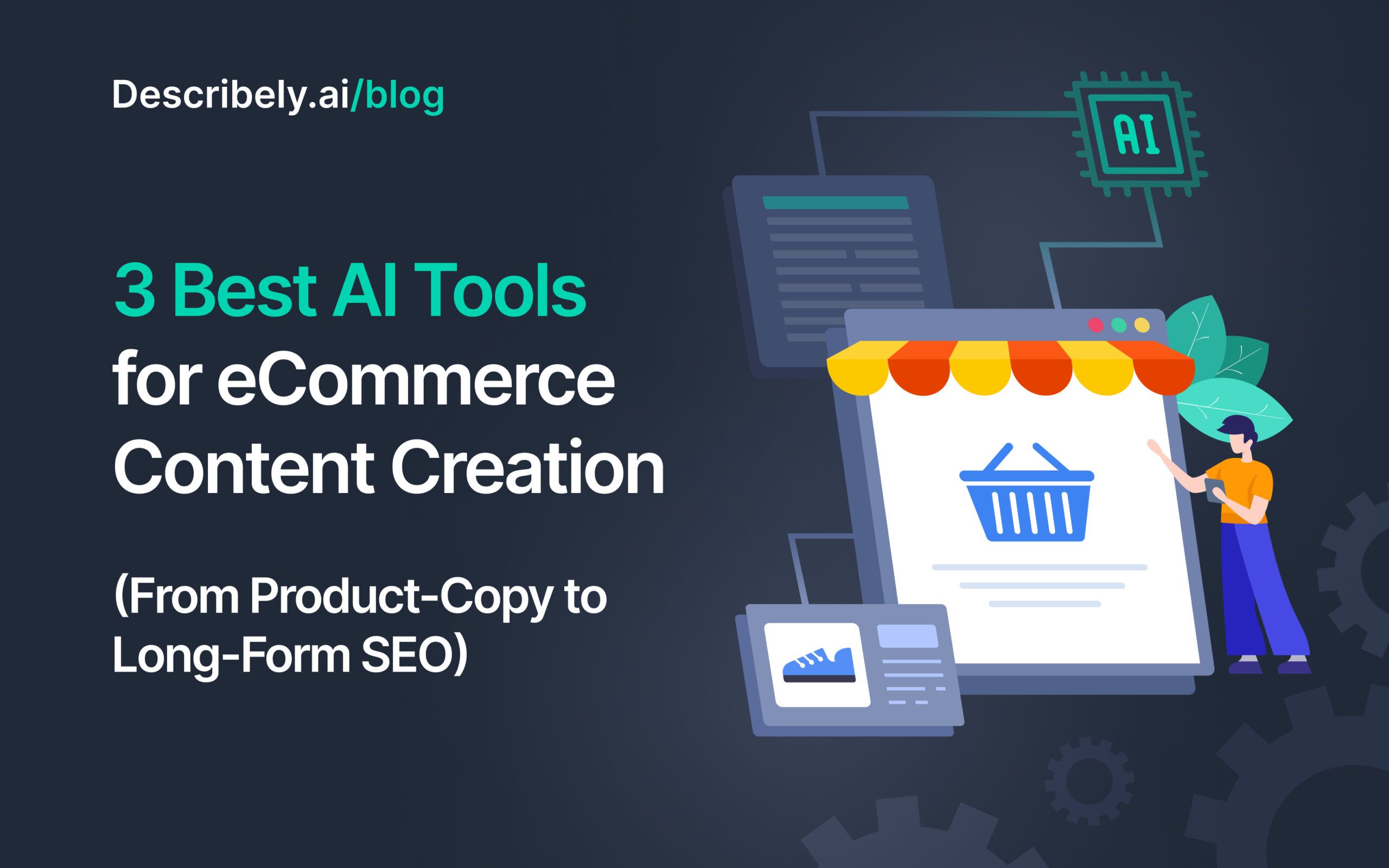
An AI SEO Ecommerce Content Generator is a software application that uses large language models (LLMs) and natural language processing (NLP) to produce written material specifically for online stores. Unlike generic chatbots, these generators are typically trained or fine-tuned to understand ecommerce-specific data points such as SKUs, product specifications, pricing tiers, and customer sentiment. The output is structured to meet the technical requirements of search engines, including keyword density, semantic relevance, and meta-data optimization.
The core function is to automate the creation of product descriptions, category introductions, FAQ sections, and blog posts that support commercial keywords. The best systems integrate directly with ecommerce platforms like Shopify, Magento, or WooCommerce, pulling existing product data and enriching it with SEO-focused copy. This eliminates the manual copy-paste workflow and allows for bulk generation across thousands of SKUs in a fraction of the time it would take a human team.
How Does an AI SEO Ecommerce Content Generator Work?
Understanding the mechanics helps you set realistic expectations and craft better prompts. The process generally involves three distinct stages: data ingestion, semantic analysis, and content synthesis.
Data Ingestion and Product Feed Analysis
The generator first ingests your product feed. This includes titles, bullet points, technical specs, and existing descriptions. Advanced tools also scrape customer reviews to identify the language buyers actually use, which is a goldmine for long-tail keywords. The AI parses this structured and unstructured data to understand what the product is, what it does, and who it is for.
Semantic Search Intent Mapping
Next, the AI maps the product attributes to search intent. It does not just look for the primary keyword; it analyzes related concepts. For a “stainless steel water bottle,” the AI identifies related queries like “insulated bottle for hiking,” “BPA-free hydration,” and “leak-proof lid.” This semantic mapping ensures the generated content covers the full spectrum of user needs, which is a critical ranking factor for Google’s BERT and MUM algorithms.
Content Synthesis and Template Application
Finally, the AI synthesizes the data into human-readable text. It applies a template that includes an H1 title, a meta description, a persuasive opening paragraph, feature-benefit bullets, and a technical specifications table. The output is designed to be scannable and informative, balancing keyword placement with readability scores. The most sophisticated generators use reinforcement learning from human feedback (RLHF) to avoid robotic phrasing and maintain a natural tone.
Key Benefits of Using an AI SEO Ecommerce Content Generator
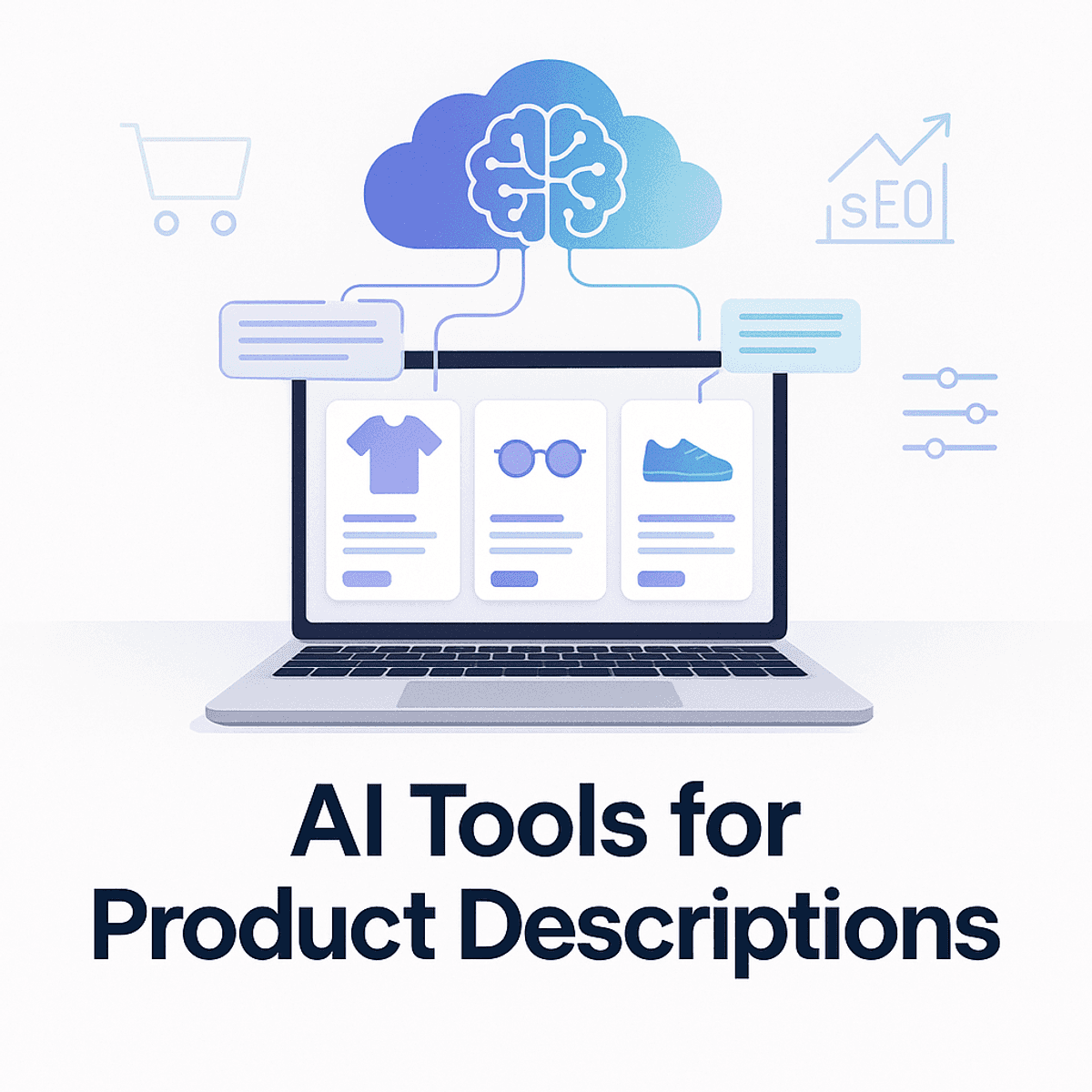
The shift from manual writing to AI-assisted generation provides measurable business outcomes beyond just saving time. These benefits directly impact the bottom line of an ecommerce operation.
- Unlimited Scalability: Generate descriptions for 10,000 products in a single batch. Human writers cannot match this velocity, making it possible to launch large catalogs quickly.
- Consistent Brand Voice: AI tools allow you to set a tone profile (e.g., “professional,” “playful,” “luxury”). This ensures every product page sounds like it belongs to the same brand, eliminating the inconsistency of multiple human writers.
- Dynamic Internal Linking: Generators can automatically insert contextual links to related products or category pages within the copy, improving site architecture and distributing link equity.
- Multilingual Expansion: Most advanced tools can translate and localize content into dozens of languages simultaneously, allowing you to enter new global markets without hiring local copywriters.
- Cost Efficiency: The cost per word is significantly lower than agency rates. For high-volume stores, the ROI is realized within the first month of use.
- Write a 150-word opening paragraph targeting the keyword “lightweight hiking backpack.”
- List 5 feature-benefit bullets focusing on durability and comfort.
- Write a 50-word meta description with a call to action.
- Generate a FAQ section addressing “is this backpack waterproof?”
Critical Limitations and Risks You Must Manage
While powerful, these tools are not infallible. Blindly publishing AI-generated text without oversight can lead to severe penalties and a damaged brand reputation. Understanding these limitations is the first step to mitigating them.
Hallucination and Factual Errors
LLMs are prone to “hallucinating” facts. They may invent a certification, a material composition, or a compatibility feature that does not exist. In ecommerce, this is a legal liability. If you claim a product is “waterproof” and it is not, you face returns and potential lawsuits. Every factual claim generated by AI must be cross-referenced against the manufacturer’s official spec sheet.
Duplicate Content and Thin Content Risks
If you use generic prompts, the A Many stores using the same tool with similar prompts will generate near-identical text. This creates a mass duplicate content problem across the web. To avoid this, you must feed the AI unique data points and use custom instructions that reflect your specific inventory.
Loss of Emotional Nuance
AI struggles with true emotional storytelling. It can describe the features of a luxury watch, but it cannot convey the feeling of receiving it as a heirloom. For high-ticket items or products with strong emotional buying triggers, human editing is essential to add the “soul” that converts a browser into a buyer.
AI SEO Ecommerce Content Generator vs. Human Writers
The debate is not about which is “better” in absolute terms, but which is better for specific tasks. A hybrid approach is the most effective strategy for modern ecommerce brands.
| Criteria | AI Generator | Human Writer |
|---|---|---|
| Speed | Generates 1000+ words per minute | Generates 500-1000 words per hour |
| Cost per Word | Fraction of a cent | High (varies by expertise) |
| SEO Technicality | Excellent at following strict keyword rules | Good, but prone to human error |
| Brand Storytelling | Weak; struggles with abstract concepts | Excellent; creates emotional connection |
| Factual Accuracy | High risk of hallucination | High accuracy with research |
| Scalability | Infinite | Limited by headcount |
The optimal workflow involves using AI for the “heavy lifting” of the first draft and technical SEO, then having a human editor review for factual accuracy, brand voice, and narrative flow. This reduces the cost per page by up to 70% while maintaining the quality standards that build trust.
Practical Guide: How to Use an AI SEO Ecommerce Content Generator Effectively
To get the highest ROI, you need a structured workflow.
Step 1: Audit Your Product Feed
Before you generate anything, clean your data. The AI is only as good as the input. Ensure your product titles are accurate, your attributes are filled in, and you have high-quality images (which the AI can use for alt-text generation). Remove any duplicate SKUs or outdated inventory.
Step 2: Define Your Brand Voice Parameters
Do not use the default settings. Create a “brand persona” document that you can paste into the AI prompt. Include your target audience demographics, your tone (e.g., “technical and precise” vs. “casual and friendly”), and your banned words list. This ensures the output aligns with your marketing strategy.
Step 3: Use Structured Prompts for Specific Pages
Do not just type “write a description.” Use a structured prompt that requests specific sections. For example:
Step 4: Implement a Human Review Workflow
Assign a content manager to review all AI output before publishing. This person checks for hallucinations, verifies technical specs, and adds any unique brand anecdotes. This step is non-negotiable for maintaining E-E-A-T (Experience, Expertise, Authoritativeness, Trustworthiness).
Step 5: Analyze Performance and Iterate
After publishing, monitor your analytics. Track which generated pages rank for their target keywords and which have high bounce rates. Use this data to refine your prompts. If a specific product category performs poorly, analyze the top-ranking competitor pages and adjust your prompt to include the missing semantic keywords.
Common Mistakes to Avoid When Using AI Generators
Many ecommerce managers make avoidable errors that sabotage their SEO efforts. Here are the most frequent pitfalls and how to sidestep them.
Publishing Without Fact-Checking
This is the most dangerous mistake. Always verify dimensions, materials, and compatibility claims. A single error on a high-traffic page can destroy your credibility and lead to a spike in return rates.
Ignoring Search Intent for Category Pages
Product pages are for transactional queries, but category pages are for informational and commercial investigation queries. Using the same AI prompt for both is a mistake. Category pages need to educate the user on the differences between products, not just list them. Tailor your prompts to the specific intent of the page.
Keyword Stuffing in the Name of SEO
Some generators, if prompted incorrectly, will stuff the primary keyword into every sentence. This creates a poor user experience and triggers Google’s spam policies. Use the keyword once in the H1, once in the first paragraph, and once in the H2. The rest of the content should focus on semantic relevance.
Neglecting to Update Old Content
AI is great for new products, but it is also perfect for refreshing old, underperforming pages. Use the tool to rewrite outdated descriptions with new keywords and current data. This is a quick win for recovering lost organic traffic.
Important Notes on Algorithm Updates and AI Detection
Google’s stance on AI-generated content is clear: it does not ban AI content, but it penalizes low-quality content regardless of who or what created it. The 2024 and 2025 core updates focus heavily on “helpful content” and “people-first” signals. This means that AI-generated content will rank well only if it provides genuine value, accurate information, and a good user experience.
Regarding AI detection tools, they are unreliable and often produce false positives. Do not obsess over “humanizing” your text to pass a detector. Instead, focus on adding unique data, original images, and first-hand experience to your pages. If you sell the product, include a “What’s in the Box” section or a “First Impressions” note based on your team’s actual testing. This is the “Experience” element of E-E-A-T that AI cannot fabricate.
Frequently Asked Questions (FAQ)
Will Google penalize my site for using an AI SEO Ecommerce Content Generator?
No, not directly. Google penalizes spammy, low-quality content, not the method of production. If the AI-generated content is accurate, helpful, and matches user intent, it can rank well. If you publish unedited, hallucinated text, you will be penalized. The focus is on the quality of the output, not the tool used to create it.
How much does an AI SEO Ecommerce Content Generator cost?
Pricing varies significantly. Basic tools with word limits start around $20 to $50 per month. Advanced ecommerce-specific platforms that integrate with your store and offer bulk generation can cost between $100 and $500 per month. Enterprise solutions with custom model training can cost thousands. Most tools offer a free trial, which is the best way to test if the output quality meets your standards.
Can AI write better product descriptions than a professional copywriter?
For pure SEO optimization and keyword coverage, AI is often more efficient. However, for persuasive, emotional copy that drives high conversion rates on luxury or niche products, a human copywriter is still superior. The best results come from a collaboration: AI drafts the technical SEO base, and the human adds the persuasive narrative.
What is the best AI SEO Ecommerce Content Generator for Shopify?
Several tools offer native Shopify integrations, including Jasper, Copy.ai, and specialized apps like Gempages or Rytr. The “best” tool depends on your catalog size and budget. Look for one that can pull your product data directly from the Shopify API to automate the workflow. Test the output quality with a free trial before committing to a long-term subscription.
How do I make AI-generated content sound more human?
Provide the AI with specific, unusual data points. Instead of saying “high-quality cotton,” say “24/7 combed organic cotton sourced from a family farm in Portugal.” The more specific the input, the more unique the output. Additionally, instruct the AI to use short sentences, active voice, and to avoid generic transition words like “furthermore” and “moreover.”
Conclusion
The AI SEO Ecommerce Content Generator is a transformative tool for scaling online retail operations. It solves the fundamental problem of content velocity, allowing brands to cover long-tail keywords and expand catalogs without exploding headcount. However, it is not a replacement for human judgment. The winning strategy is a hybrid workflow: use AI for the heavy lifting of data processing and draft generation, and use human editors for fact-checking, brand voice, and emotional resonance. By respecting the limitations and leveraging the strengths of both, you can build a content engine that drives sustainable organic growth and outperforms competitors who are still writing manually.
Xem thêm:
- AI SEO Link Reclamation: The Complete Guide to Recovering Lost Backlinks in 2025
- AI Outline Generator: The Complete Guide to Structuring Content in Seconds
- AI SEO for Photography: The Complete Guide to Ranking Your Work in 2025
- AI SEO Internal Link Generator: The Complete Guide to Automating Your Link Strategy
- AI SEO AI Content Audit Tool: The Complete Guide to Automated Content Optimization
Bài viết cùng chủ đề:

AI SEO SEO Automation with Make: The Complete Workflow Guide

AI SEO SEO Automation with Zapier: The Complete Workflow Guide

AI SEO SEO Automation with n8n: The Complete Workflow Guide
AI SEO SEO Automation with Gemini: The Complete Guide to Scaling Organic Growth

AI SEO SEO Automation with Claude: The Complete Guide to Scaling Content in 2025

AI SEO SEO Automation with ChatGPT: The Complete Playbook for 2025

AI SEO & SEO Automation for Affiliate Sites: The 2025 Playbook for Passive Income Growth
AI SEO & SEO Automation for Bloggers: The Complete Guide to Scaling Your Content

AI SEO & SEO Automation for Agencies: The Complete 2025 Playbook

AI SEO and SEO Automation for Ecommerce: The Complete Playbook for 2025

AI SEO & SEO Automation for WordPress: The Complete Playbook for 2025
AI SEO SEO Automation Strategy: The Complete Playbook for 2025

Mastering the AI SEO SEO Automation Process: A Complete Guide to Scaling Organic Growth
AI SEO SEO Automation System: The Complete Guide to Scaling Organic Growth in 2025
AI SEO SEO Automation Platform: The Complete Guide to Scaling Organic Growth in 2025
AI SEO SEO Automation Software: The Complete Guide to Scaling Organic Growth in 2025















