
No products in the cart.
AI SEO Link Reclamation: The Complete Guide to Recovering Lost Backlinks in 2025
10
Aug
Aug
AI SEO link reclamation is transforming how digital marketers recover lost backlink equity. Every website loses high-value backlinks due to broken pages, site migrations, or simple oversight. These lost links represent missed referral traffic and diminished domain authority. Modern AI-powered tools now scan, identify, and automate the recovery process at scale, making manual link reclamation obsolete. This comprehensive guide explores how artificial intelligence revolutionizes backlink recovery, offering actionable strategies to reclaim valuable link equity that competitors might otherwise capture.
What Is AI SEO Link Reclamation?
AI SEO link reclamation refers to the automated process of identifying lost, broken, or unlinked brand mentions and recovering those backlinks using artificial intelligence algorithms. Traditional link reclamation required manual spreadsheet analysis and outreach emails. AI systems now crawl the web continuously, compare historical link data, and flag opportunities with predictive accuracy.
The core concept involves three distinct recovery types. First, broken link reclamation targets pages that once linked to your site but now return 404 errors. Second, unlinked mention reclamation finds brand mentions without hyperlinks. Third, competitor link reclamation identifies backlinks pointing to outdated or removed competitor content that could redirect to your superior resource.
How AI Enhances Traditional Link Reclamation
Machine learning models process millions of data points to detect link loss patterns instantly. Natural language processing (NLP) understands context around brand mentions, distinguishing between genuine references and irrelevant noise. Predictive analytics forecast which reclaimed links will deliver the highest SEO value, prioritizing outreach efforts.
AI tools integrate with Google Search Console, Ahrefs, and Majestic APIs to maintain real-time backlink profiles. When a link disappears, the system immediately flags it, categorizes the severity, and drafts personalized outreach templates. This automation reduces recovery time from weeks to hours.
Why Lost Backlinks Matter for SEO Performance
Backlinks remain a top-three Google ranking factor. Losing authoritative links directly impacts domain rating, organic visibility, and referral traffic. A single high-authority link from a major publication can account for significant ranking power. When that link breaks, pages often drop several positions in search results.
Consider a scenario where a popular industry blog links to your definitive guide. If that blog updates its content and removes your link, your page loses valuable link juice. Without reclamation, competitors with similar content may outrank you within weeks. AI SEO link reclamation prevents this silent erosion of search equity.
Quantifying the Impact of Lost Links
Research indicates that websites lose approximately 5-10% of their backlinks annually due to natural web decay. For a site with 10,000 backlinks, that represents 500-1,000 lost links each year. Recovering even 20% of those links can preserve substantial domain authority.
Referral traffic loss compounds the problem. Links from high-traffic pages generate consistent clicks. When those links vanish, you lose both SEO value and direct visitors. AI-driven reclamation restores these traffic streams automatically.
Core Components of an AI Link Reclamation System
Effective AI SEO link reclamation relies on several integrated technologies working together. Understanding these components helps you evaluate tools and build internal workflows.
Continuous Backlink Monitoring
AI crawlers index the web daily, maintaining a historical database of every link pointing to your domain. This monitoring detects link removal, page deletion, or URL changes instantly. Unlike monthly manual audits, AI systems provide real-time alerts.
Monitoring extends beyond your direct backlinks. Advanced systems track competitor backlinks, industry resource pages, and unlinked brand mentions across social media, forums, and news sites.
Natural Language Processing for Mention Detection
NLP algorithms scan billions of web pages for brand name variations, product names, and executive names. These algorithms understand context, distinguishing between a passing mention and a substantive reference deserving a link. Sentiment analysis further prioritizes positive mentions for outreach.
Modern NLP models handle multiple languages, enabling global link reclamation campaigns. They also detect image mentions, video descriptions, and podcast show notes where text-based crawlers previously failed.
Predictive Link Value Scoring
Machine learning models assign each lost link a recovery priority score. This score considers the linking domain’s authority, relevance, traffic volume, and anchor text quality. High-scoring links receive immediate attention, while low-value links queue for batch processing.
Predictive scoring also forecasts the likelihood of successful reclamation. Factors like the linking site’s update frequency, contact responsiveness, and historical reclamation success rates inform these predictions.
Step-by-Step AI Link Reclamation Process
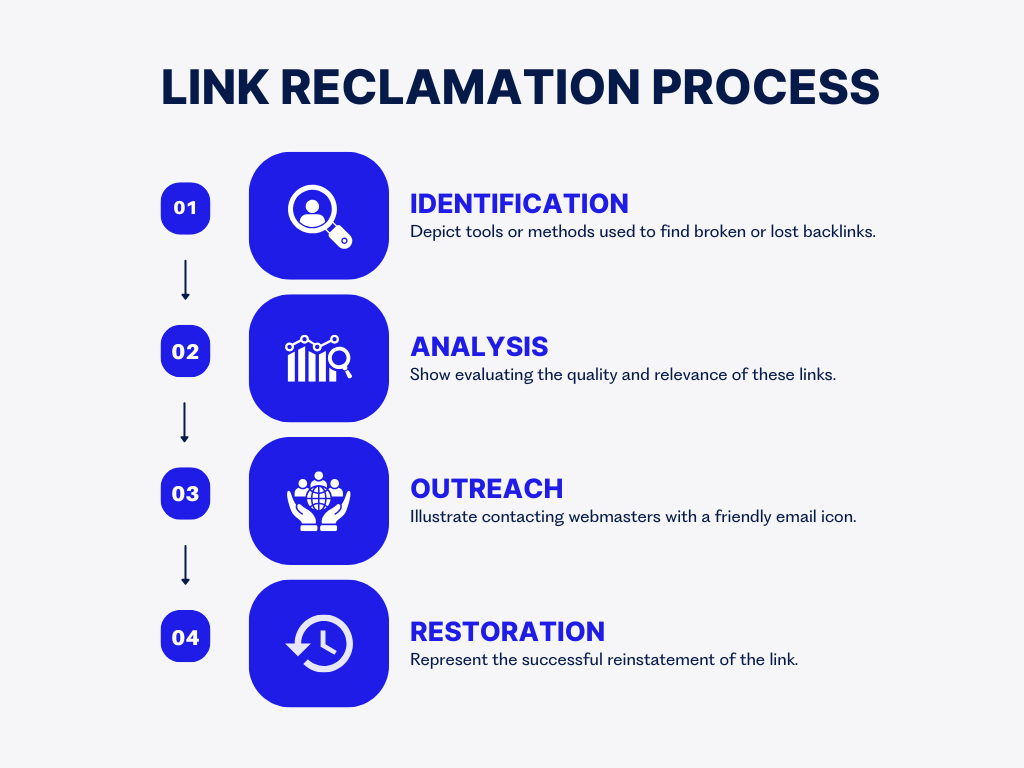
Implementing AI SEO link reclamation follows a structured workflow. Each step leverages automation while maintaining human oversight for quality control.
Step 1: Audit and Identify Lost Links
Begin by exporting your complete backlink history from SEO platforms. AI tools compare this historical data against current backlink profiles to identify discrepancies. The system categorizes each lost link by type: removed, broken, redirected, or nofollowed.
Prioritize links from domains with domain authority above 30. Focus on links from relevant industry sites over generic directories. The AI system automatically generates a prioritized recovery list.
Step 2: Verify Link Status and Context
Before outreach, verify that the lost link is genuinely gone. Sometimes links become temporarily inaccessible due to server issues. AI tools check HTTP status codes and page rendering to confirm permanent loss.
Examine the context surrounding the original link. Determine whether the linking page still exists, whether the content remains relevant, and whether a replacement link opportunity exists. This analysis informs your outreach strategy.
Step 3: Generate Personalized Outreach Campaigns
AI writing assistants draft personalized emails referencing the specific lost link, the original context, and the value your content provides. These templates incorporate the recipient’s name, site details, and a clear call to action.
Outreach sequences include follow-up reminders at optimal intervals. AI systems track open rates, reply rates, and conversion rates, continuously optimizing email copy for better results.
Step 4: Track and Measure Reclamation Success
Monitor which outreach emails generate successful link restorations. AI dashboards display recovery rates, reclaimed link value, and impact on organic rankings. This data feeds back into the predictive models, improving future prioritization.
Document successful outreach strategies for replication. Identify patterns in responses to refine messaging for different site categories.
Benefits of AI-Powered Link Reclamation

Adopting AI SEO link reclamation delivers measurable advantages over manual processes. These benefits extend beyond simple time savings.
Scalability Across Large Backlink Profiles
Enterprise websites with hundreds of thousands of backlinks cannot manually monitor link health. AI systems process unlimited link data without performance degradation. This scalability ensures comprehensive coverage regardless of site size.
Large-scale reclamation campaigns that would require a full-time team operate automatically in the background. Marketing teams focus on creative strategy while AI handles repetitive monitoring tasks.
Speed and Real-Time Response
Manual link audits typically occur quarterly or monthly. AI monitoring detects link loss within hours of occurrence. This speed prevents prolonged ranking declines and minimizes traffic loss.
Rapid response also matters for trending content. If a viral article links to your site and then breaks, immediate reclamation captures the traffic spike before it fades.
Improved Outreach Success Rates
AI-generated outreach emails achieve higher response rates than generic templates. Personalization at scale, combined with optimal send timing, increases the likelihood of link restoration. Data shows AI-assisted outreach outperforms manual outreach by 30-40% in conversion rates.
Sentiment analysis helps tailor messaging based on the recipient’s communication style. Some site owners prefer concise requests, while others respond to detailed value propositions.
Limitations and Challenges of AI Link Reclamation
While powerful, AI SEO link reclamation has inherent limitations that require human oversight.
False Positives in Link Detection
AI algorithms sometimes flag links as lost when they merely moved to a different URL or became accessible only through JavaScript rendering. These false positives waste outreach effort and potentially annoy site owners.
Regular validation of AI-detected issues reduces false positives. Combining AI detection with manual spot-checking ensures accurate recovery lists.
Contextual Understanding Gaps
NLP models may misinterpret sarcasm, industry jargon, or nuanced references. A mention that appears positive might actually criticize your brand. Reclaiming links from negative contexts could harm your reputation.
Human review of AI-identified mentions before outreach prevents embarrassing mistakes. Establish clear guidelines for what constitutes a reclaimable mention.
Outreach Fatigue and Spam Concerns
Automated outreach at scale risks being flagged as spam. Email providers monitor sending patterns, and excessive automated messages harm sender reputation. AI systems must incorporate rate limiting and natural language variation to avoid penalties.
Maintain a human review step for final outreach approval. This oversight ensures quality while preserving the efficiency of AI-generated drafts.
AI Link Reclamation vs. Traditional Methods
Understanding the differences between AI-powered and manual link reclamation helps justify technology investment.
| Feature | AI-Powered Reclamation | Traditional Manual Reclamation |
|---|---|---|
| Monitoring Frequency | Continuous real-time | Monthly or quarterly |
| Scale Capacity | Unlimited backlinks | Limited by team size |
| Detection Speed | Hours | Days to weeks |
| Outreach Personalization | Automated at scale | Manual, time-intensive |
| Data Analysis Depth | Predictive and historical | Descriptive only |
| Cost Efficiency | High initial investment, low ongoing | High ongoing labor costs |
| Error Rate | Requires validation | Human error possible |
Traditional methods remain viable for small websites with minimal backlink profiles. However, any site with significant link equity benefits from AI automation.
Practical Applications Across Industries
AI SEO link reclamation applies across diverse sectors, each with unique considerations.
E-commerce and Retail
Online retailers often lose links from product roundups and comparison articles. AI systems monitor competitor roundups, detecting when your products disappear from curated lists. Reclamation outreach highlights updated product information and exclusive offers.
Seasonal content creates recurring link opportunities. AI tracks historical seasonal links and automatically initiates reclamation before peak shopping periods.
Publishing and Media
News sites frequently update articles, removing older links. AI monitors syndication partners and content aggregators, ensuring proper attribution remains intact. Broken internal links within long-form journalism also get flagged for correction.
Media companies reclaim links from quote citations and expert roundups. NLP identifies journalist mentions that lack proper source linking.
SaaS and Technology
Software companies rely heavily on comparison pages and review sites. AI tracks competitor comparison content, alerting when your product is removed or replaced. Reclamation outreach provides updated feature matrices and integration documentation.
Documentation links frequently break during product updates. AI monitors help centers and developer portals, ensuring all documentation links remain functional.
Common Mistakes in AI Link Reclamation
Avoiding these pitfalls maximizes the effectiveness of your reclamation efforts.
Ignoring Low-Authority Links
Focusing exclusively on high-authority links leaves value on the table. Niche blogs and community forums often drive highly relevant referral traffic. AI scoring should weight relevance alongside authority metrics.
Reclaiming links from industry-specific sites, even with lower domain authority, improves topical relevance signals for Google.
Sending Generic Outreach Templates
Even with AI assistance, some teams use identical templates for every outreach. This approach reduces response rates. Each email must reference the specific link, the original context, and the mutual benefit of restoration.
AI tools generate unique emails for each prospect, but human review ensures the tone matches the recipient’s communication style.
Neglecting Broken Internal Links
Link reclamation extends beyond external backlinks. Broken internal links waste crawl budget and dilute page authority. AI systems should monitor internal link health alongside external backlinks.
Fix internal redirects and update outdated internal anchors during reclamation campaigns. This comprehensive approach improves overall site health.
Failing to Track Reclamation ROI
Without proper tracking, you cannot measure the impact of reclamation efforts. Set up analytics to monitor reclaimed link performance, including organic traffic changes and keyword ranking improvements.
Attribute recovered traffic to specific reclamation campaigns. This data justifies continued investment in AI tools.
Important Notes for Successful Implementation
Several considerations ensure smooth adoption of AI SEO link reclamation.
Data Privacy and Compliance
AI tools process external website data, raising potential privacy concerns. Ensure your chosen tools comply with GDPR, CCPA, and other relevant regulations. Review data handling policies before implementation.
Outreach emails must include proper unsubscribe options and comply with anti-spam legislation like CAN-SPAM.
Integration with Existing SEO Stack
AI reclamation tools should integrate seamlessly with your current SEO platforms. API connections to Google Search Console, Ahrefs, SEMrush, and Moz streamline data flow. Verify integration capabilities before purchasing.
Automated reporting through existing dashboards keeps stakeholders informed without additional manual work.
Continuous Model Training
AI models improve with feedback. Regularly review reclamation outcomes and provide corrections to the system. This training enhances detection accuracy and outreach effectiveness over time.
Schedule quarterly reviews of AI performance metrics, adjusting parameters based on results.
Frequently Asked Questions
What is the difference between link reclamation and link building?
Link reclamation recovers links that previously existed but were lost, while link building creates new backlinks from scratch. Reclamation targets known opportunities with higher success rates, whereas building requires prospecting and pitching new placements. Both strategies complement each other in a comprehensive SEO approach.
How long does AI link reclamation take to show results?
Initial results typically appear within 2-4 weeks of implementation. The AI system needs time to crawl historical data, identify lost links, and execute outreach campaigns. Reclaimed links start passing value immediately upon restoration, with full ranking impact visible within 1-3 months.
Can AI link reclamation recover links from removed pages?
Yes, AI systems can identify when a linking page was removed or redirected. Outreach can request the site owner restore the page or replace the link with an alternative placement. If the page is permanently gone, the AI suggests relevant existing pages on the same domain for link placement.
What tools offer AI SEO link reclamation features?
Major SEO platforms like Ahrefs, SEMrush, and Moz offer partial automation for link monitoring and reclamation. Specialized tools like Linkody, Monitor Backlinks, and CognitiveSEO provide dedicated reclamation workflows. Enterprise solutions like BrightEdge and Conductor incorporate AI-driven link recovery into broader SEO platforms.
Is AI link reclamation suitable for small websites?
Small websites with limited backlink profiles can manage manual reclamation effectively. However, AI tools become valuable when backlinks exceed 1,000 or when monitoring multiple brand mentions across the web. Many AI tools offer tiered pricing, making them accessible for growing sites.
How does AI detect unlinked brand mentions?
Natural language processing algorithms scan web content for brand name variations, product names, and related terms. The system analyzes surrounding context to determine if a mention warrants a link. When a relevant mention lacks a hyperlink, the AI flags it as a reclamation opportunity and initiates outreach.
Conclusion
AI SEO link reclamation represents a critical evolution in backlink management. The automated detection, prioritization, and recovery of lost links preserves hard-earned domain authority and referral traffic. Modern AI systems process vast datasets in real-time, identifying opportunities that manual methods miss entirely.
Implementing AI-driven reclamation requires strategic planning, proper tool selection, and ongoing human oversight. The benefits of scalability, speed, and improved outreach success far outweigh the implementation challenges. Websites that adopt AI link reclamation gain a significant competitive advantage in maintaining their search visibility.
Start by auditing your current backlink profile and identifying the scale of lost links. Evaluate AI tools that integrate with your existing workflow. Begin with a pilot program targeting high-value lost links, then expand automation as you validate results. The future of link equity preservation lies in intelligent automation, and early adopters will reap the greatest rewards.
Xem thêm:
- AI SEO Entity Extraction: The Complete Guide to Dominating Search Rankings in 2025
- AI SEO Generative Search Citations: The Complete Playbook for 2025
- AI SEO Success Stories: Real-World Wins and Lessons From Automated Search Strategies
- Mastering AI SEO Competitor Keywords: The Complete Guide to Outranking Your Rivals
- AI SEO Content Production: The Complete Guide to Scaling Your Rankings in 2025
Bài viết cùng chủ đề:

AI SEO SEO Automation with Make: The Complete Workflow Guide

AI SEO SEO Automation with Zapier: The Complete Workflow Guide

AI SEO SEO Automation with n8n: The Complete Workflow Guide
AI SEO SEO Automation with Gemini: The Complete Guide to Scaling Organic Growth

AI SEO SEO Automation with Claude: The Complete Guide to Scaling Content in 2025

AI SEO SEO Automation with ChatGPT: The Complete Playbook for 2025

AI SEO & SEO Automation for Affiliate Sites: The 2025 Playbook for Passive Income Growth
AI SEO & SEO Automation for Bloggers: The Complete Guide to Scaling Your Content

AI SEO & SEO Automation for Agencies: The Complete 2025 Playbook

AI SEO and SEO Automation for Ecommerce: The Complete Playbook for 2025

AI SEO & SEO Automation for WordPress: The Complete Playbook for 2025
AI SEO SEO Automation Strategy: The Complete Playbook for 2025

Mastering the AI SEO SEO Automation Process: A Complete Guide to Scaling Organic Growth
AI SEO SEO Automation System: The Complete Guide to Scaling Organic Growth in 2025
AI SEO SEO Automation Platform: The Complete Guide to Scaling Organic Growth in 2025
AI SEO SEO Automation Software: The Complete Guide to Scaling Organic Growth in 2025















