
No products in the cart.
AI SEO Embeddings: The Complete Guide to Semantic Search Optimization
31
Jul
Jul
Search engines no longer match keywords; they understand meaning. AI SEO embeddings have become the backbone of modern search optimization, transforming how content is interpreted, ranked, and served to users. This guide explains what embeddings are, how they power semantic search, and exactly how to leverage them for higher rankings and better organic visibility.
What Are AI SEO Embeddings?
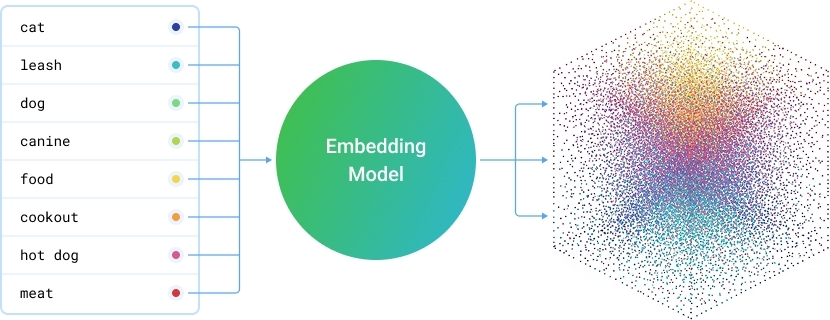
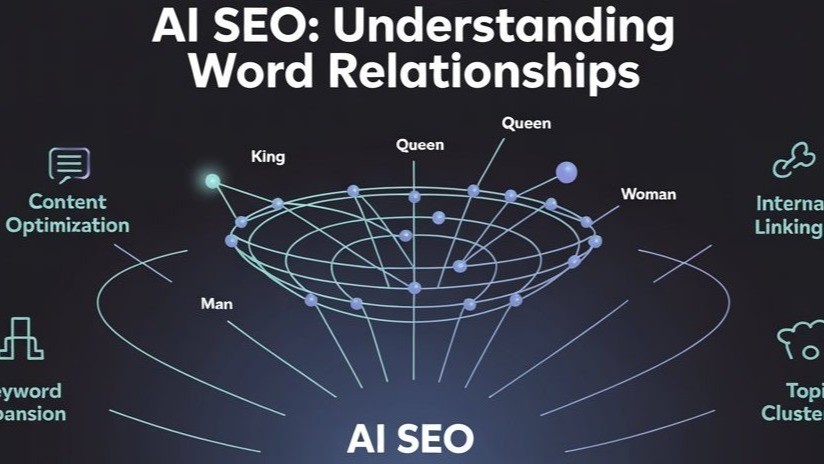
AI SEO embeddings are numerical representations of text that capture semantic meaning. In simple terms, an embedding converts words, sentences, or entire documents into vectors—arrays of numbers—that preserve relationships between concepts. Words with similar meanings end up close together in this mathematical space, while unrelated terms sit far apart.
For example, the words “car,” “automobile,” and “vehicle” produce embeddings that cluster tightly. Meanwhile, “car” and “banana” produce vectors that are distant. This allows search engines like Google to understand that a page about “automobile maintenance” is relevant to a query about “car repair,” even when no exact keywords match.
Embeddings are generated by machine learning models, most notably transformer-based architectures like BERT, GPT, and their successors. These models process massive text corpora and learn contextual relationships. The output is a high-dimensional vector, typically ranging from 384 to 3072 dimensions, depending on the model.
How Search Engines Use Embeddings
Google introduced BERT in 2019 and later integrated MUM (Multitask Unified Model), both heavily reliant on embeddings. These models help Google understand the intent behind queries, not just the literal words. When a user searches “how to fix a leaking faucet,” Google uses embeddings to identify pages that discuss plumbing repairs, water damage, and DIY home maintenance—even if those exact phrases are absent.
Embeddings also power related searches, featured snippets, and “People Also Ask” boxes. The search engine compares the embedding of your query against embeddings of billions of indexed documents. The closest matches win the top positions. This is a fundamental shift from the old keyword-matching era.
Beyond Google, Bing, YouTube, and Amazon all use embedding-based retrieval systems. YouTube recommends videos based on semantic similarity of titles, descriptions, and transcripts. Amazon matches product listings to search queries using embedding models trained on purchase behavior and product attributes.
Why AI SEO Embeddings Matter for Your Strategy

Traditional SEO focused on exact-match keywords, meta tags, and backlinks. Those factors still matter, but embeddings have changed the game. Content that covers a topic comprehensively, uses natural language, and addresses related concepts will outperform thin content that merely repeats a keyword.
Embeddings reward topical authority. When you write a detailed guide about “vegan protein sources,” the embedding of your content captures related concepts like “plant-based nutrition,” “amino acid profiles,” and “soy versus pea protein.” This signals relevance to a wide range of queries, from “best vegan protein powder” to “how much protein do vegans need.”
Another critical implication is the rise of semantic search. Users type conversational queries, often in the form of full questions. Embeddings allow search engines to match these long-tail queries with content that answers them, even if the wording differs. This means optimizing for questions and natural language is more effective than ever.
Core Components of Embedding-Based SEO
To fully leverage AI SEO embeddings, you need to understand the components that make them work. These include the embedding models themselves, the vector databases that store them, and the retrieval techniques used to match queries to content.
Embedding Models
Several models are available for generating embeddings. OpenAI’s text-embedding-3-small and text-embedding-3-large are popular choices, offering 1536 and 3072 dimensions respectively. Google’s universal sentence encoder is another option, known for its efficiency. Open-source models like Sentence-BERT and E5 provide flexibility for custom deployments.
Each model has different strengths. Some excel at short phrases, others at long documents. Some are multilingual, while others focus on English. Choosing the right model depends on your content type and target audience. For global SEO, a multilingual model like multilingual-e5-large is often the best fit.
Vector Databases
Once you generate embeddings for your content, you need a place to store them. Vector databases like Pinecone, Weaviate, Milvus, and Qdrant are designed for this purpose. They index high-dimensional vectors and enable fast similarity searches. These databases support operations like nearest-neighbor search, which finds the most similar embeddings to a given query.
For SEO professionals, vector databases are useful for internal content analysis. You can embed all your existing pages, then compare them against each other to identify gaps, overlaps, and opportunities for new content. This is a data-driven approach to content strategy.
Retrieval-Augmented Generation (RAG)
RAG combines embeddings with large language models. When a user asks a question, the system retrieves relevant documents using embedding similarity, then feeds those documents to a language model to generate a precise answer. This technique powers many AI search tools and chatbots. For SEO, RAG is relevant because it shows how search engines might synthesize information from multiple sources to answer complex queries.
Optimizing for RAG means creating content that is self-contained, factual, and clearly structured. If your page provides a definitive answer to a question, an embedding-based retrieval system is more likely to select it as a source.
Benefits of Using AI SEO Embeddings
The benefits of embedding-based optimization extend beyond rankings. Here are the key advantages, backed by practical observations.
- Improved relevance: Embeddings match content to queries based on meaning, not just keywords. This leads to higher click-through rates and lower bounce rates, as users find exactly what they need.
- Better coverage of long-tail queries: A single well-structured article can rank for hundreds of related queries, because embeddings capture the full semantic field of the topic.
- Enhanced content clustering: By embedding your own content, you can identify which pages are topically related and build internal links that pass authority more effectively.
- Competitive gap analysis: Embedding competitor content reveals topics they cover that you don’t, giving you a roadmap for new articles.
- Future-proofing: As search engines continue to adopt neural retrieval, embedding-optimized content will remain relevant, regardless of algorithm updates.
- Ignoring context: Embeddings capture context, but only if your content provides it. Writing vague, generic paragraphs produces weak embeddings. Solution: Be specific. Use concrete examples, data, and detailed explanations.
- Over-optimizing for one query: Trying to match a single query’s embedding too closely can make your content unnatural. Solution: Aim for broad topical coverage. A diverse embedding is more robust.
- Neglecting entity relationships: Embeddings understand entities like people, places, and products. Failing to mention related entities weakens your semantic signal. Solution: Include relevant entities naturally in your content.
- Using outdated models: Embedding models improve rapidly. Using a model from two years ago may produce inferior results. Solution: Stay updated with the latest model releases and benchmark your options.
- Forgetting about multilingual content: If your audience speaks multiple languages, a monolingual embedding model will miss cross-lingual connections. Solution: Use a multilingual model or generate separate embeddings per language.
- OpenAI Embeddings API: The easiest way to generate high-quality embeddings. Offers multiple models with different price points.
- Sentence-Transformers library: A Python library with hundreds of pre-trained models. Free and open-source, ideal for experimentation.
- Pinecone: A managed vector database with a free tier. Excellent for storing and querying embeddings at scale.
- Weaviate: An open-source vector database with built-in modules for text embedding. Good for self-hosted solutions.
- Google Colab: A free Jupyter notebook environment where you can run embedding scripts without local hardware.
- Keyword Insights: A tool that uses embeddings to cluster keywords by intent, helping you group related queries for content planning.
Limitations and Challenges
AI SEO embeddings are not a magic bullet. There are real limitations that practitioners must acknowledge.
First, embeddings require significant computational resources. Generating embeddings for a large website involves processing millions of tokens, which costs time and money. Using a paid API like OpenAI’s can add up quickly for enterprise-scale sites.
Second, embeddings are not interpretable. You cannot look at a vector and understand why it considers two pieces of content similar. This black-box nature makes debugging difficult when your content underperforms.
Third, embeddings are static once generated. If a model is updated, you must regenerate all embeddings to stay current. This is an ongoing maintenance burden.
Finally, embeddings do not account for user behavior signals like dwell time, bounce rate, or conversions. They are purely semantic. A page can have perfect embeddings but still rank poorly if users find it unhelpful or slow.
AI SEO Embeddings vs. Traditional Keyword Optimization
Understanding the difference between these two approaches is crucial for allocating your efforts correctly.
| Aspect | Traditional Keyword SEO | AI SEO Embeddings |
|---|---|---|
| Matching method | Exact and partial keyword matches | Semantic vector similarity |
| Content focus | Keyword density and placement | Topic coverage and natural language |
| Query handling | Short-tail, high-volume keywords | Long-tail, conversational queries |
| Scalability | Manual keyword research per page | Automated semantic analysis across site |
| Resistance to updates | Vulnerable to algorithm changes | More stable, as meaning is consistent |
| User intent | Inferred from keyword modifiers | Directly captured in embedding space |
Traditional SEO is not obsolete. Keywords still provide a useful starting point for topic selection. But embeddings allow you to go beyond keywords and optimize for the full context of user intent. The best strategy combines both: use keyword research to identify topics, then use embedding analysis to ensure comprehensive semantic coverage.
Practical Guide: How to Implement AI SEO Embeddings
Implementing embeddings in your SEO workflow does not require a PhD in machine learning.
Step 1: Choose an Embedding Model
Start with a reliable, well-documented model. OpenAI’s text-embedding-3-small is a good default due to its balance of quality and cost. For a free, open-source alternative, use Sentence-BERT with the ‘all-MiniLM-L6-v2’ model, which produces 384-dimensional vectors and runs on a standard laptop.
Step 2: Generate Embeddings for Your Content
Write a script that reads each page of your website, extracts the main text, and passes it through the embedding model. Store the resulting vectors in a CSV file or a vector database. For a small site, a CSV is sufficient. For larger sites, use Pinecone or Weaviate.
Step 3: Analyze Semantic Gaps
Embed your competitors’ top-ranking pages for your target keywords. Compare their embeddings to yours. Identify clusters where competitors have dense coverage but you have sparse coverage. These are your content gaps. Create new articles or expand existing ones to fill those gaps.
Step 4: Optimize for Query Similarity
Take a list of your target queries. Embed each query and compare it to your page embeddings. If a query’s nearest neighbor is not the page you intended, revise that page to include more related concepts. This ensures your content aligns with how users actually search.
Step 5: Build Semantic Internal Links
Use embedding similarity to find pages that are topically related but not yet linked. Add contextual internal links between them. This distributes authority and helps search engines understand your site’s structure.
Step 6: Monitor and Update
Re-run your embedding analysis quarterly. New competitors emerge, and search trends shift. Regular updates keep your semantic coverage current.
Common Mistakes and How to Avoid Them
Many SEO professionals make predictable errors when adopting embeddings. Here are the most frequent ones, along with solutions.
Important Notes for E-E-A-T and Embeddings
Google’s E-E-A-T framework (Experience, Expertise, Authoritativeness, Trustworthiness) remains critical, and embeddings interact with it in subtle ways. Embeddings do not measure trust. A page with perfect semantic alignment but low authority will not rank. Therefore, embeddings should complement, not replace, traditional authority-building efforts.
Experience matters because first-hand knowledge produces content with specific details that generic AI-generated text lacks. These details create richer embeddings. For example, a review of a hiking backpack written by someone who actually used it will include mentions of strap comfort, pocket sizes, and weight distribution—terms that a generic description would omit. Those specific terms improve semantic matching for users searching for those exact features.
Expertise and authoritativeness are signaled by citations, credentials, and consistent publishing. While embeddings do not directly process these signals, they influence how your content is retrieved. A high-authority page with good embeddings will outrank a low-authority page with perfect embeddings. Build backlinks and establish your brand as a reliable source.
Trustworthiness is about accuracy and transparency. Embeddings cannot distinguish fact from fiction. If your content contains false information, it may still match queries semantically, but users will quickly leave, and your metrics will suffer. Always fact-check and cite reliable sources.
Tools and Resources for AI SEO Embeddings
Several tools simplify the process of working with embeddings for SEO. Here are the most practical ones.
For those who prefer no-code solutions, some SEO platforms have started integrating embedding features. Surfer SEO and Frase use semantic analysis to suggest related terms, though they do not expose raw embeddings. For full control, learning basic Python is worthwhile.
Frequently Asked Questions
What exactly is an embedding in SEO?
An embedding in SEO is a numerical vector that represents the meaning of a piece of text. Search engines use these vectors to match queries with content based on semantic similarity, rather than exact keyword matches. This allows for more accurate and context-aware search results.
How do AI SEO embeddings improve search rankings?
Embeddings improve rankings by helping search engines understand the intent behind a query and the relevance of a page. Content that covers a topic comprehensively, with natural language and related concepts, produces embeddings that match a wider range of queries. This increases the chances of ranking for long-tail and conversational searches.
Do I need to use a vector database for SEO?
Not necessarily. For small websites, you can generate embeddings and compare them using simple Python scripts or even spreadsheet formulas. Vector databases become necessary when you have thousands of pages and need fast, scalable similarity searches. Start simple and scale up as your needs grow.
Can AI SEO embeddings replace traditional keyword research?
No. Keywords are still useful for identifying topics and understanding user demand. Embeddings complement keyword research by revealing semantic relationships and content gaps. The best approach is to use keywords for topic selection and embeddings for content optimization and internal linking.
How often should I update my embeddings?
You should regenerate embeddings whenever you publish new content or when the embedding model you use is updated. As a rule of thumb, run a full re-analysis every quarter. This keeps your semantic coverage aligned with current search behavior and model improvements.
Are embeddings the same as BERT or GPT?
No. BERT and GPT are language models that generate embeddings as part of their internal processing. Embeddings are the output—the numerical representations. BERT and GPT are the architectures that learn how to create those representations. In SEO, you work with the embeddings, not the models themselves.
What is the difference between sparse and dense embeddings?
Sparse embeddings are high-dimensional vectors with mostly zero values, often used in traditional keyword matching. Dense embeddings are lower-dimensional vectors where every value is non-zero, capturing more nuanced semantic meaning. Modern AI SEO relies on dense embeddings because they handle synonyms, context, and paraphrasing better.
Conclusion
AI SEO embeddings represent a fundamental shift in how search engines understand and rank content. By moving from keyword matching to semantic understanding, embeddings reward content that is comprehensive, natural, and contextually rich. For SEO professionals, this means adopting new workflows that include embedding generation, semantic gap analysis, and query similarity optimization.
The practical steps are clear: choose a reliable embedding model, generate vectors for your content and competitors, identify gaps, and optimize your pages accordingly. Combine this with traditional authority-building and E-E-A-T signals for the best results. The tools are accessible, the methods are learnable, and the payoff is a more resilient, future-proof SEO strategy.
Start small. Embed your top ten pages, compare them to your competitors, and make one improvement based on the findings. As you become comfortable, expand the process to your entire site. The search landscape is increasingly semantic, and embeddings are the map to navigate it.
Xem thêm:
- AI SEO Content Consistency: The Complete Guide to Scaling Quality Without Losing Your Voice
- AI SEO Entity Keywords: The Complete Guide to Future-Proof Search Rankings
- AI SEO Keyword Discovery: The Complete Guide to Smarter Search Rankings
- AI SEO Masterclass: The Complete Guide to Dominating Search in 2025
- AI SEO Generative Search Content: The Complete Playbook for Ranking in the Age of SGE
Bài viết cùng chủ đề:

AI SEO SEO Automation with Make: The Complete Workflow Guide

AI SEO SEO Automation with Zapier: The Complete Workflow Guide

AI SEO SEO Automation with n8n: The Complete Workflow Guide
AI SEO SEO Automation with Gemini: The Complete Guide to Scaling Organic Growth

AI SEO SEO Automation with Claude: The Complete Guide to Scaling Content in 2025

AI SEO SEO Automation with ChatGPT: The Complete Playbook for 2025

AI SEO & SEO Automation for Affiliate Sites: The 2025 Playbook for Passive Income Growth
AI SEO & SEO Automation for Bloggers: The Complete Guide to Scaling Your Content

AI SEO & SEO Automation for Agencies: The Complete 2025 Playbook

AI SEO and SEO Automation for Ecommerce: The Complete Playbook for 2025

AI SEO & SEO Automation for WordPress: The Complete Playbook for 2025
AI SEO SEO Automation Strategy: The Complete Playbook for 2025

Mastering the AI SEO SEO Automation Process: A Complete Guide to Scaling Organic Growth
AI SEO SEO Automation System: The Complete Guide to Scaling Organic Growth in 2025
AI SEO SEO Automation Platform: The Complete Guide to Scaling Organic Growth in 2025
AI SEO SEO Automation Software: The Complete Guide to Scaling Organic Growth in 2025















