
No products in the cart.
AI SEO Entity Keywords: The Complete Guide to Future-Proof Search Rankings
10
Aug
Aug
The landscape of search engine optimization is shifting beneath our feet. Traditional keyword matching has given way to semantic understanding, and at the center of this transformation lies the concept of entities. AI SEO entity keywords represent the intersection of artificial intelligence, natural language processing, and the structured data that search engines use to understand the world. This guide explores how these keywords work, why they matter for modern rankings, and how to implement an entity-focused strategy that aligns with how Google and other search engines actually process information today.
Understanding AI SEO Entity Keywords
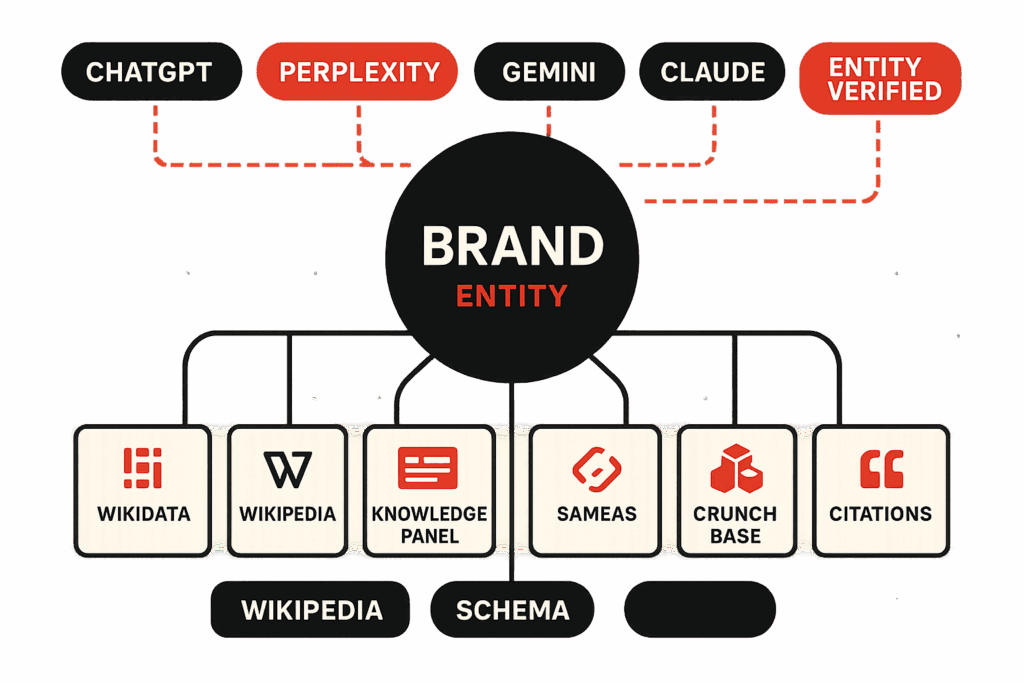
An entity is a distinct, identifiable thing or concept—a person, place, organization, product, or abstract idea. Search engines like Google have moved beyond matching exact strings of text to understanding the relationships between these entities. AI SEO entity keywords are the terms and phrases that connect your content to these entities in a way that machine learning algorithms can interpret accurately.
When you search for “Apple,” the search engine must determine whether you mean the fruit, the technology company, or the record label. This disambiguation happens through entity recognition. AI-powered systems analyze the surrounding context, related entities, and semantic relationships to deliver the most relevant results. Your content strategy must account for this reality by building topical authority around entities rather than just targeting isolated keywords.
The Shift from Keywords to Entities
Traditional SEO focused on exact-match keywords and their variations. The approach worked because early search algorithms relied heavily on lexical matching. Modern algorithms, however, use neural networks and knowledge graphs to understand the meaning behind queries. The Knowledge Graph, introduced by Google in 2012, contains billions of facts about entities and their interconnections.
This shift means that ranking well requires content that demonstrates expertise about a subject, not just content that repeats certain phrases. AI SEO entity keywords bridge the gap between the words users type and the structured knowledge that search engines maintain about the world.
How Search Engines Process Entities with AI
Search engines employ several AI-driven technologies to process entities. Natural Language Processing (NLP) breaks down text into grammatical components and identifies the roles each word plays. Named Entity Recognition (NER) identifies proper nouns and classifies them into categories like person, organization, location, or product. Entity Linking connects these mentions to entries in a knowledge base.
Google’s BERT (Bidirectional Encoder Representations from Transformers) and MUM (Multitask Unified Model) represent significant advances in understanding context. These models process words in relation to all other words in a sentence, rather than sequentially. This allows the algorithm to grasp nuance, intent, and the relationships between entities in ways that were previously impossible.
The Role of Knowledge Graphs
Knowledge graphs store information about entities and the relationships between them. For example, the knowledge graph knows that Leonardo da Vinci painted the Mona Lisa, that the Mona Lisa is displayed at the Louvre Museum, and that the Louvre is located in Paris. When your content connects these entities in a coherent way, the search engine can better understand and rank your pages.
AI SEO entity keywords help search engines map your content to these existing knowledge structures. By using precise entity names, related concepts, and clear contextual signals, you make it easier for algorithms to categorize your content accurately.
Core Components of an Entity-Based SEO Strategy
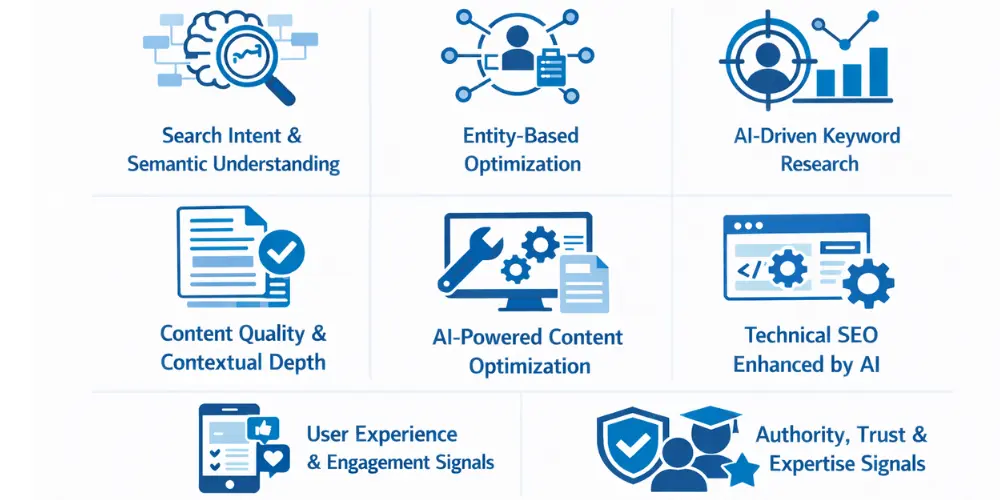
Implementing AI SEO entity keywords requires a systematic approach that goes beyond simple keyword research. The following components form the foundation of an effective entity-focused strategy.
Entity Identification and Research
Start by identifying the key entities relevant to your niche. These include your brand, your products or services, your competitors, industry leaders, related concepts, and the people, places, and organizations that matter to your audience. Use tools like Google’s Knowledge Graph API, Wikipedia, and specialized SEO platforms that offer entity extraction capabilities.
For each entity, document its attributes, aliases, and relationships. A product entity, for instance, has attributes like price, color, material, and manufacturer. It relates to other entities like the category it belongs to, the problems it solves, and the customers who use it.
Semantic Topic Clusters
Organize your content around topic clusters that center on a pillar entity. The pillar page covers the main entity comprehensively, while cluster content explores related entities and subtopics in depth. This structure mirrors how knowledge graphs organize information and signals expertise to search engines.
For example, if your pillar entity is “digital marketing,” your cluster content might cover entities like “search engine optimization,” “content marketing,” “social media advertising,” and “email automation.” Each cluster page should link back to the pillar and to other related cluster pages, creating a web of interconnected entities.
Practical Implementation of AI SEO Entity Keywords
Applying entity-based principles to your content creation process involves several concrete steps. These practices help ensure that both search engines and users understand your content clearly.
Optimizing Content Structure
Use clear headings that reflect the entities and subtopics covered in your content. The first mention of a key entity should appear early in the content, ideally in the first paragraph. Use the full, official name of entities at first mention, then you can use abbreviations or shortened forms later.
Include related entities naturally throughout the content. If you write about “artificial intelligence,” mention related entities like “machine learning,” “neural networks,” “natural language processing,” and “deep learning” in appropriate contexts. This helps search engines understand the semantic field of your content.
Structured Data and Schema Markup
Schema markup provides explicit signals about the entities in your content. Use schema types like Organization, Person, Product, Article, and FAQPage to help search engines identify and classify your content accurately. The schema.org vocabulary is supported by Google, Bing, and other major search engines.
Implement JSON-LD format for your structured data, as it is the recommended format by Google. Include properties like name, description, image, author, and datePublished to provide comprehensive entity information.
Internal Linking with Entity Anchors
Use descriptive anchor text that includes entity names when linking between your pages. Instead of “click here,” use anchors like “learn more about machine learning algorithms” or “explore our guide to natural language processing.” This reinforces the entity relationships in your content architecture.
Create entity-specific hub pages that serve as authoritative resources for each major entity in your niche. Link to these hubs from relevant content throughout your site, and link out from the hubs to related entities and subtopics.
Benefits of Using AI SEO Entity Keywords
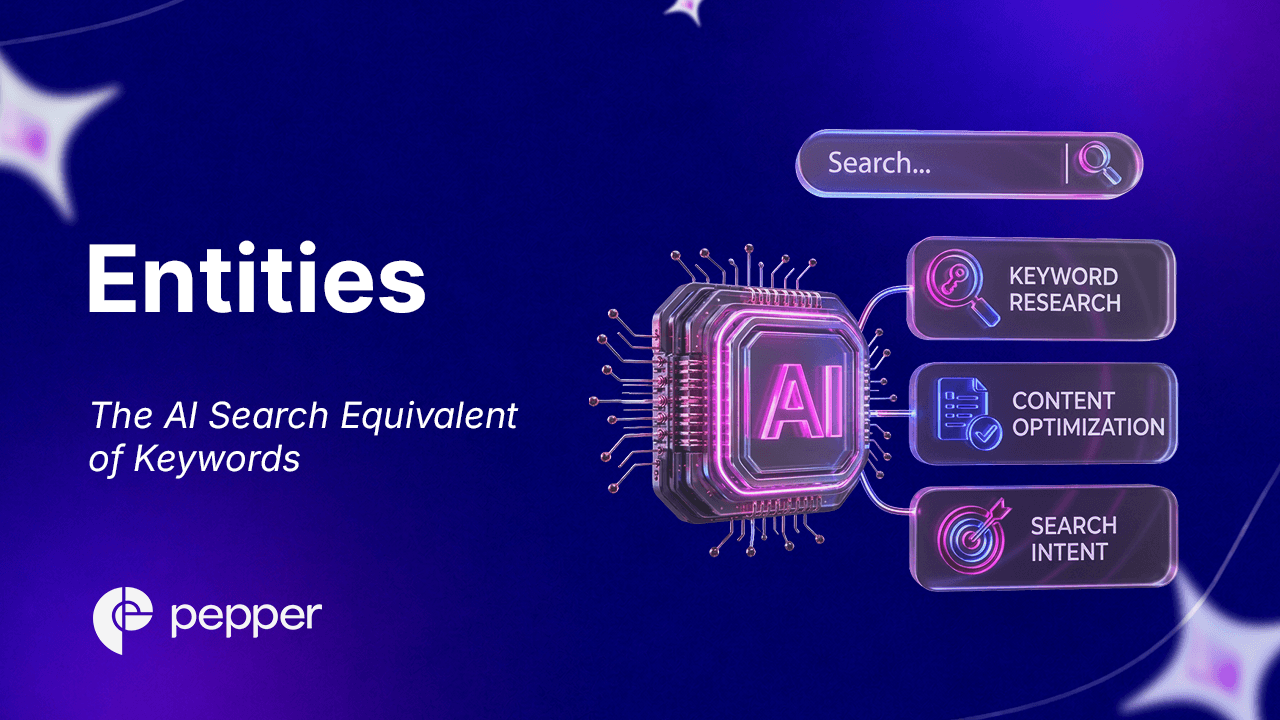
Adopting an entity-based approach to SEO offers several distinct advantages over traditional keyword-focused strategies. These benefits extend beyond rankings to impact overall content quality and user experience.
Improved Search Relevance
Content that properly utilizes entities tends to rank for a wider range of related queries. When search engines understand that your content is about a specific entity, they can match it to queries that mention that entity, even if the exact wording differs. This captures long-tail traffic that traditional keyword targeting might miss.
Resilience to Algorithm Updates
Entity-based content is less vulnerable to algorithm updates that target keyword stuffing or thin content. Because entity-focused content is inherently more comprehensive and informative, it aligns with the quality guidelines that search engines consistently enforce.
Enhanced Featured Snippet Opportunities
Clear entity definitions and structured content increase the likelihood of appearing in featured snippets, knowledge panels, and other rich results. These prominent placements drive significant traffic and establish authority in your niche.
Limitations and Challenges
While the benefits are substantial, implementing an entity-based SEO strategy comes with certain challenges that require careful consideration.
Complexity and Time Investment
Entity research and content restructuring require significant time and expertise. Small teams or solo content creators may struggle to implement a full entity strategy alongside their regular content production duties.
Measurement Difficulties
Traditional SEO metrics like keyword rankings become less meaningful when targeting entities. You may need to track visibility across a broader set of related queries and monitor brand mentions and entity associations in search results.
Comparison: Traditional Keywords vs. AI SEO Entity Keywords
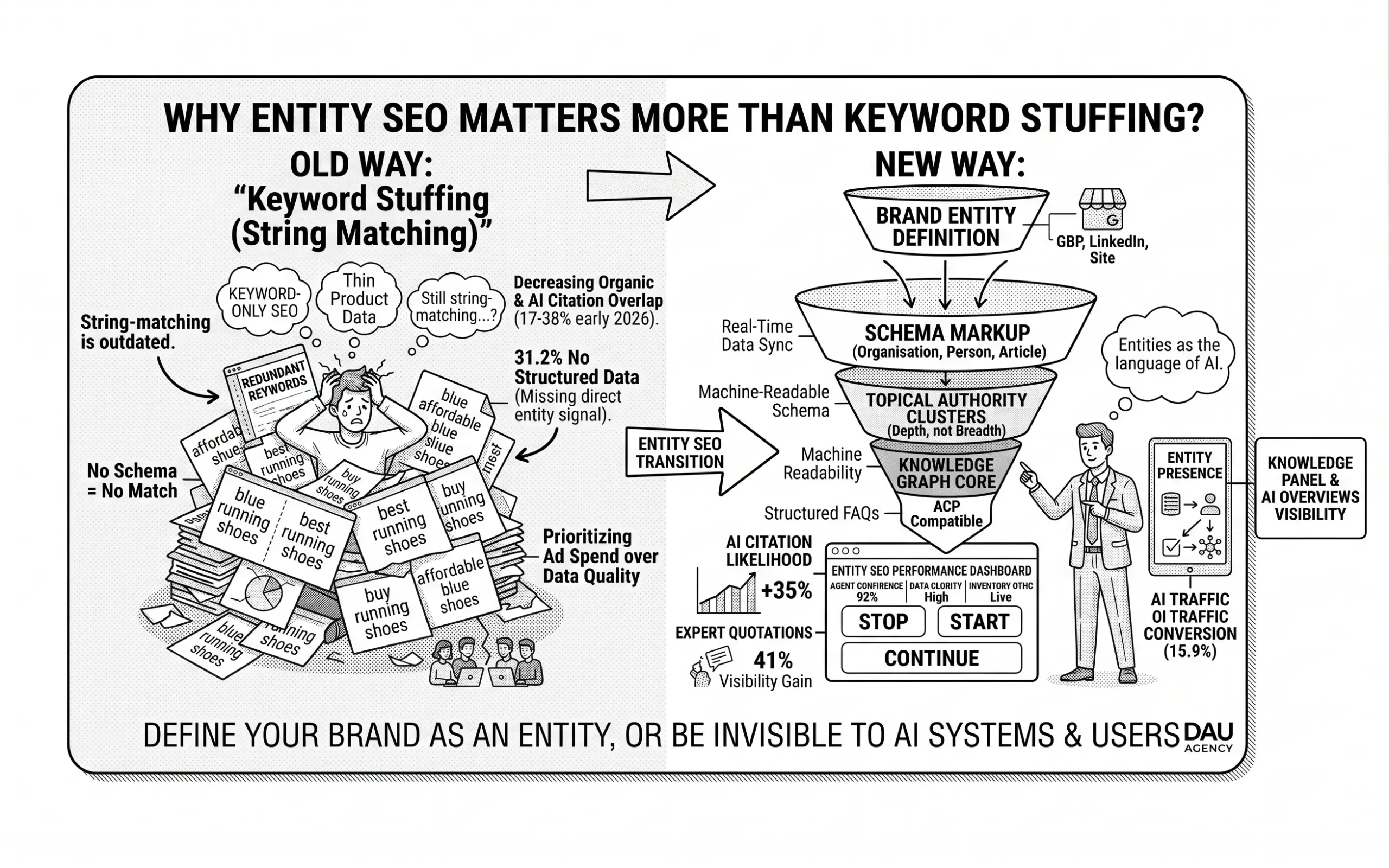
| Aspect | Traditional Keywords | AI SEO Entity Keywords |
|---|---|---|
| Focus | Exact phrases and variations | Concepts and relationships |
| Matching | Lexical string matching | Semantic understanding |
| Content approach | Keyword density and placement | Topical depth and entity coverage |
| Algorithm alignment | Older algorithms | Modern AI-driven algorithms |
| Ranking potential | Limited to specific queries | Broad query coverage |
| Content quality | Often thin or repetitive | Comprehensive and authoritative |
| Adaptability | Requires constant keyword updates | Stable across algorithm changes |
Common Mistakes and How to Avoid Them
Many content creators make errors when transitioning to entity-based SEO. Recognizing these pitfalls helps you avoid wasting effort and resources.
Keyword Stuffing in Entity Content
Some practitioners try to force entity names into content at unnatural frequencies. This approach backfires because it degrades readability and triggers quality filters. Instead, mention entities naturally where they fit contextually and rely on related terms and synonyms to reinforce the semantic field.
Ignoring Context and Relationships
Simply mentioning an entity name does not guarantee understanding. Search engines need contextual clues to determine which entity you mean and how it relates to other concepts in your content. Provide clear definitions, examples, and connections to related entities.
Neglecting Structured Data
Failing to implement schema markup means relying entirely on the search engine’s ability to infer entities from your text. While modern algorithms are sophisticated, structured data provides explicit signals that reduce ambiguity and improve accuracy.
Important Notes for Implementation
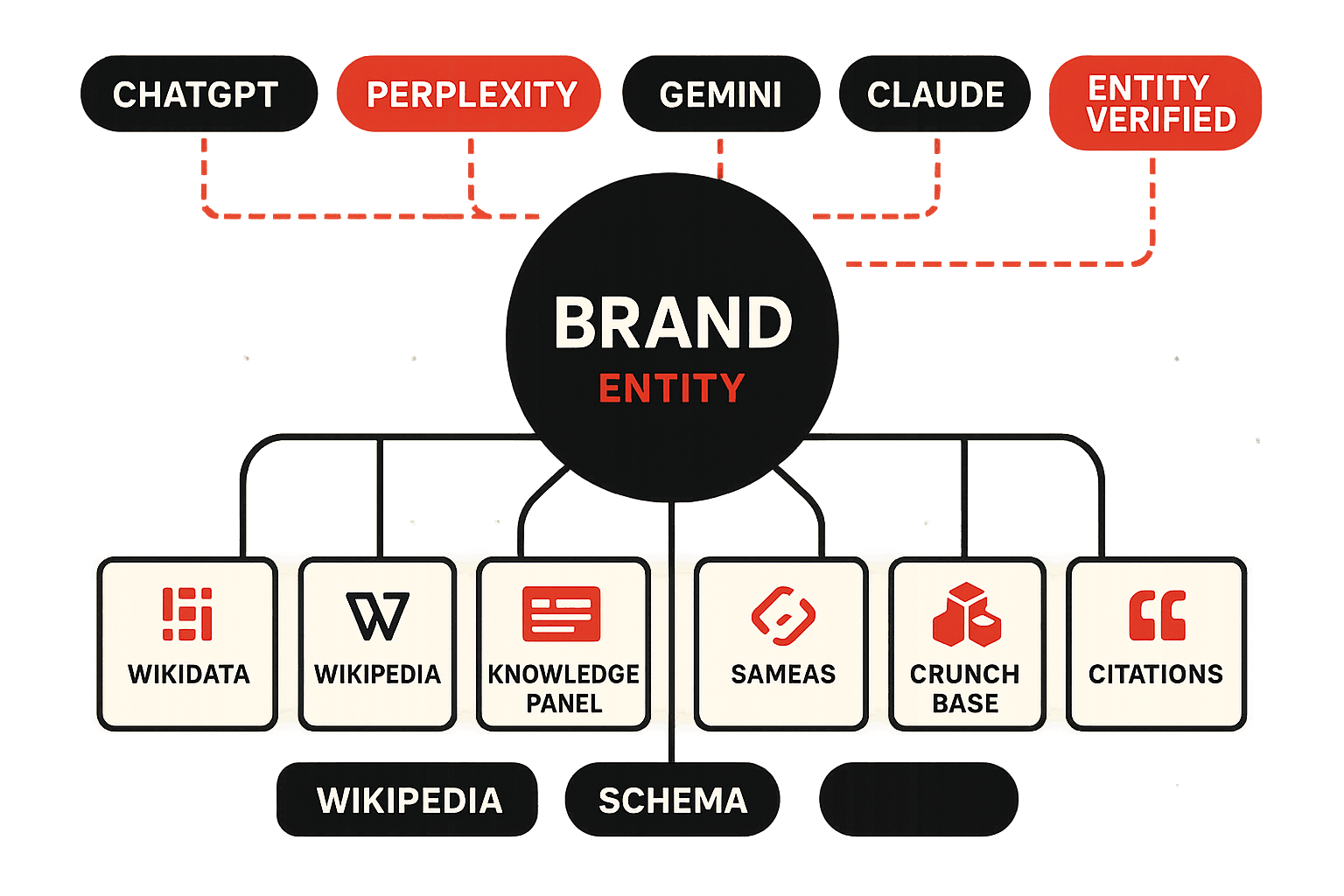
Several practical considerations can improve your success with AI SEO entity keywords. Keep these points in mind as you develop your strategy.
- Use consistent entity names across your content and structured data to avoid confusion
- Monitor how your target entities appear in search results and adjust your approach accordingly
- Prioritize user experience and content quality over entity optimization techniques
- Stay updated on changes to Google’s algorithms and entity-related documentation
- Build relationships with authoritative sites in your niche to strengthen entity associations
- Use entity extraction tools to audit your existing content for entity coverage gaps
Tools for Entity Research and Optimization
Several tools can assist with entity research and implementation. Google’s Knowledge Graph Search API allows you to query entity information directly. Natural Language API from Google Cloud provides entity extraction and sentiment analysis. SEO platforms like Ahrefs and Semrush have added entity-related features to their keyword research tools.
Wikipedia and Wikidata serve as valuable resources for understanding how entities are structured and related. The Wikidata Query Service allows you to explore entity relationships programmatically. For content optimization, tools like Surfer SEO and Clearscope analyze top-ranking pages and suggest related entities to include.
Frequently Asked Questions
What exactly are AI SEO entity keywords?
AI SEO entity keywords are terms and phrases that connect your content to identifiable concepts, people, places, or things that search engines understand through artificial intelligence and knowledge graphs. They go beyond simple keyword matching to establish semantic relationships between your content and the structured knowledge that search engines maintain.
How do entity keywords differ from regular keywords?
Regular keywords are exact strings of text that search engines match against queries. Entity keywords are connected to underlying concepts that search engines understand semantically. A regular keyword approach targets “best running shoes,” while an entity approach targets the concept of running shoes, including related entities like brands, materials, cushioning technologies, and running biomechanics.
Do I need to abandon traditional keyword research?
Traditional keyword research still provides valuable insights into user intent and demand. The key is to use keyword data as a starting point and then expand into entity research. Combine search volume data with entity identification to create content that addresses both the queries users type and the concepts they mean.
How long does it take to see results from entity-based SEO?
Entity-based SEO typically produces gradual improvements over several months. Because the approach builds topical authority and semantic relevance, results compound over time. You may see initial improvements in 2-3 months, with significant gains after 6-12 months of consistent implementation.
Can small websites benefit from entity SEO?
Small websites can benefit substantially from entity-based approaches. By focusing on a specific niche and building comprehensive entity coverage, smaller sites can establish authority in their domain. This targeted approach often yields better results than competing on broad keywords against larger, more established sites.
Conclusion
AI SEO entity keywords represent the current frontier of search optimization. As search engines continue to evolve their AI capabilities, the ability to understand and leverage entities becomes increasingly critical for ranking success. The shift from keyword matching to semantic understanding is not a passing trend but a fundamental change in how search works.
Content creators who embrace this approach position themselves for sustainable growth. By building content around entities, implementing structured data, and creating comprehensive topical coverage, you align your strategy with the direction that search technology is heading. The investment in entity research and content restructuring pays dividends through improved visibility, broader query coverage, and resilience to algorithm updates.
Start by auditing your existing content for entity coverage, identifying the key entities in your niche, and restructuring your content architecture around semantic topics. The future of SEO belongs to those who understand not just what users type, but what they mean.
Xem thêm:
- AI SEO for Education: The Complete Guide to Dominating Search in 2025
- AI SEO Article Schema: The Complete Guide to Structured Data for AI Search
- AI SEO GEO Tools: The Complete Guide to Generative Engine Optimization in 2025
- AI SEO Content Editing: The Complete Guide to Smarter, Faster Optimization
- AI SEO Keywords Everywhere: The Complete Guide to Smarter Keyword Research in 2025
Bài viết cùng chủ đề:

AI SEO SEO Automation with Make: The Complete Workflow Guide

AI SEO SEO Automation with Zapier: The Complete Workflow Guide

AI SEO SEO Automation with n8n: The Complete Workflow Guide
AI SEO SEO Automation with Gemini: The Complete Guide to Scaling Organic Growth

AI SEO SEO Automation with Claude: The Complete Guide to Scaling Content in 2025

AI SEO SEO Automation with ChatGPT: The Complete Playbook for 2025

AI SEO & SEO Automation for Affiliate Sites: The 2025 Playbook for Passive Income Growth
AI SEO & SEO Automation for Bloggers: The Complete Guide to Scaling Your Content

AI SEO & SEO Automation for Agencies: The Complete 2025 Playbook

AI SEO and SEO Automation for Ecommerce: The Complete Playbook for 2025

AI SEO & SEO Automation for WordPress: The Complete Playbook for 2025
AI SEO SEO Automation Strategy: The Complete Playbook for 2025

Mastering the AI SEO SEO Automation Process: A Complete Guide to Scaling Organic Growth
AI SEO SEO Automation System: The Complete Guide to Scaling Organic Growth in 2025
AI SEO SEO Automation Platform: The Complete Guide to Scaling Organic Growth in 2025
AI SEO SEO Automation Software: The Complete Guide to Scaling Organic Growth in 2025















