
No products in the cart.
AI SEO Entity Based Search: The Complete Guide to Future-Proofing Your Rankings
10
Aug
Aug
The landscape of digital marketing is shifting beneath our feet. Traditional keyword matching is giving way to a more intelligent, context-aware system. This is where AI SEO Entity Based Search becomes the critical differentiator between brands that thrive and those that disappear into the digital abyss. Search engines are no longer just matching strings of text; they are understanding the relationships between people, places, things, and concepts. This guide provides a deep dive into how entities work, why they matter for your SEO strategy, and how to optimize your content to align with this sophisticated search paradigm.
What is an Entity in SEO?
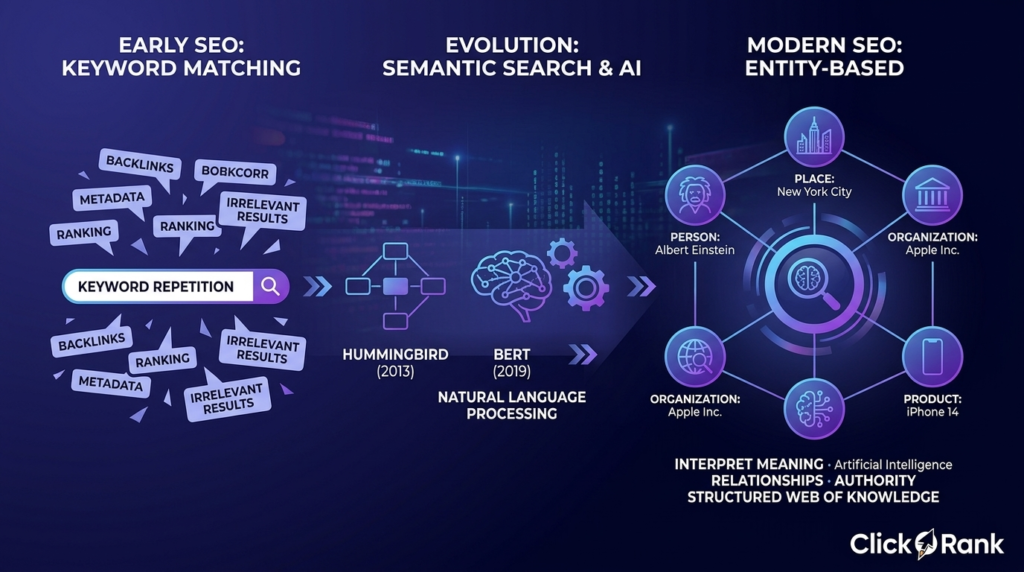
In the context of search, an entity is a distinct, well-defined object or concept that is singular, unique, and identifiable. It is not a string of words; it is the actual “thing” itself. This could be a person (Elon Musk), a place (Eiffel Tower), a product (iPhone 15), an organization (World Health Organization), or an abstract concept (Climate Change).
Search engines build a massive database of these entities and the relationships between them. This database is often referred to as a Knowledge Graph. When you search for “who is the CEO of Tesla,” the search engine understands that “Tesla” is an entity (a company) and “CEO” is a relationship. It then looks for the entity that holds that specific relationship to Tesla, which is “Elon Musk.”
This is fundamentally different from the old days of keyword matching, where the engine would look for pages containing the exact phrase “who is the CEO of Tesla.” Now, it understands the semantic meaning behind the query and retrieves the answer based on the entity relationship, not just the text on the page.
The Shift from Keywords to Entities in AI Search
For decades, SEO revolved around keywords. You identified high-volume search terms, placed them in your title tags and meta descriptions, and hoped for the best. This approach is becoming obsolete. The rise of AI SEO Entity Based Search means that search engines are now interpreting the intent behind the query, not just the literal words.
Consider the query “Apple.” In a keyword-based world, the search engine might struggle to determine if you want the fruit or the technology company. In an entity-based world, the search engine looks at your search history, location, and other contextual clues to determine which “Apple” entity you are referring to. It then serves results specifically related to that entity.
This shift has profound implications. It means that simply repeating a keyword ten times on a page is not only useless but potentially harmful. Instead, you need to build a comprehensive profile of the entity you are writing about, covering all its attributes, relationships, and variations. This is the core of AI SEO Entity Based Search optimization.
The Role of Machine Learning and Natural Language Processing
Machine Learning (ML) and Natural Language Processing (NLP) are the engines that power entity-based search. NLP allows the search engine to parse human language, understanding grammar, syntax, and sentiment. ML allows the system to learn from data, improving its understanding of entities and relationships over time.
These technologies enable the search engine to understand synonyms, acronyms, and even misspellings. If you search for “NYC,” the engine knows you are referring to the entity “New York City.” If you search for “cheap flights to the Big Apple,” it still understands you are looking for flights to New York City. This semantic understanding is what makes AI SEO Entity Based Search so powerful and so challenging for traditional SEO practitioners.
How AI Search Engines Build Knowledge Graphs
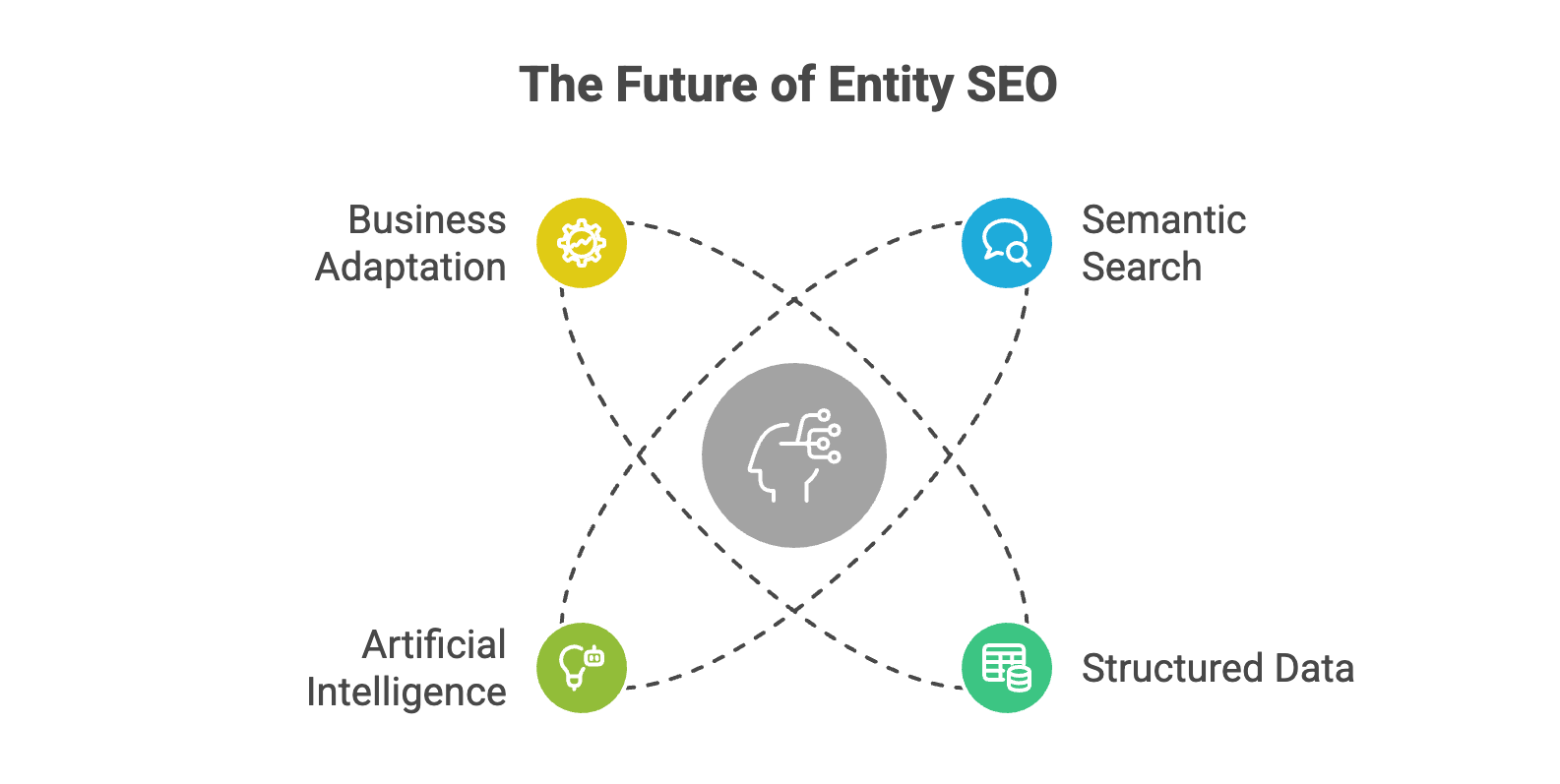
Knowledge Graphs are the backbone of entity-based search. They are structured databases that store information about entities and the connections between them. Google, Bing, and other major search engines have their own proprietary Knowledge Graphs.
These graphs are built by crawling the web, analyzing structured data (like Schema.org markup), and using AI to extract entities and relationships from unstructured text. For example, if a search engine crawls a news article that says “Amazon acquired Whole Foods in 2017 for $13.7 billion,” it will extract the entities “Amazon” and “Whole Foods,” the relationship “acquired,” and the attributes “2017” and “$13.7 billion.”
This information is then added to the Knowledge Graph, creating a richer, more detailed picture of both companies. When a user later asks, “When did Amazon buy Whole Foods?” the search engine can pull the answer directly from the Knowledge Graph, even if the original article is no longer indexed.
Structured Data and Schema Markup
One of the most effective ways to help search engines understand your content is through structured data. Schema.org provides a standardized vocabulary of tags that you can add to your HTML to explicitly define entities and their properties. This is like giving the search engine a cheat sheet for your content.
For example, if you have a page about a specific author, you can use the Person schema to mark up their name, birthdate, nationality, and occupation. If you have a product page, you can use the Product schema to mark up the price, availability, and reviews. This explicit markup removes ambiguity and helps the search engine build a more accurate entity profile for your brand.
Implementing schema markup is a technical but essential part of optimizing for AI SEO Entity Based Search. It bridges the gap between your content and the machine’s understanding of it.
Core Components of Entity-Based SEO Optimization
Optimizing for entities requires a holistic approach that goes beyond on-page content. It involves building a strong digital footprint that consistently reinforces who you are and what you represent. Here are the core components:
- Consistent NAP (Name, Address, Phone Number): For local businesses, ensuring your NAP is consistent across all directories, social media profiles, and your website is crucial. This helps search engines associate all these disparate signals with a single, unified entity.
- Wikipedia and Wikidata Presence: Having a Wikipedia page is a strong signal of notability and helps establish your entity in the search engine’s Knowledge Graph. Wikidata, the structured data companion to Wikipedia, is even more direct, as it explicitly defines entities and their relationships.
- Topical Authority: Instead of writing scattered articles on various topics, focus on becoming an authority on a specific subject. Create comprehensive, in-depth content that covers all aspects of your niche. This helps search engines understand that your website is the go-to source for information about that specific entity or topic.
- Internal Linking: Use descriptive anchor text for your internal links. Instead of “click here,” use “our guide to entity-based SEO.” This helps search engines understand the relationship between the pages on your site.
- Digital PR and Brand Mentions: Earning mentions and links from reputable, high-authority websites helps build your entity’s reputation. Even unlinked brand mentions can be valuable, as search engines use them to understand the context and sentiment surrounding your brand.
- Keyword Stuffing: Continuing to stuff your content with keywords is a surefire way to fail. It makes your content unreadable and provides no value to the search engine’s understanding of your entity.
- Ignoring Structured Data: Failing to implement schema markup is a missed opportunity. You are making the search engine work harder to understand your content, and you are increasing the risk of misinterpretation.
- Inconsistent Brand Information: Having different names, addresses, or logos across different platforms confuses search engines. It makes it harder for them to consolidate all your signals into a single entity.
- Creating Thin Content: Publishing short, low-value articles that do not cover a topic in depth does not help build topical authority. Search engines are looking for comprehensive, authoritative resources.
- Focusing on Quantity over Quality of Links: Building hundreds of low-quality links is less effective than earning a few high-quality, relevant links. Focus on building relationships and earning mentions from reputable sources.
Benefits of Optimizing for AI Entity Based Search
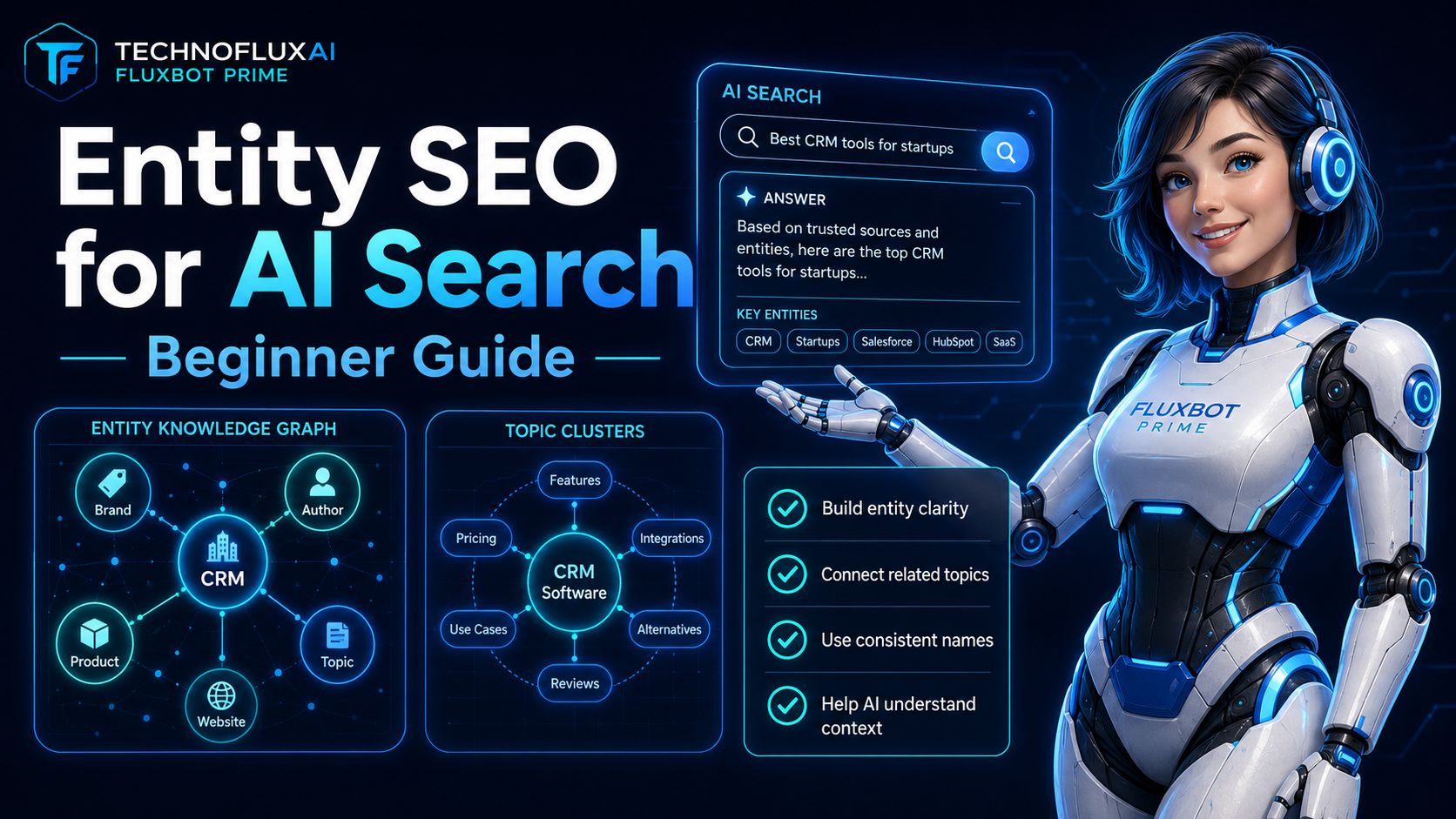
The transition to entity-based search is not just a technical challenge; it is a significant opportunity. Brands that adapt can unlock a range of benefits that were difficult to achieve with traditional SEO.
Improved Search Visibility: By optimizing for entities, you can appear in a wider range of search results, including Knowledge Panels, People Also Ask boxes, and AI-generated overviews. This increases your brand’s real estate on the search engine results page (SERP).
Enhanced Brand Authority: When search engines clearly understand your entity and its relationships, they are more likely to trust your content. This can lead to higher rankings and increased brand authority in your niche.
Future-Proofing Your Strategy: As AI continues to evolve, the importance of entities will only grow. By building a strong entity-based foundation now, you are preparing your website for the future of search, including voice search and AI assistants.
Better Understanding of User Intent: Focusing on entities forces you to think more deeply about your audience and what they are looking for. This leads to better content, a better user experience, and ultimately, higher conversion rates.
Challenges and Limitations of Entity-Based SEO
While the benefits are clear, there are also challenges that come with this new paradigm. It is not a simple switch; it requires a fundamental change in how you approach content creation and digital marketing.
Difficulty in Measuring Success: Traditional SEO metrics like keyword rankings become less relevant. It can be challenging to track your progress when you are optimizing for concepts rather than specific phrases. You need to focus on broader metrics like organic traffic, brand visibility, and share of voice.
Requires a Long-Term Strategy: Building a strong entity profile takes time. It is not a quick fix. You need to consistently produce high-quality content, build authoritative links, and maintain a consistent online presence over months and years.
Technical Complexity: Implementing structured data correctly requires technical expertise. It is easy to make mistakes that can confuse search engines or result in penalties. It is often best to work with a developer or an experienced SEO professional.
Loss of Control: Once your entity is established in a Knowledge Graph, you have limited control over how it is presented. The search engine decides which attributes to display and which relationships to highlight. You can influence this through your content, but you cannot dictate it.
Comparison: Traditional SEO vs. AI Entity Based Search
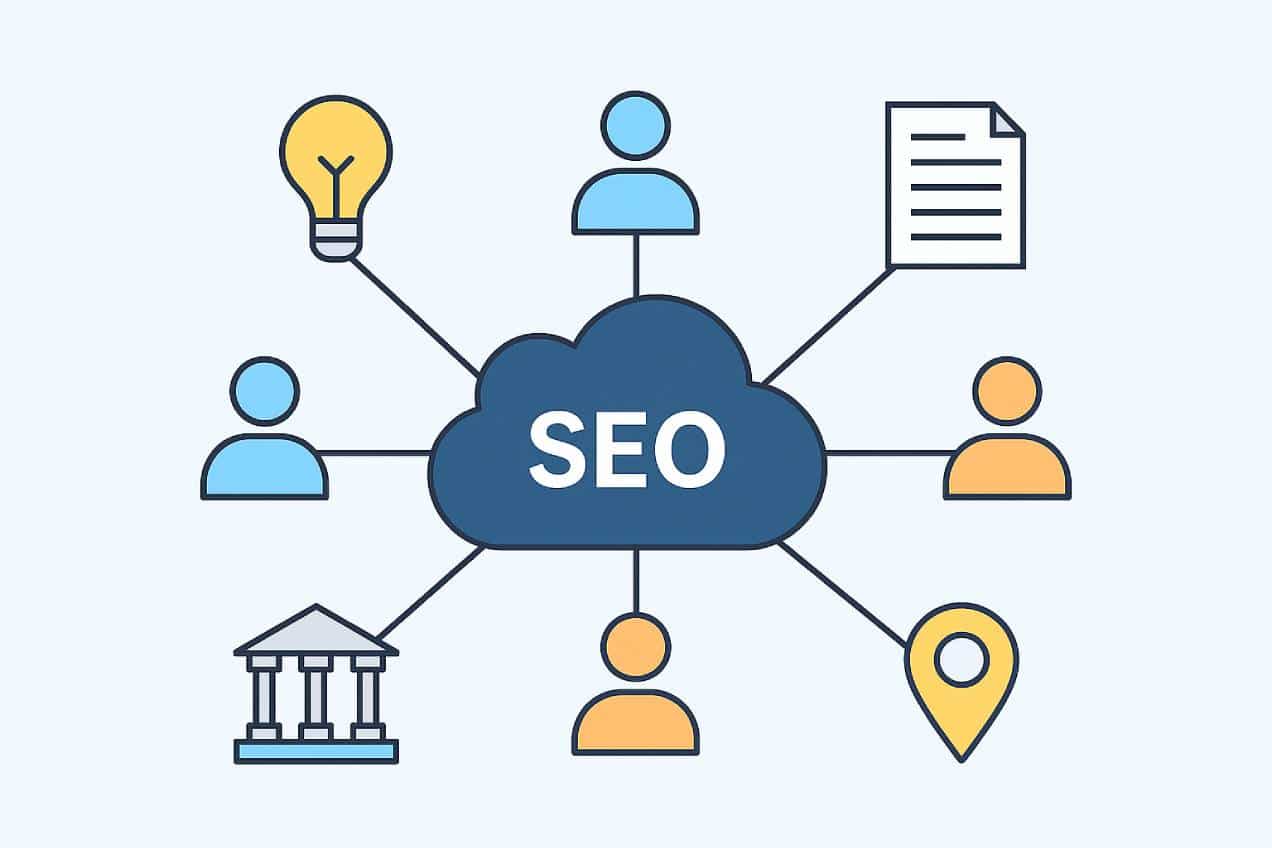
To fully grasp the significance of this shift, it is helpful to compare the two approaches side-by-side. The differences are stark and highlight why a new strategy is necessary.
| Aspect | Traditional SEO | AI Entity Based Search |
|---|---|---|
| Focus | Keywords and exact-match phrases | Concepts, entities, and relationships |
| Content Strategy | Creating pages for individual keywords | Creating comprehensive topical hubs |
| Measurement | Keyword rankings and organic traffic | Brand visibility, entity associations, and topical authority |
| User Intent | Inferred from keyword choice | Understood through context and semantics |
| Key Tactic | Link building and keyword density | Structured data, digital PR, and brand consistency |
| Search Result | List of blue links | Knowledge panels, rich results, and AI overviews |
This table illustrates the fundamental shift. Traditional SEO is about optimizing for the query. Entity-based SEO is about optimizing for the subject. The query is just the entry point to the subject.
Practical Guide: How to Implement Entity-Based SEO
Implementing an entity-based strategy involves several concrete steps. This is not a theoretical exercise; it is a practical process that you can start today.
Step 1: Define Your Core Entity
Start by clearly defining what your main entity is. Is it your brand, a specific product, or a person? Write down all the attributes that define this entity. What is it? What does it do? Who is it for? What are its key features? This will form the foundation of your optimization efforts.
Step 2: Map Out Related Entities
Identify the entities that are related to your core entity. These could be your competitors, your suppliers, your target audience, or related concepts. For example, if your core entity is a “digital marketing agency,” related entities might be “SEO,” “content marketing,” “social media,” and “brand strategy.”
Step 3: Create Comprehensive Content Hubs
Instead of creating thin content for individual keywords, create comprehensive content hubs that cover your core entity and all its related entities. A content hub is a central page (the pillar page) that provides a broad overview of the topic, with links to more detailed cluster pages. This structure helps search engines understand the relationships between all your content.
Step 4: Implement Structured Data
Add Schema.org markup to your website to explicitly define your entities. Use the Organization schema for your company, the Person schema for your authors, and the Product or Service schema for your offerings. This is the most direct way to communicate with the search engine’s Knowledge Graph.
Step 5: Build Your Digital Footprint
Ensure your brand is consistently represented across the web. This includes your website, social media profiles, business directories, and review sites. Use the same name, logo, and description everywhere. This consistency helps search engines connect all these disparate signals to a single entity.
Step 6: Earn High-Quality Mentions and Links
Focus on digital PR and outreach to earn mentions and links from authoritative websites. These mentions help build your entity’s reputation and establish its relevance. A mention from a major industry publication is far more valuable than a dozen links from low-quality directories.
Common Mistakes to Avoid in Entity-Based SEO
As with any SEO strategy, there are pitfalls to avoid. Being aware of these common mistakes can save you time and prevent you from damaging your online presence.
Important Notes for a Successful Entity Strategy
There are a few key principles to keep in mind as you navigate the world of AI SEO Entity Based Search. These are the nuances that separate successful strategies from failed ones.
Patience is Key: Building an entity profile is a long-term investment. You will not see results overnight. It takes time for search engines to crawl, index, and understand your content and its relationships.
User Experience is Paramount: While optimizing for machines is important, you should never forget the human user. Create content that is informative, engaging, and easy to read. If your content is good for humans, it is likely good for search engines too.
Monitor Your Brand Sentiment: Pay attention to what people are saying about your brand online. Negative sentiment can impact your entity’s reputation. Use social listening tools to monitor mentions and address any negative feedback promptly.
Stay Updated: The field of AI and search is constantly evolving. What works today may not work tomorrow. Stay up-to-date with the latest developments in SEO, machine learning, and natural language processing.
Frequently Asked Questions (FAQ)
What is the difference between a keyword and an entity?
A keyword is a string of text that a user types into a search engine. An entity is the actual “thing” or concept that the keyword represents. For example, “Eiffel Tower” is a keyword, but the Eiffel Tower itself—with its location, height, and history—is the entity. Search engines use keywords to identify which entity the user is looking for.
How do I find entities related to my niche?
You can find related entities by analyzing your competitors’ websites, using tools like Google’s Knowledge Graph API, and brainstorming the key concepts, people, and places associated with your industry. Look at the “People Also Ask” and “Related Searches” sections on Google to get ideas for related entities.
Is schema markup essential for entity-based SEO?
While not strictly mandatory, schema markup is highly recommended. It provides explicit signals to search engines about the entities on your page, removing ambiguity and increasing the accuracy of their understanding. It is one of the most direct ways to influence your presence in the Knowledge Graph.
Will entity-based search replace keywords entirely?
No, keywords are not going away. They are still the starting point for a user’s search query. However, their role is changing. Instead of being the primary focus of optimization, they are now a signal that helps the search engine understand the user’s intent and connect them to the relevant entity.
How long does it take to see results from entity-based SEO?
It is a long-term strategy. You may start to see improvements in your brand visibility and organic traffic within a few months, but it can take six months to a year or more to fully establish your entity and see significant results. Consistency and patience are essential.
Conclusion
The era of AI SEO Entity Based Search is here, and it is transforming the way we approach digital marketing. The focus has shifted from manipulating keywords to building a comprehensive, authoritative digital presence that search engines can understand and trust. By defining your core entity, mapping its relationships, creating in-depth content hubs, and implementing structured data, you can position your brand for success in this new landscape.
This is not a temporary trend; it is the fundamental evolution of search. The brands that embrace this change and invest in building a strong entity profile will be the ones that dominate the search results for years to come. The time to adapt is now. Start by auditing your current online presence and identifying the entities that are most important to your business. The future of your organic visibility depends on it.
Xem thêm:
- AI SEO Content Scoring: The Complete Guide to Data-Driven Content Optimization
- AI Overview Optimization: Master Google’s Generative Search for Maximum Visibility
- AI SEO Blogger Outreach: The Complete Guide to Scaling Digital PR in 2025
- AI SaaS SEO: The Ultimate Guide to Dominating Organic Growth in 2025
- AI SEO Meta Title Generator: The Complete Guide to Higher Click-Through Rates
Bài viết cùng chủ đề:

AI SEO SEO Automation with Make: The Complete Workflow Guide

AI SEO SEO Automation with Zapier: The Complete Workflow Guide

AI SEO SEO Automation with n8n: The Complete Workflow Guide
AI SEO SEO Automation with Gemini: The Complete Guide to Scaling Organic Growth

AI SEO SEO Automation with Claude: The Complete Guide to Scaling Content in 2025

AI SEO SEO Automation with ChatGPT: The Complete Playbook for 2025

AI SEO & SEO Automation for Affiliate Sites: The 2025 Playbook for Passive Income Growth
AI SEO & SEO Automation for Bloggers: The Complete Guide to Scaling Your Content

AI SEO & SEO Automation for Agencies: The Complete 2025 Playbook

AI SEO and SEO Automation for Ecommerce: The Complete Playbook for 2025

AI SEO & SEO Automation for WordPress: The Complete Playbook for 2025
AI SEO SEO Automation Strategy: The Complete Playbook for 2025

Mastering the AI SEO SEO Automation Process: A Complete Guide to Scaling Organic Growth
AI SEO SEO Automation System: The Complete Guide to Scaling Organic Growth in 2025
AI SEO SEO Automation Platform: The Complete Guide to Scaling Organic Growth in 2025
AI SEO SEO Automation Software: The Complete Guide to Scaling Organic Growth in 2025















