
No products in the cart.
AI SEO Meta Title Generator: The Complete Guide to Higher Click-Through Rates
10
Aug
Aug
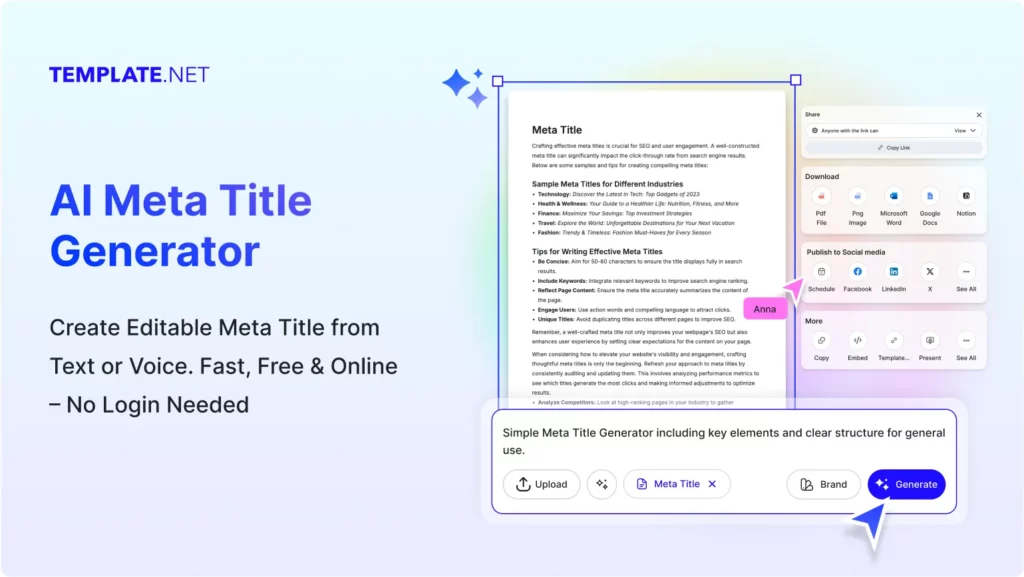
An AI SEO Meta Title Generator is a tool that uses machine learning and natural language processing to create optimized title tags for web pages. These tools analyze search engine algorithms, competitor data, and user behavior patterns to produce titles that rank well and attract clicks. In the modern search landscape, where Google processes billions of queries daily, the difference between a page that gets traffic and one that gets ignored often comes down to the meta title. This guide explores how these generators work, why they matter, and how to use them effectively for your content strategy.
What Is an AI SEO Meta Title Generator?
An AI SEO Meta Title Generator is a software application that automatically creates title tags for web content. Unlike manual title writing, these tools process vast amounts of data to understand what makes a title effective. They consider factors like keyword relevance, search intent, emotional triggers, character limits, and competitor performance.
The core function involves training on millions of existing titles and their corresponding click-through rates. The AI learns patterns that correlate with high performance. When you input a topic or keyword, the generator produces multiple title options that follow these proven patterns while maintaining uniqueness and relevance.
How the Technology Works
These tools typically use transformer-based language models similar to those powering ChatGPT. The process involves several steps:
- Input Analysis: The tool parses your target keyword, content type, and any additional parameters you provide
- Pattern Recognition: It identifies successful title structures from its training data
- Semantic Understanding: The AI grasps the meaning behind your content, not just the keywords
- Generation: It creates multiple variations using different angles, tones, and structures
- Optimization: Each title is checked against character limits and keyword placement rules
- Place the primary keyword early: The first 30 characters carry the most weight for both SEO and user attention
- Include a value proposition: Tell users what they will learn or gain by clicking your page
- Use numbers when appropriate: Titles with numbers often achieve higher CTRs because they set clear expectations
- Add emotional triggers: Words like “essential,” “proven,” or “ultimate” increase perceived value
- Keep it under 60 characters: This ensures full visibility on desktop search results
- Make it unique: Every page on your site should have a distinct title that accurately describes its content
- Match search intent: If users want information, do not promise a product review
Why Meta Titles Matter for SEO
Meta titles remain one of the most critical on-page SEO elements. They serve as the clickable headline in search engine results pages (SERPs). While Google has evolved its algorithms significantly, the title tag still influences both rankings and user behavior.
Search engines use titles to understand page relevance. A well-crafted title that includes the target keyword signals to Google that your page matches the user’s query. This relevance factor contributes to your ranking position. However, the more immediate impact is on click-through rate (CTR). A compelling title can increase CTR by 20-30% compared to a generic one.
The Connection Between Titles and Rankings
Google’s click-through rate is a known ranking factor. When your title attracts more clicks, search engines interpret this as a signal of quality and relevance. This creates a positive feedback loop: better titles lead to more clicks, which leads to better rankings, which leads to even more clicks.
Data from various SEO studies shows that pages ranking in position one receive approximately 27.6% of all clicks. Position two gets 15.8%, and position three gets 11%. Moving from position three to position one can triple your organic traffic. An AI SEO Meta Title Generator helps you compete for those top positions by optimizing the one element you control directly.
Key Features of AI SEO Meta Title Generators
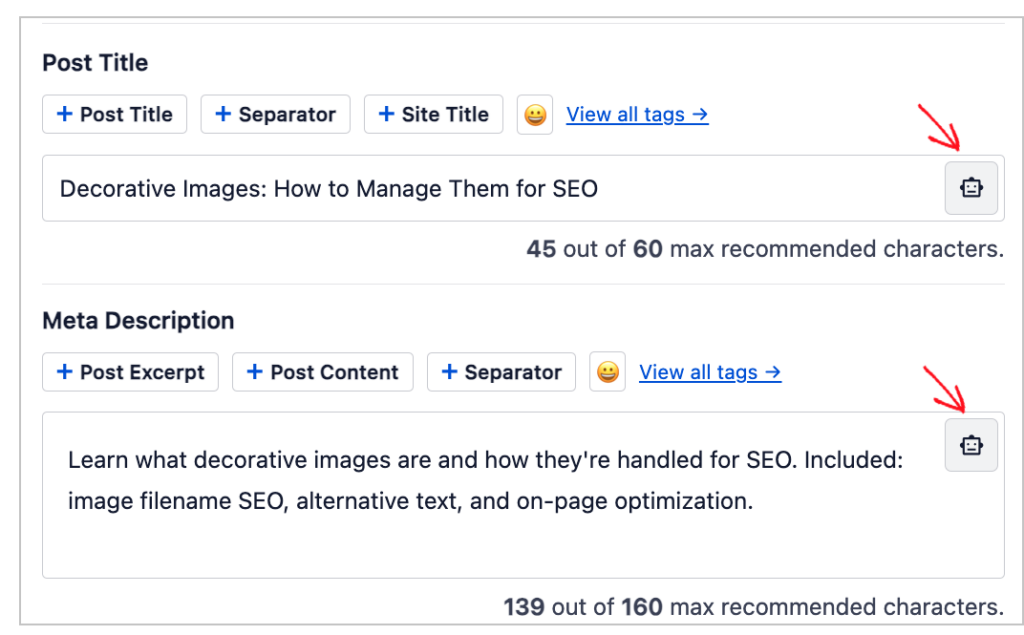
Modern AI title generators come with a range of features designed to streamline your SEO workflow. Understanding these features helps you choose the right tool and use it effectively.
Character Limit Optimization
Google typically displays the first 50-60 characters of a title tag on desktop and around 40-50 characters on mobile. The best AI generators automatically truncate or rephrase titles to fit these limits. They ensure your most important keywords and value propositions appear within the visible portion.
Keyword Placement
Search engines place more weight on keywords that appear early in the title tag. AI tools position your primary keyword at the beginning of the title whenever grammatically possible. This front-loading strategy improves both relevance signals and user comprehension.
Emotional Trigger Analysis
Effective titles evoke curiosity, urgency, or excitement. AI generators analyze which emotional triggers work best for your specific niche. They might suggest power words like “ultimate,” “proven,” “essential,” or “complete” based on what has performed well for similar content.
Competitor Gap Analysis
Many advanced tools scan the current top-ranking pages for your target keyword. They identify patterns in competitor titles and generate options that differentiate your content while addressing the same search intent. This helps you stand out in a crowded SERP.
Benefits of Using an AI SEO Meta Title Generator
The advantages of using AI for title generation extend beyond simple time savings. These tools bring a level of data-driven precision that manual writing often lacks.
Speed and Scalability
Writing effective titles manually takes time and mental energy. For websites publishing multiple articles daily, this becomes a bottleneck. AI generators produce dozens of title variations in seconds. This scalability allows content teams to maintain consistent quality across large volumes of pages.
Data-Backed Decision Making
Human intuition about what makes a good title is often wrong. AI tools base their suggestions on actual performance data from thousands of similar pages. This evidence-based approach reduces guesswork and increases the probability of creating high-performing titles.
Consistency Across Content
When different writers create titles, the quality and style can vary significantly. AI generators apply the same standards and patterns to every title they produce. This consistency helps build brand recognition and sets user expectations for your content quality.
Overcoming Writer’s Block
Even experienced SEO professionals struggle to come up with fresh title ideas after creating hundreds of articles. AI generators provide a starting point that can be refined and personalized. They offer creative angles you might not have considered.
Limitations and Challenges
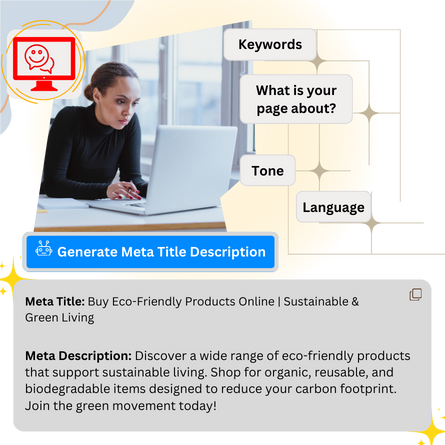
While AI SEO Meta Title Generators are powerful, they are not perfect. Understanding their limitations helps you use them more effectively and avoid common pitfalls.
Lack of Brand Voice
AI tools generate titles based on patterns, not your specific brand personality. The output can sometimes feel generic or disconnected from your unique voice. You will need to edit the suggestions to align with your brand tone.
Contextual Blind Spots
The AI does not fully understand your content’s nuances. It might generate a technically correct title that misses the core value proposition of your article. Always review the suggestions against your actual content to ensure accuracy.
Over-Optimization Risk
Some AI tools produce titles that are too keyword-dense or clickbait-heavy. Google’s spam policies penalize titles that are misleading or stuffed with keywords. You must balance AI suggestions with human judgment to maintain trustworthiness.
Comparison: AI Generators vs. Manual Title Writing
| Aspect | AI SEO Meta Title Generator | Manual Writing |
|---|---|---|
| Speed | Generates dozens in seconds | Takes minutes per title |
| Data Utilization | Uses millions of data points | Relies on personal experience |
| Creativity | Pattern-based, sometimes formulaic | Can be highly original |
| Brand Voice | Needs editing for consistency | Naturally aligned with brand |
| Scalability | Handles bulk generation easily | Difficult for large volumes |
| Cost | Subscription or per-use fees | Time cost only |
The best approach combines both methods. Use AI to generate a pool of options, then apply your expertise to select, refine, and personalize the best candidate. This hybrid strategy maximizes efficiency while maintaining quality.
How to Use an AI SEO Meta Title Generator Effectively
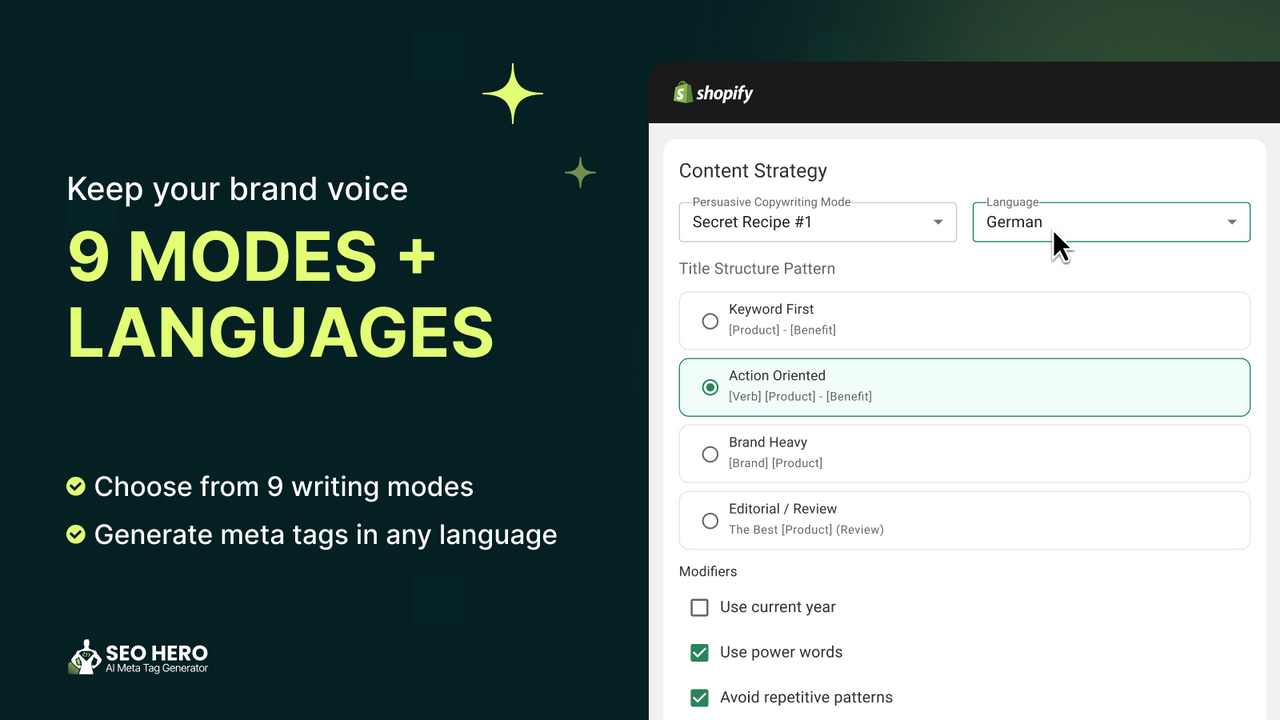
Getting the most from these tools requires a structured approach. Follow this step-by-step guide to integrate AI title generation into your SEO workflow.
Step 1: Define Your Target Keyword
Before using any tool, clarify your primary keyword. This should be the search term that best represents your content’s main topic. Use keyword research tools to identify terms with good search volume and reasonable competition. Your target keyword should appear in the title naturally, preferably near the beginning.
Step 2: Provide Context to the AI
Most generators allow you to input additional context beyond the keyword. Provide information about your content type, target audience, desired tone, and any specific value propositions. The more context you give, the more relevant the generated titles will be.
Step 3: Generate Multiple Variations
Do not settle for the first suggestion. Generate at least 10-20 title options. Different AI tools have different strengths, so consider using more than one generator for the same keyword. This gives you a wider range of angles and structures to choose from.
Step 4: Evaluate Against Your Content
Read each title and ask whether it accurately represents your content. A title that promises something your article does not deliver will increase bounce rate and damage your credibility. Eliminate any options that are misleading or exaggerated.
Step 5: Refine for Brand Voice
Edit the chosen title to match your brand’s tone. If your brand is professional and authoritative, remove casual language. If your brand is playful, add personality. This personalization step is crucial for building a consistent brand identity.
Step 6: Test and Iterate
SEO is not a one-time activity. After publishing, monitor your click-through rates in Google Search Console. If a page underperforms, use your AI generator to create new title options and test them. A/B testing titles can reveal what resonates with your audience.
Common Mistakes to Avoid
Even with AI assistance, many content creators make avoidable errors. Recognizing these mistakes helps you produce better titles and achieve better results.
Ignoring Character Limits
Google truncates titles that exceed the display limit. This cuts off important information and reduces click-through rates. Always check the character count and ensure your key message appears within the first 60 characters.
Keyword Stuffing
Some AI tools generate titles that repeat the keyword unnecessarily. This looks spammy to users and can trigger Google’s spam filters. Use your keyword once, naturally, and focus on creating value for the reader.
Clickbait Titles
Titles that promise shocking revelations or unbelievable results damage your trustworthiness. When users click and find ordinary content, they leave quickly. This increases bounce rate and signals to Google that your page does not satisfy user intent.
Duplicating Competitor Titles
AI tools trained on competitor data might suggest titles very similar to existing pages. Duplicate or near-duplicate titles confuse search engines and users. Always differentiate your titles to establish your unique value proposition.
Neglecting Mobile Users
Over 60% of searches happen on mobile devices. Mobile screens display fewer characters in titles. Ensure your title works effectively on smaller screens by keeping the most critical information at the beginning.
Best Practices for AI-Generated Meta Titles
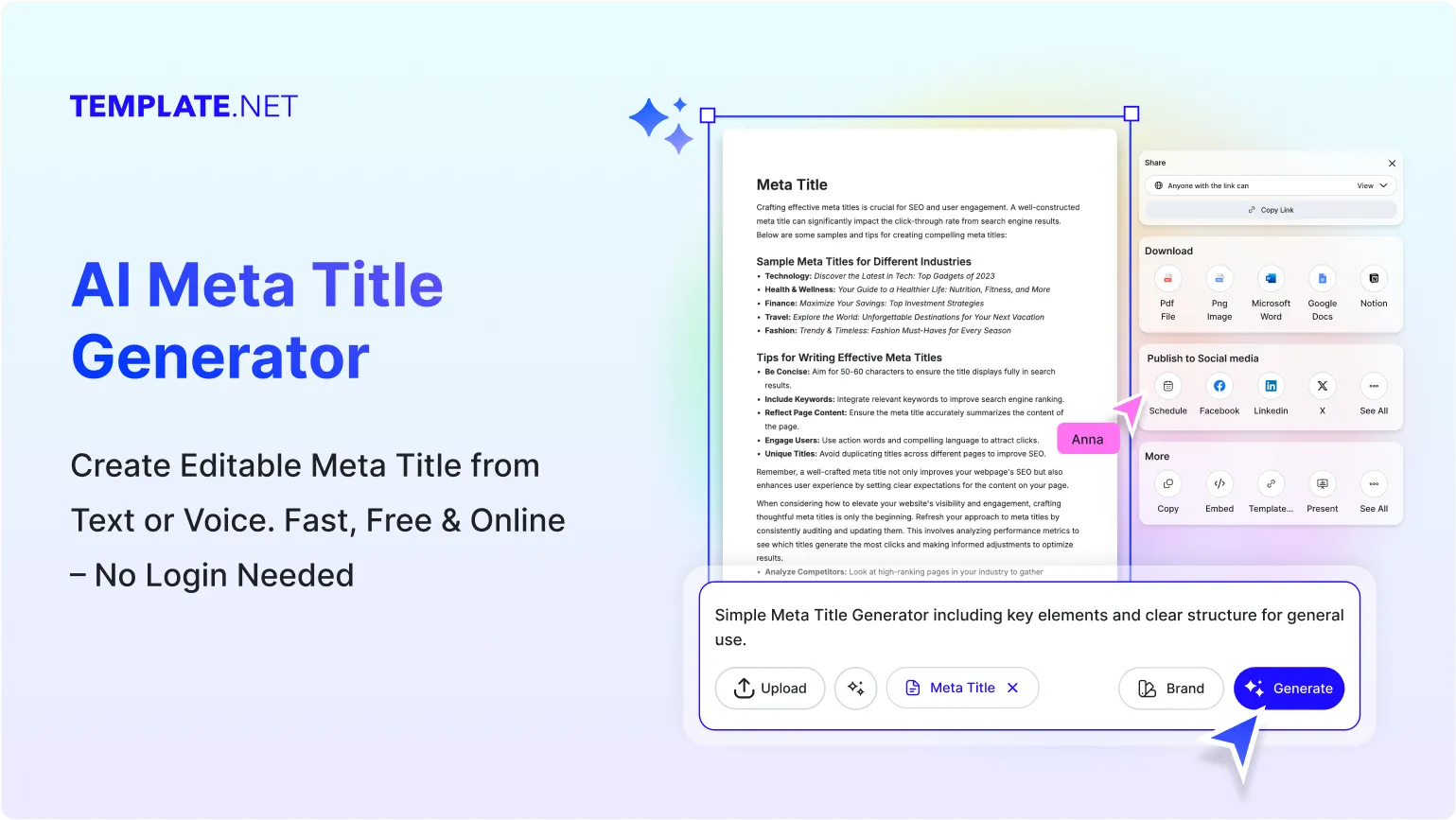
Following established best practices ensures your AI-generated titles perform optimally across all search engines.
Important Notes on AI and SEO Ethics
Using AI for title generation raises important ethical considerations. Search engines have become sophisticated at detecting manipulative SEO tactics. The goal of AI-generated titles should be to improve user experience, not to trick search engines.
Google’s guidelines explicitly state that title tags should accurately describe the page content. Misleading titles, even if generated by AI, violate these guidelines and can result in manual penalties. Always prioritize accuracy and transparency over click optimization.
Additionally, consider the broader implications of AI-generated content. While AI tools enhance productivity, they should not replace human creativity and judgment entirely. The most successful SEO strategies combine AI efficiency with human expertise and ethical standards.
Frequently Asked Questions
What is the ideal length for an SEO meta title?
The ideal length is between 50 and 60 characters. This ensures the full title displays on desktop search results without truncation. On mobile, aim for 40-50 characters since the display area is smaller. The most important keywords and value propositions should appear within the first 30 characters.
Can AI SEO Meta Title Generators replace human SEO experts?
No, these tools cannot replace human expertise. AI generators produce suggestions based on patterns, but they lack the contextual understanding and strategic thinking of experienced SEO professionals. The best results come from combining AI-generated options with human judgment for selection, refinement, and brand alignment.
How accurate are AI-generated meta titles?
AI generators produce titles that are structurally sound and keyword-optimized. However, accuracy depends on the quality of input you provide. If you give the tool clear context about your content, the titles will be more accurate. Always review the output to ensure it accurately represents your page content.
Do AI-generated titles guarantee higher rankings?
No tool can guarantee rankings. AI-generated titles improve your chances by optimizing for relevance and click-through rate, but rankings depend on many factors including content quality, backlinks, site speed, and user engagement. Use AI titles as part of a comprehensive SEO strategy.
Are there free AI SEO Meta Title Generator tools?
Yes, several free options exist. Tools like HubSpot’s Blog Topic Generator, Portent’s Title Maker, and various browser-based generators offer basic functionality at no cost. Free tools typically have fewer features and less sophisticated AI models than paid alternatives. For professional use, paid tools offer more advanced capabilities.
How often should I update my meta titles?
Review your titles whenever you update your content or notice declining performance. If a page’s click-through rate drops significantly, consider generating new title options. Seasonal content may benefit from periodic title updates to stay relevant. T
Conclusion
An AI SEO Meta Title Generator is a valuable asset in the modern content creator’s toolkit. These tools leverage machine learning to produce data-driven, optimized titles that improve visibility and click-through rates. They save time, provide creative inspiration, and ensure consistency across large content volumes.
However, the most effective use of AI title generators involves a collaborative approach. Let the AI handle the heavy lifting of generating options based on performance data. Then apply your human expertise to select, refine, and personalize the best title for your specific content and brand. This combination of artificial intelligence and human judgment produces the strongest results.
As search engines continue to evolve, the importance of compelling, accurate meta titles will only grow. By integrating AI tools into your workflow while maintaining ethical standards and brand authenticity, you position your content for sustained success in organic search. Start experimenting with these tools today to see how they can transform your click-through rates and overall SEO performance.
Xem thêm:
- AI SEO Maintenance: The Complete Guide to Sustaining Search Rankings in 2025
- AI Keyword Difficulty: The Smarter Way to Gauge Search Competition in the Age of Machine Learning
- AI Translation SEO: Mastering Multilingual Content for Global Search Dominance
- AI SEO Backlink Prospects: The Complete Guide to Smarter Link Building in 2025
- AI SEO Contextual Search: The Complete Guide to Ranking in the New Search Era
Bài viết cùng chủ đề:

AI SEO SEO Automation with Make: The Complete Workflow Guide

AI SEO SEO Automation with Zapier: The Complete Workflow Guide

AI SEO SEO Automation with n8n: The Complete Workflow Guide
AI SEO SEO Automation with Gemini: The Complete Guide to Scaling Organic Growth

AI SEO SEO Automation with Claude: The Complete Guide to Scaling Content in 2025

AI SEO SEO Automation with ChatGPT: The Complete Playbook for 2025

AI SEO & SEO Automation for Affiliate Sites: The 2025 Playbook for Passive Income Growth
AI SEO & SEO Automation for Bloggers: The Complete Guide to Scaling Your Content

AI SEO & SEO Automation for Agencies: The Complete 2025 Playbook

AI SEO and SEO Automation for Ecommerce: The Complete Playbook for 2025

AI SEO & SEO Automation for WordPress: The Complete Playbook for 2025
AI SEO SEO Automation Strategy: The Complete Playbook for 2025

Mastering the AI SEO SEO Automation Process: A Complete Guide to Scaling Organic Growth
AI SEO SEO Automation System: The Complete Guide to Scaling Organic Growth in 2025
AI SEO SEO Automation Platform: The Complete Guide to Scaling Organic Growth in 2025
AI SEO SEO Automation Software: The Complete Guide to Scaling Organic Growth in 2025















