
No products in the cart.
AI SEO Keyword Prioritization: The Complete Guide to Smarter Content Planning
10
Aug
Aug
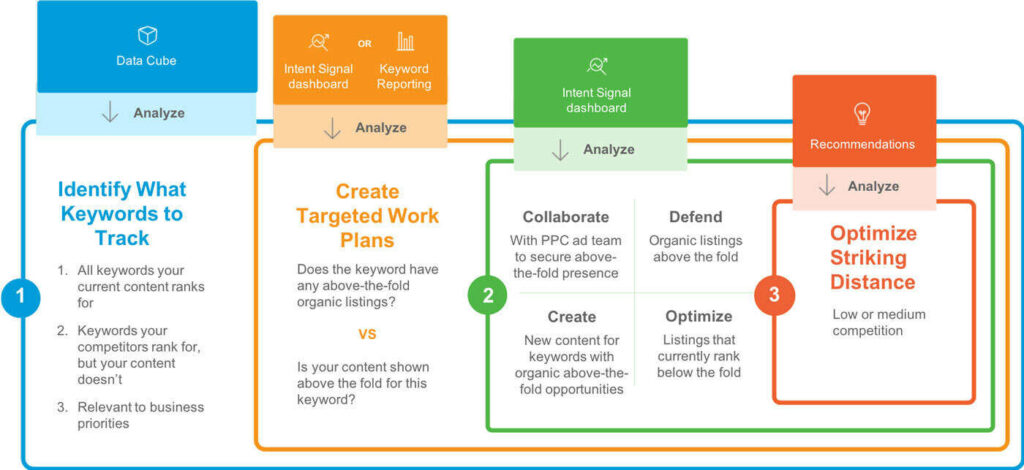
AI SEO keyword prioritization has transformed how digital marketing teams decide which search terms deserve their attention. Instead of manually sorting through thousands of spreadsheet rows, modern marketers now use machine learning algorithms to rank keywords by business impact. This shift from intuition-based selection to data-driven scoring means content teams can focus their resources on queries that actually drive revenue, not just traffic. The approach combines search volume data with predictive analytics, user intent modeling, and competitive gap analysis to create a clear hierarchy of opportunities.
What Is AI SEO Keyword Prioritization?
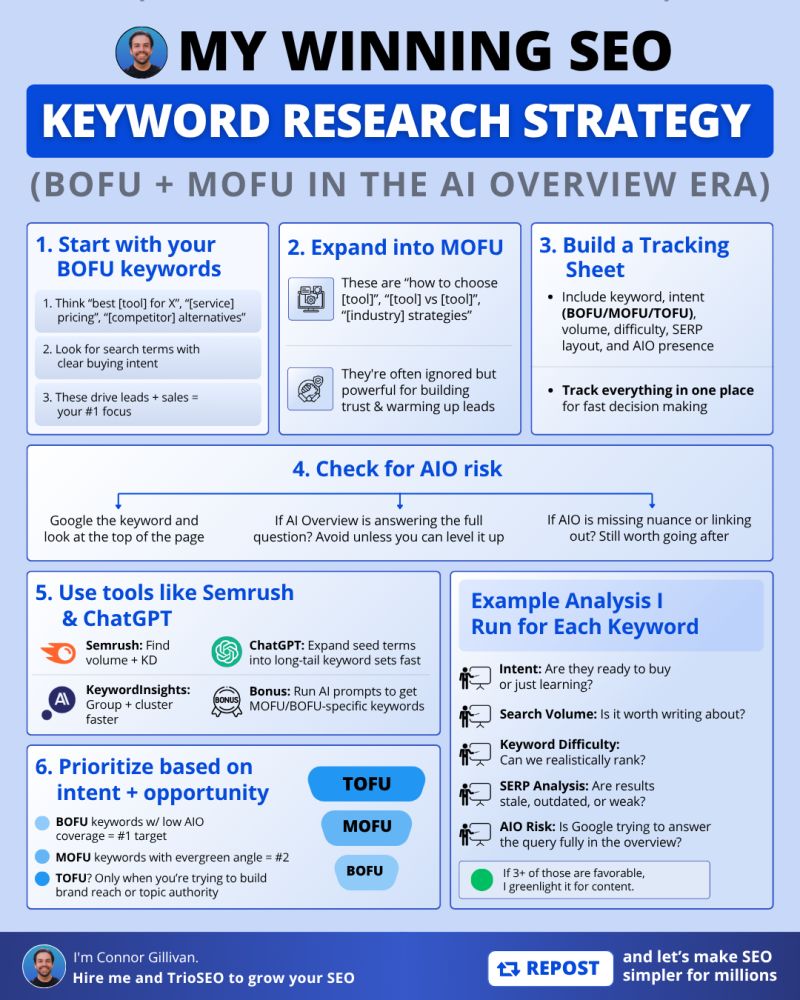
AI SEO keyword prioritization is the process of using artificial intelligence algorithms to evaluate, score, and rank target keywords based on their potential to achieve specific business outcomes. Traditional keyword research stops at identifying terms with high volume and low difficulty. AI-powered systems go several steps further by analyzing search intent patterns, predicting click-through rates, forecasting conversion probability, and even estimating the content investment required to rank.
The core difference lies in the decision-making framework. Human analysts typically rely on a handful of metrics like volume, difficulty, and current rankings. AI systems process dozens of variables simultaneously, including seasonality trends, SERP feature presence, domain authority gaps, user engagement signals, and semantic relationships between terms. This multidimensional analysis produces a priority score for each keyword, allowing teams to sort their entire content roadmap in minutes rather than weeks.
How Machine Learning Models Evaluate Keywords
Modern AI prioritization tools use supervised and unsupervised learning techniques. Supervised models are trained on historical data that shows which keywords ultimately led to conversions, sign-ups, or sales. The algorithm learns patterns from this labeled dataset and applies them to new keyword candidates. Unsupervised models cluster keywords into groups based on semantic similarity, search intent, and user behavior patterns, revealing opportunities that might not be obvious from surface-level metrics.
Natural language processing (NLP) plays a critical role in understanding query context. For example, the keyword “best running shoes” has different commercial intent than “how to tie running shoes.” NLP models detect these nuances by analyzing surrounding words, user location, device type, and even time of day. This contextual understanding ensures that prioritization aligns with the actual user journey stage, not just the literal meaning of the words.
Why Traditional Keyword Prioritization Fails
Legacy approaches to keyword prioritization rely heavily on two metrics: search volume and keyword difficulty. While these numbers provide a basic starting point, they fail to capture the full picture. High-volume keywords often attract massive competition from established domains, making them nearly impossible for newer sites to rank for. Low-difficulty keywords might be easy to rank for but could attract zero relevant traffic if the intent does not match the content offering.
Another critical failure point is the lack of dynamic adjustment. Search trends shift constantly, and a keyword that was valuable six months ago might be completely irrelevant today. Traditional spreadsheets become outdated quickly, forcing teams to redo their analysis from scratch. AI systems continuously ingest fresh data, updating priority scores in real time based on algorithm updates, competitor movements, and changing user behavior.
Additionally, manual prioritization suffers from cognitive bias. Marketers tend to favor keywords they are familiar with or that sound impressive in meetings. AI removes this subjectivity by applying consistent, transparent scoring criteria across the entire keyword universe. The result is a more objective, defensible content strategy that directly ties to business KPIs.
Core Components of an AI-Driven Keyword Prioritization System

Implementing AI SEO keyword prioritization requires understanding its fundamental building blocks. Each component contributes to the final priority score, and the weight assigned to each factor depends on the specific business model and goals.
Search Intent Classification
AI systems categorize keywords into four primary intent buckets: informational, navigational, commercial, and transactional. Informational queries seek answers or knowledge, such as “what is on-page SEO.” Navigational queries target a specific website or brand. Commercial queries involve research before a purchase, like “best CRM software for small business.” Transactional queries indicate readiness to buy, such as “buy project management tool subscription.”
Prioritization algorithms assign higher scores to keywords that align with the conversion funnel stage the business wants to target. An e-commerce site might prioritize transactional and commercial keywords, while a B2B thought leadership blog might focus on informational queries that build authority.
Predictive Performance Scoring
Beyond current metrics, AI models forecast future performance. They analyze historical click-through rate trends, seasonality patterns, and emerging topic interest. For example, a keyword related to “tax filing software” will spike in Q1 each year. The AI system recognizes this cyclical pattern and adjusts the priority score upward during the months leading up to peak season, ensuring content is published at the optimal time.
Predictive scoring also incorporates SERP feature opportunities. Keywords that trigger featured snippets, people-also-ask boxes, or video carousels receive higher priority because these features increase visibility without requiring a top-three organic ranking. The AI identifies which features are present for each keyword and estimates the additional traffic potential.
Competitive Gap Analysis
AI tools crawl competitor websites to identify keywords they rank for but your site does not. This gap analysis reveals untapped opportunities. The system also evaluates the authority of competing pages, their content depth, and their backlink profiles. If a competitor ranks with a thin, outdated article, the AI flags this as a high-priority opportunity because a superior piece of content can easily outrank them.
The competitive analysis extends beyond direct competitors. AI systems also examine adjacent industries and substitute products. A company selling project management software might discover that keywords related to “team collaboration tools” have lower competition but high relevance, opening a new content avenue.
Business Value Attribution
Not all traffic is created equal. AI prioritization systems integrate with analytics platforms to track which keywords actually drive revenue, leads, or other desired actions. This attribution data feeds back into the scoring model, giving higher priority to keywords with proven conversion history. For new keywords without historical data, the system uses lookalike modeling based on similar terms that have performed well.
This component requires clean tracking implementation. UTM parameters, goal completions, and e-commerce tracking must be properly configured for the AI to learn accurate associations. Without this data, the prioritization system operates on assumptions rather than evidence.
Benefits of AI SEO Keyword Prioritization
Adopting an AI-driven approach delivers measurable advantages across the entire content lifecycle. Teams that implement these systems report significant improvements in efficiency, accuracy, and outcomes.
- Time savings: What took weeks of manual spreadsheet analysis now happens in minutes. AI systems process thousands of keywords instantly, freeing up strategists to focus on content quality and promotion.
- Higher ROI: By focusing resources on keywords with the highest conversion probability, marketing budgets deliver better returns. Every piece of content has a clear business justification.
- Reduced guesswork: Priority scores are based on data, not intuition. This reduces the risk of creating content that nobody searches for or that cannot realistically rank.
- Adaptability: AI systems continuously update scores based on new data. When Google rolls out an algorithm update, the prioritization adjusts automatically, keeping the strategy current.
- Scalability: Whether managing 500 keywords or 500,000, the AI handles the volume without degradation in analysis quality.
- Competitive intelligence: The system provides ongoing visibility into competitor moves, alerting teams to new ranking opportunities or threats.
Limitations and Challenges
While powerful, AI SEO keyword prioritization is not a magic bullet. Understanding its limitations prevents unrealistic expectations and ensures proper implementation.
Data quality remains the biggest constraint. AI models are only as good as the data they train on. If historical conversion data is sparse or tracking is broken, the predictions will be unreliable. Similarly, keyword research tools provide estimated volumes that can be inaccurate, especially for long-tail or niche terms.
AI systems also struggle with brand-new topics that have no historical precedent. If a completely novel product category emerges, the model has no data to predict demand. In these cases, human judgment and market intuition must override the algorithm’s recommendations.
Another challenge is the black-box problem. Some AI tools do not explain why they assigned a particular score, making it difficult for marketers to trust or validate the output. Transparent systems that show the contributing factors for each score are preferable, but they are not universal.
AI SEO Keyword Prioritization vs. Traditional Methods
Understanding the differences between AI-driven and traditional approaches helps teams decide when to upgrade their processes. The table below highlights the key contrasts.
| Aspect | Traditional Prioritization | AI-Driven Prioritization |
|---|---|---|
| Metrics used | Volume, difficulty, CPC | Volume, intent, predictive CTR, conversion probability, SERP features, competitive gap |
| Analysis speed | Days to weeks | Minutes to hours |
| Update frequency | Monthly or quarterly | Continuous, real-time |
| Subjectivity | High, based on analyst judgment | Low, based on consistent algorithms |
| Scalability | Limited to a few thousand keywords | Handles millions of keywords |
| Predictive capability | None, only historical data | Forecasts future performance |
| Integration with business data | Manual, often disconnected | Direct integration with analytics and CRM |
The choice between methods depends on team size, budget, and content volume. Small teams with limited keyword lists might still manage with spreadsheets. Enterprises and agencies handling large portfolios benefit enormously from AI automation.
Practical Implementation Guide

Implementing AI SEO keyword prioritization requires a structured approach. Follow these steps to build a system that delivers actionable insights.
Step 1: Define Business Goals and KPIs
Start by clarifying what the content strategy aims to achieve. Is the goal to increase organic revenue, generate demo requests, grow email subscribers, or build brand authority? Each goal requires different prioritization weights. Document the primary and secondary KPIs, and ensure they are measurable through analytics tools.
Step 2: Audit Your Current Keyword Universe
Gather all existing keyword data from Google Search Console, paid search campaigns, and third-party tools. This includes keywords you rank for, keywords you target but do not rank for, and keywords competitors rank for. Clean the data by removing duplicates, branded terms, and irrelevant queries. This consolidated list becomes the input for the AI system.
Step 3: Select the Right AI Tool
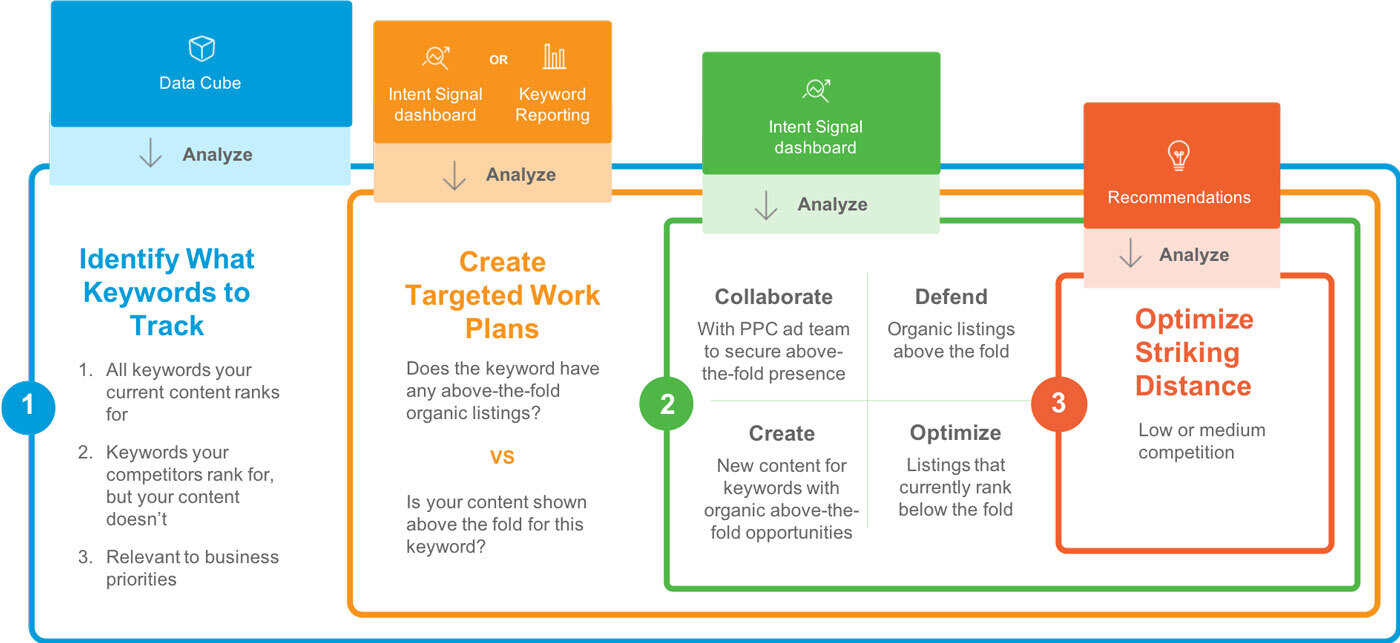
Several platforms offer AI-powered keyword prioritization features. Evaluate tools based on their data sources, scoring transparency, integration capabilities, and pricing. Popular options include Clearscope, MarketMuse, Frase, and specialized enterprise platforms like BrightEdge or Conductor. Request demos and test with your own keyword set before committing.
Step 4: Configure Scoring Weights
Most AI tools allow customization of the priority score formula. Adjust the weights based on your business goals. If conversion is the priority, increase the weight on transactional intent and historical conversion data. If traffic growth is the goal, emphasize volume and ranking probability. Document the configuration so it can be revisited and refined.
Step 5: Run the Analysis and Review Output
Upload your keyword list and let the AI process it. Review the resulting priority scores, but do not blindly accept them. Spot-check a sample of keywords to ensure the scores align with your market knowledge. Look for anomalies, such as a keyword with an impossibly high score or a clear opportunity that the system missed. Use this review to fine-tune the model.
Step 6: Integrate with Content Workflow
The prioritization output should feed directly into your content calendar. Create a system where high-priority keywords automatically generate content briefs. Assign writers, set deadlines, and track performance. The AI system should also monitor post-publication results and feed performance data back into the model for continuous learning.
Step 7: Monitor and Iterate
AI prioritization is not a set-and-forget process. Review the priority scores monthly, compare them against actual performance, and adjust the model weights as needed. Stay informed about algorithm updates and industry trends that might affect keyword value. The system improves over time as it accumulates more data about what works for your specific domain.
Common Mistakes and How to Avoid Them
Even with advanced AI tools, teams make avoidable errors that undermine their prioritization efforts. Recognizing these pitfalls is the first step toward avoiding them.
Ignoring Search Intent Nuances
Treating all keywords with the same intent label as equal is a mistake. The query “best project management software” has different intent than “project management software comparison.” The first indicates top-of-funnel research, while the second suggests a more detailed evaluation. AI tools provide intent scores, but human review ensures the content matches the specific nuance. Avoid creating generic content that tries to satisfy multiple intents at once.
Over-Reliance on Volume Metrics
High search volume is seductive, but it often comes with intense competition and vague intent. A keyword with 50,000 monthly searches might convert at 0.1%, while a long-tail keyword with 500 searches converts at 5%. The AI system should account for this, but teams sometimes override the scores to chase vanity metrics. Trust the priority score, not the raw volume number.
Neglecting Content Quality
Prioritization identifies what to write about, but it does not guarantee ranking success. Publishing thin, generic content for a high-priority keyword wastes the opportunity. Each piece must be comprehensive, well-researched, and genuinely useful. The AI can guide topic selection, but human expertise creates the content that earns links and engagement.
Failing to Update the Keyword Universe
Search behavior evolves, new products launch, and competitors enter the market. A keyword list that is not refreshed becomes stale. Set a recurring schedule to pull new keyword data and re-run the prioritization analysis. Monthly updates are a good baseline for most industries, with weekly updates for fast-moving sectors like technology or finance.
Ignoring SERP Features
Keywords that trigger featured snippets, knowledge panels, or local packs offer additional visibility opportunities. AI tools flag these features, but teams sometimes ignore them and focus only on traditional organic rankings. Optimizing content specifically for featured snippet capture can double the visibility for a single query. Pay attention to these opportunities in the prioritization output.
Important Notes for Success
Several factors determine whether AI SEO keyword prioritization delivers lasting value. Keep these considerations in mind throughout implementation.
Data integration is paramount. The AI system must connect to your analytics, search console, and CRM to access performance data. Without this integration, the model operates in a vacuum and cannot learn from actual outcomes. Invest time in setting up these connections properly.
Human oversight remains essential. AI provides recommendations, but experienced SEO professionals must validate the output and apply contextual knowledge that the algorithm lacks. The best results come from a partnership between machine efficiency and human expertise.
Prioritization is not a one-time project. It is an ongoing process that requires regular attention. Schedule recurring reviews, track the performance of prioritized keywords, and refine the model continuously. The competitive landscape and search behavior change constantly, and the system must adapt.
Finally, align prioritization with the broader marketing strategy. SEO does not operate in isolation. Coordinate with paid search, social media, and email marketing teams to ensure consistent messaging and avoid cannibalization. The AI system can incorporate data from these channels to provide a holistic view of keyword value.
Frequently Asked Questions
What is the difference between keyword research and keyword prioritization?
Keyword research is the process of discovering and collecting potential search terms. It focuses on generating a broad list of candidates. Keyword prioritization is the subsequent step where those candidates are evaluated, scored, and ranked based on their potential business value. Research answers the question “what could we target?” while prioritization answers “what should we target first?”
How does AI determine the priority score for a keyword?
AI systems calculate priority scores using a weighted formula that typically includes search volume, keyword difficulty, search intent, predicted click-through rate, conversion probability, competitive gap, and SERP feature opportunities. The exact weights vary by tool and configuration. The system analyzes historical data to learn which factors most strongly correlate with successful outcomes for your specific website.
Can small businesses benefit from AI keyword prioritization?
Yes, small businesses can benefit significantly. AI tools level the playing field by identifying low-competition, high-intent keywords that larger competitors might overlook. Many AI-powered tools offer tiered pricing, making them accessible to smaller budgets. The time savings alone justify the investment, as small teams cannot afford to spend weeks on manual analysis.
How often should keyword priority scores be updated?
For most businesses, a monthly update cycle is sufficient. Fast-moving industries like news, technology, or fashion might require weekly updates. The AI system should continuously ingest new data, but the formal review of priority scores and content calendar adjustments can happen on a set schedule. Major algorithm updates from Google might trigger an immediate re-evaluation.
Does AI keyword prioritization guarantee higher rankings?
No, prioritization does not guarantee rankings. It improves the odds by focusing effort on keywords with the best chance of success. Actual ranking depends on content quality, on-page optimization, backlinks, domain authority, and user engagement signals. Prioritization ensures you are working on the right opportunities, but execution determines the outcome.
What metrics should I track to measure the success of prioritization?
Track organic traffic growth, keyword ranking improvements, conversion rate from organic search, and revenue attributed to organic channels. Compare these metrics against the baseline before implementing AI prioritization. Also monitor the efficiency metric of time-to-rank for new content, as AI prioritization should reduce the time it takes for content to gain visibility.
Conclusion
AI SEO keyword prioritization represents a fundamental upgrade in how content strategies are built and executed. By moving beyond simple volume and difficulty metrics, AI systems provide a multidimensional view of keyword value that accounts for intent, competition, predictive performance, and business impact. The result is a content roadmap that directly supports revenue goals, eliminates guesswork, and scales effortlessly with business growth.
Successful implementation requires clean data, the right tools, and ongoing human oversight. Teams that embrace this approach gain a significant competitive advantage, producing content that ranks faster, converts better, and delivers measurable ROI. The future of SEO belongs to those who leverage artificial intelligence not as a replacement for human judgment, but as a powerful enhancement to it. Start by auditing your current keyword process, select an AI tool that fits your needs, and commit to a continuous cycle of analysis, creation, and refinement.
Xem thêm:
- AI SEO Content Clusters: The Complete Strategy for Dominating Search Rankings in 2025
- AI SEO Search Behavior: The Complete Guide to Optimizing for AI-Driven Discovery
- AI SEO Keyword Competition: How to Outrank Rivals in the Age of Machine Learning
- AI SEO Keyword Strategy: The Complete Guide to Future-Proof Search Rankings
- AI SEO Content Optimization: The Complete Guide to Ranking Higher in 2025
Bài viết cùng chủ đề:

AI SEO SEO Automation with Make: The Complete Workflow Guide

AI SEO SEO Automation with Zapier: The Complete Workflow Guide

AI SEO SEO Automation with n8n: The Complete Workflow Guide
AI SEO SEO Automation with Gemini: The Complete Guide to Scaling Organic Growth

AI SEO SEO Automation with Claude: The Complete Guide to Scaling Content in 2025

AI SEO SEO Automation with ChatGPT: The Complete Playbook for 2025

AI SEO & SEO Automation for Affiliate Sites: The 2025 Playbook for Passive Income Growth
AI SEO & SEO Automation for Bloggers: The Complete Guide to Scaling Your Content

AI SEO & SEO Automation for Agencies: The Complete 2025 Playbook

AI SEO and SEO Automation for Ecommerce: The Complete Playbook for 2025

AI SEO & SEO Automation for WordPress: The Complete Playbook for 2025
AI SEO SEO Automation Strategy: The Complete Playbook for 2025

Mastering the AI SEO SEO Automation Process: A Complete Guide to Scaling Organic Growth
AI SEO SEO Automation System: The Complete Guide to Scaling Organic Growth in 2025
AI SEO SEO Automation Platform: The Complete Guide to Scaling Organic Growth in 2025
AI SEO SEO Automation Software: The Complete Guide to Scaling Organic Growth in 2025















