
No products in the cart.
AI SEO Review Content: The Complete Guide to Automated Reviews That Rank
10
Aug
Aug
AI SEO review content has transformed how businesses generate product reviews, service feedback, and local business testimonials at scale. This approach combines artificial intelligence with search engine optimization to create review-based content that ranks well in Google while remaining genuinely useful to readers. As search engines refine their algorithms to detect unhelpful content, understanding how to leverage AI for review content without triggering penalties has become essential for digital marketers, e-commerce store owners, and local businesses alike.
What Is AI SEO Review Content?
AI SEO review content refers to written reviews, ratings summaries, and testimonial-style articles generated or assisted by artificial intelligence tools, specifically optimized to rank for search queries related to product evaluations, service comparisons, and local business feedback. This content type bridges the gap between user-generated reviews and professionally written editorial content, using machine learning models to analyze product data, customer sentiment, and search intent.
The core purpose of AI-generated review content is to capture high-intent traffic from users searching for terms like “best wireless headphones,” “XYZ software review,” or “top-rated plumbers near me.” These queries often signal strong purchase intent, making review content one of the most valuable assets for affiliate marketers, SaaS companies, and local service providers.
How AI Review Content Differs From Traditional Reviews
Traditional reviews come from actual customers who share their personal experiences. AI SEO review content, however, is systematically created using natural language processing models trained on vast datasets of product specifications, user feedback, and comparative analysis. While traditional reviews are subjective and often unstructured, AI-generated reviews follow a consistent format, incorporate target keywords naturally, and can be produced in minutes rather than days.
Search engines treat AI review content differently than organic user reviews. Google’s helpful content system specifically evaluates whether content provides substantial value beyond what users could find elsewhere. This means AI review content must offer unique insights, real testing data, or comprehensive comparisons to earn visibility.
Why AI SEO Review Content Matters in 2025
The demand for review content has exploded alongside e-commerce growth. Statista reports that over 95% of online shoppers read reviews before making a purchase decision. Simultaneously, the cost of hiring human writers to produce detailed, SEO-optimized reviews for hundreds of products has become prohibitive for many businesses. AI tools have stepped in to fill this gap, offering a scalable solution that maintains consistent quality and keyword optimization.
Search engines have also evolved to prioritize review-rich results. Google’s product review updates have consistently rewarded comprehensive, original review content while demoting thin or duplicated reviews. This creates a unique opportunity for businesses that can produce high-quality AI review content that meets these elevated standards.
The Role of Natural Language Processing in Review Generation
Modern AI SEO review content relies on advanced natural language processing models like GPT-4, Claude, and specialized review-generation tools. These models understand context, sentiment, and semantic relationships between words, allowing them to create reviews that read naturally rather than sounding robotic or keyword-stuffed. The best AI review content incorporates product specifications, user pain points, and comparative analysis in a way that mirrors expert human reviewers.
For example, an AI-generated review of a coffee maker might analyze hundreds of customer reviews to identify common complaints about brewing temperature, then highlight this in the review alongside technical specifications and a comparison with competing models. This synthesis of data creates value that individual user reviews rarely provide.
Key Components of Effective AI SEO Review Content
Creating AI review content that ranks requires more than simply prompting a language model to write about a product. Successful AI SEO review content includes several critical components that work together to satisfy both search algorithms and human readers.
Structured Data and Schema Markup
Review schema markup tells search engines that your content is a review, enabling rich snippets with star ratings in search results. AI-generated review content should include Review, AggregateRating, and Product schema to maximize click-through rates. These structured data elements help Google display your review content prominently with visual ratings that attract user attention.
Original Testing or Data Points
Google’s quality guidelines explicitly reward reviews that demonstrate first-hand experience. While AI cannot physically test products, you can feed it real testing data, benchmark results, or proprietary survey information. This transforms generic AI content into authoritative review content that stands out from the thousands of AI-generated reviews flooding the web.
Comparative Analysis
Top-ranking review content typically compares multiple products or services within the same category. AI excels at this task, processing specifications, pricing, and feature sets across dozens of products to create meaningful comparisons. Including a comparison table with key metrics improves both user experience and search visibility.
Benefits of Using AI for Review Content Creation
Businesses adopting AI SEO review content gain several distinct advantages over competitors relying solely on human writers or user-generated reviews.
- Scalability: AI can generate hundreds of product reviews in the time it takes a human writer to complete one, enabling comprehensive coverage of entire product catalogs.
- Cost Efficiency: The cost per word for AI-generated content is a fraction of professional human writing, making it accessible for small businesses and niche affiliate sites.
- Consistency: AI maintains a consistent tone, format, and keyword optimization across all review content, strengthening topical authority.
- Speed: New product launches can be covered within hours, capturing early search demand before competitors.
- Data Integration: AI can incorporate structured data from spreadsheets, APIs, and customer feedback systems directly into review narratives.
Limitations and Risks of AI Review Content

Despite the advantages, AI SEO review content carries significant risks that can damage search rankings and brand credibility if not managed properly.
Lack of Genuine Experience
Google’s helpful content system explicitly penalizes content that lacks first-hand experience. AI has not used the products it reviews, which can lead to inaccuracies, generic statements, and content that fails to provide unique value. Search engines are increasingly sophisticated at detecting content that simply rehashes product specifications without adding genuine insight.
Duplicate Content Risks
Multiple AI tools trained on similar data often produce strikingly similar review content. This creates duplicate content issues that can result in indexing problems and ranking penalties. Plagiarism checkers and Google’s algorithms can identify AI-generated text patterns, especially when the same prompts are used across different websites.
Factual Errors and Hallucinations
AI models occasionally generate plausible-sounding but incorrect information, known as hallucinations. In review content, this might manifest as incorrect specifications, wrong pricing, or fabricated user experiences. These errors damage trust and can lead to manual actions from Google.
AI SEO Review Content vs. Human-Written Reviews: A Comparison
| Factor | AI-Generated Reviews | Human-Written Reviews |
|---|---|---|
| Production Speed | Minutes per review | Hours to days per review |
| Cost | Low per-word cost | High per-word cost |
| First-Hand Experience | None (unless data is provided) | Genuine personal experience |
| Keyword Optimization | Precise and consistent | Variable, depends on writer |
| Scalability | Unlimited | Limited by writer capacity |
| E-E-A-T Signals | Weak without human oversight | Strong with author expertise |
| Factual Accuracy | Risk of hallucinations | Generally reliable |
| Uniqueness | Risk of similarity across sites | Naturally unique perspectives |
How to Create High-Quality AI SEO Review Content
Producing AI review content that ranks requires a systematic approach that combines AI efficiency with human oversight and quality control. The following process has proven effective for businesses generating review content at scale.
Step 1: Define Your Review Content Strategy
Identify the products, services, or local businesses you want to review. Prioritize items with high search volume and commercial intent. Create a content matrix that maps target keywords to specific products, including search volume data, competition level, and buyer intent signals. This strategic foundation ensures your AI review content targets queries that actually convert.
Step 2: Gather Real Data and User Insights
Collect authentic data points to feed into your AI prompts. This includes product specifications, pricing, shipping information, customer review summaries from platforms like Amazon or Trustpilot, and any proprietary testing results. The more specific and unique data you provide, the better your AI-generated review content will perform.
Step 3: Craft Detailed AI Prompts
Your prompts should instruct the AI to include specific elements: product name and model, key features, pros and cons, comparison with 2-3 competitors, target audience recommendations, and a clear verdict. Include your real data points and require the AI to reference them specifically. This prevents generic output and creates content that demonstrates genuine research.
Step 4: Human Editing and Fact-Checking
Every AI-generated review must pass through human review before publication. Editors should verify all specifications, pricing, and claims against official sources. They should also add personal commentary, real-world usage notes, or expert opinions to strengthen E-E-A-T signals. This human touch is essential for passing Google’s quality standards.
Step 5: Optimize On-Page Elements
Beyond the review text itself, optimize title tags, meta descriptions, URL structures, and image alt text with target keywords. Implement review schema markup and ensure your content is properly formatted with headings, bullet points, and tables that enhance readability and featured snippet potential.
Common Mistakes in AI SEO Review Content
Many businesses fail to see results from AI review content due to recurring mistakes that undermine both search performance and user trust.
Publishing Unedited AI Output
The most common mistake is publishing AI-generated reviews without any human review. This results in generic, error-prone content that search engines quickly identify as low-value. Always allocate time for human editing, even if it means producing fewer reviews.
Ignoring User Intent Variations
Review content must address different stages of the buyer journey. Some users want quick comparisons, others want deep technical analysis, and some want to know about long-term reliability. AI review content that only covers one angle misses significant search traffic. Create multiple review formats targeting different intents.
Keyword Stuffing in Reviews
Over-optimizing AI review content with exact-match keywords creates unnatural text that triggers spam filters. Modern AI tools can naturally incorporate keywords, but you must review the output to ensure keyword density remains reasonable and the text flows naturally.
Neglecting Local SEO for Reviews
For local businesses, AI review content must include location-specific information, local landmarks, neighborhood references, and localized keywords. Generic AI reviews that could apply to any city fail to capture local search traffic and appear inauthentic to local readers.
Important Notes on Google’s Policies for AI Review Content
Google’s spam policies explicitly address AI-generated content. The key principle is that AI-generated content is acceptable as long as it is helpful, original, and demonstrates E-E-A-T. Google does not ban AI content outright but penalizes content created primarily to manipulate search rankings without adding value.
The March 2024 core update and subsequent helpful content updates have reinforced the importance of experience, expertise, authoritativeness, and trustworthiness. For AI review content, this means you must clearly disclose AI involvement, provide evidence of real testing or data analysis, and include author bios that establish credibility.
Google’s documentation states that reviews should reflect genuine experience with the product or service. If you use AI to generate reviews, you must supplement the AI output with real user data, expert commentary, or original testing to meet this standard. Reviews that simply paraphrase product descriptions or aggregate other reviews without adding unique value are unlikely to rank well.
Tools for Creating AI SEO Review Content
Several tools have emerged specifically for generating review content, each with distinct strengths and limitations.
General-Purpose Language Models
ChatGPT, Claude, and Google Gemini can generate review content when given detailed prompts. These tools offer flexibility and can handle complex instructions, but they require significant prompt engineering and human editing to produce publishable reviews.
Specialized Review Generation Platforms
Platforms like ReviewGPT, ProductReviewAI, and similar tools are designed specifically for review content. They often include templates, schema markup integration, and product data feeds that streamline the process. However, these tools may produce more formulaic content that requires additional customization.
SEO Content Suites with AI Features
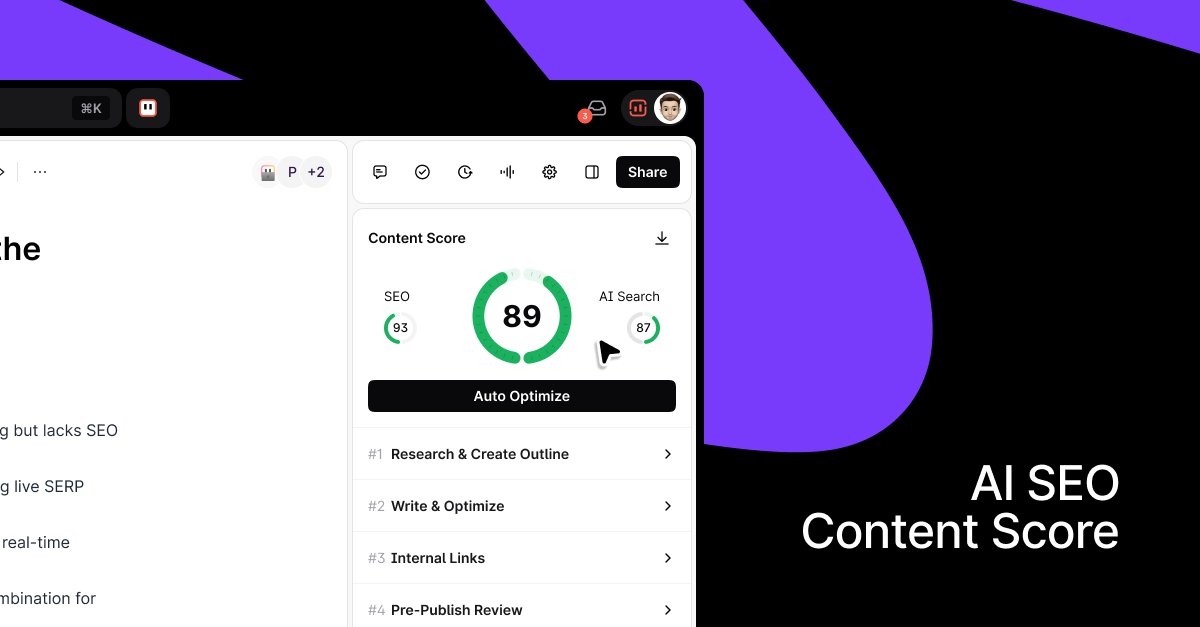
Tools like Surfer SEO, Clearscope, and Frase combine AI writing with SEO optimization features. They analyze top-ranking pages and provide real-time suggestions for keyword usage, content structure, and readability. These tools help ensure your AI review content aligns with current search engine ranking factors.
Practical Applications of AI Review Content
AI SEO review content finds practical applications across multiple industries and content types, each requiring specific adaptations.
E-Commerce Product Reviews
Online retailers use AI to generate reviews for thousands of products in their catalog. These reviews appear on product pages, category pages, and dedicated review roundups. The most effective e-commerce AI reviews incorporate customer feedback data, return rates, and quality metrics to provide genuine value beyond basic specifications.
SaaS and Software Reviews
Software review content benefits from AI’s ability to process feature comparisons, pricing tiers, and integration capabilities. AI-generated SaaS reviews can cover dozens of competing tools systematically, helping users make informed decisions. Including real user testimonials and support response times strengthens these reviews.
Local Business Reviews
Local SEO relies heavily on reviews. AI can generate review-style content for local businesses that highlights services, pricing, customer experiences, and neighborhood context. These reviews must be carefully fact-checked and localized to avoid appearing spammy or generic.
Affiliate Marketing Review Sites
Affiliate sites use AI review content to target high-value commercial keywords. The most successful affiliate sites combine AI-generated comparisons with original testing photos, video content, and personal commentary to differentiate themselves from the thousands of AI-generated affiliate pages competing for the same keywords.
Frequently Asked Questions About AI SEO Review Content
Does Google penalize AI-generated review content?
Google does not automatically penalize AI-generated content. The search engine evaluates content based on quality, helpfulness, and originality regardless of how it was produced. AI review content that provides genuine value, includes real data, and meets E-E-A-T standards can rank well. However, AI content created solely to manipulate rankings without adding value will likely face penalties under Google’s spam policies and helpful content system.
Can AI review content rank on the first page of Google?
Yes, AI review content can rank on the first page when it meets Google’s quality standards. Successful AI review pages typically include original data, comprehensive comparisons, proper schema markup, and strong on-page SEO. They also benefit from quality backlinks and domain authority. Without these supporting factors, AI review content often struggles to compete with established review sites.
How much human editing is needed for AI review content?
Substantial human editing is required for competitive keywords. Editors must verify facts, add personal insights, improve readability, and ensure the content aligns with brand voice. For low-competition long-tail keywords, lighter editing may suffice. As a general rule, the more competitive the keyword, the more human input your AI review content needs.
What is the best AI tool for writing product reviews?
No single tool works best for every situation. GPT-4 and Claude excel at generating natural, detailed review content when given comprehensive prompts. Specialized review platforms offer convenience but may produce more generic output. The best approach is to test multiple tools and combine them with your own data and editing processes to find what works for your specific niche.
How do I make AI review content sound more authentic?
Authenticity comes from specific details. Include real measurements, actual user quotes, specific use cases, and honest criticisms. Avoid absolute statements like “perfect” or “best ever.” Acknowledge trade-offs and mention situations where the product might not be the best choice. This balanced, specific approach makes AI review content feel genuine and trustworthy.
Conclusion
AI SEO review content represents a powerful opportunity for businesses to scale their review coverage and capture high-intent search traffic. The technology has matured to the point where AI-generated reviews can be informative, well-structured, and genuinely useful to readers. However, success requires more than simply running prompts through a language model and publishing the output.
The most effective AI review content strategies combine AI efficiency with human expertise, real data, and rigorous quality control. By feeding AI tools with authentic product information, supplementing generated content with personal experience, and maintaining strict editorial standards, businesses can create review content that ranks well and earns user trust. As search engines continue to refine their ability to detect low-quality AI content, the bar for what constitutes acceptable AI review content will only rise. Those who invest in quality now will build sustainable competitive advantages in the evolving landscape of search-driven commerce.
Xem thêm:
- How to Create SEO Briefs with AI: A Step-by-Step System for Faster, Smarter Content Planning
- AI SEO AI Search Tracking: The Complete Guide to Monitoring AI-Driven Discovery
- AI SEO Autonomous Agents: The Complete Guide to Hands-Free Search Optimization
- AI SEO Topical Gaps: The Complete Guide to Finding and Filling Content Voids
- WP Trove AI Automation: The Complete Guide to Streamlining Your WordPress Workflow
Bài viết cùng chủ đề:

AI SEO SEO Automation with Make: The Complete Workflow Guide

AI SEO SEO Automation with Zapier: The Complete Workflow Guide

AI SEO SEO Automation with n8n: The Complete Workflow Guide
AI SEO SEO Automation with Gemini: The Complete Guide to Scaling Organic Growth

AI SEO SEO Automation with Claude: The Complete Guide to Scaling Content in 2025

AI SEO SEO Automation with ChatGPT: The Complete Playbook for 2025

AI SEO & SEO Automation for Affiliate Sites: The 2025 Playbook for Passive Income Growth
AI SEO & SEO Automation for Bloggers: The Complete Guide to Scaling Your Content

AI SEO & SEO Automation for Agencies: The Complete 2025 Playbook

AI SEO and SEO Automation for Ecommerce: The Complete Playbook for 2025

AI SEO & SEO Automation for WordPress: The Complete Playbook for 2025
AI SEO SEO Automation Strategy: The Complete Playbook for 2025

Mastering the AI SEO SEO Automation Process: A Complete Guide to Scaling Organic Growth
AI SEO SEO Automation System: The Complete Guide to Scaling Organic Growth in 2025
AI SEO SEO Automation Platform: The Complete Guide to Scaling Organic Growth in 2025
AI SEO SEO Automation Software: The Complete Guide to Scaling Organic Growth in 2025















