
No products in the cart.
AI SEO Keyword Lists: The Complete Guide to Building High-Performance Keyword Sets
10
Aug
Aug
Building an effective SEO strategy in 2025 requires more than guessing what customers might type into Google. AI SEO keyword lists have transformed how marketers approach search intent, content planning, and competitive analysis. These lists leverage machine learning algorithms to identify patterns, predict search behavior, and uncover opportunities that traditional tools often miss. This guide explains what AI SEO keyword lists are, how to create them, and how to use them to outperform competitors in organic search results.
What Are AI SEO Keyword Lists?
AI SEO keyword lists are structured collections of search terms generated, organized, and prioritized using artificial intelligence algorithms. Unlike manual keyword research, which relies on human intuition and basic volume metrics, AI-driven lists analyze massive datasets to identify semantic relationships, search intent variations, and emerging trends in real time.
These lists go beyond simple keyword clusters. They include long-tail variations, question-based queries, voice search phrases, and predictive suggestions based on user behavior patterns. The AI processes millions of search queries, click-through rates, and content performance data to build lists that align with how users actually search at different stages of the buying journey.
How AI Generates Keyword Lists Differently
Traditional keyword tools generate lists based on exact match and broad match data. AI systems, however, use natural language processing (NLP) to understand context. For example, the keyword “apple” might generate different lists depending on whether the AI detects intent related to fruit nutrition, smartphone specifications, or investment opportunities. This contextual understanding produces more relevant keyword sets.
AI also analyzes competitor content at scale. It can crawl thousands of top-ranking pages, extract their keyword usage patterns, and identify gaps in your own content strategy. This competitive intelligence layer is something manual research cannot replicate efficiently.
Why AI SEO Keyword Lists Matter for Modern Search
Google’s algorithms have evolved to prioritize semantic search and user intent over exact keyword matching. This shift means that having a list of isolated keywords is no longer sufficient. AI SEO keyword lists provide the contextual framework needed to create content that answers questions comprehensively.
Search engines now use machine learning models like BERT and MUM to understand the relationship between words in a query. AI-generated keyword lists mirror this understanding by grouping terms that share semantic meaning. When you build content around these groups, you signal topical authority to search engines, which improves rankings for the entire cluster, not just one keyword.
The Role of Predictive Analytics
AI keyword lists incorporate predictive analytics to forecast which terms will gain traction. By analyzing historical search data, seasonal patterns, and emerging news topics, AI can suggest keywords that are about to spike in popularity. This forward-looking approach gives content creators a competitive edge by allowing them to publish before the demand curve peaks.
Core Components of an Effective AI SEO Keyword List
An effective AI-generated keyword list contains several distinct components that work together to support a complete SEO strategy.
Seed Keywords and Semantic Expansions
Seed keywords are the core terms that define your business or niche. AI takes these seeds and expands them into hundreds of semantic variations. For instance, a seed keyword like “project management software” expands into “best project management tools for remote teams,” “agile project management software comparison,” and “free project management apps for small business.”
Search Intent Classification
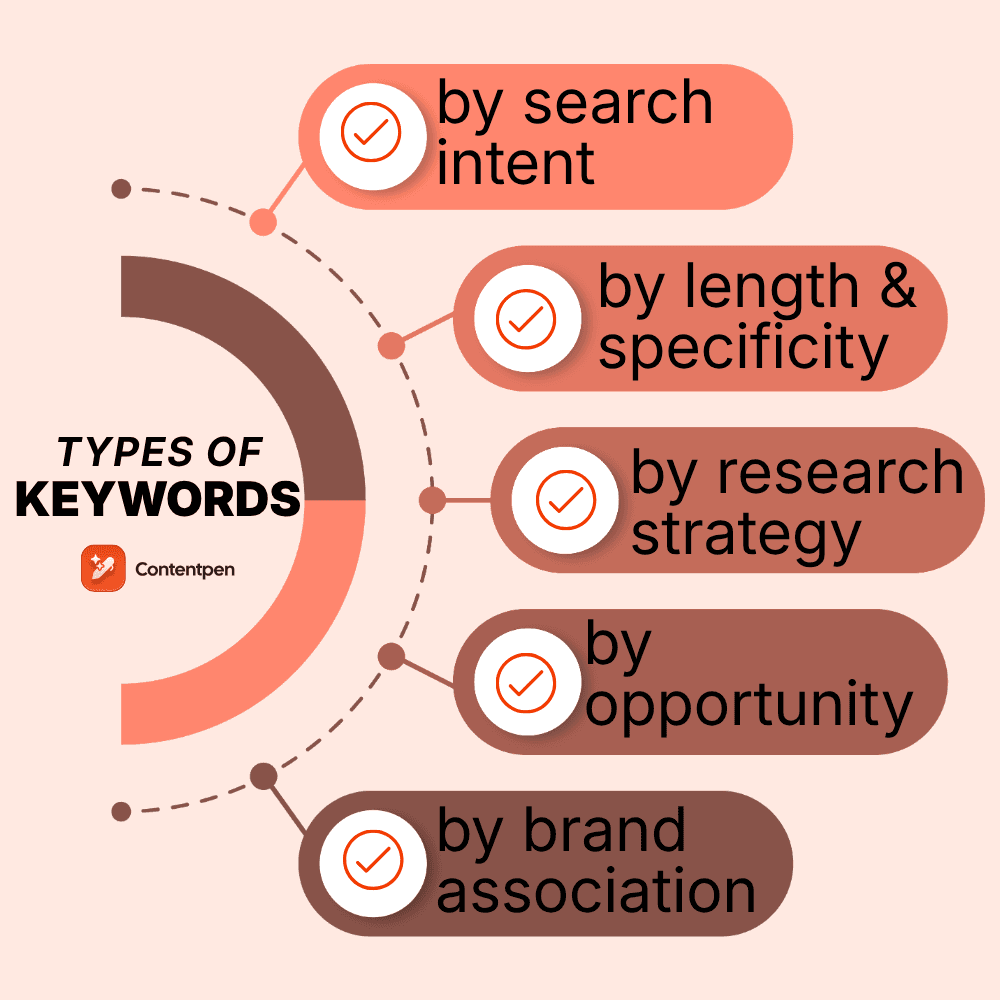
Every keyword in an AI list gets tagged with an intent classification: informational, navigational, commercial, or transactional. This classification helps content teams match the right content format to the right keyword. Informational keywords might map to blog posts, while transactional keywords map to product pages or comparison guides.
Difficulty and Opportunity Scores
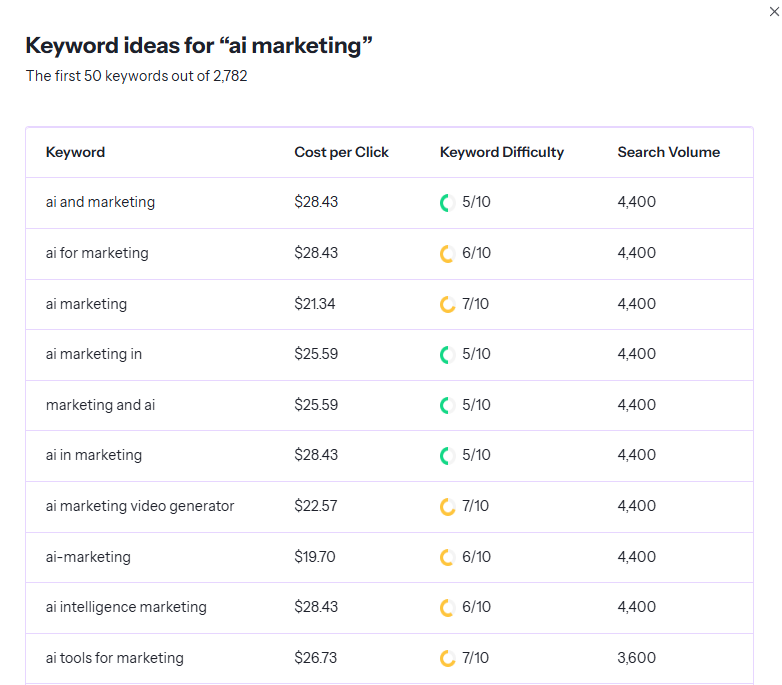
AI algorithms calculate keyword difficulty based on the authority of currently ranking pages, backlink profiles, and content quality. They also generate opportunity scores that factor in search volume, click-through potential, and conversion likelihood. These scores help prioritize which keywords deserve immediate attention.
How to Build AI SEO Keyword Lists Step by Step
Creating your own AI SEO keyword lists involves a systematic process that combines AI tools with human oversight. The following steps outline a proven workflow.
Step 1: Define Your Content Pillars
Start by identifying the main topics that define your business. These content pillars should represent the core categories of information your target audience seeks. For a fitness brand, pillars might include “strength training,” “nutrition planning,” “recovery techniques,” and “home workout equipment.”
Step 2: Input Seeds into AI Tools
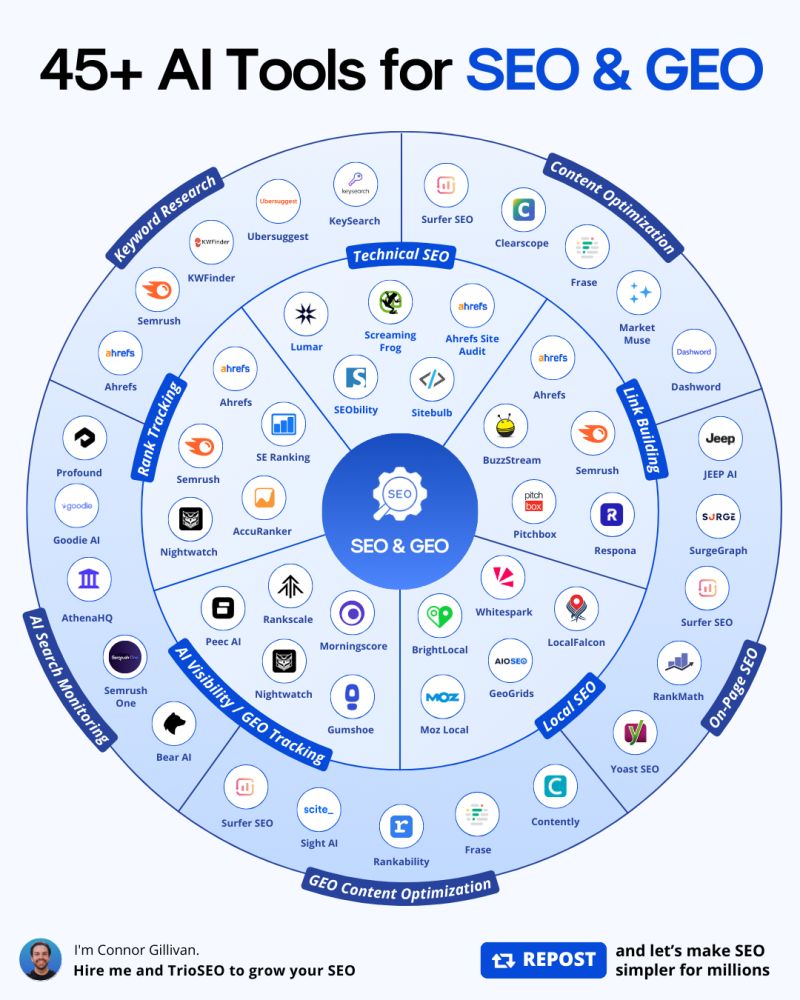
Feed your content pillars into AI-powered keyword research tools. Platforms like Clearscope, Surfer SEO, and MarketMuse use machine learning to generate comprehensive keyword lists. These tools analyze top-ranking pages and suggest related terms that your content should include to rank competitively.
Step 3: Analyze the AI-Generated Clusters
Review the clusters the AI produces. Each cluster should represent a distinct subtopic within your content pillar. Look for clusters that contain a mix of head terms, body keywords, and long-tail variations. This mix ensures you can create both broad overview content and specific deep-dive articles.
Step 4: Filter for Intent and Relevance
Not every keyword the AI suggests will be relevant to your business goals. Filter the list by removing terms that do not align with your products, services, or content strategy. Also, separate keywords by search intent so you can plan the appropriate content format for each group.
Step 5: Validate with Real Search Data
Cross-reference the AI-generated list with actual search data from Google Search Console or Google Keyword Planner. This validation step ensures the AI predictions match real-world search behavior. Pay attention to keywords that appear in both sources, as these represent high-confidence opportunities.
Practical Applications of AI SEO Keyword Lists

AI SEO keyword lists serve multiple practical purposes beyond simple content planning. Understanding these applications helps maximize the return on your keyword research investment.
Content Brief Creation
AI keyword lists form the foundation of detailed content briefs. Instead of telling a writer to target “best running shoes,” you can provide a brief that includes the full semantic cluster: “best running shoes for flat feet,” “running shoe comparison 2025,” “how to choose running shoes for marathons,” and “cushioned vs. stability running shoes.” This guidance produces more comprehensive articles that rank for multiple terms.
Internal Linking Strategy
Keyword lists reveal natural relationships between topics. Use these relationships to plan internal linking structures. When you publish an article targeting one keyword cluster, link it to related articles targeting complementary clusters. This interlinking passes authority and helps search engines understand your site’s topical architecture.
Content Gap Analysis
Compare your existing content against the AI-generated keyword list to identify gaps. If the AI suggests a cluster of keywords related to “budget project management tools” and you have no content targeting those terms, that represents an opportunity. Prioritize filling these gaps based on the opportunity scores provided by the AI.
Benefits and Limitations of AI Keyword Lists
Understanding both the advantages and constraints of AI SEO keyword lists ensures you use them effectively without over-relying on automation.
Key Benefits
- Scalability: AI can process thousands of keywords in minutes, something impossible to do manually.
- Accuracy: Machine learning reduces human bias in keyword selection, focusing on data-driven opportunities.
- Speed: Real-time data analysis means your keyword lists reflect current search trends, not outdated information.
- Comprehensive coverage: AI identifies long-tail and niche keywords that manual research often misses.
- Data dependency: AI is only as good as the data it trains on. Poor quality input data leads to poor keyword suggestions.
- Lack of creative intuition: AI cannot understand brand voice nuances or creative angles that might resonate with your specific audience.
- Over-optimization risk: Following AI suggestions too literally can lead to generic content that lacks differentiation.
Limitations to Consider
Comparison: AI Keyword Lists vs. Traditional Keyword Research
| Feature | AI SEO Keyword Lists | Traditional Keyword Research |
|---|---|---|
| Data processing speed | Processes millions of queries in seconds | Manual analysis of limited datasets |
| Semantic understanding | Uses NLP to understand context and intent | Relies on exact match and broad match logic |
| Trend prediction | Predictive analytics forecast emerging terms | Reactive, based on historical data only |
| Competitor analysis | Automated crawling of competitor content | Manual review of top-ranking pages |
| Scalability | Unlimited keyword generation | Limited by human time and effort |
| Cost | Subscription fees for AI tools | Lower tool costs but higher labor costs |
Common Mistakes When Using AI SEO Keyword Lists
Even with advanced AI tools, marketers make predictable errors that undermine their keyword strategy. Recognizing these mistakes helps you avoid them.
Ignoring Search Intent Variations
Many marketers treat all keywords in an AI list the same way. A keyword like “how to fix a leaky faucet” has informational intent, while “plumber near me” has transactional intent. Creating the same content format for both will fail to satisfy user expectations. Always separate keywords by intent before planning content.
Targeting Only High-Volume Keywords
High-volume keywords attract attention, but they also attract intense competition. AI lists often include lower-volume, long-tail keywords with higher conversion potential. Ignoring these in favor of high-volume terms means missing out on qualified traffic that is more likely to convert.
Failing to Update Lists Regularly
Search behavior changes constantly. An AI keyword list generated six months ago may contain outdated terms or miss new trends. Schedule regular updates to your keyword lists, ideally monthly, to stay aligned with current search patterns.
Copying Competitor Keywords Without Differentiation
AI tools often generate lists based on competitor analysis. Using the exact same keywords as your competitors without adding unique angles or additional semantic terms results in me-too content that offers no competitive advantage.
Important Notes for Maximizing AI Keyword List Performance
Several best practices enhance the effectiveness of AI SEO keyword lists in your overall strategy.
Combine AI Insights with Human Expertise
AI provides data, but human expertise provides context. Your knowledge of your industry, customers, and unique value proposition should guide how you interpret and prioritize AI-generated keywords. The best results come from a partnership between machine efficiency and human judgment.
Monitor Performance Metrics Continuously
Track how pages targeting AI-generated keywords perform in search rankings, organic traffic, and conversions. This performance data feeds back into your keyword strategy, helping you refine future lists. Use Google Analytics and Search Console to monitor these metrics.
Integrate with Other SEO Data Sources
AI keyword lists work best when combined with other data sources like backlink analysis, technical SEO audits, and user behavior analytics. This integrated approach provides a complete picture of your search performance.
Frequently Asked Questions
What is the difference between AI keyword lists and regular keyword lists?
AI keyword lists use machine learning algorithms to analyze search patterns, semantic relationships, and user intent at scale. Regular keyword lists typically rely on manual research and basic volume data. AI lists provide more comprehensive coverage, predictive insights, and intent classification that manual methods cannot match.
How often should I update my AI SEO keyword lists?
Update your AI SEO keyword lists at least monthly. Search trends shift rapidly, especially in industries affected by technology changes, seasonal demand, or news cycles. More frequent updates may be necessary for fast-moving niches like digital marketing, fashion, or finance.
Can AI SEO keyword lists replace manual keyword research?
AI keyword lists should complement, not replace, manual research. Human researchers bring creative intuition, brand knowledge, and strategic thinking that AI lacks. The most effective approach combines AI-generated data with human analysis and decision-making.
Which AI tools are best for generating keyword lists?
Several tools excel at AI keyword generation. Clearscope and MarketMuse focus on content optimization and semantic keyword suggestions. Surfer SEO provides comprehensive keyword data with SERP analysis. Ahrefs and SEMrush have integrated AI features that enhance their traditional keyword research capabilities. The best tool depends on your specific needs and budget.
How do AI keyword lists help with voice search optimization?
AI keyword lists include natural language phrases and question-based queries that match how people speak. Voice search users typically use longer, conversational phrases. AI algorithms identify these patterns and include them in keyword lists, helping you optimize content for voice search assistants like Siri, Alexa, and Google Assistant.
Conclusion
AI SEO keyword lists represent a fundamental shift in how digital marketers approach search optimization. These lists provide deeper insights, broader coverage, and predictive capabilities that traditional keyword research cannot deliver. By understanding how AI generates these lists, applying them strategically across content creation and site architecture, and avoiding common pitfalls, you can build a search presence that outperforms competitors.
The most successful SEO strategies will combine AI-generated keyword intelligence with human creativity and strategic judgment. Start implementing AI keyword lists in your workflow today, monitor the results, and refine your approach based on performance data. The search landscape continues to evolve, and those who leverage AI effectively will maintain a significant competitive advantage in organic search rankings.
Xem thêm:
- AI Topical Map: How to Build Unshakeable Topical Authority with Machine Intelligence
- AI SEO for Small Business: The Complete Guide to Smarter Rankings on a Budget
- Open Source AI SEO Tools: The Complete Blueprint for Data-Driven Search Visibility
- AI SEO Product Schema: The Complete Guide to Structured Data That Ranks
- AI SEO Short Form Content: The Complete Playbook for 2025
Bài viết cùng chủ đề:

AI SEO SEO Automation with Make: The Complete Workflow Guide

AI SEO SEO Automation with Zapier: The Complete Workflow Guide

AI SEO SEO Automation with n8n: The Complete Workflow Guide
AI SEO SEO Automation with Gemini: The Complete Guide to Scaling Organic Growth

AI SEO SEO Automation with Claude: The Complete Guide to Scaling Content in 2025

AI SEO SEO Automation with ChatGPT: The Complete Playbook for 2025

AI SEO & SEO Automation for Affiliate Sites: The 2025 Playbook for Passive Income Growth
AI SEO & SEO Automation for Bloggers: The Complete Guide to Scaling Your Content

AI SEO & SEO Automation for Agencies: The Complete 2025 Playbook

AI SEO and SEO Automation for Ecommerce: The Complete Playbook for 2025

AI SEO & SEO Automation for WordPress: The Complete Playbook for 2025
AI SEO SEO Automation Strategy: The Complete Playbook for 2025

Mastering the AI SEO SEO Automation Process: A Complete Guide to Scaling Organic Growth
AI SEO SEO Automation System: The Complete Guide to Scaling Organic Growth in 2025
AI SEO SEO Automation Platform: The Complete Guide to Scaling Organic Growth in 2025
AI SEO SEO Automation Software: The Complete Guide to Scaling Organic Growth in 2025















