
No products in the cart.
AI SEO Geo Targeting: The Complete Guide to Local Search Dominance in 2025
31
Jul
Jul
AI SEO geo targeting is transforming how businesses capture local search traffic. This advanced approach combines artificial intelligence with geographic location data to deliver hyper-personalized content, ads, and search results. For marketers, understanding AI SEO geo targeting is no longer optional—it is essential for staying competitive in local markets. This guide breaks down everything you need to know, from core concepts to advanced implementation strategies that drive measurable results.
What Is AI SEO Geo Targeting?
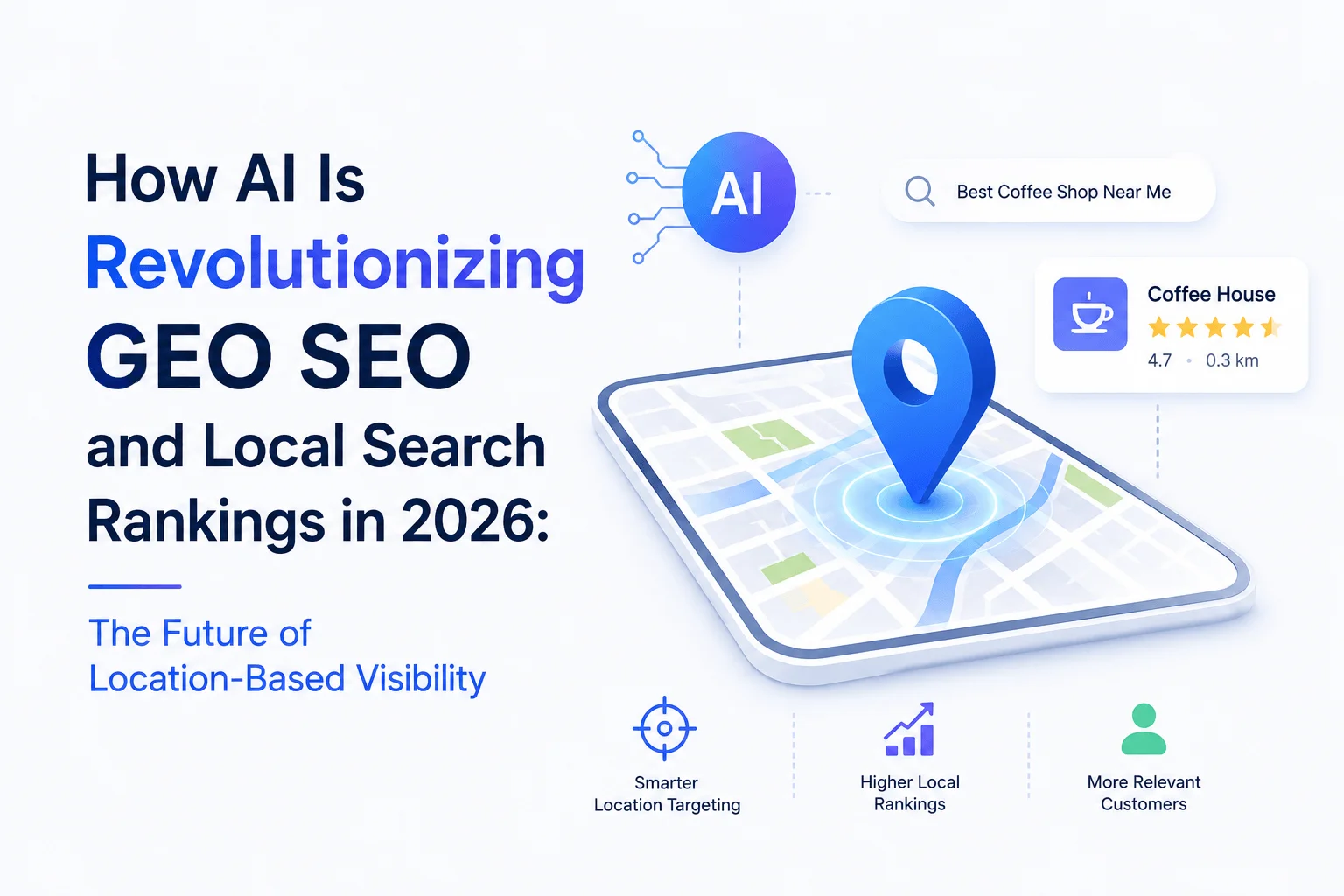
AI SEO geo targeting refers to the use of artificial intelligence algorithms to optimize website content, metadata, and digital assets for specific geographic locations. Unlike traditional local SEO, which relies on manual keyword research and static location pages, AI-powered geo targeting dynamically analyzes search patterns, user behavior, and regional language nuances in real time.
The system processes massive datasets including search queries, click-through rates, device locations, and even weather patterns to determine which content variations perform best in each area. For example, a national restaurant chain can automatically show different menu descriptions, promotions, and opening hours to users in New York versus Los Angeles, all without manual intervention.
How AI SEO Geo Targeting Works: The Core Mechanics
To fully leverage AI SEO geo targeting, you must understand its underlying processes. The technology operates through a multi-layered framework that combines data collection, machine learning, and automated content delivery.
1. Data Collection and Signal Processing
AI systems gather geographic signals from multiple sources. IP addresses provide coarse location data, while GPS coordinates from mobile devices offer precise positioning. Search engine query logs reveal local language variations, such as “soda” versus “pop” or “subway” versus “underground.” The AI also tracks local events, holidays, and seasonal trends that influence search behavior.
2. Machine Learning Models for Location Prediction
Machine learning algorithms analyze historical search data to predict which geographic areas are most likely to convert. These models consider factors like distance from physical stores, regional competition density, and local purchasing power. The AI continuously refines its predictions based on new data, ensuring that geo targeting strategies remain effective as markets evolve.
3. Dynamic Content Generation
Once the AI identifies a user’s location, it generates or selects the most appropriate content version. This includes localized headlines, product descriptions, customer reviews, and even currency formats. Advanced systems use natural language processing (NLP) to rewrite content on the fly, preserving brand voice while adapting to regional dialects and cultural references.
4. Automated Bid and Budget Adjustment
For paid search campaigns, AI SEO geo targeting automatically adjusts bids based on location performance. If users in Chicago convert at twice the rate of users in Miami, the system shifts more budget toward Chicago. This real-time optimization maximizes return on ad spend (ROAS) across different geographic segments.
Key Components of an AI Geo Targeting Strategy
Implementing AI SEO geo targeting requires a structured approach. The following components form the backbone of any successful strategy.
Geographic Keyword Clustering
Traditional keyword research groups terms by topic. AI geo targeting takes this further by clustering keywords based on geographic intent. For instance, “best pizza” might cluster differently in New York (where thin crust dominates) versus Chicago (where deep dish reigns). AI tools identify these regional variations automatically, allowing you to create location-specific keyword maps.
Localized Schema Markup
Schema markup helps search engines understand your content’s geographic relevance. AI systems generate and implement LocalBusiness, GeoCoordinates, and AreaServed schema at scale. This structured data improves your chances of appearing in local packs, Google Maps results, and voice search answers.
Geo-Adaptive Content Hubs
Instead of creating separate pages for every city, AI enables the creation of dynamic content hubs. These hubs use templates that automatically populate with location-specific data—store addresses, local testimonials, regional FAQs, and nearby landmarks. This approach eliminates duplicate content issues while maintaining high relevance for each geographic area.
Predictive Analytics for Market Expansion
AI geo targeting tools analyze market saturation, competitor presence, and search demand to recommend new geographic expansion opportunities. These predictive models help businesses identify underserved areas with high growth potential, reducing the risk of entering saturated markets.
Benefits of AI SEO Geo Targeting for Businesses
The advantages of AI-powered geo targeting extend far beyond simple local search rankings. Businesses that adopt this technology experience measurable improvements across multiple performance indicators.
- Higher Conversion Rates: Content that speaks directly to a user’s local context builds trust and relevance, leading to more clicks, calls, and purchases.
- Improved User Experience: Visitors see information that matches their immediate needs, such as local store hours, directions, and region-specific promotions.
- Cost Efficiency: AI eliminates wasted ad spend by focusing budgets on high-performing geographic segments.
- Scalability: Manual geo targeting becomes impossible beyond a handful of locations. AI handles thousands of geographic variations simultaneously.
- Competitive Advantage: Early adopters gain an edge over competitors still using static, one-size-fits-all content.
- Real-Time Adaptation: AI responds instantly to changing conditions, such as a sudden spike in searches for “emergency plumber” during a local storm.
- Automated location-based keyword clustering
- Dynamic content generation with NLP
- Integration with Google Business Profile and local directories
- Real-time bid management for local PPC campaigns
- Predictive analytics for market expansion
- Store locations with precise coordinates
- Local phone numbers and hours of operation
- Regional product availability and pricing
- Local customer reviews and testimonials
- Historical search performance by location
- City and neighborhood names
- Local landmarks and references
- Regional promotions and events
- Local customer success stories
- Directions and parking information
Limitations and Challenges of AI Geo Targeting

While powerful, AI SEO geo targeting is not without its challenges. Understanding these limitations helps you set realistic expectations and implement mitigation strategies.
Data Privacy and Compliance
Collecting location data raises privacy concerns. Regulations like GDPR in Europe and CCPA in California impose strict rules on how geographic data can be collected and used. Non-compliance results in hefty fines and reputational damage. Your AI systems must be designed with privacy-by-default principles, including anonymization and user consent mechanisms.
Algorithm Bias
AI models trained on historical data can perpetuate existing biases. For example, if past data shows higher conversion rates in affluent neighborhoods, the AI might allocate more resources there, neglecting emerging opportunities in other areas. Regular audits of AI decision-making processes are necessary to ensure fair and balanced geo targeting.
Technical Complexity
Implementing AI geo targeting requires significant technical expertise. You need data engineers, machine learning specialists, and SEO professionals working together. Small businesses without these resources may struggle to deploy and maintain such systems.
Over-Localization Risks
Excessive localization can alienate users who expect a consistent brand experience. If your New York page and Texas page differ too dramatically, you risk diluting brand identity. Striking the right balance between localization and consistency requires careful testing and monitoring.
AI SEO Geo Targeting vs. Traditional Local SEO
Understanding the differences between AI-driven geo targeting and conventional local SEO helps you decide where to invest your efforts.
| Aspect | Traditional Local SEO | AI SEO Geo Targeting |
|---|---|---|
| Keyword Research | Manual, static, based on historical data | Automated, dynamic, real-time analysis |
| Content Creation | Separate pages for each location | Dynamic templates with auto-populated data |
| Scalability | Limited to 10-20 locations | Handles thousands of locations |
| Personalization | Basic (city name insertion) | Deep (dialect, culture, behavior) |
| Adaptation Speed | Slow (weeks to update) | Instant (real-time adjustments) |
| Cost | Lower initial investment | Higher setup cost, lower long-term cost per location |
| Data Insights | Basic analytics | Predictive and prescriptive analytics |
Practical Implementation: How to Deploy AI SEO Geo Targeting
Implementing AI geo targeting requires a systematic approach. Follow these steps to build a robust system that delivers results.
Step 1: Audit Your Current Geographic Presence
Start by analyzing your existing local search performance. Use tools like Google Search Console and Google Analytics to identify which locations already generate traffic and conversions. Map your physical locations, service areas, and target demographics. This baseline data informs your AI model’s initial training.
Step 2: Choose the Right AI SEO Tools
Several platforms offer AI-powered geo targeting capabilities. Look for tools that provide:
Popular options include BrightLocal, Semrush, and specialized AI platforms like CanIRank or LocaliQ. Evaluate each based on your specific needs and budget.
Step 3: Structure Your Data for AI Consumption
AI systems require clean, structured data to function effectively. Create a centralized database containing:
Ensure this data is regularly updated and accessible to your AI tools via APIs or data feeds.
Step 4: Develop Geo-Adaptive Content Templates
Create content templates that your AI can populate with location-specific information. Each template should include placeholders for:
Write these templates in a modular way, allowing the AI to mix and match sections based on user intent and location.
Step 5: Configure Automated Testing and Optimization
Set up A/B testing frameworks that automatically compare different geo-targeted content variations. The AI should track metrics like click-through rate, time on page, and conversion rate for each version. Over time, the system learns which combinations perform best in each geographic segment and automatically prioritizes those variations.
Step 6: Monitor and Refine Continuously
AI geo targeting is not a set-and-forget solution. Regularly review performance dashboards to identify anomalies. Pay attention to seasonal shifts, competitor actions, and changes in local search algorithms. Adjust your AI models’ parameters to reflect new business goals or market conditions.
Common Mistakes in AI SEO Geo Targeting and How to Avoid Them
Even experienced marketers make errors when implementing AI geo targeting. Recognizing these pitfalls saves time, money, and frustration.
Mistake 1: Ignoring Mobile User Context
Most local searches happen on mobile devices. Some AI systems fail to differentiate between a user at home researching options and a user walking down the street ready to buy. Ensure your AI models incorporate real-time location context, not just static IP data.
Solution: Use GPS-based signals for mobile users and adjust content urgency accordingly. Show “open now” information and directions to users within a certain radius of your store.
Mistake 2: Overlooking Language Variations
English spoken in the UK differs significantly from English in the US or Australia. AI systems that only recognize standard American English miss critical nuances. For example, “trousers” versus “pants” or “lift” versus “elevator.”
Solution: Train your AI models on regional language corpora. Include local slang, idioms, and spelling variations in your training data.
Mistake 3: Duplicating Content Across Locations
Some businesses use AI to generate hundreds of location pages that are 90% identical. Search engines penalize this thin, duplicate content. It also provides a poor user experience.
Solution: Ensure each location page contains unique information. Include local staff bios, specific customer reviews, and details about the neighborhood that cannot be found elsewhere.
Mistake 4: Neglecting Negative Geo Signals
AI systems sometimes pick up negative signals, such as complaints about a specific store location or mentions of local crime near your business. Ignoring these signals damages your reputation.
Solution: Configure your AI to monitor sentiment analysis for each geographic area. Automatically flag negative mentions for human review and response.
Mistake 5: Failing to Sync with Physical Operations
If your AI promotes a product or promotion that is not available at a specific location, customers become frustrated. This disconnect erodes trust and leads to negative reviews.
Solution: Integrate your AI geo targeting system with your inventory and point-of-sale systems. Ensure that what the AI promotes is actually available in that store.
Important Notes for Successful AI Geo Targeting
Beyond avoiding mistakes, certain principles guide successful AI geo targeting implementation.
Prioritize User Intent Over Location Alone: A user searching for “best sushi” in a city might be a tourist looking for a quick meal or a local planning a special dinner. AI should analyze additional signals like time of day, search history, and device type to refine the geo targeting approach.
Maintain Brand Consistency: While content should be localized, your core brand values, visual identity, and tone of voice must remain consistent. AI-generated content should always pass through brand guidelines to ensure it aligns with your overall marketing strategy.
Invest in Data Quality: AI is only as good as the data it processes. Regularly clean your location databases, remove outdated information, and verify that all store hours and addresses are current. Inaccurate data leads to poor AI decisions and lost customers.
Combine with Human Oversight: AI handles scale and speed, but human judgment is still necessary for creative decisions, crisis management, and strategic direction. Establish a review process where human experts periodically audit AI-generated content and adjust algorithms as needed.
Stay Updated on Search Engine Guidelines: Google and other search engines frequently update their local search algorithms. What works today might not work tomorrow. Subscribe to official SEO communications and adjust your AI models accordingly.
Frequently Asked Questions About AI SEO Geo Targeting
What is the difference between geotargeting and geofencing?
Geotargeting uses IP addresses, GPS data, and other signals to deliver content based on a user’s location. Geofencing creates a virtual boundary around a physical location and triggers specific actions when a user enters or exits that area. Geotargeting is broader and applies to all users in a region, while geofencing is more precise and often used for real-time mobile notifications.
How does AI improve local search rankings?
AI improves local search rankings by analyzing vast amounts of data to identify patterns that humans might miss. It can predict which content variations will perform best in specific locations, automatically optimize metadata and schema, and adjust strategies in real time based on algorithm updates and user behavior changes.
Can small businesses use AI SEO geo targeting?
Yes, small businesses can use AI geo targeting through affordable SaaS tools that offer automated local SEO features. These tools handle keyword clustering, content generation, and performance tracking without requiring in-house data science expertise. The key is to start with a single location, measure results, and scale gradually.
What are the best AI tools for geo targeting in SEO?
Several tools excel at AI-powered geo targeting. BrightLocal offers AI-driven local rank tracking and citation management. Semrush provides geo-specific keyword analysis and content optimization. LocaliQ uses machine learning for local PPC management. For enterprise needs, platforms like Conductor and BrightEdge offer advanced geo targeting capabilities integrated with broader SEO platforms.
How long does it take to see results from AI geo targeting?
Results vary based on your industry, competition, and current website authority. Some businesses see improvements in local search rankings within 4-6 weeks. However, significant conversion rate improvements typically take 3-6 months as the AI accumulates enough data to make accurate predictions. Patience and consistent monitoring are essential.
Does AI geo targeting work for international SEO?
Yes, AI geo targeting is highly effective for international SEO. It helps manage multiple languages, currencies, and cultural nuances across different countries. AI can automatically detect a user’s country and language preferences, then serve the appropriate content version without redirects or manual configuration.
Conclusion: The Future of Local Search Is AI-Driven
AI SEO geo targeting represents a fundamental shift in how businesses approach local search. The days of manually creating separate pages for each city are ending. In their place, intelligent systems that learn, adapt, and optimize in real time are taking over. Businesses that embrace this technology gain a significant competitive advantage, reaching the right customers with the right message at the right moment.
The implementation requires investment in tools, data infrastructure, and expertise. However, the returns—higher conversions, better user experiences, and scalable growth—far outweigh the costs. As search engines continue to prioritize relevance and user satisfaction, AI geo targeting will become the standard for any business with a physical presence or a geographically defined service area.
Start small, focus on data quality, and let the AI learn from real-world performance. The future of local search belongs to those who harness the power of artificial intelligence to connect with communities on their own terms.
Xem thêm:
- AI SEO Mobile First Indexing: The Complete Guide to Future-Proofing Your Rankings
- AI SEO AI Brand Monitoring: The Complete Guide to Protecting Your Digital Reputation
- AI SEO Breadcrumbs: The Complete Guide to Smarter Navigation in 2025
- Does AI Content Rank in Google? The Real Truth About AI-Generated SEO (2025 Update)
- Mastering AI SEO Scaling: How to Automate and Amplify Your Organic Growth
Bài viết cùng chủ đề:

AI SEO SEO Automation with Make: The Complete Workflow Guide

AI SEO SEO Automation with Zapier: The Complete Workflow Guide

AI SEO SEO Automation with n8n: The Complete Workflow Guide
AI SEO SEO Automation with Gemini: The Complete Guide to Scaling Organic Growth

AI SEO SEO Automation with Claude: The Complete Guide to Scaling Content in 2025

AI SEO SEO Automation with ChatGPT: The Complete Playbook for 2025

AI SEO & SEO Automation for Affiliate Sites: The 2025 Playbook for Passive Income Growth
AI SEO & SEO Automation for Bloggers: The Complete Guide to Scaling Your Content

AI SEO & SEO Automation for Agencies: The Complete 2025 Playbook

AI SEO and SEO Automation for Ecommerce: The Complete Playbook for 2025

AI SEO & SEO Automation for WordPress: The Complete Playbook for 2025
AI SEO SEO Automation Strategy: The Complete Playbook for 2025

Mastering the AI SEO SEO Automation Process: A Complete Guide to Scaling Organic Growth
AI SEO SEO Automation System: The Complete Guide to Scaling Organic Growth in 2025
AI SEO SEO Automation Platform: The Complete Guide to Scaling Organic Growth in 2025
AI SEO SEO Automation Software: The Complete Guide to Scaling Organic Growth in 2025















