
No products in the cart.
AI SEO for Hotels: The Complete Guide to Dominating Search in 2025

31
Jul
Jul
The hospitality industry has entered a new era where artificial intelligence is reshaping how travelers discover and book accommodations. AI SEO for hotels is no longer a futuristic concept but a practical necessity for properties that want to stay visible in an increasingly competitive digital landscape. Search engines now use machine learning algorithms to interpret user intent, personalize results, and reward content that demonstrates genuine expertise. For hoteliers, this shift means traditional keyword stuffing and link building alone will not suffice. Understanding how AI interprets your website, your reviews, and your local listings has become the cornerstone of sustainable organic growth. This guide breaks down exactly how to leverage AI-driven strategies to improve your hotel’s search rankings, attract qualified traffic, and convert lookers into bookers.
What Is AI SEO for Hotels?
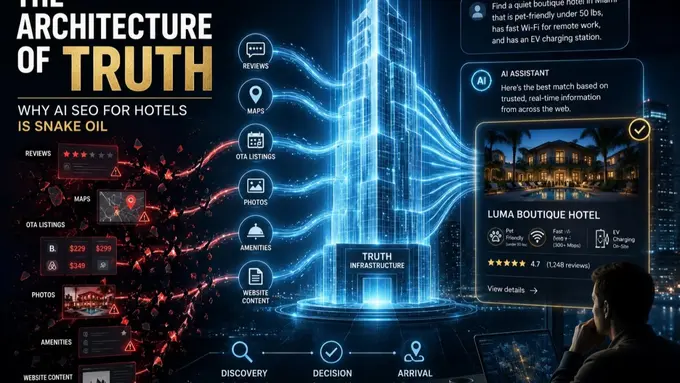
AI SEO for hotels refers to the application of artificial intelligence technologies and machine learning algorithms to optimize a hotel’s online presence for search engines. Unlike traditional SEO, which relies heavily on manual keyword research and static content updates, AI SEO uses predictive analytics, natural language processing, and automated data analysis to understand how search engines rank content and how potential guests search for accommodations. At its core, this approach involves three main pillars. First, it uses AI tools to analyze search patterns and predict which topics and keywords will gain traction. Second, it optimizes website content to match the semantic and contextual requirements of modern search algorithms like Google’s RankBrain and BERT. Third, it leverages AI to personalize the user experience based on individual visitor behavior, which directly impacts engagement metrics that search engines use as ranking signals. For hotel marketers, the practical implication is profound. Instead of guessing what guests want, AI provides data-driven insights into search volume, competitor gaps, and content performance. This allows hotels to create highly targeted pages for specific travel intents, such as “romantic weekend getaways in Napa” or “family-friendly resorts near Disney World,” with a level of precision that manual methods cannot match.
Why Traditional Hotel SEO Is No Longer Enough
The days of optimizing a single homepage with a few keywords and expecting top rankings are over. Search engines have evolved to prioritize user satisfaction above all else. Google’s algorithms now evaluate hundreds of ranking factors, including page speed, mobile usability, content relevance, and user engagement. For hotels, this means that a generic “About Us” page or a poorly structured booking engine can severely damage visibility. Traditional SEO also struggles with the dynamic nature of hotel inventory. Room availability, seasonal pricing, and local events constantly change, making static content outdated quickly. AI SEO for hotels solves this by enabling real-time content updates and dynamic schema markup that keeps search engines informed about current rates, availability, and special offers. Moreover, the rise of voice search and conversational AI has changed how people search. Travelers now ask complete questions like “What are the best pet-friendly hotels in Austin with free parking?” instead of typing “hotel Austin pet friendly.” Traditional SEO focused on exact-match keywords fails to capture these long-tail, conversational queries. AI-driven natural language processing helps hotels create content that answers these specific questions, capturing traffic that competitors miss.
Core Components of an AI-Driven Hotel SEO Strategy
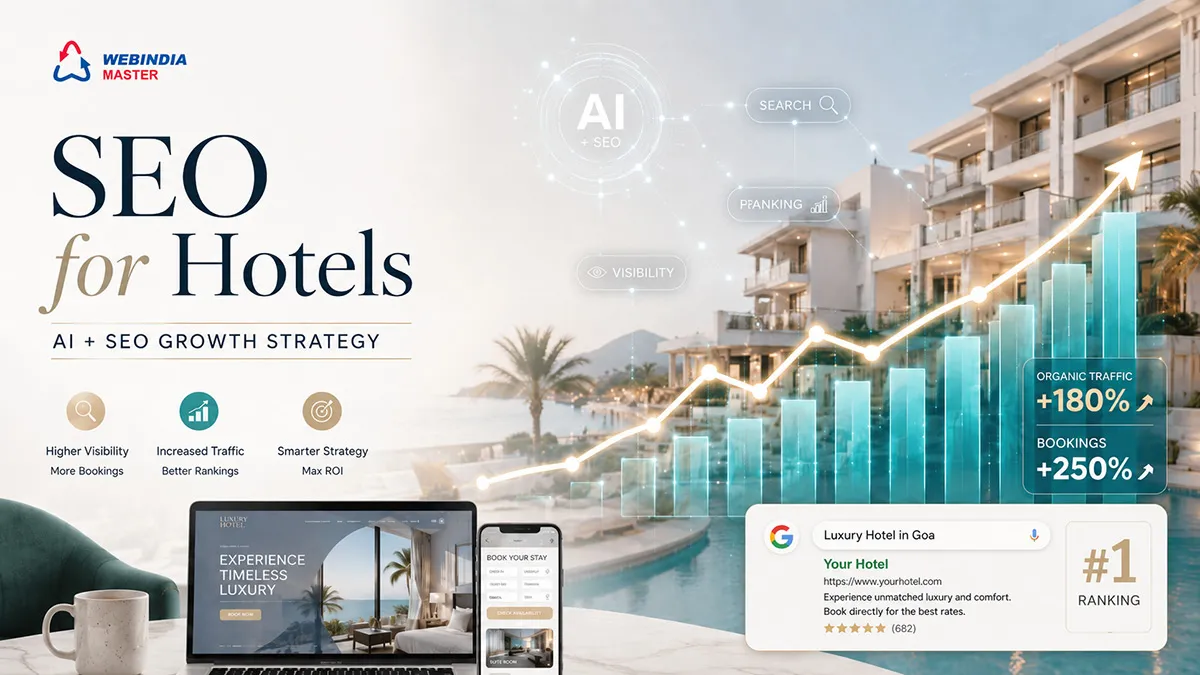
Implementing AI SEO for hotels requires a structured approach that integrates several key components. Each element works together to create a cohesive strategy that aligns with how modern search engines operate.
1. AI-Powered Keyword and Topic Clustering
Gone are the days of targeting single keywords. AI tools like SEMrush, Ahrefs, and Clearscope use machine learning to group related keywords into topical clusters. For a hotel, this means identifying a core theme like “luxury beachfront resort” and then building out content around related subtopics such as “ocean view suites,” “private beach access,” “spa packages,” and “sunset dining experiences.” These tools analyze thousands of top-ranking pages to determine which subtopics are essential for establishing topical authority. By creating comprehensive content that covers an entire cluster, your hotel signals to search engines that you are an expert on that subject, which boosts rankings for all related keywords.
2. Natural Language Processing for Content Creation
Natural language processing (NLP) allows AI to understand the context and sentiment behind words. When applied to hotel content, NLP helps you write in a way that matches user intent. For example, if a traveler searches for “budget hotels near Times Square,” they likely want practical information about price ranges, walking distance, and basic amenities. An AI-optimized page would address these specifics directly, using language that mirrors the query. Tools like Surfer SEO and Frase use NLP to analyze top-ranking pages and provide real-time recommendations for headings, word count, and related terms. This ensures your content is not only readable but also structurally aligned with what search engines consider comprehensive and authoritative.
3. Predictive Analytics for User Behavior
Predictive analytics uses historical data to forecast future trends. In hotel SEO, this can predict seasonal search spikes, popular amenities, and even the type of content that converts best. For instance, if data shows that searches for “hotel pools with cabanas” increase every March, you can prepare content and landing pages in advance to capture that traffic. AI tools can also analyze user behavior on your own website. Heatmaps and session recordings, powered by machine learning, reveal which sections of your pages attract the most attention and where users drop off. This insight allows you to optimize page layout, improve internal linking, and enhance calls-to-action, all of which contribute to better engagement metrics and higher rankings.
4. Automated Schema Markup and Structured Data
Schema markup is code that helps search engines understand the content on your page. For hotels, this includes information like star rating, price range, check-in time, amenities, and guest reviews. AI SEO for hotels leverages automated schema generation tools that can dynamically update this markup based on real-time inventory changes. Implementing structured data correctly enables rich snippets in search results, such as star ratings, review counts, and price ranges. These visual enhancements significantly improve click-through rates because they make your listing stand out from competitors. AI tools can validate and monitor your schema to ensure it remains error-free and compliant with search engine guidelines.
5. AI-Enhanced Local SEO and Google Business Profile
Local search is critical for hotels, as many travelers search for accommodations near specific landmarks, airports, or convention centers. AI enhances local SEO by analyzing location data, managing citations, and optimizing your Google Business Profile. Tools like BrightLocal and Yext use AI to ensure your hotel’s name, address, and phone number are consistent across all directories. AI also helps manage and respond to online reviews. Sentiment analysis tools can categorize reviews as positive, negative, or neutral, allowing you to address issues proactively. Responding to reviews with personalized, context-aware replies signals to Google that your hotel is actively engaged with guests, which positively impacts local rankings.
Benefits of Implementing AI SEO for Hotels
The advantages of adopting AI-driven SEO strategies extend far beyond improved rankings. Hotels that embrace this technology gain a significant competitive edge in several measurable ways.
Enhanced User Experience and Personalization
AI allows you to personalize the website experience for each visitor. By analyzing browsing behavior, past bookings, and preferences, you can display tailored room recommendations, special offers, and content. A returning guest who previously booked a suite with a sea view will see similar options on their next visit. This level of personalization increases engagement, reduces bounce rates, and encourages direct bookings, all of which are positive signals to search engines.
Higher Conversion Rates
When your content precisely matches user intent, visitors are more likely to book. AI SEO for hotels focuses on creating detailed, answer-focused content that addresses every potential question a traveler might have. This reduces friction in the decision-making process. For example, a page that clearly explains cancellation policies, parking fees, and pet restrictions will convert better than a vague page that leaves these questions unanswered.
Cost-Effective Marketing
While AI tools require an initial investment, they ultimately reduce the cost of acquiring traffic. Organic search traffic is free, and by targeting high-intent keywords with precision, you reduce wasted spend on irrelevant clicks. Additionally, AI automates many time-consuming tasks like keyword research, content optimization, and performance reporting, freeing up your marketing team to focus on strategy and guest experience.
Real-Time Adaptability
The travel industry is volatile. Economic shifts, weather events, and global health concerns can dramatically change search behavior overnight. AI systems can monitor these changes in real-time and adjust your content strategy accordingly. For instance, if searches for “staycation deals” spike in your area, AI tools can quickly suggest new content or update existing pages to capture that demand.
Limitations and Challenges of AI SEO for Hotels
Despite its many benefits, AI SEO is not a magic bullet. Understanding its limitations is essential for setting realistic expectations and avoiding common pitfalls.
Dependence on Data Quality
AI algorithms are only as good as the data they analyze. If your hotel’s historical data is incomplete, outdated, or inaccurate, the AI’s predictions and recommendations will be flawed. For example, if your booking system does not track the source of each reservation, AI tools cannot accurately determine which keywords are driving conversions.
Lack of Human Creativity
AI excels at analyzing patterns and optimizing for algorithms, but it cannot replicate genuine human storytelling. Travelers are drawn to authentic narratives, emotional connections, and unique experiences. While AI can suggest topics and structure, the actual writing, photography, and video content still require human creativity and expertise. Over-reliance on AI-generated content can result in bland, generic pages that fail to inspire bookings.
Constant Algorithm Updates
Search engine algorithms are continuously evolving. An AI strategy that works today may become less effective tomorrow if Google changes its ranking criteria. Staying updated requires ongoing monitoring and adjustment, which can be resource-intensive. Hotels must be prepared to adapt their strategies quickly, which is not always easy for smaller properties with limited staff.
Privacy and Data Security Concerns
Using AI to personalize experiences requires collecting and analyzing user data. This raises privacy concerns, especially with regulations like GDPR and CCPA. Hotels must ensure they are transparent about data collection and obtain proper consent. Failure to comply can result in hefty fines and damage to your brand’s reputation.
AI SEO vs. Traditional SEO: A Practical Comparison
To fully appreciate the impact of AI, it helps to see a direct comparison between traditional and AI-driven approaches.
| Aspect | Traditional SEO | AI SEO for Hotels |
|---|---|---|
| Keyword Research | Manual analysis of search volume and difficulty | Automated clustering and predictive trend analysis |
| Content Creation | Static pages written for exact-match keywords | Dynamic content optimized for semantic search and user intent |
| User Personalization | Limited, based on basic demographics | Real-time adaptation based on behavior and preferences |
| Data Analysis | Monthly reports with historical data | Real-time dashboards with predictive insights |
| Schema Markup | Manual implementation, often static | Automated, dynamic updates based on inventory |
| Review Management | Manual responses and monitoring | Sentiment analysis and automated response suggestions |
| Adaptability | Slow, requires manual intervention | Fast, self-learning algorithms adjust quickly |
Step-by-Step Guide to Implementing AI SEO for Your Hotel
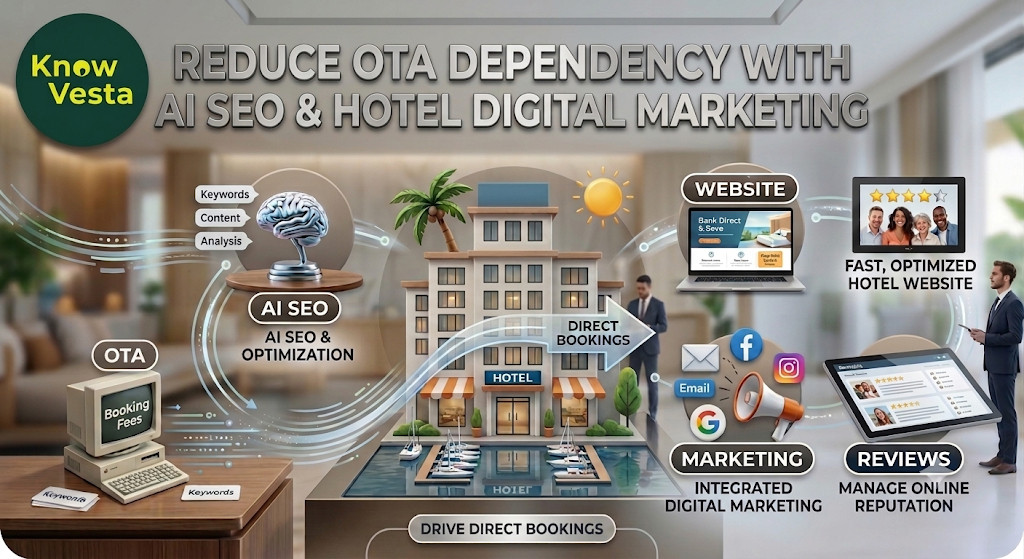
Implementing an AI-driven SEO strategy does not require a massive budget or a dedicated data science team. Many accessible tools and practical steps can get you started today.
Step 1: Audit Your Current Digital Presence
Begin by conducting a comprehensive audit of your website, Google Business Profile, and online reviews. Use AI-powered tools like Sitebulb or Screaming Frog to identify technical issues such as broken links, slow page speed, and missing meta descriptions. Analyze your current keyword rankings and identify gaps where competitors are outperforming you.
Step 2: Invest in AI-Powered SEO Tools
Select tools that align with your budget and goals. For keyword research and content optimization, consider Surfer SEO, Frase, or MarketMuse. For local SEO and review management, use BrightLocal or Podium. For technical audits and monitoring, tools like Ahrefs and SEMrush offer comprehensive AI-driven insights. Start with one or two tools to avoid overwhelming your team.
Step 3: Build Topical Clusters Around Your Core Offerings
Identify your hotel’s primary selling points, such as location, amenities, or unique experiences. Create a content hub for each theme and develop supporting articles that cover related subtopics. For example, if your hotel is in wine country, create a hub page about “Wine Tasting Experiences” and link to individual pages about specific vineyards, tasting tours, and seasonal events.
Step 4: Optimize for Voice Search and Conversational Queries
Use AI tools to identify common questions travelers ask about your area and your property. Create FAQ pages that directly answer these questions in a natural, conversational tone. Ensure your content includes location-specific phrases like “near the airport” or “walking distance to the convention center,” as these are common in voice searches.
Step 5: Implement Dynamic Schema Markup
Work with your web developer to implement schema markup for your hotel. Use tools like SchemaApp or Merkle’s Schema Markup Generator to create structured data for your rooms, rates, and reviews. Ensure that this markup updates automatically when your inventory changes, so search engines always have accurate information.
Step 6: Leverage AI for Review Analysis and Response
Set up a system that monitors all review platforms, including Google, TripAdvisor, and Booking.com. Use sentiment analysis tools to identify common themes in guest feedback. If multiple guests mention that the Wi-Fi is slow, address this issue and update your website content to reflect any improvements. Respond to reviews promptly, using AI-generated suggestions as a starting point but adding a personal touch.
Step 7: Monitor Performance and Iterate
AI SEO is not a set-and-forget strategy. Review your analytics monthly to see which pages are ranking, which keywords are driving traffic, and where users are dropping off. Use AI tools to generate recommendations for improvement and test different variations of headlines, meta descriptions, and page layouts.
Common Mistakes to Avoid with AI SEO for Hotels
Even with the best tools, hotels often make critical errors that undermine their AI SEO efforts. Being aware of these pitfalls can save you time and money.
Ignoring User Intent in Favor of Keywords
Some hoteliers still focus on stuffing pages with keywords like “best hotel” or “luxury resort” without considering what the user actually wants. AI tools can help you understand intent, but only if you use them correctly. Always ask what problem the user is trying to solve. A person searching for “hotel with airport shuttle” has a different intent than someone searching for “boutique hotel with rooftop bar.”
Over-Automating Content Creation
AI-generated content can be a useful starting point, but publishing it without human editing is a mistake. Search engines can detect low-quality, automated content, and it often fails to engage real readers. Always have a human editor review AI-generated drafts to ensure accuracy, tone, and brand voice.
Neglecting Mobile Optimization
Most travelers search for hotels on their smartphones. AI SEO tools can optimize content, but if your website is not mobile-friendly, your rankings will suffer. Ensure your booking engine, images, and text are fully responsive and load quickly on mobile devices.
Failing to Update Content Regularly
AI algorithms favor fresh, up-to-date content. A blog post about “Top Things to Do in 2023” becomes irrelevant in 2025. Use AI tools to identify outdated content and update it with new information, current events, and fresh images. Regular updates signal to search engines that your site is active and authoritative.
Ignoring the Importance of Internal Linking
Internal links help search engines understand the structure of your website and distribute authority across pages. AI tools can suggest optimal internal linking strategies, but many hotels neglect this simple yet effective tactic. Ensure that every new piece of content links to relevant existing pages and vice versa.
Important Notes for Hoteliers and Marketing Managers

Before diving headfirst into AI SEO, there are several important considerations to keep in mind. First, AI is a tool, not a replacement for a skilled marketing team. The best results come from combining AI’s analytical power with human creativity and strategic thinking. Invest in training for your team so they understand how to interpret AI insights and apply them effectively. Second, focus on the guest experience above all else. Search engines are increasingly sophisticated at detecting whether a website genuinely helps users. If your content is helpful, your website is fast, and your booking process is seamless, rankings will follow. AI SEO for hotels should enhance the guest journey, not complicate it. Third, be patient. AI-driven SEO often takes several months to show significant results. Unlike paid advertising, which delivers immediate traffic, organic growth is a long-term investment. Set realistic expectations with your stakeholders and track progress over time. Finally, stay informed about AI developments. The field is evolving rapidly, with new tools and techniques emerging regularly. Subscribe to industry blogs, attend webinars, and participate in hospitality marketing forums to stay ahead of the curve.
Frequently Asked Questions
How does AI improve hotel search rankings?
AI improves hotel search rankings by analyzing vast amounts of data to identify patterns in user behavior, search intent, and content performance. It helps hotels create highly relevant content that matches what travelers are actually searching for, optimize technical elements like schema markup and page speed, and personalize the user experience to increase engagement. These factors collectively signal to search engines that your website is authoritative and valuable, leading to higher rankings.
What are the best AI tools for hotel SEO?
The best AI tools for hotel SEO include Surfer SEO and Frase for content optimization, Ahrefs and SEMrush for keyword research and competitor analysis, BrightLocal for local SEO and review management, and SchemaApp for structured data implementation. For predictive analytics and user behavior tracking, tools like Google Analytics 4 with AI-powered insights and Hotjar are highly effective. The right choice depends on your specific needs, budget, and technical expertise.
Is AI SEO expensive for small hotels?
AI SEO can be cost-effective for small hotels, as many tools offer tiered pricing based on features and usage. Basic plans for tools like Surfer SEO start around $59 per month, while more comprehensive suites can cost several hundred dollars. However, the return on investment is often substantial, as organic traffic reduces reliance on expensive paid advertising. Small hotels can also start with free tools like Google Search Console and Google Analytics, which now include AI-powered insights.
Can AI replace human SEO experts?
AI cannot fully replace human SEO experts. While AI excels at data analysis, pattern recognition, and automation, it lacks the creativity, strategic thinking, and industry experience that human experts bring. A successful AI SEO strategy requires human oversight to interpret data, make strategic decisions, and create compelling content that resonates with travelers. The most effective approach is a collaboration between AI tools and skilled professionals.
How long does it take to see results from AI SEO?
Results from AI SEO typically take three to six months to become noticeable, depending on the competitiveness of your market and the current state of your website. AI tools can accelerate the process by identifying quick wins, such as fixing technical errors or optimizing underperforming pages, but building topical authority and earning backlinks takes time. Consistent effort and regular monitoring are essential for long-term success.
Does AI SEO work for voice search optimization?
Yes, AI SEO is particularly effective for voice search optimization. AI tools use natural language processing to understand how people speak, which is different from how they type. By analyzing conversational queries, AI helps hotels create content that directly answers questions like “What hotels are near the convention center?” or “Does this hotel have a pool?” This improves visibility in voice search results, which are increasingly important as more travelers use smart speakers and mobile assistants.
Conclusion
AI SEO for hotels represents a fundamental shift in how properties attract organic traffic and convert visitors into guests. By leveraging machine learning, natural language processing, and predictive analytics, hoteliers can gain a deep understanding of traveler intent, create highly relevant content, and deliver personalized experiences that drive bookings. While traditional SEO methods are not obsolete, they are no longer sufficient on their own. The hotels that will thrive in the coming years are those that embrace AI as a strategic partner, combining its analytical power with human creativity and genuine hospitality. The journey begins with a single step. Audit your current digital presence, invest in the right AI tools, and start building topical clusters around your unique offerings. Monitor your performance, learn from the data, and continuously refine your approach. The competitive advantage gained through AI SEO is substantial, but it requires commitment and adaptability. Those who act now will position their hotels as leaders in search visibility, capturing the attention of travelers exactly when they are ready to book. The future of hotel marketing is intelligent, data-driven, and personalized, and it is available to any property willing to embrace it.
Xem thêm:
- AI Shopify SEO: The Ultimate Guide to Dominating Search Rankings with Artificial Intelligence
- AI SEO AI Brand Mentions: The Complete Guide to Automated Brand Monitoring
- AI SEO Article Schema: The Complete Guide to Structured Data for AI Search
- AI SEO Platform: The Definitive Guide to Automating Search Dominance
- AI SEO Outreach Automation: The Complete Guide to Scaling Link Building in 2025
Bài viết cùng chủ đề:

AI SEO SEO Automation with Make: The Complete Workflow Guide

AI SEO SEO Automation with Zapier: The Complete Workflow Guide

AI SEO SEO Automation with n8n: The Complete Workflow Guide
AI SEO SEO Automation with Gemini: The Complete Guide to Scaling Organic Growth

AI SEO SEO Automation with Claude: The Complete Guide to Scaling Content in 2025

AI SEO SEO Automation with ChatGPT: The Complete Playbook for 2025

AI SEO & SEO Automation for Affiliate Sites: The 2025 Playbook for Passive Income Growth
AI SEO & SEO Automation for Bloggers: The Complete Guide to Scaling Your Content

AI SEO & SEO Automation for Agencies: The Complete 2025 Playbook

AI SEO and SEO Automation for Ecommerce: The Complete Playbook for 2025

AI SEO & SEO Automation for WordPress: The Complete Playbook for 2025
AI SEO SEO Automation Strategy: The Complete Playbook for 2025

Mastering the AI SEO SEO Automation Process: A Complete Guide to Scaling Organic Growth
AI SEO SEO Automation System: The Complete Guide to Scaling Organic Growth in 2025
AI SEO SEO Automation Platform: The Complete Guide to Scaling Organic Growth in 2025
AI SEO SEO Automation Software: The Complete Guide to Scaling Organic Growth in 2025















