
No products in the cart.
AI SEO for Local Businesses: The Complete Guide to Dominating Local Search in 2025
31
Jul
Jul
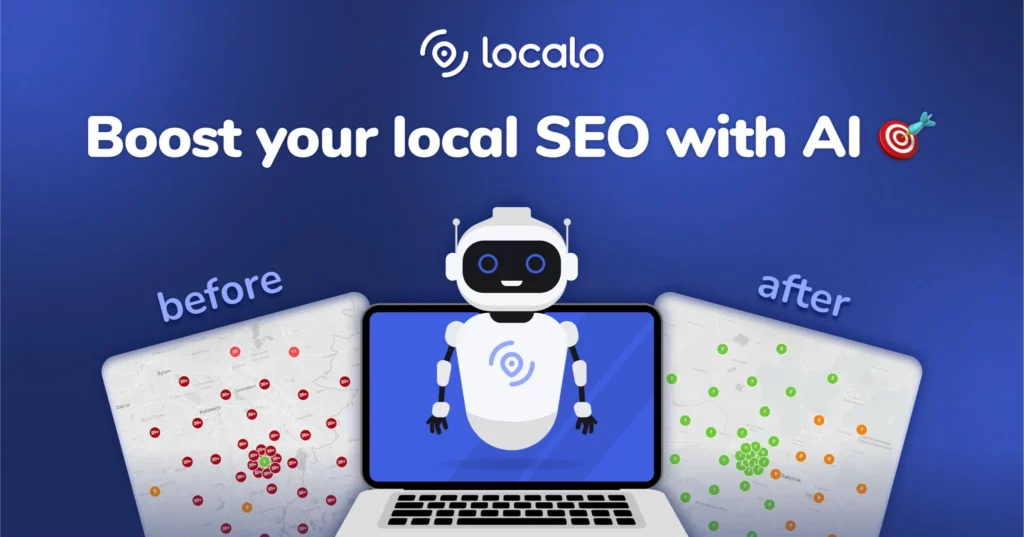
Local search has changed dramatically. The days of simply stuffing keywords into a Google Business Profile and hoping for the best are long gone. Today, artificial intelligence powers the algorithms that decide which businesses appear in local pack results, map listings, and voice search answers. For small and medium-sized enterprises, AI SEO for local businesses is no longer a futuristic concept—it is the current standard for staying visible. This guide breaks down exactly how AI transforms local search, what strategies actually work, and how to implement them without a massive budget or technical team.
What Is AI SEO for Local Businesses?

AI SEO for local businesses refers to the application of machine learning algorithms, natural language processing, and predictive analytics to optimize a company’s online presence for geographically targeted searches. Unlike traditional SEO, which relies heavily on manual keyword research and backlink building, AI-driven local SEO uses data patterns to understand user intent, predict search behavior, and automate optimization tasks.
Google’s RankBrain and the more recent MUM (Multitask Unified Model) and BERT updates are prime examples. These systems analyze the context of a query, not just the exact words. When someone searches for “best pizza near me,” the AI understands that the user wants a nearby restaurant, likely open now, with good reviews. It cross-references location data, business hours, review sentiment, and even the user’s past behavior to deliver the most relevant result.
For local businesses, this means the old tactics of keyword density and directory spam are obsolete. The focus has shifted to creating a comprehensive, consistent, and highly relevant digital footprint that AI can easily interpret and trust.
Why Traditional Local SEO Is Failing
Many local businesses still rely on methods that worked five years ago. These include submitting to hundreds of low-quality directories, using exact-match domains, and writing thin location pages. These tactics are failing for a clear reason: AI algorithms are now sophisticated enough to detect manipulation.
Google’s SpamBrain, an AI-based spam detection system, actively penalizes sites with unnatural link patterns or duplicate content. A local business with 50 directory listings that all say the same thing will not rank better than a competitor with 10 high-quality, unique citations. Furthermore, the rise of zero-click searches means that even if a business ranks, it might not get the click. AI extracts the answer directly into the search results, pulling from review snippets, FAQ sections, and structured data.
The data supports this shift. Studies show that over 50% of Google searches are now zero-click, meaning users find the answer without leaving the search engine. For local businesses, this makes schema markup and structured data critical. Without it, the AI cannot easily parse your business hours, services, or location to display in those rich results.
Core Components of AI-Driven Local SEO
To succeed with AI SEO for local businesses, you must understand the components that machine learning algorithms prioritize. These are not guesses; they are the data points that Google’s AI explicitly states it uses.
1. Entity Optimization and Knowledge Graphs
Google builds a Knowledge Graph for every recognized entity—a business, a person, a place. For local SEO, your business is an entity. AI connects your entity to related entities (your suppliers, your location, your industry). To optimize for this, you need to ensure your business name, address, and phone number (NAP) are identical across every platform. More importantly, you need to build relationships. Getting mentioned in local news, industry blogs, and community sites helps the AI understand what your entity is about and who it serves.
2. Natural Language Processing (NLP) for Content
NLP allows AI to understand the meaning behind words. When writing content for your website, you must stop targeting keywords and start targeting topics. For example, if you are a plumber in Austin, you should not just write a page about “plumber Austin.” You need to write comprehensive guides about “how to fix a leaking pipe,” “when to replace a water heater,” and “signs of a sewer line blockage.” The AI recognizes that these topics are semantically related to a plumbing business and will rank your site for the broader category.
3. Review Sentiment Analysis
AI does not just count your reviews; it reads them. Sentiment analysis determines whether the words in your reviews are positive, negative, or neutral. A business with 50 reviews that say “good service” might rank lower than a business with 30 reviews that say “the technician arrived on time, fixed the issue in 20 minutes, and charged a fair price.” The latter provides more context and trust signals to the AI. Encouraging detailed, specific reviews is a direct way to improve your AI SEO.
4. Behavioral Signals and Click-Through Rate
AI monitors how users interact with search results. If your listing gets many impressions but few clicks, the AI assumes your title and description are irrelevant. If users click your result but immediately bounce back to the search page, the AI assumes your content does not match the query. Optimizing your title tags and meta descriptions to include local context and clear value propositions is essential. For local businesses, including the city name and a specific offer (e.g., “24/7 Emergency Service”) improves click-through rates.
Practical AI Tools for Local SEO
You do not need to be a data scientist to leverage AI. There are numerous tools designed specifically for local search optimization. These tools automate the heavy lifting and provide actionable insights.
| Tool Category | Example Tools | Primary Function |
|---|---|---|
| Local Rank Tracking | BrightLocal, Whitespark | Tracks keyword rankings in specific geographic areas, monitors Google Business Profile performance. |
| Content Generation | Jasper, Copy.ai, ChatGPT | Generates draft content for service pages, blog posts, and meta descriptions based on local prompts. |
| Review Management | Podium, Birdeye | Automates review requests, analyzes sentiment, and alerts you to negative feedback in real-time. |
| Schema Markup Generators | Merchant Center, Schema App | Creates structured data code for LocalBusiness, FAQ, and Review schema without coding. |
| Competitor Analysis | Semrush, Ahrefs | Uses AI to identify gaps in your local content strategy and analyze competitor backlinks. |
Using these tools effectively requires a strategy. Simply generating 100 AI articles will not help. The AI must be guided with specific local data—your service area, your unique selling points, and your customer’s pain points.
Step-by-Step Guide to Implementing AI SEO for Local Businesses
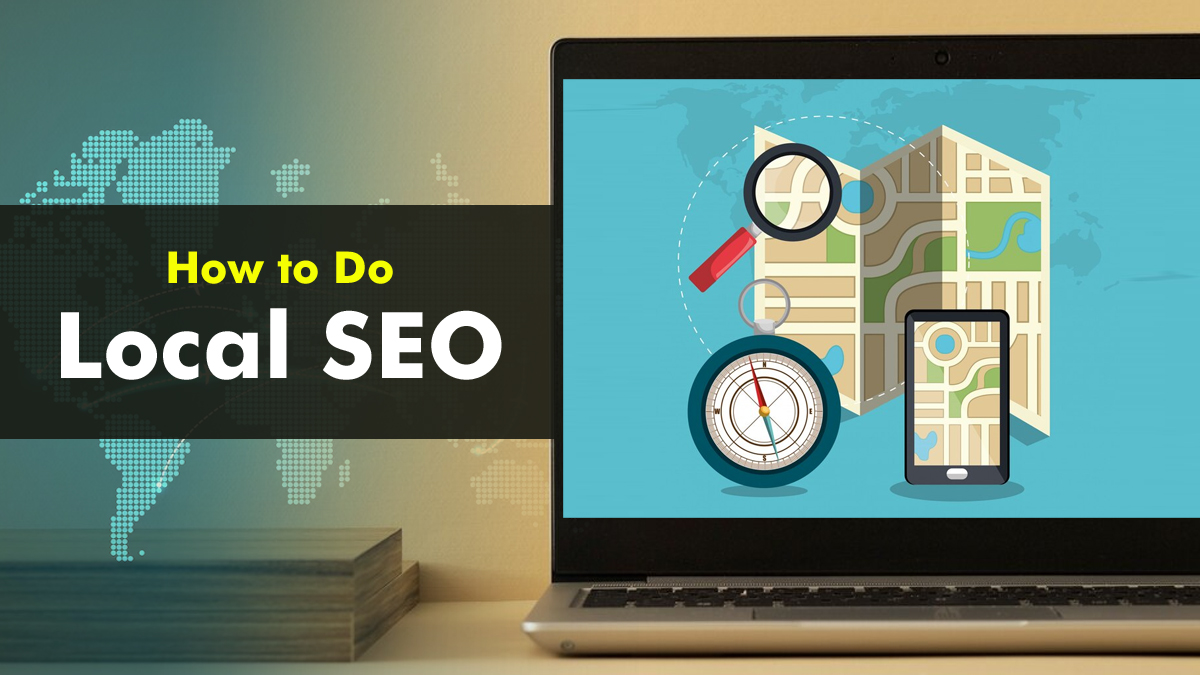
Step 1: Audit Your Digital Footprint with AI
Start by using an AI-powered tool to audit your current presence. Tools like BrightLocal’s Audit tool will scan your NAP consistency across the web, check your Google Business Profile completeness, and analyze your website’s technical health. The output will show you where the AI sees inconsistencies. Fixing these is the first priority. A single wrong phone number on a directory can confuse the Knowledge Graph and tank your rankings.
Step 2: Build a Topic Cluster Strategy
Instead of writing random blog posts, create a pillar page and cluster content. The pillar page is a comprehensive guide to your main service (e.g., “Complete Guide to Roof Repair in Denver”). The cluster content targets specific long-tail queries (e.g., “How to fix a leaky roof after a hailstorm,” “Cost of asphalt shingle replacement in Denver”). Use an AI writing tool to generate outlines, but rewrite the content in your own voice. Add local examples, photos of your work, and specific data about your service area. This establishes E-E-A-T (Experience, Expertise, Authoritativeness, Trustworthiness).
Step 3: Optimize for Voice Search
Voice search is inherently local. People ask their phones for directions, hours, and availability. Voice queries are longer and more conversational. Optimize your content for question-based queries. Include an FAQ section on every service page. Use schema markup for FAQPage. Ensure your Google Business Profile has your correct hours, including holiday hours. AI assistants pull from these structured data points to answer voice queries.
Step 4: Leverage Predictive Analytics for Content
Use tools like Google Trends and Semrush to identify rising local search terms. For example, if you are a landscaper, you might see a spike in searches for “drought-resistant landscaping” in your area. Predictive analytics can tell you this trend is growing. Create content that addresses this need before your competitors do. This proactive approach signals to the AI that your business is a current, relevant source of information.
Step 5: Automate Review Generation
Set up an automated SMS or email sequence that requests a review from every customer after a service is completed. Use a tool that integrates with your CRM. The key is to ask for reviews at the moment of highest satisfaction. Also, respond to every review—positive or negative—with a personalized message. The AI sees this engagement as a sign of a trustworthy business.
Benefits and Limitations of AI in Local SEO
Understanding what AI can and cannot do is crucial for setting realistic expectations.
Benefits
- Efficiency: AI automates repetitive tasks like rank tracking, report generation, and content drafting, freeing up time for strategic planning.
- Accuracy: AI can analyze thousands of data points to identify patterns that a human might miss, such as a correlation between review sentiment and foot traffic.
- Personalization: AI enables hyper-local targeting, allowing you to tailor content to specific neighborhoods or demographics within your city.
- Scalability: For multi-location businesses, AI can manage and optimize hundreds of local pages simultaneously, ensuring consistency across all branches.
- Lack of Human Touch: AI-generated content often lacks the nuance and local flavor that builds genuine trust. A blog post about “best coffee in Portland” written by A
- Data Dependency: AI is only as good as the data it receives. If your business information is incorrect, A
- Algorithm Updates: Google updates its algorithms frequently. An AI strategy that works today might be less effective tomorrow, requiring constant monitoring and adjustment.
- Cost: Advanced AI tools can be expensive. For a small business with a tight budget, the subscription costs might outweigh the initial ROI.
Limitations
Comparison: AI SEO vs. Traditional Local SEO

To clarify the shift,
| Aspect | Traditional Local SEO | AI SEO for Local Businesses |
|---|---|---|
| Keyword Research | Manual, based on volume and difficulty scores. | Predictive, based on user intent and semantic relevance. |
| Content Creation | Focus on exact-match keywords and density. | Focus on topic clusters and natural language. |
| Link Building | Quantity of backlinks from any source. | Quality of links from local, authoritative entities. |
| User Experience | Secondary to keyword placement. | Primary ranking factor, measured by behavioral signals. |
| Data Analysis | Monthly reports on rankings and traffic. | Real-time insights into search patterns and customer behavior. |
Traditional methods are not entirely useless. Backlinks still matter, and keyword research is still a starting point. However, the execution and prioritization have changed. AI SEO is not a replacement for traditional SEO; it is an evolution that requires a deeper understanding of how machines interpret human behavior.
Common Mistakes and How to Avoid Them
Even with the best tools, businesses make critical errors when implementing AI strategies. Here are the most common pitfalls and the solutions.
Mistake 1: Publishing Unedited AI Content
Many businesses copy and paste AI-generated articles directly to their website. This results in generic, low-value content that Google’s AI flags as unhelpful. The solution is to use AI for research and outlines, then rewrite the content with your personal experience. Add original photos, specific local anecdotes, and data from your own business operations.
Mistake 2: Ignoring Google Business Profile Insights
Your Google Business Profile provides a wealth of data about how customers find you. It shows search queries, actions taken, and photo views. Ignoring this data means missing out on direct feedback from the AI. Review these insights weekly. If you see a spike in searches for “delivery,” but your profile does not mention delivery, update it immediately.
Mistake 3: Focusing Only on Rankings, Not Visibility
Ranking #1 for a keyword with zero search volume is useless. AI tools can show you the “map pack” visibility, which is where your business appears in the local 3-pack. Focus on optimizing for map pack features like reviews, photos, and Q&A. These elements are more likely to get clicks than a high ranking for a low-intent keyword.
Mistake 4: Neglecting Mobile Experience
Most local searches happen on mobile devices. If your website is slow or difficult to navigate on a phone, the A Use Google’s PageSpeed Insights to check your mobile performance. Ensure your click-to-call button is prominent and your forms are short.
Important Notes for Long-Term Success
AI SEO for local businesses is not a one-time project. It requires continuous adaptation. Here are key notes to keep in mind.
First, prioritize consistency over volume. It is better to publish one high-quality, locally-focused article per month than four generic AI-generated posts per week. The AI rewards depth and relevance.
Second, monitor your local competitors. Use AI tools to see what keywords they are ranking for and what content they are publishing. Identify gaps in their strategy and exploit them. If a competitor has no content about “sustainable packaging,” and you are a local retailer, create that content.
Third, integrate AI with your offline marketing. If you run a local event, create a landing page for it and promote it through your Google Business Profile. The AI sees the engagement and connects your online presence with your physical presence.
Fourth, always maintain a human review process. Before publishing any AI-generated content, have a team member who knows the local market review it for accuracy and tone. This ensures your content remains authentic and trustworthy.
Frequently Asked Questions
How does AI change local keyword research?
AI shifts the focus from individual keywords to topics and entities. Instead of targeting “dentist in Chicago,” you target the topic of “pediatric dentistry in Chicago” and cover related subtopics like “braces for kids,” “emergency dental care,” and “teeth whitening for teenagers.” AI tools analyze search patterns to identify these related topics and their relative importance.
Can small businesses afford AI SEO tools?
Yes. There are free and low-cost options. Google Search Console and Google Business Profile are free and provide essential data. For content generation, free tiers of ChatGPT or Bing Chat can help with outlines. For rank tracking, tools like Ubersuggest offer affordable plans. The key is to start small and scale up as you see ROI.
What is the role of schema markup in AI SEO?
Schema markup is the code that tells search engines exactly what your data means. It is like a label on a box. Without it, the AI has to guess whether a number on your page is a phone number or a price. With LocalBusiness schema, you explicitly state your business type, address, hours, and services. This directly improves your chances of appearing in rich results and the knowledge panel.
How long does it take to see results from AI SEO?
It depends on the current state of your website and competition. If you have a well-established domain with good authority, you might see improvements in 4-6 weeks. If you are starting from scratch, expect 3-6 months. AI SEO is not a quick fix; it is a compounding strategy. The more quality data you provide, the better the AI understands your business, and the higher you rank.
Is AI SEO the same as automated SEO?
No. Automated SEO refers to tools that perform tasks like submitting sitemaps or checking broken links. AI SEO is about using machine learning to make strategic decisions. It involves analyzing data to understand what content to create, which keywords to target, and how to structure your website for maximum relevance. Automation is a part of AI SEO, but it is not the whole picture.
Conclusion
AI SEO for local businesses represents a fundamental shift in how companies must approach online visibility. The algorithms are no longer simple keyword matchers; they are intelligent systems that understand context, sentiment, and user behavior. To succeed, local businesses must embrace this change by focusing on entity optimization, creating comprehensive topic clusters, leveraging structured data, and actively managing their online reputation.
The businesses that thrive will be those that use AI as a tool to enhance their human expertise, not replace it. By combining the analytical power of AI with the authentic, personal touch of a local business owner, you can build a digital presence that not only ranks well but also genuinely serves your community. Start implementing these strategies today, and you will build a sustainable competitive advantage that withstands future algorithm updates.
Xem thêm:
- AI SEO H3 Optimization: The Complete Guide to Structuring Content for AI Search
- AI SEO MarketMuse: The Complete Guide to Content Intelligence in 2025
- AI SEO AI Search Citations: The Complete Guide to Winning AI Search Visibility
- AI SEO Keywords Everywhere: The Complete Guide to Smarter Keyword Research in 2025
- AI SEO SEO Automation with Zapier: The Complete Workflow Guide
Bài viết cùng chủ đề:

AI SEO SEO Automation with Make: The Complete Workflow Guide

AI SEO SEO Automation with Zapier: The Complete Workflow Guide

AI SEO SEO Automation with n8n: The Complete Workflow Guide
AI SEO SEO Automation with Gemini: The Complete Guide to Scaling Organic Growth

AI SEO SEO Automation with Claude: The Complete Guide to Scaling Content in 2025

AI SEO SEO Automation with ChatGPT: The Complete Playbook for 2025

AI SEO & SEO Automation for Affiliate Sites: The 2025 Playbook for Passive Income Growth
AI SEO & SEO Automation for Bloggers: The Complete Guide to Scaling Your Content

AI SEO & SEO Automation for Agencies: The Complete 2025 Playbook

AI SEO and SEO Automation for Ecommerce: The Complete Playbook for 2025

AI SEO & SEO Automation for WordPress: The Complete Playbook for 2025
AI SEO SEO Automation Strategy: The Complete Playbook for 2025

Mastering the AI SEO SEO Automation Process: A Complete Guide to Scaling Organic Growth
AI SEO SEO Automation System: The Complete Guide to Scaling Organic Growth in 2025
AI SEO SEO Automation Platform: The Complete Guide to Scaling Organic Growth in 2025
AI SEO SEO Automation Software: The Complete Guide to Scaling Organic Growth in 2025















