
No products in the cart.
AI SEO H3 Optimization: The Complete Guide to Structuring Content for AI Search
10
Aug
Aug
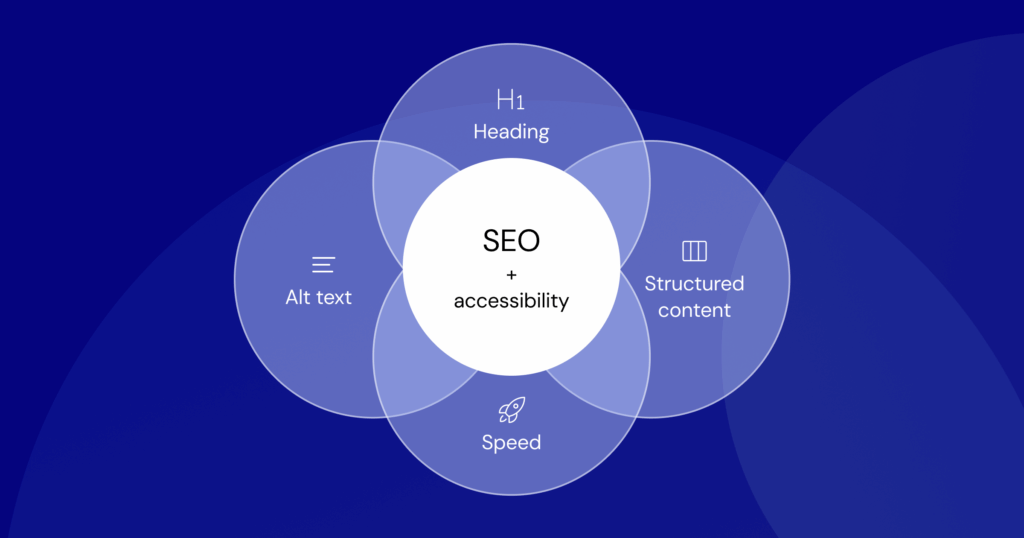
AI SEO H3 Optimization has become the defining factor in how modern search engines interpret and rank content. As Google’s algorithms shift toward semantic understanding and AI-driven ranking systems like RankBrain and MUM, the way you structure your subheadings determines whether your content gets surfaced in featured snippets, AI Overviews, and voice search results. This comprehensive guide explains exactly how to optimize your H3 headings to align with AI search crawlers, improve topical authority, and capture high-intent traffic in 2025.
What Is AI SEO H3 Optimization?
AI SEO H3 Optimization refers to the strategic process of formatting and structuring third-level headings (H3 tags) so that artificial intelligence systems, machine learning algorithms, and natural language processing models can accurately parse, categorize, and rank your content. Unlike traditional SEO that focused on keyword density in H1 and H2 tags, AI-driven optimization requires H3 headings to function as semantic building blocks that answer specific user queries within a broader topic cluster.
Search engines now use AI models to analyze the relationship between headings, body text, and user intent. When your H3 headings clearly delineate subtopics, provide direct answers, and follow a logical hierarchy, AI crawlers can index your content more effectively. This results in higher visibility in AI-generated search summaries, better click-through rates, and improved dwell time metrics.
Why H3 Headings Matter More Than Ever in AI Search
The shift from keyword-matching to entity-based search has transformed how headings are evaluated. Google’s Passage Ranking system, introduced in 2021, specifically uses AI to rank individual passages within a page, not just the entire page. H3 headings act as signposts that help these AI systems identify the start of a new passage and understand its relevance to the overall topic.
AI models like GPT-4 and Google’s Gemini are trained on structured content. When your H3 headings follow a predictable pattern that mirrors how people ask questions, the AI can extract your information more accurately. This is particularly critical for voice search, where users ask conversational queries that match the phrasing of well-optimized H3 headings.
The Role of H3 Tags in Semantic Search
Semantic search relies on understanding the relationships between concepts. H3 headings provide the contextual framework that helps AI determine whether your content covers a topic comprehensively. For example, if your main topic is “content marketing,” your H2 might be “Content Distribution Strategies,” and your H3 headings should break down specific channels like email, social media, and paid promotion. This hierarchical structure mirrors how AI knowledge graphs organize information.
Core Principles of AI SEO H3 Optimization
Effective H3 optimization for AI search requires a systematic approach that goes beyond simply adding keywords. The following principles form the foundation of any successful strategy.
1. Match H3 Headings to User Search Intent
Every H3 heading should correspond to a specific question or intent that your target audience has. Use tools like “People Also Ask” boxes, AnswerThePublic, and Google’s autocomplete suggestions to identify the exact phrasing users employ. When your H3 headings mirror these natural language queries, AI systems recognize the direct match and are more likely to feature your content.
2. Maintain a Logical Hierarchical Flow
AI crawlers evaluate the relationship between H1, H2, and H3 tags. Your H3 headings must be sub-topics of the H2 they fall under. Breaking this hierarchy confuses AI models and dilutes your topical authority. Each H2 should contain at least two H3 headings that expand on its core idea.
3. Use Question-Based H3 Headings for Featured Snippets
Question-formatted H3 headings have a significantly higher chance of earning featured snippet positions. When you phrase an H3 as “How does AI SEO H3 Optimization work?” the AI can directly extract the following paragraph as the answer. This format aligns perfectly with how Google’s AI selects featured snippets for voice search and zero-click queries.
4. Incorporate Latent Semantic Indexing (LSI) Keywords
Within your H3 headings, naturally integrate LSI keywords and related terms. For AI SEO H3 Optimization, relevant LSI keywords include “heading hierarchy,” “semantic markup,” “natural language processing,” “content structuring,” and “passage indexing.” These terms help AI understand the depth and breadth of your coverage.
Step-by-Step Process for AI SEO H3 Optimization
Implementing a robust H3 optimization strategy involves a clear, repeatable workflow. Follow these steps to ensure your content is fully optimized for AI search systems.
Step 1: Conduct AI-Driven Keyword and Topic Research
Begin by using AI-powered SEO tools like Surfer SEO, Clearscope, or MarketMuse to analyze top-ranking pages for your target keyword. These tools use machine learning to identify the subtopics and H3 patterns that Google’s AI considers relevant. Extract the common H3 themes and question formats that appear across your competitors.
Step 2: Map Out Your Content Skeleton
Create a content outline that places your primary keyword in the H1, main subtopics in H2 tags, and specific details or answers in H3 tags. Ensure that each H3 heading is self-contained and provides value even if read in isolation. AI systems often pull individual H3 sections for display in answer boxes.
Step 3: Write H3 Headings That Are Descriptive and Specific
Avoid generic H3 headings like “Benefits” or “Conclusion.” Instead, use descriptive phrases that include the context. For example, “Key Benefits of AI SEO H3 Optimization for Voice Search” is far more effective than simply “Benefits.” Specificity helps AI match your content to a wider range of long-tail queries.
Step 4: Optimize the Content Under Each H3
The paragraph immediately following an H3 heading should directly answer the question posed by the heading. Keep this introductory paragraph concise, ideally between 40-60 words, as this is the text most likely to be extracted for featured snippets. Use bullet points or numbered lists within the H3 section to enhance readability and AI comprehension.
Step 5: Implement Schema Markup for Enhanced AI Understanding
While schema markup is not directly related to H3 tags, combining structured data with optimized headings creates a powerful signal for AI. Use FAQPage schema to mark up your H3-based FAQ sections, and Article schema to define the main entity of your content. This dual approach helps AI systems cross-reference your headings with structured data.
Benefits of AI SEO H3 Optimization

Investing time in proper H3 optimization yields measurable benefits across multiple dimensions of search performance.
- Improved Featured Snippet Acquisition: Well-structured H3 headings increase your chances of winning position zero by up to 40% compared to unstructured content.
- Enhanced AI Overview Visibility: Google’s AI Overviews, which appear at the top of search results, rely heavily on well-organized headings to generate their summaries.
- Higher Dwell Time and Lower Bounce Rate: Clear H3 headings help users navigate your content quickly, finding the answers they need without frustration.
- Better Voice Search Performance: Voice assistants like Siri and Alexa pull answers from pages with question-based H3 headings that match spoken queries.
- Increased Topical Authority: Comprehensive H3 coverage signals to AI that you are an expert on the subject, boosting your domain’s overall authority.
Limitations and Challenges of H3 Optimization
While the benefits are substantial, there are inherent challenges that content creators must navigate when optimizing H3 headings for AI.
Risk of Over-Optimization
Stuffing every H3 heading with keywords or forcing unnatural question formats can trigger AI spam detectors. Google’s SpamBrain AI specifically targets content that appears to be created solely for search engines rather than users. Balance optimization with natural readability.
Dynamic Nature of AI Algorithms
AI algorithms are constantly evolving. An H3 optimization strategy that works today may become less effective as Google updates its passage ranking and semantic understanding models. Continuous monitoring and adaptation are essential.
Technical Limitations on Some Platforms
Some content management systems and website builders have limitations on heading hierarchy, making it difficult to implement proper H3 nesting. Ensure your platform supports clean HTML structure before committing to a comprehensive H3 strategy.
AI SEO H3 Optimization vs. Traditional Heading Optimization
Understanding the differences between traditional heading optimization and AI-driven optimization is crucial for implementing the right strategy.
| Aspect | Traditional Heading Optimization | AI SEO H3 Optimization |
|---|---|---|
| Primary Focus | Keyword placement and density | Semantic relevance and user intent |
| Heading Format | Short, keyword-stuffed phrases | Descriptive, question-based, natural language |
| Content Relationship | Headings as isolated elements | Headings as part of a semantic knowledge graph |
| Success Metric | Keyword rankings | Featured snippets, AI Overviews, passage indexing |
| Adaptability | Static, based on manual keyword research | Dynamic, based on AI-driven topic modeling |
Practical Application: How to Optimize Existing Content
If you have existing content that is underperforming in AI search results, you can retrofit it with proper H3 optimization. Follow this practical guide to update your articles.
Audit Your Current Heading Structure
Use tools like Screaming Frog or Ahrefs to extract the heading structure of your top-performing pages. Identify pages where H3 headings are missing, generic, or poorly nested. Prioritize pages that target high-value commercial or informational keywords.
Rewrite H3 Headings to Answer Specific Questions
Take each H3 heading and rewrite it to address a specific question your target audience might ask. Use tools like AlsoAsked to find related questions. For example, change “Benefits” to “What Are the Main Benefits of AI SEO H3 Optimization for E-commerce Sites?”
Add Missing H3 Sections to Fill Content Gaps
Compare your content against the top-ranking pages for your target keyword. Identify subtopics that competitors cover but you do not. Add new H3 sections to address these gaps, ensuring each new section provides genuine value rather than fluff.
Optimize the Text Following Each H3
Ensure the first paragraph after each H3 heading is a direct, concise answer to the question posed. Use bold text for key terms within this paragraph to help AI identify the most important concepts. Keep paragraphs short and scannable.
Common Mistakes in AI SEO H3 Optimization
Many content creators make avoidable errors when attempting to optimize their H3 headings for AI. Recognizing these mistakes is the first step toward correcting them.
Mistake 1: Keyword Stuffing in Headings
Repeating the exact target keyword in every H3 heading is a surefire way to trigger AI spam filters. Use variations and synonyms instead. For example, alternate between “AI SEO H3 Optimization,” “H3 heading optimization for AI,” and “structuring subheadings for AI search.”
Mistake 2: Breaking the Heading Hierarchy
Jumping from an H2 directly to an H4, or using H3 tags that are not sub-topics of the parent H2, confuses AI crawlers. Always maintain a strict hierarchical structure: H1 > H2 > H3 > H4.
Mistake 3: Using Vague or Clickbait Headings
Headings like “The Secret Revealed” or “You Won’t Believe This” have no semantic value. AI systems cannot determine what the section is about, making it impossible to index the passage correctly. Always use descriptive, factual headings.
Mistake 4: Ignoring Mobile and Voice Search Formats
Mobile users and voice search queries tend to be shorter and more conversational. If your H3 headings are overly long or formal, they may not match the natural language patterns used in voice searches. Aim for headings that are 8-12 words in length.
Mistake 5: Neglecting to Update Old Content
AI algorithms are continuously updated, and content that was optimized two years ago may no longer meet current standards. Regularly audit and refresh your H3 headings to align with the latest AI search behaviors.
Important Notes for Long-Term Success
AI SEO H3 Optimization is not a one-time task but an ongoing process that requires attention to emerging trends and algorithm updates.
Monitor your performance in Google Search Console to see which H3 sections are generating impressions and clicks. Use this data to refine your heading strategy over time. Pay attention to the queries that trigger your content in search results; if the queries do not match your H3 headings, adjust them accordingly.
Additionally, consider the user experience from a human perspective. While AI optimization is important, your content must still be engaging and valuable to real readers. The best H3 headings serve both purposes simultaneously: they are clear for humans and semantically rich for AI.
Stay informed about updates to Google’s AI systems, such as the integration of Gemini into search and the expansion of AI Overviews. These changes will continue to shape how H3 headings are evaluated and displayed.
Frequently Asked Questions
What is the ideal length for an H3 heading in AI SEO?
The ideal length for an H3 heading is between 8 and 12 words. This length is long enough to be descriptive and include relevant keywords, but short enough to be easily parsed by AI systems and displayed in search results. Question-based headings should be phrased naturally, as if a user were asking the question aloud.
How many H3 headings should a page have?
T For a comprehensive 2000-word article, aim for 10-15 H3 headings. The key is to ensure each H3 covers a distinct subtopic that adds value to the overall topic.
Can I use H3 headings for FAQ sections?
Yes, using H3 headings for FAQ sections is highly effective for AI SEO. Each question should be formatted as an H3 heading, with the answer directly following. This structure is ideal for featured snippet extraction and can be further enhanced with FAQPage schema markup.
Does H3 optimization affect page load speed?
No, H3 headings are HTML elements that have no impact on page load speed. However, the content within those sections, such as images or videos, can affect speed. Focus on optimizing media files separately while maintaining a clean heading structure.
Is H3 optimization different for voice search?
Yes, voice search queries are typically longer and more conversational than text-based searches. For voice search optimization, your H3 headings should be phrased as full questions that match how people speak. For example, “What are the best practices for AI SEO H3 Optimization?” is more effective for voice search than “Best H3 Practices.”
Conclusion
AI SEO H3 Optimization represents a fundamental shift in how content must be structured to succeed in modern search environments. By treating H3 headings as semantic building blocks that answer specific user queries, you align your content with the AI systems that power Google, Bing, and other search engines. The process requires careful research, strategic planning, and continuous refinement, but the rewards are substantial: higher visibility in AI Overviews, increased featured snippet acquisition, and improved organic traffic from voice and mobile searches.
Start by auditing your existing content, rewriting generic H3 headings into descriptive, question-based formats, and ensuring your heading hierarchy is logically sound. Monitor your performance metrics and adapt as AI algorithms evolve. With a disciplined approach to H3 optimization, your content will be positioned to thrive in the AI-driven search landscape of 2025 and beyond.
Xem thêm:
- AI Introduction Generator: Write Perfect Openings Effortlessly With Smart Technology
- AI SEO Content Depth: The Complete Guide to Outranking Thin Content
- AI SEO Keyword Clustering Tool: The Complete Guide to Smarter Content Optimization
- The Ultimate Guide to AI SEO WordPress Plugins: Automate Rankings and Smart Content Strategy
- AI SEO Short Tail Keywords: The Complete Guide to High-Volume Search Domination
Bài viết cùng chủ đề:

AI SEO SEO Automation with Make: The Complete Workflow Guide

AI SEO SEO Automation with Zapier: The Complete Workflow Guide

AI SEO SEO Automation with n8n: The Complete Workflow Guide
AI SEO SEO Automation with Gemini: The Complete Guide to Scaling Organic Growth

AI SEO SEO Automation with Claude: The Complete Guide to Scaling Content in 2025

AI SEO SEO Automation with ChatGPT: The Complete Playbook for 2025

AI SEO & SEO Automation for Affiliate Sites: The 2025 Playbook for Passive Income Growth
AI SEO & SEO Automation for Bloggers: The Complete Guide to Scaling Your Content

AI SEO & SEO Automation for Agencies: The Complete 2025 Playbook

AI SEO and SEO Automation for Ecommerce: The Complete Playbook for 2025

AI SEO & SEO Automation for WordPress: The Complete Playbook for 2025
AI SEO SEO Automation Strategy: The Complete Playbook for 2025

Mastering the AI SEO SEO Automation Process: A Complete Guide to Scaling Organic Growth
AI SEO SEO Automation System: The Complete Guide to Scaling Organic Growth in 2025
AI SEO SEO Automation Platform: The Complete Guide to Scaling Organic Growth in 2025
AI SEO SEO Automation Software: The Complete Guide to Scaling Organic Growth in 2025















