
No products in the cart.
The Ultimate AI SEO Framework: How to Dominate Search Rankings With Intelligent Automation
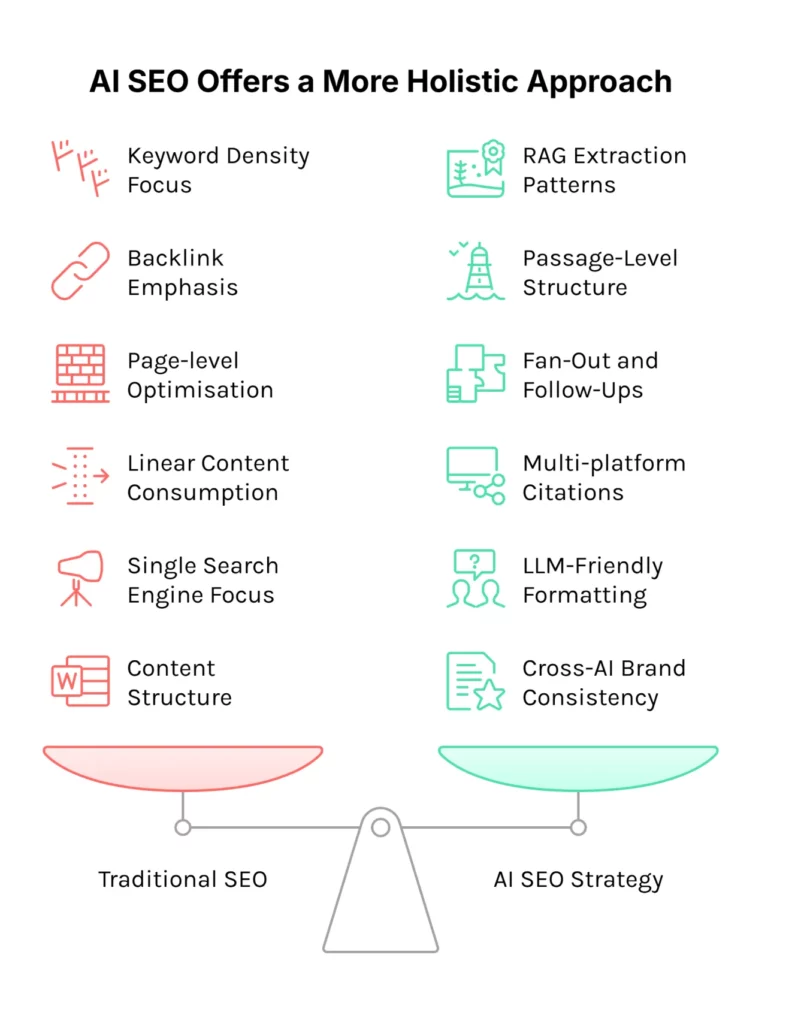
29
Jul
Jul
Search engine optimization has evolved far beyond keyword stuffing and manual link building. An AI SEO framework now represents the strategic integration of artificial intelligence into every stage of the SEO lifecycle—from research and content creation to technical auditing and performance prediction. Companies that adopt a structured AI-driven approach are seeing 40–60% faster content creation cycles, drastic improvements in topical authority, and the ability to scale SEO efforts without losing human oversight. This article unpacks the components, implementation steps, and pitfalls of building a robust AI SEO framework that combines machine speed with editorial judgment.
What Is an AI SEO Framework?
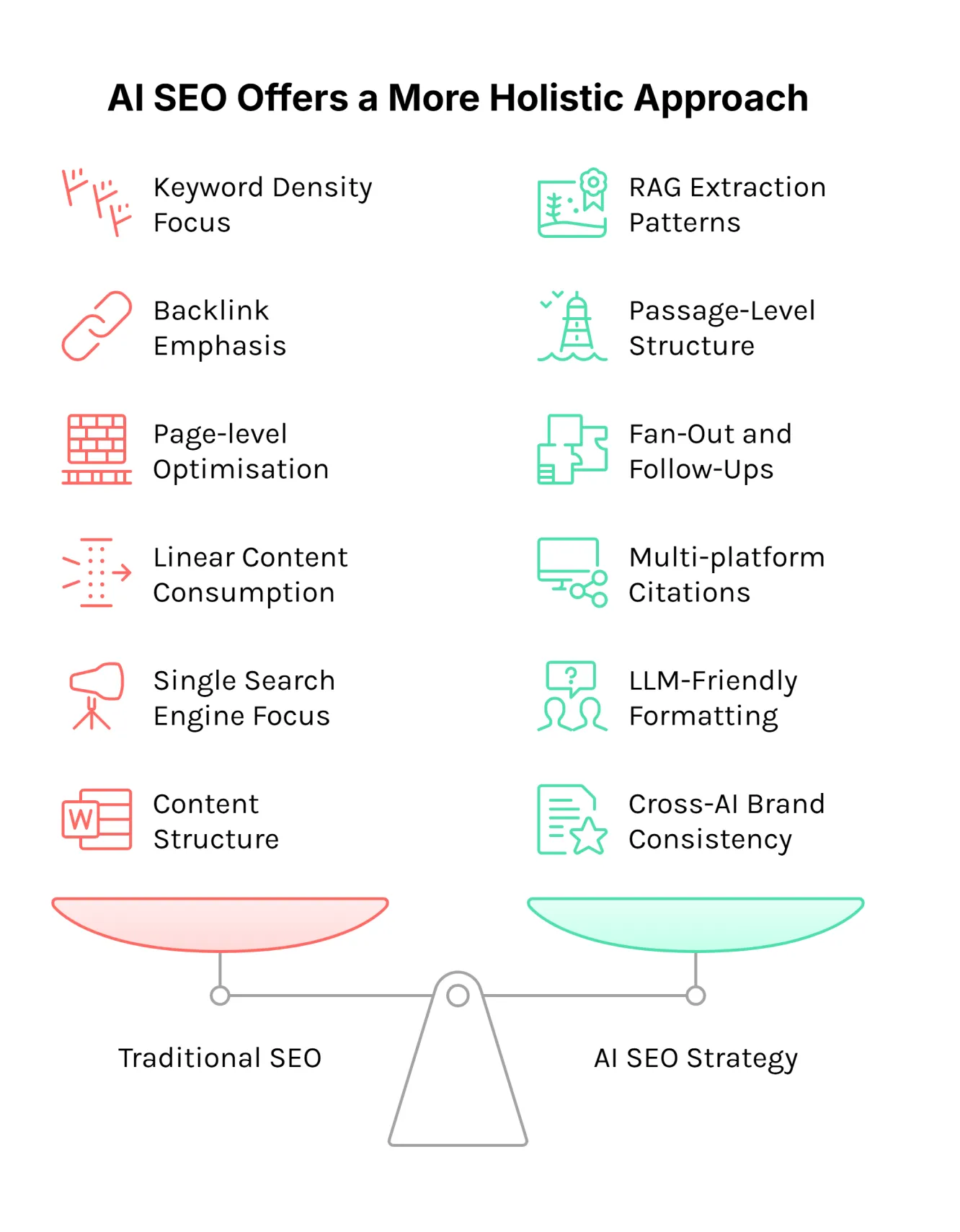
An AI SEO framework is a repeatable system that blends large language models, natural language processing, predictive analytics, and automation tools into traditional SEO workflows. It is not a single tool but a methodology that defines how AI assists—or autonomously handles—tasks like keyword clustering, content gap analysis, SERP intent classification, schema markup generation, and internal linking at scale.
Unlike ad-hoc AI usage, a proper framework establishes governance, quality gates, and human-in-the-loop checkpoints. For example, a brand might use AI to generate the first draft of a pillar page but will route it through an expert review to add original data, quotes, and nuanced industry insight. This fusion ensures that the content meets both search engine criteria and user expectations, a balance critical after Google’s helpful content updates.
At its core, an AI SEO framework transforms raw data into actionable optimization decisions without replacing the strategist. It accelerates ideation, cleans data, and highlights opportunities that manual analysis might miss, such as emerging long-tail queries or competitor content structures showing abnormal traction.
The Core Components of an AI SEO Framework
Building a reliable framework requires layering several interconnected components. Each component addresses a specific part of the SEO funnel, from discovery to measurement.
1. Automated Data Collection and Analysis
AI excels at aggregating massive datasets from Google Search Console, Ahrefs, Semrush, and internal analytics. Machine learning models can identify seasonal trends, predict traffic decay, and surface underperforming pages ripe for a refresh. This component often includes automated SERP scraping to understand ranking signals—such as the presence of images, video carousels, or People Also Ask boxes—for your target keywords.
2. Intent Classification and Topic Modeling
Instead of manually labeling keywords as informational, commercial, or transactional, AI models trained on BERT or similar architectures can classify intent with over 90% accuracy. Topic modeling algorithms then cluster thousands of keywords into semantic groups, revealing the true breadth of content needed to cover a subject exhaustively. This direct clustering shapes content architecture and prevents cannibalization.
3. AI-Powered Content Briefs and Generation
Modern frameworks use generative AI to produce detailed content briefs that outline recommended word count, header structure, media types, and questions to answer, all derived from top-ranking pages. Once approved, natural language generation tools can draft full articles. However, the framework must define which sections AI writes and which require human storytelling, like case studies or personal insights.
4. On-Page Optimization Engine
Here, AI analyzes live pages against entity-based optimization principles. It suggests internal links, optimizes meta descriptions, checks for content freshness, and even rewrites passages to improve readability and topical depth. Advanced implementations use real-time natural language understanding to align content with Google’s Knowledge Graph, reinforcing entity connections.
5. Technical SEO Auditing and Automation
AI-driven crawlers can audit site architecture, detect duplicate content, and prioritize JavaScript rendering issues. They then automatically generate structured data markup and monitor Core Web Vitals, alerting teams before performance dips impact rankings. Some frameworks integrate with CDNs to auto-optimize images and implement lazy loading based on user behavior patterns.
6. Predictive Performance and Forecasting
Using historical ranking data and known algorithm update patterns, predictive models estimate the potential traffic impact of content changes. This component supports resource allocation—showing which pages will yield the highest ROI when improved—and reduces the guesswork in quarterly SEO planning.
How AI Is Transforming Traditional SEO Frameworks
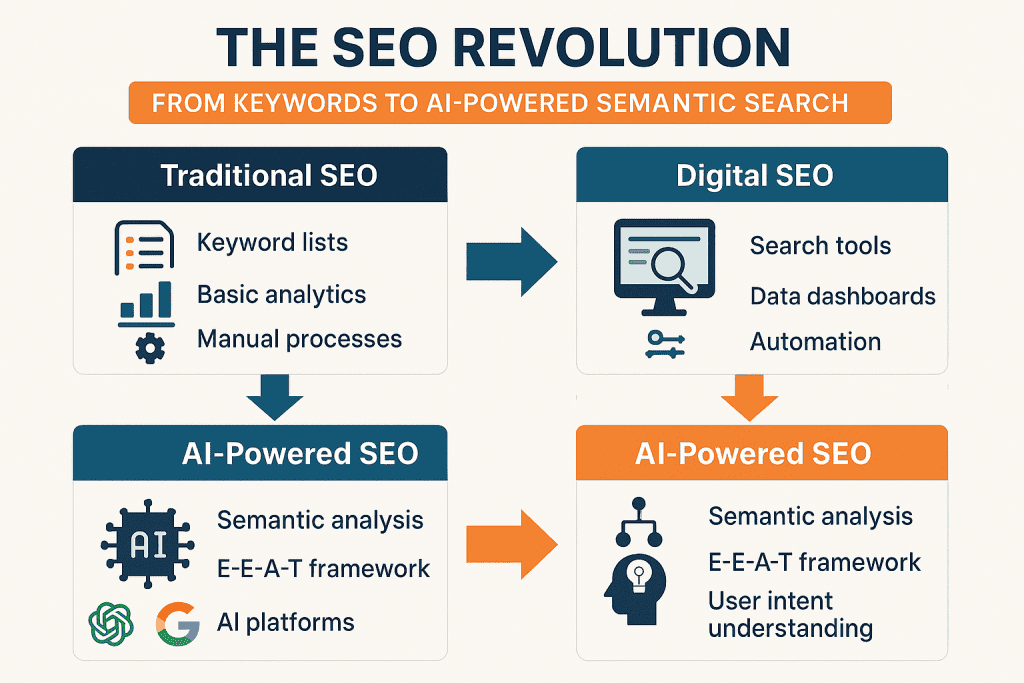
Traditional SEO relied heavily on manual spreadsheets, intuition, and slow iterative testing. The introduction of an AI SEO framework fundamentally changes speed, scalability, and the nature of the work itself.
Speed: Tasks that took weeks—like competitive content audits across 500 URLs—can now be completed in hours. AI parsers extract headings, word count, schema usage, and keyword density across entire competitor domains instantly. Scalability: Smaller teams can manage enterprise-level content libraries by automating structural updates and meta tag generation. Precision: AI identifies subtle correlations, such as exact LSI term placement that distinguishes position 3 from position 1, far more reliably than human analysis.
Yet transformation brings limits. AI can hallucinate facts, misread sarcasm, and lacks true empathy. An AI-written “best” list might recommend outdated products or fail to capture brand voice. That is why the framework must encode editorial review, just as a newsroom uses fact-checkers.
Step-by-Step Guide to Building Your AI SEO Framework
Implementing an AI SEO framework doesn’t require a data science team. Follow this phased roadmap to build a system that learns and improves over time.
Phase 1: Audit Existing Workflows and Set Guardrails
- Map every SEO task—content briefing, keyword research, backlink analysis—and identify repetitive, data-heavy steps that AI can automate first.
- Define strict guidelines: what AI is allowed to produce unedited, what requires human sign-off, and how you’ll fact-check outputs.
- Establish prompt libraries and output templates to ensure consistency across your team.
- Integrate APIs from Google Search Console, your chosen rank tracker, and web analytics. Feed this data into a central repository—often a data warehouse like BigQuery—so AI models can train on real site performance.
- Create a taxonomy of your topics and entities. Use AI clustering to identify content gaps automatically.
- Use tools like Clearscope, MarketMuse, or custom GPT‑based scripts to generate content outlines that reflect current SERP realities.
- Implement a content scoring system where AI evaluates drafts against target entity coverage, readability, and E-E-A-T signals.
- Deploy AI crawlers that run weekly and prioritize issues. Automate schema generation for articles, products, and FAQ sections.
- Create an internal linking script that identifies orphan pages and suggests contextual links using semantic similarity scores.
- Train a simple forecasting model on your traffic data. Feed it keyword difficulty, seasonality, and content age to predict traffic after a refresh.
- Build AI-generated draft reports that analysts can finalize, saving hours on data synthesis.
- Track when AI-suggested changes lead to ranking improvements. Refine models based on actual outcomes.
- Regularly update your framework to address algorithm changes—AI can be re-trained on new ranking patterns faster than a human team can adapt manually.
- Over-automating without editorial oversight. Publishing raw AI content leads to factual inaccuracies and generic phrasing that Google can devalue. Always include an expert review layer.
- Neglecting user experience signals. An AI might optimize strictly for keywords and miss engagement metrics like time on page or interaction depth. Ensure your framework measures and prioritizes UX metrics.
- Using stale or narrow training data. If your AI only looks at your own site’s data, it may reinforce existing blind spots. Ingest diverse industry data to avoid an echo chamber.
- Ignoring brand voice guidelines. Without strict style parameters, AI content becomes homogeneous and fails to differentiate your brand in the SERPs.
- Failing to monitor for AI drift. Models can degrade or change behavior after updates. Set up automated quality checks that flag sudden shifts in tone or accuracy.
Phase 2: Connect Data Sources and Build a Unified Knowledge Base
Phase 3: Deploy AI for Content Intelligence
Phase 4: Automate Technical and On-Page Optimization
Phase 5: Introduce Predictive Analytics and Reporting
Phase 6: Continuous Learning and Feedback Loops
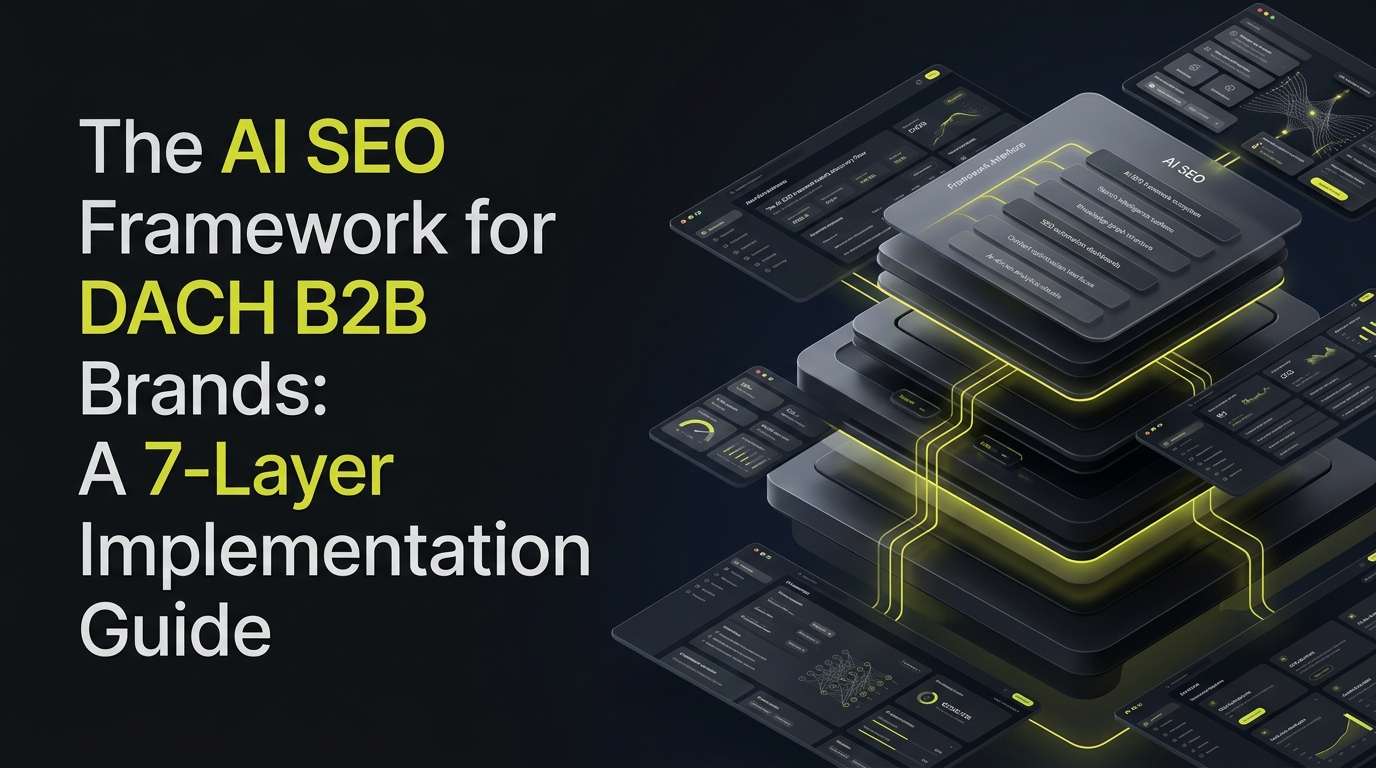
Traditional SEO Framework vs. AI SEO Framework
| Aspect | Traditional SEO | AI SEO Framework |
|---|---|---|
| Keyword Research Speed | Days of manual spreadsheet filtering | Minutes using clustering algorithms and predictive volume models |
| Content Briefs | Created manually by referencing a handful of competitors | Auto-generated with full SERP feature analysis, entity extraction, and outline suggestions |
| On‑Page Optimization | Manual checklist; one page at a time | AI-driven tools that suggest real‑time improvements and auto‑generate schema |
| Scalability | Limited by human hours and expertise | Near‑infinite scalability for repetitive tasks; human effort focused on creativity |
| Adaptation to Updates | Reactive; requires manual analysis of ranking drops | Predictive models flag at‑risk pages before traffic loss |
| Quality Control | Entirely human, prone to inconsistency | AI scoring with human oversight; consistent application of brand guidelines |
Common Mistakes When Implementing an AI SEO Framework
Despite its power, the AI SEO framework approach can fail when teams overlook critical human elements.
Important Notes for a Sustainable AI SEO Strategy
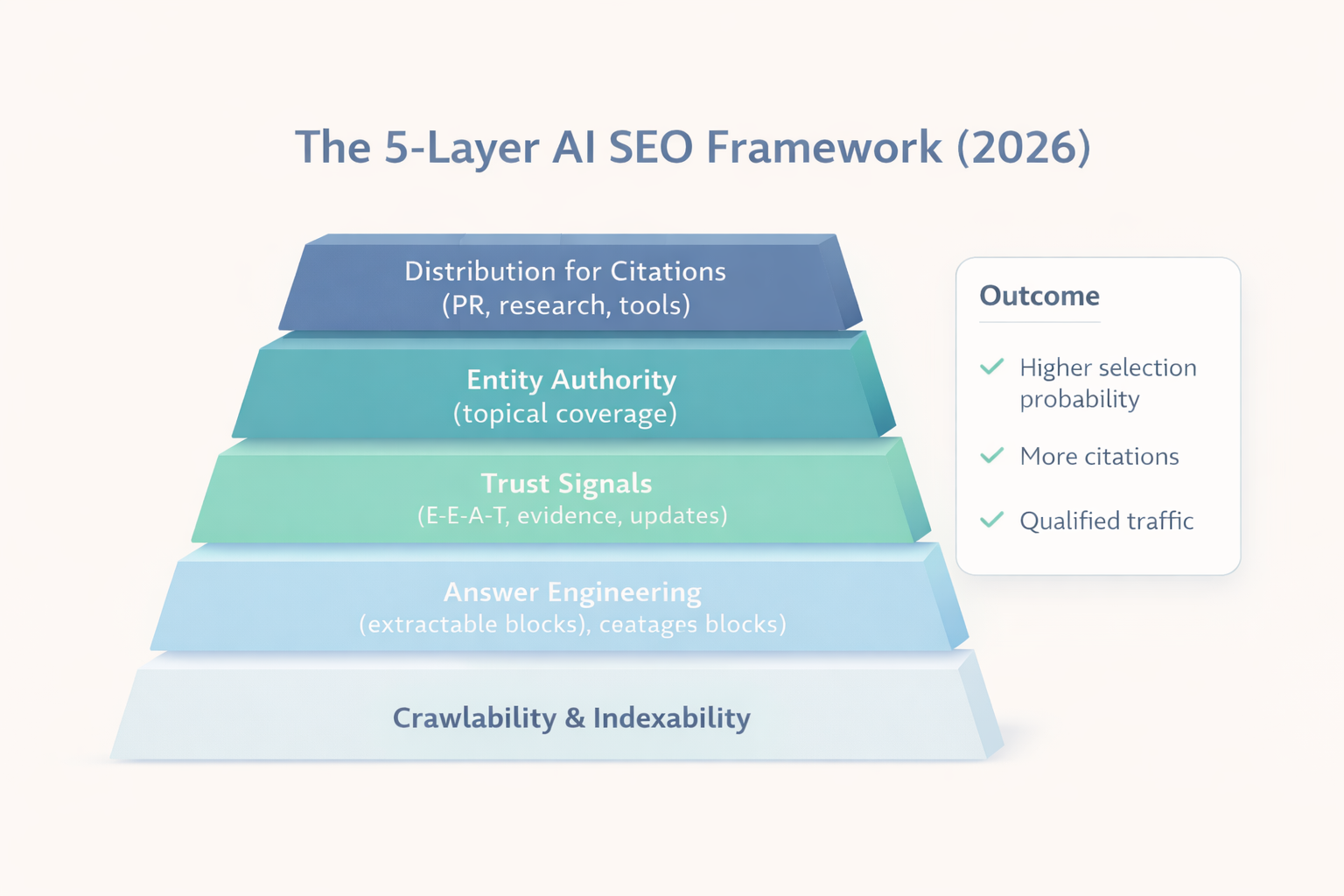
An effective framework acknowledges that AI is a collaborator, not a replacement. Google’s guidelines on AI-generated content emphasize that quality, originality, and helpfulness remain the primary ranking factors. Therefore, your framework must include a human validation stage for every customer-facing element.
Additionally, transparency with stakeholders is crucial. Document which parts of your workflow are AI-assisted and maintain changelogs so that if a ranking anomaly appears, you can trace it back to a specific model output or automation rule. Regularly audit your AI tools for bias—language models can inadvertently favor certain phrasing or ignore diverse audience needs.
Finally, invest in team upskilling. Even the best AI SEO framework will underdeliver if the team doesn’t understand prompt engineering, data interpretation, or the limits of generative AI. Pair data scientists with senior SEO strategists to build internal knowledge that outpaces competitors still experimenting with disconnected tools.
Frequently Asked Questions About AI SEO Frameworks
What is an AI SEO framework exactly?
An AI SEO framework is a structured system that integrates artificial intelligence tools and models into every phase of search optimization—from keyword research and content creation to technical audits and performance forecasting. It combines automation with human oversight to maximize efficiency and rankings.
Can small businesses implement an AI SEO framework without a large budget?
Yes. Many AI-powered platforms offer tiered pricing, and open-source models can be customized. Start small by automating keyword clustering and content briefs using affordable tools like ChatGPT with well‑engineered prompts, then gradually incorporate automated reporting and technical audits as you see ROI.
Will Google penalize content created using an AI SEO framework?
Google does not penalize content simply because it was AI-assisted. Penalties arise from low‑quality, unoriginal, or manipulative content. A strong framework ensures every piece meets E-E-A-T standards through human editing, fact‑checking, and adding unique value.
How does AI handle search intent better than manual research?
AI models process thousands of SERP data points—CTR by position, featured snippet formats, related searches, and user‑journey patterns—to classify intent with high precision. This data‑driven approach often reveals mixed‑intent queries where manual labeling might miss the nuance, enabling more comprehensive content planning.
What skills are needed to build an AI SEO framework in‑house?
You need a blend of SEO expertise, basic data analysis, and familiarity with AI tools. Key skills include prompt engineering, understanding APIs for data integration, and the ability to interpret model outputs critically. Bringing in a technical SEO specialist to set up automation and a content strategist for quality guidelines creates a strong foundation.
How often should the AI components be updated?
Update the underlying models and prompt libraries every quarter, or immediately after major search algorithm updates. Continuous monitoring of content performance and SERP shifts will indicate when the framework’s assumptions need recalibration. Treat model refinement as an ongoing process, not a one‑time setup.
Conclusion
The AI SEO framework is no longer a futuristic concept—it is the operational backbone for modern search teams aiming to scale efficiently and stay ahead of algorithm changes. By thoughtfully integrating AI into research, content development, technical optimization, and performance prediction, organizations can produce higher‑quality content faster while reducing human error. However, the true competitive advantage lies not in the technology itself but in the intelligent marriage of machine speed with human judgment, empathy, and strategic thinking. Start building your framework today with clear guardrails, and your site will be better positioned to capture the organic traffic of tomorrow.
Xem thêm:
- AI SEO Trends 2026: The Strategies That Will Define Search Next Year
- Next-Generation AI SEO Workflow for Enterprises: A Blueprint for Scalable Organic Growth
- AI Entity SEO: The Definitive Blueprint for Ranking in a Semantic Search World
- AI Blogging Tools: The Complete Guide to Automating Content Creation Without Losing Your Voice
- AI SEO Hyperlocal SEO: The Complete Guide to Dominating Local Search in 2025
Bài viết cùng chủ đề:

AI SEO SEO Automation with Make: The Complete Workflow Guide

AI SEO SEO Automation with Zapier: The Complete Workflow Guide

AI SEO SEO Automation with n8n: The Complete Workflow Guide
AI SEO SEO Automation with Gemini: The Complete Guide to Scaling Organic Growth

AI SEO SEO Automation with Claude: The Complete Guide to Scaling Content in 2025

AI SEO SEO Automation with ChatGPT: The Complete Playbook for 2025

AI SEO & SEO Automation for Affiliate Sites: The 2025 Playbook for Passive Income Growth
AI SEO & SEO Automation for Bloggers: The Complete Guide to Scaling Your Content

AI SEO & SEO Automation for Agencies: The Complete 2025 Playbook

AI SEO and SEO Automation for Ecommerce: The Complete Playbook for 2025

AI SEO & SEO Automation for WordPress: The Complete Playbook for 2025
AI SEO SEO Automation Strategy: The Complete Playbook for 2025

Mastering the AI SEO SEO Automation Process: A Complete Guide to Scaling Organic Growth
AI SEO SEO Automation System: The Complete Guide to Scaling Organic Growth in 2025
AI SEO SEO Automation Platform: The Complete Guide to Scaling Organic Growth in 2025
AI SEO SEO Automation Software: The Complete Guide to Scaling Organic Growth in 2025















