
No products in the cart.
AI Entity SEO: The Definitive Blueprint for Ranking in a Semantic Search World
29
Jul
Jul
AI Entity SEO represents the next evolution of search optimization, moving beyond isolated keywords to a holistic understanding of people, places, concepts, and things. As Google’s algorithms become increasingly adept at interpreting meaning, the fusion of artificial intelligence with entity-based strategies has emerged as the most reliable path to sustained organic visibility. This comprehensive guide unpacks every layer of AI Entity SEO, from foundational concepts to advanced implementation tactics, equipping you with a future-proof framework that aligns with how modern search engines actually think.
What Exactly Is AI Entity SEO?
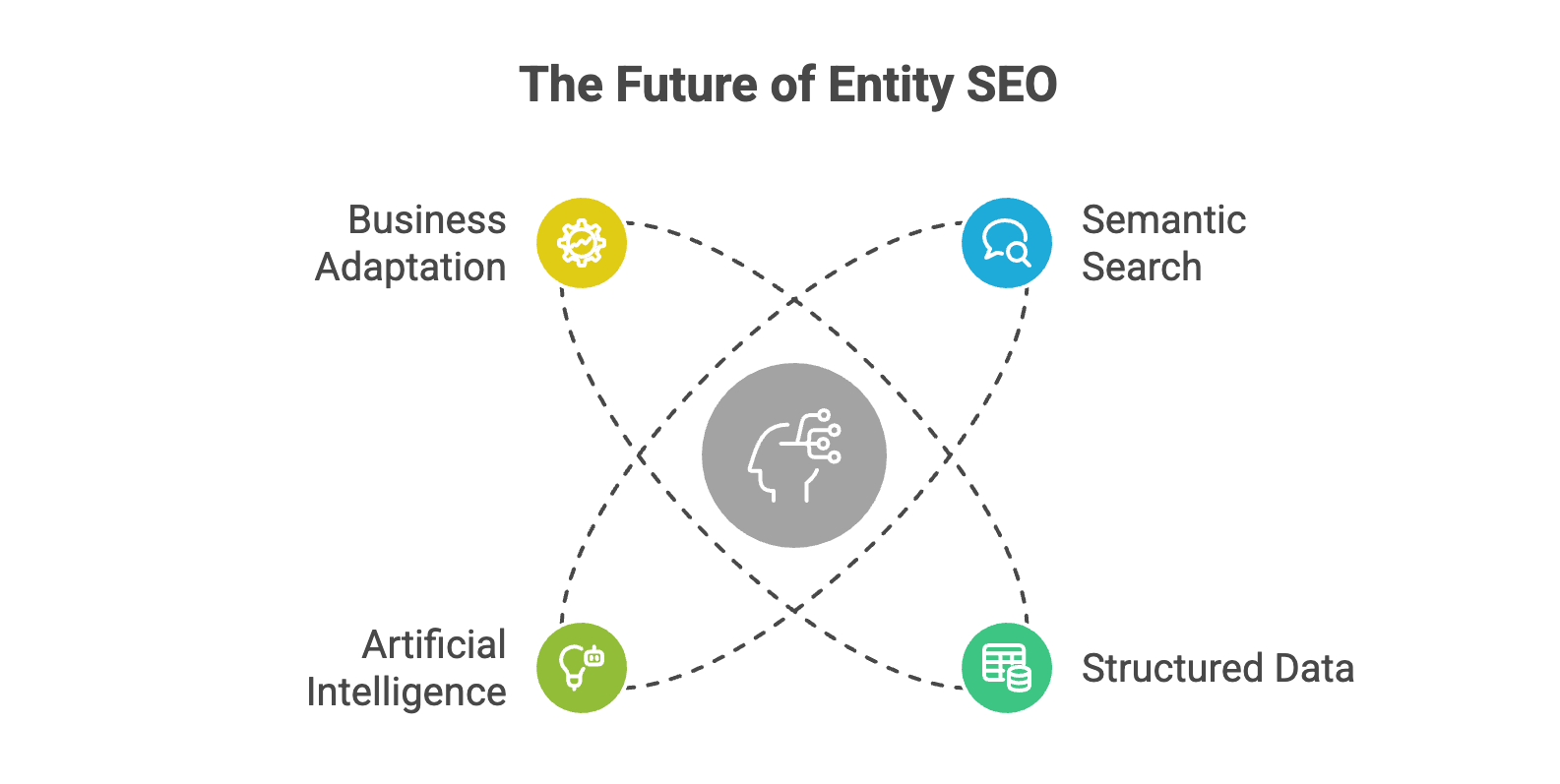
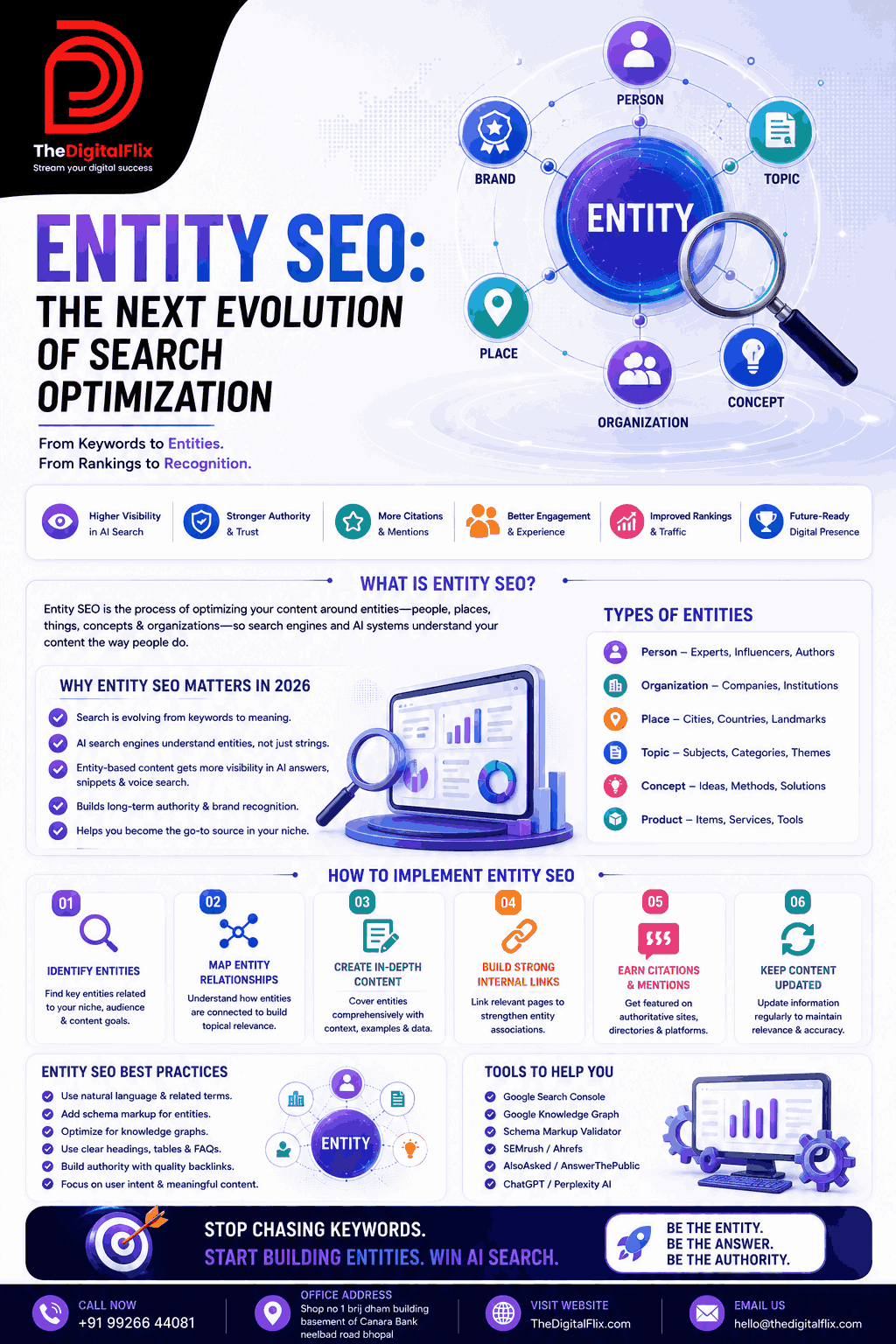
At its core, AI Entity SEO is the practice of optimizing digital content not just for strings of text, but for entities—the distinct, well-defined objects or concepts that search engines store in their knowledge bases. An entity can be a person, a brand, a location, a product, an event, or even an abstract idea like “machine learning.” Google’s Knowledge Graph, which contains over 500 billion facts about 5 billion entities, is the backbone of this semantic understanding. AI Entity SEO leverages artificial intelligence tools to discover entities, map their relationships, analyze search intent at the entity level, and craft content that demonstrates deep topical authority.
Traditional SEO often asks, “Which keywords should this page target?” AI Entity SEO reframes that question to, “Which entities must this page be about, and how should they be connected to satisfy the user’s underlying need?” The shift is monumental. When a search engine can confidently associate your content with the correct entities and their attributes, ranking signals become far more resilient to algorithm updates. AI enhances this process by automating entity extraction from massive datasets, predicting entity relevance, and even generating structured data markup that reinforces the connections between your content and the knowledge graph.
The Evolution from Keywords to Entities: Why the Shift Matters
For years, SEO revolved around exact-match keywords, density calculations, and backlink quantity. The introduction of Google’s Hummingbird update in 2013 began a steady migration toward semantic search. BERT in 2019 and MUM in 2021 accelerated this transformation by allowing the search engine to understand the nuance of natural language and the interplay of multimodal information. Keywords became signals, but entities became the currency of relevance. A query like “best laptop for graphic design under $1500” is no longer just a bag of words. Google unpacks it into entities: the “laptop” product category, the “graphic design” profession, the “price” attribute, and the comparative qualifier “best.”
AI Entity SEO capitalizes on this reality. Instead of writing separate pages for “cheap gaming laptop,” “gaming laptop deals,” and “affordable gaming computer,” an entity-first approach builds a comprehensive resource that covers the “gaming laptop” entity, its subtypes, attributes (price, GPU, refresh rate), related entities (graphic card brands, game titles), and authoritative sources. The result is a content hub that Google can trust as a definitive guide, earning higher rankings for hundreds of long-tail variations simultaneously.
How AI Powers Entity Identification and Optimization
Artificial intelligence supercharges every stage of the entity SEO workflow. The manual process of listing every relevant entity for a niche would be impossibly time-consuming. Modern AI tools use natural language processing (NLP) to crawl top-performing content, extract salient entities, and map their semantic relationships within seconds. Here are the key ways AI injects precision into the process:
- Automated Entity Extraction: Tools like Google’s Natural Language API, TextRazor, and Diffbot analyze a page’s text and return structured data about mentioned entities, their salience scores, and Wikipedia links. This identifies gaps where critical entities are missing.
- Competitor Entity Gap Analysis: AI can ingest the top 20 ranking pages for a target topic, aggregate all entities they mention, and produce a prioritized list of entities your content lacks. Closing these gaps signals comprehensiveness to search engines.
- Semantic Content Briefing: Instead of a list of keywords, AI-generated content briefs include primary and secondary entities, subtopics mapped to user intent, and suggested internal linking opportunities around entity hubs.
- Structured Data Generation: Schema markup, particularly the Organization, Person, Product, Article, and FAQ types, directly connects a page to the knowledge graph. AI can draft and validate JSON-LD schemas that include accurate entity attributes and relationships.
- Internal Linking Optimization: By understanding that “iPhone 15” and “A17 Pro chip” are entities with a strong relationship, AI can recommend internal links that create a dense, meaningful web of connections across a site, strengthening the topical authority of every page.
- Treating Entities as Glorified Keywords: Mentioning an entity without providing meaningful context, attributes, or connections is ineffective. An isolated mention of “cold brew” on a coffee page without explaining what it is, how it differs, and its relationship to the main entity adds little value.
- Ignoring Disambiguation: If your brand shares a name with a famous person or place, failing to properly disambiguate the entity using schema and clear on-page signals can confuse search engines. Always clarify which specific entity you represent.
- Overloading Schema with Irrelevant Entities: Marking up every single noun on a page as a Thing entity dilutes the signal. Reserve schema for the most salient, differentiating entities and their immediate connections.
- Choosing Quantity Over Quality of Entity Relationships: Linking to low-authority or spammy pages just to create entity connections will harm rather than help. Entity associations must be credible and contextually relevant.
- Neglecting the Human Reader: Writing solely for entity coverage results in robotic, unengaging prose. The primary goal remains satisfying user intent. Entity optimization should enhance readability and completeness, not compromise it.
- Entity persistence requires freshness: Update key attributes like dates, statistics, and product versions regularly. Stale entity data signals low maintenance and can erode ranking trust.
- Cross-platform entity consistency is vital: Ensure that your entity’s name, address, description, and branding are uniform across your website, Google Business Profile, social media, and third-party directories. Inconsistencies fragment the entity’s identity.
- User behavior shapes entity signals: Dwell time, pogo-sticking, and click-through rates on entity-rich pages indirectly inform search engines about the accuracy and usefulness of the entity associations. Optimize for engagement, not just machine understanding.
- E-E-A-T and entities are inseparable: Demonstrating Experience, Expertise, Authoritativeness, and Trustworthiness for an entity involves linking to credentials, author entities with verifiable expertise, and transparent sourcing. An entity page without demonstrated expertise is a hollow shell.
This symbiosis turns entity optimization from a theoretical concept into a repeatable, scalable system. The AI does not replace human judgment but provides the data layer needed to make informed strategic decisions about content architecture.
Core Components of an AI Entity SEO Strategy
Building a successful AI Entity SEO framework involves more than just sprinkling entity mentions into text. It demands a deliberate alignment of content, technical SEO, and authority signals. The following components form the backbone of a robust strategy:
1. Entity-Oriented Keyword and Topic Research
Begin by identifying the seed entity that defines your content. Use tools like InLinks, WordLift, or the TextRazor API to expand this into a full entity graph. Your research must answer: Which entities are inherently part of this topic? Which related entities do authoritative sources consistently mention? What attributes (size, color, price, date) are relevant? Map these into a topic cluster where a pillar page covers the main entity comprehensively, and supporting content dives into sub-entities.
2. Content Architecture Rooted in Entity Relationships
Structure your site so that each entity has a definitive URL. For example, an e-commerce site should have a page for the category entity “running shoes,” individual product entities like “Nike Air Zoom Pegasus,” and attribute pages like “cushioned running shoes” that connect the category to the attribute entity “cushioning.” Internal links should flow along these natural semantic pathways, mirroring the knowledge graph’s own connections.
3. On-Page Entity Optimization
On each page, the HTML structure must reflect entity hierarchy. The title tag should contain the primary entity. Headings should break down sub-entities and attributes. Within the body, naturally mention related entities with contextual information that clarifies their relationship. Use synonyms and variations to avoid robotic repetition. Crucially, include an entity description that aligns with how Google’s knowledge panel defines that entity, but expand with unique, experiential insight.
4. Structured Data and the Knowledge Graph Connection
Implement JSON-LD schema that explicitly declares the main entity of the page. Use the @id attribute to create dereferenceable URIs for each entity, linking them across your domain. For articles, include about and mentions properties. For local businesses, nest the LocalBusiness schema with proper entity identifiers like sameAs links to Wikidata, Wikipedia, or Google’s Knowledge Graph entry. This machine-readable layer leaves no ambiguity about what your content represents.
5. Authority Reinforcement Through External Entity Mentions
Search engines evaluate entity prominence using external references. Earning mentions and co-citations from authoritative sources that link to your entity strengthens its standing in the knowledge graph. This means building digital PR that associates your brand entity with the right topics, people, and events. An AI tool can monitor the web for unlinked brand mentions and identify opportunities to convert them into linked entity citations.
Benefits and Limitations of AI Entity SEO
| Benefits | Limitations |
|---|---|
| Greater Algorithm Resilience: Content aligned with entities is less likely to plummet after core updates because it matches the fundamental semantic understanding of the engine, not transient keyword patterns. | Complex Implementation: Requires a deep grasp of knowledge graph concepts, schema, and the ability to use NLP tools. Teams without technical resources may struggle. |
| Higher Organic Reach: A single entity-rich page can rank for thousands of related queries, far exceeding the traffic potential of a keyword-stuffed page. | Data Dependency: Accurate entity extraction depends on high-quality NLP models. Low-authority or poorly written source material can lead to misleading entity suggestions. |
| Improved User Experience: Content structured around entities naturally becomes more comprehensive and logically organized, satisfying user intent more completely and increasing dwell time. | Time Lag for Knowledge Graph Updates: Even with perfect implementation, Google’s knowledge graph may take weeks or months to fully associate new entities and attributes with your domain. |
| Featured Snippet and Knowledge Panel Exposure: Pages that clearly define entities and their attributes are prime candidates for position zero and knowledge panel information boxes. | Over-Optimization Risk: Excessively forcing entity mentions or marking up trivial attributes with schema can appear manipulative, potentially leading to manual actions. |
| Multilingual and Voice Search Readiness: Entity-based optimization transcends language barriers because the underlying entity ID remains constant, making content inherently suitable for voice assistants and international SEO. | Tool Cost: The most effective entity SEO tools often carry subscription fees, making the approach less accessible for very small websites. |
AI Entity SEO vs. Traditional Keyword SEO: A Practical Comparison
The difference between the two approaches is best illustrated through a direct lens. Consider a website selling organic coffee. A keyword-driven strategy would target terms like “buy organic coffee online,” “best organic coffee beans,” “organic coffee benefits.” An entity-driven strategy starts with the “organic coffee” entity and builds a complete information ecosystem around it.
Step-by-Step Guide to Implementing AI Entity SEO
Step 1: Map Your Core Entity and Its Ecosystem
Identify the main entity for your page. Let that entity be the seed. Use an entity extraction tool to analyze the top 10 ranking pages for a broad topic query. Export the list of entities they all share. Group them into primary entities (must-mention), secondary entities (should-mention), and supporting attributes (nice to have). This becomes your content blueprint.
Step 2: Create a Pillar Content Asset with Entity Coverage at Its Core
Write a comprehensive guide that covers the seed entity and all primary entities. Structure the page with clear headings that reflect entity names or attributes. Use bullet lists to enumerate related entities and their connections. Every claim about an entity should be substantiated with authoritative external references, which reinforces entity authority through co-citation. Avoid thin, superficial commentary.
Step 3: Implement Connected Structured Data
Based on the entity type, craft JSON-LD that declares the main entity. Use a unique identifier for each entity you reference (like a URL-based ID). Ensure that the schema types are correct—an Article should have an `about` property linking to the main entity, and the main entity should have `sameAs` links to its Wikidata or Wikipedia entries if they exist. Validate everything with Google’s Rich Results Test and Schema.org’s validator.
Step 4: Strengthen Internal Entity Links
Review every page on your site that mentions a shared entity. Link them together using descriptive anchor text that contains the entity name. For example, a page about “Arabica beans” should link to your “organic coffee” pillar page with the anchor text “organic coffee”, and vice versa. This creates a dense, crawlable entity web that mirrors the knowledge graph’s own connections.
Step 5: Earn External Entity Citations and Links
Reach out to authoritative databases, industry directories, and publications that can mention your brand entity in relation to the core topic. When your entity page and its supporting pages are referenced from trusted external sources with correct entity associations, Google’s confidence in your entity’s relevance and prominence increases significantly.
Step 6: Monitor Entity Coverage and Iterate
Use an AI-powered audit tool to periodically re-crawl your content and compare its entity profile against the evolving top-ranking pages. As Google’s understanding of a topic deepens, new entities may surface. Continuously update your content to include these emerging entities and refresh attribute data. This iterative process is what transforms a static page into a living knowledge hub.
Common Mistakes That Sabotage AI Entity SEO Efforts
Even seasoned SEO professionals make errors when transitioning to an entity-first mindset. Recognizing these pitfalls can save months of wasted effort.
Important Notes for Long-Term AI Entity SEO Success
Building entity authority is a long game. Unlike quick-win keyword tactics, the compounding benefits of entity SEO become most apparent after 6 to 12 months of consistent implementation. Keep these principles front of mind:
Frequently Asked Questions About AI Entity SEO
What is an entity in SEO, and how is it different from a keyword?
An entity in SEO is a unique, well-defined thing or concept—such as a person, place, product, or idea—that search engines recognize and store in their knowledge graph. A keyword is simply a text string a user types into a search box, which can be ambiguous. For example, “apple” as a keyword could refer to the fruit or the company. The entity “Apple Inc.” has distinct attributes, relationships, and a unique identifier in the knowledge graph. Entity SEO targets that specific, disambiguated entity rather than the vague keyword.
Which AI tools can help with entity extraction for SEO?
Several powerful AI-driven platforms excel at entity extraction and analysis. Google’s own Natural Language API analyzes text and returns recognized entities along with salience scores and Wikipedia links. TextRazor provides in-depth entity linking, disambiguation, and relationship mapping. InLinks offers an entity-based SEO tool that builds knowledge graphs and optimizes content briefs. WordLift uses AI to add structured data and entity connections directly within a website. Diffbot scrapes web pages and transforms unstructured content into structured entity data. Each tool serves slightly different use cases, from research to implementation.
Does AI Entity SEO work for small business websites with limited content?
Absolutely. A small business can begin by fully defining its brand entity, location entity, and core service entities. Even a 10-page website can implement precise schema, consistent entity references, and a strong internal linking structure around those core entities. For example, a local bakery should define the entity “Artisan Bread,” the location entity, and the “organic flour” ingredient entity. By ensuring these are clearly connected and properly marked up, the business can rank for highly specific, intent-driven queries that attract nearby customers. Scale is not a prerequisite for entity authority; clarity and accuracy are.
How long does it take to see results from AI Entity SEO?
The timeline varies based on domain authority, competition, and the completeness of existing entity associations. Most websites begin to notice improvements in query coverage and ranking stability within 3 to 6 months. However, full integration with the knowledge graph—evidenced by knowledge panel information or rich results—can take longer, especially if the entity is new or poorly defined on the wider web. Consistent, high-quality entity reinforcement accelerates the process.
Is schema markup mandatory for AI Entity SEO?
While schema markup is not an absolute requirement for ranking, it is one of the most powerful levers available. Structured data directly communicates, in machine-readable form, exactly which entities a page is about, what attributes they have, and how they relate to other entities. Without schema, search engines must infer entity associations purely from natural language, which can be less precise. Implementing JSON-LD schema that declares the main entity and its `sameAs` identifiers significantly improves the clarity and speed of entity recognition.
Can AI-generated content be used for entity SEO?
AI-generated content can serve as a starting point for entity coverage analysis and even drafting initial briefs, but human expertise remains critical. The core of entity SEO is authoritative, experience-based information that resolves user intent. AI tools can list entities and suggest attributes, but they cannot provide genuine experience, expert opinion, or the unique insights that build E-E-A-T. Use AI to identify what to cover, then have subject-matter experts write content that conveys real depth and trustworthiness.
Conclusion: The Indisputable Future Is Entity-First
Search engines have crossed the threshold from naive keyword matching to near-human semantic understanding. In this new paradigm, AI Entity SEO is not a fringe tactic—it is the foundational principle that will separate thriving digital properties from those that slowly fade into obscurity. By treating your website as a connected graph of entities, powered by AI-driven research and cemented by precise technical implementation, you build an asset that aligns intrinsically with how knowledge is indexed and retrieved. The complexity is real, but the reward is a durable, algorithm-resistant presence that earns the trust of both users and the machines that serve them. Adopt the entity-first mindset now, and your content will be speaking the language of search engines long before most competitors have even learned the alphabet.
Xem thêm:
- AI SEO Python Automation: The Complete Playbook for Modern Search Optimization
- How to Use ChatGPT for SEO: A Complete Blueprint for AI-Driven Search Success
- AI SEO Title Optimization: The Complete Guide to Higher Click-Through Rates
- AI SEO Articles: How to Rank With Intelligent Content Creation
- AI Topical Authority: The Ultimate Guide to Dominating Search with Expert-Level Content
Bài viết cùng chủ đề:

AI SEO SEO Automation with Make: The Complete Workflow Guide

AI SEO SEO Automation with Zapier: The Complete Workflow Guide

AI SEO SEO Automation with n8n: The Complete Workflow Guide
AI SEO SEO Automation with Gemini: The Complete Guide to Scaling Organic Growth

AI SEO SEO Automation with Claude: The Complete Guide to Scaling Content in 2025

AI SEO SEO Automation with ChatGPT: The Complete Playbook for 2025

AI SEO & SEO Automation for Affiliate Sites: The 2025 Playbook for Passive Income Growth
AI SEO & SEO Automation for Bloggers: The Complete Guide to Scaling Your Content

AI SEO & SEO Automation for Agencies: The Complete 2025 Playbook

AI SEO and SEO Automation for Ecommerce: The Complete Playbook for 2025

AI SEO & SEO Automation for WordPress: The Complete Playbook for 2025
AI SEO SEO Automation Strategy: The Complete Playbook for 2025

Mastering the AI SEO SEO Automation Process: A Complete Guide to Scaling Organic Growth
AI SEO SEO Automation System: The Complete Guide to Scaling Organic Growth in 2025
AI SEO SEO Automation Platform: The Complete Guide to Scaling Organic Growth in 2025
AI SEO SEO Automation Software: The Complete Guide to Scaling Organic Growth in 2025















