
No products in the cart.
AI SEO Fresh Content: The Complete Guide to Scaling Rankings in 2025
31
Jul
Jul
The digital landscape has shifted dramatically. Search engines now prioritize content that is not only relevant but also recently updated and contextually rich. This is where the concept of AI SEO fresh content comes into play. It represents the intersection of artificial intelligence and the constant need for updated material that satisfies both users and search engine algorithms. For businesses and marketers, understanding how to leverage AI for generating and refreshing content is no longer optional; it is a core component of sustainable organic growth. This guide provides a deep dive into the mechanics, benefits, and practical execution of a strategy centered on AI-driven freshness.
What Exactly is AI SEO Fresh Content?
At its core, AI SEO fresh content refers to the use of artificial intelligence tools to create, update, and optimize website material with a focus on timeliness and relevance. It is not simply about generating text with a bot. Instead, it involves a strategic workflow where AI assists in identifying content decay, suggesting updates based on new data, and producing new articles that target emerging queries. The “fresh” aspect is critical because Google’s algorithms, particularly the Query Deserves Freshness (QDF) system, often boost pages that demonstrate recent activity and updated information for time-sensitive searches.
This approach combines the analytical power of AI with the editorial judgment of human marketers. AI handles the heavy lifting of data analysis, keyword clustering, and initial drafting, while humans ensure the voice, accuracy, and brand alignment remain intact. The result is a content pipeline that can operate at scale without sacrificing quality, directly addressing the search intent of users who expect the most current answers to their questions.
Why Freshness Matters More Than Ever in SEO
Search engines have evolved from simple keyword matchers to sophisticated semantic engines. They now assess the lifecycle of information. For topics like technology, finance, and health, outdated information is not just unhelpful; it is dangerous. Consequently, Google has refined its ranking signals to reward sites that consistently refresh their cornerstone content. A page that was authoritative in 2020 may lose its ranking in 2025 if it fails to reflect the latest industry standards or news.
Furthermore, user behavior reinforces this trend. Audiences are conditioned to expect real-time updates. When a user searches for “best AI tools,” they do not want a list from last year. They want current comparisons, pricing updates, and feature changes. AI SEO fresh content directly addresses this expectation by automating the monitoring of changes and facilitating rapid updates. This creates a positive feedback loop: fresh content earns higher engagement, which signals value to search engines, which in turn boosts rankings.
The Core Components of an AI-Driven Freshness Strategy
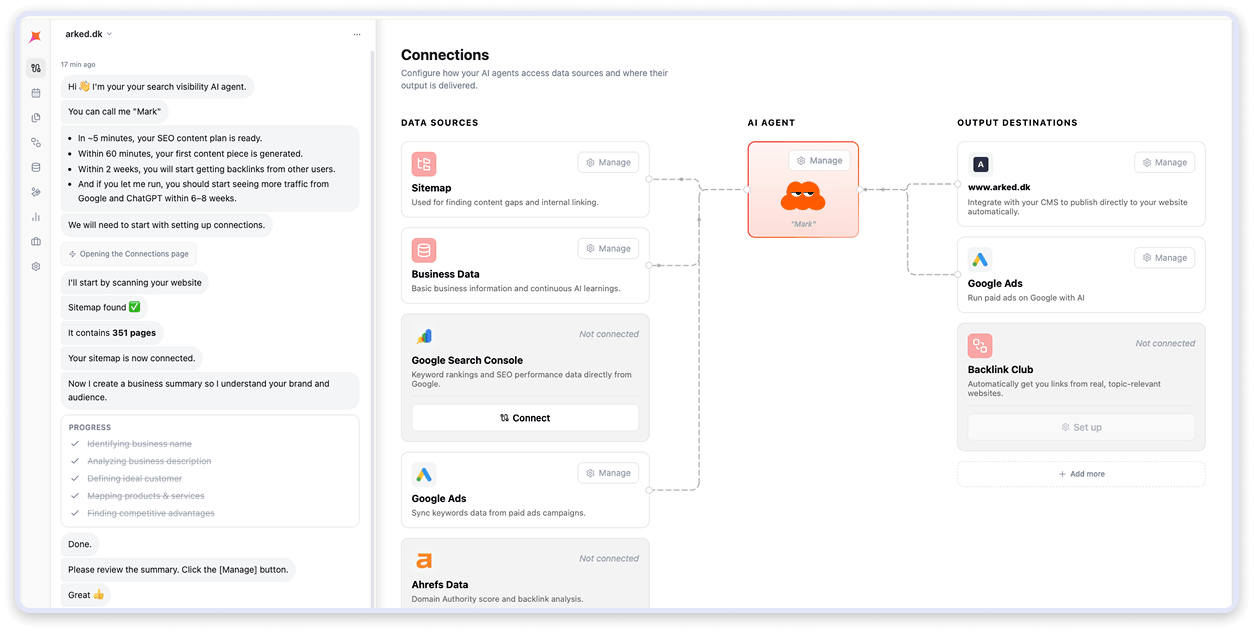
Implementing this strategy requires more than just purchasing a writing tool. It requires a structured approach that integrates several key components. Below are the pillars that support a successful AI SEO fresh content operation.
1. Automated Content Auditing and Decay Detection
Before you can refresh content, you must know which pages need attention. AI tools excel at this. They can crawl your entire site and analyze metrics like organic traffic trends, keyword position drops, and engagement rates. By setting thresholds, the AI flags pages that have lost significant visibility over a specific period. This removes the guesswork from prioritization, allowing you to focus resources on pages with the highest potential for recovery.
For example, an AI audit might reveal that a blog post about “social media algorithms” has dropped from position 3 to position 15 in the last 60 days. The system automatically flags this as a decay candidate, suggesting that the content is no longer aligned with the current algorithm landscape. This triggers the refresh workflow.
2. Real-Time Data Integration
Fresh content relies on fresh data. AI systems can be connected to various data sources, including Google Search Console, industry RSS feeds, and competitor monitoring tools. This integration allows the AI to pull the latest statistics, news mentions, and trending queries directly into the content update process. Instead of manually researching, the AI provides a summary of what has changed since the last update, ensuring that the new version is factually current.
3. Semantic Keyword Expansion
Refreshing content is not just about changing dates. It is about expanding the topical coverage. AI analyzes the top-ranking pages for your target keyword and identifies semantic gaps. It suggests related terms, questions, and subtopics that your current content does not cover. This helps you build a more comprehensive resource that satisfies the full spectrum of user intent, making it more likely to rank for a wider array of long-tail keywords.
Practical Applications: How to Use AI for Content Refresh
Understanding the theory is one thing; executing it is another.
Step 1: Identify Your “Money” Pages
Start with your high-value pages. These are the posts that generate the most traffic, leads, or revenue. Use an AI-powered analytics tool to rank your pages by business impact. Focus your refresh efforts on these pages first, as they offer the highest return on investment. A 10% traffic increase on a page that generates 1,000 leads is far more valuable than a 50% increase on a page that generates 10.
Step 2: Use AI to Generate a Refresh Brief
Once you have selected a page, input the URL into an AI content optimization tool. The A It will provide a brief that includes:
- Keywords that are now ranking but are missing from your text.
- Questions from the “People Also Ask” box that are unanswered.
- Suggested structural changes (e.g., adding a table, splitting long paragraphs).
- Updated statistics and data points to replace outdated ones.
- Keyword Position Velocity: Track how quickly a refreshed page moves up the SERP. A successful refresh should show movement within 2-4 weeks.
- Organic Click-Through Rate (CTR): An updated title tag and meta description should improve your CTR from the search results page.
- Engagement Metrics: Look at time on page and bounce rate. If the refreshed content is genuinely better, users should stay longer and explore more.
- Conversion Rate: Ultimately, does the refreshed content drive more sign-ups, purchases, or inquiries? This is the bottom-line metric.
This brief serves as your roadmap. It ensures that the human writer is not starting from scratch but is guided by data-driven insights.
Step 3: Rewrite and Expand with AI Assistance
Using the brief, instruct your AI writing tool to rewrite specific sections. For example, you can prompt the AI to “rewrite the introduction to include the 2025 statistics” or “generate a new section comparing the top three tools mentioned in the brief.” The key is to use AI for the heavy lifting of drafting, but to apply human judgment for tone, nuance, and brand voice. Always fact-check the AI’s output against the provided sources.
Step 4: Update Metadata and Internal Links
Freshness extends beyond the body text. The title tag and meta description must also be updated to reflect the new angle. Use AI to generate multiple title tag variations that include the primary keyword and a compelling value proposition (e.g., “2025 Update” or “New Data”). Additionally, refresh internal links. Point to newer, more relevant pages within your site to distribute link equity and improve crawlability.
Comparing Traditional Content Updates vs. AI-Driven Freshness
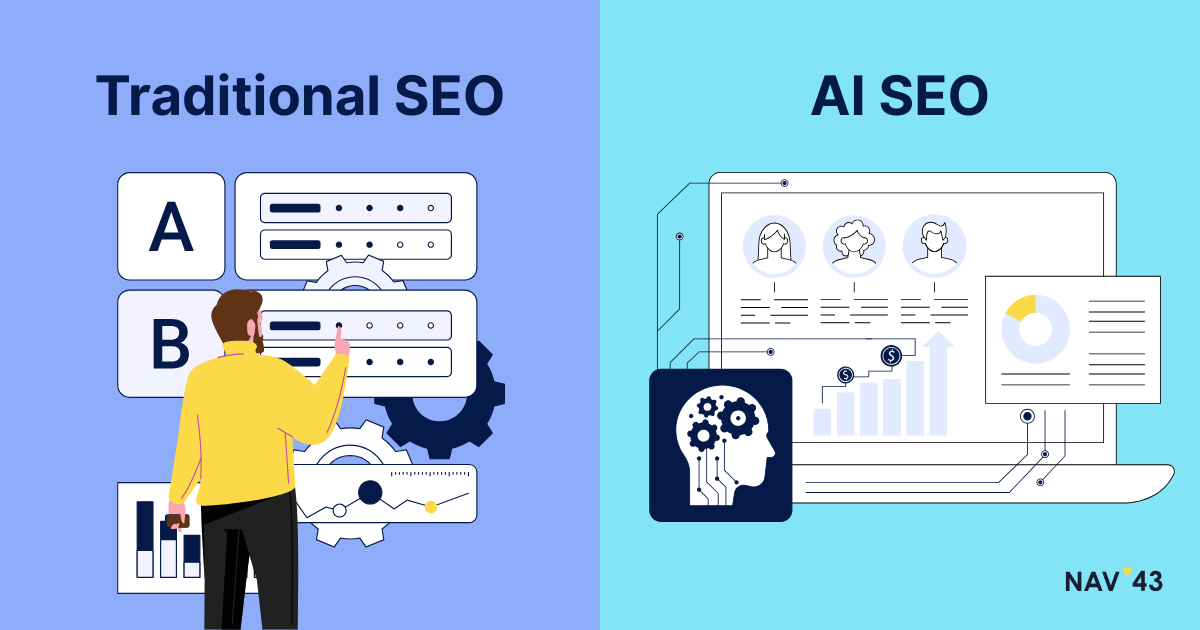
To fully appreciate the value of AI, it helps to compare it directly with the traditional manual process. The differences are stark in terms of speed, depth, and consistency.
| Feature | Traditional Manual Update | AI SEO Fresh Content |
|---|---|---|
| Speed of Execution | Slow (days to weeks) | Fast (hours to days) |
| Data Analysis Scope | Limited to manual review | Comprehensive, real-time SERP analysis |
| Scalability | Difficult to scale | Highly scalable across hundreds of pages |
| Consistency | Varies based on writer | Consistent adherence to SEO briefs |
| Cost Efficiency | High labor costs | Lower cost per page updated |
| Human Oversight | High (manual writing) | Medium (editing and strategy) |
While the table highlights the efficiency of AI, it is crucial to note that human oversight remains the linchpin. AI provides the raw material and analysis, but the final editorial review ensures quality and accuracy. The best results come from a hybrid model where AI handles the “grunt work” and humans handle the “genius work.”
Common Mistakes to Avoid with AI Content Refresh
Many teams jump into AI adoption and make critical errors that undermine their efforts. Being aware of these pitfalls can save you time and prevent ranking losses.
Mistake 1: Blindly Publishing AI Output
The most common mistake is treating AI as a replacement for editors. AI can generate text that sounds authoritative but may contain factual errors, hallucinations, or outdated information. Always verify statistics and claims. A single incorrect fact can destroy your site’s credibility and trigger a manual action from Google. The AI is a tool, not a source of truth.
Mistake 2: Ignoring the “Why” Behind the Refresh
Refreshing content just for the sake of having a new date is a wasted effort. You must understand why the page is underperforming. Is it a technical issue? Is the search intent different now? Is the competition simply stronger? Use AI to diagnose the root cause before making changes. If the keyword is no longer relevant to your business, no amount of refreshing will help.
Mistake 3: Over-Optimizing with Keywords
In the rush to rank, some marketers use AI to stuff content with every possible keyword variation. This leads to unnatural, robotic prose that fails the “helpful content” test. Focus on topical depth and readability. Use AI to suggest where keywords fit naturally, not to force them into every sentence. The goal is to answer the user’s question comprehensively, not to game the algorithm.
Important Notes on Quality and E-E-A-T
Google’s Quality Rater Guidelines emphasize Experience, Expertise, Authoritativeness, and Trustworthiness (E-E-A-T). AI SEO fresh content must align with these principles to succeed long-term. This means that even when using AI, you must ensure the content reflects real-world experience. If you are writing about a software tool, include specific user experiences or case studies. If you are writing about a medical topic, ensure the information is reviewed by a qualified professional.
Furthermore, transparency is key. While you do not need to label AI-generated content, you are responsible for its accuracy. Implement a strict editorial process where every AI-generated piece is reviewed by a subject matter expert. This human-in-the-loop approach is the only way to build the trust that both users and search engines demand. Freshness without accuracy is a hollow victory.
Measuring the Success of Your AI Fresh Content Strategy
To determine if your efforts are paying off, you must track specific metrics. Vanity metrics like page views are useful, but deeper analysis is required to prove ROI.
Use AI analytics dashboards to automate the reporting of these metrics. Set up alerts so you are notified when a refreshed page starts to gain traction or, conversely, when it continues to decline. This allows for rapid iteration and continuous improvement.
Frequently Asked Questions (FAQ)
How often should I refresh my content using AI?
The frequency depends on the industry. For fast-moving sectors like technology, finance, and news, a refresh every 3-6 months is often necessary. For evergreen topics like “how to tie a tie,” an annual check-up may suffice. Use AI to monitor keyword volatility. If your rankings are stable and traffic is consistent, you can extend the interval. If you see a decline, prioritize that page for an immediate refresh.
Does Google penalize AI-generated content?
Google does not penalize content based on how it is produced. It penalizes content that is spammy, low-quality, or manipulative, regardless of whether a human or AI created it. If your AI SEO fresh content is accurate, helpful, and aligns with search intent, it will rank. The key is to use AI as a tool to enhance quality, not to mass-produce thin content.
Can AI completely replace human SEO writers?
No. AI can draft, research, and optimize, but it lacks the strategic thinking, brand empathy, and creative nuance of a skilled human writer. The most effective approach is a partnership. AI handles the data-heavy tasks and initial drafts, while humans provide the editorial oversight, unique insights, and final polish. This hybrid model is the future of content marketing.
What is the difference between content refresh and content repurposing?
Content refresh involves updating an existing piece to keep it current and accurate. Content repurposing involves taking an existing idea and transforming it into a different format, such as turning a blog post into a video or an infographic. Both are valuable, but they serve different goals. AI SEO fresh content focuses primarily on the refresh aspect, ensuring the original asset remains competitive.
How do I choose the right AI tool for content freshness?
Look for tools that offer SERP analysis, content decay detection, and integration with Google Search Console. Tools like Surfer SEO, Clearscope, and Frase are popular choices. Evaluate them based on your budget, team size, and technical expertise. Most offer free trials, so test a few to see which workflow feels most intuitive. The best tool is the one your team will actually use consistently.
Conclusion
The era of “set it and forget it” SEO is over. Search engines demand relevance, and users demand accuracy. AI SEO fresh content provides the mechanism to meet these demands efficiently and at scale. By leveraging AI for auditing, data integration, and drafting, you can transform your content strategy from a reactive chore into a proactive growth engine. The key takeaway is to embrace the technology while maintaining rigorous human oversight. When you combine the speed of AI with the discernment of experienced editors, you create a powerful competitive advantage that is difficult to replicate. Start by auditing your top pages, implement a structured refresh workflow, and measure the results. The pages that rank today are not guaranteed to rank tomorrow, but with a robust freshness strategy, you can ensure they have the best possible chance.
Xem thêm:
- AI SEO Keyword Forecasting: The Complete Guide to Predicting Search Trends
- AI SEO Schema Markup Generator: The Complete Guide to Automated Structured Data
- AI SEO Gemini Gems: The Complete Guide to Unlocking Hidden Search Potential
- AI Title Generator: Craft Click-Worthy Headlines That Drive Traffic and Engagement
- AI SEO Examples: Proven Ways to Automate and Optimize Your Search Strategy
Bài viết cùng chủ đề:

AI SEO SEO Automation with Make: The Complete Workflow Guide

AI SEO SEO Automation with Zapier: The Complete Workflow Guide

AI SEO SEO Automation with n8n: The Complete Workflow Guide
AI SEO SEO Automation with Gemini: The Complete Guide to Scaling Organic Growth

AI SEO SEO Automation with Claude: The Complete Guide to Scaling Content in 2025

AI SEO SEO Automation with ChatGPT: The Complete Playbook for 2025

AI SEO & SEO Automation for Affiliate Sites: The 2025 Playbook for Passive Income Growth
AI SEO & SEO Automation for Bloggers: The Complete Guide to Scaling Your Content

AI SEO & SEO Automation for Agencies: The Complete 2025 Playbook

AI SEO and SEO Automation for Ecommerce: The Complete Playbook for 2025

AI SEO & SEO Automation for WordPress: The Complete Playbook for 2025
AI SEO SEO Automation Strategy: The Complete Playbook for 2025

Mastering the AI SEO SEO Automation Process: A Complete Guide to Scaling Organic Growth
AI SEO SEO Automation System: The Complete Guide to Scaling Organic Growth in 2025
AI SEO SEO Automation Platform: The Complete Guide to Scaling Organic Growth in 2025
AI SEO SEO Automation Software: The Complete Guide to Scaling Organic Growth in 2025















