
No products in the cart.
AI SEO Examples: Proven Ways to Automate and Optimize Your Search Strategy
29
Jul
Jul
Artificial intelligence has quietly woven itself into nearly every stage of search engine optimization. The most practical AI SEO examples show how marketers now automate keyword clustering, generate content outlines, audit technical health, and even predict rankings with surprising accuracy. This shift is not about replacing human judgment. The real breakthroughs come when AI handles repetitive data processing, leaving strategists free to interpret insights, shape creative direction, and build the kind of trust no algorithm can fabricate. Understanding these concrete use cases transforms abstract AI talk into measurable competitive advantage.
What AI in SEO Actually Means
At its core, AI in SEO refers to the application of machine learning models, natural language processing, and predictive analytics to tasks that traditionally required manual effort and guesswork. Search engines like Google have used AI for years through systems such as RankBrain and BERT to better understand user intent. On the practitioner side, AI tools now analyze enormous datasets—backlink profiles, SERP features, user behavior signals—to surface patterns a human would never spot within a reasonable timeframe.
These systems learn from historical search data, algorithm updates, and content performance to provide recommendations. A simple example: instead of manually grouping 10,000 keywords by hand, an AI clustering algorithm can return semantically related clusters in minutes, complete with search volume trends, intent labels, and content gap identifiers. This is not futuristic theory; it is how many enterprise SEO teams already operate.
Key Categories of AI SEO Examples in Practice
AI applications in SEO span the entire workflow from discovery to reporting. The most impactful examples cluster around content intelligence, technical optimization, rank tracking with predictive modeling, and link opportunity identification. Each category uses different underlying technologies but shares a common thread: reducing manual labor while improving precision.
Content Creation and Optimization Assistants
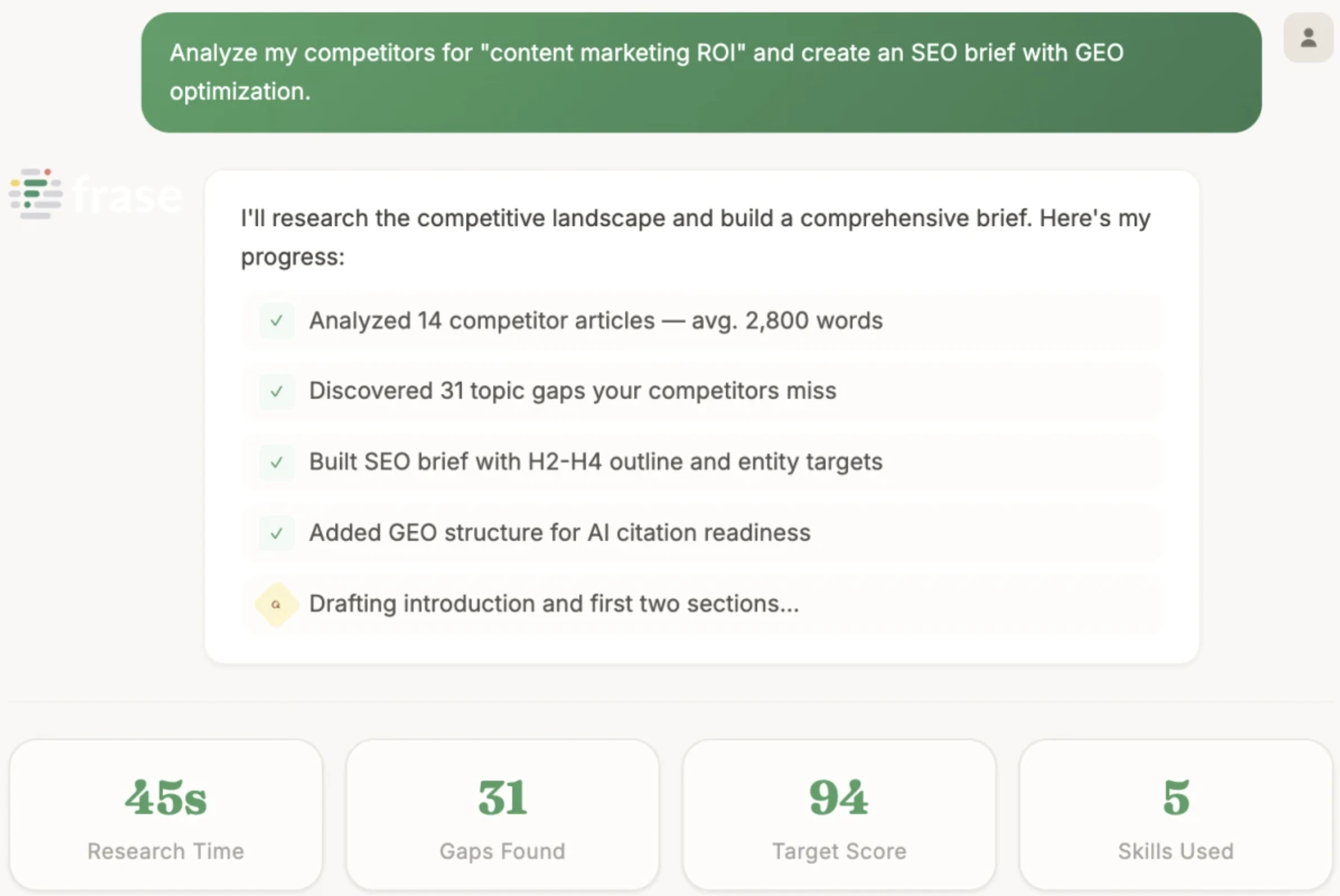
Content-focused AI SEO examples dominate discussion for good reason. Tools powered by large language models can now draft full articles, but the real power sits in optimization layers that analyze top-ranking pages for a target query and suggest content structures, semantic keywords, and readability improvements. For instance, an AI content optimizer might scan the first page of Google results for “best running shoes for flat feet” and identify that all high-ranking pages include sections on arch support, podiatrist recommendations, and specific brand comparisons. The tool then generates a content brief specifying these subtopics, recommended word counts per section, and NLP entity terms to include.
Beyond briefs, AI rewrites existing content to fill topical gaps. A practical example: an e-commerce site discovered through AI analysis that its product category page for “ergonomic office chairs” mentioned lumbar support only twice, while the top ten competitors used the term an average of fourteen times in strategic locations. After the AI suggested inserted text and heading modifications, the page moved from position eleven to position five within three weeks. This type of on-page fine-tuning, driven by data rather than intuition, represents a core AI SEO example.
Keyword Research and Intent Mapping
Traditional keyword research involved seed lists, manual spreadsheet manipulation, and best-guess intent classification. AI transforms this by automatically classifying queries into informational, commercial, transactional, and navigational buckets while also identifying micro-intents. One powerful AI SEO example is the use of topic modeling algorithms that ingest thousands of related search terms and output a topical map with parent topics, child subtopics, and content types best suited for each node.
Another example involves predictive keyword value. Advanced SEO platforms now train models on a domain’s historical traffic, conversion rates, and competitive difficulty to forecast which keywords are most likely to generate revenue within a specific timeframe. Instead of chasing high-volume terms with fierce competition, a site can pinpoint lower-volume long-tail keywords with strong purchase intent signals—a strategic shift that AI makes operationally feasible at scale.
Technical SEO Audits and Automated Fixes
Technical SEO AI examples have moved far beyond simple crawlers that list broken links. Modern systems prioritize issues based on projected traffic impact, considering page importance, internal link equity, and historical performance patterns. A logistics company recently used an AI-powered audit tool that detected not just standard issues like missing canonical tags, but also correlated slow page speed on mobile with a 14% decline in organic clicks for location-specific pages. The tool automatically recommended a sequence of fixes starting with image compression and lazy loading for those exact pages, not the entire site, maximizing resource efficiency.
Some AI-driven crawlers now simulate how search engine bots render JavaScript-heavy pages, pinpointing exactly which dynamic content fails to get indexed. This level of automated diagnosis replaces hours of manual log file analysis and Chrome DevTools inspection. Structured data implementation also benefits: AI tools can scan product catalogs, blog archives, or recipe databases and suggest appropriate schema markup, flagging missing fields that could unlock rich results.
Link Building and Backlink Profile Analysis
Quality link acquisition remains resource-intensive, but AI injects efficiency into several stages. One AI SEO example sits in prospect identification: algorithms analyze competitor backlink profiles, third-party referral traffic patterns, and topical relevance to generate prioritized lists of likely linkable domains. The AI goes beyond raw Domain Authority, evaluating whether a site’s audience genuinely overlaps with the target niche and whether its editorial guidelines suggest a realistic chance of earning a link.
Disavow file generation also benefits from machine learning. Instead of manually reviewing thousands of domains and applying blanket rules, AI models trained on known spam patterns can flag suspicious links with high accuracy, dramatically reducing false positives. Additionally, natural language generation helps craft personalized outreach emails at scale, though human review remains essential to maintain authenticity.
Benefits and Limitations of AI-Driven SEO
The advantages of incorporating AI into search strategies are tangible. Speed stands at the forefront: tasks that once took weeks, like comprehensive content gap analysis across a 10,000-URL site, now finish in hours. Consistency improves as well—algorithms apply the same optimization rules to every page, eliminating the variability that comes with multiple human editors. Data-driven decision-making replaces gut feelings, which often leads to more predictable ranking outcomes.
However, limitations demand attention. AI models rely on patterns present in training data, meaning they can perpetuate outdated tactics if not continuously updated against modern algorithm changes. Content generated purely by AI without human editorial oversight frequently lacks original insight, personal experience, and the nuanced voice that builds reader trust. Google’s helpful content system explicitly rewards people-first content; solely machine-written pages risk classification as unhelpful. Cost can be a barrier too. While many AI SEO tools offer free tiers, the most powerful enterprise solutions carry significant subscription fees.
Ethical considerations also arise. Over-automation can lead to scaled content abuse, where thousands of low-quality pages flood the web in pursuit of long-tail traffic. The smartest approach uses AI as an amplifier of human creativity, not a replacement.
Traditional SEO vs. AI-Assisted SEO: A Practical Comparison
The table below highlights how core SEO activities shift when AI enters the workflow. The differences are not about old-school versus futuristic, but about the depth, speed, and data reliance of each method.
| SEO Activity | Traditional Approach | AI-Assisted Approach |
|---|---|---|
| Keyword Research | Manual seed list expansion using Google’s autocomplete and keyword planners; grouping by intuition. | Automated semantic clustering, intent classification, and revenue prediction models. |
| Content Optimization | Competitor page manual review, keyword density checks, and editorial guideline adherence. | NLP-based gap analysis against top SERP pages, real-time scoring for entities, tone, and structure. |
| Technical Audits | Scheduled crawls, manual log file inspection, issue identification without prioritization. | Continuous monitoring with impact scoring, prioritization by projected traffic loss, automated fix suggestions. |
| Link Analysis | Manual backlink profile review, subjective judgment on link quality, disavow file creation via spreadsheet. | Machine learning spam detection, predictive link value scoring, automated prospect discovery with relevance filters. |
| Reporting | Data pulled from multiple sources, assembled in static spreadsheets, manually interpreted. | Anomaly detection algorithms that alert on unexpected ranking drops, automated correlation with traffic drivers. |
Practical Application: A Step-by-Step AI SEO Workflow
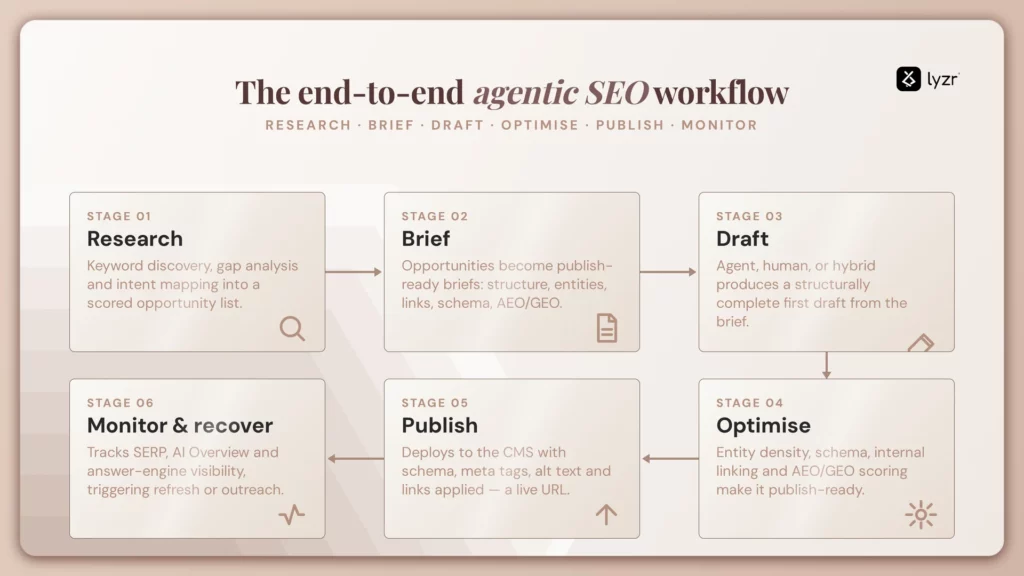
Turning AI SEO examples into a repeatable process requires deliberate integration rather than tool hopping. The following workflow demonstrates how a content team might tackle a new product launch using AI at every stage.
Step 1: Topic Discovery and Demand Validation
Begin by feeding a broad term—say, “sustainable activewear”—into an AI keyword research tool. The system returns thousands of related queries, grouped by intent. One cluster might center on fabric materials (e.g., “organic cotton vs recycled polyester”), while another focuses on care instructions. Validate demand by cross-referencing search volume trends and seasonality. The AI surfaces not just what people search now, but forecasts rising queries based on social signals and news mentions.
Step 2: Competitive SERP Analysis
Use an AI content optimizer to analyze the top twenty results for a chosen primary keyword. The tool extracts common headings, frequently mentioned entities (brands, scientific terms, regulatory bodies), and content type patterns. The output includes a content score and a detailed brief specifying the optimal length, number of images, and which questions to answer directly.
Step 3: Content Drafting with Human Oversight
An AI writing assistant creates a first draft pulling in the brief’s structure. The draft includes statistically correlated subheadings, naturally placed semantically related terms, and a readability score. A subject-matter expert then reviews the draft, adding original data, personal anecdotes, and recent news references. This hybrid step ensures the content meets Google’s people-first standards while retaining optimization strength.
Step 4: On-Page Refinement and Internal Linking
After publishing, an AI monitoring tool crawls the page and its cluster of topic-related content. It suggests internal links to existing high-authority pages and flags any on-page elements that deviate from top performer benchmarks. For example, missing alt text on a critical image or a heading hierarchy that skips an H2 level would be highlighted.
Step 5: Performance Tracking with Anomaly Detection
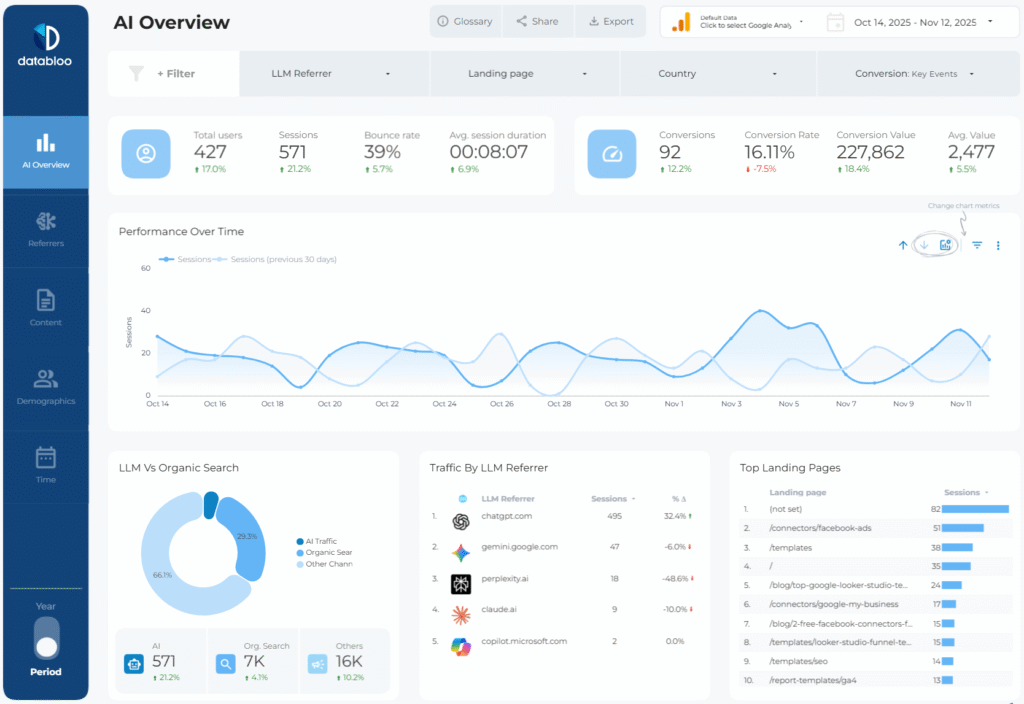
Instead of manually checking rankings weekly, an AI analytics system connects to Search Console and monitors click-through rate, average position, and impressions daily. The algorithm establishes a baseline and alerts the team only when a statistically significant deviation occurs, along with a list of potential causes—such as a new competitor entering the SERP or a featured snippet change.
Common Mistakes When Using AI for SEO and How to Avoid Them
Relying on AI without understanding its limitations leads to predictable pitfalls. The most frequent mistake is treating AI output as final and publish-ready. Content often emerges factually correct but bland, lacking the unique perspective that drives engagement and backlinks. Always layer human expertise, opinion, and original data on top of machine drafts.
Another error involves over-optimizing for tool scores. Some platforms assign a “content score” based on keyword frequency and entity inclusion. Chasing a perfect 100 often results in unnatural repetition and a poor reading experience. Use scoring as a directional guide, not an absolute target. Similarly, trusting AI-generated keyword data without verifying intent can lead to targeting terms your business should not rank for—a blog post should not compete with a transactional product page, yet a naive algorithm might suggest exactly that.
Automated technical fixes carry risk. Blindly accepting all recommended schema changes or redirect rules can break site functionality. Implement a staging environment and test AI suggestions before deploying them live. Finally, avoid the set-it-and-forget-it mindset. Search algorithms evolve; AI models must be retrained and workflows revisited regularly.
Important Notes for Sustainable AI SEO Integration

Transparency about AI usage is gaining regulatory and ethical importance. Disclose AI involvement where appropriate, especially in YMYL (Your Money or Your Life) niches. Maintain a strict editorial review process that verifies statistical claims, medical statements, or financial advice generated by AI. Remember that AI-generated images and videos also fall under SEO purview—alt text, file names, and surrounding context must be accurate and not misleading.
Data quality dictates AI effectiveness. Tools that rely on third-party data estimates for search volume or backlinks can produce flawed recommendations if the underlying data is stale or imprecise. Whenever possible, integrate first-party analytics, Search Console, and CRM data into AI platforms. Lastly, protect user privacy. Avoid feeding personally identifiable information into unverified AI models, and ensure compliance with GDPR and similar regulations.
Frequently Asked Questions About AI SEO Examples
What are the most common AI SEO examples used by agencies?
Agencies frequently apply AI for automated content briefs, technical SEO audit prioritization, rank tracking with predictive alerts, and backlink profile monitoring. Content gap analysis that scans thousands of competitor pages and generates article topic clusters is among the most valued time-savers. On the reporting side, anomaly detection systems that identify unexpected traffic drops and correlate them with algorithm updates save hours of manual investigation.
How does AI help with keyword research beyond finding terms?
Beyond simple keyword suggestion, AI classifies queries by audience persona, purchase stage, and regional variations. Some platforms identify “question patterns” that reveal the exact phrases users type during different decision phases—for example, query structures that indicate comparison shopping versus those signaling readiness to buy. AI also predicts keyword difficulty shifts as competitor activity changes, enabling dynamic prioritization of content production resources.
Can AI replace human SEO strategists entirely?
No. AI excels at processing large datasets and identifying patterns, but strategy requires understanding brand nuance, market context, and creative messaging that algorithms cannot replicate. The most effective SEO teams combine AI-driven insights with human judgment to decide what content to create, how to position it, and when to take calculated risks that historical data alone would not support. AI is a powerful assistant, not a replacement for domain expertise and editorial instinct.
Is AI-generated content penalized by Google?
Google does not penalize content simply because it was created with AI. The search engine’s guidelines focus on content quality, usefulness, and originality. Primarily AI-generated content that lacks human review, contains factual errors, or exists solely to manipulate rankings violates spam policies. Content that uses AI as a drafting aid, then adds substantial human editing, original research, and authentic expertise, aligns with Google’s E-E-A-T standards.
What is the best way to start incorporating AI into an existing SEO workflow?
Start with a specific pain point rather than attempting a wholesale overhaul. If keyword research consumes excessive time, pilot an AI clustering tool on a single content category. Measure the time saved and the traffic impact over 90 days. Gradually expand to on-page optimization tools that connect directly to your CMS. Document lessons learned and create internal guidelines for AI usage before scaling to additional areas like technical SEO or link analysis.
Conclusion
AI SEO examples now cover every operational layer, from discovering hidden keyword gems to diagnosing subtle technical flaws and predicting content performance. The value lies not in adopting every new tool, but in strategically integrating machine intelligence into workflows where scale and pattern recognition outpace human capability. Those who treat AI as a disciplined junior analyst—fast, thorough, always in need of supervision—will extract the greatest returns. As search continues to evolve, the line between AI-assisted and purely manual SEO will blur further, making today’s examples the baseline for tomorrow’s strategy.
Xem thêm:
- How to Rank in AI Overviews: The Complete Guide to Appearing in Google’s Generative Search Results
- AI SEO SERP Competitor Analysis: The Complete Playbook for 2025
- AI SEO Research Workflow: The Complete Guide to Scaling Organic Growth
- Unlock Endless Authentic Feedback: A Deep Dive Into the AI Review Generator
- AI SEO Content Clusters: The Complete Strategy for Dominating Search Rankings in 2025
Bài viết cùng chủ đề:

AI SEO SEO Automation with Make: The Complete Workflow Guide

AI SEO SEO Automation with Zapier: The Complete Workflow Guide

AI SEO SEO Automation with n8n: The Complete Workflow Guide
AI SEO SEO Automation with Gemini: The Complete Guide to Scaling Organic Growth

AI SEO SEO Automation with Claude: The Complete Guide to Scaling Content in 2025

AI SEO SEO Automation with ChatGPT: The Complete Playbook for 2025

AI SEO & SEO Automation for Affiliate Sites: The 2025 Playbook for Passive Income Growth
AI SEO & SEO Automation for Bloggers: The Complete Guide to Scaling Your Content

AI SEO & SEO Automation for Agencies: The Complete 2025 Playbook

AI SEO and SEO Automation for Ecommerce: The Complete Playbook for 2025

AI SEO & SEO Automation for WordPress: The Complete Playbook for 2025
AI SEO SEO Automation Strategy: The Complete Playbook for 2025

Mastering the AI SEO SEO Automation Process: A Complete Guide to Scaling Organic Growth
AI SEO SEO Automation System: The Complete Guide to Scaling Organic Growth in 2025
AI SEO SEO Automation Platform: The Complete Guide to Scaling Organic Growth in 2025
AI SEO SEO Automation Software: The Complete Guide to Scaling Organic Growth in 2025















